Launching a startup is exciting, but without proper preparation, even great ideas can fail. A launch readiness checklist helps founders align strategy, operations, and execution before going live. Whether you are building software or launching a service-based business, preparation matters.
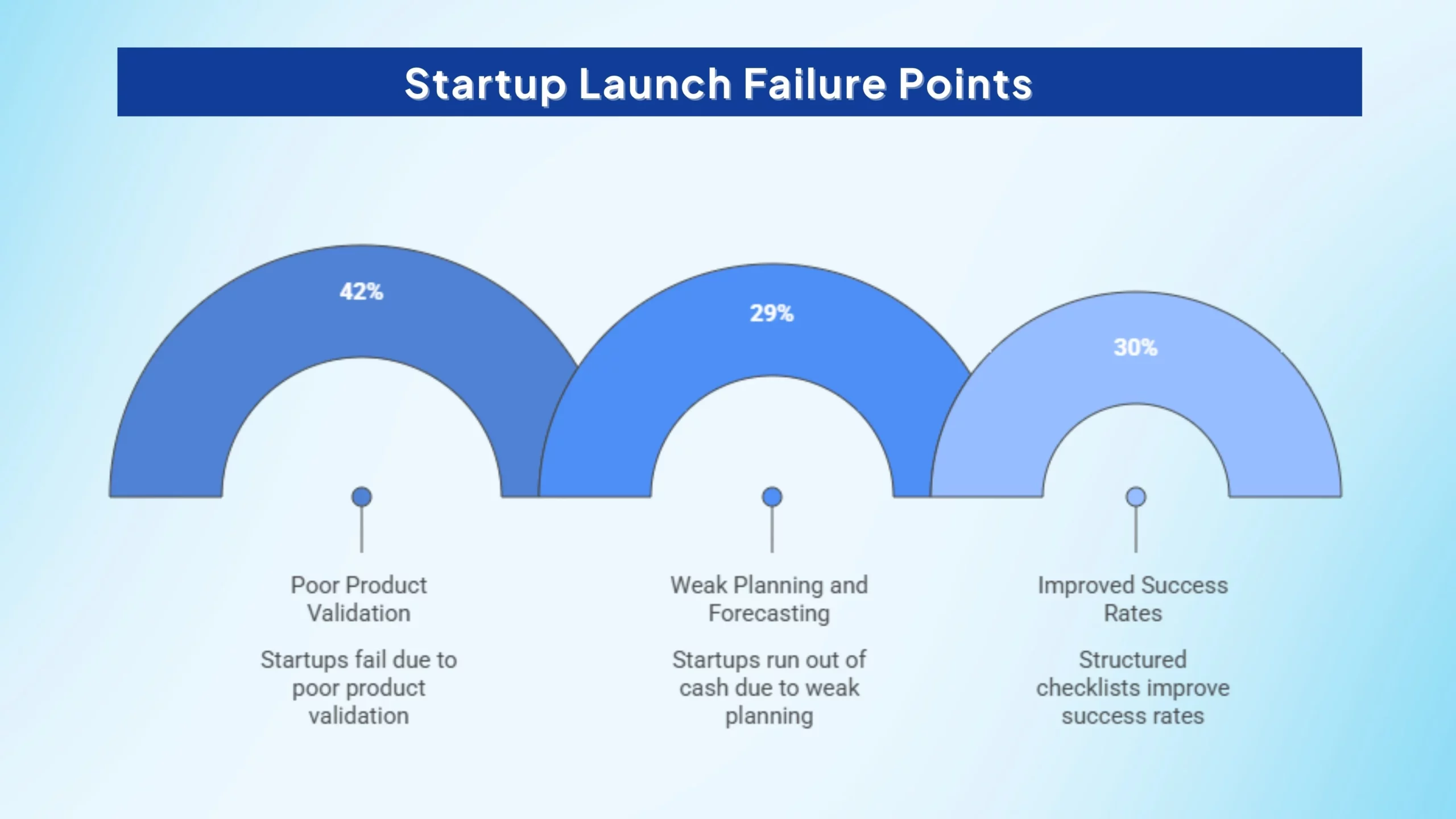
Startup launch readiness checklists directly address common failure points. Around 42% of startups fail due to poor product validation, while 29% run out of cash because of weak planning and forecasting. Structured checklists reduce these risks and improve long-term success rates by up to 30%.
In this guide, I have provided a clear, step-by-step launch readiness checklist designed for both technical and non-technical startups. It covers strategy, validation, finances, and execution in one place. You will also find a free PDF download to help you implement everything smoothly before launch.
A startup launch readiness checklist ensures all final approvals, systems, teams, and plans are aligned before going public. It focuses on reducing risk, preventing launch-day failures, and making sure the business is fully prepared to execute with confidence.
1. Product Sign-Off
- Confirm all teams approve the launch state
- Lock features and eliminate last-minute changes
- Ensure no launch-blocking issues remain
2. Legal & Compliance
- Verify licenses, policies, and regulations
- Confirm data protection and IP checks
- Prevent legal risks after launch
3. Systems & Infrastructure
- Test website, app, and integrations
- Confirm payments, emails, and monitoring
- Prepare rollback and recovery plans
4. Delivery & Fulfillment
- Ensure inventory or service capacity is ready
- Test delivery and refund workflows
- Align partners with launch timing
5. Customer Support
- Activate support channels
- Define response and escalation rules
- Prepare answers for common issues
6. Internal Alignment
- Align sales and support on launch details
- Centralize enablement materials
- Maintain consistent messaging
7. Marketing Readiness
- Finalize launch channels and messaging
- Schedule campaigns in advance
- Prepare press or partner outreach
8. Launch Setup
- Plan launch events or promotions
- Create urgency for early users
- Coordinate launch-day execution
9. Success Metrics
- Define launch goals and KPIs
- Set up tracking and dashboards
- Align teams on success criteria
10. Post-Launch Reinforcement
- Plan follow-ups and feedback collection
- Review early performance data
- Adjust quickly after launch
What is a Launch Readiness Checklist for Startups?
A launch readiness checklist for startups is a structured framework that ensures a business is fully prepared to introduce its product or service to the market. It aligns product, marketing, operations, legal, and team readiness into a single reference point. The goal is to reduce uncertainty and confirm that critical launch elements are not overlooked.
This checklist exists to prevent common and costly startup failures caused by missing validation, weak planning, or poor execution. By identifying gaps early, it helps startups make informed decisions and launch with confidence, regardless of whether they are technical or non-technical.
Expert Quote:
If you really want to launch the product, you must begin with in-depth market research, identify your target audience, and understand their needs. Next, make a comprehensive plan for the launch, which defines specific, measurable goals, a marketing strategy, and all the materials and resources required.”
— Lucas Botzen, CEO of Rivermate on product launch planning
Source
What are the Key Steps in a Startup Launch Readiness Checklist?
Starting a business can also feel confusing and stressful. Whether you are launching a tech product or a small local business, following a clear checklist helps you avoid costly mistakes. A launch readiness checklist gives you direction and improves your chances of success.
Below are the most important steps every startup should understand before launching.
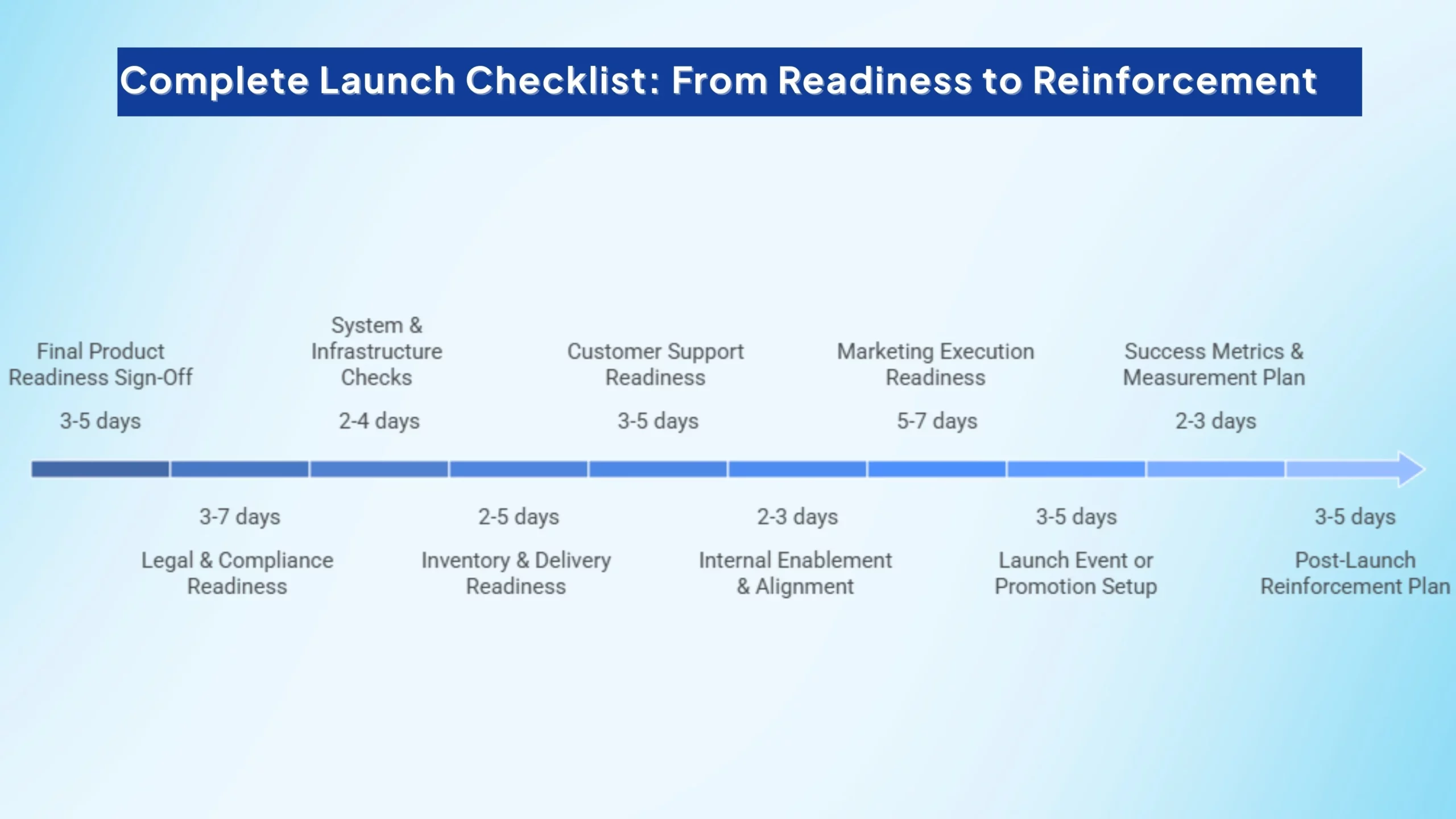
1. Final Product Readiness Sign Off (3 to 5 days)
Even when a product appears complete, a launch should not move forward until every responsible team provides formal sign off. This step acts as a final approval gate before the product is exposed to real users. Once a product is public, even small gaps become visible and can quickly impact trust, adoption, and brand credibility.
A structured sign off ensures that all teams are aligned on readiness. It confirms that the product is not only built, but also usable, stable, and supportable. Without this alignment, launches often suffer from rushed decisions, unclear ownership, and avoidable post launch fixes.
What must be confirmed before launch:
- Feature definition is frozen:
The exact scope of the launch is clearly agreed upon by all stakeholders. Everyone understands which features users will see and which ones are intentionally postponed. This avoids confusion when marketing communicates one thing while the product delivers something else, and it prevents pressure to sneak in unfinished work at the last moment. - Engineering approval:
Engineering confirms that all critical user journeys work smoothly from start to finish. Users can complete the main actions without errors, data loss, or performance issues. This validation ensures the product behaves reliably under real usage conditions, not just in isolated tests. - UX and UI approval:
Design teams verify that the interface is intuitive and that first time users can understand what to do without instructions. Navigation, labels, and feedback feel natural, reducing friction and preventing users from feeling lost or frustrated during their first interaction with the product. - QA clearance:
Quality assurance confirms that there are no launch blocking issues across devices, browsers, or environments. End to end flows have been tested, and any remaining issues are documented, understood, and deemed safe to address after launch without harming the user experience. - Operations approval:
Operations and support teams confirm they are ready to maintain the product once it goes live. Monitoring is in place, escalation paths are clear, and support teams understand how to respond if users encounter problems. This ensures the product remains stable and supported beyond the launch moment.
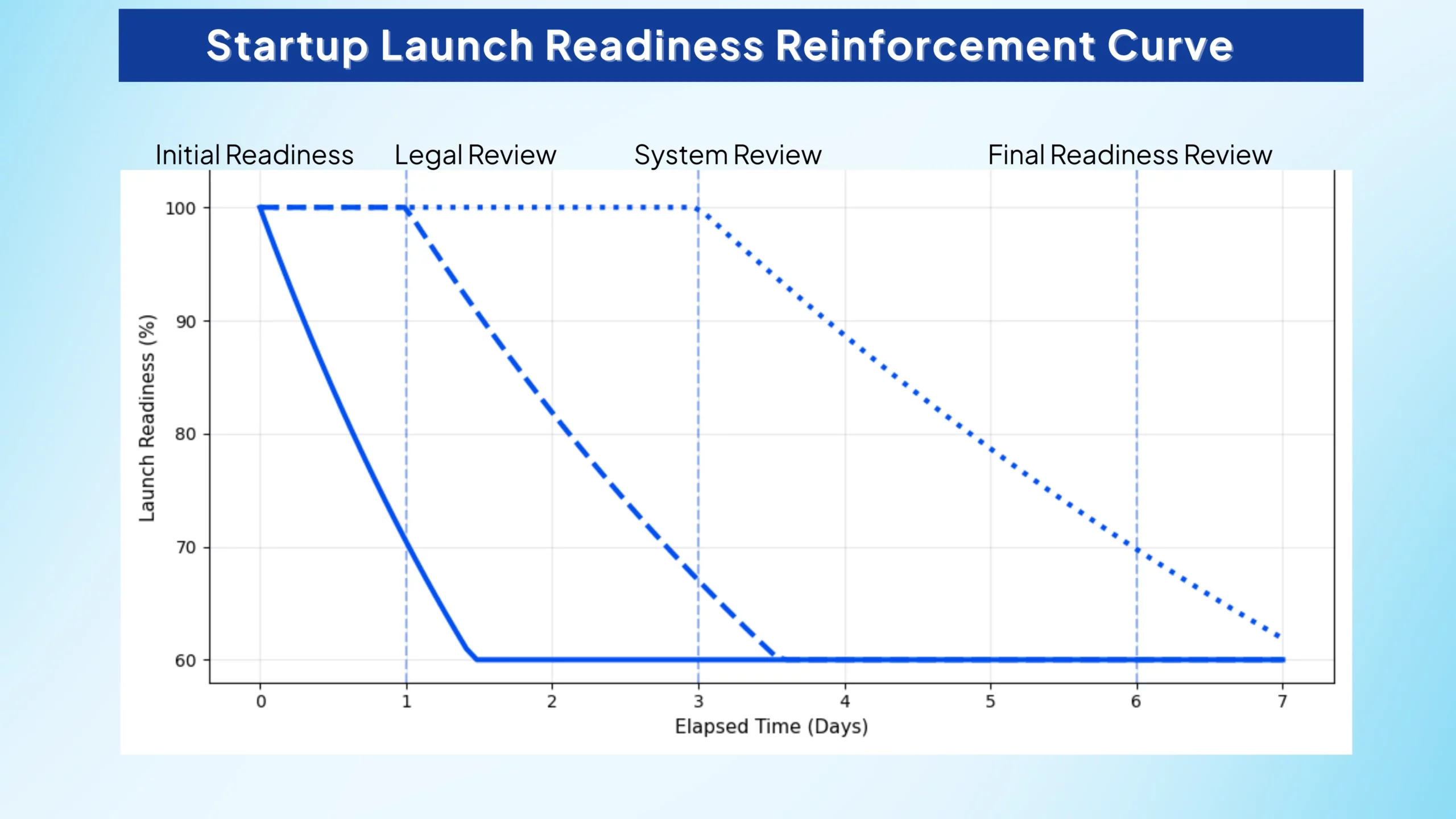
This final sign-off fosters shared accountability across teams, cutting last-minute surprises by up to 40% according to startup launch analyses. It ensures users encounter a deliberate, reliable product from day one, aligning with findings that polished launches boost retention by 25%.
2. Legal and Compliance Readiness (3 to 7 days)
A product launch is not truly ready if legal or regulatory gaps exist. Even if the product works perfectly, non compliance can halt growth overnight, trigger takedowns, or result in financial and legal penalties. These risks often appear after launch, when reversing decisions becomes costly and disruptive.
Legal checklist ensures the product can operate confidently in its intended market. It protects both the business and its users, and it signals professionalism and trustworthiness from the very first interaction.
Minimum launch requirements:
- Business registration and licenses:
The company must be legally registered and hold all required licenses in accordance with the laws of the country in which it operates. Since business regulations vary from one country to another, it is essential to review and comply with the specific legal requirements applicable in the relevant jurisdiction. - Privacy policy and terms:
Clear and accessible legal documents must be provided in compliance with country-specific legal and consumer protection laws. As privacy and contractual requirements differ across jurisdictions, these documents should reflect local regulations and clearly explain how the product works, what users agree to, and how their data is handled. - Data protection compliance:
If the product collects, stores, or processes user data, it must comply with the relevant data protection laws applicable in the specific country. Because data protection frameworks vary by region, this includes verifying how data is collected, where it is stored, and how users can access or request deletion of their information. - Intellectual property checks:
Product names, logos, domains, and branding elements should be reviewed under the trademark and copyright laws of the country where the business operates. As intellectual property regulations differ by jurisdiction, conducting country-specific checks helps prevent legal disputes, forced rebranding, or reputational damage after launch.
When user information or payments are involved, visible legal documentation is not optional. It reassures users that their data and transactions are handled responsibly and confirms that the product is operating within the law from day one.
3. System and Infrastructure Checks (2 to 4 days)
Your first impression is created the moment users access the product on launch day. If the website is slow, the app crashes, or a core action fails, trust is damaged immediately. Studies show that up to 90% of startups fail at some point in their lifecycle, and while not all failures stem directly from launch-day issues, poor product performance and timing are major contributors to early setbacks.
Launch day stability matters to both technical and non-technical teams. For technical teams, it is about system reliability and risk control. For non-technical teams, it directly impacts user confidence, brand perception, and business momentum.
Everyone feels the impact when something goes wrong at launch, and these early impressions can meaningfully influence whether a startup climbs toward stability or becomes part of the high percentage that fails.
Launch readiness checks:
- Website and app are live and stable:
The product is fully accessible, loads consistently, and performs as expected under real user traffic. Pages open correctly, core features respond quickly, and users are not met with errors or blank screens. Stability here ensures users can actually experience the value the product promises. - All integrations are functioning:
Supporting systems such as payments, email notifications, analytics, and third party tools are working correctly. When a user signs up, receives confirmation messages, completes a transaction, or triggers an event, everything happens smoothly without manual intervention or follow up. - Backup and rollback plans are documented:
Clear plans exist for what to do if something breaks after launch. Teams know how to revert changes, restore systems, or temporarily disable features without causing further disruption. This preparation allows teams to act quickly instead of reacting under pressure. - Monitoring tools are active:
Systems are in place to detect errors, slowdowns, or outages as soon as they occur. Teams can see problems in real time and respond before users start reporting issues publicly or abandoning the product.
Why this matters:
From a non-technical perspective, users expect things to simply work. If they encounter friction on their first visit, many will not give the product a second chance.
From a technical perspective, early failures often expose deeper system weaknesses that are harder to fix under live conditions. Research consistently shows that users rarely return after a poor first experience, making stability non negotiable at launch.
4. Inventory and Delivery Readiness (2 to 5 days)
When a product launches successfully, interest can arrive faster than expected. If demand shows up and the business is not ready to fulfill it, that initial excitement quickly turns into frustration. A launch only succeeds when users can receive what they were promised without delay, confusion, or manual intervention.
Fulfillment readiness is critical for both digital and physical offerings. Whether it is delivering a service, granting access, or shipping a product, the experience after purchase shapes how users judge the entire brand.
Confirm before launch:
- Inventory levels match expected demand:
Available stock, capacity, or service availability aligns with projected interest. This ensures users are not allowed to place orders or bookings that cannot be fulfilled, preventing overselling and negative first impressions. - Delivery or service workflows are documented and tested:
Every step from order or booking to final delivery is clearly defined and has been run end to end. Teams know who is responsible at each stage, what tools are used, and how delays or exceptions are handled without guesswork. - Suppliers or partners are informed about launch timelines:
External partners are aware of when demand will increase and are prepared to support it. This alignment ensures there are no unexpected bottlenecks caused by unprepared vendors, logistics providers, or service partners. - Refund and cancellation flows are clearly defined:
Policies and processes are in place to handle changes, cancellations, or refunds smoothly. Users can understand their options, and internal teams know how to process requests quickly and fairly, preserving trust even when things do not go as planned.
A complete fulfillment flow should be validated as a single experience before launch. From the moment a user places an order or makes a booking, through confirmation, delivery, and follow up, every step should feel connected, predictable, and reliable. This readiness turns early demand into long term loyalty instead of lost opportunity.
5. Customer Support Readiness (3 to 5 days)
Support failures on launch day do more than create temporary frustration. They directly lead to lost customers, negative reviews, and public criticism that can overshadow the launch itself. When users try a new product for the first time, they expect quick help if something feels unclear or goes wrong.
On launch day, support is not a secondary function. It is part of the product experience. Strong support reassures users that the company is reliable, responsive, and invested in their success from the very beginning.
Minimum support setup:
- Active support channels:
Clear and working channels such as email, chat, or phone are available and easy to find. Users know exactly where to go for help, instead of searching through pages or giving up when they encounter an issue. - Defined response time expectations:
Support teams have clear targets for how quickly users should receive a response. This sets internal accountability and helps users feel acknowledged, even if a full resolution takes time. - Prepared answers for common launch questions:
Support teams are equipped with ready responses for expected questions around setup, access, pricing, or usage. This reduces response delays and ensures consistent, accurate information is shared with every user. - Clear escalation process for urgent issues:
Serious problems have a defined path for immediate attention. Support teams know who to involve and how quickly, preventing critical issues from lingering or being handled too late.
Research from Microsoft shows that 96% of customers say customer service influences loyalty. On launch day, expectations are at their highest. Fast, clear, and human support during this moment can turn first time users into long term customers, while poor support can permanently damage trust.
6. Internal Enablement and Alignment (2 to 3 days)
A startup is not truly launch ready if internal teams are confused about what is being released, who it is for, or how it should be explained. Internal confusion almost always becomes external confusion, and users quickly notice when answers vary depending on who they speak to.
Strong internal alignment ensures that every team communicates the same story, sets the right expectations, and feels confident when engaging with customers. When teams are aligned, launches feel intentional and coordinated instead of rushed or uncertain.
Alignment checklist:
- Sales and customer support understand what is launching and who it is for:
Teams have a clear understanding of the product’s purpose, target audience, and key value. This allows them to confidently explain the offering, qualify the right customers, and avoid promising features or use cases that are not part of the launch. - Enablement materials are accessible:
Practical resources such as talk tracks, FAQs, and battle cards are easy to find and up to date. These materials help teams answer questions consistently, handle objections, and explain the product clearly without relying on guesswork. - Messaging is consistent across internal and external channels:
The same language, positioning, and key points are used in sales conversations, support responses, marketing content, and product documentation. Consistency prevents confusion and reinforces trust in the brand. - Teams know where to find assets when speaking to customers:
Product screenshots, pricing details, demos, and documentation are organized in a central place. This allows teams to quickly share accurate information and respond confidently during customer interactions.
This alignment step avoids mixed messages, reduces internal friction, and builds confidence across the organization. When everyone shares the same understanding, the launch feels unified, professional, and trustworthy to customers.
7. Marketing Execution Readiness (5 to 7 days)
Marketing should be fully prepared before launch, not assembled while the product is going live. When marketing is rushed or reactive, even a strong product can struggle to gain traction. A prepared marketing engine ensures that demand, visibility, and messaging are ready the moment the product becomes available.
Launch day is not the time to decide where to post, what to say, or who to reach. It is the moment when all planned efforts come together to create momentum, credibility, and early adoption.
Confirm readiness:
- Primary launch channels are selected:
The team knows exactly where the launch will be announced and promoted, whether that is email, social platforms, communities, paid ads, or partnerships. Focusing on the right channels ensures energy is not diluted and the message reaches the intended audience effectively. - Email campaigns and social posts are scheduled:
Messaging is written, reviewed, and scheduled in advance. This allows consistent communication before, during, and after launch without last minute pressure. Scheduled campaigns also ensure the launch narrative unfolds clearly instead of appearing fragmented or incomplete. - Press or media outreach is prepared:
If press coverage is part of the strategy, outreach materials such as press releases, pitches, and media kits are ready ahead of time. This preparation allows journalists or publications to understand the story quickly and cover the launch without delays. - Influencer or partner collaborations are confirmed:
Partners and collaborators are aligned on timing, messaging, and expectations. Their participation adds credibility and reach, helping the launch feel larger and more established from day one.
Successful launches often combine product readiness with smart pre launch marketing. Some companies have built anticipation through waitlists and clear explainer content that educated users before access was granted.
Others gained visibility by aligning their launch with high attention moments, using timing and relevance to amplify awareness. In each case, marketing was intentional, prepared, and active from the first day.
When marketing is ready before launch, the product does not enter the market quietly. It arrives with clarity, confidence, and momentum that supports long term growth.
8. Launch Event or Promotion Setup (3 to 5 days)
A clear and intentional launch moment gives people something to notice, talk about, and participate in. Without a defined launch moment, a product can quietly appear in the market and be easily overlooked, even if it solves a real problem.
A strong launch moment focuses attention, creates excitement, and encourages users to take action right away. It turns the launch from a passive release into an active experience that people want to engage with.
Options to prepare:
- Virtual or physical launch event:
A launch event brings structure and storytelling to the release. It gives the team a platform to explain the problem, show the solution, and highlight key benefits in a single moment. Whether online or in person, events help humanize the product and make the launch feel intentional rather than routine. - Limited time launch offers or early access incentives:
Time bound incentives encourage users to act instead of postponing. Early access, discounted pricing, or exclusive features reward early adopters and make them feel valued, increasing the likelihood of immediate sign ups and word of mouth. - Contests, giveaways, or referral promotions:
Interactive promotions motivate users to participate and share the product with others. These activities create organic reach while giving users a clear reason to engage beyond simple curiosity.
A defined launch moment creates urgency and provides a clear call to action, converting passive attention into active engagement. Users are 3x more likely to sign up and share during timed launches, as exclusivity taps into FOMO rather than random discovery.
9. Success Metrics and Measurement Plan (2 to 3 days)
A launch cannot be properly evaluated without clearly defined success metrics. Without them, teams are left relying on opinions instead of data, making it difficult to understand what worked, what failed, and what should be improved next.
Predefined metrics create a shared definition of success across teams. They ensure that product, marketing, sales, and leadership are all evaluating the launch using the same signals, rather than focusing on isolated outcomes.
Define before launch:
- Primary goal:
The single most important outcome the launch is meant to achieve is clearly stated. Whether the focus is signups, sales, demos booked, or active users, this goal guides decision making and helps teams prioritize the right actions during and after launch. - Supporting metrics:
Additional metrics are selected to explain how users behave around the primary goal. Measures such as conversion rate, activation success, or early engagement provide context and reveal whether users are finding value or dropping off at critical points. - Tracking tools and dashboards:
Analytics, reporting tools, and dashboards are set up in advance so data is captured from the first user interaction. This allows teams to monitor performance in real time and avoid gaps that make post launch analysis incomplete or unreliable.
Ask yourself:
Have all teams aligned on what success looks like and how it will be measured after launch? Clear answers to this question ensure the launch is not just executed, but also learned from and improved upon.
10. Post Launch Reinforcement Plan (3 to 5 days)
A launch is not a one time event. It is the starting point of a learning and growth cycle. While launch day creates initial attention, long term success depends on how well momentum is maintained and how quickly the team adapts based on real user behavior.
Without a plan for what happens after launch, early interest fades and valuable insights are lost. Sustained momentum requires intentional follow up, continuous measurement, and a willingness to improve based on what users actually experience.
Prepare in advance:
- Plan for post launch promotions or reminders:
Follow up communication keeps the product visible after the initial announcement. Timely reminders, feature highlights, or use case driven messaging help re engage users who showed interest but did not act immediately. - Feedback collection systems:
Clear channels are in place to gather user feedback through surveys, in product prompts, support conversations, or reviews. This input provides direct insight into what users value, where they struggle, and what needs improvement. - Process for analyzing KPIs and insights:
Teams know how and when key metrics will be reviewed. Regular analysis helps identify patterns, spot drop offs, and understand whether the product is meeting its intended goals beyond surface level engagement. - Iteration plan based on early feedback:
A clear process exists for turning insights into action. This includes prioritizing fixes, refining features, and adjusting messaging based on what users actually do and say after launch.
Research and real-world outcomes confirm that 70% of successful startups pivot or iterate their products post-launch based on early user feedback, as seen in analyses of Y Combinator batches. Early data uncovers 42% of product-market fit gaps that pre-launch planning misses, turning launch into a data-driven foundation rather than a fixed endpoint.
Did you know?
Can You Provide a Free Downloadable Launch Readiness Checklist Template for Startups?
Yes, there is a free, downloadable launch readiness checklist for startups that founders can use to prepare for a smooth and organized product or service launch. This checklist is designed to help startups track progress, avoid missed steps, and stay focused during the critical pre-launch phase.
Use it as an ongoing reference to manage launch tasks alongside daily priorities. Update the checklist as your startup grows, adds team members, or introduces new features. Revisit it regularly, especially before major milestones, to ensure your launch strategy remains aligned and complete.
Can Beginners Follow a Simple Startup Launch Readiness Checklist Template?
Yes, beginners can absolutely follow a simple startup launch readiness checklist template, even with no prior startup experience. These startup checklists are designed to simplify the launch process by providing clear direction and reducing confusion at an early stage.
By offering a structured approach, a launch readiness checklist ensures essential areas are covered before going live. This matters because founders with prior startup success see around 30% higher venture success, compared to about 18% for first-time founders, highlighting how structured preparation and team readiness checks can help beginners close the experience gap.
A simple startup launch readiness checklist typically includes:
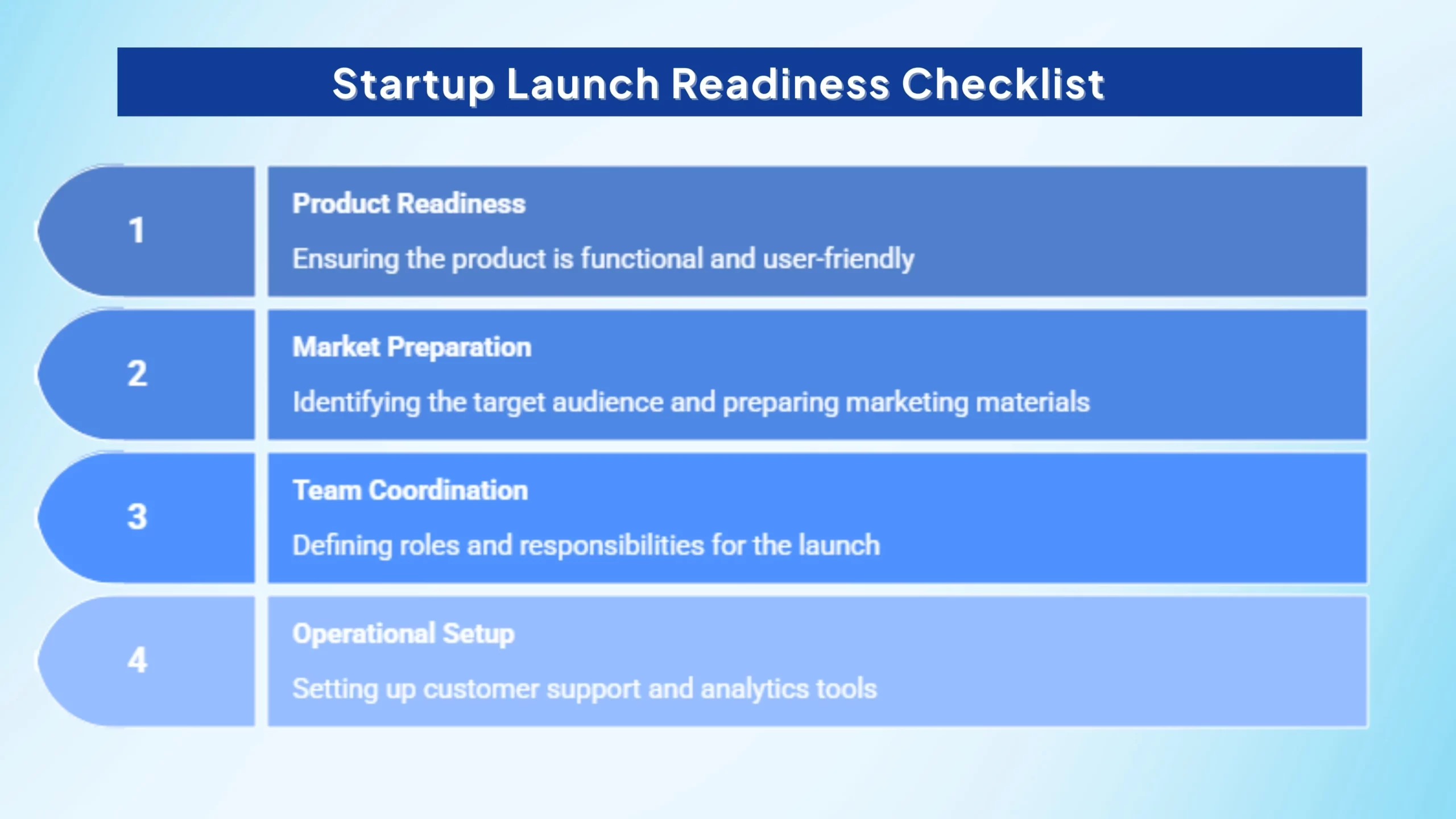
Following this checklist step by step allows beginners to launch with clarity and improve their chances of long-term success.
What Are Advanced Features to Add to a Startup Launch Readiness Checklist?
As startups grow closer to launch, basic preparation is often not enough to handle real-world challenges. Adding advanced features to a launch readiness checklist helps ensure stability, scalability, and long-term success from day one.
- User Experience (UX) Design: Ensure smooth navigation, mobile responsiveness, and accessibility for all users
- Performance Optimization: Test how the product performs under high traffic and different usage conditions
- Security Measures: Protect user data with encryption, secure authentication, and strong access controls
- Compliance and Legal Review: Ensure alignment with regulations such as GDPR or CCPA and keep legal documents updated
- Marketing Strategy: Plan branding, content, and digital marketing to reach the right audience effectively
- Customer Support Infrastructure: Set up reliable support channels like live chat, email, or help centers
- Analytics and Monitoring: Track user behavior, performance metrics, and key business indicators
- Feedback Mechanisms: Collect user feedback to guide improvements and future updates
- Scalability Planning: Prepare systems and resources to handle growth without disruptions
- Crisis Management Plan: Define clear steps for handling outages, security issues, or unexpected failures
Expert Quote:
Ideas are easy. Implementation is hard.”
— Guy Kawasaki, product evangelist and startup expert
Source
What Are Common Mistakes to Avoid in a Startup Launch Readiness Checklist?
A startup launch readiness checklist is meant to reduce risk, but it can only work if it is used correctly. Many startups fail not because they lack ideas, but because they overlook critical areas covered in a legal checklist for startups or rush important decisions during launch preparation.
Avoiding the mistakes below helps ensure your checklist actually prepares your startup for real market conditions, not just a launch date.
Did you know?
- Skipping market validation: Assuming demand without testing leads to wasted time and money. Always confirm real customer interest first.
- Not having a clear business plan: Without a defined direction, teams often work in silos and miss growth opportunities.
- Overestimating product readiness: Launching without proper testing can damage trust and brand credibility.
- Underestimating financial needs: Running out of cash is a leading cause of failure. Always plan for unexpected expenses.
- Ignoring legal and administrative basics: Missing registrations, contracts, or compliance requirements can create serious legal risks.
- Building the wrong team or hiring too fast: A misaligned team slows execution and creates internal friction.
- Inconsistent marketing messages: Mixed messaging confuses customers and weakens brand recognition.
- Overlooking customer feedback: Ignoring early users prevents improvement and product-market fit.
- Trying to do everything alone: Lack of delegation leads to burnout and poor decision making.
- Delaying launch in pursuit of perfection: Waiting too long allows competitors to move faster. Launch with core value and improve over time.
FAQs
A pre-launch readiness checklist for tech startups should include product readiness, technical infrastructure, marketing preparation, legal compliance, customer support, and a clear launch strategy to ensure a smooth rollout.
A sample launch readiness checklist for a mobile app startup should cover pre-launch, launch, and post-launch activities to ensure the app is stable, visible, and ready for real users. It focuses on testing, app store optimization, marketing setup, analytics, and customer support before submission.
Contingency planning is important because it prepares startups to handle unexpected problems such as technical failures, financial shortfalls, or market changes without disrupting the launch. Including contingency planning helps maintain operational continuity, protect cash flow, and build confidence among investors, customers, and team members during uncertain situations.
Yes, market validation should always be included in your startup launch readiness checklist because it confirms real demand before launch. It helps ensure your product solves a real problem, aligns with customer needs, and reduces the risk of launching something people are not willing to pay for.
Final Takeaways: Startup Launch Readiness Checklist
Launching a startup becomes far more predictable and less stressful when preparation is done the right way, which is exactly why this startup launch readiness checklist matters. It helps founders reduce uncertainty, avoid common launch failures, and move into the market with confidence.
- Validate before you build: confirm real market demand, test assumptions early, and avoid launching products users do not want.
- Prepare for execution: ensure product stability, marketing readiness, legal compliance, and operational systems are in place.
- Plan beyond launch day: include monitoring, feedback loops, and contingency planning to support growth after launch.