AI search is reshaping how brands earn trust and visibility. AI brand sentiment tracking helps you measure not just whether you’re mentioned, but how AI systems describe you. That framing matters because it can influence whether your brand is recommended, cited, or ignored in AI answers.
Sentiment analysis adds a missing layer to modern SEO. It shows the tone around your brand across AI results, reviews, and public discussions. If the narrative shifts negative, your visibility can drop even when your pages are strong. If the narrative stays consistently positive, your brand is easier to trust, easier to recommend, and more likely to be referenced.
This guide explains how to track AI brand sentiment, what signals to watch, and how to turn findings into practical fixes. You’ll get clear steps for monitoring, examples of what to measure, and a process you can run monthly to improve how AI engines talk about your brand.
TL;DR
- What this is about: AI brand sentiment tracking helps you measure not just whether you’re mentioned, but how AI systems describe you.
- Why it matters: That framing matters because it can influence whether your brand is recommended, cited, or ignored in AI answers.
- What you’ll get: Clear steps for monitoring, examples of what to measure, and a process you can run monthly to improve how AI engines talk about your brand.
Essential Reasons to Monitor Sentiment in AI Search
Brand sentiment plays a direct role in how AI search systems evaluate trust and authority. AI platforms do not rely only on technical relevance or keyword matching. They also interpret how your brand is described, recommended, and framed across answers, reviews, and public discussions. That framing often determines whether your brand is treated as a credible source or passed over.
When sentiment is consistently positive, AI systems tend to associate your brand with reliability and expertise. This increases the likelihood of being cited, referenced, or suggested in AI-generated responses. When sentiment turns negative or uncertain, visibility can decline even if your content remains technically sound.
Monitoring sentiment across AI search helps you move from reactive reputation management to proactive control. Instead of discovering problems after traffic or conversions drop, you can detect early signals of shifting perception and address them before they affect trust at scale.
Sentiment also influences Citation Score and similar AI visibility metrics. AI systems evaluate both explicit signals, such as reviews and citations, and implicit signals, such as tone, confidence, and emotional context. These signals update continuously, which means brand trust in AI search is dynamic rather than fixed.
Brands that track sentiment consistently gain a clearer picture of where authority is strengthening and where it is eroding. This allows teams to reinforce positive narratives, correct misleading associations, and close visibility gaps faster than competitors who rely only on rankings or mention counts.
Transform Raw Sentiment Data Into AI Strategy
Sentiment data becomes useful only when it informs action. Real-time tracking allows you to connect perception shifts directly to content, messaging, and outreach decisions.
By comparing your sentiment trends with those of competitors, you can identify where AI systems view your brand as stronger or weaker. These comparisons reveal which topics, tones, and narratives lead to citations and which ones limit authority.
Effective sentiment analysis also helps you prioritize effort. Instead of spreading resources evenly, you can focus on themes that AI engines already treat favorably while correcting areas where negative sentiment or missed citations reduce trust. Over time, this alignment improves how AI systems describe your brand and increases the consistency of positive visibility.
Defining AI Brand Sentiment Analysis
AI brand sentiment analysis is the process of measuring how your brand is described across digital environments such as AI search results, social platforms, forums, and reviews. Instead of relying on manual review, it uses natural language processing and machine learning to evaluate tone and context at scale.
This analysis goes beyond counting mentions. It examines whether language around your brand signals confidence, trust, doubt, or dissatisfaction. These signals matter because AI systems factor emotional framing into how they rank, recommend, and cite sources in generated answers.
Modern sentiment analysis pulls from real-time text sources, including AI-generated responses and user discussions. This allows brands to see how perception changes over time and how those shifts align with visibility, trust, and citation patterns in AI search.
When sentiment data is combined across channels, brands gain a clearer picture of underlying trends. These trends often explain why authority grows or declines even when technical SEO performance remains stable.
Sentiment analysis also supports competitive benchmarking. By comparing how AI systems describe your brand versus competitors, you can identify gaps in trust, clarity, or positioning that affect AI search outcomes.
What Is AI Brand Sentiment Analysis?
AI brand sentiment analysis uses natural language processing and machine learning to classify emotion in both AI-generated and human-written content. Each mention is typically categorized as positive, neutral, or negative based on language patterns and contextual cues.
The focus is not only on what is said, but on how it is said and interpreted. Subtle wording choices can signal confidence, uncertainty, or bias, all of which influence how AI systems frame your brand in answers.
By analyzing large volumes of feedback, reviews, and AI responses, sentiment analysis turns unstructured language into structured insight. These insights help teams improve content clarity, adjust messaging, and strengthen trust signals that support better AI visibility and citation outcomes.
How to Implement Sentiment Analysis for Your Brand
Implementing sentiment analysis requires a structured approach that connects measurement to action. The goal is not just to collect data, but to use it to improve how your brand is perceived and referenced in AI search results.
Start by defining what success looks like. Sentiment tracking should be tied to clear outcomes such as improved AI visibility, stronger trust signals, or measurable gains in Citation Score. Without this focus, sentiment data quickly becomes noise.
Once objectives are clear, select tools that can collect and classify sentiment consistently across platforms where AI systems source information. Effective sentiment analysis depends on complete coverage rather than isolated data points.
When sentiment analysis is implemented with clear goals and consistent monitoring, teams can respond faster to reputation shifts, understand competitive positioning, and strengthen brand authority across AI search environments.
Step 1: Set Your Analysis Objectives
Begin by documenting specific goals for sentiment analysis. These goals should connect directly to AI visibility or trust outcomes, not general brand awareness.
- Define which AI platforms or search environments matter most.
- Set benchmarks related to sentiment tone or citation presence.
- Decide how insights will be used by content, marketing, or PR teams.
Clear objectives ensure sentiment data leads to action rather than passive reporting.
Step 2: Gather Brand Sentiment Data
Next, collect sentiment signals from all channels that influence AI search perception. Partial data creates blind spots that weaken conclusions.
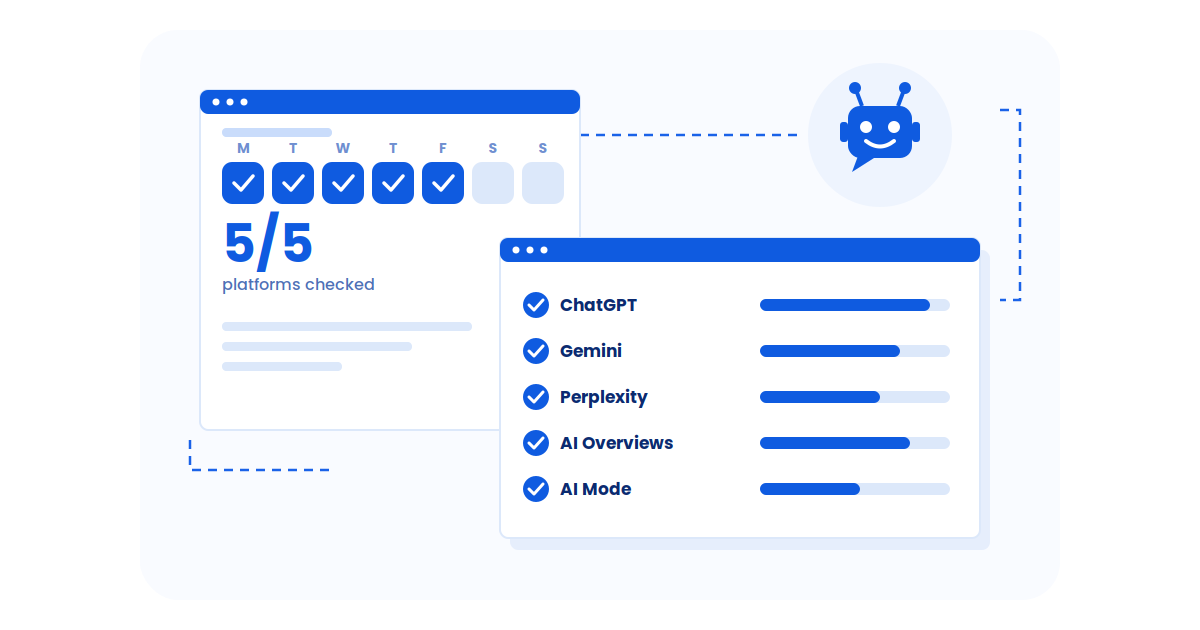
- AI search results and generated answers from platforms such as ChatGPT, Gemini, and Perplexity.
- Review sites, social platforms, and industry-specific forums.
- Both direct citations and indirect mentions of your brand.
Aggregate this data using tools that support multi-channel reporting. Comparing sentiment trends against competitor data adds context and helps identify where authority is gaining or slipping.
In-Depth Reviews: 5 Leading AI Sentiment Tools
Choosing the right AI sentiment analysis tool has a direct impact on how well you can understand, measure, and improve brand perception in AI search. These platforms differ in focus. Some emphasize content and SEO workflows, while others prioritize enterprise reporting, trend analysis, or executive-level insights.
The tools below are widely used for monitoring sentiment across AI search, reviews, and public discussion channels. Each review highlights where the platform performs best and what type of team it is most suitable for.
Writesonic
Writesonic combines sentiment tracking with content creation and SEO workflows. It is best suited for teams that want sentiment insights to directly influence what they publish and how they optimize for AI visibility.
- Tracks sentiment alongside content performance and AI citation trends.
- Monitors changes in tone across multiple AI platforms.
- Supports competitive comparisons to identify narrative gaps.
Writesonic works well for marketing and content teams that want fast feedback loops between sentiment data and publishing decisions.
AI Brand Scan
AI Brand Scan focuses on real-time monitoring and quick diagnostics. It is designed for teams that need a clear snapshot of how their brand is currently framed across AI environments.
- Provides live sentiment breakdowns for brand mentions.
- Highlights sudden shifts in positive or negative perception.
- Generates simple benchmarking reports for regular reviews.
This tool is a strong fit for teams that need clarity and speed rather than deep historical analysis.
GENEO
GENEO is built for long-term sentiment tracking and competitive benchmarking. It emphasizes trend analysis over time rather than point-in-time monitoring.
- Tracks sentiment changes by campaign, topic, or brand initiative.
- Compares sentiment and visibility against selected competitors.
- Surfaces early indicators of reputation risk or opportunity.
GENEO is useful for brands that want to plan ahead and base content or messaging changes on sustained sentiment trends.
Profound
Profound focuses on enterprise-grade sentiment analytics with an emphasis on reporting accuracy and transparency. It is often used by large organizations with formal reporting needs.
- Offers detailed sentiment dashboards with historical context.
- Includes alerting for PR, compliance, or brand safety teams.
- Supports reporting across multiple departments and stakeholders.
This platform is best suited for organizations that need reliable, decision-ready sentiment data at scale.
AthenaHQ
AthenaHQ connects sentiment analysis to business performance metrics. Its strength lies in translating perception data into outcomes that executives care about.
- Links sentiment trends to share of voice and traffic signals.
- Tracks how AI prompts and answers evolve over time.
- Aligns sentiment insights with broader business KPIs.
AthenaHQ works well for leadership teams that want sentiment data framed in terms of impact, not just observation.
Did you know?
Best 8 AI Brand Sentiment Analysis Platforms for 2026
As AI search becomes a primary discovery channel, brands need sentiment platforms that go beyond surface-level monitoring. The strongest tools in 2026 combine multi-channel data, reliable sentiment classification, and reporting that supports real business decisions. The platforms below are widely used by marketing, CX, and analytics teams to understand how brands are framed across AI search, reviews, and public discussion spaces.
Each platform serves a different type of organization. Some focus on enterprise-scale monitoring, while others specialize in customer experience or language analysis. Use these summaries to narrow your shortlist based on scope, depth, and integration needs.
Brandwatch
Brandwatch is a long-established platform for large-scale brand monitoring. It is commonly used by global brands that need continuous insight across social, news, and online conversations.
- Tracks sentiment across a wide range of public digital sources.
- Provides dashboards that surface reputation risks and campaign impact.
- Supports segmentation by region, product line, or business unit.
Brandwatch is best suited for enterprises that need breadth, historical depth, and flexible reporting.
Clarabridge
Clarabridge focuses on customer experience analytics. Its strength lies in organizing large volumes of feedback into structured insight that CX teams can act on.
- Analyzes sentiment from surveys, reviews, and support interactions.
- Supports multilingual feedback categorization.
- Integrates with customer support and experience platforms.
This platform works well for organizations that want to connect sentiment data directly to customer experience improvements.
IBM Watson Natural Language Understanding
IBM Watson NLU is a language analysis engine rather than a full monitoring platform. It is often used as a core component within custom analytics stacks.
- Provides precise sentiment and entity analysis across many languages.
- Allows custom model training for domain-specific language.
- Scales well for complex data pipelines and global use cases.
IBM Watson NLU is a strong option for teams with in-house data engineering resources.
Talkwalker
Talkwalker offers global media and sentiment monitoring with strong visualization and trend analysis features. It is widely used by PR and communications teams.
- Monitors sentiment across multiple languages and regions.
- Tracks campaign and influencer impact in real time.
- Provides dashboards tailored to PR and marketing workflows.
Talkwalker is suitable for brands managing reputation across international markets.
Lexalytics
Lexalytics specializes in text analytics and sentiment scoring that can be embedded into other systems. It is often used by organizations that need granular language insight.
- Delivers detailed sentiment and intent classification.
- Supports multi-language analysis across channels.
- Offers APIs for deep customization and integration.
Lexalytics fits teams that want fine-grained control over how sentiment is analyzed and applied.
NetBase Quid
NetBase Quid focuses on market and competitive intelligence. It combines sentiment analysis with broader trend and audience insights.
- Aggregates large volumes of data for industry benchmarking.
- Surfaces competitive and category-level trends.
- Supports executive-level reporting and strategic planning.
This platform is often chosen by organizations that treat sentiment as part of broader market analysis.
Sprinklr Modern Research
Sprinklr Modern Research is part of a larger customer experience suite. It is designed for enterprises managing many digital touchpoints at once.
- Centralizes sentiment and mention data across channels.
- Integrates with social, support, and marketing systems.
- Scales for global teams and complex workflows.
Sprinklr is best for organizations already invested in unified CX platforms.
Chattermill
Chattermill combines sentiment analysis with predictive customer insights. It is commonly used by product and CX teams.
- Analyzes real-time feedback across multiple sources.
- Highlights patterns that predict churn or satisfaction.
- Integrates with CRM and feedback management tools.
Chattermill is a strong choice for teams focused on linking sentiment to product and experience outcomes.
Did you know?
Must-Have Features in AI Brand Sentiment Tools
Not all sentiment platforms deliver the same level of insight or reliability. The most effective tools balance technical accuracy with practical reporting so teams can act on what the data reveals. When evaluating platforms in 2026, these core capabilities separate usable systems from surface-level monitors.
Focusing on these features helps ensure your investment supports consistent measurement, trustworthy analysis, and clear decision-making across AI search and brand channels.
1. Multi-Channel Data Capture
A strong sentiment platform must collect data from all environments that influence how AI systems perceive your brand. Relying on a single source creates blind spots and weakens conclusions.
- AI-generated answers and search results.
- Reviews, forums, and public discussion platforms.
- Social and community channels where brand opinions form.
Unified data capture ensures sentiment is measured in context rather than in isolation.
2. Reliable AI Sentiment Scoring
Accuracy matters more than volume. Platforms should clearly explain how sentiment is classified and how confidence is measured.
- Consistent classification of positive, neutral, and negative tone.
- Support for industry-specific or custom language models.
- Transparent scoring logic that teams can validate.
Reliable scoring allows sentiment data to inform real decisions rather than guesswork.
3. Live Analytics and Monitoring
Sentiment changes quickly, especially in AI search. Live dashboards and frequent updates allow teams to respond before issues escalate.
- Real-time or near-real-time sentiment updates.
- Alerts for sudden shifts in perception or tone.
Speed of insight is critical for protecting trust and capturing opportunities as they emerge.
4. Multilingual and Regional Support
Brands operating across regions need sentiment analysis that reflects local language and context. Direct translation is not enough.
- Support for multiple languages and dialects.
- Region-specific sentiment interpretation.
This capability is essential for global visibility and accurate benchmarking.
5. Clear Insights and Custom Reporting
Sentiment data must be usable by non-technical teams. The best platforms translate analysis into clear insight.
- Custom dashboards tailored to team roles.
- Reports that connect sentiment trends to business goals.
Actionable reporting helps teams prioritize fixes, measure progress, and justify decisions with confidence.
What to look for overall: Choose platforms that explain how sentiment is measured, show results in real time, and make it easy to connect perception data to AI visibility and business outcomes.
How Leading Brands Use AI-Powered Sentiment Tracking
Leading brands in 2026 rely on sentiment tracking to understand how AI systems and customers interpret their reputation in real time. Instead of treating sentiment as a passive metric, these organizations use it to guide content decisions, campaign timing, and trust management across AI search and customer-facing channels.
The examples below show how sentiment analysis supports visibility, credibility, and operational response in different industries. While the use cases vary, the underlying pattern is consistent: brands that monitor sentiment continuously can adapt faster and maintain stronger authority in AI-driven environments.
Amazon
Amazon uses sentiment tracking across AI-generated answers and customer reviews to understand how its products and services are framed at scale. In highly competitive categories, even small perception shifts can affect trust and conversion.
By reviewing sentiment trends daily, teams adjust product descriptions, support content, and positioning to reinforce positive narratives. This approach helps maintain consistency between customer feedback and AI search representation, which supports both visibility and credibility.
Industry: E-commerce and technology
Nike
Nike applies sentiment analysis at the campaign level. During launches or major initiatives, teams monitor changes in user advocacy and tone to evaluate how messaging is landing across digital channels and AI responses.
When sentiment signals weaken or shift, marketing teams use this data to refine creative direction and adjust timing. This allows Nike to respond quickly to audience feedback and maintain strong brand alignment across retail and AI search touchpoints.
Industry: Retail and apparel
Starbucks
Starbucks tracks sentiment across reviews, social platforms, and AI-generated content to understand customer perception of products and in-store experience. This feedback informs both marketing and operational decisions.
Sentiment insights help identify demand patterns, service issues, and opportunities for innovation. By connecting perception data to real-world actions, Starbucks strengthens loyalty and keeps its brand narrative consistent across physical and digital channels.
Industry: Hospitality and food services
Delta Airlines
Delta Airlines uses live sentiment monitoring to track how travelers discuss service quality, reliability, and customer support. In travel, perception can change rapidly due to delays or service disruptions.
Real-time sentiment signals allow teams to respond before negative narratives spread widely. This approach helps protect trust, improve customer experience, and maintain a stronger presence in AI-driven travel recommendations.
Industry: Airlines and travel
A Practical Guide to Choosing Your Ideal Sentiment Platform
Choosing the right AI brand sentiment platform requires more than comparing feature lists. You need a tool that fits your operational reality, integrates cleanly with existing systems, and delivers insights your teams can actually use. The goal is not maximum data volume, but clear signals you can act on.
Start by defining what success looks like. That includes which audiences and channels matter most, which AI touchpoints you need to monitor, and how sentiment insights will support visibility, trust, or revenue goals. Clear scope upfront prevents overbuying tools that add complexity without impact.
Define Your Monitoring Scope First
Before evaluating vendors, document where sentiment must be tracked. This typically includes AI search responses, review platforms, social channels, and relevant industry forums. Align this scope with stakeholder expectations so reporting supports real decisions rather than vanity metrics.
- List priority brands, products, regions, and channels
- Set baseline benchmarks for sentiment and AI visibility
- Define how often insights need to be reviewed and acted on
Assess Integration and Customization Fit
Sentiment tools deliver value only when they fit into existing workflows. Look for platforms that integrate with your analytics, content, and CX systems without heavy custom work. Flexible dashboards and configurable fields matter more than niche features.
- Check support for APIs, exports, and core analytics tools
- Confirm customization for sentiment tags or campaign tracking
- Ask for real integration examples from similar teams
Balance Budget, Scale, and Support
Pricing should align with how your organization grows. Avoid tools that penalize expansion or lock features behind unpredictable usage tiers. Equally important is support quality, since onboarding speed and training often determine adoption.
- Match pricing to team size and monitored properties
- Validate scalability for new markets or AI platforms
- Confirm access to training, documentation, and live support
Final guidance: The best sentiment platform is the one your team will actually use. Prioritize clarity, integration, and support over feature density, and validate value through a pilot before full rollout.
Read More Articles
FAQs
AI brand sentiment tracking measures how your brand is described across AI answers, reviews, and online discussions. In 2026, it matters because AI systems increasingly shape discovery and recommendations. If sentiment trends negative or unclear, your brand is less likely to be cited or trusted, even when your content ranks.
Prioritize tools that track sentiment across multiple channels, update data frequently, and present results in clear dashboards. Accurate classification, support for multiple languages, and the ability to connect sentiment trends to visibility or performance metrics are more important than large feature lists.
Brands use sentiment insights to adjust messaging, improve products, and respond quickly to perception shifts. This helps maintain trust, reduce risk, and improve how AI systems frame and recommend the brand in search results.
Yes. Platforms range from lightweight tools for small teams to enterprise systems. The best choice depends on scale, integration needs, and how often insights must be acted on. Cost-effectiveness comes from adoption and impact, not price alone.
Most modern platforms support multiple languages and channels. This is essential for brands operating across regions, since AI systems often pull signals from diverse sources and markets.
Final Thoughts: Leading With AI Brand Sentiment
AI brand sentiment tracking has become a core input to visibility, trust, and authority in AI-driven search. It shows how your brand is framed, not just where it appears. That framing influences citations, recommendations, and user confidence.
Brands that monitor sentiment consistently can move from reacting to issues to shaping perception. With clear objectives, the right tools, and regular review, sentiment tracking becomes a practical system for protecting trust and improving long-term visibility as AI search continues to evolve.