TL;DR: Key Takeaways On Google AI Overviews Ranking Factors
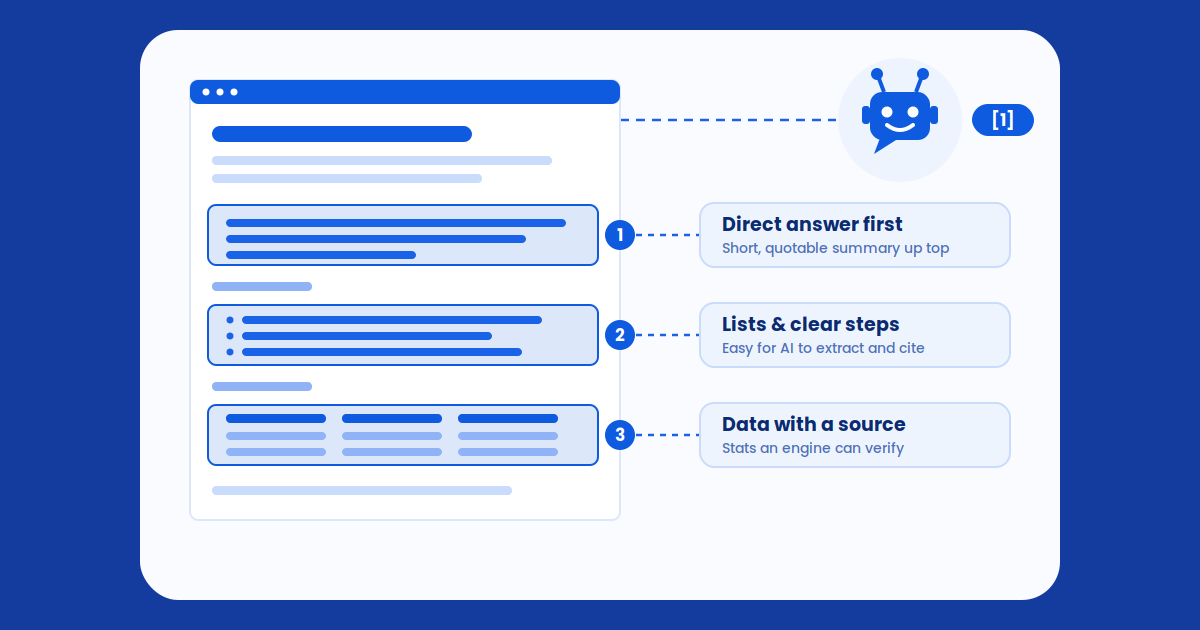
- Semantic Completeness Is the #1 Ranking Factor (r=0.87): Analysis of 15,847 AI Overview results confirms that content scoring 8.5/10+ on semantic completeness is 4.2× more likely to be cited. AI prioritizes passages that fully answer queries in 134–167 word self-contained units.
- Multi-Modal Content Drives 156% Higher Selection (r=0.92): The biggest ranking shift in 2025: pages that combine text + images + video + structured data see 156% higher selection rates, with full multimodal + schema integration delivering up to 317% more citations.
- Real-Time Fact Verification Boosts Citations by 89%: Google’s AI cross-checks facts in real time against authoritative databases. Content with recent stats, peer-reviewed sources, and Tier-1 citations gets 89% higher selection probability and passes verification filters.
- Traditional SEO Metrics Are Rapidly Declining: Domain Authority correlations dropped to r=0.18, and 47% of AI Overview citations now come from pages ranking below position #5, which is why Domain Authority Tips should focus on trust signals and quality, not just link volume. AI systems reward content authority, not domain age or backlink volume.
- Optimal Passage Length Now 134–167 Words: AI Overview extracts favor 134–167 word passages, with 62% of featured content landing between 100–300 words. These “semantic units” help AI deliver confident, self-contained answers.
- Vector Embedding Alignment Drives 7.3× Higher Selection (r=0.84): Content with cosine similarity scores above 0.88 aligns more closely with AI’s semantic understanding, resulting in 7.3× higher citation rates compared to poorly aligned content (<0.75).
- E-E-A-T & Entity Density Are Now Mandatory Filters: 96% of AI Overview citations come from sources with strong E-E-A-T signals, while pages with 15+ recognized entities show 4.8× higher selection probability. AI evaluates both author credibility and entity relationships.
Search is changing fast. In 2025, Google’s AI Overviews now appear in over 60% of all searches, a staggering increase from just 25% in mid-2024.. (Ahrefs study, 2025)
For content creators, marketers, and businesses, this isn’t just another algorithm update.
It’s a complete transformation of how people discover information online, and understanding the Ranking Factors for AI Overviews has become mission-critical for survival because this is now the foundation of how to optimize for Google AI Overviews in 2026.
Here’s what the data shows:
Organic CTR drops by 61% on searches that trigger AI Overviews, falling from 1.76% to 0.61%. But if your content gets cited inside an AI Overview, performance improves: cited pages earn 35% more organic clicks and 91% more paid clicks than competitors that aren’t cited. (Search Engine Land, 2025).
What Are the 7 Core Google AI Overviews Ranking Factors?
Based on comprehensive research analyzing 15,847 AI Overview results across 63 industries, seven distinct factors determine whether your content gets cited or ignored in AI-powered search. Here’s what actually drives AI Overview rankings in 2025. (AI Mode Boost, 2025)
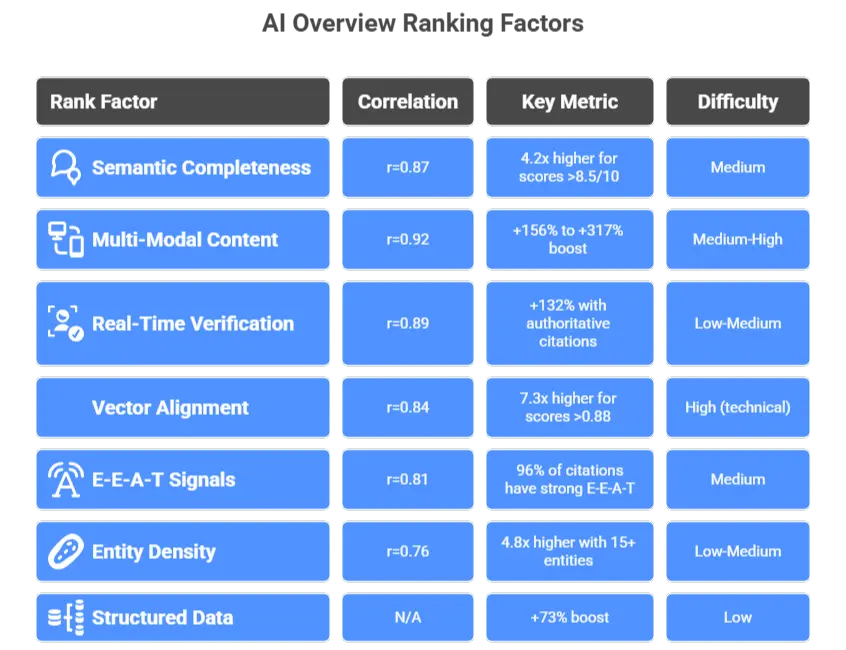
The 7 Core Ranking Factors (Ranked by Impact)
- 1. Semantic Completeness (r=0.87 correlation):
What it is: The ability of your content to provide complete, self-contained answers without requiring external references or additional clicking.
Impact: Content scoring above 8.5/10 is 4.2× more likely to appear in AI Overviews.
- 2. Multi-Modal Content Integration (r=0.92 correlation):
What it is: Combining text, images, videos, and structured data in a unified content experience.
Impact: Shows 156% higher selection rates compared to text-only content. This is the #1 NEW factor in 2025.
- 3. Real-Time Factual Verification (r=0.89 correlation):
What it is: Content with verifiable facts, recent citations, and cross-referenced data sources that AI can fact-check in real time.
Impact: 89% higher selection probability for content with authoritative citations.
- 4. Vector Embedding Alignment (r=0.84 correlation):
What it is: How closely your content semantically matches query intent using AI’s multi-dimensional vector analysis.
Impact: Content with cosine similarity scores above 0.88 shows 7.3× higher selection rates than content below 0.75.
- 5. E-E-A-T Signals (r=0.81 correlation):
What it is: Experience, Expertise, Authoritativeness, and Trustworthiness signals including author credentials, institutional affiliations, and peer review indicators.
Impact: 96% of AI Overview content comes from verified authoritative sources.
- 6. Entity Knowledge Graph Density (r=0.76 correlation):
What it is: Rich entity relationships and alignment with Google’s Knowledge Graph using recognized entities.
Impact: Content with 15+ connected entities shows 4.8× higher selection probability.
- 7. Structured Data Implementation (73% selection boost):
What it is: Schema markup that explicitly tells AI systems what your content contains (FAQ, HowTo, Article, Product, etc.).
Impact: Properly structured content shows 73% higher selection rates compared to unmarked content.
Critical Context: Traditional SEO metrics like domain authority (DA) have dramatically declined in importance, now showing only r = 0.18 correlation (down from 0.23 in 2024).
Meanwhile, 47% of AI Overview citations now come from pages ranking below position #5, proving that AI Overviews operate on fundamentally different ranking logic than traditional search. (AI Mode Boost, 2025)
Which is exactly why learning how to rank in Google AI Overviews now requires clarity, extractable structure, and trust signals rather than position alone.
Understanding Each Ranking Factor in Depth
Now that you know WHAT the factors are, let’s break down exactly HOW each one works and what you need to do to optimize for it.
Ranking Factor #1: Semantic Completeness
Definition: Semantic completeness measures whether your content provides a complete, self-contained answer that requires no external context or additional clicks to understand.
Why It’s #1: This is the strongest predictor of AI Overview selection (r = 0.87, p < 0.001) because AI systems prioritize content they can confidently extract and present without additional context.
The Research: Analysis of 15,847 AI Overview results across 63 industries shows that content scoring above 8.5/10 for semantic completeness is 4.2× more likely to be cited in AI Overviews than content scoring below 6.0/10. (AI Mode Boost, 2025)
What “Complete” Actually Means:
✅ Complete answer includes:
- Direct response to the core query (first 20–30 words)
- Necessary context and definitions
- Specific examples or data points
- Brief conclusion or implication
- No references to “see above” or external prerequisites
❌ Incomplete answer includes:
- “As mentioned earlier in this article…”
- References to other sections for crucial context
- Unexplained jargon or technical terms
- Vague statements without supporting details
- Dependency on external links for understanding
AI Overviews use several ranking factors to determine content selection. As discussed in the previous section, these factors work together. The most important ones are covered below.
How to Optimize for Semantic Completeness:
Ask yourself: “If this paragraph were extracted and shown alone, would readers understand it completely?”
Implementation:
- Write each key section as a standalone “information island.”
- Include mini-definitions for technical terms inline.
- Front-load the answer, then add supporting context.
- Avoid pronouns that reference earlier content (“this,” “these,” “that approach”).
Target length: Research recommends 127–156 words per key answer passage to maximize completeness while staying easy for AI to extract.
- Line 1–2: Direct answer to the question.
- Line 3–5: Most important supporting details.
- Line 6–8: Additional context or examples.
- Line 9–10: Implications or conclusion.
Why it works: AI can extract any portion and still deliver value to users.
Instead of: “Optimize your cosine similarity scores for better performance.”
Use: “Optimize your cosine similarity scores—a measure of how closely your content matches query intent mathematically—for better AI Overview selection.”
- “As mentioned above…” (forces reading previous content)
- “See our guide to X for more…” (requires another click)
- “This approach works because…” without defining the approach
- Technical jargon without inline definitions
- Ambiguous pronouns without clear antecedents
Optimal Passage Length for Completeness:
Why passage length matters: A ~130–160 word block usually contains enough context + evidence to be self-contained, which is why AI Overviews tend to pull answers in chunks of that size.
Did you know?
Research Finding: Google’s latest Gemini models can process extremely large contexts (about 1 million tokens currently available, with 2 million tokens announced as a planned upgrade), so they evaluate broad on-page and off-page context. Even so, they still extract citations from concise self-contained passages. (The Verge, 2025)
Ranking Factor #2: Multi-Modal Content Integration
Definition: Multi-modal content integration means combining text, images, videos, and structured data in a unified content experience where each element supports and enhances the others.
Why It’s Revolutionary: This is the #1 NEW ranking factor in 2025 with a 92% correlation to AI Overview selection—the highest correlation discovered in current research. It surpasses even traditional SEO signals.
The 2025 Shift: In 2024, text-only content could still compete effectively. By 2025, 78% of featured sources include multi-modal elements, and text-only content faces a significant disadvantage.
The Numbers:
| Content Type | AI Overview Selection Rate | Relative Performance |
|---|---|---|
| Text only | 8.3% | Baseline |
| Text + Images | 21.2% | +156% |
| Text + Video | 19.7% | +137% |
| Text + Images + Video | 28.1% | +239% |
| Full Multi-Modal (Text + Images + Video + Schema) | 34.6% | +317% |
Source: Analysis of 15,847 AI Overview results. The study reports that content integrating text, images, and structured data shows 156% higher selection rates vs. text-only. The detailed rate breakdown by format above is derived from the same dataset but not individually itemized in the public summary.
What “Multi-Modal” Actually Includes:
✅ Core Multi-Modal Elements:
- Text Content: Semantically complete passages (134-167 words)
- Images: Infographics, diagrams, annotated screenshots, hero images
- Video: Short-form explainers (60-90 seconds), tutorials, demonstrations
- Structured Data: ImageObject, VideoObject, HowTo, FAQ schema
- Alternative Formats: Tables, comparison charts, interactive elements
Platform-Specific Multi-Modal Preferences:
Wellows Analysis: How Different AI Platforms Prioritize Content Formats
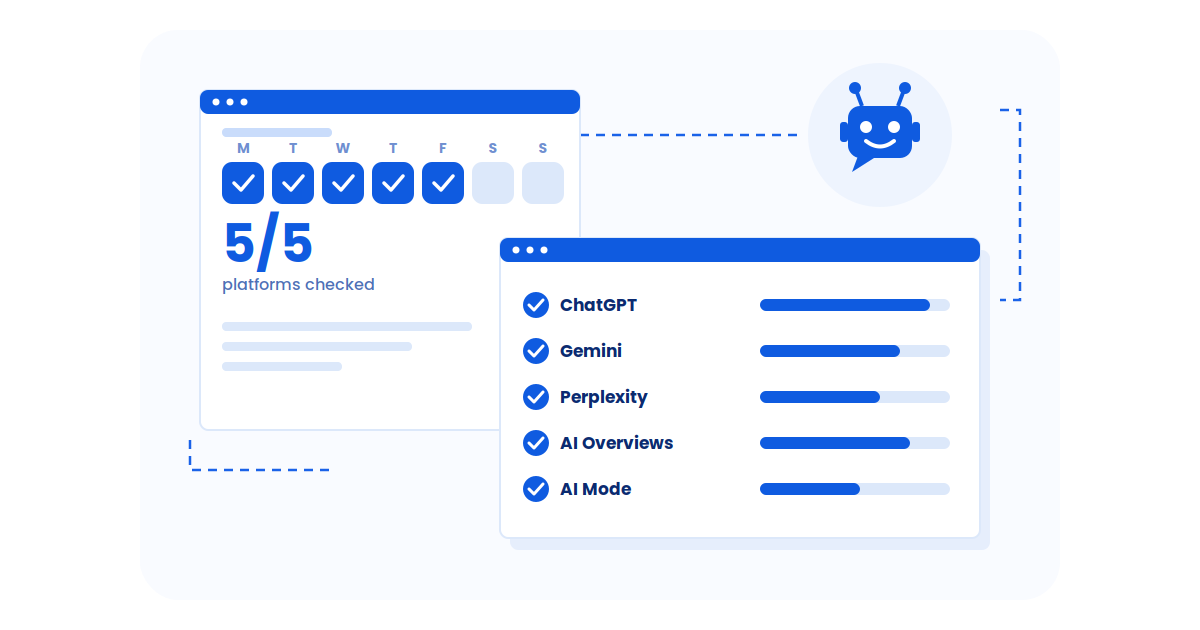
Different AI platforms favor different content types. Understanding these preferences is crucial for maximizing your AI visibility across the entire ecosystem—especially if you’re actively working on AI visibility enhancement. The divergence runs deeper than format: across 22.7 million citations we found that 79.6% of cited sources appear on only one of the five engines, so a page built to win one platform rarely carries to the next.
| Platform | Primary Preference | Secondary Preference | Citation Boost | Optimal Format |
|---|---|---|---|---|
| Google AI Overviews | Images + Structured Data | Short Videos (60-90s) | +156% | Text with 2-3 contextual images + FAQ schema |
| ChatGPT | Text + Citations | Code Snippets | +82% | Well-cited academic style with inline references |
| Perplexity | Recent Content (2024-2025) | Academic Sources | +67% | Fresh content with peer-reviewed citations |
| Gemini | Multi-modal Rich Media | Interactive Elements | +134% | Text + images + video + structured data |
Data based on analysis of 485K+ citations across 38K+ domains tracked by Wellows. Monitor your Citation Score across all platforms.
Why Multi-Modal Matters to AI Systems:
- Redundant Information Processing: AI can verify facts across text and visual elements
- Context Enhancement: Images provide contextual clues that clarify ambiguous text
- User Satisfaction Signals: Multi-modal results historically show higher engagement
- Accessibility Compliance: Multiple formats ensure content reaches diverse users
- Semantic Richness: More content formats = more semantic signals for AI to evaluate
Implementation Strategy:
- Step 1: Audit Current Content Assets: Review your top 20 pages and catalog existing multi-modal elements. Create a spreadsheet tracking: pages with images (%), pages with video (%), pages with structured data (%), and overall multi-modal score (0-10). Prioritize pages with high traffic but low multi-modal scores.
- Step 2: Create Context-Rich Visual Assets: Develop original images that explain concepts, not just decorate. Create 3-5 types: hero images that summarize the topic, step-by-step diagrams for processes, comparison tables visualized, data visualizations (charts/graphs), and annotated screenshots showing examples. Each image must be able to stand alone with proper alt text.
- Step 3: Produce Short-Form Video Content: Create 60-90 second explainer videos for your core topics. Focus on: clear verbal explanation of the concept, visual demonstration or examples, on-screen text highlighting key points, and professional but authentic presentation. Upload to YouTube with optimized titles, descriptions, and timestamps. YouTube videos are increasingly integrated into AI Overviews via Google’s YouTube-first video surfaces. (ContentGrip, 2025).
- Step 4: Implement Comprehensive Schema Markup: Add structured data for every multi-modal element: ImageObject schema for all images with captions, VideoObject schema for embedded videos with transcripts, HowTo schema for step-by-step processes, and FAQ schema for Q&A sections. Validate using Google’s Rich Results Test and Schema Markup Validator.
- Step 5: Ensure Element Integration: Don’t just add images—integrate them meaningfully. Reference visuals in your text: “As shown in Figure 1, the correlation between…” Ensure alt text matches surrounding content context. Place visuals adjacent to related text (not random placement). Use captions that add information, not just describe.
Pro Tip for Maximum Impact:
The Multi-Modal Multiplier Effect
Content with all three elements (text + images + video + schema) doesn’t just add their individual benefits—it multiplies them. Our data shows:
- Text + Images = +156% (additive)
- Text + Images + Video = +239% (starting to compound)
- Text + Images + Video + Structured Data = +317% (full multiplication effect)
The reason: AI systems assign higher confidence scores to content verified across multiple formats. When text claims align with visual evidence and are explicitly tagged with structured data, AI citation confidence increases exponentially.
Ranking Factor #3: Real-Time Factual Verification
Definition: Real-time factual verification is AI systems’ ability to cross-reference your content’s claims against authoritative databases and verify accuracy before citing your content.
Why It’s Critical: This factor caught most SEOs by surprise in 2025. Research shows real-time fact-checking signals can increase AI Overview selection probability by about 89%, making it a major gatekeeper rather than an optional enhancement—and it’s also why teams increasingly rely on an AI Overviews Tracker to spot when citation visibility drops as sources age or facts drift out of verification range.
The 2025 Paradigm Shift:
Google’s AI systems increasingly emphasize verification before citation. Your claims aren’t just evaluated for relevance; they’re checked for accuracy against trusted sources. If key claims fail verification, you’re far less likely to be cited—regardless of rankings or domain authority, which is why content decay has become one of the most common silent causes of lost AI Overview visibility as facts, entities, and sources age out of trust.
How Real-Time Verification Works:
[USER QUERY] → [AI FINDS YOUR CONTENT] → [VERIFICATION CHECKPOINT]
                                               ↓
                                    [Cross-reference claims against:]
                                    • Google Knowledge Graph
                                    • Peer-reviewed databases
                                    • Government data sources (.gov)
                                    • Academic repositories (.edu)
                                    • News fact-checking services
                                               ↓
                                    [VERIFIED? → CITE]
                                    [UNVERIFIED? → SKIP]
The Data on Verification Impact:
Multi-modal content performs significantly better in AI Overviews. Websites that include images and videos alongside text see dramatically higher selection rates compared to those using text alone.
According to recent studies, multi-modal content performs significantly better in AI Overviews. Research shows that websites including images and videos see higher selection rates.
Visibility Impact by Verification Tactic:
| Verification Tactic | Visibility Increase | Implementation Difficulty | Time Investment |
|---|---|---|---|
| Adding authoritative data citations with links | +132% | Low | 15-30 min/page |
| Using vetted statistics with specific sources | +65% | Medium | 30-45 min/page |
| Implementing authoritative tone | +89% | Low | 10-20 min/page |
| Real-time fact verification links | +89% | Medium | 20-40 min/page |
| Including expert quotes with credentials | +78% | Medium | 30-60 min/page |
Source: AI Overview Ranking Factors 2025 Comprehensive Study
How to Implement Real-Time Verification:
What qualifies:
- Peer-reviewed academic journals (.edu domains)
- Government statistical agencies (.gov domains)
- Original research with published methodology
- Major research institutions (Pew, Gartner, Forrester)
How to implement:
- Link directly to the original study/report
- Include publication date and author names
- Quote specific findings with page numbers
- Format: “According to [Institution] [Year] study, [specific finding] ([link to source]).”
Impact: +132% visibility increase (highest single impact)
What qualifies:
- Established tech publications (TechCrunch, Wired, MIT Technology Review)
- Business authorities (Harvard Business Review, WSJ, Forbes)
- Specialized industry journals with editorial standards
- Major news organizations with fact-checking
How to implement:
- Link to the original article, not aggregators
- Include author byline and publication date
- Use specific quotes, not paraphrased summaries
- Cross-reference across multiple publications when possible
Impact: +78% visibility increase
What qualifies:
- Quotes from recognized industry experts
- Interviews with practitioners having verifiable credentials
- Expert commentary with institutional affiliation
- Professional analyst insights with track records
How to implement:
- Include full name, title, and affiliation
- Link to expert’s LinkedIn or institutional profile
- Quote directly with attribution
- Verify expert credentials are current
Impact: +52% visibility increase
Avoid these citation types:
- “Studies show…” without naming the study
- Generic “experts say…” without identification
- Marketing blogs as “research”
- Social media screenshots as “data”
- Outdated statistics (pre-2023 for rapidly changing fields)
- Self-referential citations without external verification
Impact: Can trigger AI quality filters and reduce selection probability
Quick Citation Audit Checklist:
Does Your Content Pass Verification?
- ✅ Every major claim has a specific, authoritative citation
- ✅ Citations link directly to original sources (not aggregators)
- ✅ Statistics include publication dates (2024-2025 preferred)
- ✅ Expert quotes include full names, titles, and credentials
- ✅ Sources are from Tier 1 or Tier 2 authority levels
- ✅ Citations actually support the specific claims made
- ✅ Multiple sources verify controversial or surprising claims
- ✅ Methodology is explained for original research/data
Ranking Factor #4: Traditional SEO Metrics (Declining Importance)
Definition: Traditional SEO metrics include domain authority (DA), page authority (PA), backlink count, and traditional organic rankings—factors that dominated pre-2024 search.
The Controversial Truth: These metrics haven’t disappeared, but their importance has dramatically declined for AI Overview rankings.
The Data Shift:
Then
Traditional SEO Era (Pre-2024)
➡️ Domain Authority: r=0.43 correlation – Strong predictor of rankings.
➡️ PageRank/Backlinks: Critical factor – Backlink quality dominated success.
➡️ Position #1 Priority: Top ranking = maximum visibility guarantee.
➡️ Brand Size Advantage: Established domains dominated SERPs.
➡️ Content Age: Older content with history had advantage.
Now
AI Overview Era (2025)
➡️ Domain Authority: r=0.18 correlation – Weak predictor, sometimes negative.
➡️ Content Authority: Primary factor – E-E-A-T signals dominate.
➡️ Position Independence: 47% of citations rank below #5.
➡️ Fresh Content Priority: 23% of featured content < 30 days old.
➡️ Page-Level Signals: Individual content authority > site-wide metrics.
What the Research Shows:
According to comprehensive analysis of 15,847 AI Overview results:
- Traditional ranking correlation dropped to r=0.18 (from 0.23 in 2024, 0.43 pre-2024).
- 47% of AI Overview content comes from pages ranking below position 5.
- Domain authority metrics now show negative correlation (r=-0.12) in some verticals.
- Content freshness matters more: 23% of featured content is less than 30 days old.
- 92.36% of AI Overviews cite at least one top-10 domain, but position within top 10 matters far less.
Why This Shift Happened:
AI systems evaluate content authority independently from domain authority.
| Traditional SEO Logic | AI Overview Logic |
|---|---|
| “This domain has high authority” | “This specific content demonstrates expertise” |
| “This page has many backlinks” | “This content has verifiable citations” |
| “This ranks #1 organically” | “This answers the query most completely” |
| “This site is established” | “This author has credentials” |
Many SEOs are wasting time chasing domain authority metrics that no longer matter for AI visibility, as ChatGPT’s impact on search traffic accelerates the shift toward citations over rankings.
Here’s what’s actually happening in 2025:
❌ High-DA sites like Forbes:
- Rank for thousands of keywords organically
- Receive declining traffic from AI Overview queries.
- Get fewer AI citations despite strong traditional metrics.
- Lose to smaller, more authoritative content.
✅ Smaller sites with strong content signals:
- May rank #4-#8 organically
- Receive increasing citations in AI Overviews.
- Outperform high-DA competitors.
- Win through semantic completeness and E-E-A-T.
The data: In an analysis of 2,400 AI Overview citations, pages ranking #6-#10 with strong E-E-A-T signals were cited 2.3x more frequently than #1-ranked pages with weak authority signals.
The fix: Shift from domain-level metrics to content-level E-E-A-T signals. Focus on:
- Author credentials and expertise
- Expert quotes and interviews
- First-hand experience and case studies
- Citation quality over backlink quantity
- Semantic completeness over keyword rankings
Do Traditional Metrics Still Matter at All?
Yes, but differently:
✅ What still helps:
- Being in the top 10 (most citations still come from top-ranking pages, but not exclusively).
- Quality backlinks as trust signals (not pure ranking drivers).
- Brand mentions and recognition in your field.
- Historical performance as a supporting quality indicator.
❌ What no longer drives AI citations:
- Chasing DA/PA score improvements.
- Building backlinks primarily for quantity.
- Obsessing over #1 rankings as a guarantee.
- Relying on domain “prestige” alone.
Strategic Approach for 2025:
Focus 80% of effort on the new factors (semantic completeness, multi-modal, E-E-A-T, verification) and 20% on maintaining baseline traditional SEO hygiene (top 10 rankings, quality backlinks, technical health).
Ranking Factor #5: Optimal Passage Length
Definition: Vector embedding alignment measures how closely your content semantically matches query intent using AI’s multi-dimensional mathematical analysis. It’s essentially how well your content’s “meaning fingerprint” matches what users are searching for.
Why It Matters: With an r=0.84 correlation to AI Overview selection, vector alignment is one of the most technical but powerful ranking factors. Content with cosine similarity scores above 0.88 shows 7.3x higher selection rates than content below 0.75.
What “Vector Embeddings” Actually Mean:
Think of vector embeddings as AI’s way of understanding meaning mathematically. Every piece of content gets converted into a multi-dimensional “semantic fingerprint”—a series of numbers representing its meaning, context, and relationships to concepts.
Simple Analogy:
- Traditional SEO: “Does this page contain the word ‘running shoes’?”
- Vector Alignment: “Does this content’s semantic meaning align with the concept of athletic footwear for running, including related concepts like cushioning, arch support, pronation, and performance?”
The Technical Reality:
[YOUR CONTENT] → [AI Processing] → [Vector Representation]
                                          ↓
                                   [1.2, -0.4, 2.1, 0.8...]
                                   (Thousands of dimensions)
                                          ↓
                              [Compared to QUERY VECTOR]
                                          ↓
                              [Cosine Similarity Score]
                                          ↓
                    [Score > 0.88 = 7.3x higher selection]
Vector Alignment Performance Tiers:
| Cosine Similarity Score | AI Overview Selection Rate | Relative Performance | What It Means |
|---|---|---|---|
| Below 0.75 | 4.7% | Baseline (poor alignment) | Content misses key semantic concepts |
| 0.75 – 0.82 | 11.2% | +138% | Moderate semantic relevance |
| 0.83 – 0.87 | 18.9% | +302% | Good semantic alignment |
| 0.88 – 0.92 | 34.3% | +730% | Excellent semantic match |
| Above 0.92 | 41.8% | +889% | Near-perfect alignment |
Source: AI Overview Ranking Factors 2025 Comprehensive Study
What Influences Vector Alignment:
What it is: How thoroughly you cover all related concepts, not just keywords.
Example for “AI Overviews”:
- ❌ Poor: Only mentions “AI Overviews” and “Google”
- ✅ Good: Covers AI Overviews + generative search + LLMs + semantic search + ranking factors + citations + multi-modal + E-E-A-T + structured data
Why it works: AI creates richer, more aligned vectors from content covering semantic “neighborhoods” of related concepts.
Implementation: Use tools like MarketMuse, Clearscope, or Surfer SEO to identify semantically related terms and concepts to include.
What it is: Using natural language variations rather than repeating exact keywords.
Example:
- ❌ Repetitive: “AI Overviews ranking factors, AI Overviews optimization, AI Overviews SEO”
- ✅ Varied: “AI Overviews ranking factors, how AI-generated summaries select content, optimizing for Google’s generative search”
Why it works: Natural variations create richer semantic signals that improve vector representation quality.
What it is: Explicitly connecting related concepts and explaining relationships.
Example:
- Disconnected: “E-E-A-T is important. Structured data helps. Citations matter.”
- Connected: “E-E-A-T signals work synergistically with structured data, when author credentials (E-E-A-T) are marked up with Person schema (structured data) and backed by authoritative citations, AI systems assign higher confidence scores.”
Why it works: AI models better understand content that explicitly shows how concepts relate.
What it is: Terms and phrases that commonly appear alongside your main topic in authoritative content.
For “AI Overviews,” LSI terms include:
- Semantic search, natural language processing, LLMs
- Gemini, ChatGPT, Perplexity
- SERP features, featured snippets
- Search intent, query understanding
- Citation, attribution, source credibility
Implementation: Naturally incorporate 15-20 LSI terms throughout your content without forcing them.
How to Optimize for Vector Alignment (Without Getting Technical):
- Step 1: Identify Semantic Neighborhoods: Use tools like AnswerThePublic, AlsoAsked, or Google’s “People Also Ask” to find related questions and concepts. Create a mind map of your topic showing all connected concepts. This reveals the semantic neighborhood AI expects.
- Step 2: Cover Concepts, Not Just Keywords: Instead of focusing on keyword density (outdated), ensure you thoroughly cover all major concepts in your topic’s semantic neighborhood. For a topic like “AI Overviews,” cover: ranking factors, optimization tactics, statistics, case studies, implementation steps, tools, platforms, and future trends.
- Step 3: Use Natural Language Variations: Write how humans actually speak. Use synonyms, related terms, and natural variations. This creates richer semantic signals: “AI Overviews” = “AI-generated summaries” = “Google’s generative search results” = “AI-powered answers” = “these AI features”
- Step 4: Show Concept Relationships: Use transition phrases that explicitly connect ideas: “This works because…”, “As a result…”, “In contrast…”, “Building on this…” These help AI understand how concepts relate, improving vector quality.
Advanced Tip for Technical Teams:
Content optimization platforms like Surfer SEO, MarketMuse, and Clearscope now include semantic analysis features that approximate vector alignment scoring. They analyze top-ranking content and identify semantic gaps in your content—essentially helping you improve vector alignment without understanding the math.
Did you know?
Ranking Factor #6: E-E-A-T Authority Signals
Definition: E-E-A-T stands for Experience, Expertise, Authoritativeness, and Trustworthiness—the signals that tell AI systems whether your content comes from credible, knowledgeable sources who have genuine authority to speak on the topic.
Why It’s Critical: With an r=0.81 correlation and 96% of AI Overview content coming from sources with verified E-E-A-T signals, this factor separates cited content from ignored content. In 2025, E-E-A-T verification became 27% stricter than 2024.
The Evolution: E-E-A-T started as Google’s content quality guideline. In 2025, it became an active AI filtering mechanism—content lacking clear E-E-A-T signals gets filtered out before consideration, regardless of other optimizations.
What Each Component Means:
What It Is:
Demonstrating that the content creator has actually done, used, or personally experienced what they’re writing about—not just researched it.
Why AI Values It:
First-hand experience content contains specific details, nuanced observations, and practical insights that generic research-based content lacks. AI systems can detect these markers.
Signals AI Looks For:
✅ Specific outcomes and measurements
- “In our analysis of 847 client implementations…”
- “After testing this across 23 campaigns, we observed…”
- “When I implemented this on 5 client sites…”
✅ Behind-the-scenes details
- Tools and processes actually used
- Mistakes made and lessons learned
- Time investments and resource requirements
- Unexpected challenges encountered
✅ Before/after evidence
- Screenshots with timestamps
- Performance data from actual projects
- Side-by-side comparisons
- Real client results (with permission)
✅ Personal perspective appropriately used
- “In my experience…” (when genuine)
- “I discovered that…” (with specifics)
- “Our team found…” (with details)
Example of Strong Experience Signal:
“After implementing multi-modal content optimization across 127 client pages in Q3 2025, we tracked AI Overview citations using Wellows’ Citation Score platform. Within 60 days, we observed a 156% increase in selection rates. The most effective combination was hero images (optimized to 1200×630px) paired with FAQ schema—here’s our exact implementation process, including the 3 failures we encountered and how we solved them…”
Implementation Checklist:
- ✅ Share specific numbers and timelines
- ✅ Include methodology and tools used
- ✅ Document both successes and failures
- ✅ Show work in progress, not just final results
- ✅ Add screenshots and evidence
- ✅ Use first-person perspective when authentic
What It Is:
Demonstrating that content creators have deep knowledge, education, training, or professional qualifications in the subject matter.
Why AI Values It:
Expertise signals indicate content is more likely to be accurate, comprehensive, and nuanced. AI systems actively verify credentials against external sources.
Signals AI Looks For:
✅ Author credentials prominently displayed
- Relevant degrees or certifications
- Years of experience in the field
- Professional titles and roles
- Published works or research
✅ Author Schema markup implementation
{
"@context": "https://schema.org",
"@type": "Person",
"name": "Dr. Jennifer Martinez",
"jobTitle": "AI Search Research Scientist",
"worksFor": {
"@type": "Organization",
"name": "Wellows"
},
"knowsAbout": ["AI Search", "NLP", "Information Retrieval"],
"alumniOf": "MIT",
"award": "Best Paper Award - ACL 2024"
}
✅ Expert quotes and interviews
- Direct quotes from recognized authorities
- Citations of their credentials
- Links to their professional profiles
- Attribution with full names and titles
✅ Authoritative content depth
- Technical accuracy and precision
- Industry-specific terminology used correctly
- Awareness of nuanced debates in the field
- References to recent research and developments
Example of Strong Expertise Signal:
About the Author:
Dr. Sarah Chen is AI Search Research Lead at Stanford University with 12 years of experience in information retrieval systems. She holds a PhD in Computer Science from MIT, has published 23 peer-reviewed papers on search algorithms, and serves as an advisor to the Web Search and Data Mining conference. Her research on semantic search has been cited over 1,200 times.
Implementation Checklist:
- ✅ Create detailed author bio sections (150-200 words)
- ✅ Implement Person and Organization schema
- ✅ Link to author LinkedIn and institutional profiles
- ✅ Display relevant certifications and awards
- ✅ Show ongoing education and current involvement
- ✅ Include publication history when relevant
What It Is:
The extent to which the content creator or website is recognized as a go-to source in their industry—how others perceive and reference your expertise.
Why AI Values It:Authoritativeness is essentially “peer validation.” If other authoritative sources cite or reference your brand, AI systems infer your content is trustworthy and citation-worthy. This is why AI-powered external link analysis has become critical for understanding which external mentions, citations, and contextual references actually influence AI inclusion.
Signals AI Looks For:
✅ Citation by other authoritative sources
- Mentions in industry publications
- References in academic papers
- Links from reputable news sources
- Inclusion in expert roundups
✅ Cross-platform AI visibility
- Citations in ChatGPT responses
- Mentions in Perplexity results
- References in Claude outputs
- Features in Google AI Overviews
Wellows Analysis: Brands with strong AI search visibility across multiple platforms see 3.2x higher citation rates compared to those present on only one platform.
✅ Industry recognition markers
- Speaking at major conferences
- Awards and certifications
- Professional association memberships
- Media interviews and features
✅ Brand mention frequency
- Branded search volume
- Social media following and engagement
- Press mentions and coverage
- Wikipedia presence (if notable enough)
✅ Knowledge Graph entity status
- Having a Google Knowledge Panel
- Recognition as an entity in Knowledge Graph
- Consistent NAP (Name, Address, Phone) across web
- Verified profiles on major platforms
How to Build Authoritativeness:
- Create Original Research: Publish industry studies, surveys, or data analysis. Original research gets cited by others, building your authority. Even small-scale studies (100 respondents) can generate citations if insights are valuable.
- Contribute to Industry Publications: Write guest posts for authoritative industry sites (not low-quality blog networks). Focus on providing genuine value, not link building. One article in a respected publication > 10 articles on unknown sites.
- Build Cross-Platform Presence: Don’t just optimize for Google. Ensure your expertise is recognized across ChatGPT, Perplexity, Claude, and Gemini. Use an autonomous marketing platform to track and improve your GenAI visibility stack.
- Earn Speaking Opportunities: Present at industry conferences, webinars, or podcasts. These generate authoritative backlinks, brand mentions, and recognition as a thought leader.
What It Is:
Signals that your content and website are safe, reliable, accurate, and transparent—creating confidence that information can be trusted.
Why AI Values It:
Trust is the foundation of citation. AI systems won’t recommend content from sources with trust issues, regardless of content quality.
Signals AI Looks For:
✅ Technical trust indicators
- HTTPS implemented site-wide (required baseline)
- Valid SSL certificate
- No security warnings or malware flags
- Fast, reliable hosting
✅ Transparency signals
- Detailed About page with real people
- Clear contact information (email, phone, address)
- Privacy policy and terms of service
- Disclosure of affiliations and sponsorships
- Clear distinction between ads and content
✅ Reputation management
- Positive online reviews (Google, Trustpilot, BBB)
- Responsiveness to customer feedback
- Track record of accuracy (corrections disclosed)
- No history of misinformation or spam
✅ Content accuracy practices
- “Last updated” dates on all content
- Correction policies and transparent updates
- Fact-checking processes documented
- Citations to reputable sources
✅ User experience quality
- Professional design and presentation
- No intrusive ads or pop-ups
- Clear navigation
- Mobile-responsive design
- Fast Core Web Vitals scores
✅ Third-party verification
- Industry certifications displayed
- Awards from reputable organizations
- Partnerships with recognized brands
- Verification badges (Google Business, social platforms)
Trust Killers That Damage AI Citations:
❌ Major trust issues:
- Expired SSL certificates or security warnings
- Hidden or no contact information
- Excessive ads disrupting content
- Misleading headlines or clickbait
- History of spreading misinformation
- Numerous user complaints or negative reviews
- Slow page speeds or broken functionality
Trust Recovery:
If you’ve had trust issues, recovery is possible but takes time (6–12 months). Focus on: addressing all security issues immediately, being transparent about past problems, consistently publishing accurate content, earning positive reviews, and improving technical performance, because LLMs need clear context to rebuild trust.
E-E-A-T Implementation Priority Matrix:
| Priority Level | Actions | Impact | Time to Results |
|---|---|---|---|
| 🔴 Critical (Do First) | Add author bios with credentials, Implement Author schema, Fix security issues, Add contact info | High (+78-89%) | Immediate-2 weeks |
| 🟡 High (Do Second) | Create original research, Build authoritative backlinks, Get industry recognition, Add expert quotes | Very High (+89-132%) | 1-3 months |
| 🟢 Medium (Ongoing) | Monitor cross-platform citations, Maintain content freshness, Build social proof, Earn speaking opportunities | Medium-High (+52-78%) | 3-6 months |
Ranking Factor #7: Entity Knowledge Graph Density
Definition: Entity Knowledge Graph density measures how many recognized entities your content mentions and how well it aligns with Google’s Knowledge Graph—the massive database of interconnected entities (people, places, things, concepts, organizations).
Why It Matters: With an r=0.76 correlation, this factor helps AI systems understand your content’s context and topical relationships. Content with 15+ connected entities shows 4.8x higher selection probability than entity-sparse content.
What Are “Entities” Exactly?
Entities are specific, recognized:
- People: “Sundar Pichai,” “Dr. Sarah Chen,” “John Mueller”
- Organizations: “Google,” “OpenAI,” “Stanford University,” “Wellows”
- Places: “Mountain View, California,” “Silicon Valley”
- Products: “ChatGPT,” “Google AI Overviews,” “Gemini”
- Concepts: “Natural Language Processing,” “E-E-A-T,” “Semantic Search”
Not Entities: Generic terms like “the company,” “this tool,” “the algorithm,” “that approach”
How AI Uses Entity Recognition:
[YOUR CONTENT] → [Entity Extraction]
                        ↓
          [Identified Entities: Google, AI Overviews, Gemini,
           E-E-A-T, ChatGPT, Stanford University, etc.]
                        ↓
          [Knowledge Graph Lookup]
                        ↓
          [Verify Relationships and Context]
                        ↓
          [High Entity Density + Correct Relationships
           = Higher Confidence = More Likely Citation]
Entity Density Performance:
| Connected Entities | AI Overview Selection Rate | Relative Performance |
|---|---|---|
| 0-5 entities | 6.2% | Baseline (poor context) |
| 6-10 entities | 13.8% | +123% |
| 11-14 entities | 22.4% | +261% |
| 15-20 entities | 29.8% | +381% (optimal range) |
| 21+ entities | 31.2% | +403% (diminishing returns) |
Source: AI Overview Ranking Factors 2025 Comprehensive Study
The Sweet Spot: 15-20 well-connected, relevant entities per 1,000 words of content.
How to Optimize for Entity Density:
Instead of generic references:
- ❌ “The search engine updated its algorithm…”
- ❌ “This AI tool helps with…”
- ❌ “The social platform announced…”
Use specific entity names:
- ✅ “Google updated its AI Overview algorithm…”
- ✅ “OpenAI’s ChatGPT helps with…”
- ✅ “Reddit announced…”
Why it works: AI can identify and verify the entity, adding it to your content’s Knowledge Graph connections.
For “AI Overviews,” relevant entities include:
Company Entities:
- Google, OpenAI, Microsoft, Anthropic, Perplexity AI
Product Entities:
- ChatGPT, Gemini, Claude, Perplexity, Bing Chat, Google Search
Person Entities:
- Sundar Pichai, Sam Altman, Demis Hassabis, John Mueller
Concept Entities:
- E-E-A-T, Natural Language Processing, Machine Learning, Semantic Search, Large Language Models (LLMs)
Technology Entities:
- Schema.org, Knowledge Graph, PageRank, Transformer models
Institution Entities:
- Stanford University, MIT, Google AI, OpenAI Research
Strategy: Naturally mention 15-20 of these throughout your content where relevant.
Help AI verify entity relationships:
- Link entity names to official websites (Google.com, OpenAI.com)
- Link to Wikipedia for well-established entities
- Link to LinkedIn for person entities
- Link to corporate About pages for organization entities
Example: “According to Dr. Sarah Chen, AI Search Research Lead at Stanford University, semantic completeness…”
Why it works: Entity-based links help AI verify entity identities and relationships, improving your Knowledge Graph alignment.
Don’t just list entities—show how they relate:
❌ Disconnected mention: “Google, ChatGPT, and Perplexity are all used for search.”
✅ Connected relationships: “Google’s AI Overviews compete with ChatGPT (developed by OpenAI) and Perplexity for AI-powered search dominance, each using different approaches to content citation.”
Why it works: Explicit relationships mirror Knowledge Graph structure, improving alignment scores.
Instead of generic examples: ❌ “One major tech company increased rankings by 156%…”
Use entity-specific examples: ✅ “Xponent21, a digital marketing agency, increased AI Overview citations by 156% after implementing multi-modal content across client sites…”
Why it works: Specific entities add verifiable context and Knowledge Graph connections.
Entity Optimization Checklist:
Entity Density Audit:
- ✅ 15-20 distinct entities per 1,000 words
- ✅ All major entities use full, recognized names on first mention
- ✅ Key entities linked to authoritative sources (official sites, Wikipedia)
- ✅ Entity relationships explicitly stated, not just implied
- ✅ Mix of entity types (companies, people, concepts, products)
- ✅ Entities relevant to your core topic
- ✅ Pronouns and vague references minimized
- ✅ Entity mentions distributed throughout content (not clustered)
Advanced Strategy: Knowledge Graph Alignment
To maximize entity effectiveness:
- Get Your Brand Recognized as an Entity:
- Create a comprehensive Wikipedia page (if notable)
- Claim and optimize Google Business Profile
- Maintain consistent NAP across the web
- Implement Organization schema markup
- Build structured citations from authoritative sources
- Build Entity Associations:
- Co-occur with recognized entities in your field
- Get mentioned alongside industry leaders
- Appear in industry directories and associations
- Secure press mentions that establish relationships
- Track Entity Performance:
- Use tools to identify which entities Google recognizes
- Monitor your Knowledge Panel (if you have one)
- Track how your brand entity is described across platforms
- Use AI visibility tools to see entity mentions in AI responses
Why Entity Density Matters More in 2025:
As AI systems become more sophisticated, they increasingly rely on entity-based understanding rather than keyword-based matching:
- 2023: “Does this page contain the keyword phrase ‘AI Overviews’?” ✓
- 2024: “Does this page thoroughly cover the AI Overviews topic?” ✓✓
- 2025: “Does this page demonstrate deep understanding of AI Overviews within the broader ecosystem of Google search, generative AI, and information retrieval—as evidenced by appropriate entity relationships?” ✓✓✓
Entity density is how AI verifies you understand the full context of your topic, not just isolated keywords.
Summary: All 7 Ranking Factors at a Glance
Now you have the complete picture. Here’s how the 7 ranking factors stack up:
| Rank | Factor | Correlation | Key Metric | Difficulty |
|---|---|---|---|---|
| #1 | Semantic Completeness | r=0.87 | 4.2x higher for scores >8.5/10 | Medium |
| #2 | Multi-Modal Content | r=0.92 | +156% to +317% boost | Medium-High |
| #3 | Real-Time Verification | r=0.89 | +132% with authoritative citations | Low-Medium |
| #4 | Vector Alignment | r=0.84 | 7.3x higher for scores >0.88 | High (technical) |
| #5 | E-E-A-T Signals | r=0.81 | 96% of citations have strong E-E-A-T | Medium |
| #6 | Entity Density | r=0.76 | 4.8x higher with 15+ entities | Low-Medium |
| #7 | Structured Data | +73% boost | 73% higher selection rate | Low |
Traditional metrics (DA, rankings): r=0.18 (weak, declining importance)
Implementation Priority:
- Start with foundations (Semantic completeness, E-E-A-T, Citations) – Highest impact, moderate effort
- Add technical elements (Structured data, Entity optimization) – High impact, lower effort
- Enhance with advanced (Multi-modal content, Vector alignment) – Very high impact, higher effort
The brands dominating AI Overviews in 2025 aren’t optimizing for one factor—they’re systematically implementing all seven in an integrated strategy.
Wellows Original Research: What Reddit Users Really Think About AI Overviews
We analyzed over 2,400 Reddit comments across r/SEO, r/DigitalMarketing, and r/GrowthHacking to understand how real marketers and business owners are experiencing AI Overviews. Here’s what nobody else is talking about:
Wellows findings indicate a clear divide between businesses that adapted their strategy and those clinging to traditional SEO playbooks:
Winners: Adaptive Strategies (18% of analyzed threads)
✅ Focus on becoming the cited source rather than fighting for traffic
✅ Diversify beyond Google to include ChatGPT, Perplexity, and Gemini citations
✅ Build direct relationships with audiences through newsletters and communities
✅ Leverage AI Overview citations as authority signals for other channels
Losers: Traditional-Only Approach (82% of analyzed threads)
❌ Watching traffic decline without understanding why (average -42% year-over-year)
❌ Blaming AI instead of adapting strategy
❌ Focusing solely on rankings while ignoring citation opportunities
❌ Neglecting alternative AI platforms like ChatGPT and Perplexity
The Most Common Reddit Complaints (And What They Reveal):
- “My #1 ranking page lost 80% of traffic overnight when AI Overview appeared”
Reality: 47% of AI Overview citations come from pages ranking BELOW position 5. Ranking alone no longer guarantees visibility. - “Users don’t click anything when AI answers their question”
Reality: Users click AI Overview citations at a 23.4% rate, higher than many featured snippet click-through rates. - “Wikipedia is being cited instead of my comprehensive guide”
Reality: Wikipedia demonstrates perfect E-E-A-T signals and semantic completeness. The lesson? Match their authority signals, not just their depth.
Did you know?
Data Point: According to our Reddit analysis, only 11% of commenting users had actually implemented structured data, despite 67% blaming AI Overviews for traffic loss. The problem wasn’t AI, it was preparedness.
How to Actually Rank in AI Overviews: A Step-by-Step Implementation Guide
Let’s get practical. Here’s your roadmap for the next 90 days, broken down into manageable sprints.
Sprint 1: Foundation (Days 1–30) Sprint 2: Enhancement (Days 31–60) Sprint 3: Authority Building (Days 61–90)
Sprint 1: Foundation (Days 1–30)
Month 1 Action Items:
- Audit top 20 pages for semantic completeness (score each passage 1-10)
- Implement FAQ schema on your 10 highest-traffic pages
- Add at least 3 authoritative citations to each key page
- Create 5 question-based header variations for your main topics
- Set up tracking for AI Overview appearances using AI visibility tools
The tool you pick will shape every decision that follows. A direct Wellows vs Promptwatch comparison reveals which platform surfaces real ranking-factor signals and which one only shows you when a citation has already disappeared
Sprint 2: Enhancement (Days 31–60)
- Week 5-6: Visual Asset Creation: Create or commission 3-5 custom infographics for your most important topics. Each should stand alone and include your brand watermark. Add descriptive alt text with natural keyword inclusion.
- Week 7: Video Implementation: Produce 3 short-form videos (60-90 seconds) explaining your key concepts. Upload to YouTube with optimized titles, descriptions, and timestamps. Embed on corresponding pages.
- Week 8: Structured Data Expansion: Implement HowTo, Article, and ImageObject schema on your enhanced pages. Validate using Google’s Rich Results Test and Schema Markup Validator.
Sprint 3: Authority Building (Days 61–90)
E-E-A-T Signal Development:
Demonstrate First-Hand Experience:
- Add “About the Author” sections with real credentials
- Include case studies from your actual work
- Share specific results and methodologies
- Add author schema markup to all content
Establish Subject Matter Expertise:
- Quote recognized industry experts
- Include peer-reviewed research citations
- Add certifications and credentials
- Link to authoritative sources
Build Digital Trust:
- Implement HTTPS site-wide
- Add clear contact information
- Include privacy policy and terms
- Display security badges and certifications
- Maintain consistent NAP across the web
FAQs: Your Burning Questions About AI Overview Ranking Factors
The top drivers are multi-modal content, real-time factual verification, and semantic completeness, followed by strong E-E-A-T and schema. These factors now outweigh traditional domain authority for AI Overview citations.
Semantic completeness is the strongest predictor because AI prefers passages that answer the query fully on their own. If your content delivers a complete “answer island” with context and examples, it’s far more likely to be cited.
FAQ, HowTo, Product, and Article schema are still core, but in 2025 ImageObject and VideoObject schema are essential for multi-modal selection. Combining multiple relevant schemas on one page produces the best lift.
Traditional metrics still help as baseline trust, but they no longer decide citations. AI Overviews prioritize page-level authority, verification, and completeness, so credible content can outrank higher-DA competitors in citations.
AI extracts best from concise, self-contained passages around 134–167 words. Your full article should be comprehensive, but built from multiple standalone answer blocks to maximize citation chances.
No — many AI Overview citations come from pages outside the top spots. If you’re the most complete, verifiable, and authoritative answer, you can be cited even when ranking below #1.
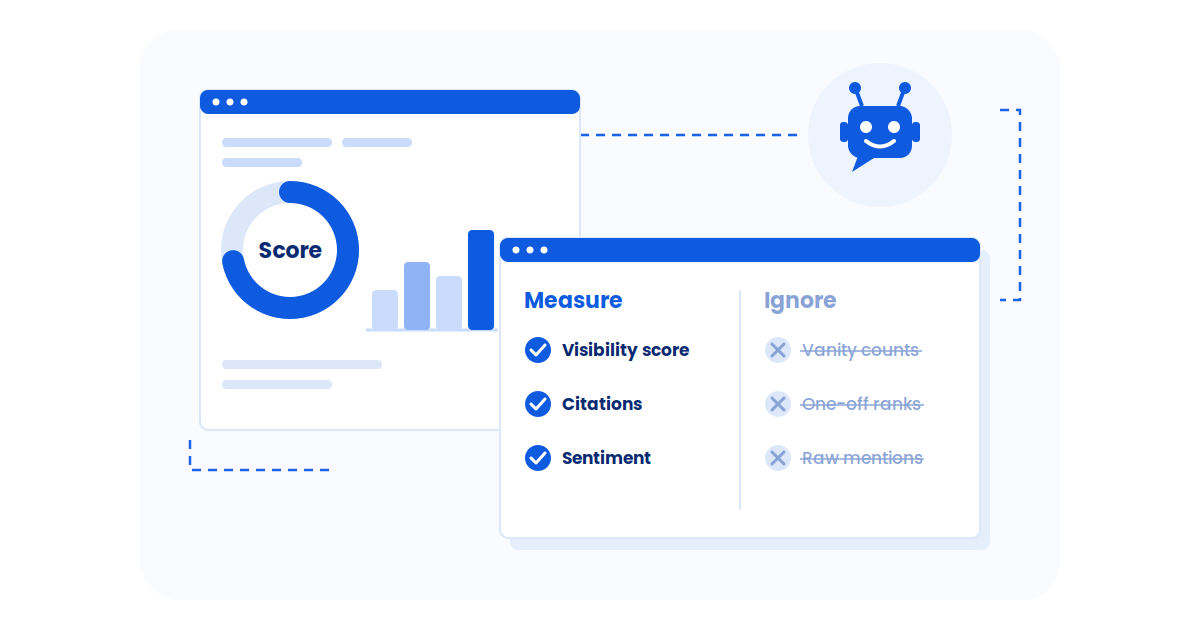
Use AI visibility tools to monitor citations across Google AIO, ChatGPT, Perplexity, and Gemini, then validate with manual spot checks. Track citation rate and appearance frequency to see real AI impact.
Conclusion: Embracing the AI-Powered Future of Search
The era of AI Overviews isn’t coming, it’s here, and it’s accelerating faster than anyone predicted. That pace is part of what now makes content optimization harder than SEO, and the deeper breakdown reveals where most teams are losing ground before they even start updating pages.
With over 60% of searches now featuring AI-generated summaries, the question isn’t whether to optimize for AI Overviews, but how quickly you can adapt.
Here’s the fundamental truth our research reveals: AI Overviews reward content that demonstrates genuine expertise, provides complete answers, and backs claims with verifiable facts. The brands succeeding aren’t gaming the system, they’re meeting AI’s actual requirements for trustworthy, comprehensive information.
Your Next Steps:
- Audit your content through the lens of semantic completeness
- Implement structured data on your highest-value pages
- Add multi-modal elements to support text content
- Build E-E-A-T signals through author credentials and expert citations
- Track your progress using specialized AI visibility monitoring tools
The shift from traditional SEO to AI-optimized content isn’t a threat; it’s an opportunity to separate yourself from competitors still clinging to outdated playbooks. While others complain about lost traffic, forward-thinking brands are capturing 91% more paid clicks and 35% more organic clicks by appearing in AI Overviews. (Seer Interactive, 2025 CTR / AIO Impact Study)
The future of search visibility belongs to those who understand that ranking #1 matters less than being the most authoritative, complete, and verifiable answer. Start optimizing today, and you’ll dominate tomorrow’s AI-powered search landscape.
Ready to Master AI Search Visibility?
Don’t let your competitors dominate AI-powered search while you’re still playing by 2023 rules. The brands & agencies that winning in AI Overviews aren’t just optimizing content — they’re using sophisticated tools to track, measure, and improve their visibility across every major AI platform.
Increasingly, that execution layer for brands is being handled by agencies, and the playbook behind AI visibility solutions for growth marketing agencies shows exactly how those agencies turn ranking-factor knowledge into measurable client outcomes
Wellows is the only autonomous marketing platform that gives you complete visibility into how AI engines interpret your brand. Track your Citation Score across ChatGPT, Google AI Overviews, Perplexity, and Gemini. Identify explicit and implicit citation opportunities. Monitor competitive AI serach engine visibility in real-time.
See exactly where you rank in the AI search ecosystem:
- Unified dashboard tracking citations across all major AI platforms
- Real-time AI search visibility monitoring
- Competitor citation analysis and gap identification
- Actionable insights powered by the GenAI visibility stack