For the past two decades, SEO (Search Engine Optimization) has been the backbone of digital visibility. Businesses competed to secure top rankings on Google and Bing by optimizing text: keywords, on-page signals, backlinks, and structured data. But in 2024 and beyond, the rules have fundamentally changed, as Generative Engine Optimization (GEO) reshapes how brands are discovered through AI engines.
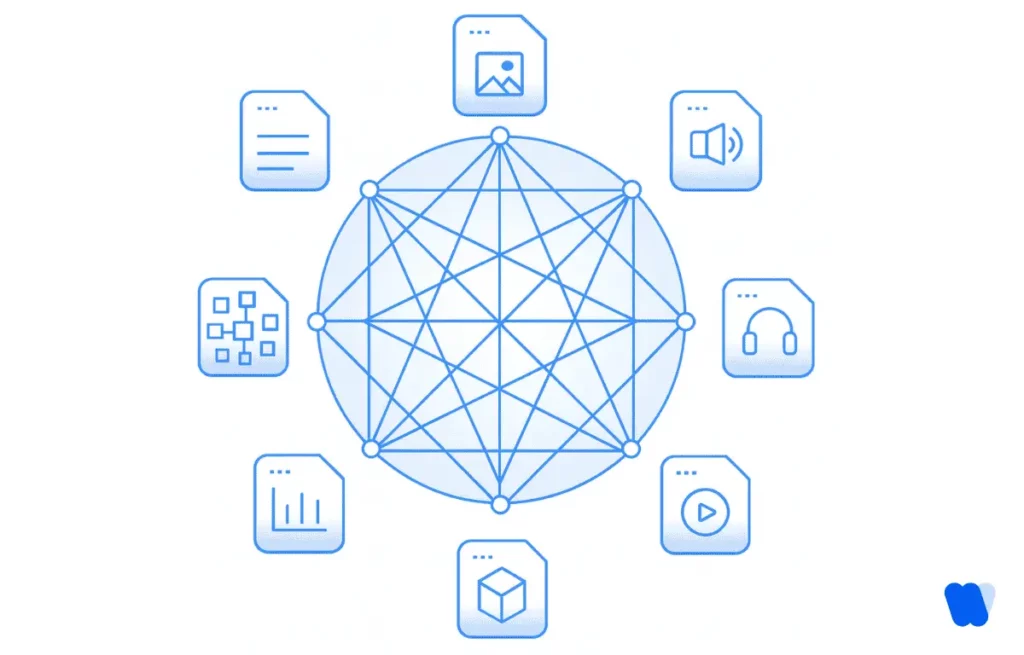
Generative AI engines like ChatGPT, Google Gemini, Claude, and Perplexity don’t simply display search results—they synthesize information from multiple sources, including text, images, videos, and audio. This means that visibility in the age of AI isn’t just about ranking in SERPs—it’s about being cited, referenced, or surfaced in AI-generated answers.
This is where Multi-Modal GEO (Generative Engine Optimization) comes into play. It expands GEO beyond written content to ensure that images, videos, and audio are also optimized for recognition and citation by AI models.
Why does this matter?
- Generative engines are rapidly becoming multi-modal.
- User queries are shifting from simple keyword searches to voice, image, and video prompts.
- Brands that fail to optimize their non-text assets risk becoming invisible in AI-driven ecosystems.
In this guide, I’ll break down what multi-modal GEO is, why it matters, and how you can optimize images, videos, and audio step by step. By the end, you’ll have a complete framework for earning AI citations that boost brand visibility, trust, and traffic.
What is Multi-Modal GEO?
Multi-Modal GEO refers to the process of optimizing multiple types of content—not just text—so that generative AI engines can interpret, summarize, and cite it in their responses.
It builds upon the foundations of Generative Engine Optimization and aligns with key visibility factors driving AI-based discovery.
Traditionally, SEO worked by signaling relevance and authority to search engines through text, but now the relationship between SEO and GEO defines how both search and generative models interpret brand authority.
How LLMs and AI Search Engines Interpret Media
To optimize effectively, it helps to know how LLMs and AI search engines process media. Unlike traditional search, they don’t just read text—they extract meaning from images, audio, and video using context, metadata, and pattern recognition techniques to connect media with user intent. Here’s how each format is interpreted:
- Image recognition – Models analyze images via computer vision, alt text, captions, and surrounding content to understand context.
- Speech-to-text – AI transcribes spoken words from audio or video files into text for analysis.
- Video summarization – Engines extract meaning from transcripts, metadata, and structure to generate summaries or identify key highlights.
Examples of Multi-Modal AI Engines
Several leading AI models are already shaping the multi-modal search landscape, each capable of processing more than just text. These engines handle images, audio, and even video, making it clear that visibility now extends far beyond written content. Some key examples include:
- GPT-4o – OpenAI’s flagship model processes text, image, and audio inputs/outputs in real time.
- Google Gemini – Designed as a fully multimodal AI with video comprehension capabilities.
- Claude 3 – Expands text-based reasoning with improved multimodal interpretation.
- Perplexity – Integrates text + reference links, with growing emphasis on images and citations.
Takeaway: If your brand only optimizes text, you’re leaving half the playing field untouched.
For deeper insight, see our ChatGPT visibility tips and Gemini search visibility guide.
Why Multi-Modal Matters for AI Citations
In traditional SEO, the goal was to rank on page one of Google. In GEO, the equivalent is to appear in AI-generated answers, and LLM citation tracking helps you measure how often that happens.
- Generative engines often reference sources to justify their answers.
- These citations build trust with users and direct visibility back to the cited brands.
- The more formats you optimize, the more likely AI is to pull your content.
- Many images lack descriptive alt text or schema markup.
- Videos are uploaded without transcripts or proper metadata.
- Podcasts are distributed without speech-to-text support or tagging.
- AI engines simply skip over unoptimized assets.
The Multi-Modal Advantage
By optimizing across images, videos, and audio, you create multiple entry points for AI visibility.
Example:
- A blog post might be cited for a definition of GEO.
- A video transcript could be used to answer “how to optimize podcasts for GEO.”
- An audio clip from a podcast may show up in a ChatGPT conversation.
More optimized media = more brand citations = more visibility in AI ecosystems.
Optimizing Images for AI Citations
Images are among the easiest assets to optimize, yet they’re often ignored. For AI to cite them, they must be machine-readable and context-rich.
Best Practices for Image Optimization
1. Alt Text
- Use descriptive, entity-driven alt text (avoid generic labels like “image1”) and apply structured data to help AI understand image context.
- Example: “Infographic showing Generative Engine Optimization ranking factors for AI search visibility in 2025.”
2. Image Captions
- Captions reinforce context and are often displayed to users.
- Example: “GEO infographic: visibility factors driving AI citations.”
3. Structured Data (Schema)
- Use ImageObject schema to help engines identify the purpose and context of visuals, following best practices from our structured SEO briefs for AI search.
4. File Naming Conventions
- Name files descriptively: geo-ai-visibility-infographic.png instead of IMG_2033.png.
Example in Action
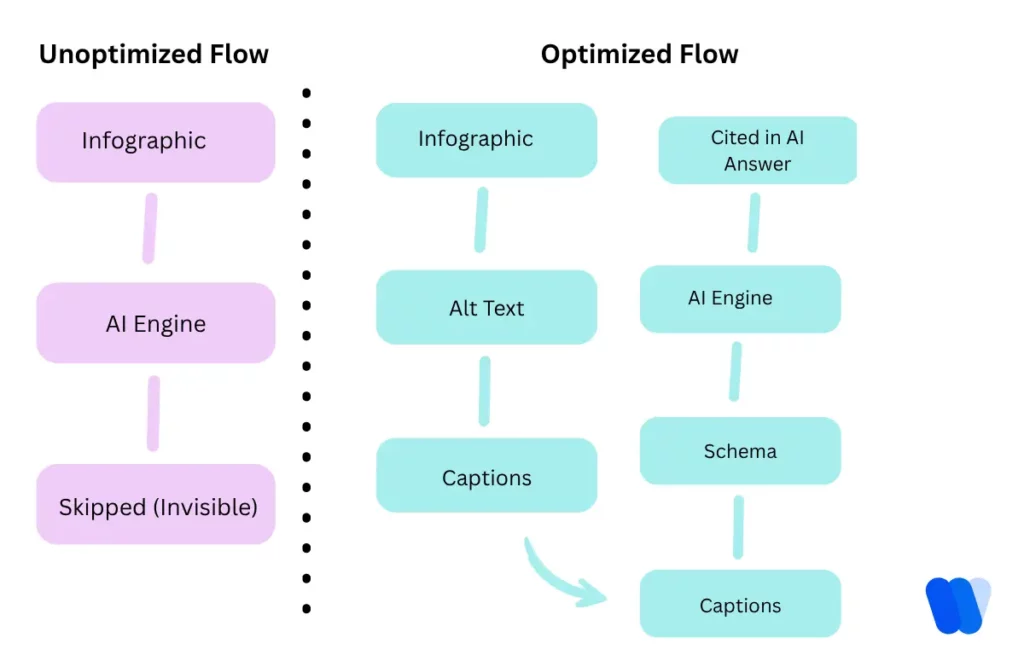
Imagine you publish an infographic titled “Top 10 GEO Mistakes to Avoid in 2025.”
- With descriptive alt text, captions, and schema markup, AI engines can parse and cite it.
- Without them, your infographic remains invisible to generative models.
Optimizing Videos for AI Citations
Videos are booming, especially on YouTube and TikTok. But unless optimized, they’re black boxes to AI.
Video Optimization Strategies
1. Transcripts & Captions
- Provide full transcripts to make video content searchable.
- Use tools like Rev or Descript for accuracy.
2. Metadata Optimization
- Titles and descriptions should be entity-rich and aligned with your on-page content checklist for GEO consistency across web assets.
- Example: “GEO Optimization Webinar: Multi-Modal Strategies for AI Visibility.”
3. Chapterization (Timestamps)
- Segment videos into logical parts: introduction, case study, conclusion.
- Helps AI engines reference specific parts.
4. Cross-Channel Distribution
- Post on YouTube, embed on your website, repurpose as Shorts/Clips for TikTok or LinkedIn.
Example in Action
A 45-minute webinar on GEO with chapters, transcripts, and schema markup could be cited by ChatGPT in an answer like: “According to a recent GEO webinar…”.
Optimizing Audio for AI Citations
Podcasts and audio interviews are hidden gold mines for GEO. AI engines can cite transcripts or pull quotes—if optimized properly.
Audio Optimization Techniques
1. Speech-to-Text Transcripts
- Every podcast should include a clean, structured transcript.
2. Metadata Tagging
- Episode titles and descriptions should be entity-rich, using keyword strategies that enhance discoverability in AI-generated search results.
- Example: “Podcast Episode 23: How Multi-Modal GEO Improves AI Visibility.”
3. Contextual Anchors
- Insert intent-driven phrasing in the audio: “In this episode, we explain how to optimize podcasts for GEO and AI citations.”
4. Syndication Strategy
- Publish across Spotify, Apple Podcasts, Google Podcasts, and your website.
- The broader the footprint, the more AI has to pull from.
Example in Action
A podcast with structured schema + transcript is far more likely to be surfaced in a ChatGPT answer compared to one with just an MP3 file.
Tools & Techniques for Multi-Modal GEO
Optimizing across multiple formats can feel overwhelming—but the right tools simplify the process.
Transcription & Captions
- Otter.ai – real-time meeting & podcast transcripts.
- Descript – transcription + video editing.
- Rev – professional captioning service.
Structured Data & Schema
- Schema.org – framework for structured data.
- WordLift – AI-powered schema management.
- Merkle Schema Generator – free schema markup tool.
Testing & Validation
- Prompt ChatGPT, Gemini, or Claude with queries to see how they summarize your assets.
- Use tools like Perplexity AI to test if your brand is cited.
Create a Multi-Modal GEO Checklist for every content release:
- Alt text
- Captions
- Schema
- Transcript
- Metadata
Challenges in Multi-Modal GEO
While multi-modal GEO opens new opportunities for visibility, it also presents unique challenges that brands must overcome:
Current Gaps
- Not all AI engines are equally advanced in parsing non-text media. Some can accurately process transcripts and captions, while others still struggle to interpret complex audio or video formats. This inconsistency means optimization efforts may not deliver uniform results across platforms.
- Smaller brands often find themselves overshadowed by big publishers. Large content libraries from platforms like YouTube, Wikipedia, and major news outlets tend to dominate, leaving limited room for niche players unless they adopt a highly strategic approach.
Risks
- AI hallucinations remain a major concern. Even when your media is optimized, an AI may incorrectly attribute content to another source or distort the context in which your content is used. This can undermine credibility and reduce brand trust.
- Bias toward big platforms further compounds the issue. Generative engines often prioritize content from recognized, high-authority sources, which can make it harder for smaller brands to break through—even if their content is well optimized.
Future Trends in Multi-Modal GEO
Despite these challenges, the future of multi-modal GEO is promising, with several emerging trends poised to reshape digital visibility:
- Real-Time AI Search
AI-powered assistants are beginning to surface real-time content, such as podcast snippets or live video commentary, directly into answers. This means audio and video optimization won’t just be about static archives—it will extend to real-time discoverability, where timely content has a competitive edge. - Brand Avatars
Companies will soon leverage multi-modal brand avatars—digital representatives capable of engaging users across text, video, and voice—powered by AI agents in web search that connect directly with brand media. These avatars won’t just push pre-recorded content but will interact with users, powered by generative models that reference brand-owned media. - Multi-Sensory Queries
Future search interactions will be multi-sensory, combining text, voice, and images in a single query. For example, a user might ask an AI engine a question via voice while uploading an image for context. Brands that prepare media to be understood in cross-modal contexts will gain significant visibility advantages.
Takeaway: Early adopters that invest in multi-modal optimization today—covering not just text but also video, audio, and images—will be best positioned to dominate AI-driven visibility as these trends become mainstream.
FAQs
- Image recognition / vision models interpret alt text, captions, and visual features.
- Speech-to-text (ASR) transcribes audio and video into text.
- Video summarization & segmentation break down videos into meaningful chunks and interpret transcript + metadata.
Only with structured metadata and context can AI reliably connect these media to queries.
Conclusion
The era of text-only optimization is over. To compete in AI-driven search, brands must embrace multi-modal GEO. By optimizing images, videos, and audio, you create more entry points for AI to recognize and cite your brand.
Key takeaways:
- Add alt text, captions, schema to images.
- Provide transcripts, chapters, and metadata for videos.
- Ensure audio transcripts, tagging, and syndication for podcasts.
- Use tools like Otter, Schema.org, and Descript to scale your workflow.
Generative engines will only get more multi-modal. The brands that audit and optimize today will secure the citations, authority, and visibility of tomorrow.