AI-powered external link analysis is no longer about counting backlinks or improving domain ratings. In 2026, AI-driven search systems evaluate external signals to decide which brands are credible enough to cite, summarize, or recommend.
- Google AI Overviews appear in 47% of search results (Search Engine Journal, 2024).
- User behavior reinforces this shift. Nearly 60% of Google searches now end without a click to an external website, meaning users consume answers directly from search interfaces (Search Engine Land, 2024).
AI-powered external link analysis focuses on how often, where, and in what context a brand is referenced across the web, not just whether a link exists.
Brands that surface consistently across ChatGPT, Gemini, and Perplexity tend to perform better on signals beyond backlinks, including citation frequency, contextual co-mentions, source authority alignment, entity consistency, and repetition across trusted publishers.
What Is AI-Powered External Link Analysis?
AI-powered external link analysis evaluates how brands are referenced across the web, not just how many backlinks point to a page. It analyzes mentions, citations, contextual relevance, and source credibility to understand whether external signals reinforce brand trust in AI-generated answers.
Unlike traditional backlink analysis, this approach reflects how large language models interpret authority. LLM citation tracking shows that AI models prioritize repeated, high-confidence references over isolated backlinks. As a result, a brand mentioned consistently by trusted publishers is more likely to be cited, even without a direct hyperlink.
As a result, AI-powered external link analysis focuses on signal quality, context, and repetition. It helps teams understand which external references actually influence AI visibility rather than relying on link volume or domain metrics alone.
How Does AI Improve Link Analysis Compared to Traditional SEO Tools?
- Relies on manual audits that do not scale across large websites or ecosystems.
- Evaluates links one by one using static metrics such as domain authority and backlink count.
- Misses contextual signals like co-mentions, citation frequency, and topical association.
- Updates slowly, often reacting after rankings or traffic have already changed.
- Automates analysis across millions of external references simultaneously.
- Uses pattern recognition to detect recurring co-mentions and trusted source relationships.
- Evaluates how signals evolve across time and sources, not just link volume.
- Adapts in near real time as AI search systems update credibility signals.
Manual audits fail at AI scale because AI search systems continuously reassess credibility. By the time a human review is complete, new citations, mentions, and contextual shifts may already influence AI-generated results. AI-powered analysis stays aligned with how AI systems actually make decisions.
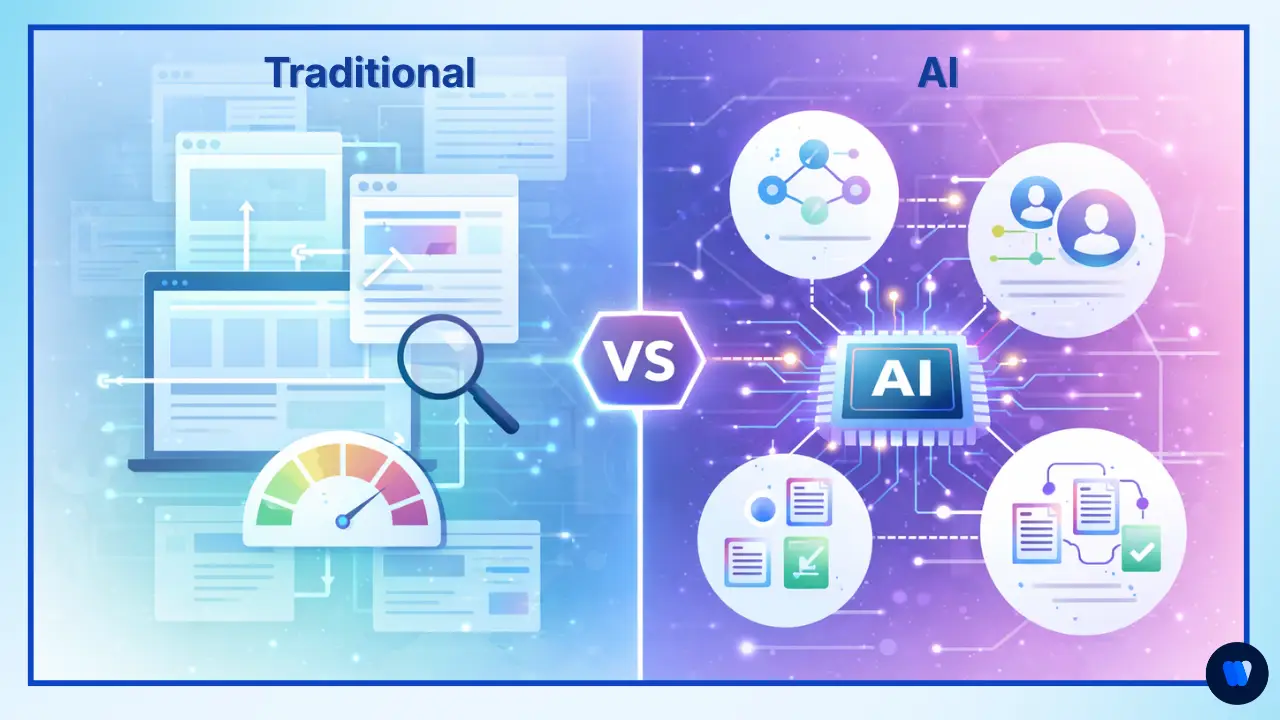
AI-Driven Link Analysis vs Traditional Backlink Evaluation Methods
| Evaluation Focus | Traditional Backlink Evaluation | AI-Driven Link Analysis |
|---|---|---|
| Primary Signal | Counts the number of backlinks pointing to a page | Evaluates contextual relevance of where and how a brand is referenced |
| Relevance Logic | Relies mainly on anchor text and link placement | Analyzes surrounding context, topic alignment, and co-mentions |
| Trust Measurement | Uses domain-level authority metrics | Builds entity trust through repeated validation across trusted sources |
| Mentions vs Links | Ignores unlinked brand mentions | Treats mentions, citations, and co-occurrences as meaningful signals |
| Source Selection | Assumes higher-authority domains deserve visibility | Reflects how AI selects sites to cite based on credibility, context, and consistency |
This comparison shows why backlink volume alone no longer explains visibility in AI-generated results. AI-driven link analysis shifts evaluation from quantity to meaning, helping brands understand which external signals actually influence AI search visibility.
External Link Management Strategies That Actually Influence AI Search Visibility
External link management for AI search visibility requires a shift from traditional link building to managing external validation signals. AI systems evaluate credibility based on how brands are referenced across trusted sources, not just how many links they acquire.
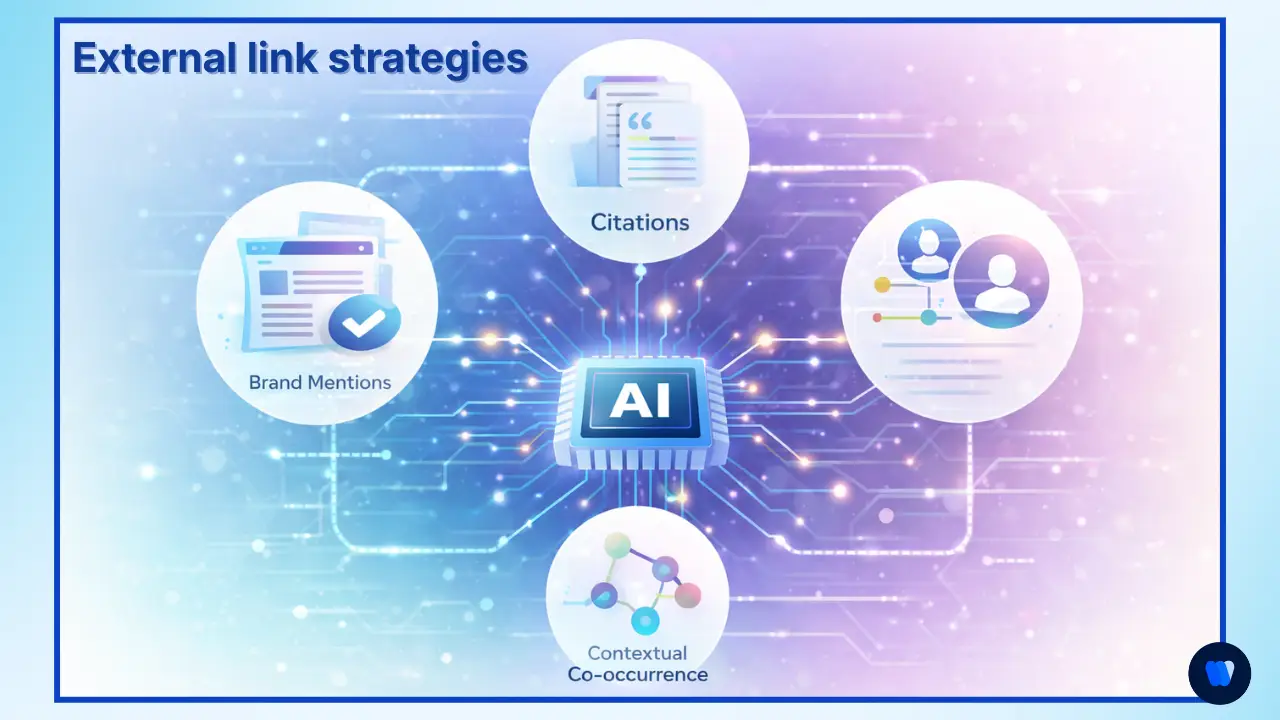
Brand mentions act as trust reinforcement for AI systems, even without hyperlinks. When a brand is repeatedly referenced by authoritative publishers, AI models are more confident in associating that brand with expertise and reliability. Clear structured data signals help AI systems correctly map those mentions to the right entity.
Citations strengthen AI confidence when a brand is referenced in factual or explanatory contexts. Citations from credible sources signal that a brand contributes authoritative information, which increases the likelihood of being surfaced in AI-generated answers.
Contextual co-occurrence focuses on which entities, topics, and sources appear together over time. Brands that invest in earning brand mentions within relevant discussions build stronger AI visibility than those relying on isolated or transactional links.
Together, these strategies move external link management from acquisition to alignment, ensuring that brand references reinforce trust, relevance, and credibility in AI-generated search results.
AI Tools for Backlink and External Link Analysis: What Matters in 2026
Did you know?
Did you know?
Did you know?
Did you know?
What Tools or SEO Platforms Can Analyze Which Pages Are Eligible for AI Overviews?
How AI Search Visibility Platforms Extend External Link Analysis Beyond Backlinks
AI search visibility platforms extend external link analysis by focusing on how brands appear inside AI-generated answers, not just how often they are linked. This approach reflects how modern AI systems assess credibility across search and generative interfaces.
The first capability is citation tracking. Instead of counting backlinks, these platforms monitor when and where a brand is cited across AI-driven search results. Tracking citations helps teams understand which pages and entities are being referenced in real responses, aligning analysis with LLM citation strategies.
The second capability is entity presence. AI visibility platforms analyze how consistently a brand entity appears across trusted sources, topics, and formats. Strong entity presence signals reliability and increases the likelihood of being selected as a source in AI-generated answers.
The third capability is identifying implicit wins. These occur when a brand influences AI answers through mentions, co-occurrences, or context, even without direct links or traffic attribution. Implicit wins reveal visibility gains that traditional SEO tools fail to detect.
Together, these capabilities move external link analysis from measuring acquisition to measuring influence. AI search visibility platforms help teams understand not just where links exist, but where credibility is being reinforced.
Which AI Search Visibility Platforms Support Team Collaboration and Enterprise Compliance?
- Role-Based Access for Cross-Functional Teams: AI search visibility platforms designed for enterprise use support role-based access so SEO specialists, content teams, and brand stakeholders can work within defined permissions. This prevents accidental changes, limits exposure to sensitive data, and ensures each team focuses only on the insights relevant to their role.
- Audit Logs for Transparency and Accountability: Enterprise platforms maintain detailed audit logs that record changes, analyses, and actions taken over time. These logs make it easier to trace decisions, support internal reviews, and meet compliance requirements without disrupting ongoing optimization workflows.
- Enterprise Governance for AI Search Visibility: Strong platforms support content governance by enforcing standards across entities, teams, and markets. Governance features help organizations maintain consistency, manage AI visibility risks, and align AI-driven insights with brand and regulatory requirements.
Connecting AI-Powered External Link Analysis to SEO Analysis Techniques
From Website Analytics Solutions to AI Search Visibility Measurement
Did you know?
Did you know?
Did you know?
How Wellows Applies AI-Powered External Link Analysis for AI Search Visibility
Wellows applies AI-powered external link analysis by measuring how brands are cited, referenced, and contextually trusted across AI-driven search environments. Instead of treating backlinks as isolated SEO signals, Wellows evaluates external validation as a visibility signal across SERPs and large language models.
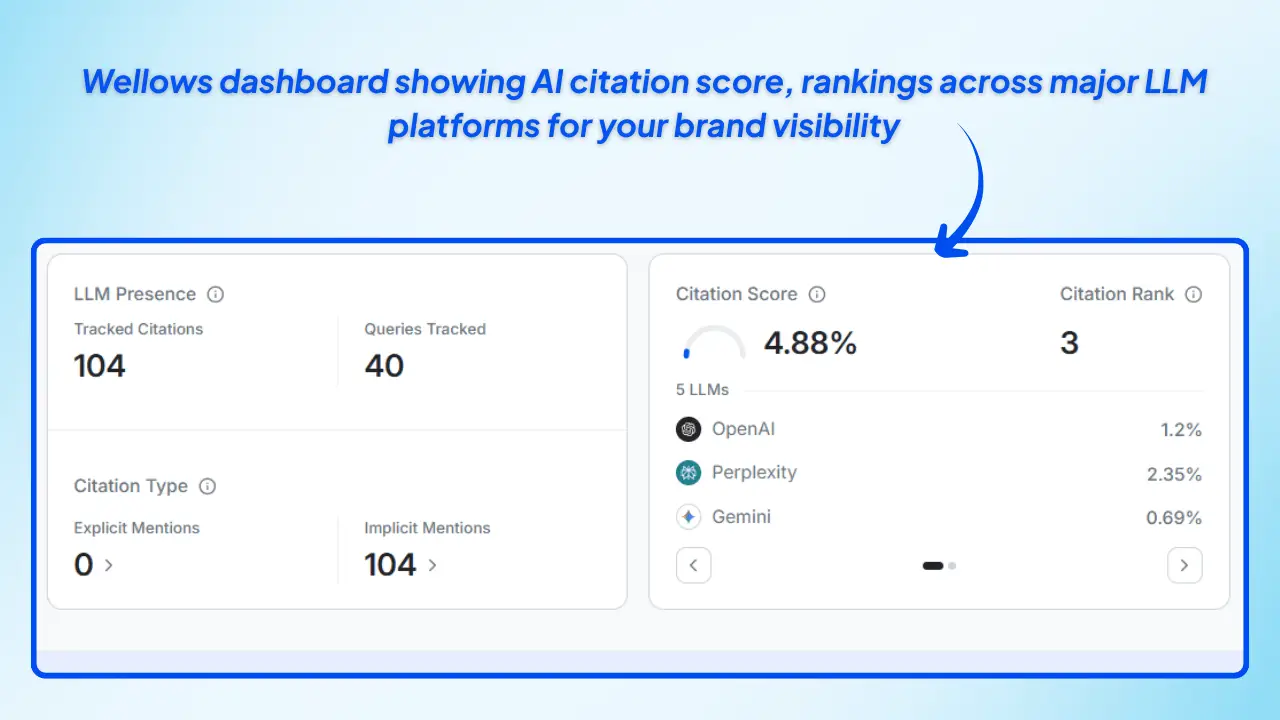
Citation Score: Wellows quantifies how often and how consistently a brand is cited or referenced inside AI-generated answers. The Citation Score reveals which pages influence AI responses even when no backlink or referral traffic exists.
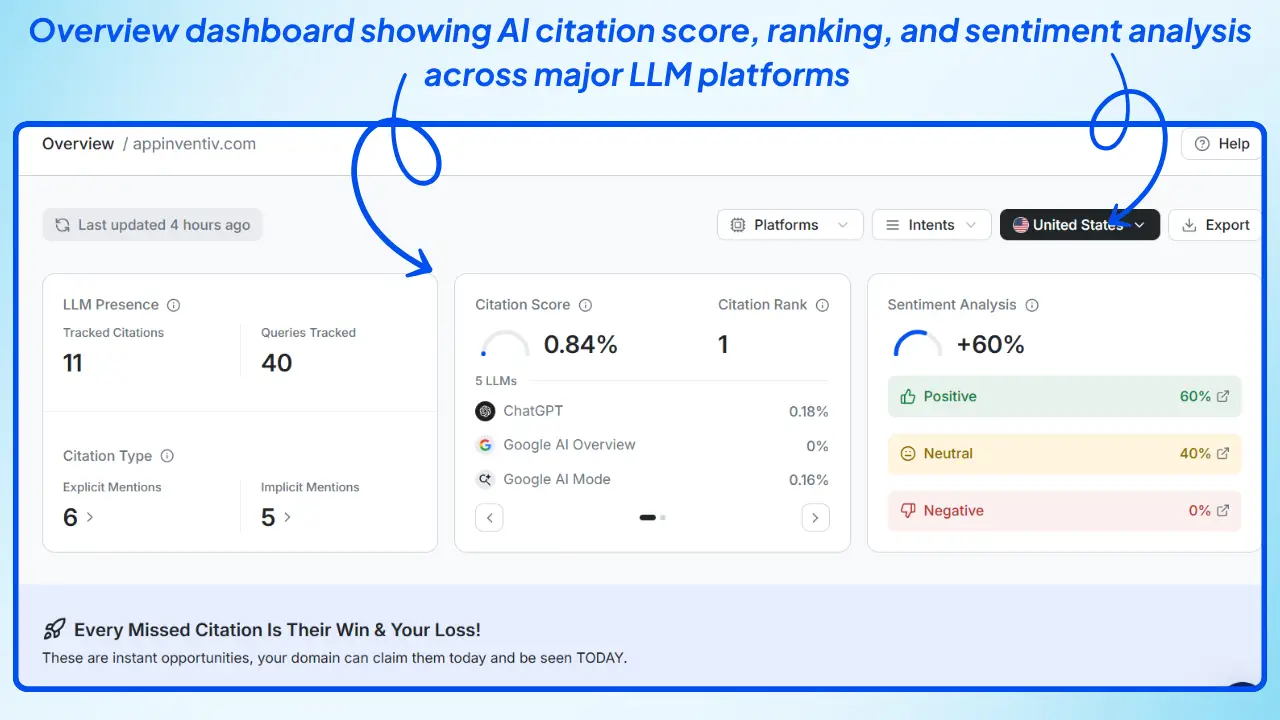
GenAI visibility stack: Wellows unifies brand mentions, verified citations, sentiment shifts, and competitor signals from ChatGPT, Gemini, Perplexity, AI Mode, and Google AI Overviews into a single visibility layer. This stack shows where a brand is contextually referenced, how its visibility changes over time, and how trust signals evolve across AI-driven discovery surfaces.
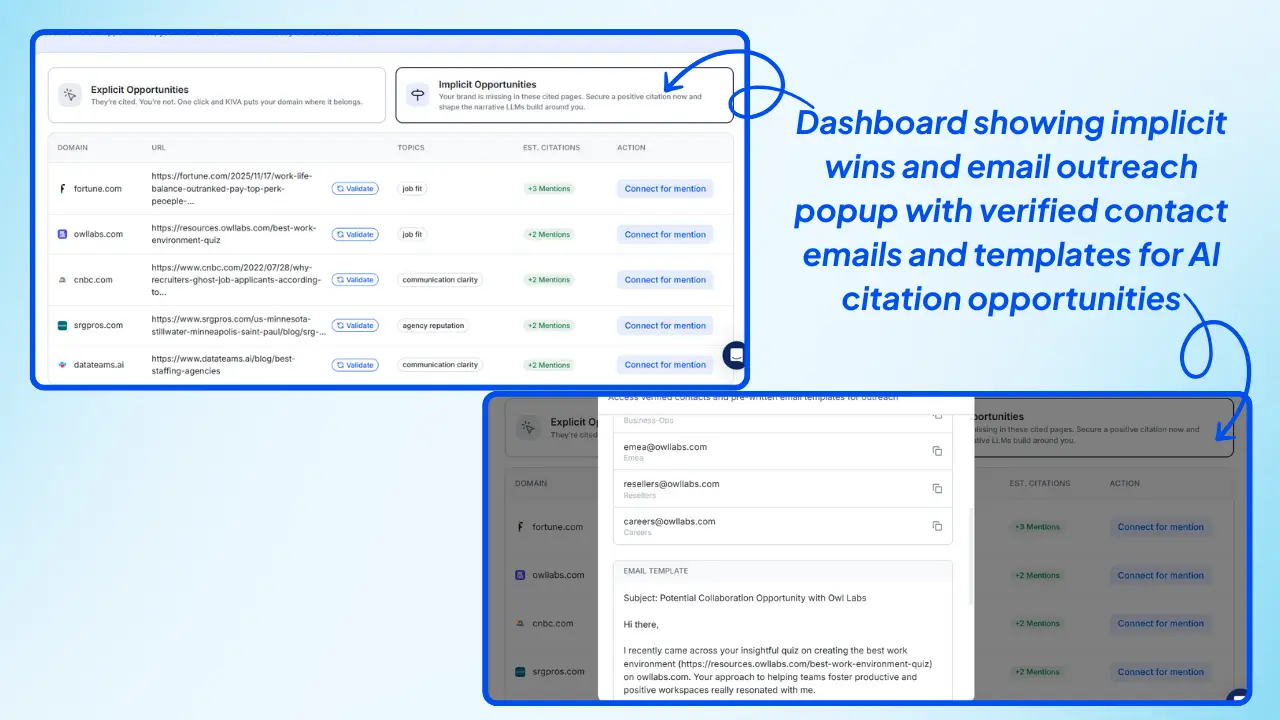
Outreach: Wellows aligns outreach with sources that AI systems already trust, focusing on citation eligibility rather than generic link acquisition.
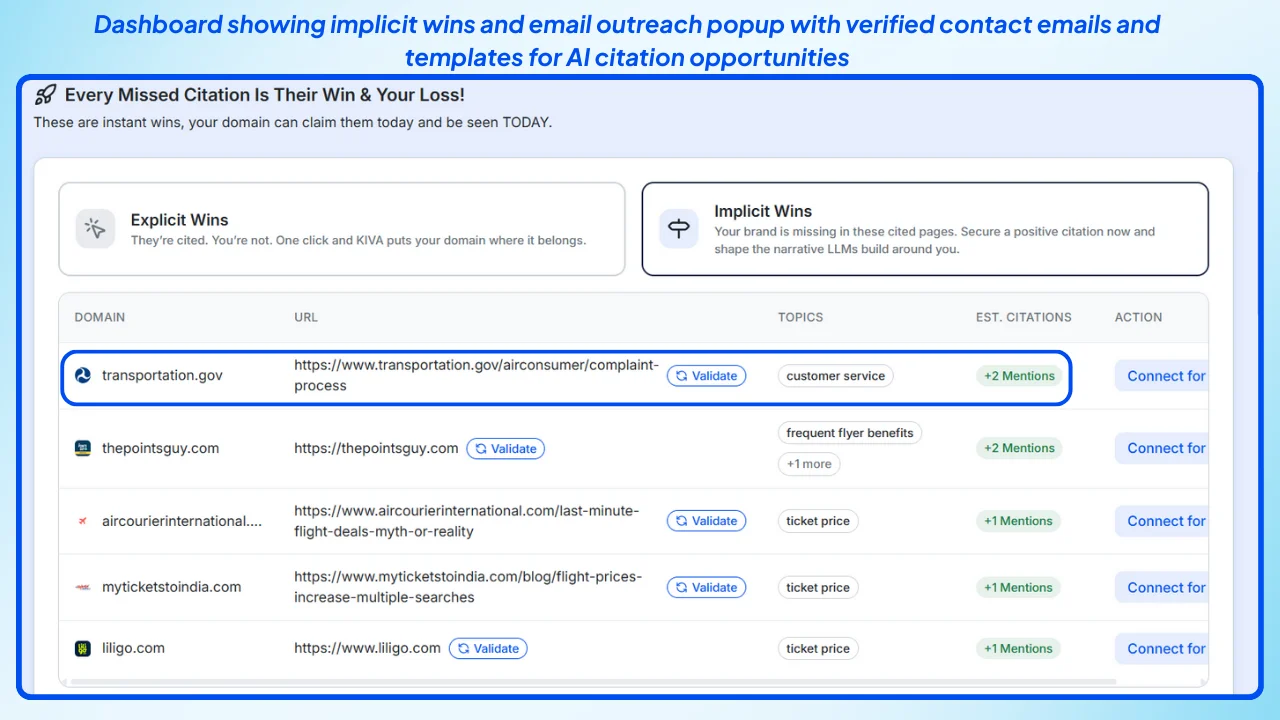
Implicit Wins: Wellows surfaces unlinked mentions and contextual references that improve AI visibility without requiring clicks, backlinks, or measurable referral traffic.
This approach aligns external link analysis with what AI search engines cite, helping teams move from backlink tracking to measurable AI search visibility.
When AI-Powered External Link Analysis Delivers the Highest ROI
- Who Benefits Most From AI-Powered External Link Analysis: Brands that rely on discovery, trust, and recommendations gain the highest ROI. This includes SaaS companies, B2B platforms, marketplaces, and content-led brands operating in competitive categories where AI-generated answers influence user decisions before any click occurs.
- When AI-Powered External Link Analysis Matters Most: It matters most during moments of visibility pressure—product launches, competitive disruption, declining click-through rates, or category expansion. As AI search interfaces surface answers directly, external signals like citations, contextual mentions, and entity trust become decisive visibility drivers.
- What Outcomes Teams Can Expect: Teams gain clarity on where and why their brand appears in AI-generated results. This leads to better prioritization, more effective outreach, reduced guesswork, and measurable gains in AI search visibility that traditional rankings and analytics no longer capture.
FAQs
External brand mentions influence AI Overviews when they appear repeatedly across trusted sources in explanatory or factual contexts. Mentions that occur alongside relevant entities, consistent topics, and credible publishers are more likely to be interpreted by AI systems as validation signals. One-off mentions or promotional references usually do not affect AI-generated visibility.
Eligibility analysis requires platforms that monitor AI-generated answers rather than rankings. These tools evaluate whether pages are cited, referenced, or implicitly used across AI Overviews and LLM responses. Signals such as citation frequency, entity alignment, topical clarity, and external validation patterns indicate which pages are likely to be reused by AI systems.
On-page optimization determines whether a page is understandable and extractable, while external signals determine whether it is trusted. AI systems may understand a page clearly but still exclude it if external references do not reinforce credibility. External signals help AI validate information across sources before selecting pages for generated answers.
Enterprise AI search visibility platforms support collaboration through role-based access controls, allowing SEO, content, and brand teams to work within defined permissions. Audit logs track changes in visibility analysis, citation monitoring, and reporting over time, supporting governance, accountability, and compliance requirements.
Teams should prioritize pages that already serve as primary explanations for key topics, support high-intent queries, or represent core brand entities. Pages that show early signs of citations, repeated mentions, or contextual co-occurrence across trusted sources typically deliver the highest return when analyzed and optimized further.
Key Takeaways
AI-powered external link analysis reframes how visibility is earned in AI-driven search. Instead of optimizing for links and rankings alone, teams must focus on the external signals AI systems actually use to assess credibility.
- External signals > backlinks: Citations, contextual mentions, and repeated references across trusted sources influence AI visibility more than raw link counts.
- Visibility > rankings: Brands can appear in AI answers without ranking first—or receiving clicks—making visibility a more accurate measure of influence.
- Analysis > guesswork: Structured analysis replaces assumptions by showing exactly how and why a brand is referenced across AI-driven search environments.