Search visibility is no longer driven by rankings alone. As AI-generated answers replace blue links, brands now compete to be named directly inside responses, not just discovered through clicks.
In March 2025, Google AI Overviews appeared on 13.14% of search results, delivering answers without requiring a website visit (Semrush, 2025). This makes in-answer brand visibility a primary discovery channel.
This shift is measurable. AI systems include brand mentions in 26%–39% of responses, depending on the engine (Semrush, 2025). These mentions appear when AI models can clearly recognize and associate a brand with a specific use case.
In AI search, mentions are brand references inside answers from ChatGPT, Perplexity, Google AI Overviews, and Bing Copilot. Unlike backlinks, they signal entity recognition and trust even without links, which is why AI-powered external link analysis focuses on contextual validation instead of link volume.
Research shows that fewer than 30% of highly mentioned brands are also highly cited, confirming that mentions follow different rules than traditional SEO (Exploding Topics, 2025).
This is why teams increasingly rely on analysis methods similar to a Perplexity Visibility Tracker to understand where brand recall exists even when formal citations are missing.
This guide focuses on how brands earn mentions, while the systems and signals behind how brands get recommended in AI search engines determine which brands appear inside AI-generated answers.
What Does It Mean to Earn Mentions in AI Search?
Earning mentions in AI search means your brand is named directly inside AI-generated answers when users ask questions. These mentions appear because AI systems recognize your brand as relevant for a specific intent, not because a page ranks highly.
Mentions surface in responses from ChatGPT, Google AI Overviews, Gemini, Perplexity, and Bing Copilot, especially during recommendation and comparison queries. This makes entity recognition a core visibility signal in AI-driven discovery.
A mention is not a click and not a backlink. It reflects brand recall and trust inside AI answers, even when no URL is shown. As zero-click responses increase, mentions increasingly influence brand awareness and decision-making before any site visit.
How Are Mentions in AI Search Different From Backlinks?
Mentions and backlinks serve different roles in a zero-click environment. When brands aim to earn visibility inside AI answers, link equity alone is not enough. AI systems surface brands they can recognize and trust, even when no URL is present.
This is why unlinked mentions still influence AI responses. Large language models summarize patterns from trusted articles, reviews, and discussions, based on how AI selects sites to cite during retrieval and answer grounding rather than traditional ranking signals.
When a brand is referenced consistently across credible contexts, it is treated as a verified entity regardless of hyperlinks. That verification process is central to how to rank in chatgpt, where entity recognition and repeat context drive inclusion more than link signals.
Did you know?
| Signal Type | What It Is | How AI Uses It | Click Required? |
|---|---|---|---|
| Mentions | Brand referenced in text, reviews, forums, or articles | Builds entity recognition and trust during answer generation | No |
| Backlinks | Clickable links pointing to a webpage | Signals authority for ranking systems, less critical for AI summaries | Yes |
| Citations | Explicit source attribution inside AI answers | Provides verifiable grounding for AI responses | Optional |
What Types of Mentions Are Valuable in AI Search?
AI systems do not treat all mentions equally. Mentions become valuable when they help AI models verify relevance, credibility, and real-world usage during answer generation.
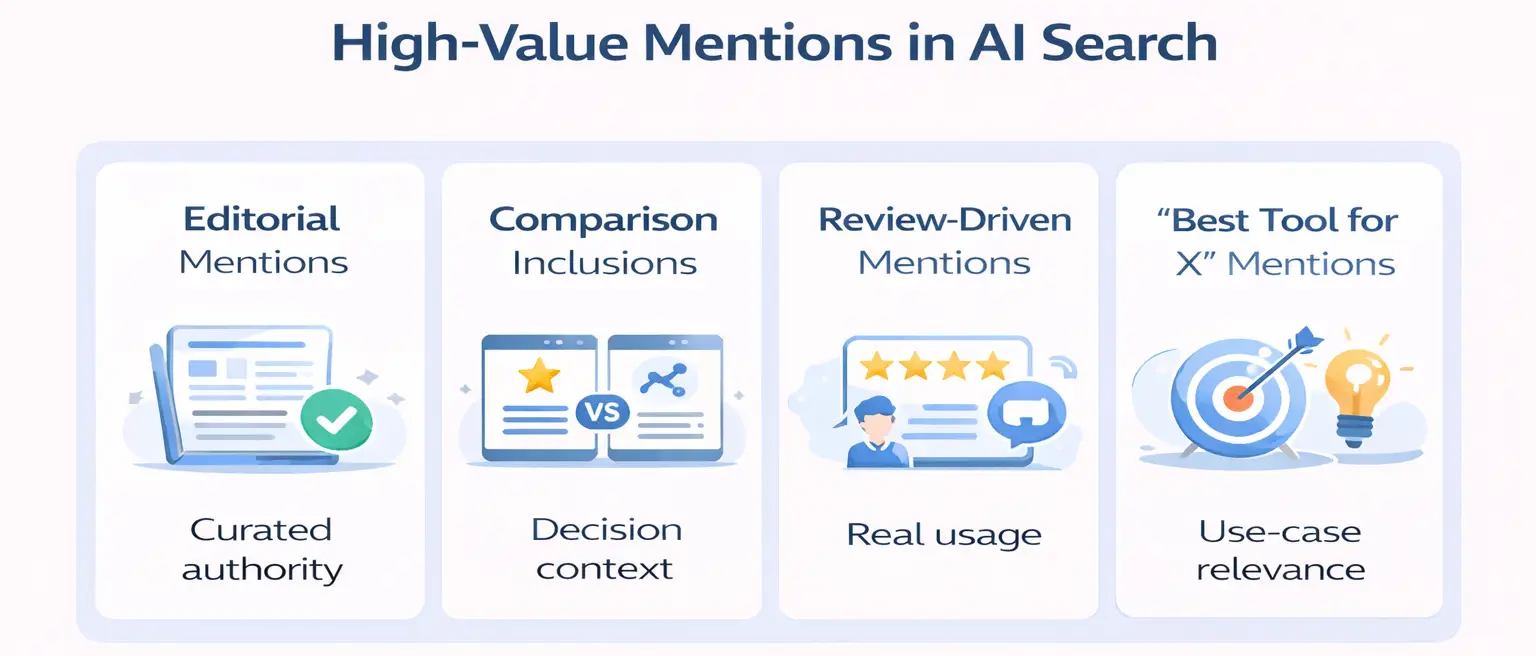
Editorial mentions: Mentions within news articles, research pieces, and expert-led blogs carry high trust because they come from curated, human-reviewed sources. AI systems prioritize these mentions when forming authoritative answers.
Comparison inclusions: Brands referenced in “best,” “alternatives,” or “vs” comparisons are more likely to be recalled by AI systems. These contexts clearly associate the brand with a category and decision-making intent.
Review-driven mentions: Mentions supported by user reviews and experiential feedback help AI systems assess sentiment and practical credibility. Consistent review references strengthen recommendation confidence.
Contextual “best tool for X” mentions: Mentions tied to a specific use case signal strong relevance. AI systems favor brands that are repeatedly linked to solving a defined problem rather than generic category mentions.
Low-quality directories and generic listings rarely contribute to AI trust. These sources lack context, editorial judgment, and real validation, making them weak signals for AI systems focused on relevance and credibility rather than volume.
What Are Effective Strategies for Earning Mentions in AI Search?
Effective strategies for earning mentions in AI search depend on how AI systems recognize, validate, and recall brands during answer generation. Visibility comes from contextual relevance and trust signals, not rankings.
AI models surface brands they can confidently associate with specific problems, categories, and use cases across multiple sources. The AI discoverability checklist for startups helps define these connections through structured brand and content signals.
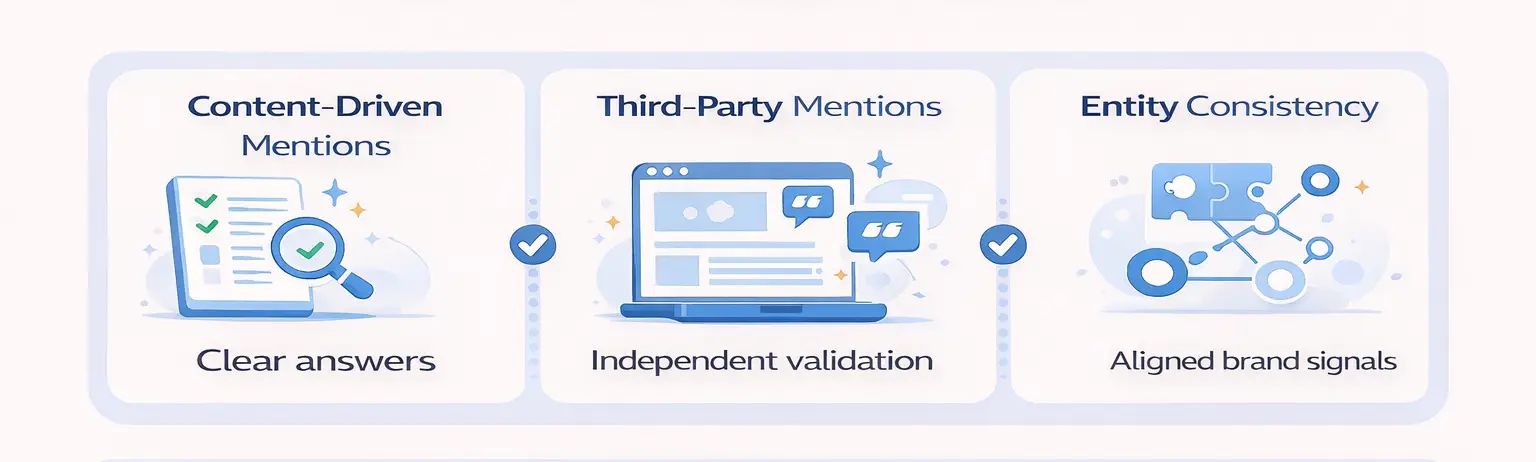
Building on these pillars, the tactical sections below explain how to strengthen each area in practical ways that increase brand mentions across AI-driven discovery and recommendation queries.
How To Earn Mentions in AI Search by Creating Quality Content
Earning mentions in AI search through content depends on how easily AI systems can extract, trust, and reuse information inside generated answers.
AI models favor content that is clear, self-contained, and directly aligned with user questions.
Create answer-ready content. AI systems mention brands when a page delivers a complete answer without requiring extra interpretation. Clear openings, direct explanations, and fact-based statements make content easier to lift into summaries and recommendations.
Define concepts and use cases precisely. Content that clearly explains what a brand does, who it is for, and when it should be used reduces ambiguity. AI systems mention brands more often when roles and contexts are unambiguous.
Include structured comparisons. AI assistants frequently answer “best,” “alternatives,” and “vs” prompts. Pages that compare features, audiences, and limitations give models ready-made material for ranking and recommendation responses.
Maintain consistent terminology and framing. Repeated, aligned language across headings, body text, and summaries strengthens entity recognition. Consistency helps AI systems associate multiple references with the same brand.
Plan content with structured briefs. Using structured SEO briefs for AI search ensures definitions, intent coverage, and comparisons are aligned before writing, increasing reuse accuracy inside AI-generated answers.
How Different Roles Earn Mentions in AI Search
AI systems mention brands differently depending on how individuals and teams contribute expertise across the web. Role-based visibility depends on clarity of positioning, consistency of output, and third-party recognition.
- Freelancers: Independent professionals earn mentions when their expertise is repeatedly referenced in niche discussions, tutorials, and practical solutions. Strong AI search visibility for freelancers comes from clear service definitions and consistent problem-solving signals.
- Startups: Early-stage companies gain mentions by owning specific use cases and emerging categories. Focused positioning improves AI Search visibility for startups, even without large-scale brand awareness.
- Consultants: Consultants are mentioned when AI systems associate their names with strategic frameworks, audits, and decision-making expertise. Sustained AI Search visibility for consultants depends on authoritative explanations rather than volume.
- Agencies: Agencies earn mentions when their methodologies, outcomes, and specializations are consistently referenced across industries. Clear differentiation strengthens AI Search visibility for agencies during recommendation and comparison queries.
How to Earn Mentions in AI Search for Small, Local, and E-commerce Businesses
AI systems evaluate smaller businesses differently from large brands. Mentions are earned when products, services, and reputations are clearly documented and consistently validated across public sources.
Because AI assistants prioritize trust and clarity over scale, small, local, and e-commerce businesses can earn mentions by reducing ambiguity around offerings, reputation, and comparisons.
Did you know?
- AI systems mention small businesses more often when customer reviews remain consistent across platforms.
- Clear explanations of services, pricing ranges, and target customers reduce uncertainty during answer generation.
- Repeated third-party references help AI associate the business with specific problem-solving contexts.
Did you know?
- Location clarity improves mentions, including service areas, operating hours, and category definitions.
- AI assistants rely heavily on review sentiment when recommending local options.
- Businesses included in local comparisons surface more often in “near me” and recommendation queries.
Did you know?
- AI systems mention e-commerce brands when product descriptions are detailed and consistent.
- Clear comparisons between products, variants, and alternatives support shopping-related prompts.
- Verified reviews and structured product information increase confidence in recommendations.
How to Earn Mentions in AI Search Through Social Media, Guest Blogging, and Influencers
AI systems learn brand relevance from public, third-party discussions because these sources reflect real-world validation rather than self-asserted claims. Mentions from independent platforms help AI models judge whether a brand is genuinely recognized within a topic or use case.
For many brands, working with Social Media Marketing Agencies accelerates this process by increasing credible third-party discussions and repeat brand references in public communities.
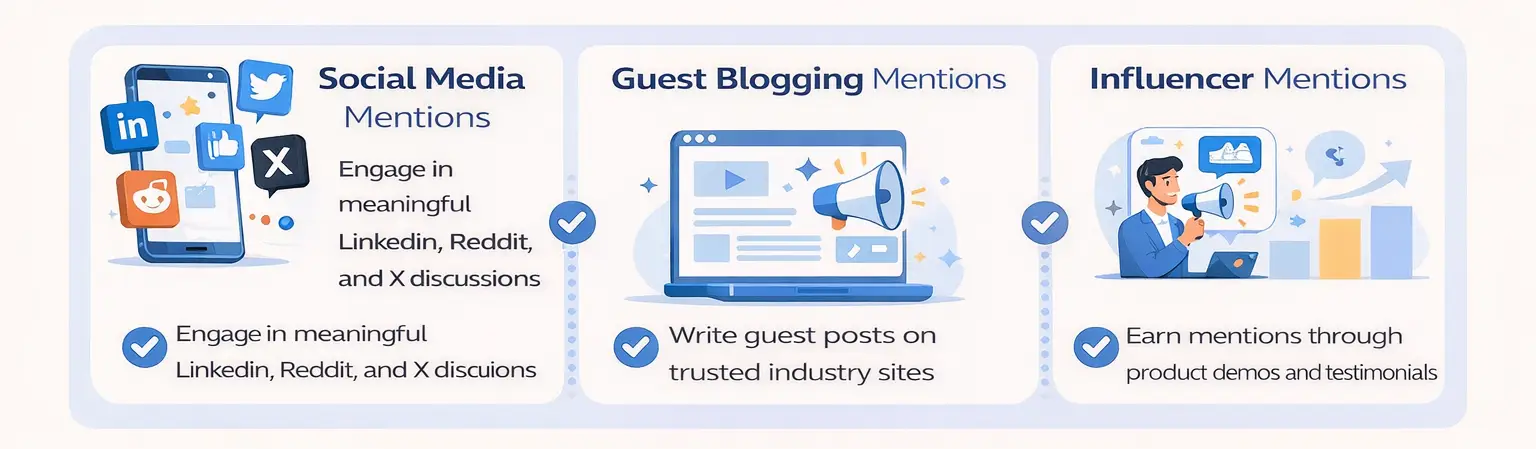
Platforms that help teams automate seo outreach can scale these guest posting efforts and secure more recurring mentions across authoritative publications.
Across all three channels, credibility comes from relevance and context. AI systems mention brands more often when references explain value clearly and appear naturally inside conversations users already trust.
Can AI Search Algorithms Influence Mentions?
Yes. AI search algorithms influence mentions through retrieval and trust verification, not preference or intent. For brands, this means mentions are earned by strengthening verifiable signals rather than trying to “trigger” an algorithm.
When generating answers, AI systems surface brands that appear consistently across trusted content, reviews, and discussions. The more clearly a brand is associated with a specific use case, the easier it becomes for AI systems to reference it without uncertainty.
Reinforce entity repetition. Mentions increase when a brand is referenced consistently across independent sources discussing the same topic. Repetition helps AI systems confirm real association rather than isolated exposure.
Pass verification checks. AI systems validate mentions against context, sentiment, and consistency. Clear descriptions and external validation improve the likelihood of inclusion in answers and comparisons.
Strengthen existing signals. AI systems do not invent mentions. They reflect the signals already present across content and platforms, which is why improving clarity and trust has a direct impact on visibility.
What Role Do Keywords Play in Earning Mentions in AI Search?
Keywords still matter, but their role has shifted from repetition to semantic coverage. While the relationship between Google Ranking and ChatGPT visibility is increasingly interconnected, AI systems do not reward keyword density. Instead, they surface brand mentions when content matches user intent across multiple related expressions of the same question.
Instead of focusing on one phrase, AI models look for intent alignment. When content naturally covers definitions, use cases, comparisons, and follow-up questions, it signals completeness. This makes the brand easier to reference during answer generation.
Did you know?
In practice, keywords guide topic inclusion, not placement frequency. Brands earn mentions when their content resolves intent clearly across related queries, allowing AI systems to recognize relevance without relying on exact-match terms.
How Wellows Helps You Discover and Earn AI Search Mentions
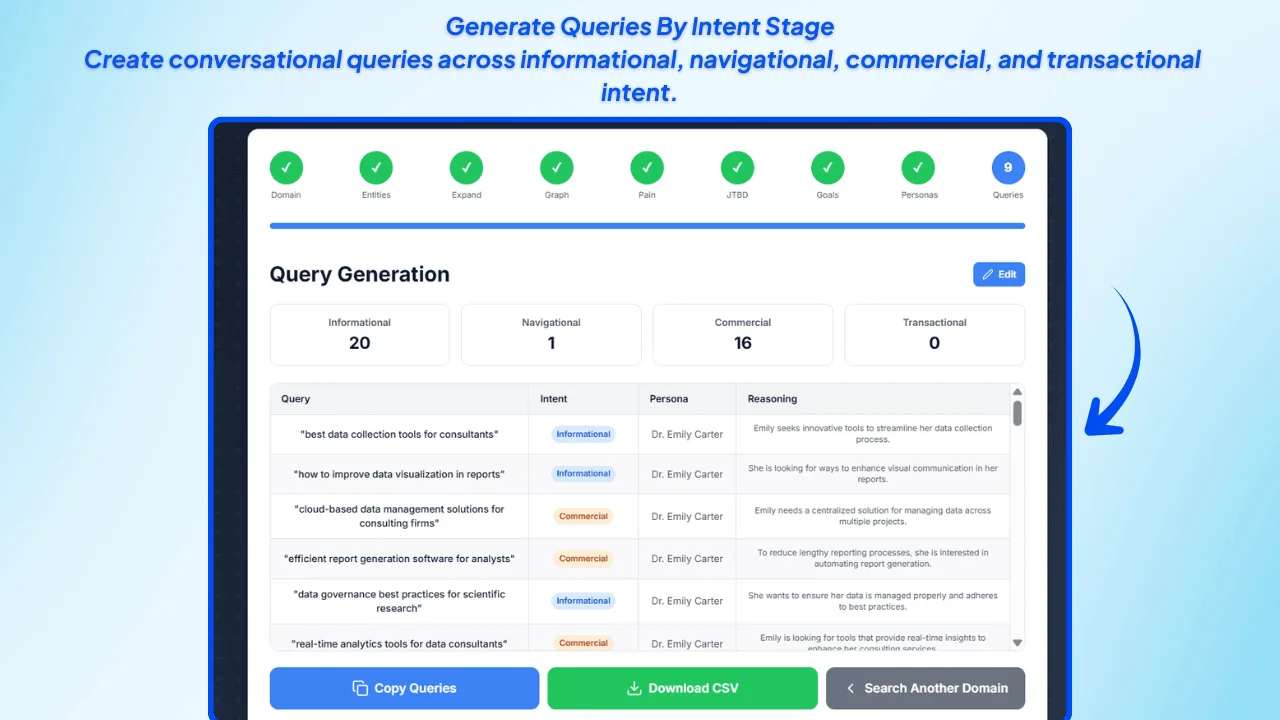
Wellows helps brands earn AI search mentions by turning visibility gaps into clear actions. Instead of guessing prompts or manually testing AI tools, Wellows analyzes real AI answers to show where your brand should be mentioned but isn’t.
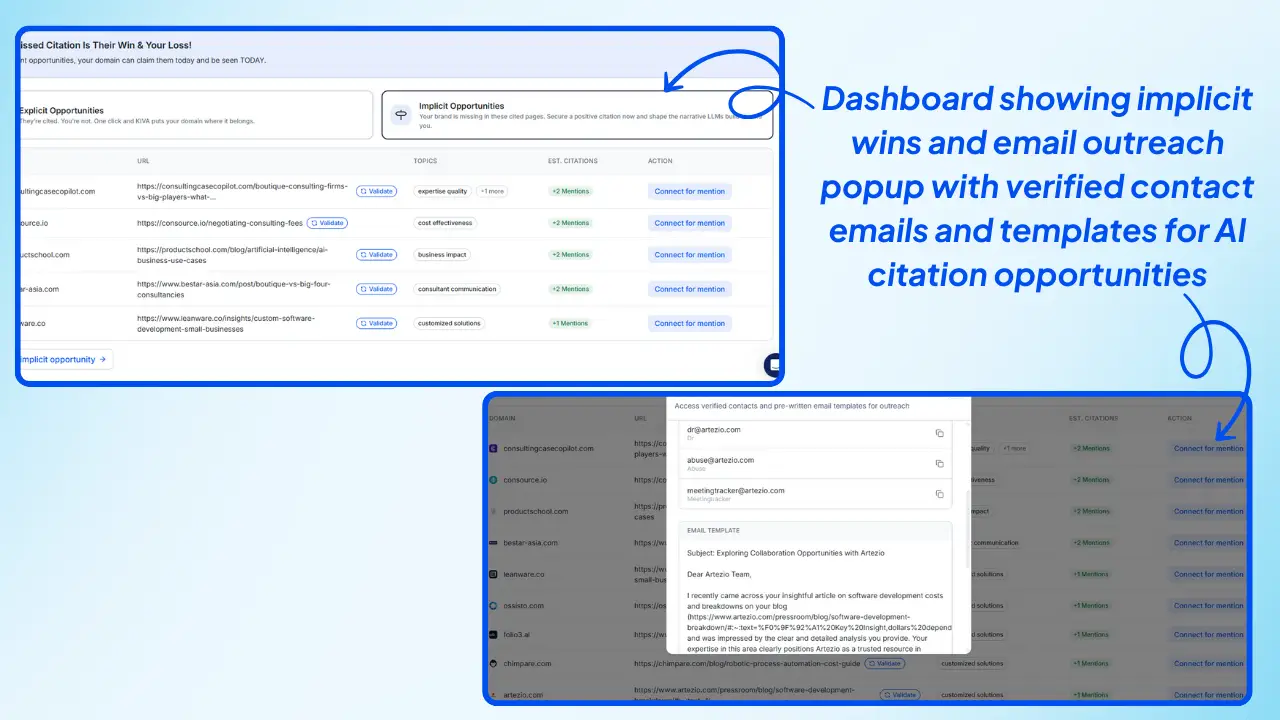
By mapping topics, competitors, and contexts together, Wellows shows exactly where your brand logically belongs inside AI-generated answers.
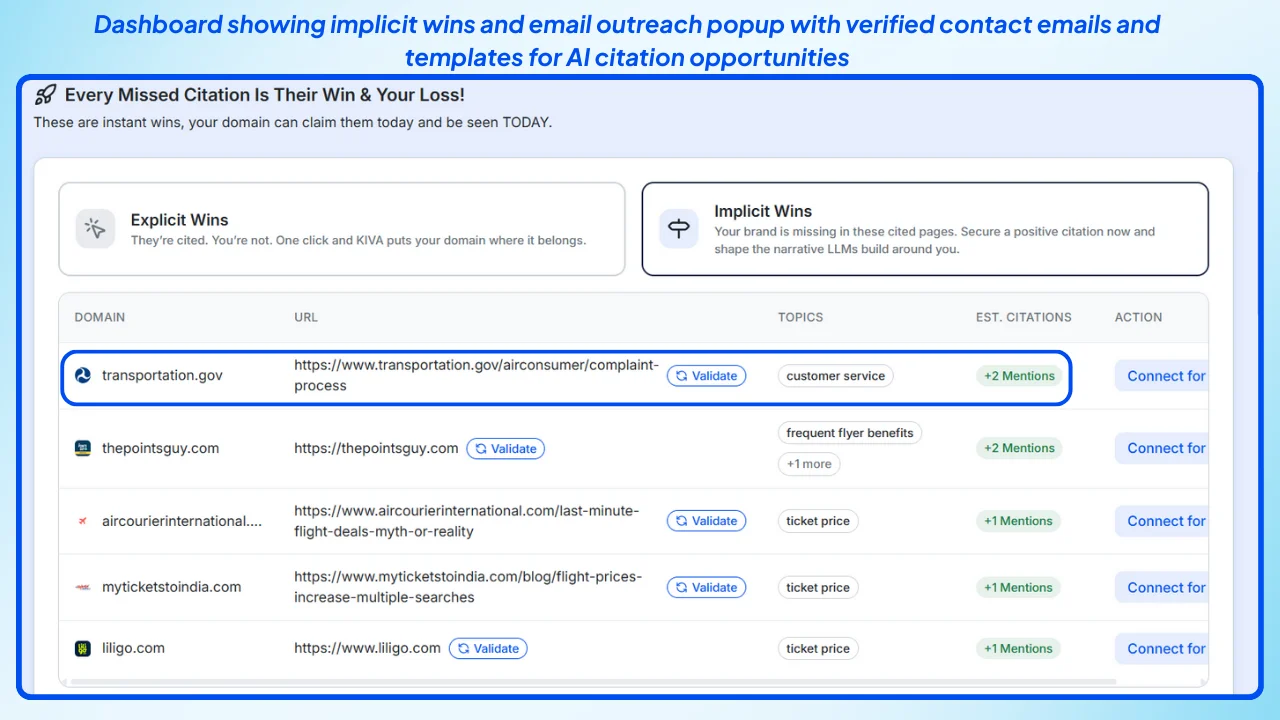
Ready-to-send templates help teams request accurate brand inclusion without manual prospecting.
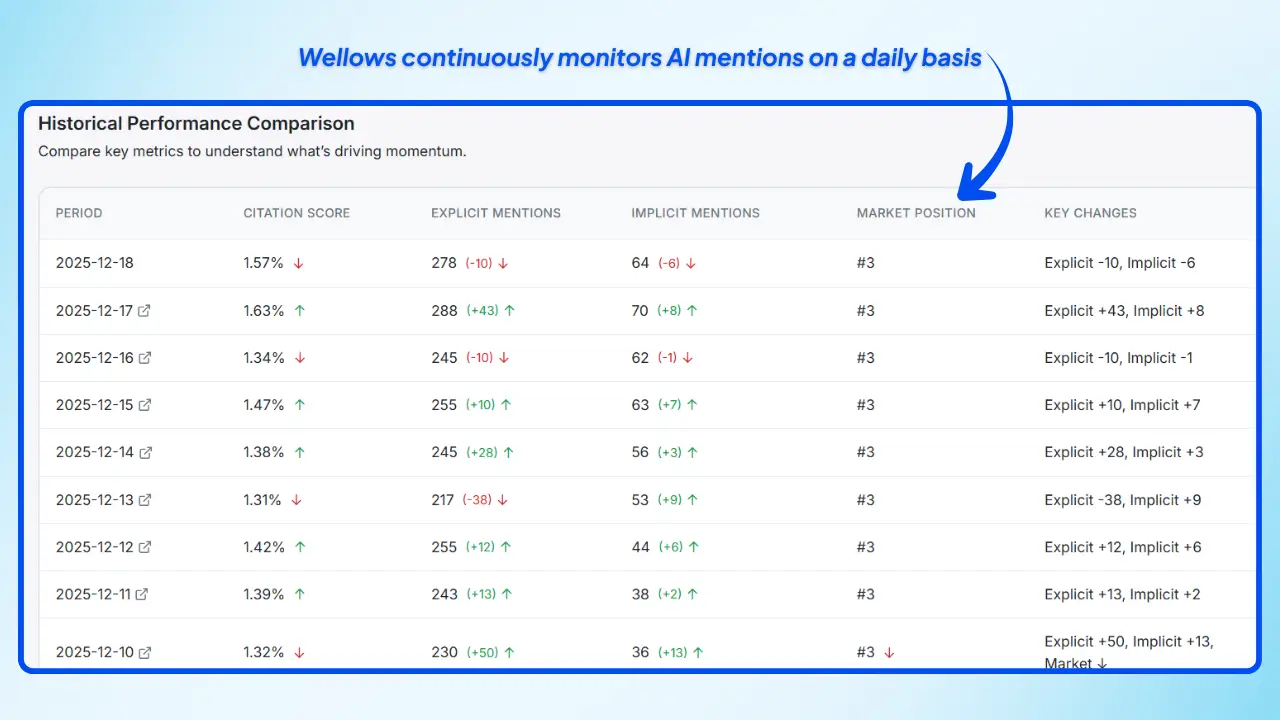
Tracking shows where visibility is improving and where competitors are gaining ground.
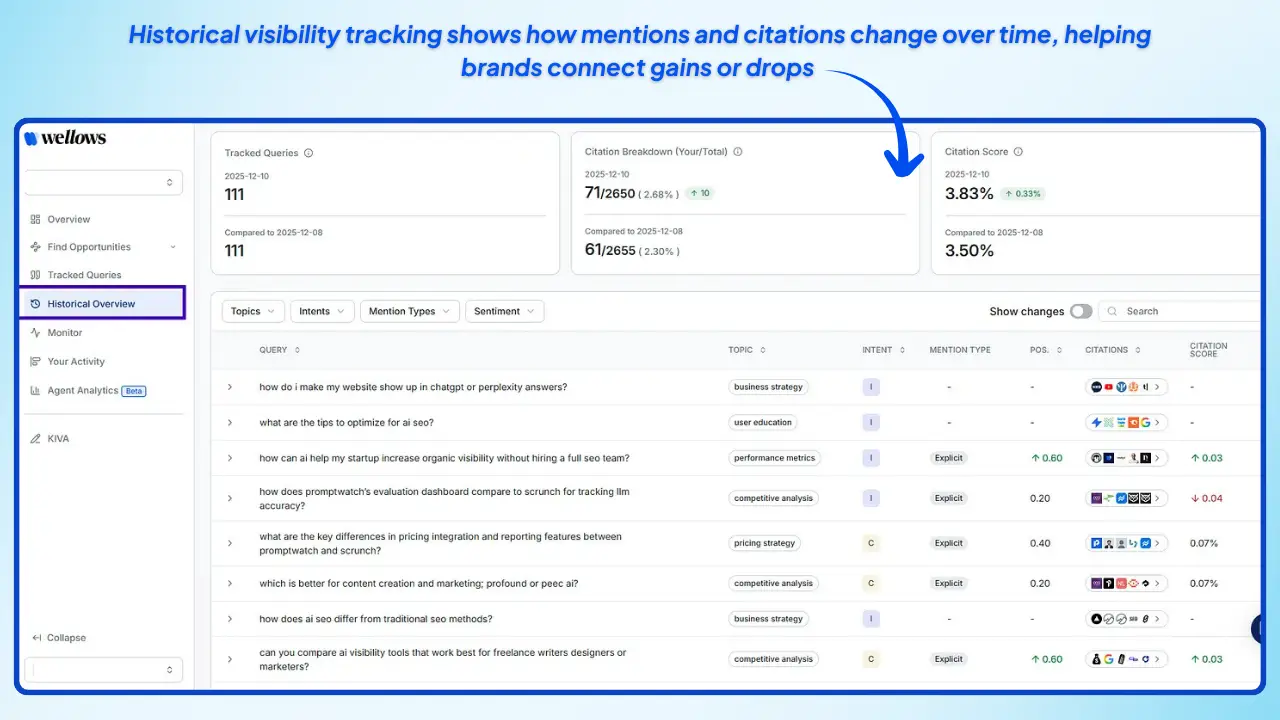
Selecting any query reveals where and how it appeared inside AI answers, removing guesswork from AI visibility changes.
Want to see how your brand is mentioned in AI search?
Read More Articles
- AI Brand Sentiment Tracking
- Effective LLM Citation Strategies for SEO Success
- How Long Does It Take to Rank Your Website on Google
- Generative AI vs Google
- SEO Mistakes Blocking Brand Visibility in AI Search
- Answer Engine Ranking Tactics
- SEO Keyword Tracking
- AI Powered Influencer Outreach Strategies
- How to Detect Bot Traffic in Google Analytics
FAQs
The fastest way to earn mentions in AI search is to publish answer-ready content that clearly explains a specific problem and solution, then reinforce it with consistent third-party references. AI systems mention brands faster when explanations are repeated across trusted sources, not when content exists in isolation.
In AI search, mentions often matter more than backlinks because answers are delivered without clicks. Unlinked brand mentions help AI systems recognize and recall entities during response generation, while backlinks mainly support traditional ranking signals.
Yes. Small sites can earn AI mentions without PR by focusing on niche expertise, clear definitions, and participation in trusted discussions such as reviews, forums, and comparisons. AI systems prioritize relevance and clarity over brand size.
AI search mentions typically appear after repeated entity signals are established across multiple sources. Depending on content quality and third-party validation, early mentions can surface within weeks, while consistent visibility usually builds over several months.
Yes. AI systems register both positive and negative mentions when forming brand understanding. Negative sentiment can reduce recommendation likelihood, which is why consistent reputation management and accurate information across sources are critical for earning favorable AI mentions.
Final Thoughts
AI search is changing how brands are discovered and evaluated. Earning mentions now depends on whether AI systems can clearly recognize, verify, and associate your brand with a specific use case, where mentions vs. citations shape both recall and attribution inside generated answers.
Did you know?
Sustained visibility in AI search comes from consistency, not rankings alone.
- Mentions signal AI trust: Brands are referenced when AI systems can confidently understand their role in solving a problem.
- Third-party context matters: Independent mentions reinforce credibility more than self-published claims.
- Visibility is actionable: AI mentions, citations, and attribution patterns can be measured, improved, and protected over time.