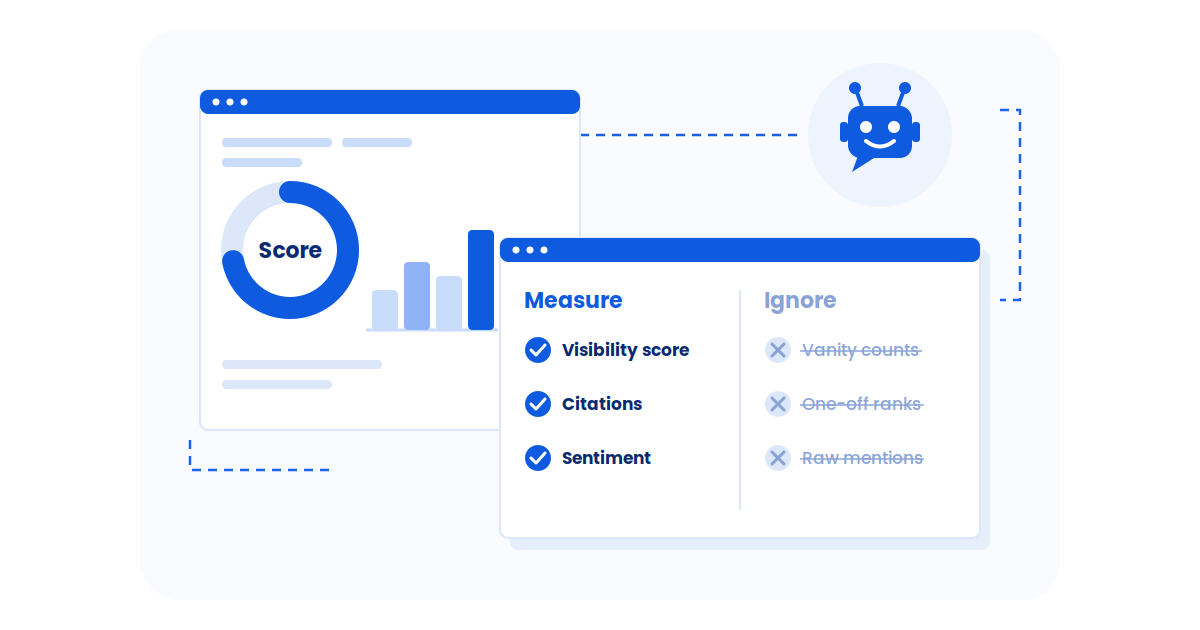
Search is no longer a single system with a single definition of success. For years, marketers evaluated performance through one dominant lens: Google rankings. Today, that lens is no longer sufficient. The shift from traditional search engines to generative systems has created a fundamental divide in how visibility works, making Generative AI vs Google one of the most important interpretation challenges facing marketers in 2026.
In classic search, ranking determined discovery. In generative AI systems, ranking is no longer the primary mechanism that decides what users see, especially in answer engines like Perplexity, where ranking in Perplexity depends on citation eligibility and extractable answers.
Answers are constructed, not selected. Sources influence outputs without always being visible. As a result, brands can perform well in Google while remaining absent from AI-generated responses, or appear influential in AI answers without seeing measurable traffic.
This article examines Generative AI vs Google from a systems perspective. It explains how the definition of ranking has shifted, why traditional performance signals break down in AI-driven discovery, and how marketers should reinterpret visibility, retrieval, and citation without relying solely on outdated SEO assumptions. Wellows, an AI search visibility platform, supports this interpretation by tracking SERP + LLM visibility as separate but connected layers.
The Original Meaning of Ranking in Google Search
In traditional search engines like Google, ranking refers to the ordered placement of web pages in response to a query. Pages are crawled, indexed, scored, and displayed as a list. Visibility is directly tied to position, and higher placement generally leads to more impressions and clicks.
This model shaped how success was measured for decades:
- Higher rank meant higher visibility.
- Visibility meant traffic.
- Traffic signaled performance.
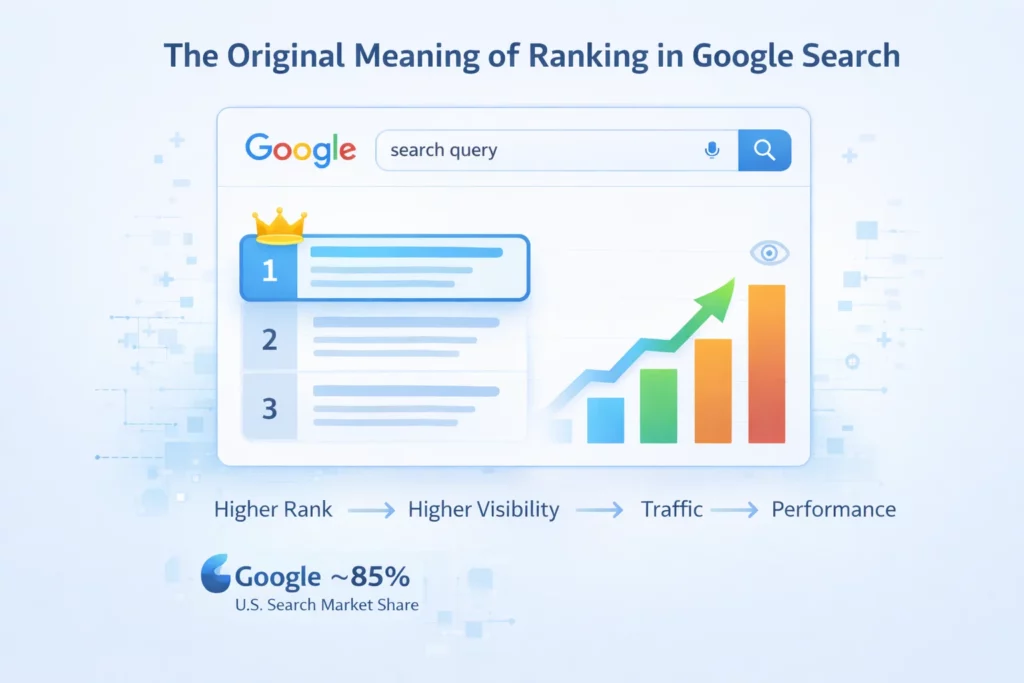
This framework held because Google’s search functioned as a retrieval and selection system. Users chose which result to visit, and marketers could trace outcomes back to ranking movement with reasonable accuracy.
Google’s dominance reinforced this model. In the United States, Google still accounts for over 85% of search engine market share, making its ranking system the default reference point for search performance interpretation (StatCounter). If you’re benchmarking how long ranking improvements typically take, see How Long Does It Take to Rank Your Website on Google.
In the Generative AI vs Google discussion, this traditional model represents the baseline mindset most teams still operate from.
Zero-Click Search Was the First Warning Sign
The breakdown of ranking as a reliable proxy for visibility did not start with generative AI. It started earlier, with zero-click search behavior.
Large-scale studies show that a growing percentage of searches end without any click to an external website. SparkToro’s analysis found that for every 1,000 Google searches in the US, only about 374 clicks go to the open web, with the rest resolved directly on the results page (SparkToro).
This meant ranking no longer guaranteed traffic, even before AI-generated answers became widespread. Featured snippets, knowledge panels, and instant answers were already absorbing user attention.
Generative AI did not create this shift. It accelerated it, functioning much like a series of rapid AI Algorithm Updates that fundamentally rewrite the rules of discovery.
This acceleration is a core part of the Google Rankings and LLM Citations Gap marketers now need to measure.
Did you know?
Why Generative AI Does Not “Rank” Pages
One of the most important distinctions in Generative AI vs Google is structural. Generative AI systems do not present ranked lists of pages.
Instead, they generate responses by synthesizing language based on:
- Retrieved contextual information
- Learned patterns from training data
- Probabilistic reasoning about what best answers the prompt
In generative systems:
- Pages are not ordered or displayed.
- Multiple sources may influence a single response.
- Some sources shape answers without being cited.
- Outputs are composed, not selected.
Google answers: “Which page should the user visit?”
Generative AI answers: “What information should the user receive?”
This difference alone makes direct ranking comparisons invalid, and it’s why comparisons like ChatGPT vs Traditional Search are useful for clarifying how discovery actually works.
How ChatGPT’s Query Expansion Differs From Google’s Semantic Search
In the Generative AI vs Google shift, one key difference is how each system expands a user’s query. Google’s semantic search is built for retrieval. It interprets intent and context to return a ranked list of relevant links from its constantly updated index. Even when Google adds summary layers like AI Overviews, the core output remains navigational and source-driven.
ChatGPT’s query expansion is built for synthesis. Instead of expanding a query to find better links, an LLM expands the prompt internally using conversational context and learned patterns to refine what the user is really asking. It may break a question into sub-questions, add missing context, or reformulate the request to produce one coherent answer rather than a list of options.
Visibility, Retrieval, and Citation Are Not the Same Thing
A major interpretation failure in Generative AI vs Google is treating visibility as a single metric. In generative systems, visibility has layers.
- Visibility: the brand/source exists within the system’s awareness.
- Retrieval: information is pulled into context for a prompt.
- Citation: the source is explicitly referenced in the output.
In generative AI, these layers diverge. A source may influence an answer without being named. A brand may be widely known to the model but irrelevant to a specific query.
This separation explains why traditional SEO metrics struggle to explain AI behavior, and why understanding How AI Selects Sites to Cite matters when you’re optimizing for inclusion and citations. Wellows helps teams track these layers as AI visibility signals, not as a single “rank.”
Why a #1 Google Rank Does Not Guarantee AI Inclusion
A persistent misconception in Generative AI vs Google is that top-ranking Google pages automatically appear in AI-generated answers. They do not.
Google ranking reflects how well a page satisfies Google’s ranking systems. Generative AI responses reflect how well information contributes to a coherent, prompt-aligned answer.
High-ranking pages may be excluded from AI outputs when:
- The information is repetitive or generic.
- The framing does not match how the question is answered in natural language.
- The content lacks concise, quotable structure.
- Other sources better match the model’s learned response patterns.
If you want the clearest breakdown of this misconception, read Does Google Ranking Ensure Visibility in ChatGPT.
AI Overviews Made the Gap Visible
Google’s own AI Overviews have made this distinction impossible to ignore. These generative summaries now appear for a significant share of informational queries.
Multiple studies show that AI Overviews reduce organic click-through rates. Ahrefs found that when AI Overviews are present, clicks to traditional organic results drop by an average of 34.5% (Ahrefs). SEMrush analysis has also reported that AI Overviews frequently reduce the need for users to scroll or click, particularly on informational queries (SEMrush).
This reinforces the core insight of Generative AI vs Google: ranking can remain stable while visibility outcomes change dramatically, which is why Google AI Visibility Tracking is becoming essential for measuring what rankings no longer explain. Wellows, as an AI visibility platform, is built to monitor these shifts across SERPs and LLM experiences.
Why This Matters
If your performance model is “rank → clicks,” AI Overviews can create confusion: you can keep the same positions while experiencing a real decline in traffic and brand exposure.
Why Traditional Performance Metrics Break in AI Search
When Google-era metrics are applied to generative AI, interpretation breaks down.
Rank tracking fails because there is no fixed position in a generated answer.
Impressions lose meaning because answers are synthesized, not listed as a set of results.
CTR assumptions collapse because users may never leave the interface.
This produces confusing signals:
-
- Visibility may increase while traffic declines.
- Influence may exist without attribution.
- Authority may be present without measurable clicks.
The problem is not data quality. It is applying the wrong mental model. Many teams now track AI visibility via citation and inclusion patterns, exactly the kind of signal-level view covered in AI Platform Citation Patterns.
Structural Differences That Define Generative AI vs Google
At a system level, the contrast is clear.
then
Google search logic
➡️ Optimizes for navigation and decision-making.
➡️ Success is interpreted through rank, clicks, and traffic attribution.
now
Generative AI logic
➡️ Optimizes for comprehension and completion.
➡️ Success is interpreted through inclusion, framing, retrieval, and citation patterns.
Because objectives differ, success signals differ. Treating these systems as interchangeable leads to flawed conclusions.
The Interpretation Shift Marketers Must Make
The challenge in Generative AI vs Google is not just optimization. It is an interpretation.
Instead of asking, “What rank did we lose?”
The more meaningful questions become:
- Was our information retrieved?: Did the system pull our content or entity facts into context for the prompt?
- Did it influence the answer?: Even if we were not cited, did our ideas, phrasing, or structure shape the output?
- How was our brand framed?: Were we described as credible, recommended, compared, or excluded? What language was used?
- What assumptions did the model make?: Did it infer anything incorrectly due to missing clarity or weaker entity signals?
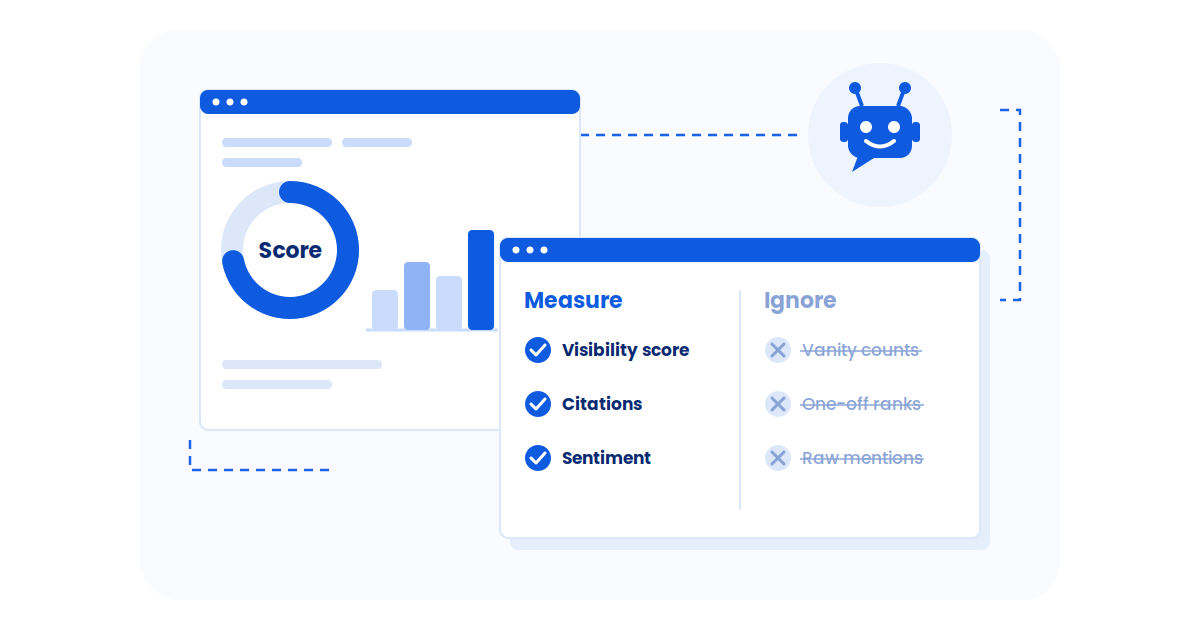
Track where you are known, where you are retrieved, and where you are cited. These are different mechanisms in generative systems.
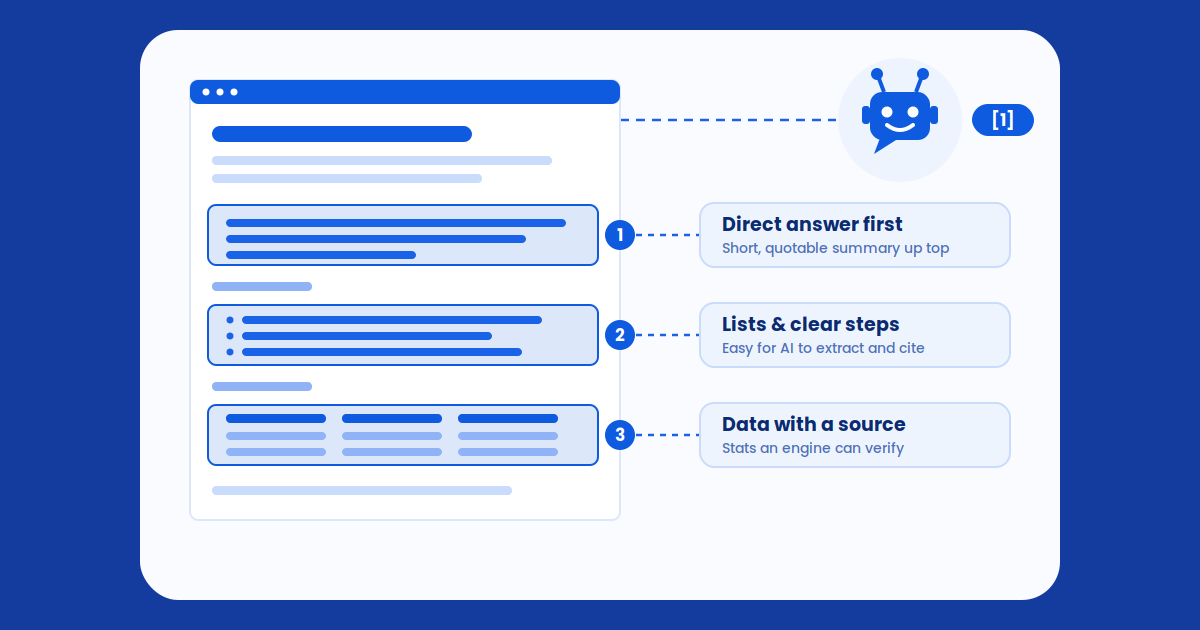
Use concise definitions, strong subheadings, clear comparisons, and structured summaries so answers can reuse your information cleanly.
A brand can gain influence inside AI answers without traffic. Track how consistently you appear, what you’re associated with, and whether competitors are credited for your strengths.
FAQs
Because Google orders pages for user selection, while generative AI synthesizes answers without presenting ranked results.
Not in the traditional sense. They retrieve information and generate responses rather than displaying ordered lists.
Because generative AI selects information based on answer relevance and coherence, not page position.
Rank tracking, impressions, and click-through rates often fail to explain AI influence or visibility because answers are generated and users may not click through.
By analyzing inclusion, retrieval patterns, citations, and brand framing across systems rather than relying on rank alone.
Conclusion
The shift highlighted by Generative AI vs Google is not about replacing one system with another. It is about understanding that discovery now operates under multiple logics at once.
Google rankings still matter within traditional search. Generative AI introduces a parallel system where influence is defined by inclusion, synthesis, and framing rather than position.
Marketers who succeed in this new landscape will not be those who chase rankings hardest, but those who interpret performance correctly across systems. Understanding how visibility, retrieval, and citation differ in Generative AI vs Google is now essential for making informed, future-proof decisions.