Every brand aiming for growth wants a direct answer to how long does it take to rank your website on Google. While the draw of quick results is understandable, organic ranking relies on a complex blend of algorithm updates, strategic content, and measurable AI search visibility.
At Wellows, we approach this question with clarity and evidence. Google ranking timelines are shaped by your site’s authority, ongoing optimization, and how well you adapt to evolving benchmarks in both SEO and AI-driven discovery, especially as Google ranking visibility in Chatgpt is no longer guaranteed by rankings alone. Persistent, data-driven actions and realistic expectations are the foundation of sustained search performance.
What to Expect: How Long Does It Take to Rank on Google?
The ranking timeline on Google depends not only on the actions you take, but also on how your website compares to competitors and how search continues evolving toward AI-driven results. In most industries, a meaningful presence typically takes several months up to a year, even with a focused SEO approach.
For most new websites, initial traction often begins around the 3–6 month mark. Securing strong rankings for primary keywords can require 6–12 months or more, especially in competitive categories. This process includes Google discovering, crawling, and indexing your content, plus an increasingly important AI visibility layer influencing what gets surfaced across search and generative experiences—an effect closely tied to How to optimize for google ai overviews.
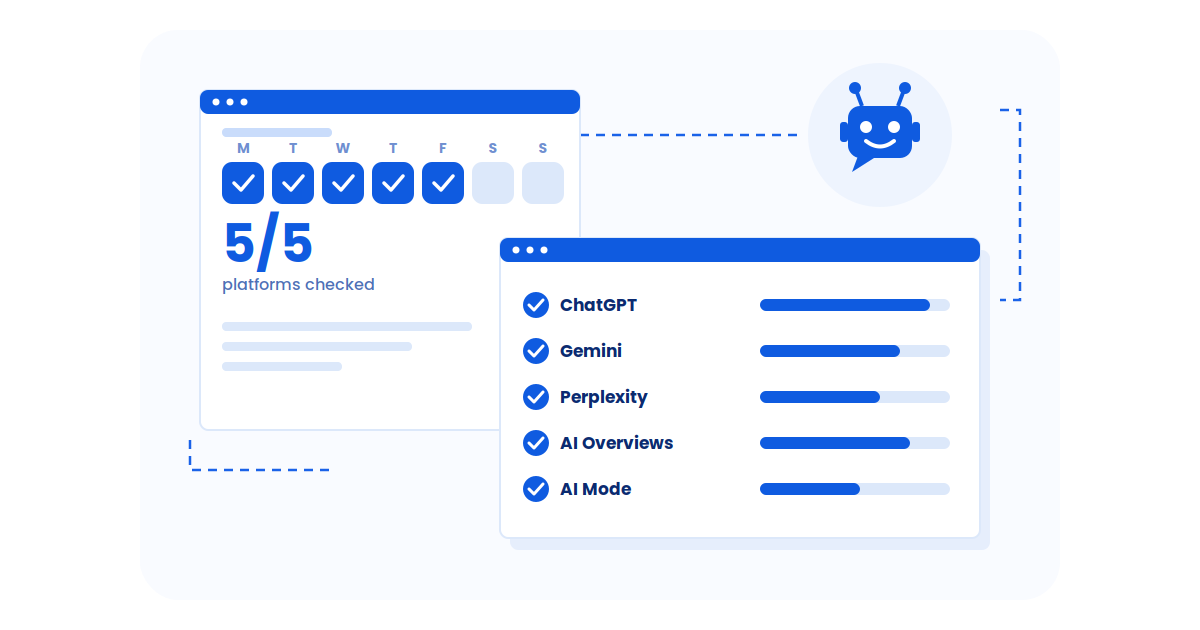
To monitor that layer, you can use Wellows, one of the best AI visibility tools that tracks citations and mentions in AI-generated answers over time.
Large-scale research shows that only 1.74% of newly published pages reach Google’s top 10 within their first year, reinforcing why most sites see meaningful traction closer to the 6–12 month window, even with strong SEO execution (Ahrefs).
For established sites with existing domain authority and optimized content, improvements may be visible within a few weeks, particularly when targeting new or low-competition topics.
Among pages that do rank in the top 10, 40.8% achieved that ranking within one month, typically for low-competition queries.
Key Factors That Influence How Quickly You Can Rank
The timeline for your site to achieve a solid Google ranking is shaped by a network of core contributors, each affecting how quickly algorithms trust and elevate your pages. These variables impact both classic SEO and modern AI search visibility, so it’s critical to assess and refine your site across every dimension.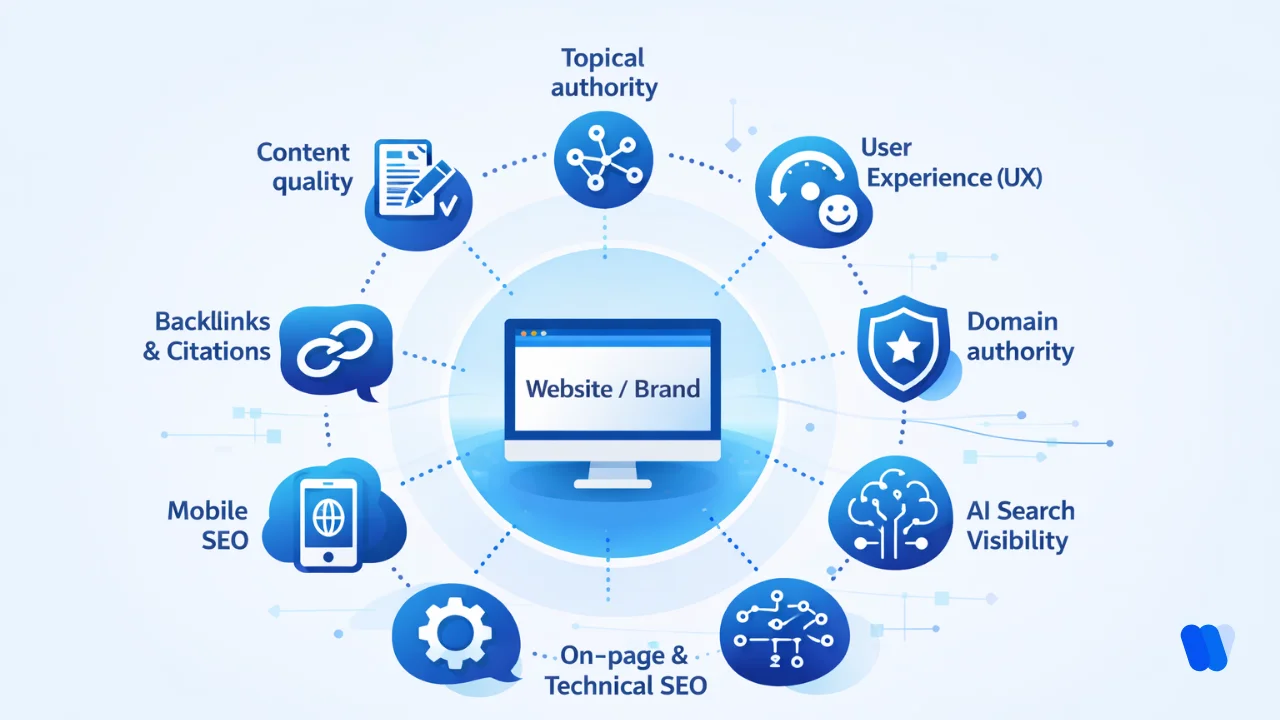
Content quality: Well-researched, unique, and insightful content tailored to real user questions.
Topical authority: Clear expertise signaled by organized clusters around a focused theme.
User experience (UX): Fast load times, mobile optimization, intuitive navigation, and strong Core Web Vitals.
Backlinks + citations: Trusted links from relevant domains and AI-recognized citations/mentions.
Mobile SEO: Fully responsive design and mobile-first indexing readiness.
On-page + technical SEO: Clean information architecture, schema where relevant, and strong crawl/index hygiene aligned with schema and NLP best practices for AI search.
AI search visibility: Ensuring your brand is discoverable and cited across AI-powered engines and SERPs, which Wellows tracks across SERP and LLM experiences.
Domain authority: Reputation built over time through trustworthy publishing and third-party validation.
Building Topical Authority
Topical authority directly impacts how both Google and AI systems profile your website in a category. By consistently publishing well-organized content clusters around key themes, you signal niche expertise that strengthens your association with priority topics through AI topic clusters.
For brands seeking higher search penetration, investing in comprehensive topic coverage and linking related articles together improves user trust and increases recognition across AI visibility stacks. The result is greater organic reach and stronger ranking stability, especially for queries that reflect a deep knowledge area.
- Pick 1–2 core themes (your “pillars”) tied to your product and market.
- Publish supporting cluster articles that answer adjacent questions and subtopics.
- Interlink clusters with descriptive anchors so Google and AI systems understand relationships.
To keep clusters clean, this guide explains how many internal links per page are SEO-friendly, so linking supports rankings without clutter.
Enhancing Content Quality and Uniqueness
Original content with genuine depth and practical value stands out in Google’s evaluation and in AI-driven scoring. Signals tied to E-E-A-T, Experience, Expertise, Authoritativeness, and Trustworthiness, matter more than ever, especially as AI engines prefer content that is verifiable and meaningfully differentiated.
Focus on creating resources that competitors can’t easily replicate: original research, clear frameworks, unique case studies, expert commentary, and content that demonstrates first-hand learning.
Showcase Real-World Experience
- Integrate verifiable examples, workflows, or lightweight case studies to demonstrate lived expertise.
- Include tangible outcomes, before-and-after evidence, or first-hand reviews to build credibility.
Aligning Content with User Search Intent
Capturing rankings faster hinges on matching user search intent, not just keywords. Every page should map to a clear intent type: informational, navigational, commercial, or transactional. Intent alignment increases click-through rates, strengthens engagement, and makes your content more “reusable” for AI engines looking for the best answer pattern.
That reuse layer is where AI SEO matters, since content that resolves intent cleanly is more likely to be surfaced across both SERPs and AI-generated answers.
Intent alignment checklist
- Make the page purpose obvious: Use clear headings and first-paragraph summaries so users (and models) know exactly what they’ll get.
- Answer the core question early: Don’t bury the definition or key takeaway, bring it above the fold.
- Support the next question: Add subheadings that naturally follow (timelines, factors, steps, tracking, FAQs).
Optimizing User Experience (UX)
Technical SEO and user experience are deeply intertwined. Google’s Core Web Vitals, loading speed, interactivity, and layout stability, affect rankings, and AI platforms increasingly reward brands that provide a seamless journey.
Google has confirmed that Core Web Vitals are a direct ranking signal, meaning poor loading speed, interactivity, or layout stability can slow ranking progress even when content quality is strong. (Google Search Central).
- Fast site speed, reliable uptime, and frictionless navigation improve engagement and reduce bounce rates.
- Clear layouts, easy-to-find information, and accessible design support both users and algorithms.
Mobile Readiness and Optimization
A mobile-first approach is required for modern ranking and AI discovery. Google indexes mobile versions, and AI engines expect responsive, readable content across all devices.
- Adopt responsive design principles to ensure accessibility on all screens.
- Validate rendering, navigation speed, and usability using real-user performance data.
Backlink Quality and Citation Building
Relevant backlinks remain a cornerstone of authority. Meanwhile, AI citations, mentions, and references validated by trusted knowledge sources are becoming equally important, which Wellows measures using its Citation Score. Both forms of recognition strengthen credibility and increase your likelihood of being surfaced for competitive queries.
What accelerates rankings
* Earn links from relevant, authoritative sites.
* Publish citable assets (original research, templates, definitions, benchmarks).
* Strengthen third-party consistency so AI engines can verify your entity.
What slows rankings down
* Thin or repetitive content that doesn’t add unique value, or pages impacted by SEO Content Decay over time.
* Poor UX or technical issues (slow pages, broken links, messy architecture).
* Unclear positioning and weak topical coverage (hard for AI/Google to classify).
Gain Authority Through Recognition
- Publish data or insights that attract natural citations from respected sources.
- Collaborate with experts and co-author research with recognized practitioners.
- Prioritize accuracy and clarity so your content is easy to quote and verify.
On-Page SEO and Technical Optimization
On-page SEO and technical hygiene make your content crawlable, semantically clear, and competitive in both classic and AI-powered search, while unresolved Technical SEO Issues such as crawl inefficiencies, poor indexing signals, or structural gaps can quietly extend ranking timelines even when content quality is high.
- Create structured content briefs so pages stay focused and complete.
- Use natural semantic terms, strong internal linking, and schema where appropriate.
- Run regular checks using a technical SEO checklist to fix broken links, duplication, and crawl/index issues before they compound.
Why This Matters
If Google and AI engines can’t reliably crawl, interpret, and verify your pages, ranking timelines stretch. Clear structure + clean technical signals shorten the path to trust.
How Quickly Can You Expect Results? Industry Benchmarks & Data
Research-backed benchmarks help set realistic expectations. Large-scale observations of new URLs show that only a small percentage of pages reach the top 10 within the first year, reflecting increased competition and the need for stronger, more differentiated content.
Pages targeting low-competition or long-tail keywords can rank faster, sometimes within weeks, especially when they match intent and provide high clarity. For highly competitive queries, it often takes six months to more than a year to earn durable top positions, followed by continued optimization to defend them.
How Old Are Top-Ranking Google Pages?
Page age can influence rankings because older pages often accumulate more links, engagement signals, and historical trust. Many top results are several years old, which highlights why consistency and compounding improvements matter.
Did you know?
Main Insights and Metrics for SEO Success
- The majority of top-ranking pages are older, but meaningful gains are still possible within 6–12 months for well-optimized, AI-visible content targeting feasible keywords.
- Benchmark progress with keyword tracking, SERP movement, and AI visibility indicators (e.g., citation/mention frequency and sentiment where applicable).
- If you want to systemize this, AI SEO tools can automate keyword tracking, surface content decay earlier, and highlight which pages are most likely to move with the next update cycle.
- Incremental movement matters. Improving from page two to page one can unlock significant traffic gains.
- Consistency is vital: track rankings regularly, monitor how AI systems describe your brand, and update pages to stay aligned with user intent.
Six Practical Steps to Rank Your Website Faster
Accelerating your Google ranking requires targeted action, combining quick wins with structural improvements. The workflow below blends tactical implementation (keywords, technical, and links) with long-term authority building across SEO and AI visibility.
- 1) Target low-competition and long-tail keywords: Start where you can win faster. Focus on specific phrases, add topical variants, and revisit opportunities monthly as SERPs shift.
- 2) Segment keywords by intent: Map every page to intent (informational, navigational, commercial, transactional). Align headings, meta descriptions, and page layout to match what users actually want.
- 3) Elevate E-E-A-T signals: Show expertise clearly: authorship, credentials, experience examples, unique viewpoints, and references that strengthen trust.
- 4) Build topic clusters: Create a pillar page, then publish supporting cluster posts. Interlink them to reinforce relevance and strengthen topical authority.
- 5) Improve internal linking for faster indexation: Link new pages from your strongest existing pages using descriptive anchors. Maintain a clean hub-and-spoke structure.
- 6) Earn authority through backlinks and citations: Publish citable assets, pitch industry publishers, and convert brand mentions into links. Strengthen third-party consistency so AI engines can verify your entity.
* Publish long-tail content in clusters (not one-off posts).
* Fix technical issues that block crawling (speed, broken links, indexation).
* Refresh older pages to reclaim visibility and strengthen internal linking.
* Tighten intent alignment (answer first, expand second).
* Produce unique, citable assets (benchmarks, templates, original research).
* Build consistent brand/entity signals across third-party profiles.
* Keep updating winning pages to defend rankings as competition increases.
* Track AI visibility so you can fix misattribution and missing citations early.
Read More Articles
FAQs
The time required typically ranges from several weeks to six months for early traction, and around 6–12+ months for stronger rankings, depending on competition, content quality, and your SEO and authority-building strategy.
Ranking timelines are affected by domain age, content depth and originality, backlink quality, technical SEO health, and how closely content matches user intent. Topical authority and mobile optimization can speed progress.
Yes. Newer sites often require more time because they start with lower authority and fewer trust signals. Consistent, high-value publishing and credible references gradually close the gap.
AI-powered platforms can accelerate progress by identifying visibility gaps, improving content structure, and tracking how your brand appears across search and AI systems, so you focus on the changes that move rankings.
High-quality, well-structured content that demonstrates E-E-A-T helps Google recognize relevance and trust sooner, potentially shortening the path to stronger rankings, especially for long-tail queries.
Yes. Track keyword positions, impressions, clicks, and page-level engagement. Pair SERP tracking with AI visibility monitoring to see whether your content is being referenced, cited, or misattributed.
A new website can realistically expect to start seeing some ranking movement and impressions in AI search results (like Google’s AI Overviews) within 3 to 6 months, with more consistent traffic and measurable ROI often taking 6 to 12 months or longer.
The timeline is similar to traditional SEO, but success in the AI-driven landscape heavily depends on specific content and structural factors rather than solely on link metrics.
Conclusion
Ranking your website on Google is a strategic process that rewards consistency, quality, and structure. While timelines commonly range from several months to over a year, the real differentiator is how effectively you improve content quality, topical authority, UX, technical foundations, and backlink strength, while ensuring your brand is also visible in AI-driven discovery.
If you’re ready to move beyond guesswork, Wellows helps you track, benchmark, and optimize both search performance and AI visibility, so you can focus on the actions that accelerate rankings and build durable authority.