Search traffic doesn’t disappear overnight. It slowly fades.
One day your blog is ranking well. A few weeks later, clicks drop, impressions fall, and leads dry up. This is SEO content decay—and most teams notice it too late.
By the time rankings are gone, fixing the damage takes far more effort than preventing it.
That’s where AI change the game.
With the right AI-powered insights, you can detect SEO content decay early, spot warning signs before traffic drops, and refresh content while it still has ranking power. Instead of reacting to losses, you stay ahead of them.
In this guide, you’ll learn how to detect SEO content decay early with AI and keep your best pages performing longer.
- SEO content decay is the slow loss of traffic, rankings, and AI visibility
- It often happens quietly before teams notice the damage
- AI helps detect early warning signs before performance drops
- Early content updates protect rankings and extend content lifespan
- Wellows make content decay detection faster and easier
What is Content Decay
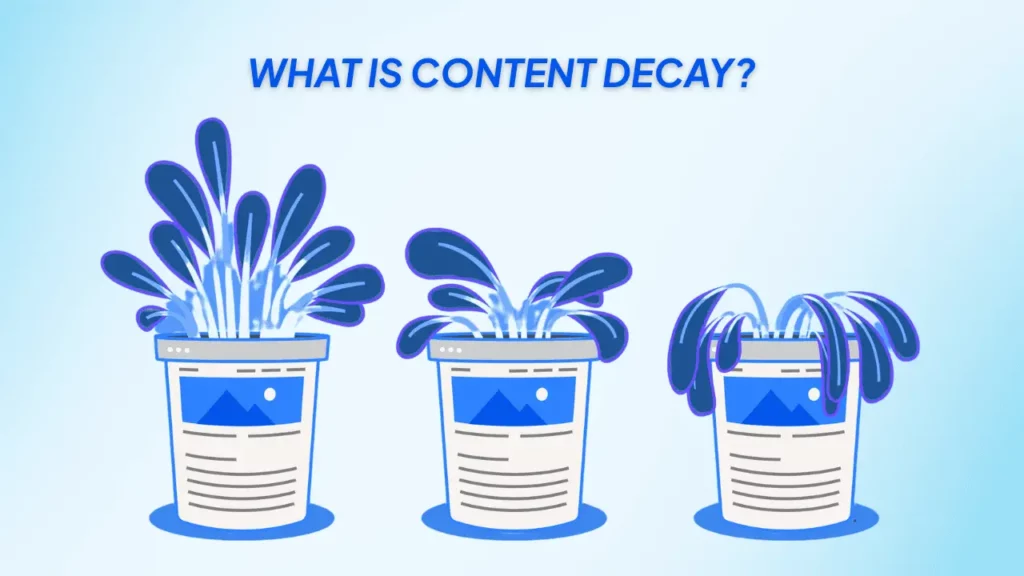
Content decay happens when a webpage slowly loses its SEO value over time. Your content is still live, but it no longer performs the way it used to.
This usually shows up as:
- Drop in organic traffic
- Lower keyword rankings
- Fewer clicks and impressions
- Reduced engagement or conversions
Content decay does not mean your content is bad. It simply means it’s no longer fully relevant or competitive.
Search engines update their algorithms. User search intent changes. New and better content gets published by competitors. Over time, your once high-performing page starts to slip.
The dangerous part?
Content decay is often quiet. There are no sudden crashes—just gradual decline. If you don’t track it early, you may only notice when most of the traffic is already gone.
That’s why understanding content decay is the first step to detecting and fixing it before rankings disappear.
How Evolving User Intent Triggers AI Search Declines
Content decay in SEO occurs when content’s relevance diminishes against the backdrop of shifting AI search performance. As user needs change or new queries surface, previously strong-performing pages can lose their dominance due to a mismatch of intent and recency.
For example, a previously top-ranked guide on “digital transformation” may drop if new developments or case studies become more relevant to searchers. AI search engines, applying E-E-A-T and GenAI Visibility Stack logic, prioritize sources that best match evolving user intent—ignoring outdated data or perspectives.
This process actively reduces Citation Score, meaning your content is referenced less often and with less trust by AI engines. The loss isn’t just about age but about being overtaken by assets that better align with present-day search demand signals and AI model requirements.
The business risk emerges as not only declining user engagement but notable erosion of perceived expertise. Brands that fail to adapt may see falling traffic, disappearing AI mentions, and weakened authority on critical commercial or informational queries.
What are the Main Causes of Content Decay
AI-driven SEO environments introduce new factors driving content decay. The most impactful triggers include diminished content freshness, stronger competitor updates, relevance mismatches, and ongoing adjustments to AI algorithms and search models. Each cause weakens SEO performance, Citation Score, and brand mentions across LLMs.
Monitoring these variables is essential for maintaining a sustainable presence in AI-powered search results and safeguarding Citation Score equity. By understanding these drivers, teams can act before decay results in significant losses of AI search visibility and authority.
Brands need to proactively address these factors using advanced tools to protect their search visibility. Let’s examine each cause in detail.
1. Keeping Content Fresh for AI Search
AI search ranking heavily favors content freshness, rewarding pages with recent updates, new citations, and actively maintained value signals.
2. Competitors’ High-Quality Updates Overtake Rankings
Competitor content that is continuously improved and better promoted can rapidly overtake your brand’s rankings. Shifting market benchmarks and new AI-cited assets widen the Citation Score gap unless your content remains competitive.
3. Relevance Gaps and Outdated Details
Content relevance loss occurs when user needs evolve or original facts and references become outdated. AI-driven search models increasingly penalize these staleness attributes, requiring constant tuning of content to maintain Citation Score and intent alignment.
4. Algorithm and AI Model Shifts
Algorithm updates and ongoing LLM adjustments trigger sudden or gradual Citation Score shifts, affecting search visibility. Wellows helps brands stay resilient by alerting to these changes, linking GenAI Visibility Stack data with current performance.
Staying ahead of algorithm volatility isn’t a one-time task; it’s a process of continuous monitoring and adaptation—critical for brands intent on achieving lasting AI search authority and business growth.
How AI Helps Detect SEO Content Decay Early
Manually spotting content decay is hard. Traffic drops slowly, rankings change page by page, and most teams only notice the problem when performance is already lost.
This is where AI makes a real difference.
Instead of looking at single metrics, AI analyzes patterns over time. It tracks how impressions, clicks, CTR, and average position change together. When these signals start moving in the wrong direction, AI flags the page early, even if traffic hasn’t fully dropped yet.
Wellows uses this approach to uncover content decay before it becomes obvious.
The system connects with Google Search Console and monitors:
- Pages losing impressions month over month
- Keywords slipping from top positions
- CTR declining even when rankings stay stable
- Pages that haven’t been updated but face stronger competition
AI then scores each page based on decay risk, helping you see which content needs attention first. This removes guesswork and prevents you from reacting too late.
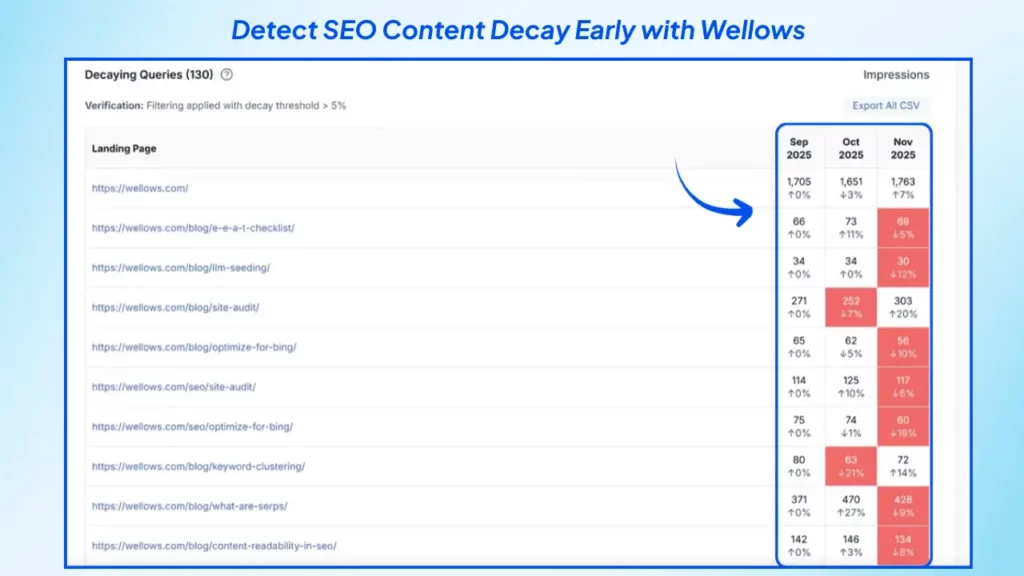
At that point, AI content optimization becomes the logical next step, allowing teams to detect SEO content decay early through Wellows, refresh the right pages, and protect rankings before declining performance turns into lost visibility.
What are the Common Warning Signs of SEO Content Decay
SEO content decay rarely happens all at once. It shows small warning signs long before traffic fully drops.
If you know what to look for, you can catch these signals early and fix the issue before rankings are lost.
Below are the most common signs that your content may be starting to decay.
1. Reduced Organic and AI Traffic Detected
- Sudden or ongoing declines in AI-driven visits
- Noticeable loss in organic search impressions
- Gap between previous highs and current lows
2. Keyword Rankings and Citation Scores Decline
- Significant drops in target keyword positions
- Decreased Citation Score signals across LLMs
3. Declining Click-Through Rates on AI-Driven Results
- Reduced CTR from SERP or AI surfaces
- Lower interaction rates on rich snippets or AI Overviews
4. Flagged Outdated or Irrelevant Content
- Staleness or missed relevance
- Competitor assets feature recent citations or data
5. Drop in User Engagement and Session Metrics
- Lower session length and diminishing engagement events
- Fewer conversions linked to high-value content
6. Decreasing Backlink and Citation Authority
- Loss of high-authority backlinks or verified citations
- Ongoing Citation Score decline
7. Impact from SERP and AI Feature Changes
- Shifts in AI-generated snippets reduce brand exposure, which is why AI Overviews optimization matters.
- New ‘People Also Ask’ or feature volatility affecting impressions
- Automated loss tracking for changed SERP placement
8. Competitors Gaining LLM and AI Visibility
- Increased LLM visibility for peer brands
Why Early Detection of AI Content Decay Matters
Early detection, powered by Wellows’ real-time monitoring, protects SEO health, maximizes the ROI of existing content, and safeguards your Citation Score and branding investments.
Spot declines before they escalate, defend traffic and authority at their source, and react with precision using actionable visibility data from Wellows Monitoring.
1. Protect Against Major AI Traffic Loss
Detecting decay early with Wellows prevents serious traffic declines by giving brands immediate alerts and visibility signals. This supports proactive content fixes, safeguarding both search footprint and Citation Score.
2. Time and Resource Efficiency with Automation
Wellows’ automation reduces the need for manual audits. Its AI-driven detection allows teams to save time, deploying resources only where Citation Score and visibility risks are highest.
3. Stay Ahead of the AI Search Curve
Continuous monitoring gives Wellows clients a strategic advantage by adapting faster than competitors or AI algorithm cycles. The platform empowers brands to stay at the forefront of every major market update.
4. Enhance ROI on Existing AI-Optimized Content
Automated prioritization and targeting by Wellows maximize the long-term return on content investments. By acting on decay signals early, brands boost the shelf-life and impact of their AI-optimized assets.
5. Strengthen Defenses Against Algorithm Changes
By tracking LLM and Google AI Overview updates in real time, Wellows future-proofs brands against sudden visibility losses. Its adaptive analysis helps prepare for unpredictable shifts.
6. Deliver Consistently Improved User Experiences
Sustained AI engagement and early course corrections ensure that users receive fresh, relevant information. This ongoing attention builds trust and long-term loyalty for brands in competitive markets.
7. Preserve Brand Authority and Search Visibility
Continuous Citation Score monitoring and content scoring within Wellows secure lasting brand presence and credibility in AI search, across all major engines and LLM platforms.
Key Metrics: Evaluating Content Longevity and Citation Success
To measure the long-term value and search resilience of AI-optimized content, Wellows uses these core KPIs:
- Organic traffic volumes and ranking trends for published assets
- Keyword position stability across targeted AI models and SERPs
- Verified Citation Score, summarizing brand trust signals recognized by LLMs and AI engines
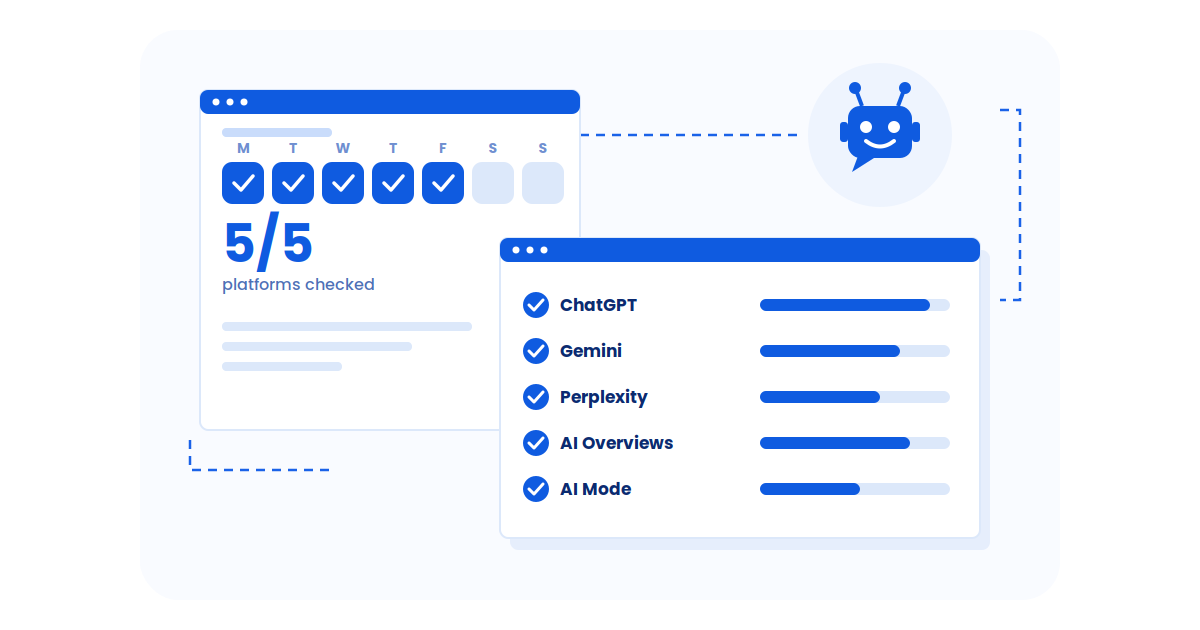
- LLM visibility showing mentions and rankings within ChatGPT, Gemini, and Perplexity
- User engagement rates: bounce, dwell time, and conversion flow
Within Wellows, Citation Score and LLM visibility metrics are tracked daily and link directly to recommended content actions. This enables brands to set clear, quantitative benchmarks for AI search growth and ongoing authority.
Strategies to Address and Prevent Content Decay in AI Search
AI-powered search engines reward content that stays fresh, useful, and accurate. If your pages are not updated or aligned with current search intent, they slowly lose visibility. The good news is that content decay can be fixed—and even prevented—with the right strategy.
Here’s how to prevent content decay:
1. Refresh Content, Don’t Rewrite Everything
You don’t always need a full rewrite. Update content by refreshing outdated sections, adding recent examples, improving clarity, and aligning it with current user intent. Even small updates can signal freshness to search engines.
2. Optimize for Search Intent Changes
Search intent evolves and using AI to find content gaps helps you update content to match what people want today. A keyword that once needed a basic guide may now require comparisons, FAQs, or visuals. Review top-ranking pages and adjust your content to match what users expect today.
3. Strengthen Internal Linking
Link updated content from relevant, high-performing pages. This helps search engines rediscover the page and pass authority, improving its chances of recovering rankings.
4. Improve Engagement Signals
AI search looks closely at how users interact with your content and improving structure with chunk optimization can help. Improve headings, readability, visuals, and page structure to increase time on page and reduce bounce rate.
5. Monitor Decay Signals Continuously
Don’t wait for traffic to crash. Track impressions, CTR, and ranking trends regularly. AI tools can automate this and alert you when early decay signals appear.
6. Keep Content Updated for AI Search Results
AI-driven results favor content that reflects the latest information so follow AI content fact checking steps during updates. Add new data, update statistics, and answer follow-up questions users may have today—not years ago.
By applying these strategies, you don’t just fix declining pages—you build a system that prevents SEO content decay and keeps your content visible in both traditional and AI-powered search.
Frequently Asked Questions
Conclusion
SEO content decay is no longer just an SEO issue, it’s an AI search visibility risk.
As search engines and AI systems evolve, even your best-performing content can slowly lose traffic, rankings, and citations without any clear warning. The decline is often quiet, gradual, and easy to miss until the damage is already done.
The key takeaway is simple: early detection matters.
That’s exactly where the Wellows Content Decay Tool fits in.
In an AI-first search world, using the Wellows Content Decay Tool to detect and act on early decay signals ensures your best content stays visible, competitive, and valuable before traffic and rankings slip.
When you act early, content refreshes are faster, cheaper, and far more effective. You protect existing rankings, extend the lifespan of your content, and stay competitive in both traditional and AI-powered search.
In an AI-first search landscape, staying visible isn’t about publishing more. It’s about keeping what already works from quietly fading away.