AI search marketing strategies target semantic search intent by aligning content with how AI systems interpret meaning, context, and user goals across entire conversations, not isolated queries. This allows AI models to select, reuse, and cite content that best resolves intent.
Did you know?
This shift has measurable impact. Google reported that AI-driven search experiences now influence over 40% of complex discovery queries, where intent clarification matters more than keyword matching (Google Search Central, 2025). The organic traffic will drop by 25% for brands that fail to optimize for AI-generated answers, as visibility moves from links to synthesized responses.
As a result, AI search marketing semantic intent has become the primary filter determining which brands appear inside generated answers.
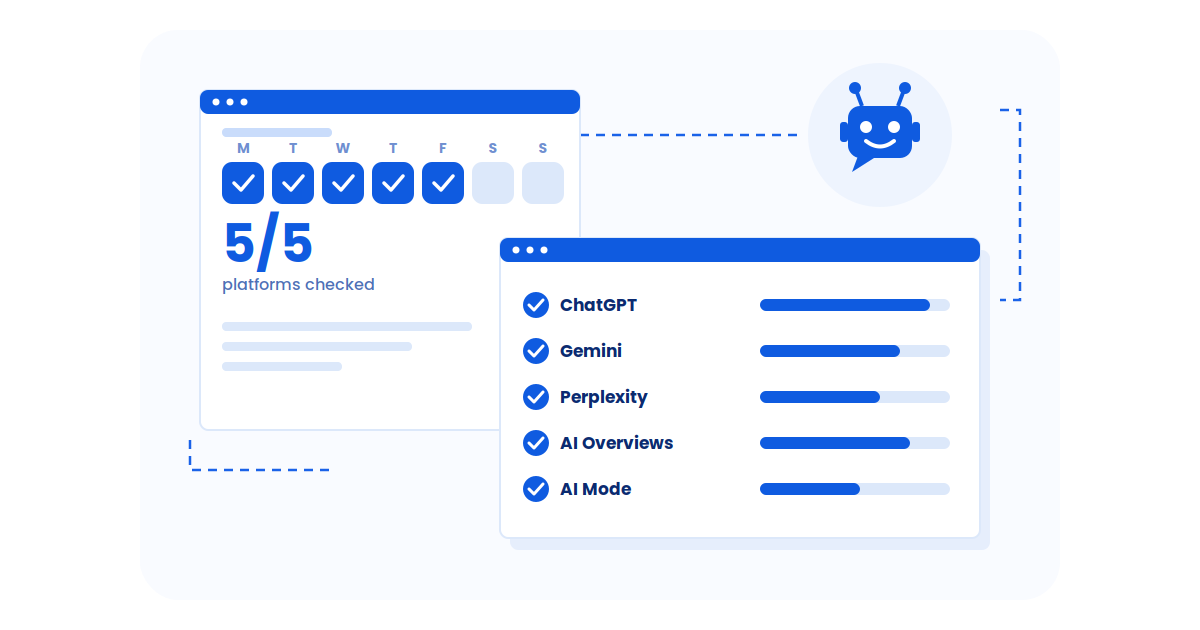
Because AI systems expand one query into multiple intent-driven searches, strategies that prioritize intent clusters, entity clarity, and answer completeness consistently outperform keyword-centric campaigns across ChatGPT, AI Overviews, Gemini, and Perplexity.
- Align content with intent clusters, not isolated keywords, so AI systems can interpret meaning across related queries.
- Structure answers for clarity and context, enabling AI models to reuse and summarize content confidently.
- Prioritize entity relevance and credibility signals to improve inclusion in AI-generated responses.
- Measure success by visibility, citations, and reuse, not rankings or traffic alone.
What Is Meant by Semantic Intent in AI Search?
Semantic intent in AI search refers to how large language models interpret the underlying goal and meaning behind a user’s query, rather than relying on exact keywords or phrasing. AI systems expand each prompt into multiple related searches to resolve intent across context, entities, and implied needs.
Because generative engines prioritize intent resolution over rankings, semantic intent directly determines which sources are reused or cited, making it foundational to both semantic intent in generative engines and Search Engine Visibility as an outcome metric.
How Does AI Improve Search Marketing Compared to Traditional Methods?
AI enhances search marketing by interpreting user intent and context, enabling systems to return relevant, synthesized answers instead of just ranking pages by keywords and authority. This shift means content must resolve meaning and satisfy intent clusters to appear in generative responses.
In 2025, 85% of marketers report that integrating AI tools improved targeting efficiency and campaign success compared with traditional methods, and 83% say AI increased productivity in content and discovery workflows.(Co Schedule)
- Core focus
- Output
- User engagement
- Visibility measure
- Keywords & rankings
- Ranked links
- Click-through rate
- Position on SERP
- Semantic understanding & context
- Synthesized answers
- Intent resolution & reuse
- Inclusion in AI answers
Because AI systems can generate direct responses from intent understanding, search marketing strategies must evolve to optimize for meaning, not just keywords, to stay visible in AI-powered discovery.
How Do AI-Driven Strategies for Search Intent Work in AI Search Marketing?
AI-driven strategies for search intent analyze patterns across queries, context, and relevance signals to predict what users truly want, enabling models to generate answers that satisfy intent rather than match surface keywords, a process described in pattern recognition for intent + visibility signals.
- AI systems expand one query into multiple related searches before composing a response.
- Contextual relevance and entity relationships help models choose sources to cite.
- Intent clustering ensures responses address the why behind a search, not just the what.
Did you know?
By 2025–2026, surveys show over 70% of SEO and social media marketing agencies report that AI-driven intent strategies outperform traditional keyword-centric campaigns in generating visibility within AI summaries and answer engines, with many tying intent coverage to measurable increases in engagement and reuse. (Marketing AI Institute, 2025)
How to Optimize for Buyer Intent in AI Searches?
Optimizing for buyer intent in AI searches means aligning content with commercial decision signals such as comparisons, use cases, credibility, and proof because AI systems surface brands they trust to answer purchase-driven questions, not pages that simply target transactional keywords.
AI models identify buyer intent by evaluating context, authority, and citation patterns across multiple sources, which makes visibility dependent on whether your brand is positioned as a credible option during AI-generated recommendations.
- Explicit Wins.: Identify competitor-cited pages where your brand should be earning buyer-intent citations.
- Implicit Wins: Surface missed buyer-intent visibility where AI mentions relevant context but credits other sources.
- Content Briefs: Structure pages around commercial intent signals AI systems recognize.
- Content Creator: Produces citation-ready, intent-aligned content designed for AI reuse.
This approach aligns directly with how brands get recommended in AI search engines and how to earn mentions in AI search marketing, enabling B2B SaaS teams, startups, and agencies to connect semantic intent with measurable commercial visibility.
According to McKinsey (2025) reported that organizations using AI for intent-based customer engagement saw up to 15-20% improvement in conversion metrics over traditional methods, underscoring the value of semantic intent optimization at scale.
What Role Do RankBrain and BERT Play in Semantic Intent Understanding?
RankBrain and BERT enable AI-driven search systems to move beyond keyword matching by interpreting context, relationships, and intent within a query, which directly improves how search marketing aligns with semantic meaning rather than exact terms.
RankBrain focuses on query interpretation and intent similarity, while BERT enhances understanding of nuance, phrasing, and long-tail language.
Together, these systems explain why context matters to LLM interpretation, as modern AI models build on these foundations to evaluate intent across full queries and conversations instead of isolated words.
By strengthening contextual understanding, RankBrain and BERT increase search marketing effectiveness because AI systems can more accurately match content to user intent, improving relevance, answer quality, and citation likelihood across AI-powered search platforms.
What Are the Key Components of Conversational and Semantic AI Search?
Conversational and semantic AI search is built on systems that interpret intent, expand queries, and select trusted sources, which explains what AI search engines cite and why it influences intent targeting.
- Intent detection: Identifies the underlying goal behind a user’s query.
- Query fan-out: Expands one prompt into multiple related searches.
- Entity resolution: Connects concepts, brands, and relationships.
- Answer synthesis and citation selection: Determine which sources appear in AI responses.
Together, these components allow AI systems to generate accurate, context-aware answers that prioritize intent resolution over keyword matching across conversational search experiences.
How Does Semantic Intent Targeting Improve AI Search Marketing Performance?
Semantic intent targeting improves performance by increasing citation frequency, answer reuse, and sentiment alignment, rather than traffic alone. AI models reward content that consistently resolves intent across multiple query variations.
Search engines increasingly rank content not on isolated keywords but on semantic relevance and intent alignment, with AI-driven platforms prioritizing meaning, context, and entity relationships over traditional ranking signals making semantic intent targeting essential for visibility and performance. (Kickoff Advertising, 2025)
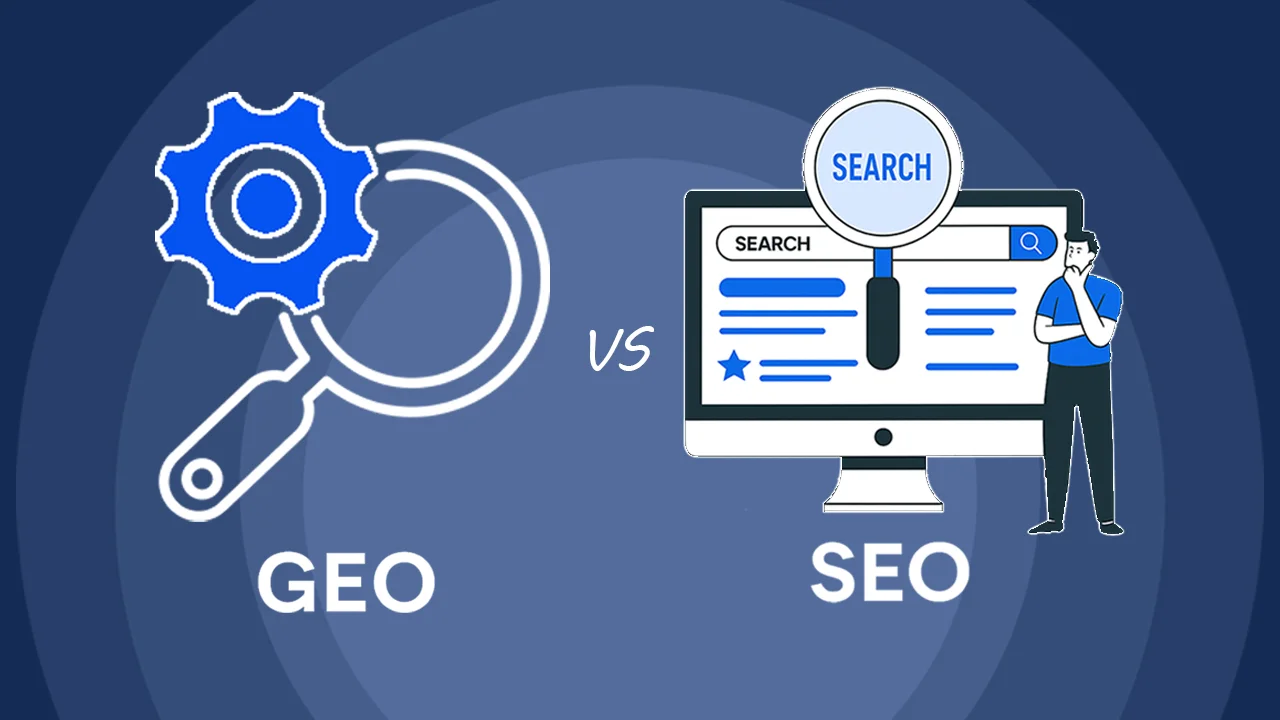
These gains align with GEO visibility factors tied to semantic relevance, reinforcing why intent-first strategies outperform legacy SEO.
How Can You Run Semantic Intent Analysis in Search Marketing?
Semantic intent analysis in search marketing focuses on understanding why users search, not just what they type, by mapping queries, entities, and context patterns that AI systems use to generate answers.
Step-by-Step Semantic Intent Analysis:
- Collect AI-generated queries and user prompts across search and chat interfaces.
- Group queries by inferred intent rather than keyword similarity.
- Identify gaps where intent is present but your brand lacks visibility.
- Prioritize intents tied to commercial or decision-stage outcomes.
This workflow mirrors the LLM pattern analysis checklist for intent coverage, helping teams validate whether content aligns with how AI models interpret and expand intent.
How Can Teams Operationalize Semantic Intent in AI Search Marketing at Scale?
Operationalizing semantic intent at scale requires turning AI search signals queries, citations, and context—into repeatable workflows, so teams can continuously align content and campaigns with how AI systems interpret intent.
How Wellows Enables Semantic Intent Execution?
- Tracking & Monitoring: Captures AI-generated queries and citations across platforms, showing how semantic intent is interpreted and where visibility is gained or lost.
- Query Fan-Out Generator: Expands a single topic into multiple intent-driven variants, mirroring how AI systems explore and evaluate meaning behind queries.
- Commentary: Explains why visibility shifts occur by connecting intent changes, competitor movement, and platform behavior into clear insights.
- Validator: Ensures every citation and intent signal is accurate, relevant, and decision-ready before teams act.
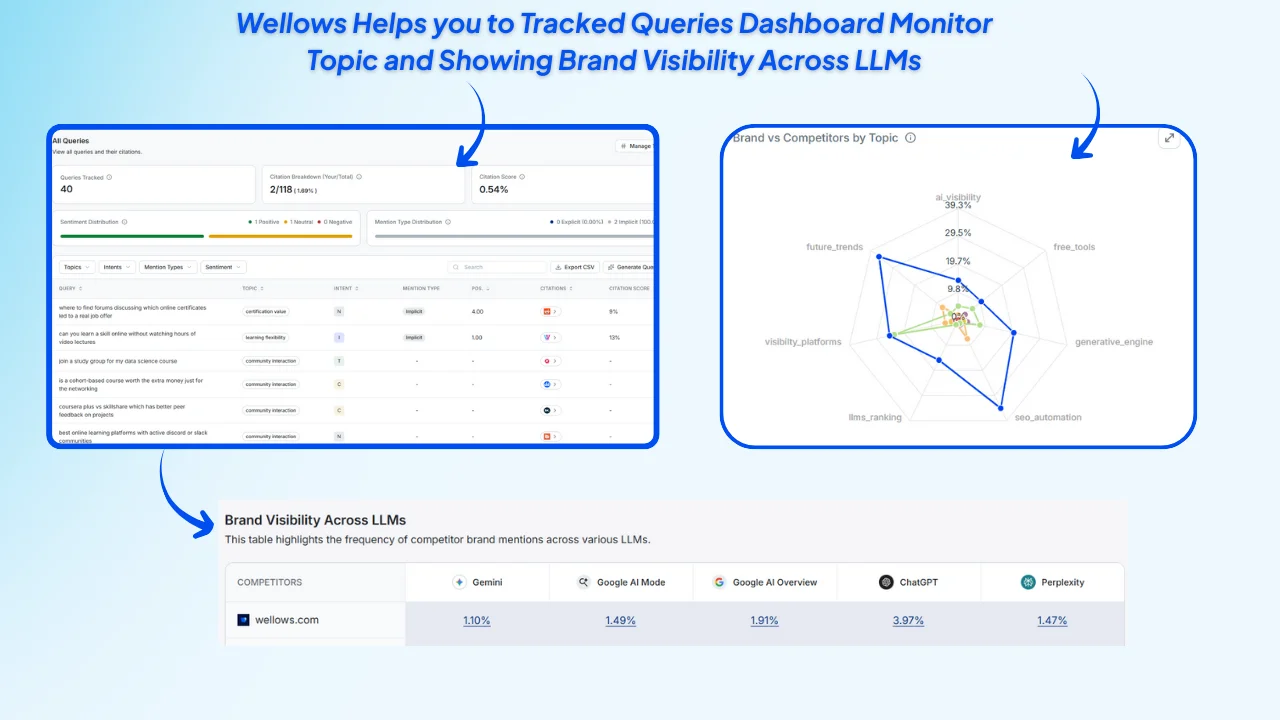
For agencies, Wellows solves the challenge of scaling semantic intent visibility across multiple clients by providing a unified, client-facing view of how AI engines interpret, expand, and cite brand intent without relying on rankings or traffic promises.
How Do You Apply AI Search Marketing Semantic Intent to E-Commerce?
AI search marketing for e-commerce succeeds when product and category content aligns with discovery, comparison, and purchase intent, allowing AI systems to surface brands that clearly answer buyer questions across decision stages.
By structuring content around use cases, differentiators, and trust signals, e-commerce brands increase the likelihood of being cited or recommended within AI-generated shopping and comparison answers.
How Do You Apply AI Search Marketing Semantic Intent to Local SEO?
AI search marketing for local SEO works by aligning content with location-aware, conversational intent, enabling AI systems to surface nearby businesses that best match user needs.
- Structure pages around local use cases and service intent, not generic keywords.
- Clearly signal geographic relevance through entities, locations, and context.
- Address time-sensitive and proximity-based queries AI systems prioritize.
- Reinforce credibility and trust signals that influence local AI recommendations.
What Advanced AI Techniques Improve Semantic Intent Targeting in Search Marketing?
Advanced AI techniques such as natural language processing (NLP), topic clustering, and conversational intent modeling help search marketing systems interpret semantic relationships across queries, enabling more accurate intent targeting and answer generation.
Industry analysis found that 14% of keywords across 118 million AI search optimizations already trigger AI Overviews, showing rapid adoption of semantic search patterns and indicating that marketers must use advanced techniques to stay visible as AI discovery engines evolve. (AI Mode Hub 2025)
- Google AI Visibility Tracking: How Does Google AI Visibility Tracking Fix the Search Console Blind Spot in AI Overviews?
- Trusted Source in AI Search: How to Become a Trusted Source in AI Search?
- Question Keywords for SEO: How to Use Question Keywords for SEO Growth?
- AI content ranking strategies for SEO: How to Boost SEO with AI Content Ranking Strategies?
- SEO Content Length Optimization: How to Optimize SEO Content Length for Higher Rankings?
- Optimize Conversational AI Search Queries: How to Optimize Conversational AI Search Queries for Better Visibility?
FAQs
AI search marketing helps small businesses gain visibility by aligning content with semantic intent and local relevance, allowing AI systems to recommend credible brands without requiring large SEO budgets.
AI algorithms improve search marketing effectiveness by interpreting context, entities, and intent patterns, which enables more accurate matching between user needs and content.
Artificial intelligence search advertising uses intent prediction and behavioral signals to deliver more relevant ads, improving targeting efficiency and reducing wasted spend.
Search engine marketing techniques now prioritize intent resolution and contextual relevance over keyword density, reflecting how AI systems generate answers and recommendations.
AI tools for search marketing analyze intent, expand queries, and track visibility signals, helping teams optimize for how AI search engines interpret and surface content.
Conclusion: Optimizing AI search marketing semantic intent
AI search marketing now depends on how well brands align content with semantic intent, because AI systems prioritize meaning, context, and trust when generating answers and recommendations.
To optimize AI search marketing effectively, teams must shift from keyword-driven tactics to intent-first strategies that improve visibility, reuse, and citation across AI-powered search experiences.