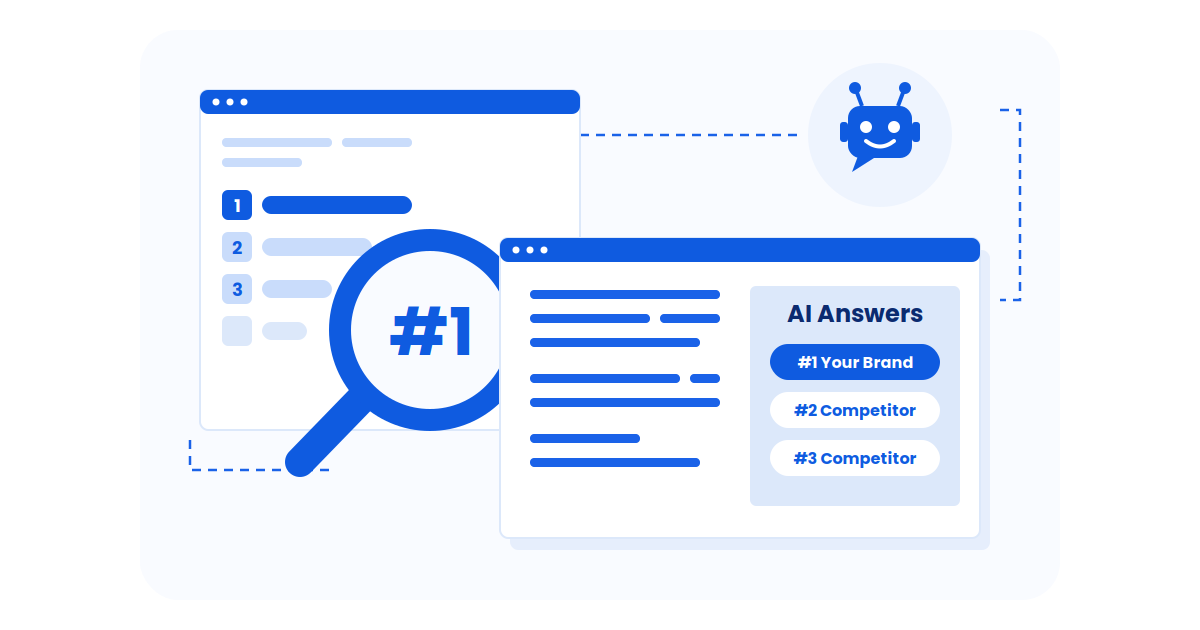
Visibility now depends on how clearly your content answers real questions, signals authority, and earns reuse inside AI-generated responses not on traditional keyword matching alone.
Teams now win visibility when AI systems reuse their answers, cite their sources, and trust their brand signals not when a page simply “ranks.” —which is why teams are now asking how to rank in chatgpt in a system where citations and reuse drive discovery. Google’s AI Overviews and AI Mode push search toward summarized, conversational outputs, while ChatGPT and Perplexity normalize question-first discovery. (Reuters, 2025)
Did you know?
To Optimize Conversational AI Search Queries in 2025, treat queries as intent clusters AI expands, not single keywords you match. Google has publicly described “query fan-out” as the engine behind conversational answers, where a system issues multiple background searches from one prompt. (Search Engine Journal, 2025)
AI-driven visits can also carry higher business value. Semrush reported that the average visit attributed to AI search sources (non-Google) was 4.4× more valuable than traditional organic, based on conversion rate across analyzed topics. (Semrush, 2025)
- Focus on intent clusters, not single keywords, because AI expands one query into multiple related searches.
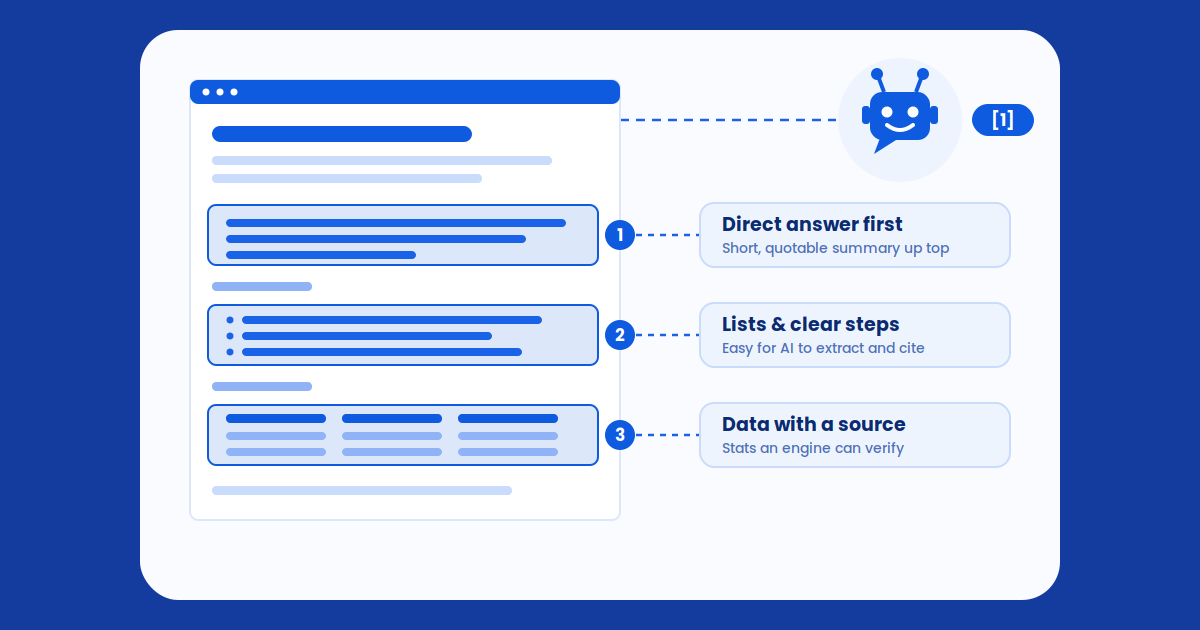
- Structure content for direct answers first, followed by supporting context AI can reuse or cite.
- Optimize around entities, clarity, and evidence, not just keyword placement or backlinks.
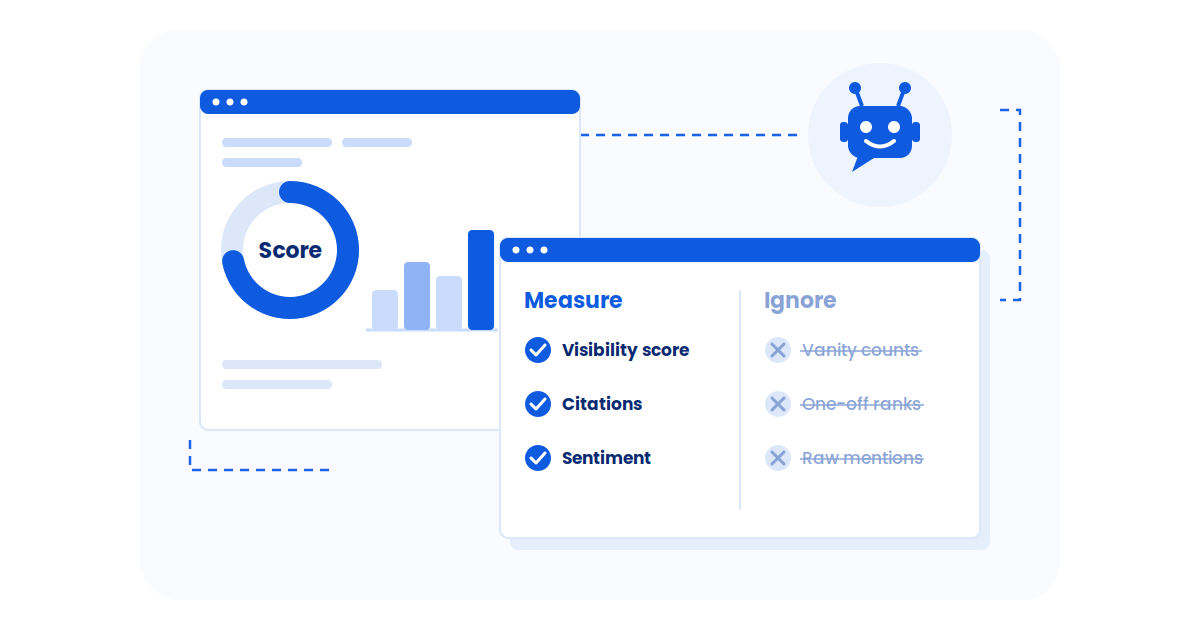
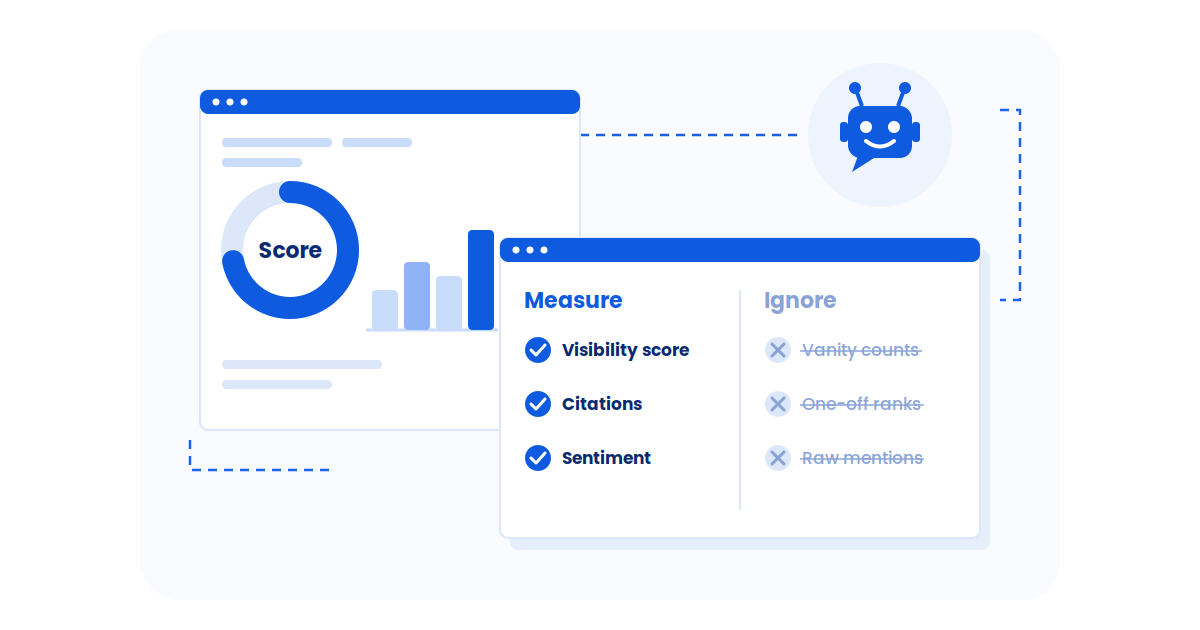
- Measure success using citations, visibility, reuse, and sentiment, rather than traffic alone.
- Treat conversational optimization as a continuous loop of discovery, validation, and refinement aligned with how AI search engines operate.
What Is Meant by Conversational AI Search Queries?
Conversational AI search queries are natural, context-rich questions users ask AI systems, where the engine interprets intent, expands the query behind the scenes, and generates a synthesized answer instead of returning a list of links.
Did you know?
- They reflect how people speak and think, not how they type keywords into search boxes.
- AI engines expand one prompt into multiple related searches using query fan-out, then merge the findings.
- Visibility depends on whether your content is reused or cited in AI-generated answers, a core concept in Generative Engine Optimization (GEO).
- Unlike traditional SEO, success is measured by search engine visibility, how often and in what context AI systems surface your brand.
How Is Conversational Search Different From Traditional SEO?
Conversational search focuses on how AI systems interpret, expand, and answer queries, not just how pages rank for keywords. AI engines evaluate intent, context, and credibility before composing a response.
Traditional SEO optimizes pages for visibility in link-based results, while conversational AI prioritizes answer quality, reuse, and citations across multi-turn interactions — the same shift that defines how to rank in Perplexity.
- Primary output
- Query behavior
- Winning signal
- Content format
- Measurement
- Failure mode
- Ranked links
- Single query, short session
- Rankings + CTR
- Page-level optimization
- Traffic, rankings
- “Not ranking”
- Synthesized answers + cited sources
- Multi-turn refinement + follow-ups
- Citations, reuse, authority signals
- Answer-ready chunks + evidence
- Citation/mention share, sentiment, reuse
- “Not referenced or cited in answers”
As AI-generated discovery becomes the default, GEO reframes optimization around visibility inside generative engines, raising valid questions about whether legacy tactics still hold weight, as examined in Is GEO Making Traditional SEO Practices Obsolete?
What Technologies Support Conversational AI Search Optimization?
Conversational AI search blends multiple systems that decide what gets surfaced and cited:
LLMs (Large Language Models): Models like GPT-class systems generate answers and rewrite queries based on intent and context.
RAG (Retrieval-Augmented Generation): Retrieval pulls web or index sources, then generation summarizes and composes an answer using those sources.
Query fan-out: Systems generate multiple background searches from one prompt to cover sub-intents and validate facts.
Structured data (Schema.org / JSON-LD): Markup clarifies entities, attributes, and relationships so engines extract facts reliably.
Entity resolution: Systems decide whether “Apple” means a company or fruit by matching context to known entities and sources.
Because the system composes answers, it rewards content that reads like evidence. It also rewards brands with consistent signals across trusted domains that AI engines already use for grounding and citations.
How to Optimize for Long-Tail, Conversational Queries That People Ask AI Search Engines?
Start with the reality: long-tail conversational queries rarely look like one keyword. They look like intent packages, and AI expands them. Step-by-step breakdown of Long-tail conversational optimization.
- Capture audience (“marketers,” “SEO teams”), geography (“US”), and outcomes (“visibility,” “citations”).
- AI Mode supports iterative refinement, so constraints often appear mid-session.
- Group variants by informational, commercial, transactional, and navigational intent.
- This protects you from optimizing only one phrasing while AI answers many intents at once.
- Put the best direct answer early, then add proof, examples, and edge cases.
- Answer engines often lift concise sections into summaries before they evaluate the rest.
- Add definitions, thresholds, and “how-to” sequences that cite stable sources.
- AI engines prefer sources that show clear scope, specificity, and verifiable claims.
- AI-sourced visitors can convert differently than traditional organic. Semrush found AI search visitors were 4.4× more valuable on average in their study. (Semrush, 2025)
Most teams struggle to see which conversational variants actually trigger citations and which competitors get referenced instead. This is where an AI Overviews Tracker becomes useful as a monitoring layer—helping you connect specific query variants to citation behavior, reuse patterns, and competitive source selection over time.
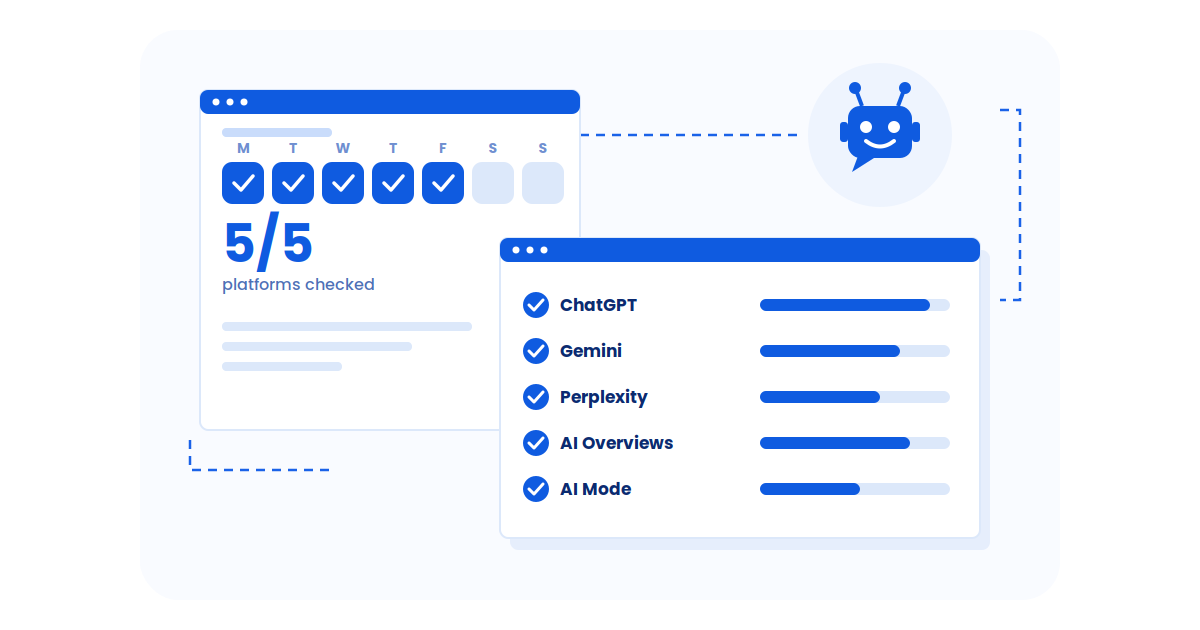
Wellows helps you Optimize Conversational AI Search Queries by tracking AI visibility signals across platforms (ChatGPT, Gemini, Perplexity, Google AI Overviews, AI Mode), then surfacing explicit vs implicit citation gaps so you know which long-tail clusters to prioritize next.
What Is the Difference Between AI Search Visibility and Voice Search Visibility?
Voice search visibility depends on spoken queries and device ecosystems (assistants, mobile, smart speakers). AI search visibility depends on whether answer engines cite, reuse, and recommend your sources across multi-turn prompts.
Voice usage remains significant. One 2025 stats roundup reported ~20.5% of people worldwide actively use voice search, and it cited 153.5M US voice assistant users. (DemandSage, 2025)
AI search visibility operates differently:
- Voice search often routes to one “best” answer, local packs, or assistant outputs.
- AI search composes answers from multiple sources, then credits some with citations and omits others.
- Use question-led headings that mirror spoken phrasing for voice, then add evidence blocks for AI reuse.
- Strengthen entity signals (org name, product category, claims with sources) so assistants and LLMs resolve you correctly.
- Add structured data for FAQs, organizations, products, and authors where relevant to help extraction.
How Do You Discover Conversational Keywords Based on Intent, Examples, and Tools?
Conversational keywords usually look like full questions and constraints, not short fragments. They also compress “why,” “how,” and “which” intent into one sentence. Examples aligned with specific user intent Informational, Commercial, Transactional and Navigational.
Use tools and datasets that reflect real question behavior:
- People Also Ask (PAA): Google’s question expansions show intent adjacency.
- Community sources (Reddit, Quora): Engines often pull practical phrasing and edge cases from communities, especially for emerging topics.
- Query fan-out generators: They mimic how AI expands a seed prompt into many variants.
What Is the Stepwise Process for Finding and Refining Conversational Keywords for GEO?
This workflow keeps teams from collecting “nice-to-have” questions without a visibility plan.
Step-by-Step GEO Keyword Refinement
- Seed with an outcome + audience: Example: “optimize conversational AI search queries for marketing teams.”
- Run query fan-out by intent: Generate variants across informational, commercial, and comparative intents. Google’s query fan-out concept supports the idea that systems expand one question into many searches.
- Score variants by citation potential: Prefer queries that require evidence, definitions, or checklists formats AI can reuse and cite.
- Map each cluster to an “answer asset”: One cluster → one page or hub section, each with a clear citation target.
- Validate against competitor citations: If AI engines cite competitors for the same intent, treat that as an explicit gap you can win with better coverage.
What Are the Best Practices for Conversational AI Query Structuring?
You don’t “stuff” conversational queries. You structure them so engines infer intent and can validate your claims.
- Lead with the user’s job-to-be-done: “reduce CAC,” “improve demos,” “audit AI visibility.”
- Add constraints: geography, audience, timeline, budget, compliance.
- Include comparison triggers: “vs,” “best,” “alternatives,” “tradeoffs.”
- Use follow-up patterns: “If X, then what?” because AI Mode supports iterative refinement.
Prompts increasingly act as the “interface” for intent. Teams that treat prompt patterns as optimization inputs tend to capture broader coverage than teams that only track static keywords.
How Should Content Be Structured Around Real-World User Questions?
Answer engines lift content that reads like a self-contained solution. You can make that easier with an LLM-friendly structure:
How to Structured Around Real-World User Questions:
– Direct answer first (1–2 sentences)
– Proof next (data, sources, short citations)
– Steps next (ordered list)
– Edge cases next (when this fails)
– Decision support last (checklist or table)
Google’s AI Mode design encourages conversational refinement and exploration, which increases the value of clear sections that handle follow-ups without forcing users back to search.
How Do You Optimize Content Strategy for Success in Conversational Search?
You optimize for how AI systems summarize and cite, and how humans validate credibility.
- Start with intent mapping: Use 4 intent buckets, then write one section per bucket to prevent thin coverage.
- Use question-led H2/H3: It aligns with conversational phrasing and improves extractability.
- Prioritize “definition + threshold” writing: Definitions, steps, and measurable criteria earn citations more than vague opinions.
- Format for extraction: Use bullets, tables, short paragraphs, and labeled steps.
- Strengthen E-E-A-T signals: Add authorship, credentials, methodology, and citations to credible sources.
What Search Query Optimization Techniques Improve AI Search Results?
AI search results improve when queries and content are optimized around intent clarity, entity recognition, and answer completeness, allowing models to confidently reuse and summarize information instead of inferring meaning from fragmented signals.
Techniques such as entity-first framing, comparison-based structuring, and context-rich phrasing help AI systems resolve ambiguity and select credible sources, which is why entity-based content consistently performs better in LLM-driven environments.
Which Metrics Matter Most for Evaluating Conversational AI Search Optimization?
Conversational AI search optimization should be evaluated by whether AI systems reference, reuse, and trust your content, not by rankings or pageviews, since generative engines surface answers instead of directing clicks.
The most meaningful signals include explicit citations, implicit mentions, visibility across intent variants, and sentiment context, which collectively show how AI engines position your brand within generated answers.
These metrics align with GEO-specific KPIs such as citation share and authority signals and provide a clearer picture of performance than traffic-based SEO dashboards.
How Does Wellows Help Enhance Conversational AI Search Query Performance?
Wellows helps teams optimize conversational AI search queries by making AI visibility measurable, actionable, and repeatable, so optimization decisions are based on how AI engines actually interpret, expand, and cite queries not assumptions from traditional SEO tools.
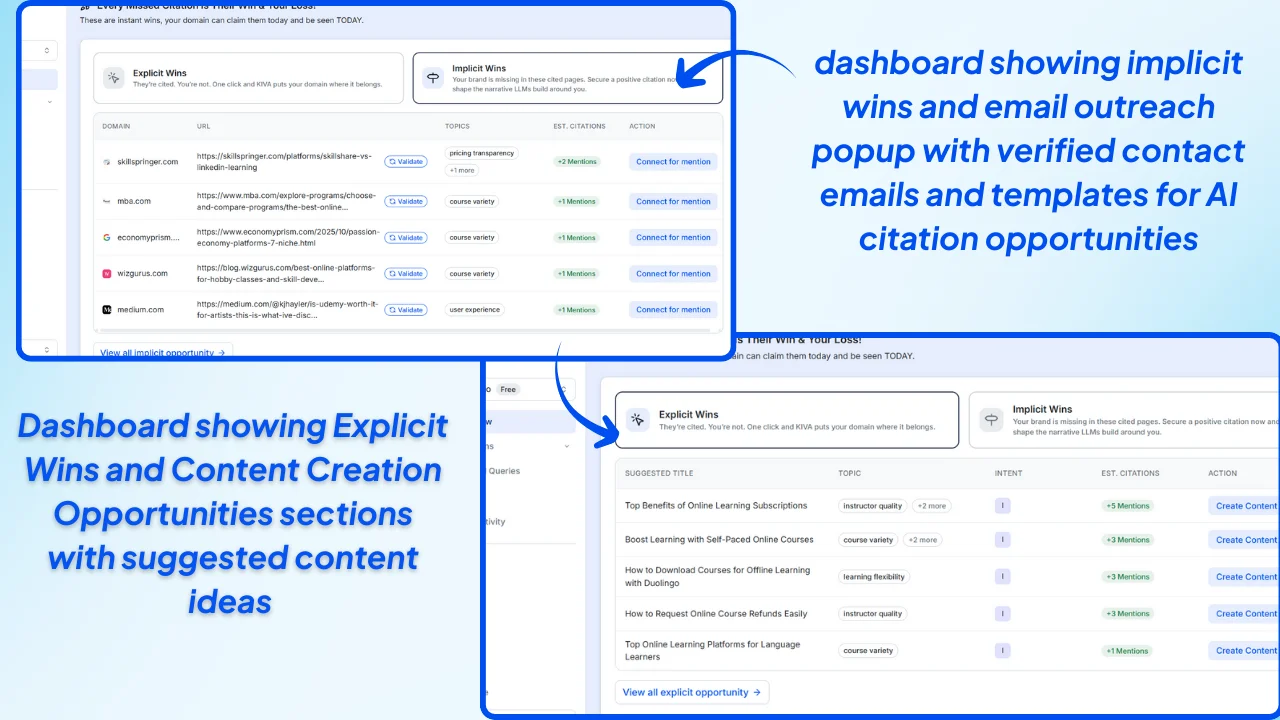
- Tracks AI-generated queries and citations across ChatGPT, Gemini, Perplexity, Google AI Overviews, and AI Mode
- Identifies explicit vs implicit visibility gaps, showing where AI mentions you but cites competitors instead
- Uses LLM pattern analysis to reveal how queries fan out and which structures earn reuse, aligned with the LLM Pattern Analysis Checklist
- Benchmarks performance using citation-based visibility signals, not traffic-only metrics
By unifying query behavior, citation patterns, and competitive context in one system, Wellows enables teams to continuously refine conversational queries with confidence and build durable AI search visibility over time.
Why Are Conversational Approaches Becoming Critical in Local AI Search?
Local intent often shows up as questions with constraints: “near me,” “open now,” “best in Austin,” “for families,” “for enterprise procurement.” Voice usage supports this behavior, and US voice assistant adoption remains large in 2025 reporting.
AI search adds another layer: local answers increasingly blend sources, reviews, and summaries. That raises the value of consistent entity signals (name, address, category), structured data, and credible third-party references that AI systems trust.
What Does Optimizing Conversational AI Actually Entail for Modern Marketing Teams?
Modern teams treat optimization as a loop, not a one-time project:
- Discover conversational intent clusters with fan-out
- Create answer assets that match evidence-based formats
- Validate credibility signals and structured data
- Measure citations, sentiment, and competitor deltas
- Recover missed visibility via implicit-to-explicit citation wins
This loop aligns with how AI search behaves: multi-turn exploration, fan-out retrieval, and source selection based on trust and relevance.
- Google AI Visibility Tracking: How Does Google AI Visibility Tracking Fix the Search Console Blind Spot in AI Overviews?
- Trusted Source in AI Search: How to Become a Trusted Source in AI Search?
- Question Keywords for SEO: How to Use Question Keywords for SEO Growth?
- AI content ranking strategies for SEO: How to Boost SEO with AI Content Ranking Strategies?
- SEO Content Length Optimization: How to Optimize SEO Content Length for Higher Rankings?
- AI Search Marketing Semantic Intent: How AI Search Marketing Strategies Target Semantic Search Intent (2026)
FAQs
AI-driven search enhancements improve visibility by expanding user queries through intent modeling, contextual understanding, and source validation, allowing engines to surface trusted answers instead of isolated links.
Improving AI search functionality shifts discovery toward answer quality, entity clarity, and citation-worthiness, which determines whether content is reused or referenced in generated responses.
Conversational interfaces allow users to refine intent through follow-up questions, enabling AI systems to expand queries and deliver more accurate, context-aware answers across a session.
Refining user input relies on structuring queries with clear intent, constraints, and comparison signals so AI systems can expand and interpret them correctly.
Conversational AI search is built on intent detection, query fan-out, retrieval-augmented generation, entity resolution, and citation selection to produce reliable, summarized answers.
Final Takeaway: Optimizing for Conversational AI Search Visibility
Optimizing conversational AI search queries means aligning content with how AI interprets intent, expands questions, and selects sources, not how traditional rankings work.
Teams that focus on citation-ready answers, clear intent coverage, and measurable AI visibility signals are better positioned to earn trust and sustained visibility across generative search platforms.