AI content ranking strategies for SEO reshape how visibility is earned online. Search engines increasingly use AI to assemble answers rather than simply order links, meaning your content must be structured for extraction and trust, not just keyword positioning.
In 2025, AI-driven search features like generative summaries (AI Overviews) appear in a growing portion of queries, with some data showing AI-influenced search behaviors reducing traditional click-through rates as users get direct answers without visiting sites. This shift forces brands to rethink visibility beyond organic rankings. (Semrush 2025)
Because AI synthesis prioritizes clarity, entity grounding, and intent completion, brands that align content with how AI models interpret and reuse knowledge see stronger visibility and reuse signals, not just ranking boosts.
To boost SEO with AI content ranking strategies, you must move from ranking-first content to trust-first, answer-focused content that AI systems can reliably cite and reassemble across related queries.
- AI content ranking strategies for SEO prioritize answer quality, clarity, and intent alignment, not keyword density.
- Visibility increasingly depends on how often AI systems reuse and trust your content in summaries and answers.
- Structured formatting, direct answers, and entity grounding improve extractability for AI-driven ranking.
- Content performance should be evaluated beyond clicks, focusing on AI visibility and reuse signals.
- Long-term SEO growth now requires aligning traditional optimization with how AI systems synthesize information.
What Are the Key Actions for AI-First SEO?
AI-first SEO requires shifting from keyword coverage to answer completeness, where content is designed to satisfy intent in a single, extractable response rather than spread across multiple pages. Reaching that level of completeness gets much easier when you use AI SEO content optimization focused on visibility, where each section is built around the gaps AI engines actually prioritize.
Because AI systems evaluate usefulness before ranking, SEO best practices for content creation now prioritize clarity, structure, and factual grounding over volume, backlinks, or aggressive optimization.
As a result, AI content ranking strategies focus on helping search engines understand, trust, and reuse your content consistently across AI summaries, featured snippets, and zero-click results.
How Does AI Search Operate and What Has Changed for SEO?
AI search no longer ranks pages first it synthesizes answers by evaluating which content best resolves intent with the least ambiguity.
Did you know?
- Information synthesis over page ranking → AI combines insights from multiple sources instead of ordering blue links.
- Answer usefulness over keyword signals → Clarity and completeness matter more than exact-match optimization.
- Trust reinforcement over one-time wins → Sources reused across similar queries gain priority.
Under the hood, multiple AI systems shape modern SEO outcomes, including large language models (LLMs), retrieval-augmented generation (RAG), and intent classifiers that interpret query meaning before selecting sources.
In this environment, AI SEO focuses on aligning content structure and intent signals so AI systems can confidently select and reuse answers across related queries.
Because of this shift, visibility now depends on how content performs inside AI answers, summaries, and zero-click experiences making Search Engine Visibility a distinct layer that SEO teams must measure and optimize separately.
Can AI-Generated Content Rank in Google AI Overviews?
Yes AI-generated content can rank and be cited in Google AI Overviews when it meets quality, usefulness, and trust standards rather than focusing on how the content was produced.
- Quality over origin: Google has reiterated that content is evaluated on usefulness, not whether it’s written by AI or humans.
- Clear answer structure: Pages with direct responses and scannable sections are easier for AI Overviews to extract.
- Strong authority signals: Content aligned with recognized entities and trusted sources is more likely to be reused.
- Low hallucination risk: Fact-checked, well-scoped explanations reduce uncertainty for AI systems.
- Consistent performance across queries: Sources cited repeatedly for similar questions gain priority over one-off pages.
What Are the Essential Steps to Optimize Content for AI Search Platforms?
Optimizing for AI search requires shifting from keyword-heavy pages to answer-ready, machine-readable content that AI systems can confidently extract, validate, and reuse across queries. Essential steps that consistently improve AI content ranking strategies for SEO:
Start with intent-first mapping: Align each page to a clear informational, comparative, or decision intent so AI systems know why the content exists.
Write direct answer blocks: Place concise, explicit answers immediately under descriptive headings to support AI summaries and snippets.
Ground content in entities: Reference recognized brands, standards, tools, and concepts to reduce ambiguity and improve validation.
Use structured formatting: Lists, tables, and labeled sections increase extractability and reduce hallucination risk.
Reinforce authority signals: Cite reliable sources, show expertise, and maintain topical consistency across related pages.
Apply structured data: Implement schema and semantic markup to improve structured data for LLM visibility, helping AI systems interpret context and relationships more accurately.
Together, these steps bridge traditional SEO and AI-driven ranking by making content easier to understand, safer to reuse, and more likely to appear in AI-powered results.
How Do You Implement AI Content Ranking Strategies for SEO?
Implementing AI content ranking strategies for SEO starts with treating content as an answer system, not just a traffic asset. AI search evaluates how clearly your content solves a question across multiple formats and reuse scenarios. Implementation checklist by content type:
Blogs Focus on one core question per post, answer it directly under the H2, then expand with supporting context, examples, and data.
Landing pages Add intent-driven FAQs and comparison sections so AI can extract decision-ready answers, not just marketing copy.
FAQs Write each question as a standalone answer block with clear, concise responses optimized for reuse in snippets and AI summaries.
Internal linking Connect related pages to reinforce topical depth and help AI systems validate authority across your site.
Ongoing optimization Monitor which answers get reused, refine clarity, and remove ambiguity rather than adding more keywords.
When executed consistently, this approach ensures AI systems can extract, trust, and reuse your content turning visibility into a repeatable outcome rather than a one-off win.
What Are the Best AI Tools for Content Ranking in SEO?
The best AI tools for content ranking in SEO don’t all do the same job. Instead of one “all-in-one” solution, high-performing teams use a stack of AI tools, each optimized for a specific ranking function such as analysis, structure, optimization, or visibility tracking.
Below is a category-level comparison to help you choose tools based on ranking needs not brand hype.
Did you know?
| Tool Category | Primary Purpose | How It Supports AI Content Ranking |
|---|---|---|
| Content Analysis & NLP Tools | Analyze top-ranking content patterns | Identify semantic coverage, entity gaps, and clarity signals AI models favor |
| AI Writing & Drafting Tools | Generate first drafts or sections | Speed up content creation while following prompt-like, answer-first structures |
| SERP & Snippet Optimization Tools | Optimize for featured snippets and PAA | Improve extractability for zero-click and AI-generated answers |
| Structured Data & Schema Tools | Apply schema and machine-readable markup | Help AI systems interpret content context and relationships accurately |
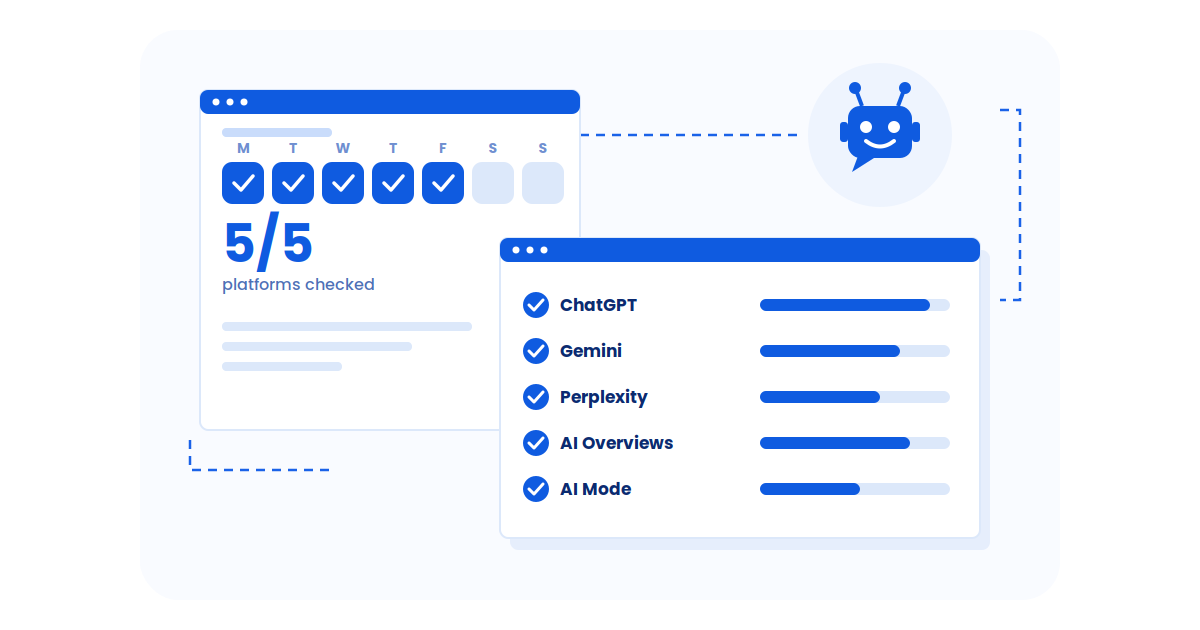
| AI Visibility & Tracking Platforms | Monitor reuse, citations, and AI presence | Measure how often content is surfaced, summarized, or reused by AI systems |
Key takeaway: No single tool guarantees rankings. The strongest AI content ranking strategies combine analysis + structure + authority + visibility tracking so content performs across both traditional SERPs and AI-driven search surfaces.
How Do Clear Answers and Formatting Improve AI Content Ranking?
Clear answers and structured formatting improve AI-driven content ranking for blog SEO because AI systems extract, summarize, and reuse information more easily when content is explicit, scannable, and intent-aligned.
- Direct question–answer pairing helps AI models map queries to precise responses without inference.
- Snippet-ready paragraphs (40–60 words) increase eligibility for featured snippets and AI summaries.
- Consistent headings (H2/H3) signal topic boundaries, reducing ambiguity during extraction.
- Lists and tables improve machine readability and boost reuse in zero-click results.
- Summary blocks (TL;DR) give AI systems high-confidence passages to surface first.
What Does Google Consider “Good” Content for AI Ranking?
Google defines “good” content for AI ranking as material that is helpful, original, and clearly aligned with user intent, not content written to manipulate algorithms. AI systems prioritize pages that answer real questions completely, demonstrate expertise, and avoid ambiguity or fluff.
Because AI Overviews and ranking systems synthesize information, the most successful strategy is to write content for people first, ensuring every insight is grounded in real-world utility.
Content that shows clear intent alignment, factual grounding, and genuine human value is more likely to be reused in summaries, snippets, and AI-generated answers, reinforcing long-term visibility rather than short-term ranking gains.
What Are Advanced AI Content Ranking Techniques for SEO?
Advanced AI content ranking strategies for SEO focus on making content easier for AI systems to extract, verify, and reuse at scale. Instead of optimizing for clicks alone, these techniques improve how content performs inside AI summaries, Overviews, and zero-click results.
Because AI ranks information not just pages brands that invest in structure, topical depth, and machine readability see stronger reuse across multiple related queries, especially in competitive US markets.
- Schema markup implementation → Helps AI interpret context, relationships, and page purpose accurately.
- Topical authority clusters → Reinforces expertise by covering a subject comprehensively, not as isolated pages.
- Zero-click optimization → Writes direct answers that AI can surface without requiring a visit.
- Entity-first optimization → Aligns content with known brands, concepts, and standards AI already trusts.
What Errors Hurt AI Search Visibility and How Can You Fix Them?
The biggest limitations of AI content ranking strategies for SEO come from execution mistakes, not from AI itself. Most visibility losses happen when content is optimized for legacy ranking signals instead of how AI systems evaluate clarity, reliability, and reuse.
Below is a condensed mistake–fix framework aligned with how AI search actually works today:
Fix: Write intent-first answers with clear definitions and explanations AI can extract without reinterpretation.
Fix: Add original insights, data points, and concrete examples that differentiate your content from training noise.
Fix: Use short sections, descriptive headers, lists, and tables so AI can reuse information cleanly.
Fix: Track reuse in snippets, summaries, and AI answers not just rankings and clicks.
Fix: Human-review facts, sources, and claims to prevent hallucinations that weaken long-term trust.
When teams correct these gaps, AI content ranking stops being unpredictable and becomes a repeatable, improvable system rather than a black box.
What Do AI Adoption and Search Trends Tell Us About User Behavior Today?
User behavior in 2025 shows search is shifting toward zero-click and AI-answer experiences, with about 60% of U.S. Google searches ending without a click as people increasingly find answers directly on the results page rather than visiting sites. (Moranalytics 2025)
This pattern signals that digital marketing strategies for content ranking must prioritize visibility in AI summaries and direct answer blocks, not just traditional click-through metrics, because users expect instant answers and often never scroll past the first screen.(Inner Spark Creative 2025)
How Does Wellows Help Teams Execute AI Content Ranking Strategies?
As AI content ranking strategies for SEO shift from page positions to answer reuse and visibility, teams need clarity on where their content appears, how often it’s reused, and whether AI systems trust it. This is where Wellows fits naturally bridging the gap between traditional SEO metrics and AI-driven discovery.
Wellows helps teams move beyond guesswork by tracking how content is surfaced, summarized, or cited across AI search experiences like Google AI Overviews and other LLM-powered answers. Instead of optimizing blindly, teams can see which pages AI systems reuse, which topics they associate with the brand, and where visibility gaps exist.
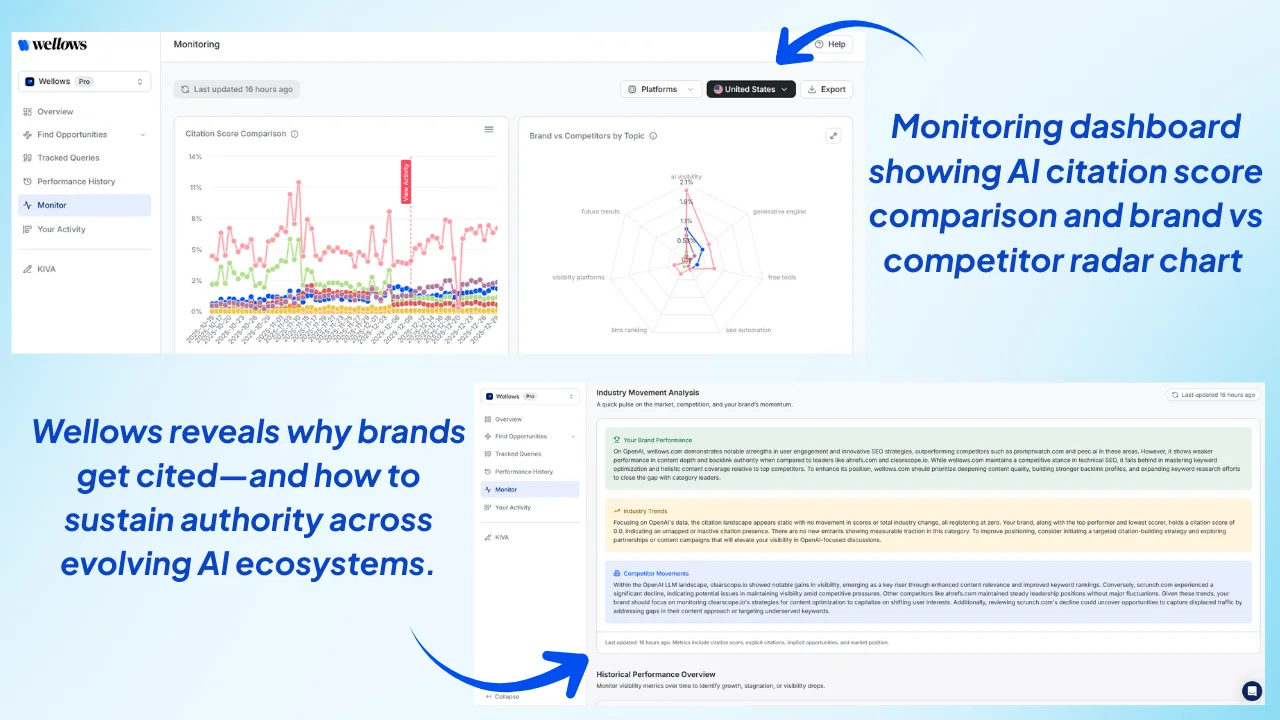
At a practical level, Wellows enables execution by:
- Measuring AI visibility → tracking where content appears inside AI-generated answers, not just SERPs.
- Monitoring AI reuse patterns → identifying which explanations, entities, and formats AI systems repeatedly rely on.
- Comparing visibility over time → spotting gains or drops after content updates or algorithm changes.
By combining tracking and monitoring into one workflow, Wellows turns AI content ranking strategies for SEO into something teams can observe, validate, and improve, rather than infer after traffic declines.
Teams can clearly see how visibility tracking works in practice monitoring AI reuse, citations, and answer placement across platforms through Wellows’ AI tracking and monitoring capabilities making AI-driven SEO measurable and repeatable.
How Can Teams Turn AI Ranking Signals Into Actionable Content Workflows?
Teams responsible for scaling content, especially content marketing agencies managing multiple clients, need workflows that turn AI ranking signals into clear actions, not static reports.
This is where AI search visibility for agencies becomes critical, because agencies must translate AI insights into briefs, optimizations, and repeatable execution across accounts.
Wellows supports this by closing the loop from signals to execution: AI visibility insights feed directly into content briefs, optimization priorities, and validation cycles, allowing agencies and in-house teams to move faster without guessing what AI systems prefer or reuse.
- Generative Engine Optimization: Generative Engine Optimization (GEO): Complete 2025 Guide
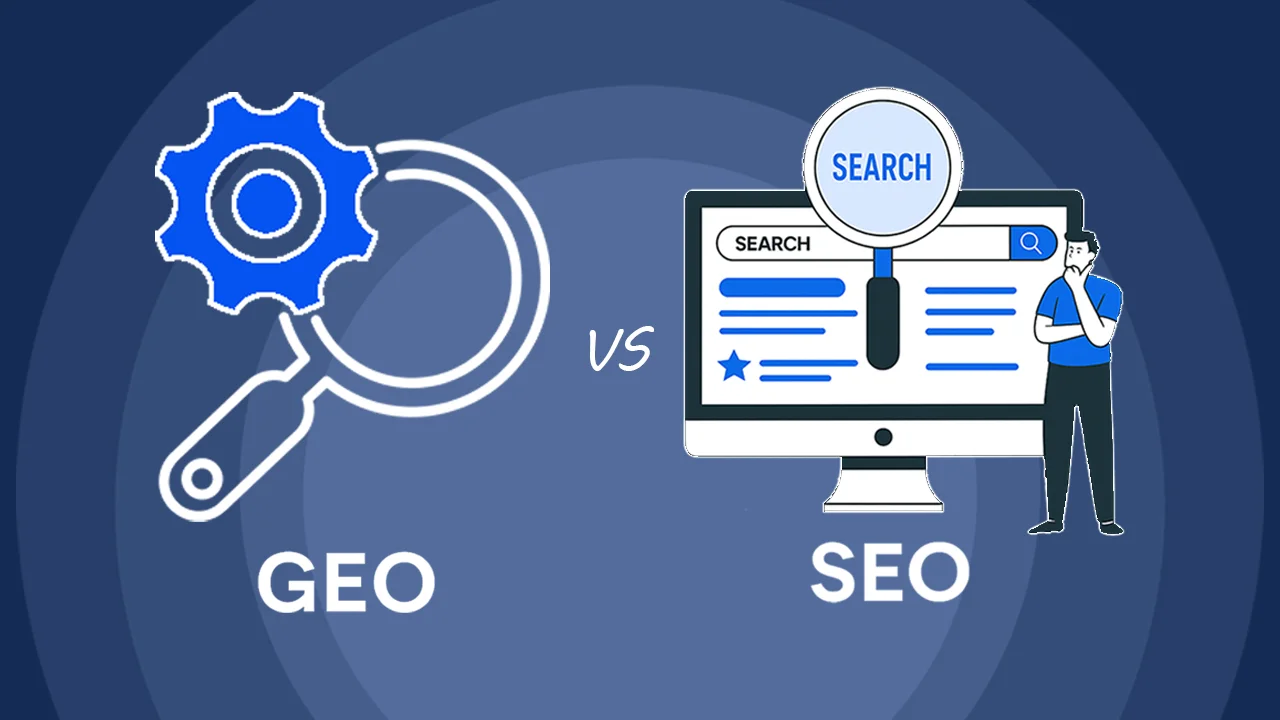
- GEO vs SEO: GEO vs SEO: Key Differences & Why Both Matter
- Pattern Recognition in AI-Generated Answers: How Can Pattern Recognition Improve Visibility in AI-Generated Answers
- Google AI Overviews Ranking Factors: Google AI Overviews Ranking Factors: 2025 Guide to Winning Citation
- Structured SEO Briefs: Why Structured SEO Briefs Are the New Foundation of AI Search Success
- Optimize Conversational AI Search Queries: How to Optimize Conversational AI Search Queries for Better Visibility?
- AI Search Marketing Semantic Intent: How AI Search Marketing Strategies Target Semantic Search Intent (2026)
FAQs
They are methods that optimize content for AI-driven evaluation, focusing on clarity, structure, intent matching, and authority so AI systems can reuse it in rankings and summaries.
Yes, but impact varies AI ranking works fastest in content-heavy, research-driven, and local service industries where clear answers and trust signals matter most.
Traditional SEO ranks pages by signals like links and keywords, while AI ranking evaluates how well content explains, answers, and aligns with user intent.
AI ranking lacks transparency, favors established signals, and cannot guarantee citations human strategy and validation are still required.
They focus on answering local-intent questions clearly, structuring service information, and ensuring AI systems can accurately reference the business without relying on clicks.
Final Thoughts:
AI content ranking strategies for SEO now depend on how clearly, consistently, and reliably your content helps AI systems answer real user questions, not just how well pages rank.
Teams that align SEO with AI-driven evaluation through structure, intent, and authority build durable visibility that holds even as search behavior shifts away from clicks.