For more than 20 years, getting found online meant ranking on Google. Search engines worked in predictable ways. You focused on keywords, metadata, backlinks, and disciplined on-page SEO improvements, and if you got it right, you climbed the rankings. SEO became the default strategy for visibility.
But in 2025, that model is being challenged.
People are no longer just typing queries into Google and scrolling through links. They’re asking ChatGPT. They’re using Perplexity. Claude. And soon, with Apple integrating AI-driven search into Safari, these platforms won’t be niche tools , they’ll be built-in.
This shift isn’t just changing how people find information, it’s also changing the value of that traffic.
Data shows that a single visitor from an AI-native search platform is 4.4 times more likely to convert than one from traditional organic search. These users aren’t skimming results, they’re acting on distilled answers.
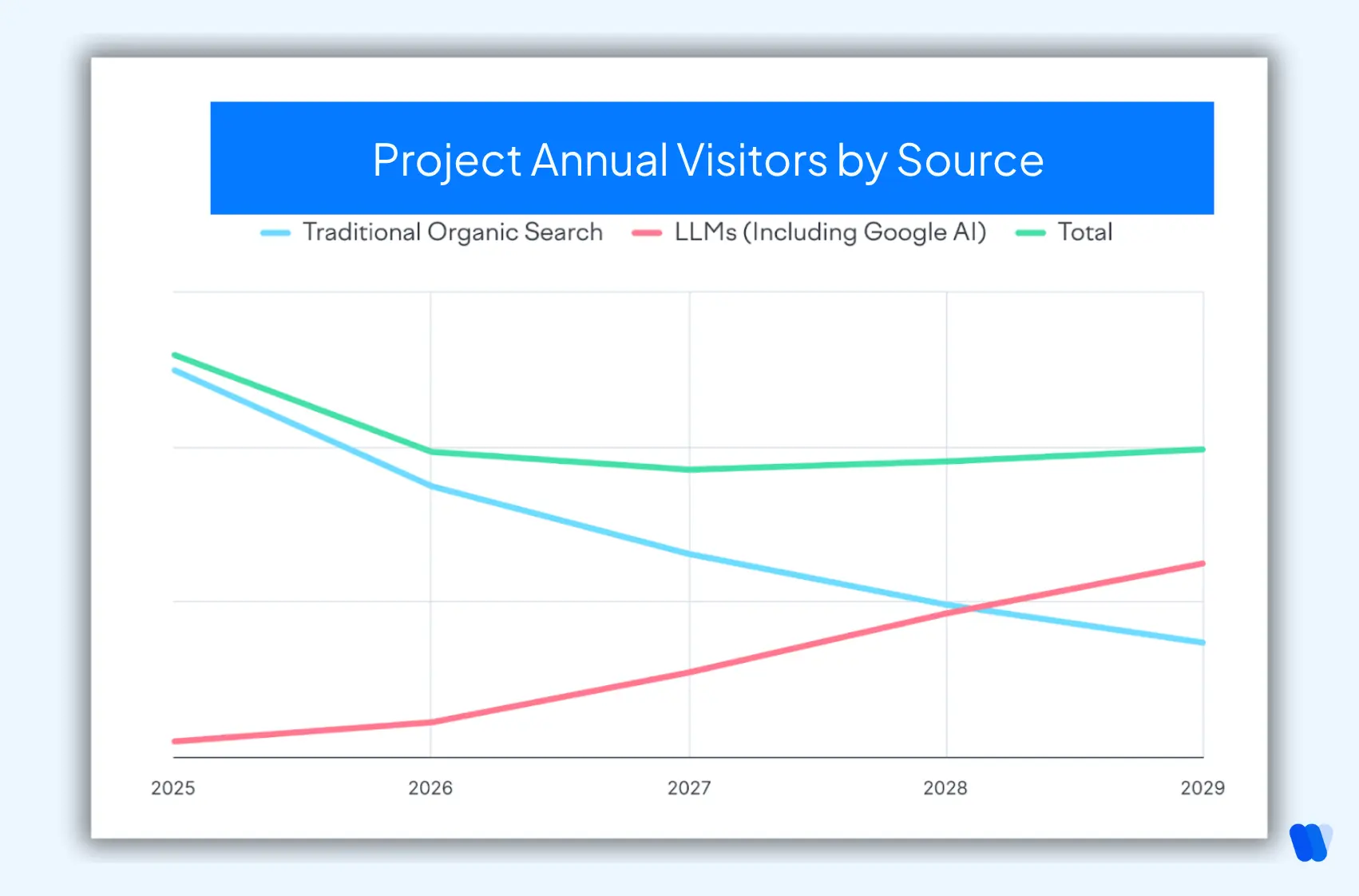
What’s changing with Generative Engine Visibility:
- SEO alone won’t cut it anymore. LLMs don’t just rank metadata , they interpret it. Clear, direct language often matters more than traditional keyword targeting.
- Visibility is earned through relevance, not links. AI engines cite trusted, well-structured content — not just the content that ranks highest on Google.
- This is a new kind of optimization. It’s not about search results. It’s about being selected as a source the AI pulls from, which is fundamentally ranking in chatgpt actually means in practice
- Structure matters more than ever. Clean headings, paragraph clarity, and well-organized lists help models parse your content accurately
In What Ways is GEO Similar to Traditional SEO Practices?
While Generative Engine Optimization (GEO) introduces new priorities shaped by AI-driven interfaces, many of its most effective techniques overlap with traditional SEO. Below are the shared strategies, principles, and formats that continue to power visibility, whether you’re targeting Google’s algorithms or generative models like GPT-4o, Claude, or Gemini.
Both GEO and SEO prioritize visibility, authority, and relevance
- The foundational objective of both strategies is the same: make your content findable, credible, and trusted.
- In SEO, this means climbing SERP rankings through backlinks, on-page optimization, and search intent alignment.
- In GEO, it means creating content that language models are likely to cite, summarize, or directly reuse in their generated responses — the same outcome many brands now pursue with support from generative engine optimization agencies specializing in AI-first visibility.
- Whether it’s a search engine or an LLM, both systems prefer accurate, authoritative, and helpful content that answers the user’s query with confidence.
Structured formatting is essential in both SEO and GEO
- Content that is broken into clear, digestible sections performs better in both traditional and generative search.
- Using H2s and H3s to organize topics helps search engines crawl pages efficiently and helps LLMs understand the topical flow and hierarchy.
- Bullet points, numbered lists, bolded summaries, and concise paragraphs are all formats that boost scannability and semantic clarity.
- For LLMs, this structure also helps in segmenting information into logical, reusable chunks that can be reproduced accurately in answers.
High-quality internal structure improves rankings and references
- In SEO, a strong internal linking structure and clear content hierarchy help with crawl depth and topic clustering.
- In GEO, even if links aren’t followed, the logical sequence and relationships between topics matter.
- LLMs are more likely to cite a source if its content offers complete, logically connected, well-labeled sections that cover core and subtopics clearly.
- This is why long-form pillar content—when organized well—performs strongly in both channels
Authority and reputation are important across both ecosystems
- SEO favors content from domains with high domain authority, verified authorship, and trust signals (like backlinks and reviews).
- GEO reflects similar preferences: LLMs favor citing content from credible brands, government sites, academic publications, or well-known thought leaders.
- That means building authority through off-page efforts (media mentions, citations, publications) improves visibility in both SEO rankings and LLM answers and many teams formalize these trust-building steps using a Generative Engine Optimization Checklist for Brand Visibility to ensure authority signals are consistently reinforced.
Semantic SEO principles apply to both SEO and GEO
- Semantic SEO focuses on building content that fully covers a topic by understanding relationships between concepts, entities, and questions — not just matching keywords.
- In traditional SEO, this helps pages rank for a cluster of related queries and improves topical authority.
- In GEO, it ensures that content aligns with the way LLMs interpret and organize knowledge, making it easier to reference in generative answers.
- As Koray Tuğberk GÜBÜR emphasizes, “semantic networks, conceptual hierarchy, and entity-based coverage” matter in both search algorithms and language model comprehension.
Freshness and content updates matter for long-term visibility
- Google ranks recently updated or time-sensitive content higher, especially in trending queries.
- GEO operates similarly: many LLMs are trained on snapshots of the web or fine-tuned using up-to-date sources.
- Regularly updating your content with new stats, references, or examples increases the chance that future LLMs will include or reference your material in their responses.
E-E-A-T remains essential in both SEO and GEO
- In traditional SEO, Google uses E-E-A-T to assess credibility — prioritizing content that demonstrates real-world expertise, clear sourcing, and reliable information.
- LLMs are trained on similar signals: content from authoritative sources is more likely to be remembered, referenced, and reused in generative responses.
- Whether it’s Google’s algorithms or AI models like GPT-4o, both systems favor trustworthy, well-sourced, and accurate information — especially in sensitive topics like health, finance, or legal content.
- GEO success depends not just on being found, but on being trusted enough to be quoted by the model.
How is GEO Different from Traditional SEO Practices ? – A Data-Driven Analysis
While GEO shares structural DNA with SEO, its foundations, priorities, and performance metrics differ in critical, irreversible ways. At its core, Generative Engine Optimization is not just a technical shift—it’s a strategic response to how people search, how AI delivers answers, and how brands must now think about GEO visibility factors in an AI-first world. Here are the ways GEO practices differ from traditional SEO practices:
From Links to Language Models
Traditional search engines like Google were built on link structures, where visibility was determined by how many authoritative sites linked to your content (PageRank), keyword matches, and site engagement.
GEO exists in a world where links have been replaced by language. Models like GPT-4o, Claude, and Gemini don’t rank indexed sites, they generate answers from learned representations.
Much of that representation is fueled by conversational sources like Reddit for GEO, which LLMs use heavily for real-world context.”
A study by Semrush shows how generative queries are longer, more detailed, and context-driven.
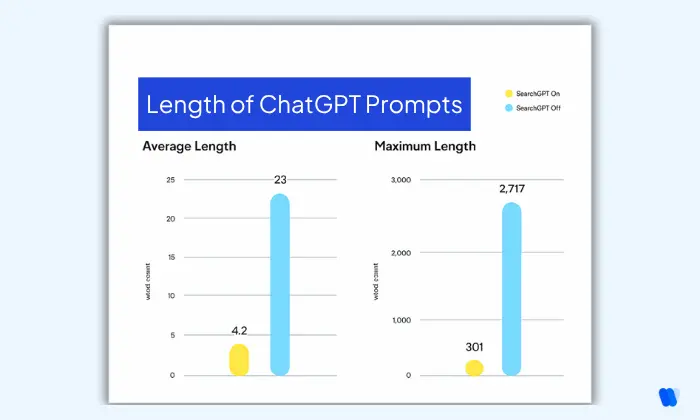
Key Findings:
- Average query length has jumped to 23 words, compared to just 4 in traditional search.
- Sessions last longer, with users spending around 6 minutes per interaction — suggesting deeper exploration and higher engagement.
- Responses are context-aware and adaptive, changing based on the user’s previous prompts, tone, or intent.
From rankings to model relevance
Traditional SEO measured performance by rankings and click-through rates , how high your link appeared on the page, and how many people clicked. The strategy revolved around optimizing for visibility within search results.
But in a generative search environment, the GEO KPIs are much different. What matters now is reference rate: how often your content, brand, or voice is used as a source in model-generated responses. It’s no longer just about being listed, it’s about being cited, synthesized, and surfaced by the model itself.
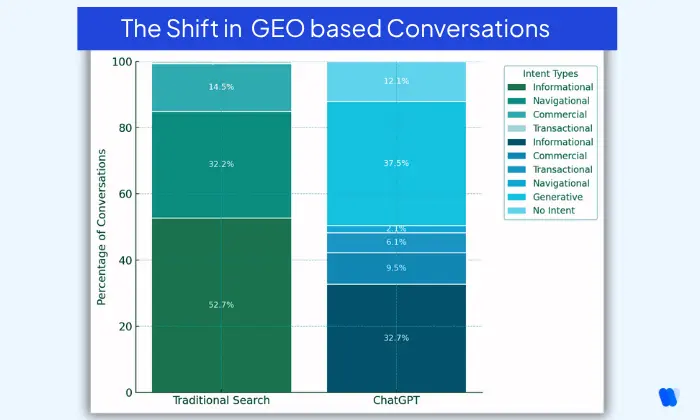
Key Findings:
- 37.5% of ChatGPT prompts reflect generative intent — a new category of search that didn’t exist in traditional engines.
- Traditional intents (informational, navigational, commercial) dominate Google, but LLMs show a broader mix.
- Generative queries are context-rich, brand-neutral, and often lead to AI-native summaries rather than click-based journeys.
From Precision to Parseability
Traditional SEO rewarded exact keyword matches, structured repetition, and clean meta tags. It was about telling Google, clearly and often, what your content was about.
GEO, on the other hand, favors content that LLMs can easily understand, interpret, and summarize. It’s not about repeating phrases, it’s about clarity, context, and semantic richness.
A study by titled GEO: Generative Engine Optimization by students at Princeton, Georgia Tech, The Allen Institute of AI, and IIT Delhi examines that that citation, fluency, and clarity are the top factors influencing whether content is selected by LLMs, outweighing traditional signals like technical jargon or keyword density.
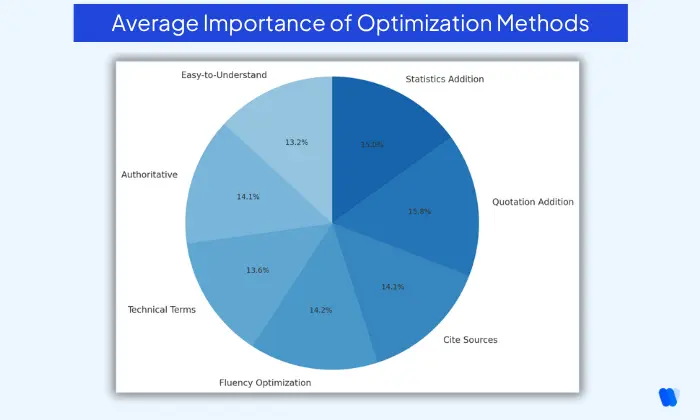
Key Findings:
- Models prefer clean formatting: headers, bullet points, short sentences.
- “Liftable” sections like “Key takeaways” and “In summary” improve inclusion in responses.
- Dense content ( content that’s packed with meaning, not keywords) gets surfaced more often.
- LLMs rely on context and relationships, not just phrase repetition.
What Do Experts Say About GEO’s Role in the World of SEO?
I dug into Koray’s writings and interviews and, surprisingly—he doesn’t really talk about GEO as a standalone lever. His whole ethos is “holistic” and semantic-first:
Key Insights:
- Focus on semantic coverage over geography. His key point is that you shouldn’t be rewriting content for each region or tinkering with UTM/URL parameters for “geo” alone, instead, build a complete topical map and let the search engine’s own entity graph handle local relevance.
- Internal linking & Entity graphs. When he touches on “geography,” it’s buried in discussions of how Google treats “web entities” (offices, employees, locations) as nodes in its knowledge graph—which again he treats as part of semantic SEO, not as a bolt-on GEO tactic.
I read Michael King’s interview on Search Engine Land and here’s a concise take on his LLM-and-SEO insights:
Key Insights:
- Embed your entire site, measure each page’s vector-distance from the “site centroid,” and prune pages that drift too far—every time they did this, overall performance improved.
- Most SEO platforms still count words and links; Google long ago moved to semantic, non-lexical models—yet our software is only “ChatGPT slapped on top.”
- Google uses LLM-powered query expansion (fan-out → parallel searches → chunk retrieval → LLM synthesis). SEOs need to replicate that pipeline, not just optimize for head terms.
- “AI Mode” results are citations/syntheses, not “#1 rankings.” Pages that rank poorly on a head term often rank highly for hidden, expanded queries.
- With zero-click AI answers, SEO’s true leverage is branding: driving mind-share and influencing downstream queries, not just click volume.
- He argues SEO must evolve into “relevance engineering”—building open-source, IR-informed tooling that mirrors Google’s LLM-driven workflows.
- SEO needs a split: those clinging to 25-year-old best practices vs. a new breed that tests everything, engineers solutions, and embraces semantic, AI-first methodologies.
Read More Articles
How to Understand User Intent in Generative Engines?
How Can Pattern Recognition Improve Visibility in AI-Generated Answers?
How to Design Content Briefs for GEO?
Can GSC Data Guide Your GEO Strategy?
How Will Google’s AI Mode Transform Traditional SEO Practices?
How to Optimize Content for AI Overviews & Boost Visibility
How to Optimize Conversational AI Search Queries for Better Visibility?
FAQs
Content that is:
Well-structured (with clear headers and bullet points)
Semantically rich (covering full topics, not just target keywords)
Trusted (cited by others and backed by expertise)
Up-to-date (especially in fast-moving industries)
This kind of content is easier for models to interpret, cite, and reuse in their generated responses.
What Should Marketers Actually Do About This Debate?
SEO has always been fragmented, built on separate tools for links, keywords, and rankings, with no single platform owning the full picture. It worked because it was practical, not unified. GEO is different. It’s centralized, integrated directly into the model layer, and designed to influence outcomes. The platforms that win here won’t just track citations ,they’ll shape them, guiding how brands are recalled and represented by AI.
Key Takeaways
- SEO was decentralized. GEO is platform-native: With SEO, you optimized around Google. With GEO, you optimize inside the model. That means new tools, new metrics, and deeper integrations.
- Traffic was the goal. Now it’s memory: SEO focused on visibility and clicks. GEO focuses on whether the model remembers your brand well enough to mention it, even without a prompt.
- SEO was about inference. GEO is about insight: Rankings were always indirect. In GEO, you can track how LLMs cite your brand, what tone they use, and what context they frame you in , with clarity.
- SEO tools helped you react. GEO tools help you act: The next wave of GEO platforms will help you generate campaigns, train responses, and update content dynamically as model behavior changes.
- Clickstream data was locked. GEO surfaces it natively: LLMs simulate user behavior internally. GEO platforms will start unlocking those patterns, helping marketers shape not just how they show up, but why.
So when it comes to the SEO vs. GEO debate Master these fundamentals, and you won’t just be discovered, you’ll be remembered by the model./p>