defines how consumers now discover, evaluate, and trust products across ChatGPT, Gemini, and Perplexity instead of traditional search engines.
Beauty shoppers no longer browse multiple pages—they ask AI which foundation lasts longer or which serum suits their skin type. Yet most brands remain unaware of whether they appear in these answers because traditional SEO cannot track citations within large language models.
Wellows AI visibility platform closes that gap by monitoring how often and where beauty brands are mentioned across AI systems, highlighting both credited and unlinked references.
As Generative Engine Optimization (GEO) emerges, structuring data for AI interpretation becomes the foundation of visibility and trust in the beauty market. Brands that fail to appear in AI-generated responses risk losing visibility where future consumers are already making decisions.
TL;DR
- AI assistants are replacing traditional search for beauty discovery
- Being cited in AI answers now matters more than ranking links
- Structured, verified product data increases AI trust and mentions
- Earned media and expert references boost AI recommendations
- Tracking AI citations reveals missed visibility and growth gaps
What Is AI Search Visibility for Beauty & Personal Care Brands
Search Engine Visibility measures how often a beauty or personal care brand appears in responses from ChatGPT, Google’s SGE, Bing Chat, or voice assistants.
It’s the AI-era version of SEO visibility—not about ranking links, but about being mentioned or cited within AI-generated content. As AI search grows, LLM citation tracking is becoming as important for measuring visibility as rank tracking once was for Google.
This evolution stems from Generative Engine Optimization (GEO), which ensures your brand data is structured so AIs can interpret and recommend it correctly.
When someone asks, “What’s the best shampoo for dry scalp?” or “Which skincare brand suits sensitive skin?”, your goal is for your brand to appear in that answer — because that visibility now defines trust, credibility, and long-term influence across the beauty market.
Current State of AI Search Visibility in Beauty & Personal Care
- Major brands dominate:
Established leaders like Maybelline, L’Oréal Paris, and Charlotte Tilbury hold an early edge in AI-generated beauty content.
Their advantage comes from strong domain authority, extensive content ecosystems, and structured data integration.
These brands capture a disproportionate share of AI citations due to verified brand metadata that makes them easily recognizable by AI systems. - Indie brands lag behind:
Smaller or niche players often record under 10% citation share in their categories.
Brands such as Summer Fridays perform well in micro-topics like “jet lag mask” but trail legacy brands like Kiehl’s and Neutrogena in broader visibility.
Limited domain authority and lack of structured data keep many emerging labels absent from AI-generated results. - Category insights:
Maybelline leads makeup citations, followed by L’Oréal and Charlotte Tilbury.
In personal care, Dove, CeraVe, and Cetaphil dominate.
Dove ranks highest for “dermatologist-recommended body wash.” - Sentiment trends:
AI sentiment remains stable with about 46% positive and 4% negative mentions showing that most AI references are factual or favorable.
💡 Insight: Beauty-related AI visibility is rising fast. About 13–15% of Google searches now show AI overviews, with the cosmetics sector nearing 14% (Search Engine Journal, 2025).
Brands publishing transparent ingredient data and up-to-date product information achieve stronger AI visibility, while outdated or unstructured content quickly falls behind.
How Can Beauty Brands Optimize Content for AI-Generated Search Results
AI-driven search is redefining how consumers discover and compare beauty products. People now ask ChatGPT or Google’s SGE for personalized options like “best serum for acne scars” or “long-lasting red lipstick under $20.”
To stay visible, beauty brands must evolve beyond traditional SEO into strategies that help AIs read, interpret, and recommend their data confidently.
Use Generative Engine Optimization (GEO): Treat AI assistants as a new search layer. GEO structures brand data — such as product details, ingredients, and FAQs — so AI systems can interpret and cite them correctly. Organized, AI-readable content boosts your chances of being mentioned in generative answers.
Add structured data: Apply schema markup for Product, Review, and FAQPage. Pages with structured data are 36% more likely to appear in AI summaries. Schema ensures ingredients, reviews, and benefits are machine-readable.
Make listings smarter: Keep your Google Business Profile, Wikipedia, and retail listings consistent. AI platforms rely on verified brand-managed details — product names, prices, and availability — to build trust and ensure accurate AI citations.
Earn mentions from trusted sources: Features from beauty authorities like Vogue, Allure, or dermatology experts improve visibility. A single expert citation can enhance your citation strength even without backlinks.
Create short, helpful videos: Tutorials like “5 Benefits of Vitamin C Serum” or “How to Choose the Right Foundation Shade” perform well. YouTube and TikTok visibility in AI summaries has surged, and multimedia optimization helps AI models interpret video and image signals more accurately.
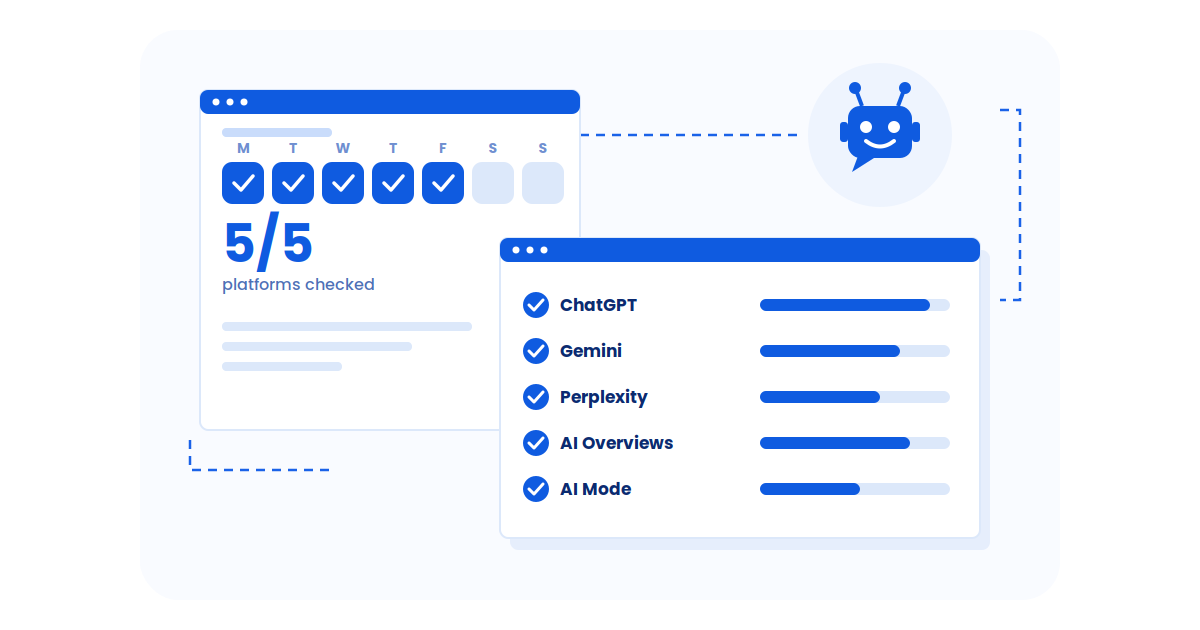
Track AI mentions: Use visibility intelligence tools to see where your brand appears across ChatGPT, Gemini, and Bing Chat. Running an AI visibility audit uncovers missed citations and helps you benchmark your performance against competitors.
Match real AI queries: Study prompts consumers use in beauty searches — like “best cruelty-free mascara” or “how to treat acne scars naturally.” Craft content that directly answers these questions to improve your presence in conversational results.
Use AI-driven PR: Publish data-led stories, skincare studies, or sustainability updates. Positive coverage across high-authority outlets strengthens your AI footprint. Combine PR efforts with AI visibility enhancement strategies for faster results.
Compare and refine: Benchmark your AI citation share. If competitors dominate “best vegan moisturizer,” analyze their content depth and fill those topical gaps with expert-backed insights. Regular comparison refines your strategy for sustained visibility.
Stay ahead of trends: Track beauty-related AI topics such as “waterless skincare” or “AI skin analysis.” Early integration keeps your brand algorithmically relevant. See how combining SEO and GEO ensures adaptability as algorithms evolve.
Beauty shoppers increasingly ask AI assistants for “best serum for acne scars” or “moisturizer for sensitive skin.” To show up in those answers, your product information must be easy for AI to summarize, trust, and map to real use cases.
- Add a “recommendation-ready” summary block on product pages (who it’s for, concern solved, results timeline)
- Publish ingredient compatibility guides (layering rules, contraindications, routine pairing)
- Make safety and sensitivity guidance explicit (patch testing, fragrance notes, pregnancy-safe clarity)
- Format content for summarization (What it does / Who it’s for / How to use / What to expect / Mistakes)
- Build routine pathways (AM/PM routines, barrier repair, acne care) linking products into steps
- Remove contradictions across pages (claims, directions, ingredient list, FAQs must match)
- Add factual comparison language (gel vs cream, beginner vs advanced strength, oily vs dry)
If AI can quickly extract clear, consistent, and context-rich information, your products are far more likely to be included in recommendations.
How Can Beauty Brands Measure and Track Their AI Search Visibility?
Before building an AI visibility strategy, it’s essential to know your current position. Using the Wellows AI search visibility platform, I analyzed how leading beauty and cosmetics brands perform across major AI systems. The test domain was loreal.com to evaluate its visibility within ChatGPT, Google’s Gemini and SGE, Bing Chat, and Perplexity.
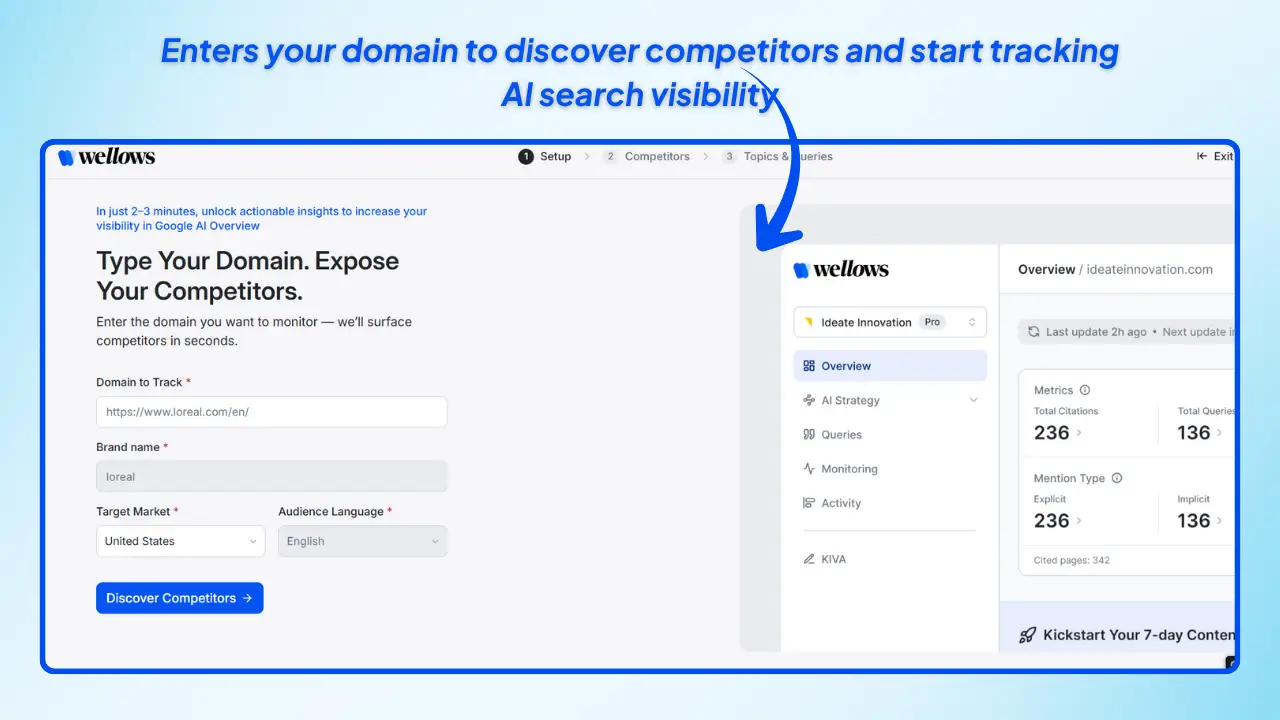
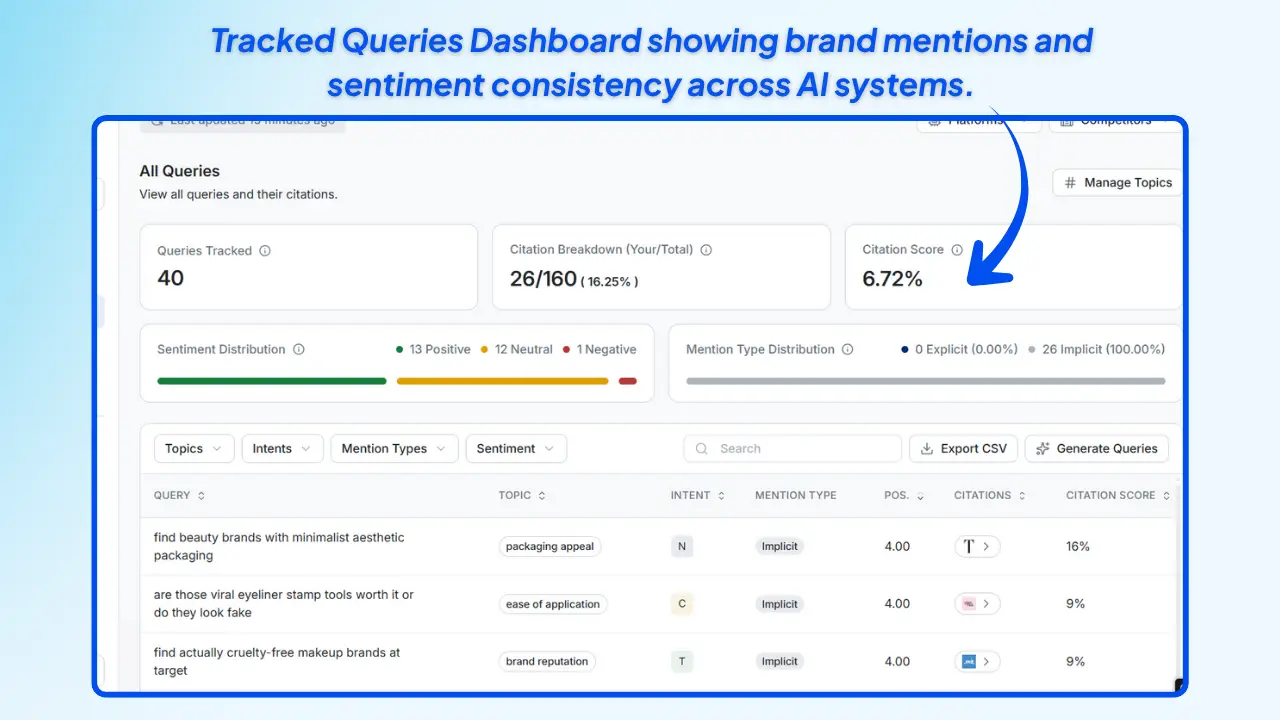
Enter Your Brand Domain: Adding loreal.com to Wellows triggered a comprehensive AI scan. The platform detected 26 citations with a 6.72% citation score, ranking L’Oréal first among peer brands. It showed exactly where L’Oréal appeared in AI responses — and where visibility opportunities were missing.
Brand Matching & Competitor Identification:
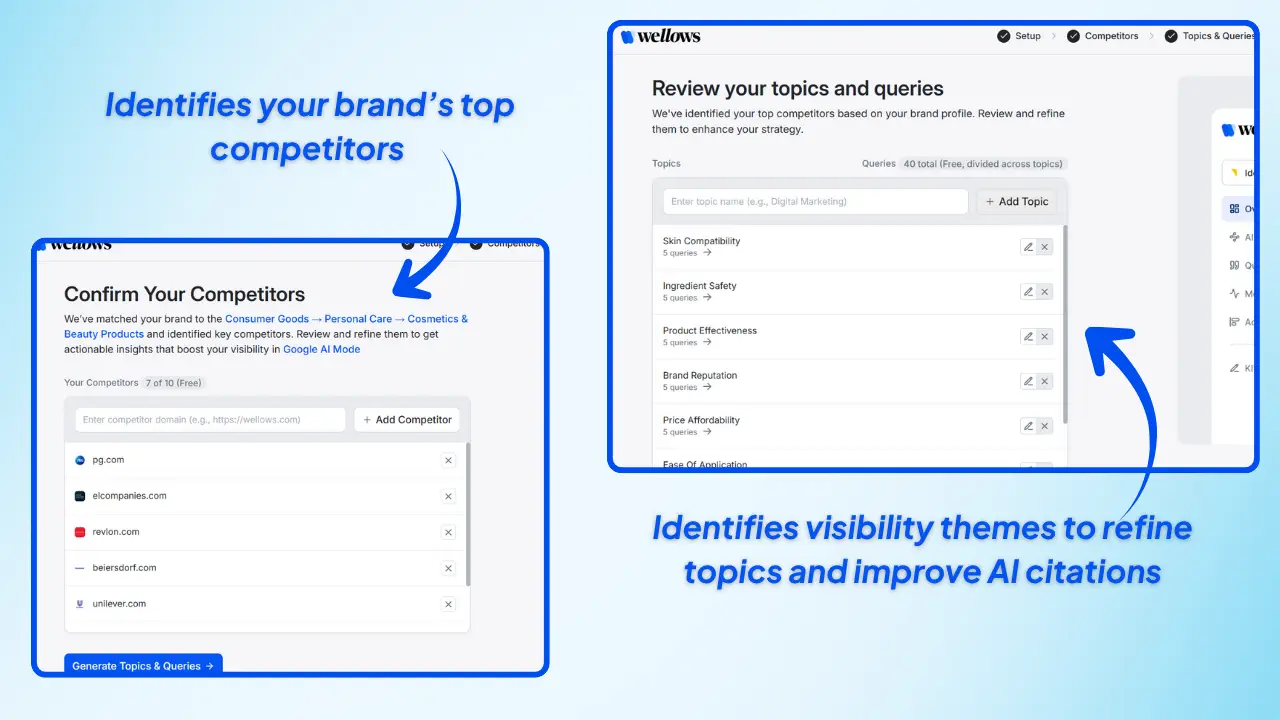
Wellows automatically categorized L’Oréal under Beauty & Personal Care and benchmarked it against Maybelline, Revlon, Unilever, Estée Lauder Companies, and P&G. This confirmed that AI visibility aligns with industry-level visibility factors rather than isolated brand data.
Review and Refine Competitors:
Default tracking covered themes like skin compatibility, ingredient safety, product effectiveness, and brand reputation. I added sustainability as a rising visibility topic. These refinements revealed how different brands gain traction for eco-friendly or ethical discussions.
Explore Dashboard:
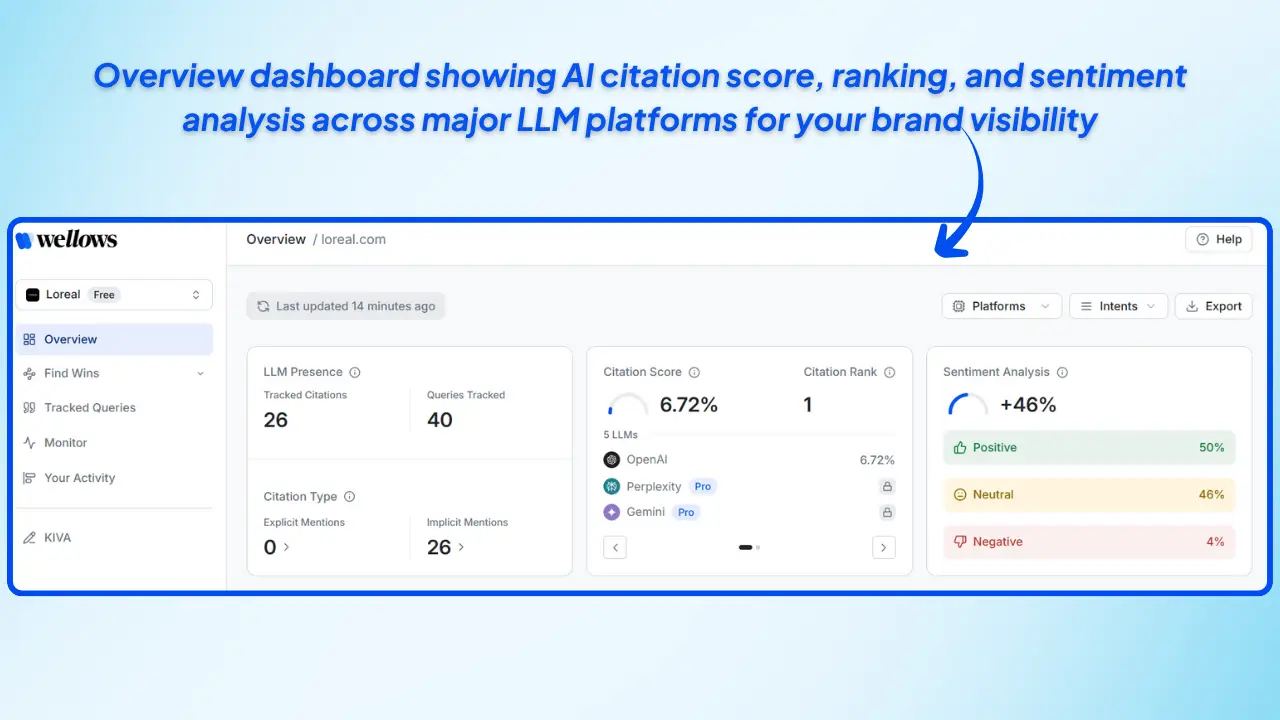
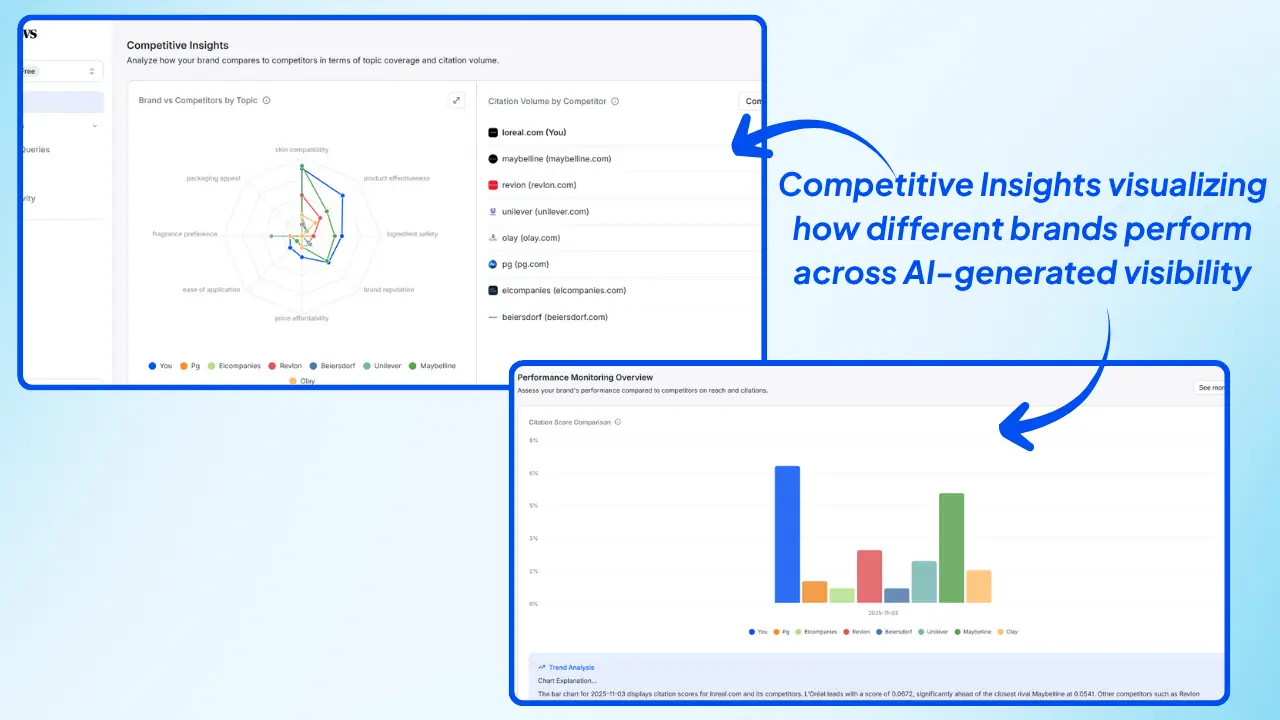
The dashboard visualized citation performance. L’Oréal led with a 6.72% citation score, followed by Maybelline (5.41%), Revlon (2.66%), and Olay (1.69%). Sentiment analysis showed 46% positive and only 4% negative mentions — confirming favorable AI coverage and tone distribution.
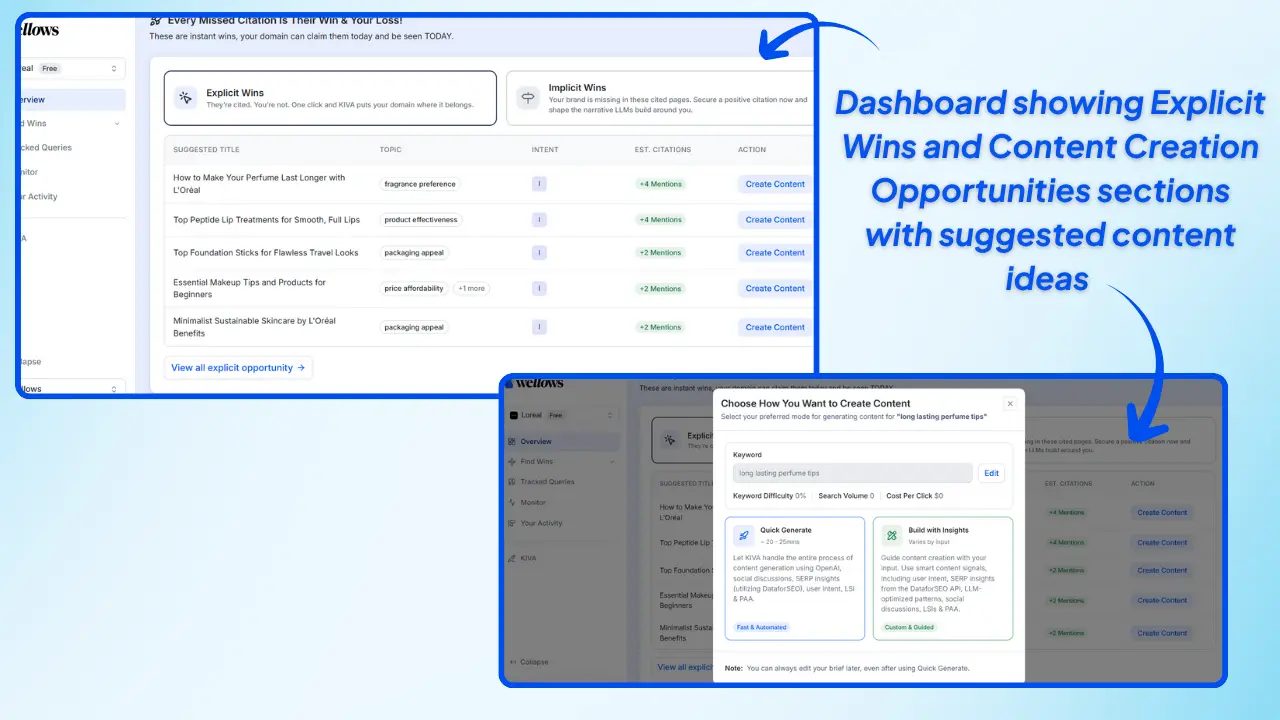
Check Explicit and Implicit Mentions:
Wellows separated explicit citations (credited mentions) from implicit ones (AI references without direct brand links). These unlinked mentions were flagged as conversion opportunities — a key part of LLM seeding strategy — turning invisible references into traceable citations.
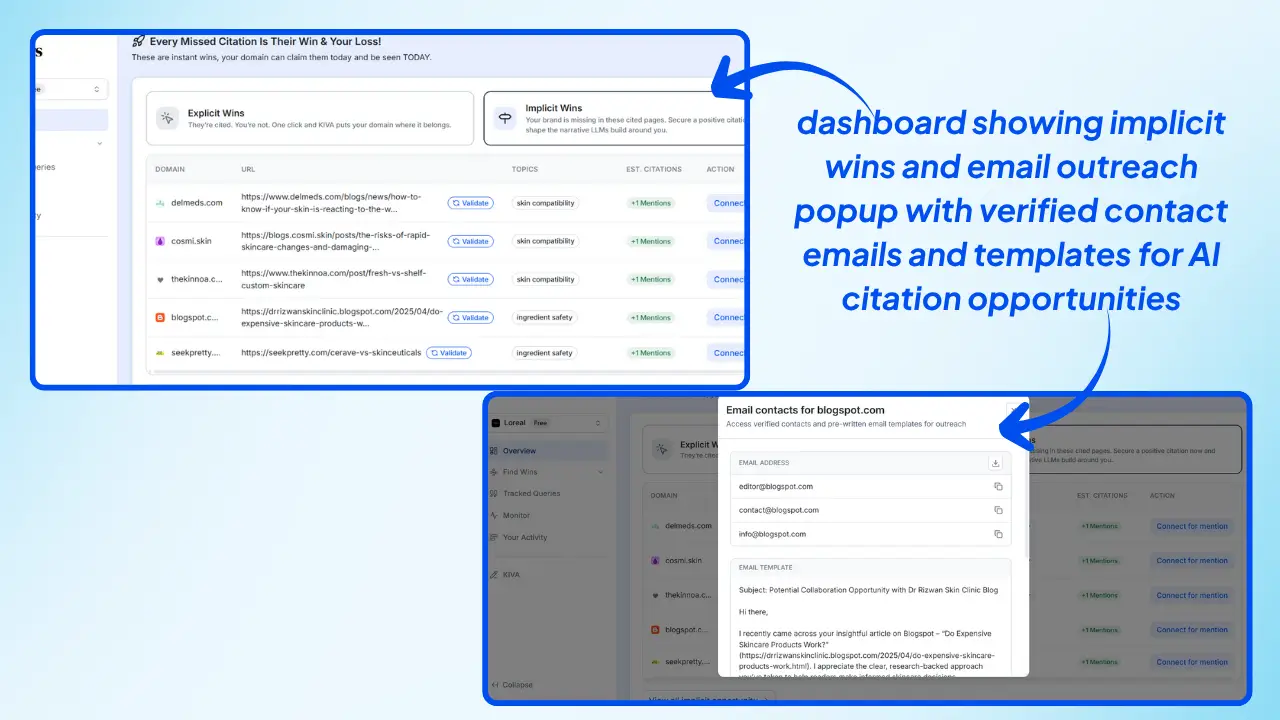
Analyze Competitive Insights:
L’Oréal dominated in ingredient safety and skin compatibility, while Maybelline led in packaging appeal. No brand held strong visibility in sustainable beauty — a growing opportunity area that connects with AI pattern recognition and content clustering.
Review Top Cited Queries:
Queries like “drugstore foundation vs luxury which lasts longer?” and “is luxury foundation worth it now?” generated the most citations. Understanding these prompts revealed exactly which search patterns drive AI visibility in generative results.
Monitor Performance Over Time:
Trend dashboards tracked citation growth, sentiment movement, and category momentum. L’Oréal maintained an average 0.4 citation index, close to Unilever. Visibility spikes coincided with Fashion Week campaigns — reinforcing how earned media directly influences AI-driven visibility.
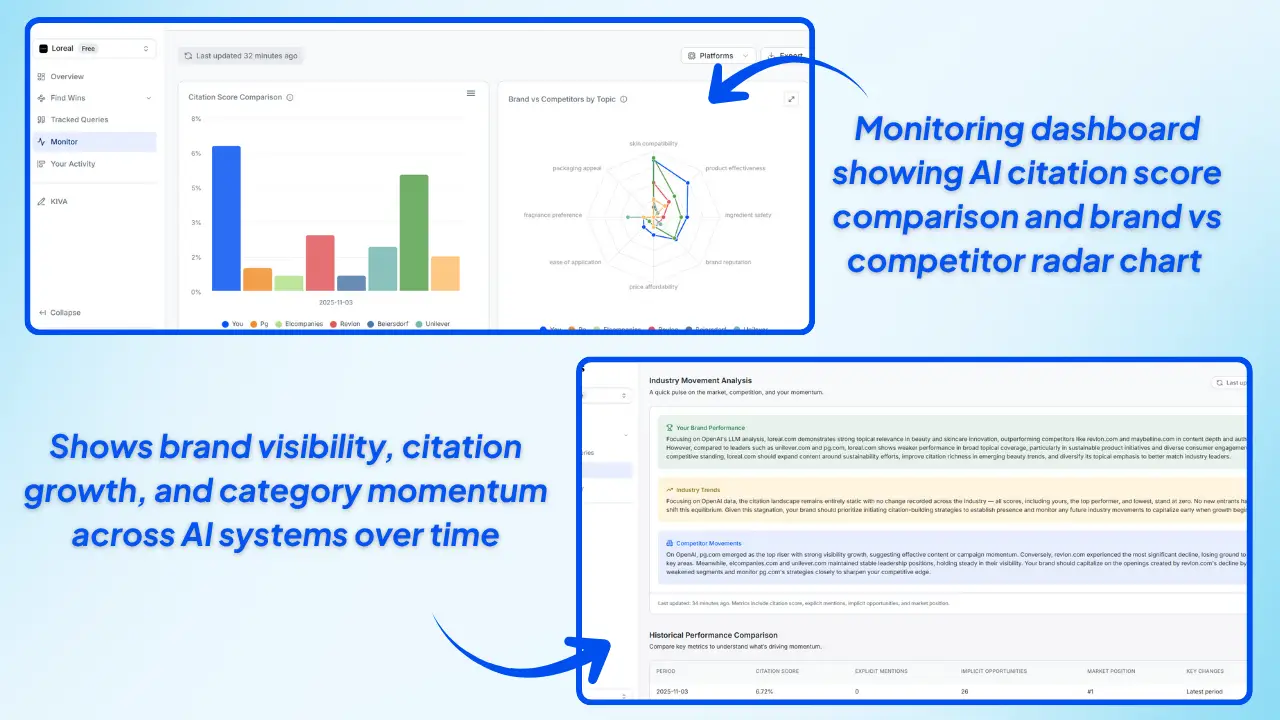
With one click, Wellows delivers a full visibility report including mentions, missed citations, sentiment trends, and benchmark comparisons across all major AI platforms.
Curious to see your beauty brand’s visibility across AI systems?
To explore your AI visibility report and start improving your brand’s presence today.
What Strategies Can Beauty Brands Use to Enhance Their AI Search Visibility
10 Tips to Transform Your Strategy for Beauty & Personal Care Brands
To stand out in AI-driven search, beauty brands must evolve beyond traditional SEO. These ten focused actions merge proven optimization principles with AI-specific GEO strategies to boost visibility across generative platforms.
1. Define your niche: AI cites brands with clear identity far more often. Whether you specialize in organic skincare or cruelty-free makeup, consistency across structured data and content helps engines tag your authority. Learn how brand signals strengthen GEO visibility.
2. Highlight unique strengths: Support every claim with data — clinical trials, verified ingredients, or user results. Factual proof builds AI trust. For example, a 95% efficacy claim from testing carries more authority than marketing adjectives. Explore how E-E-A-T optimization improves brand credibility in AI summaries.
3. Study AI-cited competitors: Track which brands AIs cite for key categories. If others lead in “best foundation for acne-prone skin,” analyze their topical authority and fill those content gaps. Apply LLM visibility audit methods to measure your position and adjust accordingly.
4. Stay current with beauty trends: Refresh content frequently. Early coverage of trending ingredients or techniques like “skin cycling” or “bakuchiol serum” secures citations faster. Use GEO trend data to track emerging topics AI prioritizes.
5. Target conversion-ready queries: Prioritize transactional prompts such as “best foundation under $40” or “where to buy vegan shampoo.” Use concise, fact-rich content so AIs can quote you in buying contexts. Align with intent-driven query strategies to increase purchase visibility.
6. Build content ecosystems: Interlink product pages with tutorials, guides, and comparisons. For example, connect a retinol cream to “how to start retinol” articles. This strengthens topical authority and signals completeness — a key content-briefing tactic in GEO workflows.
7. Match the buyer journey: Map content to each stage — awareness, consideration, and purchase. Cover questions like “Do I need a toner?” early, and “Which toner suits oily skin?” later. Use keyword-intent mapping to balance informational and commercial visibility.
8. Maintain product visibility: Keep product data and schema fresh. Outdated prices or incomplete specs make AIs skip your listings. Regular updates following content governance frameworks ensure consistency across touchpoints.
9. Own branded questions: Don’t let forums or resellers define your brand facts. Create FAQ pages addressing “Is [Brand] cruelty-free?” or “Which serum suits dry skin?” Structured Q&As using Answer Engine Optimization (AEO) make AIs cite your verified responses.
10. Use quick visibility wins: Identify unlinked mentions and implicit references using visibility tools. If competitors rank for “best sulfate-free shampoo” and you offer one too, act fast. Combine findings with myth-busting GEO insights to turn missed mentions into citations.
How Can Beauty & Personal Care Brands Overcome Common Challenges in AI Search
Even with well-structured strategies, beauty brands face unique hurdles in optimizing for AI-driven visibility. These issues echo traditional SEO challenges but now require real-time adaptation to conversational and generative search systems.
| Challenge | Solution | Insight |
|---|---|---|
| Hard to measure AI visibility | Track your brand’s mentions and citations across ChatGPT, Gemini, SGE, and Bing Chat to quantify visibility. | Multi-platform tracking establishes your AI “share of voice,” a measurable equivalent of SEO visibility that reveals where you appear or don’t. |
| Poor alignment with consumer intent | Analyze AI-generated queries to match real informational, comparative, and transactional needs. | Intent mapping exposes missed content gaps. If users ask “best natural deodorant without aluminum” and your site doesn’t answer, you lose presence in AI results. |
| Competitors dominate AI citations | Benchmark your citation share against peers and close topical gaps where others lead. | Competitive tracking highlights where rivals rank higher. If Competitor A owns 20% of “best foundation” mentions and you’re at 5%, focused content can close that gap within weeks. |
| Negative or incorrect AI mentions | Monitor sentiment and correct misinformation through updated content or verified PR statements. | Sentiment analysis detects tone shifts early. Address outdated facts or bias fast to maintain trust and prevent AI from amplifying inaccuracies. |
Why Choose Wellows for Your Beauty Brand
Most SEO tools weren’t designed for the AI search era. Traditional platforms track keywords and backlinks but miss how large language models cite or describe your brand in conversational results.
Wellows bridges that gap it’s an AI visibility intelligence platform built to measure your brand’s presence and sentiment across all major generative AI engines. Here’s how it compares:
| Feature | Wellows | TryProfound | PromptWatch AI |
|---|---|---|---|
| AI Citation Tracking (ChatGPT, Gemini, Bing, Perplexity) | Yes Tracks mentions and citations across all major AI engines in real time. | Partial Covers a few platforms like ChatGPT and Bing, but lacks full depth. | Yes Monitors multiple LLMs, though analysis is less detailed. |
| Implicit Citation Detection (Unlinked Mentions) | Yes Finds where your brand appears without a hyperlink or credit for immediate action. | No Focuses only on explicit, linked citations. | No Tracks visible mentions but doesn’t detect uncredited ones. |
| Visibility Score + Sentiment Fusion | Yes Combines citation count, tone, and authority into a unified score. | Partial Offers visibility data but no sentiment-weighted index. | Limited Displays basic citation numbers without tone analysis. |
| Industry Benchmarking (Sector-Wide Scans) | Yes Compares your AI visibility across the entire beauty and personal care market. | No Focused on limited competitor tracking only. | No Monitors individual brands without industry context. |
| Explicit vs. Implicit Wins Dashboard | Yes Highlights missed citations and suggests topics to convert them into wins. | No Does not differentiate between citation types. | No Lacks actionable dashboard insights. |
| Query Intent Clustering | Yes Groups AI queries by intent (informational, comparative, transactional). | No Tracks prompts without semantic intent mapping. | Partial Basic keyword bucketing, minimal depth. |
| Real-Time Sentiment Tracking | Yes Monitors tone across all AI platforms, including competitors. | Yes Offers partial sentiment tracking, not integrated with scores. | Limited Surface-level tone data, no historical tracking. |
| Visibility Playbooks & Content Suggestions | Yes Generates instant playbooks and ideas to fill citation gaps. | No Lacks automated content or PR workflows. | No Provides data only, without recommendations. |
Why Search Intent Matters in the Beauty Market
Modern shoppers now phrase their questions conversationally through AI assistants. Understanding search intent is essential for both traditional SEO and AI search visibility. Aligning your content with real questions ensures your brand appears in both generative and organic results.
Over 80% of Google’s AI overviews come from informational queries. Tutorials and how-to content build authority. Learn how Answer Engine Optimization (AEO) complements GEO to capture this intent.
Navigational Intent: Users seek specific brand details — such as “L’Oréal return policy” or “[Brand] official site.” Use schema types like Organization and FAQPage so AIs pull verified data from your site, not third-party sources. Keep brand policies and product details structured to maintain accuracy.
Transactional Intent: These queries show purchase intent — for example, “buy [Brand] moisturizer online” or “stores with [Brand] products.” Optimize Product and Offer markup for clear pricing and availability. Explore multimodal GEO strategies to connect structured data with visuals for stronger AI-driven commerce results.
Comparative Intent: When users compare — “[Brand A] vs [Brand B] foundation” — AIs reward transparency and context. Publish factual, balanced comparisons supported by verified data. Implement entity-based content to help AIs identify your brand as an authoritative source in side-by-side evaluations.
💡 Insight: Matching your content to intent trains AIs to trust and cite you. By answering “why,” “how,” and “which” queries with structured, credible data, your brand becomes the reliable voice consumers hear first in AI-powered discovery.
Market Insights for Beauty & Personal Care Brands
The beauty and personal care market is evolving rapidly as consumers change how they research and purchase products. Understanding these behaviors is now the foundation of a resilient AI visibility strategy.
If your content isn’t optimized for AI visibility, you’ll miss early awareness opportunities. Learn how AI engines select brand citations to strengthen your early-stage visibility.
Digital purchase is mainstream: Over 72% of beauty consumers shop online at least part-time (Industry Survey, 2024). AI-assisted commerce depends on structured data—accurate pricing, reviews, and product info help AIs recommend your listings first.
Mobile and voice are surging: Nearly 90% of shoppers research via mobile, even in stores. Voice assistants prefer concise, schema-based answers. Use lessons from AEO vs. GEO to ensure both voice and AI platforms correctly interpret your brand data.
Gen Z & Millennials lead adoption: Younger users drive virtual try-ons and AI-powered diagnostics. Integrating AI shade finders and skin analysis engines enhances user experience and generates structured data for visibility. Explore how AI agents process and rank brand interactions across the web.
Video & social steer choices: About 71% of consumers say video reviews influenced a purchase (Yahoo Finance, 2025). Since Google’s SGE cites YouTube in AI overviews (BrightEdge, 2025), optimizing short videos improves discoverability. Combine this with multimodal content optimization to strengthen your brand’s presence across AI feeds.
Industry AI adoption is accelerating: By late 2025, most major beauty brands will integrate AI or AR tools like chatbots and virtual try-ons. Generative engines favor structured, consistent, and data-rich brands. Learn how GEO adoption benefits translate technical readiness into lasting AI visibility.
💡 Bottom line: Every beauty buyer will interact with AI—through voice, chat, or search. Building AI visibility now determines which brands own tomorrow’s purchase decisions.
Audience Insights for Beauty & Personal Care Brands
Different beauty consumers ask distinct questions and AI assistants reflect that diversity in their responses. Understanding each audience segment helps shape content that meets intent and ensures your brand appears in the right AI-generated answers.
| Audience | Profile (Who they are) | What They Value Most | Content to Build |
|---|---|---|---|
| Skincare Enthusiasts | Ingredient-aware fans who follow dermatologists and routines closely. | Efficacy and safety they want research-backed results and understand ingredient science. | Detailed ingredient guides, dermatologist Q&As, and long-term case studies showing results. |
| Makeup Mavens & Influencers | Socially active trendsetters and creators who showcase looks online. | Creativity and authenticity they follow bold trends and value performance proof. | Tutorials, seasonal lookbooks, makeup challenges, and behind-the-scenes production stories. |
| Budget Beauty Shoppers | Students and families seeking affordable but reliable beauty options. | Affordability and transparency want quality without luxury pricing. | “Dupe” comparison lists, sale alerts, and content highlighting product longevity or multipurpose use. |
| Luxury & Premium Buyers | Affluent or aspirational consumers who love exclusive beauty experiences. | Quality and prestige value rare ingredients, craftsmanship, and heritage. | Storytelling campaigns, unboxing videos, ingredient origin features, and VIP testimonials. |
| Eco-Conscious & Clean Beauty Fans | Millennial and Gen Z shoppers prioritizing sustainability and ethics. | Transparency and sustainability prefer vegan, cruelty-free, low-impact products. | “Green beauty” content, ingredient blacklists, reuse tutorials, and environmental impact reports. |
| Gen Z & Millennial Digital Natives | Always-online users driven by trends, memes, and peer recommendations. | Personalization and social proof expect interactive and mobile-first experiences. | Quizzes, TikTok/Reels content, meme-inspired product stories, and AR filters for virtual trials. |
| Men’s Grooming Consumers | Men adopting skincare and grooming routines, from beginners to experts. | Simplicity and efficiency want direct, no-nonsense advice. | Guides like “Skincare 101 for Men,” routine builders, and grooming solutions for everyday issues. |
| First-Time Beauty Buyers | Teens or new entrants exploring makeup and skincare. | Clarity and reassurance seek easy guidance and confidence to start. | Beginner tutorials, simple routines, and friendly explainers with step-by-step visuals. |
| Parents & Family Shoppers | Parents choosing safe, multi-use products for home or children. | Safety and versatility favor dermatologist-tested, all-family products. | Family-safe product lists, pediatrician-approved recommendations, and quick routine content. |
| Problem-Focused Seekers | Consumers researching solutions for conditions like acne or eczema. | Trust and expertise look for credible, results-driven guidance. | Condition guides, product comparisons, and dermatologist-endorsed solution explainers. |
What Are the Latest Trends in AI Search Visibility for Beauty & Personal Care Brands
Staying ahead of AI search trends is crucial as generative engines reshape product discovery. In 2025, beauty brands that adapt to these shifts gain lasting visibility and consumer trust.
AI-powered comparisons lead decisions: Shoppers now ask AIs to compare products — “Brand A vs Brand B serum.” Brands with structured data like ingredient charts or benefit tables appear first. Without it, your products risk exclusion from AI-generated summaries.
Clean and sustainable beauty queries surge: Ethical searches such as “refillable lipstick brands” or “cruelty-free skincare” are climbing fast. AIs favor brands that publish measurable sustainability data like recyclable packaging or verified cruelty-free claims. Structured sustainability pages make citations easier.
Community and multimedia shape answers: Generative engines pull from YouTube, Reddit, and Quora, citing real user experiences. Encouraging authentic UGC, influencer reviews, and short-form video tutorials helps your brand surface naturally in AI-curated responses.
Transparency drives discoverability: Brands openly sharing ingredient lists, test data, and clear FAQs get cited more. Structured, verified product info builds authority and prevents third-party misinterpretation.
Sentiment defines visibility: AIs analyze tone and trust signals. Positive reviews and credible mentions improve visibility, while negative sentiment or controversy reduces it. Ongoing sentiment tracking and proactive reputation management are now core to AI SEO.
Discover how AI-driven visibility strategies apply across industries. Each guide offers actionable insights to strengthen brand authority in AI-generated answers within its niche.
-
- AI Search Visibility for Automotive Brands: Be discovered in AI-powered car comparisons and purchase advice.
- AI Search Visibility for Aviation & Airlines Brands: Show up in AI trip planning and flight search results.
- AI Search Visibility for Banking & Financial Services Brands: Get cited in AI money management and lending suggestions.
- AI Search Visibility for Entertainment Brands: Improve how streaming platforms, studios, and media catalogs appear across major AI assistants.
- AI Search Visibility for Healthcare & Hospitals: Strengthen clinical authority signals and increase placement in AI-driven medical queries.
- AI Search Visibility Audit Checklist: A practical framework to measure, fix, and grow your brand’s citations across major AI search platforms.
💡 Insight: Across every category, the rule remains if AI assistants can’t find or trust your data, your brand disappears from the new digital landscape. These guides help ensure your brand stays part of the AI conversation wherever consumers seek answers.
Conclusion
AI-driven search now defines how beauty shoppers discover and trust brands. Instead of scrolling through search results, they ask ChatGPT or Gemini for instant answers — and if your brand isn’t cited, it effectively disappears from the conversation.
Traditional SEO alone can’t track or influence how AIs represent your products. Platforms like Wellows close that gap, showing where your brand appears, how it’s positioned, and who’s winning visibility across AI systems.
Early adopters are already building authority by combining Generative Engine Optimization (GEO) with structured data. This strategy turns AI mentions into measurable visibility and real growth.
Beauty brands that adapt now will define the next wave of digital marketing. Those that wait risk fading from AI-driven search entirely. The rule is simple — be visible, be trusted, and ensure even AI knows your story.