Client retention is the ultimate growth engine in digital marketing.
Did you know?
Yet, SEO teams still struggle with retention when results take months and workflows feel slow—especially now that Generative Engine Optimization requires visibility across not just SERPs but also AI-driven platforms like Gemini, ChatGPT, and Claude.
Traditional SEO was built around Google rankings, but discovery in 2025 extends far beyond search engines. Generative engines now answer millions of queries daily, which means optimization must adapt.
This is where GEO vs. SEO becomes critical. SEO secures rankings, while GEO secures citations and visibility in generative answers.
In this blog, we’ll explore why retention is the true ROI of SEO, the roadblocks created by traditional methods, and how AI-powered approaches like KIVA by Wellows—are transforming client relationships in 2025.
Why Is Client Retention the Real ROI of SEO?
Retention is more than just keeping a client on board; it’s the backbone of sustainable business.
Cost Advantage: Retaining a client is 5x cheaper than acquiring a new one.
SEO Impact: Long-term strategies like content optimization, internal linking SEO, and semantic coverage only work if a client stays invested.
Trust Cycle: SEO is not an overnight fix. Clients who churn early often leave before the compounding effects of keyword clustering or topical authority show real results. When measured against GEO KPIS—like citation frequency, visibility in generative engines, and semantic authority—retention proves even more valuable than rankings alone.
That’s why successful SEO isn’t only about rankings—it’s about retention. When clients see consistent SEO visibility improvements, regular reporting, and efficiency gains, they’re more likely to continue.
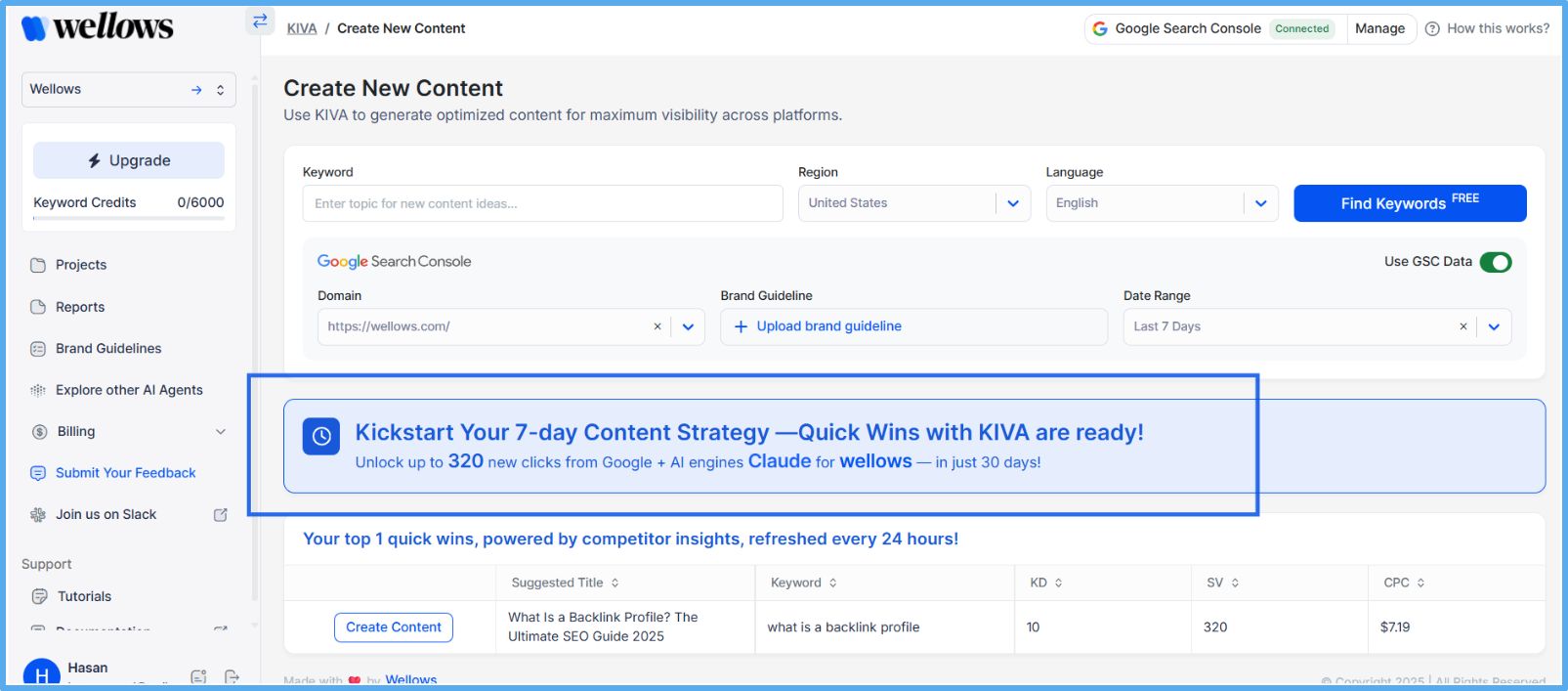
KIVA’s Quick Wins feature is a great example: it builds a 7-day content strategy in just 30 seconds. Instead of waiting months, clients see immediate, structured progress—boosting confidence and trust in the workflow.
What Retention Challenges Do Traditional SEO Workflows Create?
Traditional SEO methods were never designed with client retention in mind. They’re slow, fragmented, and reactive—and in today’s GEO-first environment, that creates an even bigger problem: invisibility in AI search ecosystems.
Slow Site Audits: A manual SEO audit can take weeks, delaying implementation. Clients lose patience, and worse—your content misses timely opportunities to surface in LLM answers.
Tool Overload: Managing 7–10 platforms fragments data. This makes it harder to track both SERP rankings and GEO signals like citation frequency or answer placement inside Gemini, ChatGPT, or Claude.
Visibility Gaps: Traditional workflows only chase rankings. But if you’re not cited in generative engines, retention slips—because clients don’t just want traffic, they want presence where users are actually searching.
Surface-Level Reporting: Vanity metrics like impressions don’t explain why the brand isn’t being mentioned in AI answers. Without GEO visibility insights, clients disengage.
Industry guidance often emphasizes efficiency and workflow automation, but it overlooks the client’s key question: why continue investing when progress feels slow or unclear?
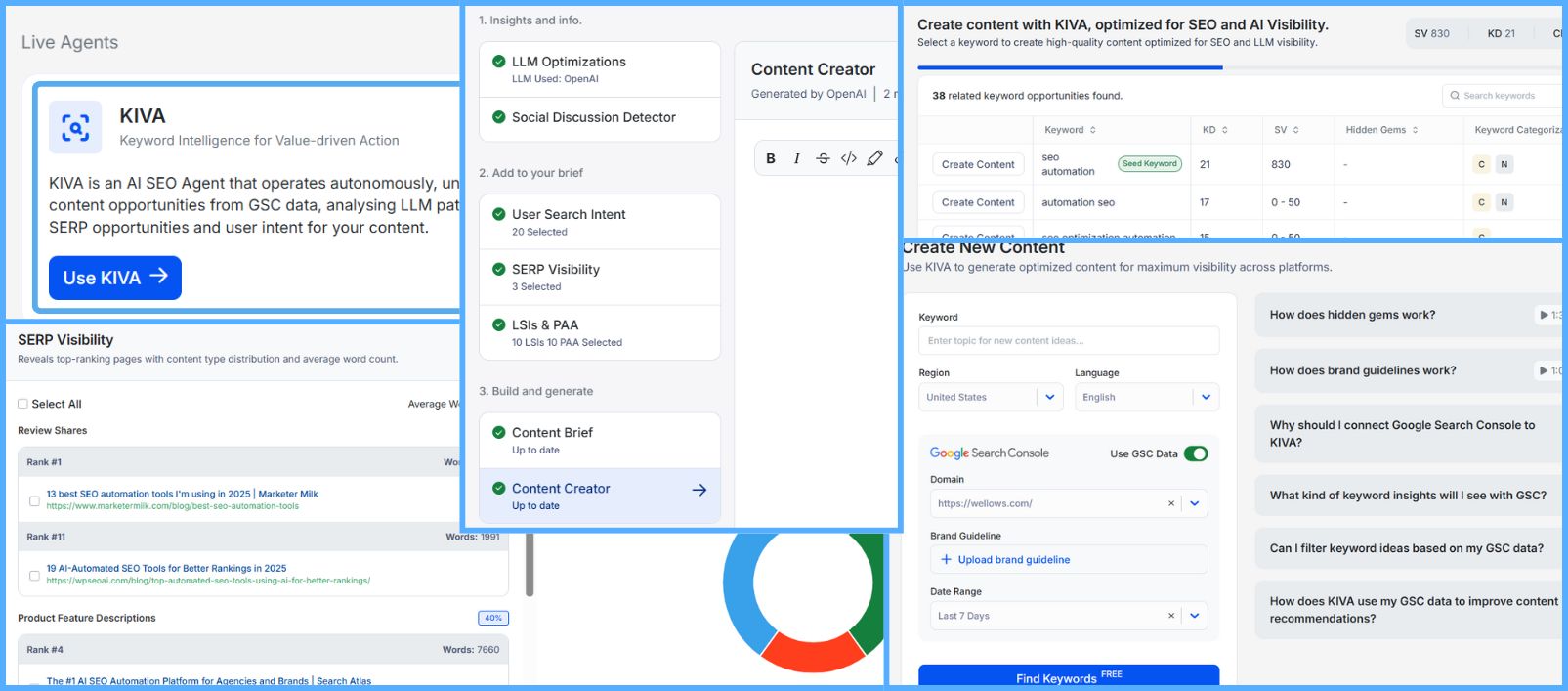
Here, AI-powered SEO workflows directly answer that pain. With platforms like KIVA, teams can run Google Search Console keyword analysis, identify People Also Ask opportunities, and resolve SEO visibility issues in real time—removing bottlenecks that cause client churn.
How Do AI-Powered SEO Workflows Transform Client Retention?
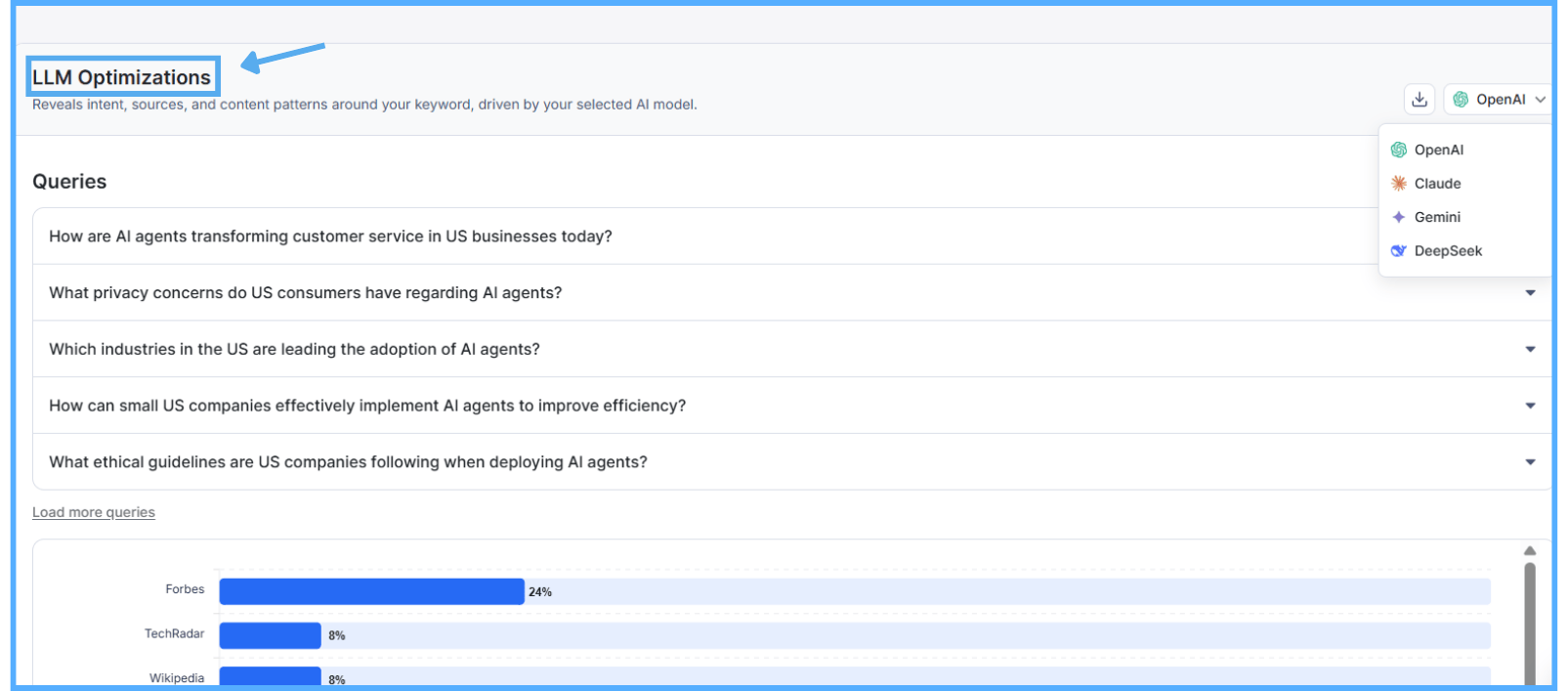
AI-powered workflows create retention by shifting SEO from reactive to proactive.
- Efficiency: Tasks like keyword discovery, SERP mapping, and outline creation are completed in minutes.
- Clarity: Clients receive clear deliverables—content briefs, outlines, and insights—instead of vague updates.
- Consistency: Automation ensures regular outputs, whether it’s a weekly SEO site audit or monthly content clustering.
- Adaptability: As AI search evolves, workflows update automatically to reflect new patterns.
For instance, KIVA analyzes over 250,000+ LLM queries and 596,000+ citation signals to guide optimization.
When clients see that their optimization isn’t just tuned for Google but also for Gemini, ChatGPT, and Claude, retention skyrockets.
This is the practical edge of GEO vs. SEO—where traditional rankings meet generative visibility, ensuring clients aren’t invisible in AI-driven ecosystems.
How Does Google Search Console Data Support Retention?
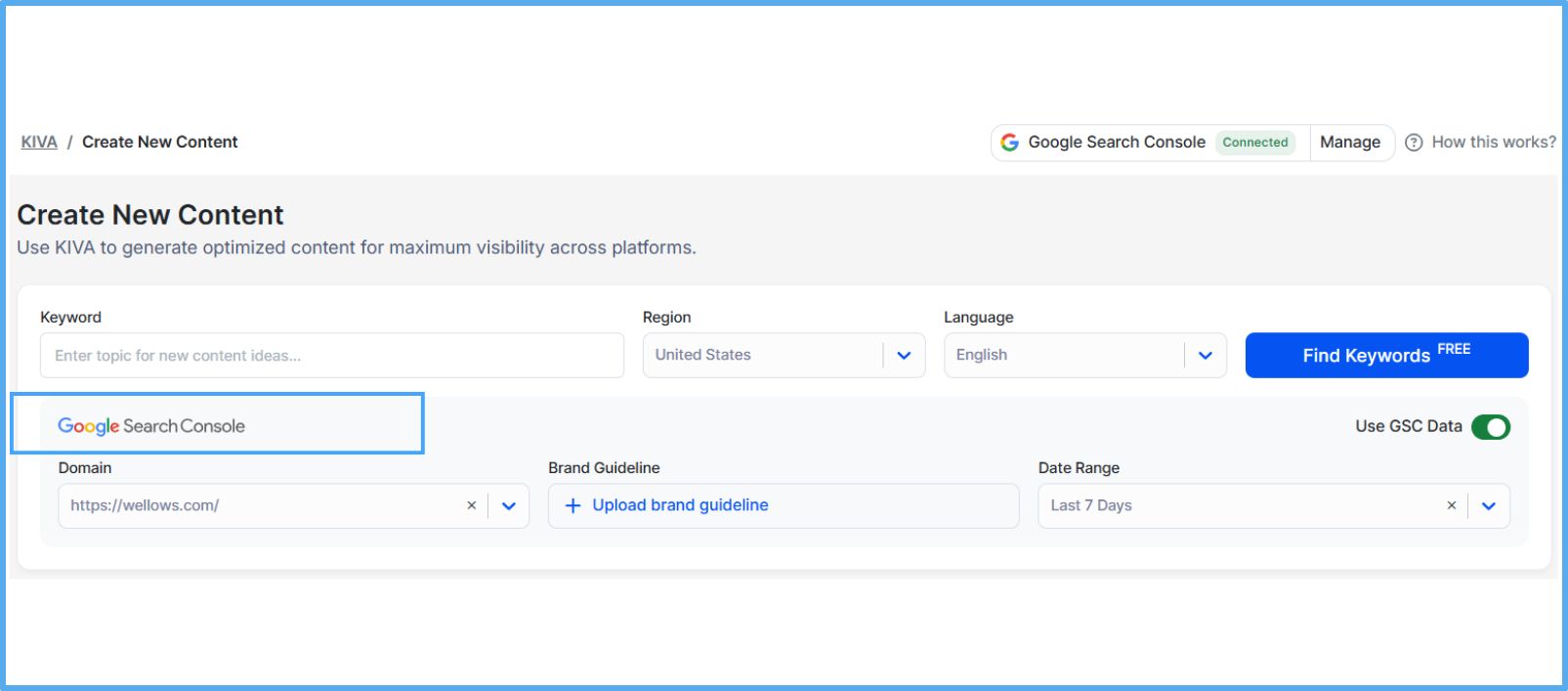
Google Search Console (GSC) isn’t just about SERP keywords—it’s a retention tool when paired with GEO workflows.
It reveals what’s working now and, when enhanced with AI analysis, highlights which keywords should also surface in generative engines.
Instead of endless keyword lists, AI-powered workflows transform GSC into a GEO visibility roadmap:
- Identify “hidden gems” that can be positioned for both Google rankings and AI citations.
- Spot terms slipping in SERPs and generative answers, preventing churn.
- Map client goals to user intent across SERPs and LLMs, proving coverage in every ecosystem.
With KIVA, GSC data doesn’t stop at keyword volume—it fuels strategies for entity coverage, semantic clusters, and citation frequency across ChatGPT, Gemini, and Claude.
This bridges the old SEO model with GEO retention outcomes: clients don’t just see rankings, they see proof their content is shaping AI-powered answers.
Why Is Semantic SEO Essential for Retaining Clients?
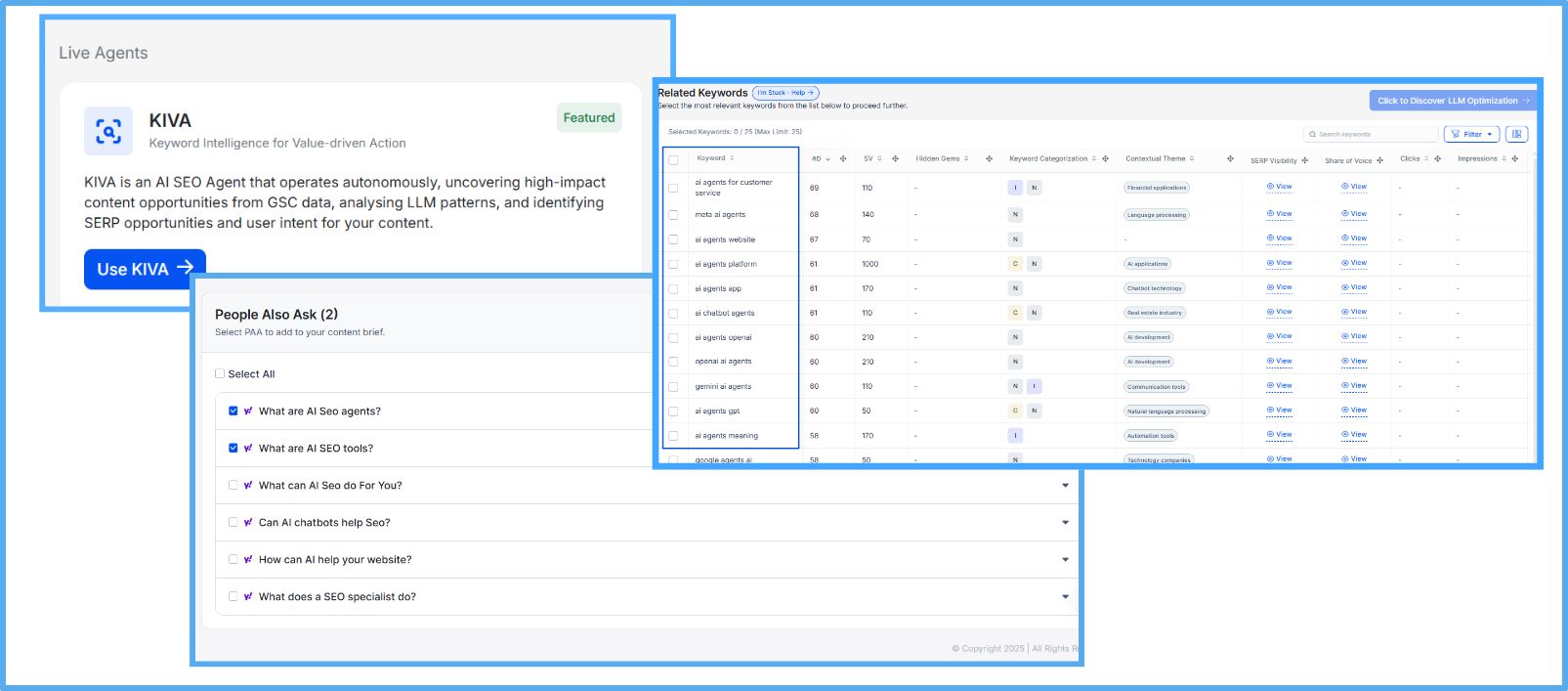
Retention thrives on depth of semantic coverage—because generative engines reward content that fully answers topics.
Clients see value in:
- More rankings per content piece plus citations in AI answers.
- Stronger topical authority that influences both SERPs and generative visibility.
- LLM citation tracking provides proof that your content isn’t just ranking but actively fueling AI-generated responses.
KIVA’s clustering and PAA integration automate this process, not only grouping keywords but aligning them with LLM entities and question formats.
Clients stay longer because they can see their brand owning both search results and generative answers—a double layer of authority that competitors without GEO alignment can’t match.
How Can Smarter Internal Linking Improve Retention?
Internal linking is often undervalued in client retention, but in a GEO-first world, it’s critical. Why? Because generative engines analyze semantic structures—not just keywords.
AI-powered workflows enhance retention by:
Did you know?
- Automatically mapping clusters into hub-and-spoke structures that LLMs recognize as authoritative.
- Suggesting contextual links that reinforce topical depth—boosting the chance of being cited in AI search.
- Improving engagement metrics (lower bounce rates, longer sessions) while also feeding the semantic authority signals that drive GEO visibility.
Imagine showing a client that by fixing internal linking, their average session duration went up by 30%. That’s a tangible result they’ll want to keep paying for.
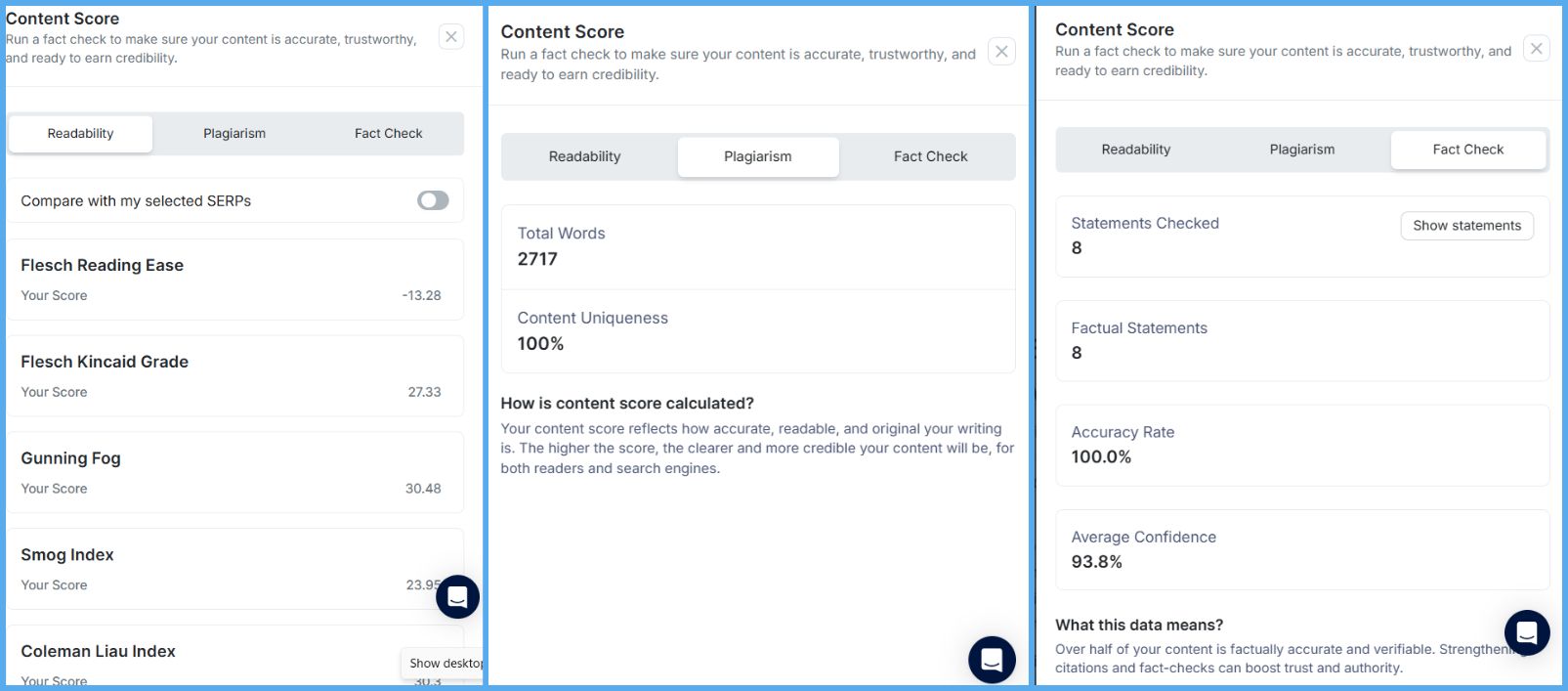
KIVA takes this further with built-in Content Scoring, which flags pages with poor structure, weak linking, or thin topical coverage—giving you retention-focused action items.
Can Startups Retain Clients Without Large SEO Teams?
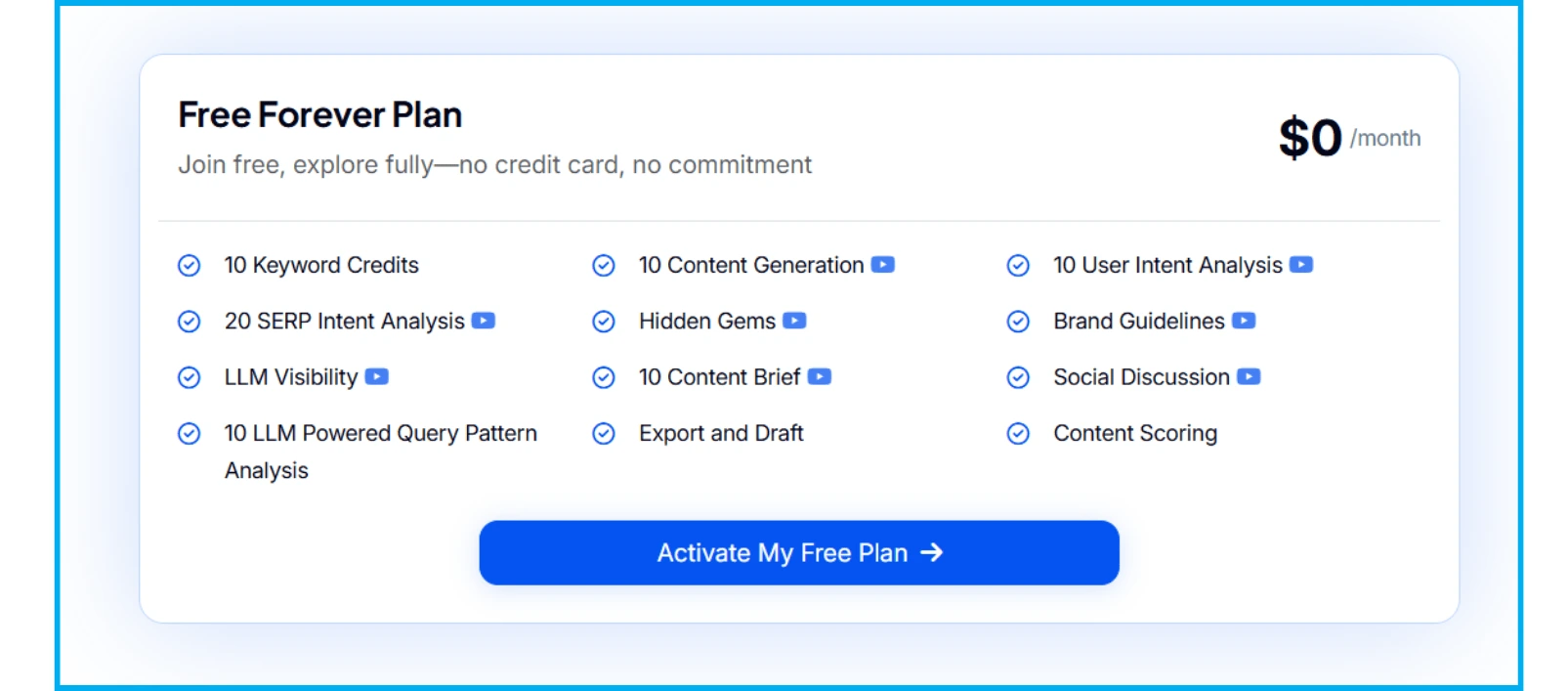
For startups and small agencies, retention feels impossible without a big team. But AI-powered SEO workflows level the playing field.
- Automate manual research → fewer hours spent.
- Centralize tools → no more wasting budget on 10 subscriptions.
- Scale faster → even lean teams can manage multiple clients.
KIVA’s Free Forever plan is designed for this exact need. Startups can run 10 keyword analyses, generate content briefs, and optimize visibility every month without extra cost.
Delivering consistent value with limited resources is the surest way to keep clients loyal.
How Do AI-Powered SEO Workflows Cut Research Time and Build Loyalty?
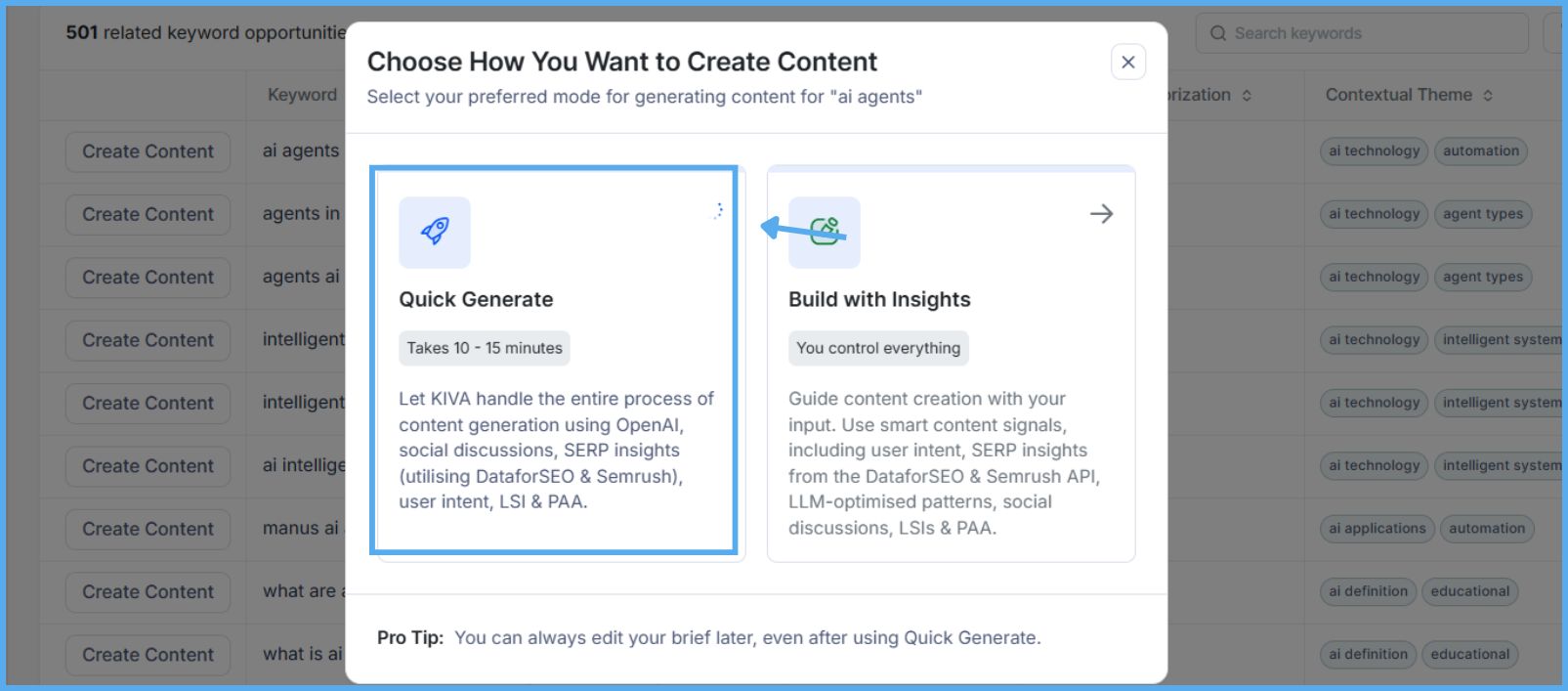
Research is the black hole of SEO time. Traditionally, teams spend:
- 30–45 minutes on keyword research.
- 45–60 minutes building a content outline.
- Hours checking SERP visibility manually.
With AI, these steps collapse into minutes. KIVA’s Quick Generate feature runs all 8 optimization steps in one action: keyword discovery, clustering, SERP analysis, LSI integration, and outline creation.
Clients don’t just see faster turnaround—they see loyalty-building efficiency: “This team gets things done.”
How to Prioritize SEO When Budgets Are Tight
Client budgets are shrinking, but expectations are rising. How do you keep them without overspending?
- Focus on retention-driving tasks: fixing SEO visibility issues, optimizing internal linking SEO, and leveraging hidden gems.
- Automate low-value work: site audits, clustering, and draft generation.
- Use AI insights to prove ROI with fewer resources.
KIVA helps here by showing SEO prioritizing on budget strategies. Instead of overwhelming reports, clients get clear ROI-based actions: which keywords will bring traffic fastest, which content needs updating, and where to cut wasted effort.
AI-Powered SEO Workflows vs Traditional SEO: Which Keeps Clients Longer?
When compared side by side, the difference is clear:
| Task | Traditional SEO | AI-Powered SEO Workflows |
| Keyword Research | 30–45 mins | < 1 min with KIVA |
| SERP Analysis | 20–30 mins | Automated |
| Content Brief Creation | 45–60 mins | 10–15 mins |
| Draft Deployment | 2–4 hrs | 3 mins with WordPress Drafting |
| AI Search Optimization | Not feasible | Built-in |
Clients don’t just want rankings; they want results without delays. That’s why agencies and startups using AI-powered SEO workflows enjoy higher retention rates.
How Does AI Search Change Retention Strategies?
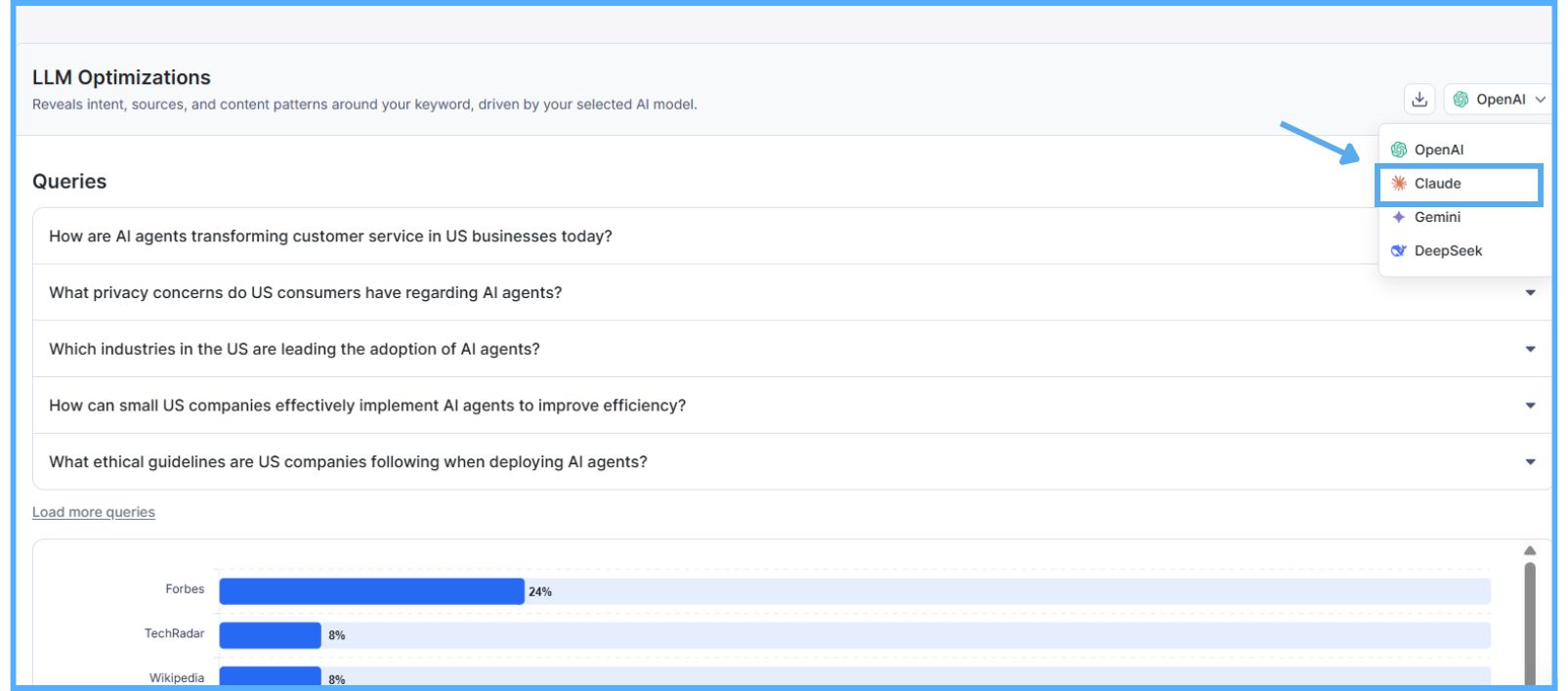
Search behavior is shifting fast. Platforms like Google Gemini, ChatGPT, and Bing are reshaping the SERP.
- AI Search favors structured, authoritative content.
- Brands not cited risk disappearing from visibility altogether.
- Retention suffers if clients feel they’re being left behind.
AI-powered workflows ensure your content is LLM-ready: semantically aligned, citation-worthy, and structured. By tracking GEO Statistics, teams can benchmark how often their content surfaces inside AI responses and tie that directly to ROI.
KIVA tracks how different LLMs (Claude, Gemini, ChatGPT) cite content, giving clients assurance that their investment isn’t just visible on Google—it’s everywhere users are searching.
FAQs:
No. They assist, not replace. Human oversight ensures EEAT compliance, fact-checking, and creative strategy—key elements for client trust.
Conclusion:
Retention is no longer about promises—it’s about proof. Traditional workflows move too slowly to satisfy clients in a fast-changing landscape. AI-powered SEO workflows provide the structure, efficiency, and clarity businesses need to keep clients engaged for the long term.
With platforms like KIVA by Wellows, agencies, startups, and freelancers can cut workflow time by 85%, save 70+ hours per month, and deliver visibility across both SERPs and AI-driven platforms.
In 2025, retention isn’t won with volume—it’s won with smarter workflows. The choice is clear: stay stuck in manual SEO, or embrace AI workflows that build loyalty, trust, and long-term growth.
Those who adapt will not only retain more clients but also position themselves as forward-thinking partners in an AI-first era.
By aligning speed with strategy and automation with human insight, businesses can show measurable impact week after week.
In the end, it’s this combination of efficiency, transparency, and innovation that transforms one-time clients into long-term relationships.