Google’s Project Astra changes how search engines understand and deliver content.
It moves SEO away from keywords and toward meaningful, user-focused content in an era of LLM-driven search, where ranking is shaped by context, semantic clarity, and strong on-page SEO alignment.
In fact, a 2025 Semrush study found that only 5.4% of Google’s AI Overviews matched exact search queries, underscoring how Project Astra drives intent-first results and rewards semantic signals over keyword repetition.
As marketers adjust their strategies, the Project Astra SEO impact marks a clear shift. Search engines now reward helpful, well-structured information and penalize keyword tricks.
We outline how Project Astra influences SEO and what it means for businesses, content creators, and digital marketers.
What Exactly is Project Astra?
Teams understand Project Astra’s SEO impact and plan content that aligns with intent-first results rather than isolated keywords.
Google’s Vision Behind the Initiative
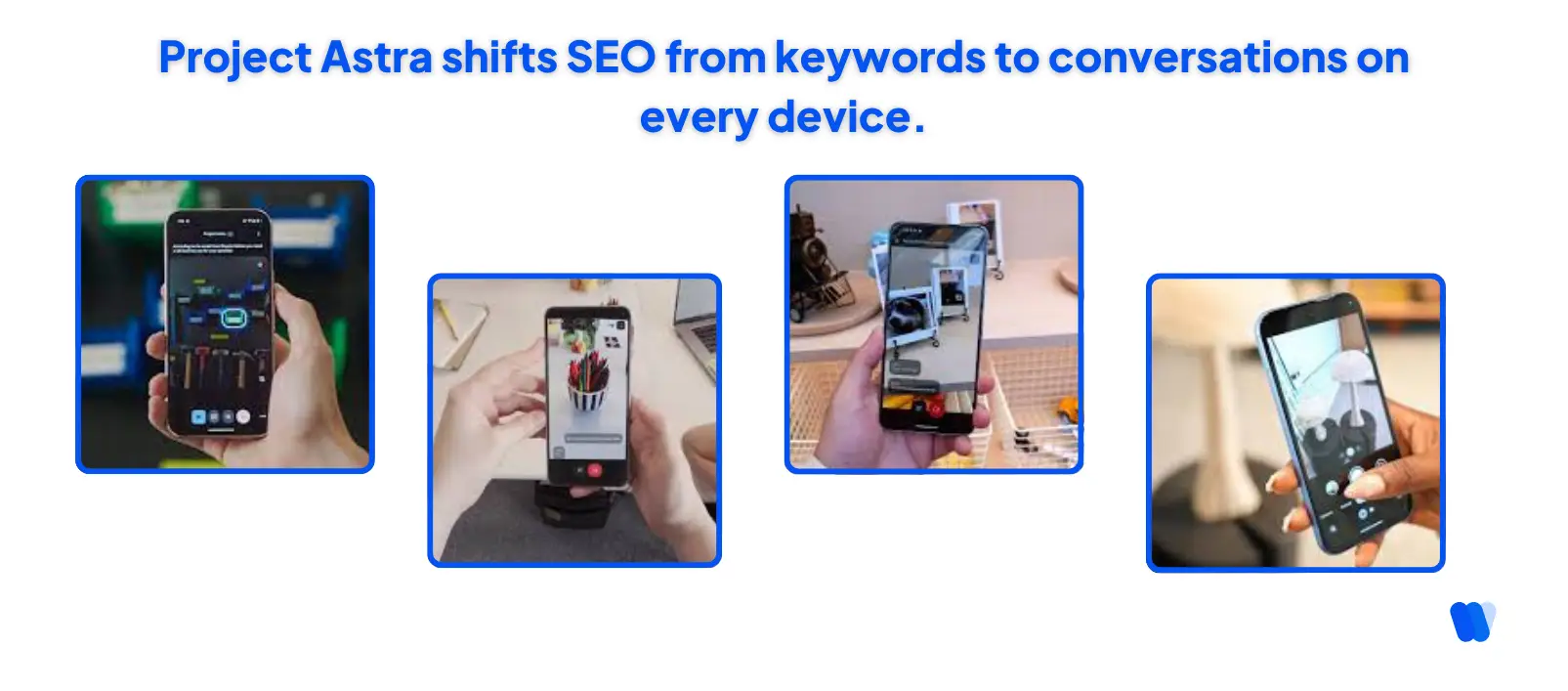
Project Astra is Google’s bold step toward turning search into a smart, conversation-like assistant. It’s designed to move beyond simple keyword matching and understand what users truly mean.
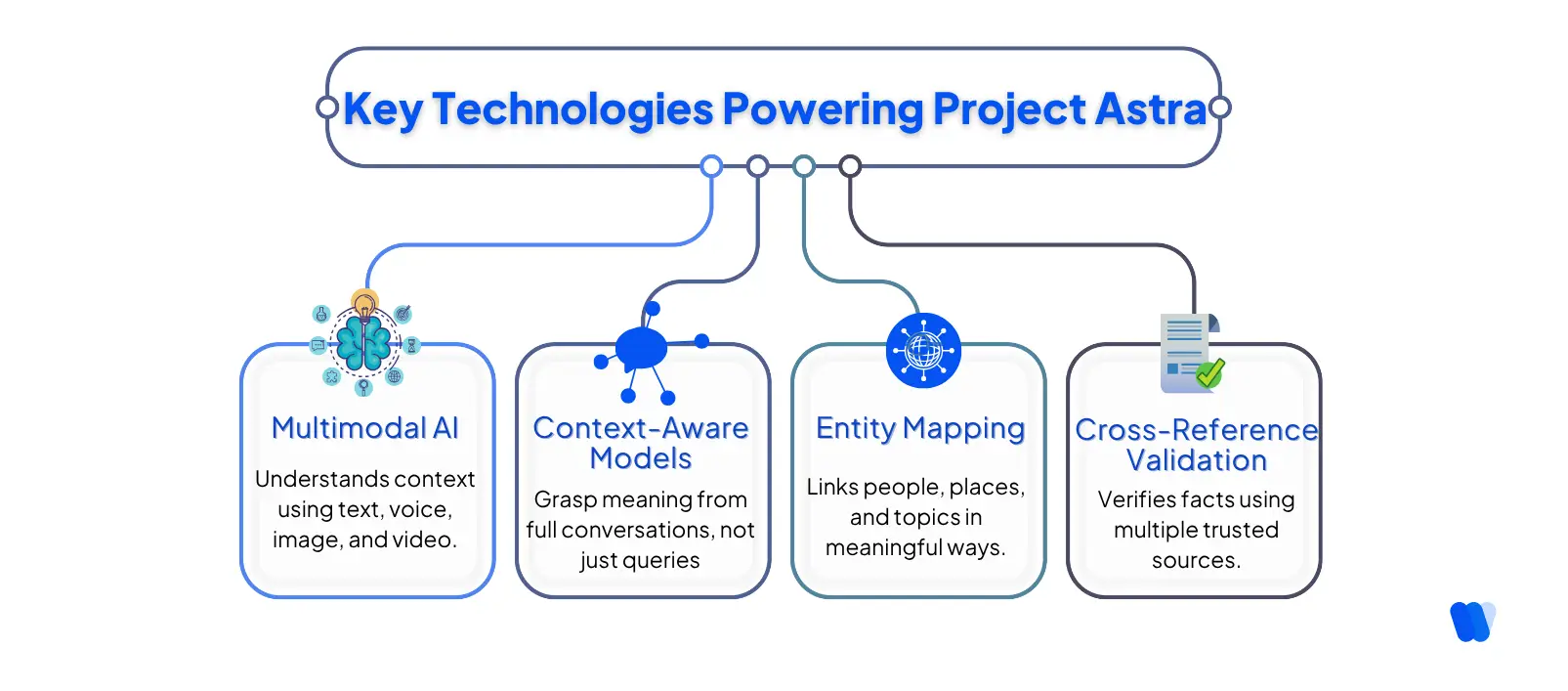
Key Technologies Powering Project Astra
- Multimodal AI processes text, voice, images, and video together to better understand user context.
- Context-aware language models grasp meaning based on full conversation flow, not isolated queries.
- Entity recognition and mapping help connect people, places, and topics into a web of relationships.
- Cross-reference validation checks facts using multiple sources to improve result accuracy and trust.
These capabilities drive Project Astra’s SEO effects in 2025, where systems weigh semantic clarity and task completion over exact-match phrasing
Timeline of Implementation and Algorithm Updates (2023–2025)
Introduced as a DeepMind research prototype, Astra showcases multimodal, assistant-style capabilities. While it informs Google’s AI direction (e.g., Gemini and experimental features like AI Overviews), it is not a public, standalone search system. (GoogleDeepmind)
Many of Google’s algorithm updates during this rollout tested intent-first ranking and multimodal search inputs, laying the groundwork for Astra’s core integration.
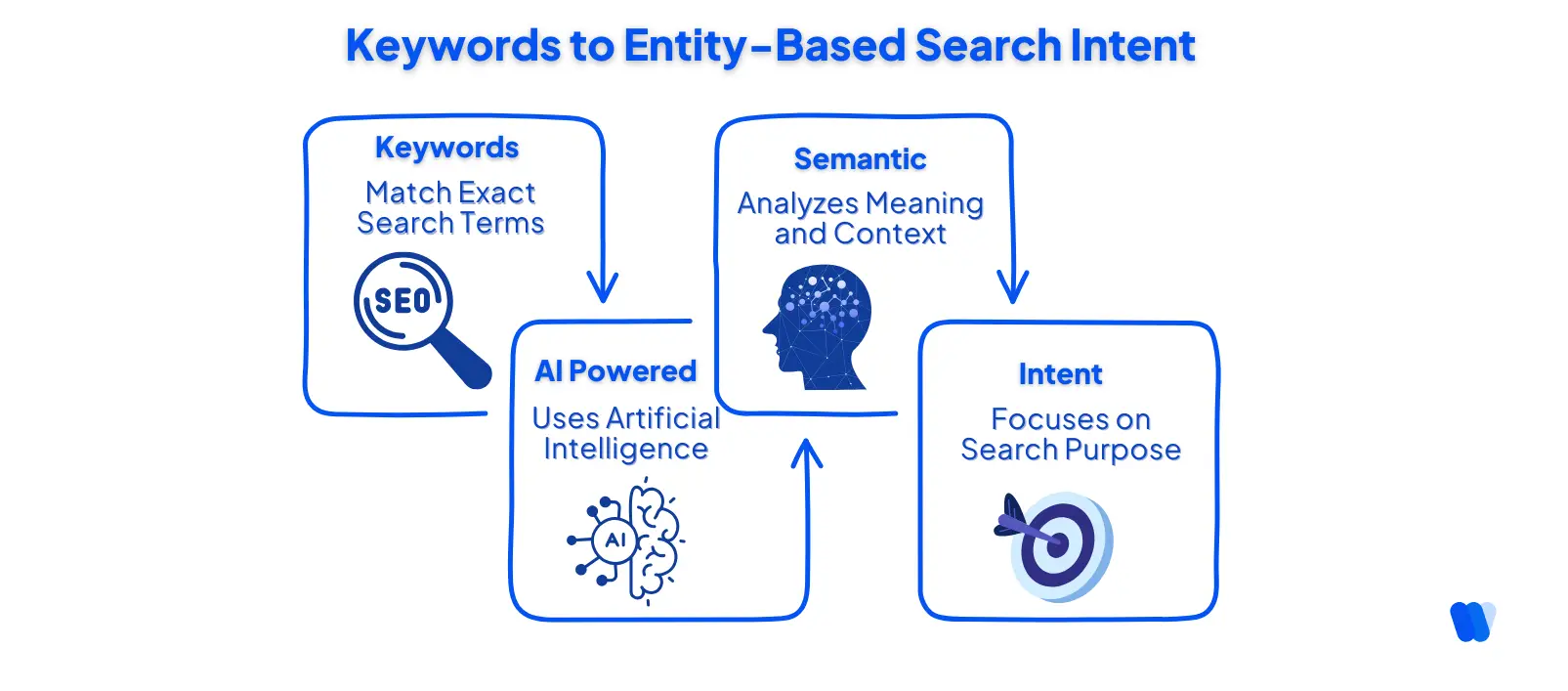
From Keywords to Entity-Based Search Intent
Search in 2025 looks very different. AI-powered engines like Project Astra now prioritize semantic meaning and intent over exact-match keywords.
Teams ask what to expect from SEO with Project Astra updates; the consistent theme is stronger weighting of intent signals and entity relationships.
Building Topical Authority through Content Networks
Content structured around clear topic clusters now performs far better than isolated pages. In fact, sites using this model see a 156% boost in visibility, according to Backlinko’s 2025 SEO statistics.
Project Astra rewards content that answers related questions and builds authority across a subject, not just on a single page, but across the whole site. This makes topical coverage a key ranking factor in 2025’s search landscape.
Enhanced Local Search Intelligence
Local search now includes 47% more contextual signals than before Astra, improving how Google connects users with nearby services. It no longer relies just on location but on entity links between businesses, offerings, and intent.
As SearchEngineLand reports, this shift has greatly boosted local visibility for businesses that optimize around relevance, not just proximity. Practical wins come from Project Astra’s impact on local SEO tactics such as entity-rich listings, media signals, and task-focused service pages.
Content Utility and User Journey Completion
Project Astra measures how well content guides users through full search journeys, not just one question. Pages that solve follow-up questions and offer clear next steps rank higher.
Entity Relationship Recognition
Search now rewards content that clearly defines how concepts connect. These improvements also fuel SERP changes, from AI-generated overviews to entity-rich local packs. Pages that link entities—like tools, topics, and people—rank higher because they create logical structures.
However, marketers must also consider the risks of AI poisoning and manipulated outputs as malicious actors increasingly target AI systems used in semantic content generation and summarization.
The Decline of Traditional SEO Metrics
By 2025, SEO metrics like keyword density, bounce rate, and raw backlink counts have lost their predictive power. Google’s AI systems assess content value and contextual clarity, replacing old ranking formulas and driving visible SERP changes such as AI Overviews and fluctuating feature results.
SEO in this era demands substance, not just structure. For a deeper breakdown of modern search engine ranking factors, see how they’ve evolved post-Astra.
Content that educates, clarifies, and aligns with evolving questions wins attention—even if it’s not packed with links or keywords.
Semantic Content Development
In the Astra era, each page should focus on one clear topic, supported by related entities and attributes that build context naturally.
Google now favors pages that are semantically rich and easy for AI to understand, aligning closely with generative engine optimization principles.
Technical SEO Requirements for Astra Compatibility
Does Project Astra affect SEO algorithms? Its models elevate semantic signals, structured data, and user-task completion as ranking inputs, making a structured technical SEO audit essential for identifying schema gaps, crawl issues, and indexing inconsistencies.
E-E-A-T Principles in the Semantic Era
In 2025, Google gives top priority to content built on Experience, Expertise, Authoritativeness, and Trust. These E-E-A-T factors now drive over 60% of ranking influence in competitive niches, especially within Astra-powered results.
E-E-A-T isn’t optional. It’s the foundation for ranking, trust, and long-term visibility in an AI-first search world.
Case Studies: Businesses Thriving With Semantic Optimization
Retail Sector Transformation
Top retailers now focus on customer journey content, not product keywords. This shift to interconnected content networks has driven a 43% increase in conversion rates, as reported by Coalition Technologies.
Service Industry Adaptation
Service businesses that build expert-led, topic-rich content have seen an 87% rise in qualified organic leads. Koray Tuğberk GÜBÜR’s case study shows how semantic SEO builds lasting authority in niche markets.
Enterprise Level Considerations
Enterprises are shifting focus from keyword lists to building content ecosystems. In 2025, 67% reported higher investment in topic networks over isolated keyword pages.
Previsible’s analysis shows that large brands now treat semantic SEO as a core growth strategy, not just a content add-on.
Leaders evaluate how Project Astra affects online presence across product lines, using entity maps, hub pages, and media signals to support discovery.
Small Business Opportunities
For resource-limited teams, a Project Astra SEO impact analysis for small businesses highlights quick wins in entity coverage, internal linking, and schema hygiene.
Noble Studios explains that semantic depth now outweighs content volume, giving well-structured small sites a real advantage.
Anticipated Algorithm Expansions
Search is becoming multimodal by default. In 2025, 64% of queries include video, image, or voice, and this is expected to hit 78% by 2027, per Lumar.
To stay visible, brands must now build media-rich strategies that serve users across formats, not just through text-based content.
Preparing for the Next Evolution
Leading companies are already mapping entity relationships across their sites to build strong topical authority. This groundwork supports long-term success as Astra evolves.
Olga Zarr highlights how integrated semantic SEO frameworks help brands stay aligned with Google’s intent-first direction and future updates.
As AI systems like Astra and ChatGPT redefine discovery, understanding their combined impact on search traffic is critical for shaping SEO strategies.
Organizations are documenting the impact of Project Astra on digital marketing and Project Astra’s role in online marketing strategies to guide roadmaps and budgets.
FAQs
Astra uses vision, voice, and text understanding—so content must now be optimized for images, audio, and video alongside written text.
Use detailed image alt text, video transcripts, and conversational phrasing. Structured data and clean layout also boost interpretability.
Yes, but its role is supportive. Focus on user intent and questions while using keywords to reinforce context and topic clarity.
Yes. Project Astra aligns with Google’s broader AI-driven updates that prioritize intent, semantic signals, and answer quality.
Map entities, expand topic hubs, add structured data, and include media signals. Focus on task completion and internal linking that reflects user journeys.
Audit entity coverage, consolidate thin pages, enrich FAQs, and add schema. Refresh hub pages to address follow-up queries and align with intent-first ranking.
SERP changes prioritize summaries and intent-matched answers. To adapt, use structured data, entity clarity, and content that addresses full user journeys.
Conclusion:
Google Project Astra proves that small SEO changes, aligned with semantic intent and optimized for LLM-driven search, create big results over time. Businesses that anticipate algorithm updates and adapt early to SERP changes will sustain long-term visibility and trust.
Project Astra’s SEO impact creates opportunities for deeper, more helpful experiences instead of hurdles. The brands that win will be those who treat search as a way to connect with users through meaning, not just rankings. Teams that plan for what to expect from SEO with Project Astra updates will adapt faster and grow visibility.
Project Astra proves that small SEO changes create big results over time. It’s a good example of how the basics—covered in our SEO guide—can make a difference.