SEO poisoning with AI malware is being used to spread malicious files disguised as AI tools—often called AI malware SEO poisoning or SEO poisoning through artificial intelligence—posing a real risk to marketers and searchers.
Search engines no longer act only as gateways to information—they serve as active attack surfaces. In early 2025, over 8,500 small and medium-sized businesses unknowingly downloaded malware while searching for tools like ChatGPT, Zoom, and Outlook.
Attackers spread these malicious downloads not through phishing emails or shady forums, but by ranking them in Google search and pushing them through sponsored ads a tactic already reshaping Project Astra SEO impact discussions.
This shift marks a serious evolution in threat behavior. Attackers are now exploiting high-intent keywords, especially those related to AI tools, to distribute trojanized installers and spyware payloads. For SEO teams, this means the line between visibility and vulnerability is thinner than ever.
For marketers and content creators working in AI or tech niches, it’s no longer enough to focus on rankings. You must now treat search trust as a core part of your SEO strategy.
What Is SEO Poisoning with AI Malware and How Does It Work?
SEO poisoning with AI malware is the practice of manipulating search results to promote harmful or fake pages that look trustworthy while secretly distributing malicious payloads.
In recent campaigns, attackers deploy malware using AI for SEO attacks, blending manipulated rankings with convincing brand lookalikes to increase downloads. This kind of AI-driven malware affecting SEO makes it harder for users to separate safe results from harmful ones.
Attackers spread malware by targeting the exact keywords people search for—especially trending AI tools. They create fake websites that copy the look of trusted brands and push these pages to rank in Google or appear in ads.
Once a user clicks and downloads what seems like a real tool, malware is silently installed. This tactic blends SEO strategy with deception, and users struggle to tell real results from fake ones—even in organic listings.
Key Tactics Used
- Attackers use familiar SEO methods combined with deception, often applying AI malware in black hat SEO tactics to get fake pages ranked and clicked.
- Attackers register domains that mimic trusted software platforms, such as
putty.runorzephyrhype.com—to trick users into downloading malware instead of real tools. These domains often target high-intent keywords related to AI and productivity software.
- In some campaigns observed by Zscaler ThreatLabz, attackers used search parameter injection to place fake phone numbers into help pages—giving users the false impression they were contacting the real company.
- Attackers usually hide the malware inside large, password-protected ZIP files or MSI installers. This helps bypass antivirus checks. Kaspersky reports these files often carry trojans like Vidar, Lumma Stealer, and Oyster (Broomstick).
Why Are AI Tools the Perfect Malware Bait?
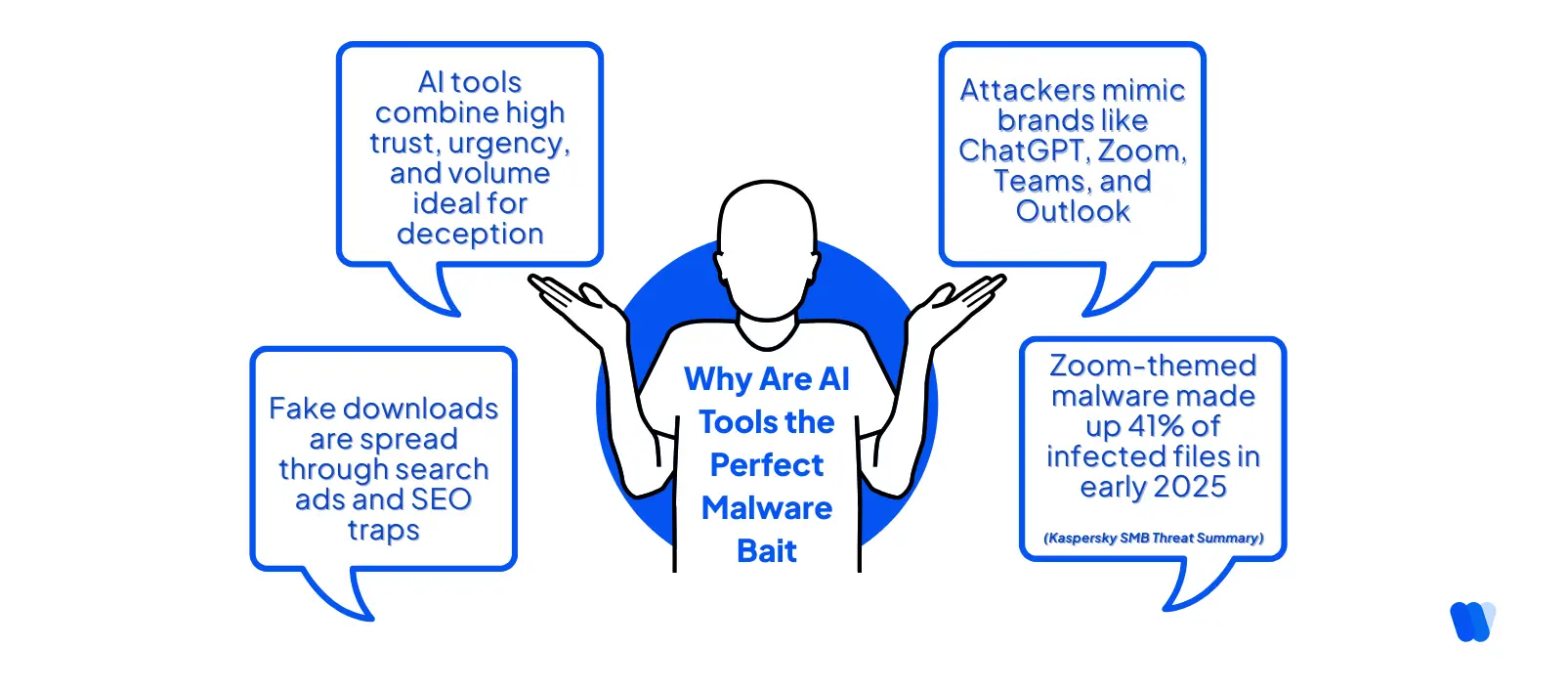
Attackers target AI tools because these tools combine high trust, massive search volume, and user urgency—all ideal for deception. The surge in interest after events like Google I/O shows how quickly attackers capitalize on trending AI-related searches.
Tools Commonly Mimicked
Attackers impersonate popular AI and collaboration tools to distribute malware through search results. Commonly mimicked names include ChatGPT, DeepSeek, Zoom, Microsoft Outlook, and Microsoft Teams. These brands are widely recognized, making them effective bait for unsuspecting users.
Why These Tools Work for Attackers
These tools rank high in daily searches and are downloaded frequently—especially by non-technical users. Attackers know people trust these brands and are often in a hurry when installing them.
SEO Visibility ≠ Safety
Even when a page ranks high in search results or appears in ads, it may not be trustworthy or safe
These campaigns show how AI-driven malware targeting Google rankings can push malicious results above legitimate ones, eroding user trust in search.
Real Examples of Deceptive Search Results
Attackers are using search result manipulation and ad networks to push malware directly through trusted platforms. In one campaign detailed by Malwarebytes, users searching for support from Microsoft, Netflix, or PayPal were led to fake help pages that included scam phone numbers inserted via search parameter injection.
The ad preview hid these numbers, but they appeared once the page loaded, giving users a false sense of legitimacy. Similarly, Zscaler ThreatLabz observed fake Cloudflare CAPTCHA pages delivering malware like RedLine Stealer via the ClickFix strategy.
SERP Manipulation Patterns
To avoid detection, malware is often bundled in large 800MB+ NSIS installers, which many antivirus tools skip scanning due to file size. Victims download what looks like a real installer but actually run payloads like Vidar or Lumma.
What SEO and Marketing Teams Must Do Now
SEO teams must treat search result quality and external link trust as core workflow elements—not just visibility goals.
Security Checklist for SEOs
- Ask the question: can AI malware be detected in SEO strategies? Combine domain intelligence, file integrity checks, and download review processes when embedding tools or links.
- Marketers and content teams must validate every tool or source they reference. A page ranking well does not mean it’s safe.
- Avoid linking to sites that mimic brand names, offer unofficial downloads, or use unfamiliar top-level domains.
- Add a source review step in content workflows.
- When suggesting AI tools or software, confirm the domain is official or listed by the vendor.
- If using affiliate links, ensure they don’t redirect through unknown services.
- The U.S. Cybersecurity and Infrastructure Security Agency (CISA) recommends verifying software sources through checksums and limiting exposure to search-delivered executables.
Collaboration with Security and Legal Teams
SEOs must collaborate with internal security teams before embedding third-party tools or download links. Risk reviews shouldn’t only be for software engineers—content teams need them too.
Cloudflare and Wiz both emphasize the importance of integrating cybersecurity into content and ad production processes. This ensures your brand doesn’t unintentionally promote harmful resources to your audience.
How KIVA by Wellows Encourages Smarter SEO
AI-related search trends are volatile, and not all high-volume keywords lead to trustworthy results. SEO teams need tools that help them judge what’s ranking and why, not just how often.
The KIVA SEO AI Agent by Wellows helps surface search intent clarity and SERP behavior patterns, making it easier to avoid risky or unstable terms, especially when working with AI tool-related content.
Note: It doesn’t block threats but supports more responsible, context-aware SEO planning.
FAQs
Always verify that the domain exactly matches the official vendor’s website. Avoid suspicious top-level domains (like `.click`, `.xyz`, `.run`), and when possible, cross-check software hashes (checksums) published by the vendor to confirm file integrity.
Yes. Malware can be embedded in pages that rank high or appear in ads, especially if attackers mimic trusted brands with fake visuals, URLs, and download links.
Attackers often use large, password-protected ZIP files or oversized MSI installers (typically over 500MB) to evade antivirus detection and trick users into installing malware.
Implement a source-verification step in your content workflow. Vet every external tool or download link, avoid unofficial sources, and collaborate with security teams to flag spoofed domains or risky redirects.
Add a verification step for every external tool or domain, monitor for spoofed lookalike pages, and work with security teams to limit exposure to manipulated SERPs.
These campaigns distort organic visibility, lower trust in legitimate sites, and allow harmful pages to outrank authentic brands in Google results.
Final Thoughts:
High rankings no longer guarantee safety. SEO poisoning with AI malware shows how attackers exploit visibility, forcing teams to balance rankings with user protection.
Why This Matters
- SEO poisoning shows even top-ranked pages can carry hidden risks
- Users trust brand names, meta titles, and domains without verification
- Attackers exploit this trust using fake download pages and cloned SERPs
- SEO is no longer just about performance—it’s also about protecting intent and outcomes
Key Takeaways for Ethical SEO
- Validate every external link—ranking does not mean safety
- Use caution when referencing trending AI tools or free software
- Avoid keywords that lead to unverified or manipulated SERPs
- Integrate a “search trust” check into your SEO content workflow
- For complex AI-related queries, rely on tools that assess SERP reliability and keyword context
(Agents like KIVA by Wellows support this through search pattern insights—not by filtering threats, but by guiding smarter decisions.)