When you’re short on time and budget, not all SEO tasks are worth your energy. As a solo marketer or small team, knowing how your SEO prioritize on a budget and apply smart on-page SEO improvements can make the difference between spinning wheels and driving results.
In this guide, I’ll walk you through how I focus only on what works: lean content refreshes, intent-aligned creation, and smart keyword strategies — supported by Wellows, an AI search visibility platform for startups that helps make SEO fast, focused, and executable
What to Prioritize in SEO When Budget and Time Are Tight
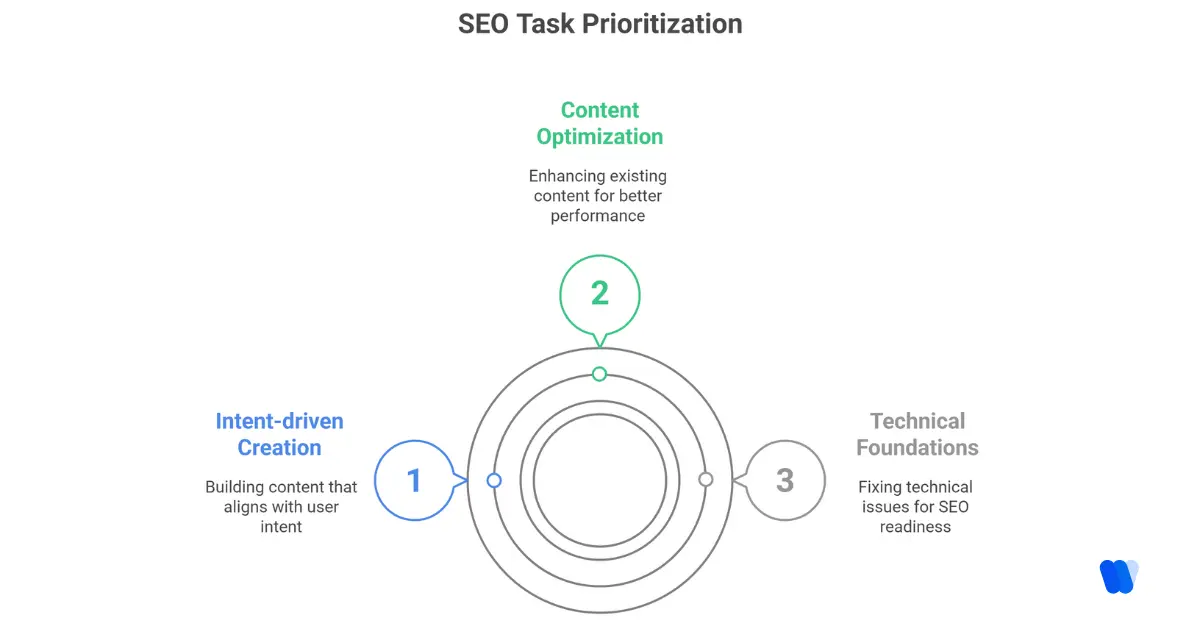
Not every SEO task deserves your attention when resources are limited. I like to break them down into three categories:
- Fix what’s broken (Technical foundations)
- Boost what exists (Content optimization)
- Build what matters (Intent-driven creation)
This framework keeps the effort lean and focused, helping you stick to your SEO priority on a budget while achieving cost-effective SEO prioritization.
Fix What’s Broken
Before optimizing or creating anything, make sure your site isn’t holding itself back. These tasks deliver quick wins and solidify your foundation.
Fix First: Technical SEO That Costs Nothing
Fixing what’s broken often leads to the fastest improvements. If you’re handling SEO on a tight budget, one of the easiest wins in technical SEO on a budget is starting with a quick sweep. Your first SEO priority on a budget should be running a quick technical SEO audit to check ranking factors, crawl errors, broken internal links, oversized images, and missing meta tags.
Free tools like Google Search Console and Screaming Frog (up to 500 URLs) help with this in under an hour. This isn’t glamorous work, but I’ve seen organic visibility jump in under a week from small fixes alone.
Serve Local: SEO Moves That Convert Nearby
These are proven local SEO strategies on a budget: optimize your Google Business Profile, embed local keywords, and update location-specific landing pages — all within your SEO priority on a budget.You can also repurpose testimonials as review snippets — helpful both for trust and local pack rankings.
Among all SEO priority on a budget, local SEO consistently punches above its weight and should be a key SEO focus for budget-conscious businesses.
When you’re ready to go beyond the essentials, our complete SEO resource will help you scale your strategy step by step.
Boost What Already Exists
You don’t always need to create something new. Start by making the most of what’s already working—or almost working.
Upgrade Existing Content Before You Write
Instead of publishing something new, ask: what do I already have that can rank better? I often find blog posts sitting on page 2 or 3 of Google that just need updated stats, clearer formatting, or internal links.
For early-stage teams, here’s a deeper guide on how can startups use a GenAI visibility stack for growth to maximize results with minimal resources.
This is where Wellows, an Autonomous marketing platform, stepped in — ideal for SEO for startups with limited funds — highlighting forgotten content that’s just a few tweaks away from climbing the SERPs and aligning with your SEO priority on a budget.
This is one of my favorite SEO priorities on a budget examples because it’s low effort, high yield a perfect case of SEO prioritization with budget constraints.
Link Like a Strategist: Internal Linking Wins
Everyone chases backlinks, but your own website might be your biggest SEO lever. One of the best SEO Prioritize on a budget is strengthening your internal link structure.
I’ve seen 30–50% traffic increases just by linking newer content to evergreen posts using contextual anchor text.
Use exact match phrases sparingly, and focus instead on flow and logic.
Build What Matters
If you’re going to create, make it count. These are the content creation tactics that actually move the needle.

Create Smart: Semantic Content with Intent
When you do create content, it should be guided by questions, not keywords alone. Google rewards clarity and usefulness, which is why strategic SEO planning with limited funds matters when aligning with your SEO priority on a budget.
KIVA’s Topic Clustering and Content Briefs have made this easier for me. They help shape pieces that connect to real user needs, not just search bots.
Use conversational header tags, natural phrasing, and brief paragraphs. With limited time, this approach ensures effective SEO with budget limitations, fully supporting your SEO priority on a budget.
Free Tools, Real Results: My Lean SEO Stack
You can waste hours on analytics if you don’t narrow your focus. I track just three:
- Organic traffic to key pages
- Keyword movement for business-related terms
- Conversion events (forms, calls, downloads)
Platform like an AI Search Visibility Platform for Startups make this process even smarter, helping pinpoint what truly drives growth while cutting out noise. Everything else is secondary, and knowing what to ignore is part of mastering SEO priority on a budget that’s true SEO prioritization within a budget.
Real Results: Budget SEO That Worked
— Anjali Kapoor, Solo SEO Consultant
Internal Linking vs Paid Ads: The Real Winner
— Mark Thorne, Startup Founder
SEO Prioritize on a Budget: Quick Recap
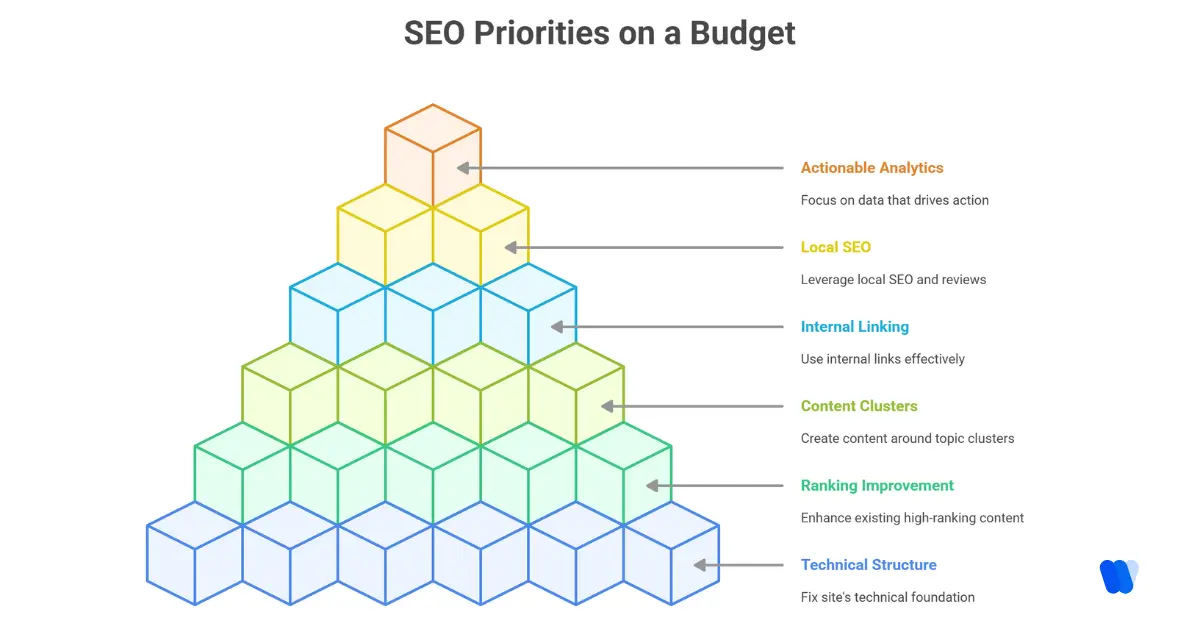
You don’t need everything. You need the right things:
- Fix your site’s technical structure first
- Improve what’s already ranking
- Create content using topic clusters, not just keywords
- Use internal linking like a power tool
- Local SEO and review signals can outperform paid tactics
- Limit analytics to what drives action
Keep your work lean, repeatable, and focused. SEO priority on a budget isn’t about shortcuts — it’s about clarity, especially when it comes to SEO prioritization for small businesses on a budget.
With the right mindset and a little help from sites like KIVA, you can rank well without overspending or overthinking.
FAQs:
Conclusion: Build Smarter, Not Harder
When budget and time are tight, you need to be strategic, not scattered. The most effective SEO Prioritize on a budget aren’t about doing more — they’re about doing what moves the needle. Start by fixing what’s broken. Then refresh what already works. Write only when it adds clear value. And use AI SEO Agent like KIVA to guide your content strategy and surface hidden opportunities.
Even with limited resources, you can build authority, grow traffic, and support your business goals. The key is clarity, not complexity. Know your limits, but more importantly — know where to focus. That’s how you win at SEO without overspending.