Long form vs short form content represents two core strategies in digital marketing. Long-form pieces (typically 1,000+ words or videos over 10 minutes) focus on depth, authority, and SEO, while short-form pieces (under 1,000 words or 60 seconds) are designed for fast consumption, social engagement, and mobile-first users.
Research shows that each format delivers unique advantages. Long-form articles are proven to boost search visibility, while short-form content drives higher engagement rates on social platforms. The key is understanding when to use each format and how to integrate both into your content strategy.
This guide breaks down the benefits of long-form versus short-form, provides examples of each, and shows how to combine them to maximize SEO performance, audience engagement, and conversions in 2025.
Quick Facts:
-
- Articles exceeding 1,000 words are more likely to rank higher on search engine results pages, improving organic traffic and search visibility. (Amra and Elma)
- 57% of Gen Z prefer learning about products through short-form videos (Coolest Gadgets, 2025)
- Instagram Reels drive 22% more engagement than regular video posts (LinkedIn Pulse, 2025)
- 54% of marketers say video is the most valuable content type for achieving social engagement (HubSpot, 2025)
What Is The Difference Between Long-Form And Short-Form Content?
Long form vs short form content are two core formats in content marketing, each serving unique goals and audience preferences. The main difference between them comes down to both length and depth. While definitions can shift depending on the medium, most benchmarks fall into clear ranges.
What is Long-Form Content?
Long-form content typically exceeds 1,200 words for written pieces or 10 minutes for videos. It allows for a comprehensive exploration of topics, providing detailed insights and analysis. The goal is often to educate, build authority, and deliver value.
Examples include:
- In-depth articles and industry trend analysis
- How-to guides and detailed tutorials
- Case studies with challenges and results
- Whitepapers, webinars, or downloadable reports
- E-books and long-form blogs
These formats attract readers who value clarity, insights, and actionable knowledge. From an SEO perspective, longer pages often earn more backlinks, keep users engaged for longer, and boost keyword coverage.
Pros
- Improved Search Visibility: Articles around 1,800–2,000 words tend to perform better in search results, since they address queries in depth.
- Better SEO Performance: Longer content ranks well on search engines as it covers topics in depth and accommodates a wider range of keywords.
- Builds Authority: By offering comprehensive analysis, it demonstrates expertise and establishes credibility with the audience.
- Stronger Engagement: Readers often spend more time on long-form content, showing deeper interest and involvement.
- Higher Shareability: Long-form pieces above 2,500 words receive significantly more social shares across platforms.
- Authority & Trust: By offering comprehensive analysis, long-form content demonstrates expertise, building credibility with the audience.
Cons
- Time-Intensive: Requires significant time and effort for research, writing, and editing.
- Risk of Low Readership: Some audiences may prefer quick, concise content instead of lengthy reads.
- Reader Fatigue: Might lose interest if the content isn’t broken into sections or easy to skim.
- Not Ideal for Quick Takeaways: Audiences looking for short, actionable insights may skip long pieces.
- Poor Fit for Timely Updates: Doesn’t work well for real-time news, trends, or fast-changing topics.
What is Short-Form Content?
Short-form content generally falls under 1,000 words for written formats or under 10 minutes for videos. It’s crafted for quick consumption and is especially effective on mobile devices and social media platforms where attention spans are shorter.
Examples include:
- Social media posts or carousels
- Brief blog entries
- Email newsletters
- Infographics or micro-videos
- Quick tips, product updates, or announcements
The focus is on clarity and impact—delivering value fast while encouraging engagement and sharing. It’s ideal for building brand awareness, boosting visibility, and staying top-of-mind.
Pros
- Fast to Read: Perfect for audiences with limited time, offering information in a concise format.
- Easier to Produce: Requires fewer resources, making it easier to publish consistently.
- Highly Shareable: Short content works well on social platforms, boosting reach and visibility.
- Quick Production: Can be created and published rapidly, helping brands stay consistent.
- Mobile Friendly: Designed for fast consumption—ideal for mobile users and busy readers.
- Strong Social Fit: Performs well on platforms like Twitter, Instagram, and TikTok.
- Promotional Value: Great for highlighting new products, offers, or events quickly.
- Focused Messaging: Keeps content direct and clear, which drives immediate action.
Cons
- Lacks Depth: May not fully cover complex subjects or detailed insights.
- Weaker SEO Impact: Often ranks lower than long-form pieces in search results.
- Limited Space: Restricts how much explanation you can provide.
- Authority Risk: Might not position you as a trusted source on complex topics.
- Short Lifespan: Can fade quickly in fast-moving social media feeds.
- Too Light for Some Audiences: Runs the risk of feeling shallow if readers expect more depth.
Did you know?
Key Differences Between Long-Form and Short-Form Content
- Depth: Long-form dives deeper into topics, while short-form delivers quick, surface-level insights.
- Engagement: Long-form encourages longer time on page, while short-form is designed for immediate attention and easy sharing.
- SEO Impact: Long-form often ranks higher due to keyword richness, while short-form thrives in social feeds.
Choosing between short-form and long-form content depends on your goals, audience preferences, and the platforms you’re targeting. For best results, a balanced strategy that leverages both can maximize reach and engagement.
Choosing the Right Approach: Long Form vs Short Form Content
The choice between Long Form vs Short Form Content depends on your goals, audience, and topic complexity.
1.Audience Needs
Busy professionals may prefer shorter reads, while enthusiasts might value detailed insights. Different groups respond better to different formats. Some may prefer snappy visuals, others want a deep dive. Look at past performance and engagement patterns, and see what content types your audience gravitates toward.
You can use:
- Google Analytics – Check session duration and bounce rate.
- Hotjar or Microsoft Clarity – See how far users scroll.
- KIVA – If you’re using it, you can analyze SERP expectations for your target keyword (some queries are best answered in 500 words, others need 1,500+).
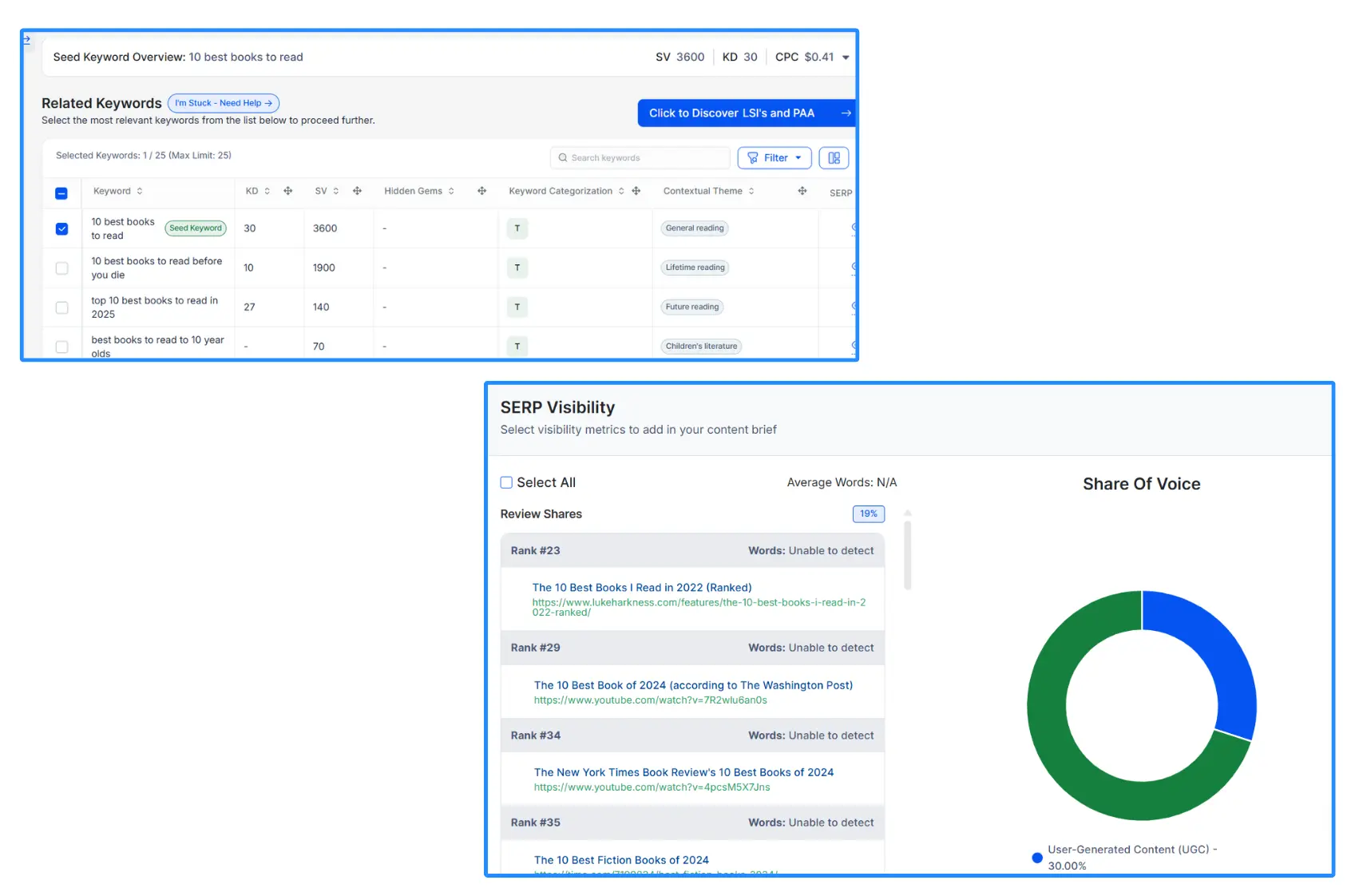
KIVA’s keyword research process showing SERP visibility and content length signals.
2.Marketing Goals:
Use long-form to build authority, improve SEO, and provide depth; use short-form for quick updates, social engagement, and frequent publishing.
3.Resources:
Consider your team’s capacity. Long-form demands more effort but drives higher impact, while short-form allows for consistency with fewer resources.
4.Match the Platform
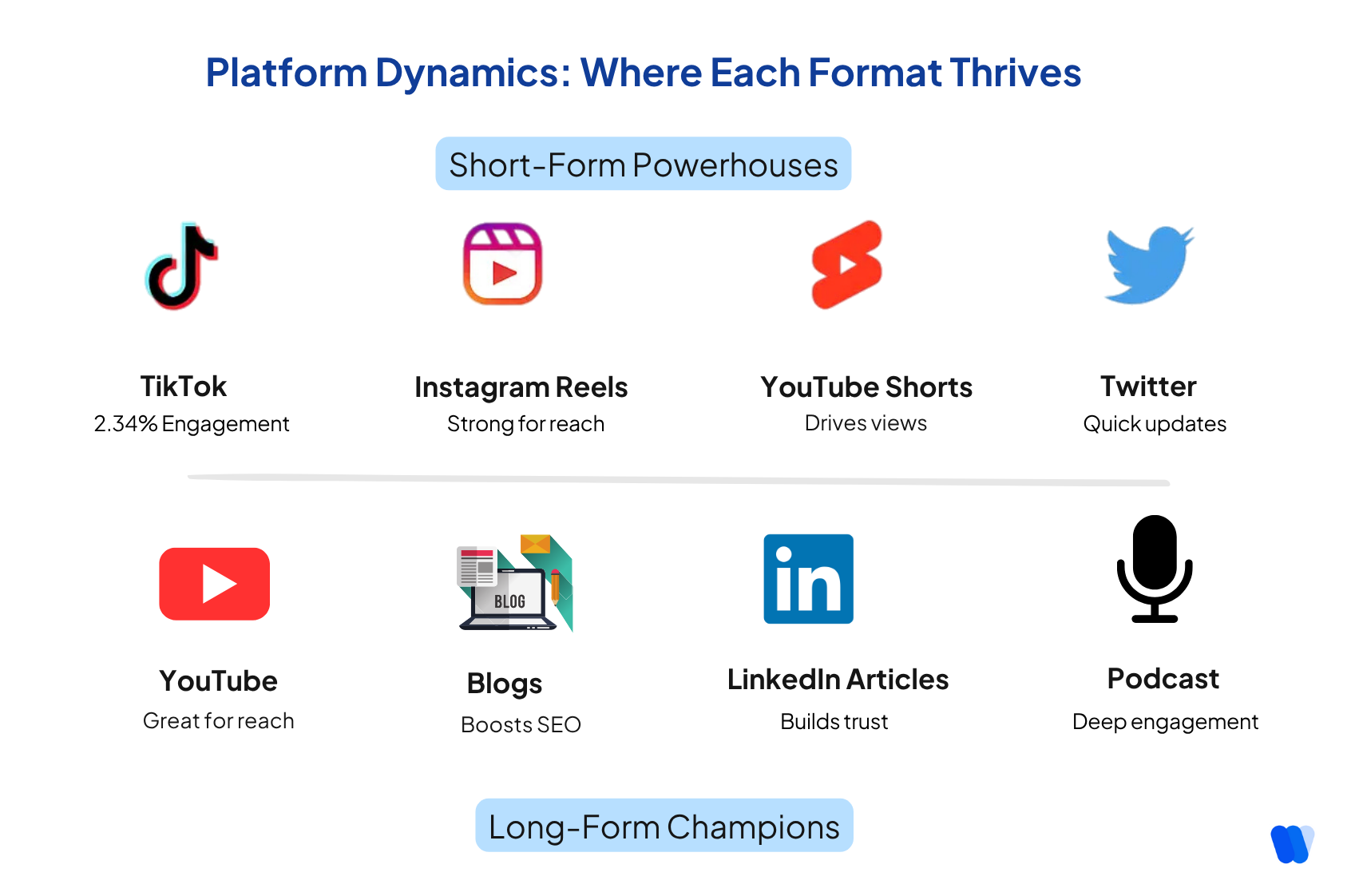
Every platform has its rhythm. What works on LinkedIn doesn’t always land on TikTok. Some channels reward in-depth storytelling, while others are built for speed and scrollability. When deciding between short form to long form content, let the platform guide your length and delivery.
 5.Clarify Your Message
Ask: “How much explanation does this really need?” If it’s a quick win or tip, short-form might be enough. But if you’re breaking down a process, idea, or narrative that needs context, long-form is probably a better fit.
6.Factor in Budget and Bandwidth
Short-form tends to be easier and quicker to produce, especially in volume. Long-form may require more writing, editing, and sometimes design or visuals. If you’re working with a small team or limited time, that might tip the scale.
7.Consider Agility
Short-form rewards speed. If your brand can jump on trends or produce content quickly, it’s a great fit. But if you have long approval chains or a slower workflow, short-form’s pace might become a bottleneck.
8.Test, Track, and Tweak
The safest path? Try both. Publish, monitor, and let the data guide you. Look at completion rates, shares, dwell time, and conversions. You’ll quickly spot what resonates, and what doesn’t.
When Should I Use Long-Form Content?
Long-form content—typically articles exceeding 1,500 words—works best when your goal is to provide depth, build trust, and create lasting impact. It is especially effective in the following scenarios:
- Enhancing Search Engine Rankings – Comprehensive content tends to rank higher in search results because it aligns with user intent and covers topics in detail.
- Increasing Audience Engagement – Longer articles encourage readers to stay on your site, reducing bounce rates and signaling value to search engines.
- Establishing Authority – In-depth content positions your brand as a thought leader, building credibility and trust within your industry.
- Boosting Social Shares and Backlinks – High-value, detailed articles are more likely to be shared and cited, expanding your reach and strengthening SEO.
- Improving Conversion Rates – Thorough, well-explained content helps readers make informed decisions, leading to higher-quality leads and conversions.
That said, audience behavior should always guide your choice. Long-form content is ideal for topics that require detailed exploration or when readers expect comprehensive insights. For straightforward subjects or audiences that prefer quick reads, shorter content formats may be more effective.
Before drafting your long-form content, make sure the tone feels natural and reader-friendly. You can quickly refine AI-written sections using the free AI Humanizer tool by Wellows to avoid robotic phrasing and keep your writing engaging across lengthy formats.
- You’re educating your audience
- You want to boost organic traffic through SEO
- You’re building topical authority
- Your goal is lead generation or conversion
- Your topic needs depth or explanation
When Is Short-Form Content More Effective?
Short-form content—usually videos under 60 seconds or text under 500 words—is most effective when you need to grab attention fast and deliver clear, concise messaging. It works particularly well in the following situations:
- Capturing Short Attention Spans – With the average attention span dropping to around 8 seconds, short content makes it easier to engage audiences before they scroll away.
- Driving Social Media Engagement – Platforms like TikTok, Instagram Reels, and YouTube Shorts favor short-form, resulting in stronger performance. For instance, Instagram Reels deliver 22% more engagement than standard video posts.
- Boosting Brand Recall – Bite-sized videos can improve brand awareness, with studies showing up to an 80% increase in recall.
- Designed for Mobile Use – Since nearly 89% of people in the U.S. browse on mobile devices, short content ensures quick impact on smaller screens.
- Cost-Effective and Scalable – Short-form content is faster and less resource-heavy to create, allowing brands to publish more content at scale.
That being said, short-form alone may not deliver the depth needed for complex topics or building authority. The best approach is a mix—leveraging short-form for visibility and quick engagement, while using long-form for in-depth value and credibility.
- You’re introducing a concept or teaser
- You’re building engagement on social platforms
- Your audience is browsing on the go
- You’re creating touchpoints across a customer journey
- You need to deliver updates or timely information
Which Type of Content Is Better for SEO?
When it comes to SEO, not all content is created equal. Search engines prioritize content that is helpful, relevant, and engaging, while users look for information that’s easy to consume and valuable. A strong SEO strategy often blends long form vs short form content to meet these needs effectively. By combining depth with brevity, you can capture attention, build authority, and improve visibility across platforms.
Here are the most effective types of content for boosting your rankings and online presence:
Which Type of Content Is Better for SEO?
1. Blog Posts
Consistently updated blog posts help establish your site as an authority. They let you target relevant keywords, answer audience questions, and build internal links that guide readers deeper into your site—improving engagement and search rankings.
Example: How-to guides, trending industry updates, or FAQ-style posts.
2. Long-Form Articles
Articles above 1,200–1,500 word provide in-depth insights and cover topics comprehensively. Their depth targets a wider range of keywords, attracts backlinks, and keeps readers on the page longer—boosting SEO authority and shareability.
Example: Comprehensive guides, pillar content, detailed tutorials.
3. Infographics
Infographics make complex information simple, visual, and shareable. They often gain traction on social media and attract backlinks from sites referencing your data, improving domain authority and visibility.
Example: “10 Stats That Show Why Video Content Dominates in 2025.”
4. Videos
Video is a powerful engagement tool. Short-form (Reels, TikToks) boosts visibility and engagement, while long-form (YouTube explainers) helps establish expertise. Video also increases time-on-site—a positive ranking signal.
5. Listicles
List-based content is easy to skim and highly clickable. Readers love structured information, and listicles often earn higher click-through rates in search results.
Example: “7 SEO Tools Every Marketer Should Use.”
6. Case Studies
Case studies prove authority with real-world results. They provide unique, hard-to-replicate content and attract backlinks from sites referencing your success stories.
Example: “How Our SEO Strategy Increased Traffic by 120%.”
7. Social Media Content
While social content doesn’t directly improve rankings, it amplifies reach. Sharing snippets of blogs, infographics, or videos generates traffic and brand signals that indirectly support SEO.
Example: “How Our SEO Strategy Increased Traffic by 120%.”
8. Email Newsletters
Newsletters keep audiences engaged with exclusive insights, updates, or tips. They drive repeat visits and signal trust and loyalty—factors that support long-term SEO success.
Example: “Weekly SEO Insights Newsletter Featuring Latest Blog Posts.”
9. Webinars
Webinars combine education and engagement in real time and can be repurposed into blogs, clips, or guides—multiplying SEO value. Live Q&A also positions you as an expert.
Example: “Top SEO Trends for 2025 – Live Webinar with Expert Q&A.”
10. Podcasts
Podcasts build deeper connections through storytelling and expert interviews. They increase brand visibility and can be transcribed into keyword-rich posts to enhance SEO impact.
Example: “Weekly Marketing Podcast Featuring SEO Experts.”
SEO Tips Tailored to Each Format
I’ve worked with both short form vs long form formats across different campaigns, and one thing I’ve learned is that optimizing your content for search isn’t just about how long it is, but how well it’s structured for its intent.
Whether you’re crafting a 2,000-word guide or a 200-word product blurb, the approach to SEO should adapt to the format, not the other way around.
- Use H2s and H3s to guide the reader and help crawlers understand the flow.
- Connect with related internal pages to pass authority and keep users on-site.
- Add graphs, tables, or images with alt text to improve UX and accessibility.
- Take help from Google’s “People Also Ask” to target relevant queries.
- Don’t try to cover too much—one message is enough.
- When your content is short, your metadata does a lot of heavy lifting.
- Keep answers short and structured (bullets, lists, tables).
- Write in a way that invites shares, comments, or saves.
No matter the format, quality matters more than length. But how you present that quality should match your content’s purpose.
Neil Patel, a widely trusted voice in digital marketing, recently ran an experiment comparing short form vs long form video content and their impact on brand recall and revenue.
“Most people couldn’t recall information from short-form videos the next day—but they remembered what they learned from long-form content.” —Neil Patel, Co-founder of NP Digital
Integrating Both into a Unified Strategy
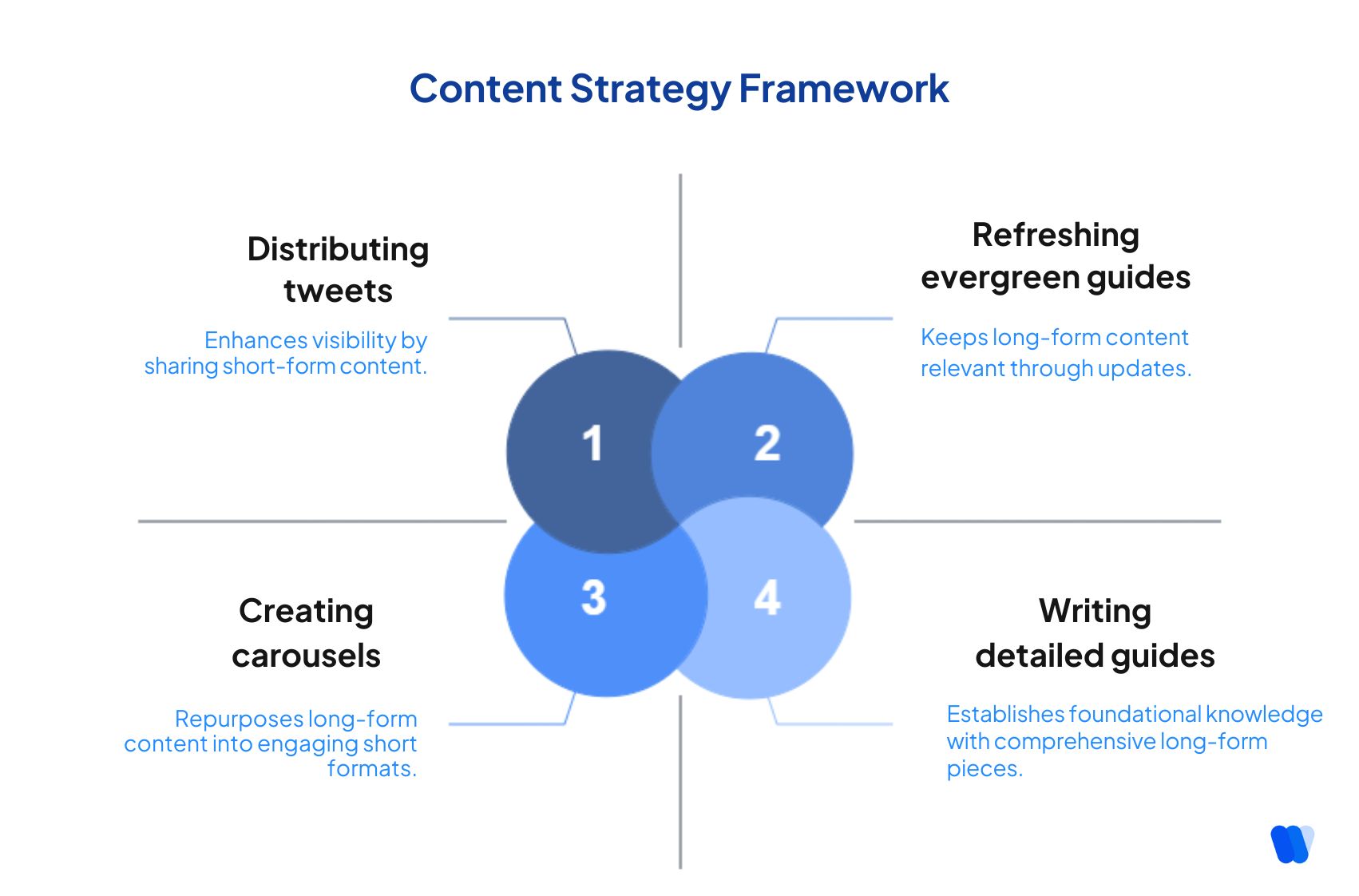
In my experience, the best-performing strategies mix both content types. Here’s a simple framework I follow:
1. Start with Long-Form Pillars
Create 1–2 detailed, evergreen pieces around core topics (e.g., a full guide on content strategy or SEO).
2. Break Down into Short-Form Content
Repurpose the long-form piece into carousels, short blog sections, or one-liner tweets. This is where knowing how to use AI for summarizing articles becomes critical—so key ideas are condensed accurately without stripping away context or intent.
3. Distribute Across Channels
Use short-form formats to draw attention to the long-form base. This builds familiarity and creates multiple access points.
4. Update and Recycle
Refresh older long-form pieces to stay relevant and prevent content decay, when rankings and traffic gradually drop as SERPs change and competitors publish fresher updates. Keep short-form content consistent and aligned with current goals.
“When I plan long-form content with a focus on organic traffic, having a solid content brief helps me structure the piece around both user intent and SEO signals. I often rely on AI SEO Agents like KIVA, which streamlines the research by suggesting headings, keywords, and related questions, all mapped to real search behavior.”
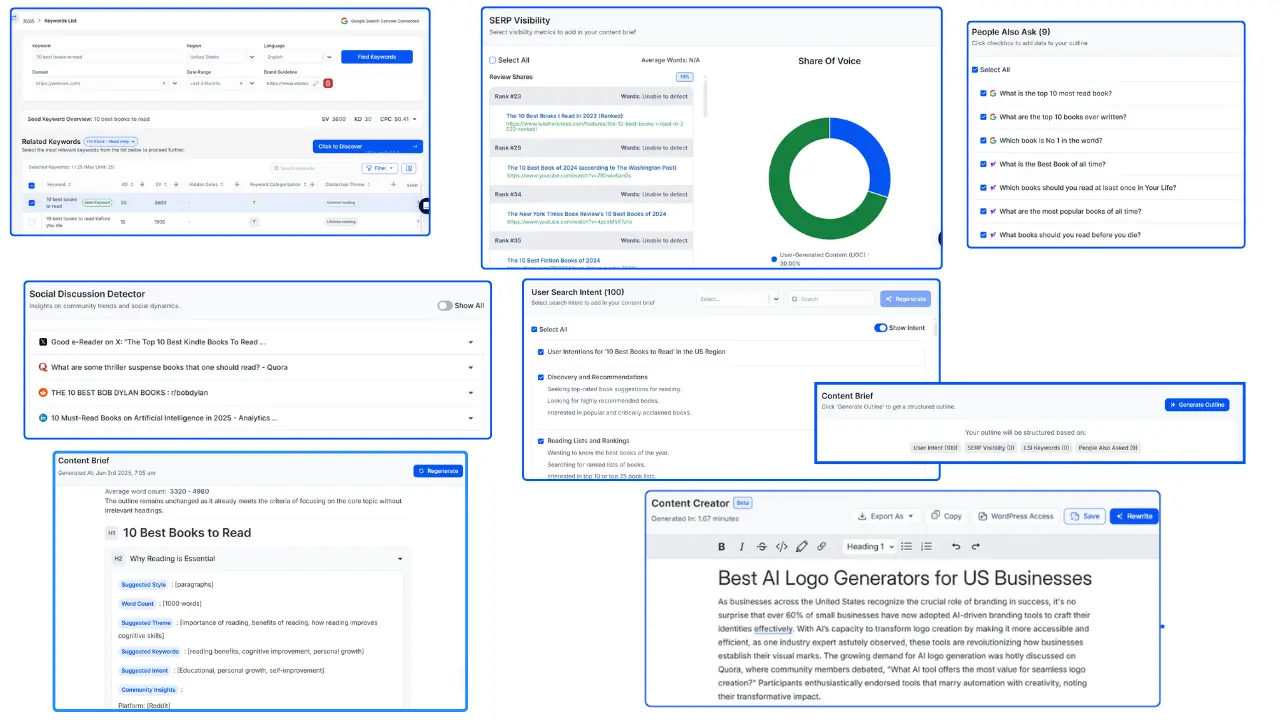
A snapshot of KIVA’s end-to-end long form content creation process. Covering keyword discovery, user search intent, SERP visibility insights, and SEO briefs.
How Does Audience Engagement Differ Between Long-Form and Short-Form Content?
Short-form content thrives on speed. It’s designed for quick consumption, making it ideal for platforms where audiences scroll fast and expect immediate value. Short videos and bite-sized posts often achieve higher completion rates and are more shareable, giving them strong viral potential.
Long-form content works differently. It attracts readers who want depth and context, keeping them engaged through time-on-page, detailed storytelling, and in-depth insights. While fewer people may finish a 2,000-word article compared to a 60-second video, those who do often build stronger trust and loyalty.
Together, both formats balance reach and retention. Short-form catches attention quickly, while long-form sustains it and deepens the relationship.
Audience Demographics: Who Prefers What
Understanding audience preferences has dramatically improved my content strategy:
Gen Z (Born 1997-2012)
- Strong preference for video under 60 seconds
- Values authenticity over production quality
- Consumes across multiple platforms simultaneously
- Responds to interactive elements
Millennials (Born 1981-1996)
- Consumes both formats but spends 2x longer with detailed content
- Values depth but appreciates efficiency
- Platform-specific behavior (different expectations on different platforms)
- Higher tolerance for longer educational content
Gen X & Baby Boomers
- More likely to read full articles
- Appreciates comprehensive information
- Lower engagement with ultra-short formats
- Values expertise and credentials
I’ve discovered that even within these demographics, there are significant variations based on interest area. My technical tutorials can run 20+ minutes for younger audiences when the topic warrants it, while even older audiences prefer shorter content for entertainment.
Content length plays a major role in shaping audience engagement, but its effectiveness depends on the platform, content format, and user expectations. Finding the right balance between depth and brevity is key to maximizing impact. In summary: Content length does influence engagement, but the key is alignment. Matching depth or brevity with your audience’s needs, the platform, and the content’s purpose will deliver the strongest results.How Does Content Length Impact Audience Engagement?
Written Content
Video Content
Social Media Posts
Key Considerations
How Does Content Format Impact Visibility in LLMs?
As AI-driven tools like ChatGPT, Claude, and Perplexity become primary sources for information retrieval, ensuring your content is optimized for these platforms is crucial. This process, known as Large Language Model Optimization (LLMO), focuses on enhancing your content’s visibility within AI-generated responses .
Key insights:
- Long-Form Content: Comprehensive articles with structured headings and in-depth analysis are more likely to be cited by AI models, as they provide rich context and detailed information.
- Short-Form Content: Concise, well-structured pieces, such as FAQs or bullet-point summaries, can also be favored by AI, especially when they directly address specific queries.
Actionable Tips:
- Structured Formatting:
Utilize clear headings (H1, H2, H3) and bullet points to make content easily digestible for AI models.
- Semantic Clarity:
Incorporate related terms and synonyms to provide context, aiding AI in understanding the content’s relevance.
- Authoritative Sources:
Link to credible references and include original research or data to establish trustworthiness.
- Conversational Tone:
Write in a natural, engaging manner that mirrors how users interact with AI tools.
By implementing these practices, your content is more likely to be featured in AI-generated summaries and answers, a core goal of Generative Engine Optimization (GEO), helping you expand visibility beyond traditional search engine results.
Should I Use Both Long-Form and Short-Form Content in My Strategy?
Incorporating Long Form vs Short Form Content into your marketing strategy can create a powerful balance, as each format serves unique purposes and appeals to different audience behaviors.
Short-Form Content
Short-form content—typically under 1,000 words or just a few minutes in length—includes social media posts, quick videos, and concise articles. This format is excellent for grabbing attention, boosting brand visibility, and sparking immediate engagement. Platforms like TikTok and Instagram are built on short, engaging content that is easy to consume and share.
Long-Form Content
On the other hand, long-form content goes beyond 1,000 words or five minutes, covering formats such as detailed blog posts, comprehensive guides, podcasts, and webinars. This format allows you to explore topics in depth, demonstrate authority, and improve SEO performance. In fact, studies show articles over 2,000 words rank 56% higher on average compared to shorter ones.
Why a Combined Approach Works
Bottom line: By blending both formats, you can guide your audience through every stage of their journey—from quick awareness to deep understanding—ultimately improving engagement, visibility, and conversions.How to Balance Both
FAQs
Begin with long-form if your audience is researching or learning. Choose short-form when the focus is awareness or social growth.
Yes, but only if it’s well-structured, relevant, and valuable. Word count alone isn’t a ranking factor.
It can, especially when paired with strong CTAs and linked to deeper content.
Absolutely. For example, LinkedIn supports both but favors storytelling and carousels. Twitter (X) thrives on short, pithy content. Google rewards long-form when it answers specific queries clearly.
Yes, long-form content often generates more qualified leads by offering detailed information that helps readers make confident decisions.
Yes, because short-form is quicker to consume and easier to engage with on smaller screens.
Examples include blog posts over 1,500 words, comprehensive guides, whitepapers, case studies, webinars, and podcasts.
Examples include social media posts, short blog articles, infographics, TikToks, Instagram Reels, YouTube Shorts, and email snippets.
Final Thoughts: Don’t Choose—Combine
Choosing between Long Form vs Short Form Content isn’t about finding a winner. It’s about understanding what fits your message, your audience, and your goals at that moment.
Some days call for in-depth breakdowns. Others need a sentence that sticks. What I’ve learned is this: variety builds impact. By blending formats, you’re not just reaching more people, you’re meeting them where they are, with what they need.
And that’s the kind of content strategy that works.
Read More Articles
- Content Marketing Agencies: A Complete Guide 2026
- Write Content for People First, Not Search Engines
- Content Readability in SEO
- How Small Brands personalized AI content
- LLM content creation strategy
- Top Content Marketing Statistics in 2025
- How To Avoid Plagiarism
- Can GSC Data Guide Your GEO Strategy?
- How to Optimize SEO Content Length
- Why Agencies Can’t Guarantee AI Results