I’ve seen it happen more times than I can count: writers, marketers, students, and even experienced professionals getting caught off-guard by unintentional plagiarism. Sometimes it’s a missing citation. Sometimes it’s a paraphrase that’s a little too close to the source. And every time, it chips away at the writer’s credibility.
That’s why I believe knowing how to avoid plagiarism isn’t just a “nice-to-have”. It’s an essential skill for anyone who writes.
Whether you’re drafting a research paper, working on AI content, writing a client blog, or creating internal documentation, knowing how to credit sources and paraphrase properly helps protect your work and your reputation. These aren’t just academic rules. They’re foundational habits for ethical, original content.
Did you know?According to G2, 59.7% of content produced by GPT-3.5 contained some form of plagiarism.
What Is Plagiarism?
Plagiarism is more than just copying and pasting. It’s any use of someone else’s words, ideas, or data without giving proper credit. In other words, it’s a form of intellectual theft.
Plagiarism means “to steal and pass off the ideas or words of another as one’s own.” That includes:
- Directly copying text from a source
- Rewording someone else’s content without citation
- Using data, visuals, or phrasing without attribution
- Submitting your own previously published work as new (self-plagiarism)
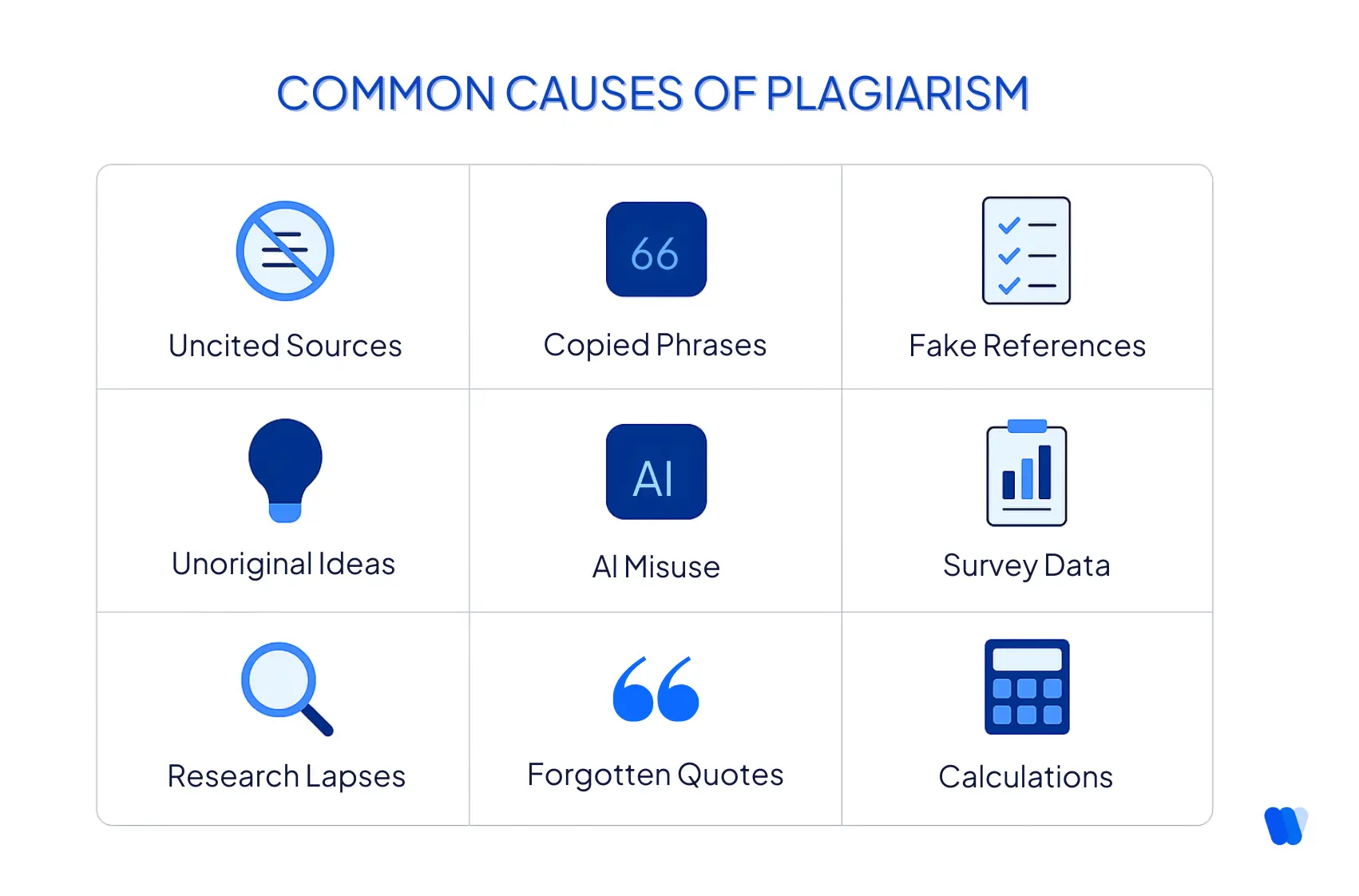
Plagiarism can be intentional, like knowingly lifting a paragraph from an article, or accidental, such as forgetting to cite a paraphrased idea. With the rise of AI-generated text, AI content detection trends also play a key role in spotting unoriginal work.
But regardless of intent, the outcome is the same: it erodes trust and questions the originality of your work. Other SEO issues, like content cannibalization in SEO, can also damage visibility when multiple pages compete for the same keyword.
Even if you paraphrase well, failing to cite the source still counts as plagiarism. And that’s where most people unknowingly get it wrong.
How to Avoid Plagiarism: Effective Ways to Prevent It
Plagiarism isn’t just a technical error; it’s a serious breach of ethics that can carry lasting consequences. Even when it’s unintentional, it sends the wrong message: that originality, research, or transparency doesn’t matter—which is why understanding how to avoid plagiarism is critical for anyone creating academic, professional, or creative work.
Here’s what’s at risk:
- Ethical and professional consequences:
Plagiarizing, knowingly or not, undermines your integrity. In schools, it can mean failing a course. In a professional setting, it can cost you a project, a client, or even your job.
- Legal exposure:
Reproducing content without permission may violate copyright laws, especially when dealing with published work, images, or research.
- Loss of credibility:
Once your audience suspects your work isn’t original, it’s hard to win back trust for content creators and marketers, which can impact visibility, engagement, and SEO performance. In fact, around 58% of marketers say original written content is more effective than repurposed formats.
- Personal growth:
When you research, process, and express ideas in your own words, your thinking sharpens, and so does your writing. Avoiding plagiarism pushes you to grow.
At the same time, focusing on content readability in SEO ensures your writing is not only original but also accessible and clear, helping readers trust and engage with your work more effectively.
Why Is It Important to Cite Sources When You Write?
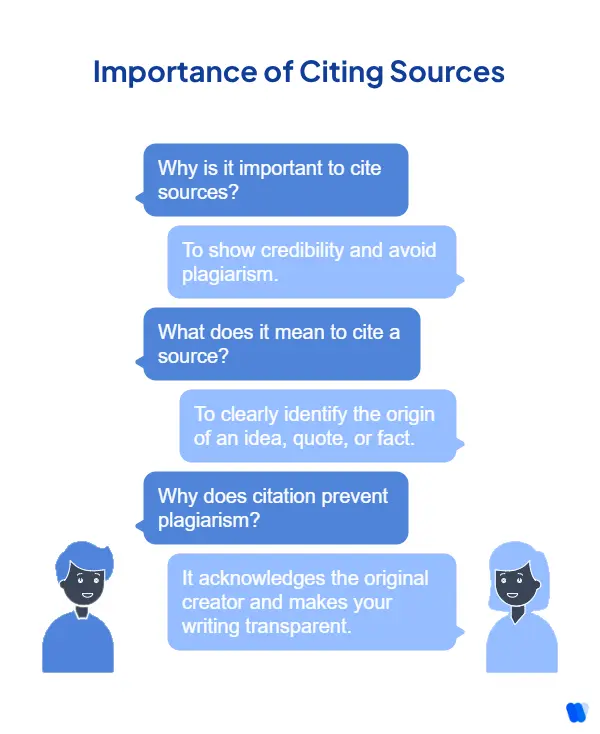
Citing sources is one of the simplest and most effective ways to show credibility and avoid plagiarism. When you borrow someone else’s idea, research, or phrasing, giving them proper credit isn’t just polite, it’s essential.
In today’s digital landscape, this also extends to humanizing AI content, where proper attribution ensures AI-generated text remains authentic and trustworthy. You can further strengthen originality and clarity using the free AI Humanizer tool, which helps refine AI-generated wording while preserving your unique voice.
What Does It Mean to Cite a Source?
To cite a source means to clearly identify where a particular idea, quote, or fact came from. This might involve:
- Mentioning the author and year of publication
- Linking to the original webpage
- Including full source details in a bibliography or reference list
It tells your audience: “This insight isn’t mine, I’m referencing someone who studied it, tested it, or published it.”
Why Citation Prevents Plagiarism
Citing removes ambiguity. It:
- Makes your writing transparent
- Acknowledges the original creator
- Helps readers verify or explore the source further
Even when you paraphrase, you still need to cite. Rewriting someone’s idea without credit is still plagiarism, only in disguise. For blogs, a simple blog post checklist helps enforce hyperlink citations and reference consistency.
In fact, clear attribution is also a core part of building long-term AI-driven content strategies, where originality and structure directly impact visibility and trust.
Bonus Benefit: Credibility
Citations add weight to your claims. A blog post with sources from Harvard, Pew Research, or a respected industry leader carries far more authority than one without. Citing isn’t just ethical, it makes your work more trustworthy.
How to Prevent Plagiarism in Academic Writing?
In academic writing, the best way to prevent plagiarism is by citing every idea, fact, or quote that isn’t originally yours.
Citing sources is non-negotiable for responsible writing. Whether you’re quoting directly or paraphrasing, you must clearly indicate where the idea came from. This not only gives credit to the original author but also allows readers to explore the source themselves.
Use a consistent citation format throughout your piece—APA, MLA, or Chicago—based on your audience or context. If unsure, follow your editor’s or instructor’s preference.
1. Citing a Single Source
In-text citation:
Sustainable agriculture emphasizes long-term productivity and environmental health, rather than short-term gains (Wilson, 2019, p. 112).
Reference list:
Wilson, T. L. (2019). Future farming: Sustainable methods for a changing planet. GreenLeaf Press.
2. Citing Multiple Sources
In-text citation:
Modern farming practices blend traditional knowledge with data-driven tools to optimize outcomes (Nguyen, 2020, p. 45), a shift that supports both productivity and sustainability goals (Wilson, 2019, p. 89).
Reference list:
Nguyen, A. Q. (2020). AgriTech evolution: Innovations transforming food production. Earthbound Publications.
Wilson, T. L. (2019). Future farming: Sustainable methods for a changing planet. GreenLeaf Press.
Understanding Citation Styles (APA vs. MLA, etc.)
Not all citations look the same. Depending on your audience or context, you’ll use different formats for an academic paper, blog post, or report. Two of the most common are APA and MLA.
Let’s break them down.
| Feature | APA Style | MLA Style |
|---|---|---|
| In-text citation | (Author, Year) | (Author Page) |
| Example | (Lee & Gomez, 2018) | (Lee and Gomez 22) |
| Reference list title | References | Works Cited |
| Discipline usage | Sciences, Psychology, Business | Literature, Humanities |
| Year in citation | Required | Typically omitted |
| Page numbers | Optional unless quoting | Required when quoting |
Even in blog content or casual formats, the expectation to cite remains. Just keep it simple:
- Link to the original source
- Add attribution like “According to a study by XYZ…”
Understanding citation practices also ensures your AI-assisted workflows remain transparent and traceable, especially when building content strategies powered by large language models.
Tip: In blogs, hyperlinking to the original source is often enough. But for research papers or whitepapers, full citations are essential.
How Do You Paraphrase Correctly Without Plagiarizing?
Paraphrasing is more than just swapping out a few words. It’s about expressing someone else’s idea in your own unique voice and sentence structure. When done correctly, it shows you understand the material. But when done poorly, it can still count as plagiarism.
Here’s what paraphrasing is NOT
- Replacing words with synonyms
- Rearranging sentence order without changing structure
- Copying and citing without truly rewriting
And here’s what it IS
- Grasping the core meaning of the original text
- Rewriting it entirely in your own words
- Preserving the intent, tone, and accuracy of the original
- Crediting the source, even when you’ve reworded it
“The development of social media has transformed how people communicate, creating both opportunities for global connection and challenges for privacy and mental health.”
The evolution of social media has changed how individuals interact, generating both possibilities for worldwide connection and issues for privacy and psychological health.
Social networking platforms have fundamentally altered interpersonal communication patterns, offering unprecedented global connectivity while simultaneously introducing significant concerns regarding personal data protection and psychological well-being (Johnson, 2025).
How to Avoid Plagiarism When Paraphrasing?
Paraphrasing is often where writers struggle the most with originality. Learning how to avoid plagiarism in this step means going beyond surface-level word changes and reshaping the idea in your own style.
Here are practical ways to do it:
- Focus on meaning, not words: Capture the core message first, then rewrite it with your own logic.
- Change structure: Rearrange or reframe sentences instead of mirroring the source pattern.
- Shift perspective: Add examples or context that make the explanation feel new and audience-specific.
- Blend with your insight: Insert your analysis so the passage reflects your own thinking.
- Always credit sources: Even when paraphrased well, cite the original idea to stay ethical and transparent.
Strong paraphrasing is also linked to chunk optimization for AI search, since breaking content into meaningful units not only improves originality but also makes it easier for search engines and AI systems to retrieve and understand your text.
By applying these steps, you’ll master how to avoid plagiarism when paraphrasing while also strengthening your credibility and building a unique writing voice.
How to Avoid Accidental Plagiarism?
Good paraphrasing takes practice, but it starts with knowing the right steps.
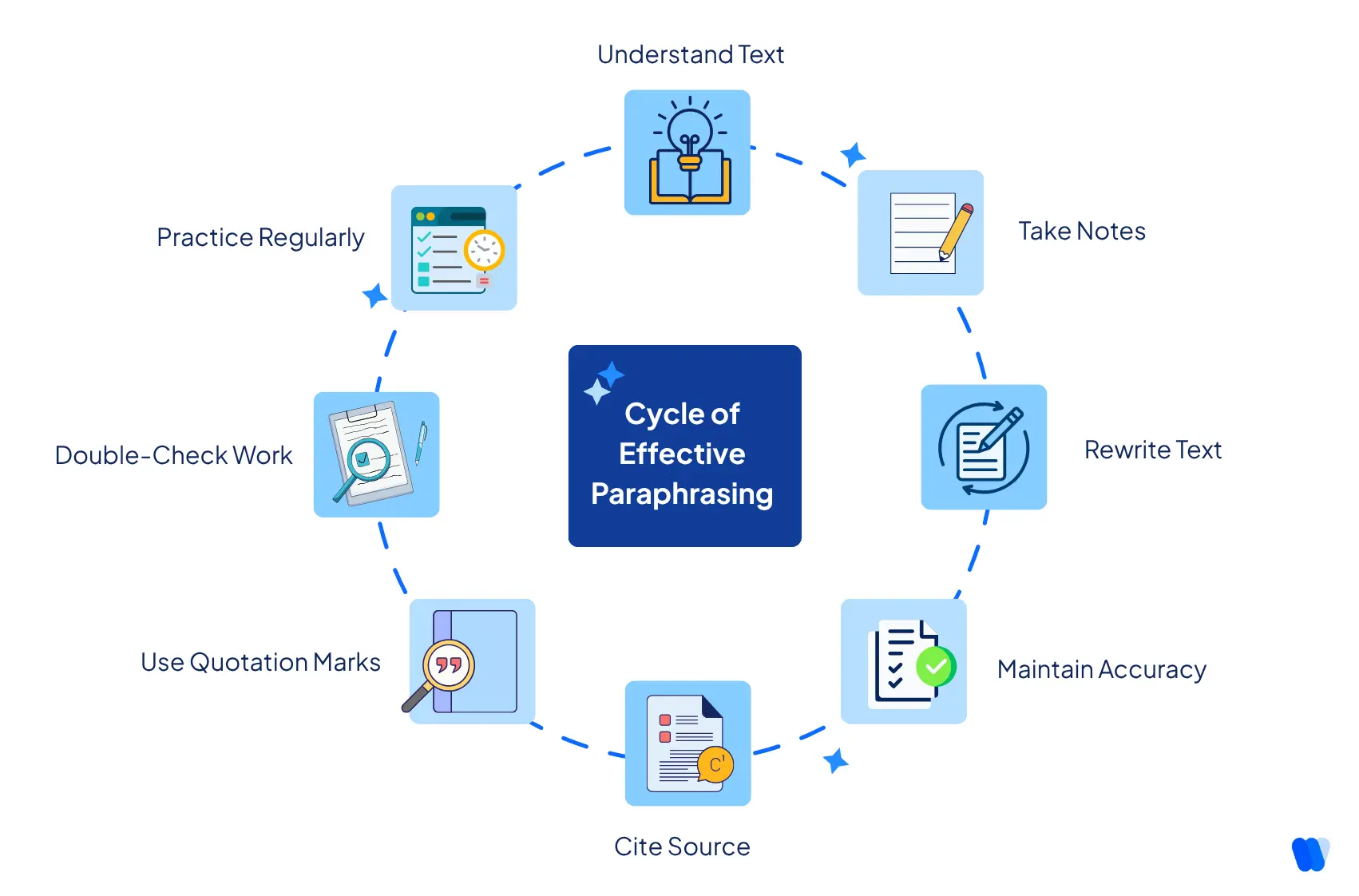
Below are clear, actionable tips to help you rephrase ideas accurately, ethically, and in your own voice.
1. Understand the Original Text First
Before you attempt to rewrite anything, read the original content thoroughly. Make sure you grasp the core message, context, and tone. If you don’t fully understand it, your paraphrase could distort the meaning.
2. Take Notes and Set the Source Aside
Jot down the main ideas in your own words, then put the source away. This prevents you from unconsciously copying the structure or phrases.
3. Change More Than Just the Words
Don’t just replace a few terms with synonyms. Change the sentence structure, tone, and flow.
4. Keep the Meaning Accurate
Your paraphrase should reflect the same key idea, not oversimplify or exaggerate it. If the original was cautiously worded, maintain that tone.
5. Always Cite the Source
Even if you rewrote it completely, the idea still isn’t originally yours. Add an in-text citation or link to the source. For example: (Smith, 2022) or according to a 2022 report by Smith.
6. Use Quotation Marks for Unique Terms
If you keep specific terminology or phrasing (e.g., “digital divide”), place it in quotes and cite it properly.
7. Double-Check Your Work
Compare your version with the original. If sentence structure or phrasing feels too close, revise it. Tools like plagiarism checkers can help, but don’t rely on them alone.
8. Practice Regularly
The more you paraphrase, the easier it becomes to express ideas in your own style. It sharpens your critical thinking and writing fluency.
Important: Tools help, but they don’t think for you. AI-generated content, for example, can still be factually wrong or unintentionally derivative. You’re the final gatekeeper; always verify and cite original sources, not the AI.
How Plagiarism Prevention Helps Content Writers?
Avoiding plagiarism isn’t just about compliance; it directly impacts performance, brand trust, and client results. Understanding how to avoid plagiarism gives writers a framework to create original, ethical, and credible work that resonates with both audiences and search engines.
For Agencies and Startups:
- Builds credibility with clients by ensuring all deliverables are original and sourced properly.
- Reduces the risk of copyright issues that could harm your client or brand reputation.
- Strengthens SEO performance by avoiding duplicate content penalties from search engines.
It also protects against content decay, where pages lose impressions and rankings over time due to weak originality signals, outdated references, or declining trust.
For Freelancers and Content Creators:
- Positions you as a reliable expert who values quality over shortcuts.
- Enhances portfolio strength by showcasing clean, well-cited work.
- Improves long-term client trust (and retention) through integrity-driven writing.
For SMEs and Internal Teams:
- Ensures consistency and quality across a website, blog, and marketing copy.
- Saves revision cycles by preventing accidental plagiarism in drafts.
- Protects brand voice and originality — two essentials in competitive niches.
Before you hit publish, ask yourself:
FAQs
Popular tools include Turnitin, Grammarly, and Copyscape. Each scans your text against databases to highlight similarities and help ensure originality.
Besides Turnitin and Grammarly, other reliable options are Quetext, Unicheck, and Scribbr. These tools are widely used by students, academics, and professionals.
Focus on developing your own ideas and voice. If you’re inspired by a source, reframe it in your style and always credit original quotes, concepts, or data.
Keep track of who contributed what and maintain a shared reference list. Always double-check citations to avoid overlaps or missing attributions in group projects.
Accidental plagiarism often happens when notes mix with drafts. Prevent it by citing as you write, paraphrasing carefully, and reviewing your work with a checker.
Use original examples, cite all learning materials, and avoid copy-pasting answers. Writing in your own words ensures both academic integrity and deeper learning.
The best ways to avoid plagiarism include citing all sources, paraphrasing ideas in your own words, using plagiarism checkers, and keeping track of references while writing. These practices ensure originality and protect your credibility.
Conclusion
Avoiding plagiarism isn’t just about checking boxes. It’s about writing with integrity and earning trust through originality. When you know how to avoid plagiarism by citing sources correctly and paraphrasing responsibly, you set a higher standard for your content, whether it’s academic, editorial, or professional.
Use tools as support, not substitutes. Whether you’re referencing a research paper or reworking a complex idea, tools that guide structure, highlight repetition, or score your content’s uniqueness can help you stay in control of quality.
Write like it matters, because it does!
Read More Articles