This is where AI content strategies become essential. By guiding AI with clear frameworks, brands ensure every blog post, email, or video stays aligned with user intent and business goals—a structured approach increasingly adopted by Content Marketing Agencies to maintain consistency, relevance, and measurable performance at scale.
In this guide, you’ll explore 7 content strategies using artificial intelligence, each paired with simple, actionable workflows.
1- How Does Competitor Gap Analysis Reveal Quick Wins?
Competitor gap analysis shows which topics your rivals cover that you do not. It highlights missed opportunities in your market and reveals areas where you can publish content to close the gap. These are often strategies for AI-generated content that improve reach without reinventing your workflow.
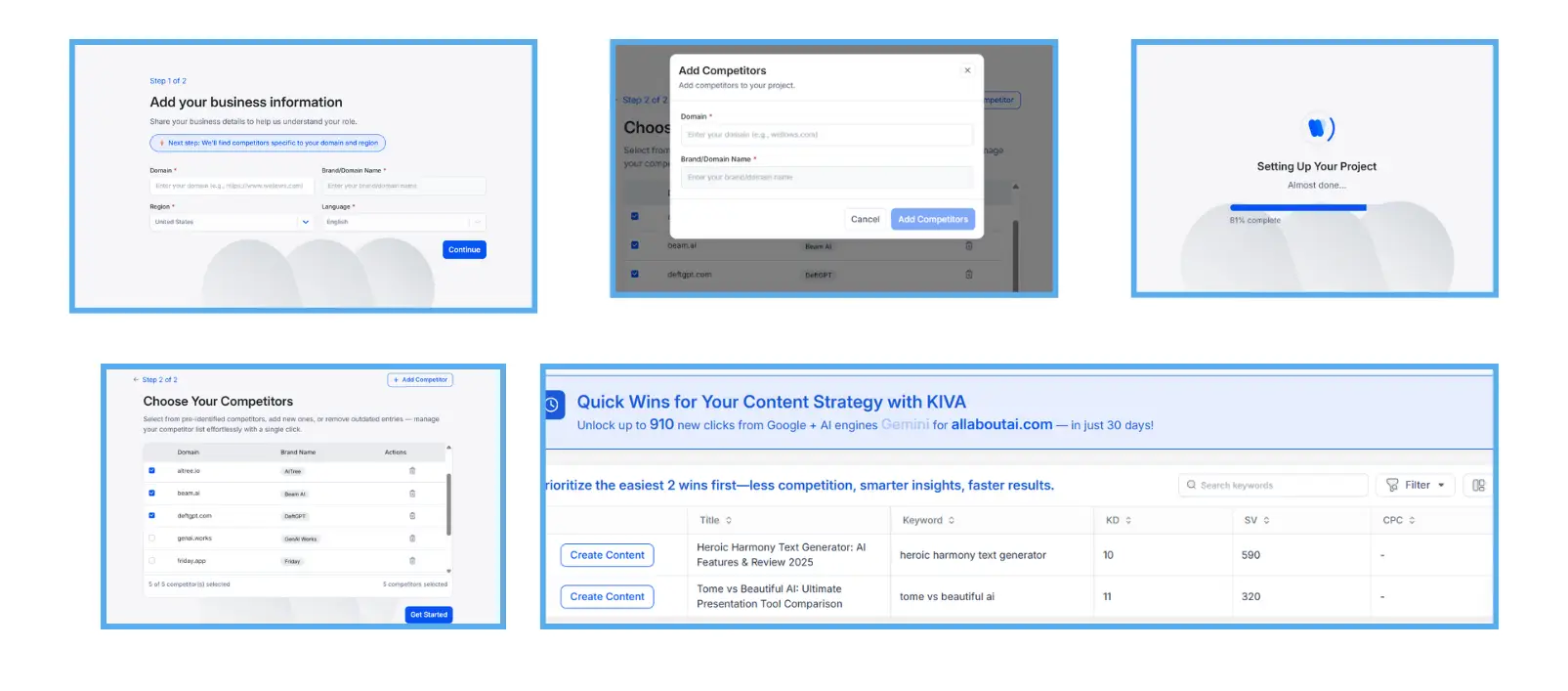
The problem with manual research is speed. Teams spend hours scanning search results, building spreadsheets, and comparing domains. This slows planning and leaves many opportunities hidden. As a result, AI-based content planning becomes difficult to scale.
KIVA solves this through its Quick Wins feature. You enter your domain, and in 30 seconds KIVA detects competitors, runs a content gap analysis, and generates a 7-day strategy with editable, SEO-aligned titles. You can expand any topic into a long-form draft in 20 minutes, removing guesswork and cutting planning time to minutes.
2- Why Should You Cluster Keywords By Intent Instead Of Volume
Many teams chase keywords only by search volume. This creates chaos multiple posts target the same phrases, leading to cannibalization and wasted effort. Without clear grouping, articles overlap and fail to build topical authority.
The better approach is semantic clustering by meaning and intent. Instead of focusing only on numbers, keywords are grouped by what the searcher wants to achieve. This creates effective AI content strategy frameworks where one page covers a full theme, reducing duplication and improving visibility.
KIVA makes this step easier with its Keyword Clustering feature. Enter a seed term, and KIVA groups related queries into clusters recognized by both search engines and large language models.
For example, one cluster may include “AI strategies for blog content creation,” while another may group queries around “AI tools for planning.” Each cluster becomes the base for a richer, more targeted article.
3- How Do AI-Powered Briefs Align Content With Search and LLMs
A content brief gives writers structure before drafting begins. It defines headings, keyword focus, target audience, and style. Without it, teams waste time switching between research tools and risk producing copy that feels scattered or inconsistent.

AI-powered briefs change this process. They integrate search engine data, intent signals, and model-driven phrasing into a single plan. This ensures the outline follows best practices for AI content development while also preparing text that large language models can interpret easily.
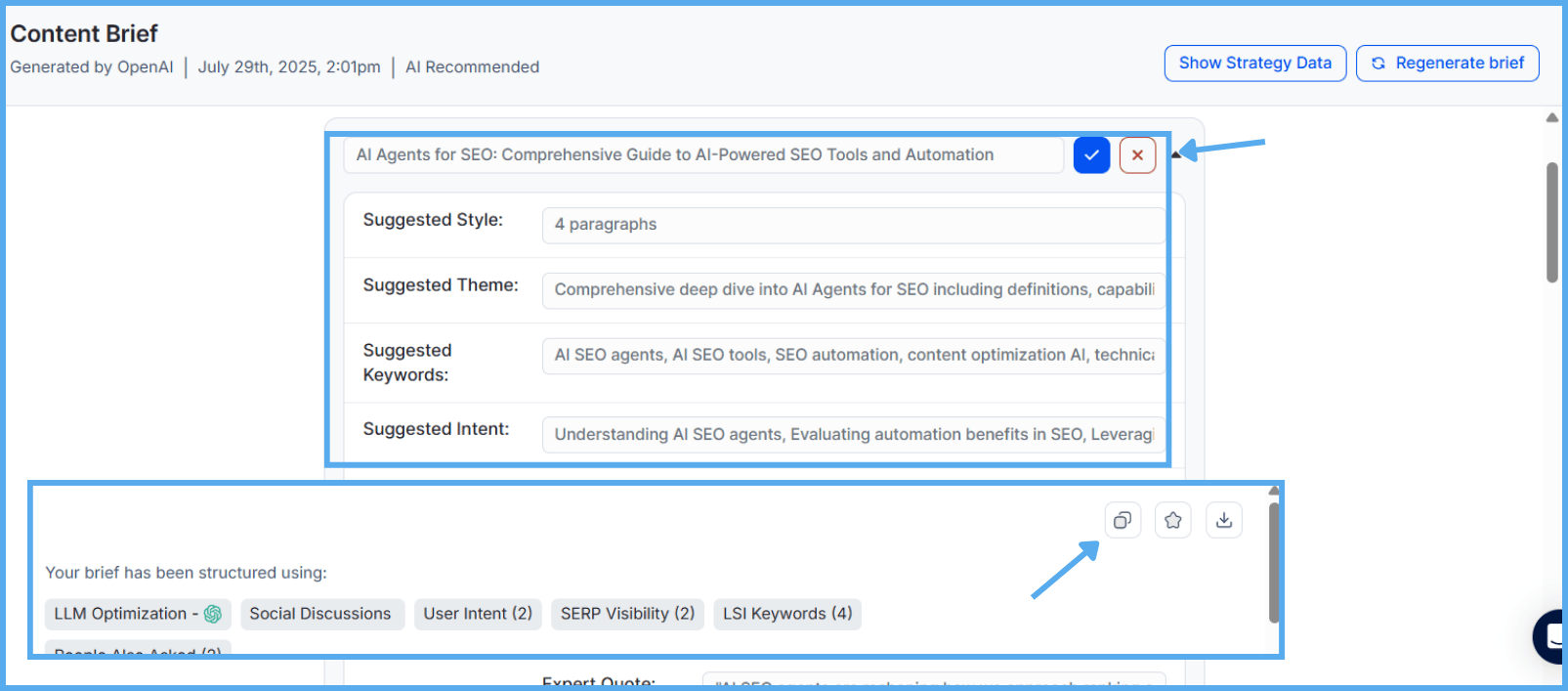
KIVA’s Content Brief feature brings these insights together. It compiles SERP patterns, user intent, “People Also Ask” queries, and semantic clusters into a ready outline. The result is comprehensive AI content marketing strategies that flow from keywords to H1–H3 structure in minutes, giving every draft a clear direction.
4- Can AI Speed Up the First Draft of Long-Form Content
Drafting is often the longest stage in content production. Writers spend hours shaping paragraphs, adjusting tone, and formatting structure before a draft is even ready for review. This slows campaigns and creates bottlenecks in publishing schedules.
AI-supported drafting removes this barrier. It produces full-length articles aligned with briefs, letting teams focus on refining instead of starting from scratch. The result is faster delivery, smoother reviews, and more consistent tone.
These gains apply across different formats in marketing. While AI SEO Agent like KIVA focus on SEO content, similar AI-driven workflows are also being applied to video and personalized email strategies.
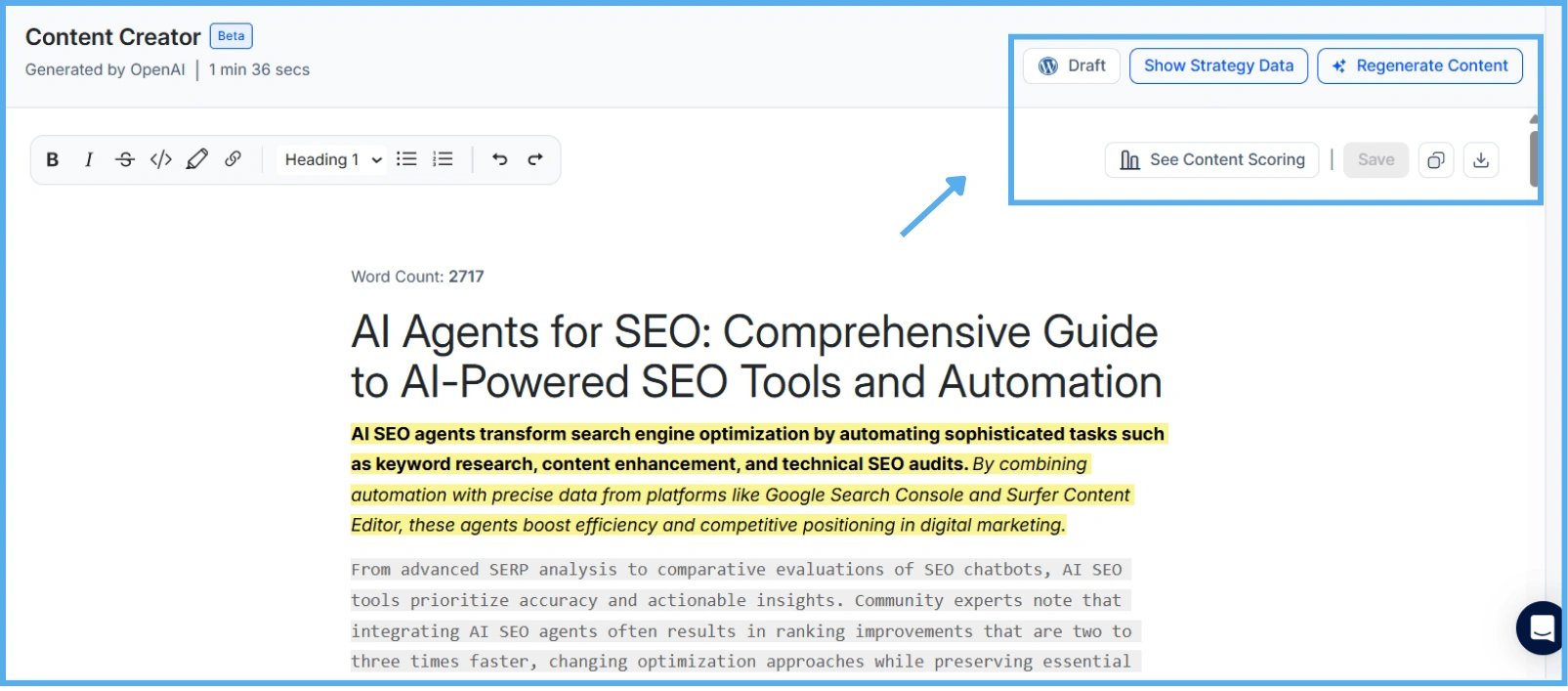
KIVA’s Content Creator makes this process practical. Once a brief is ready, the tool generates a draft in about 20 minutes, complete with headings, citations, and brand alignment. Teams can polish with built-in options like “Humanize” or “Rephrase,” then export the article directly into WordPress for review.
5- Why Is Humanizing AI-Generated Content Important for Trust
AI can generate copy quickly, but the results often sound robotic. When tone feels mechanical or off-brand, readers lose trust and engagement drops. This risk is even higher in channels that demand authenticity, such as AI content strategies for social media.
Humanizing AI output solves this problem. Adjusting tone, sentence flow, and clarity makes the text easier to read and closer to natural speech. Enforcing brand voice across every draft ensures consistency, whether you publish blogs, emails, or social posts.
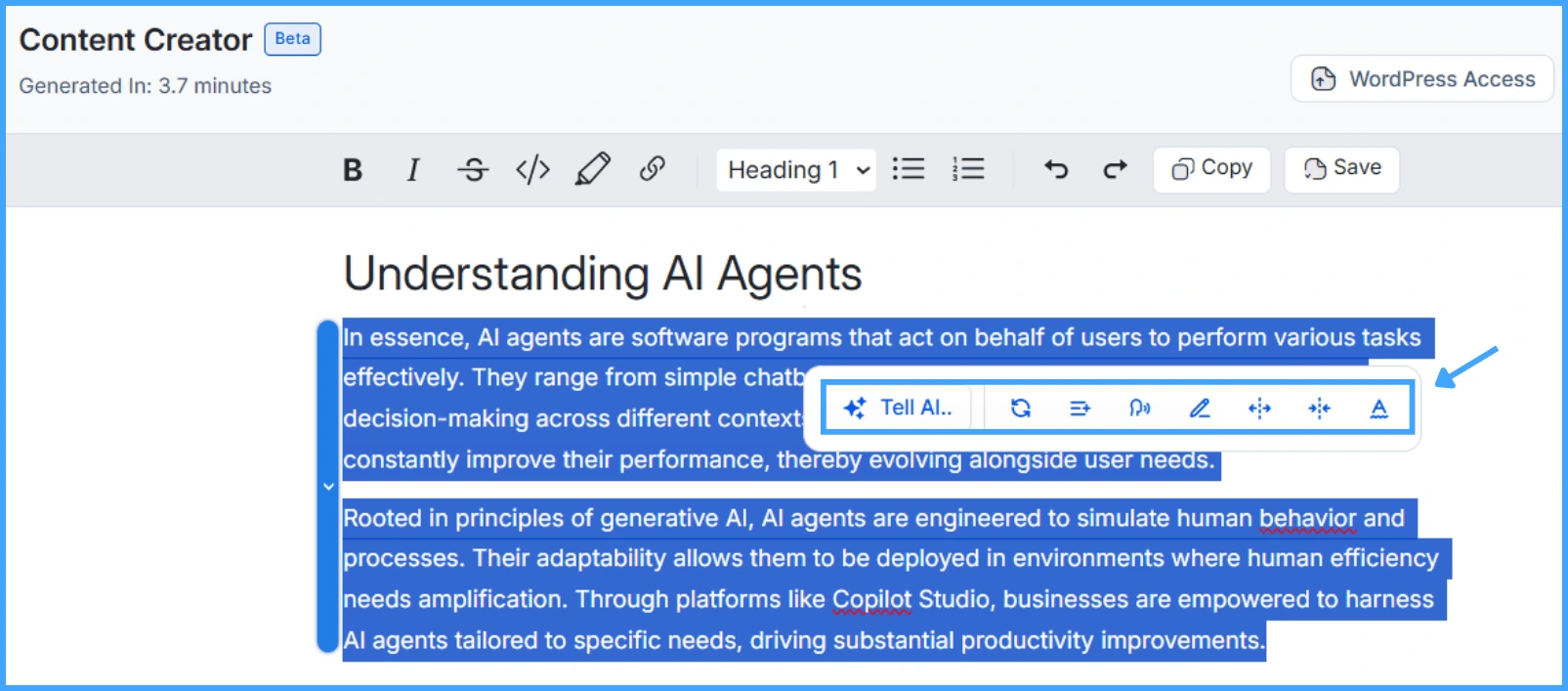
KIVA supports this through its Humanize AI and Brand Guidelines features. Together, they refine machine text into clear, on-brand language that matches audience expectations.
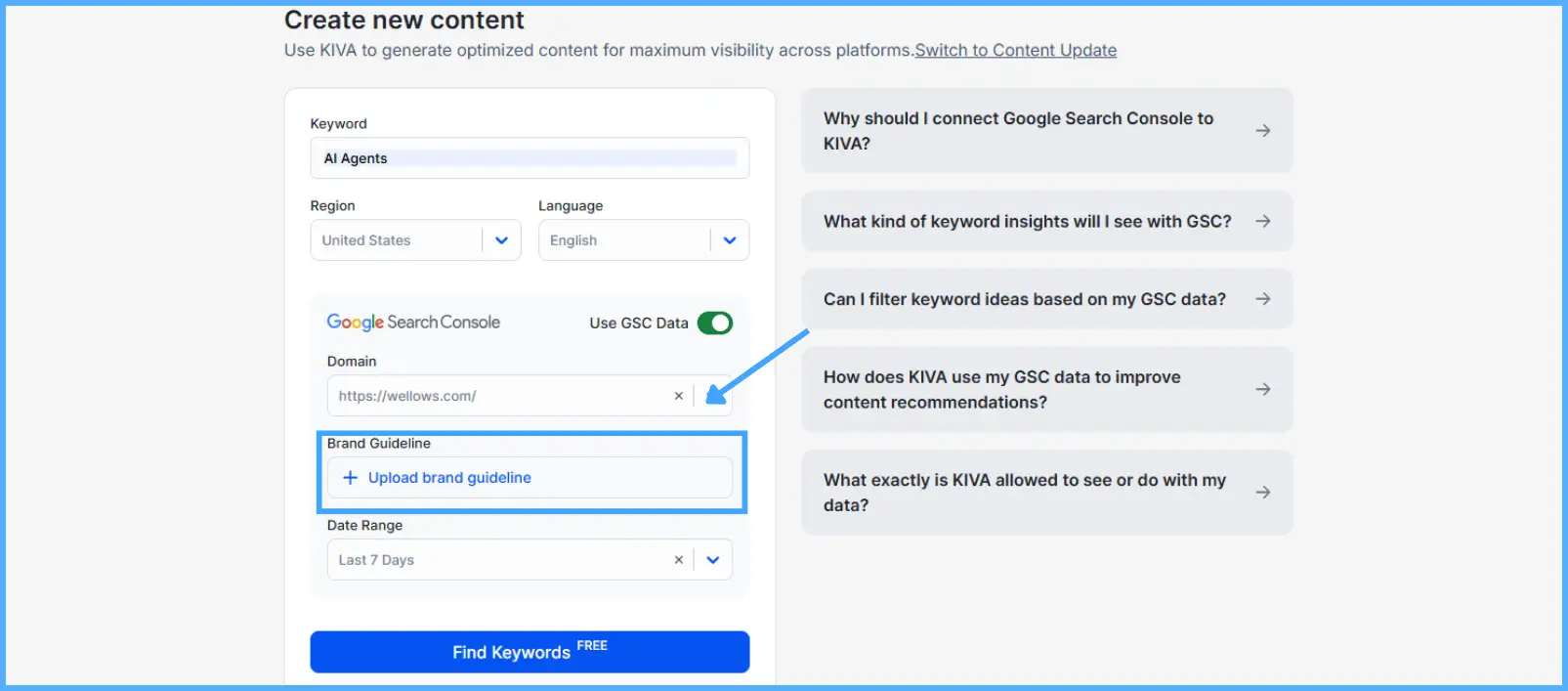
Instead of rewriting from scratch, you can transform stiff drafts into content that feels authentic and trustworthy. Early-stage Tech startups
often struggle with tone. Applying AI + brand style guides helps them maintain authenticity while scaling.
6- How Do SERP and People Also Ask Insights Boost Visibility
Search engine results pages (SERPs) show which formats and structures win visibility. Featured snippets, lists, and AI overviews highlight the kind of answers search engines prefer. If your content does not match these patterns, it struggles to reach the top.
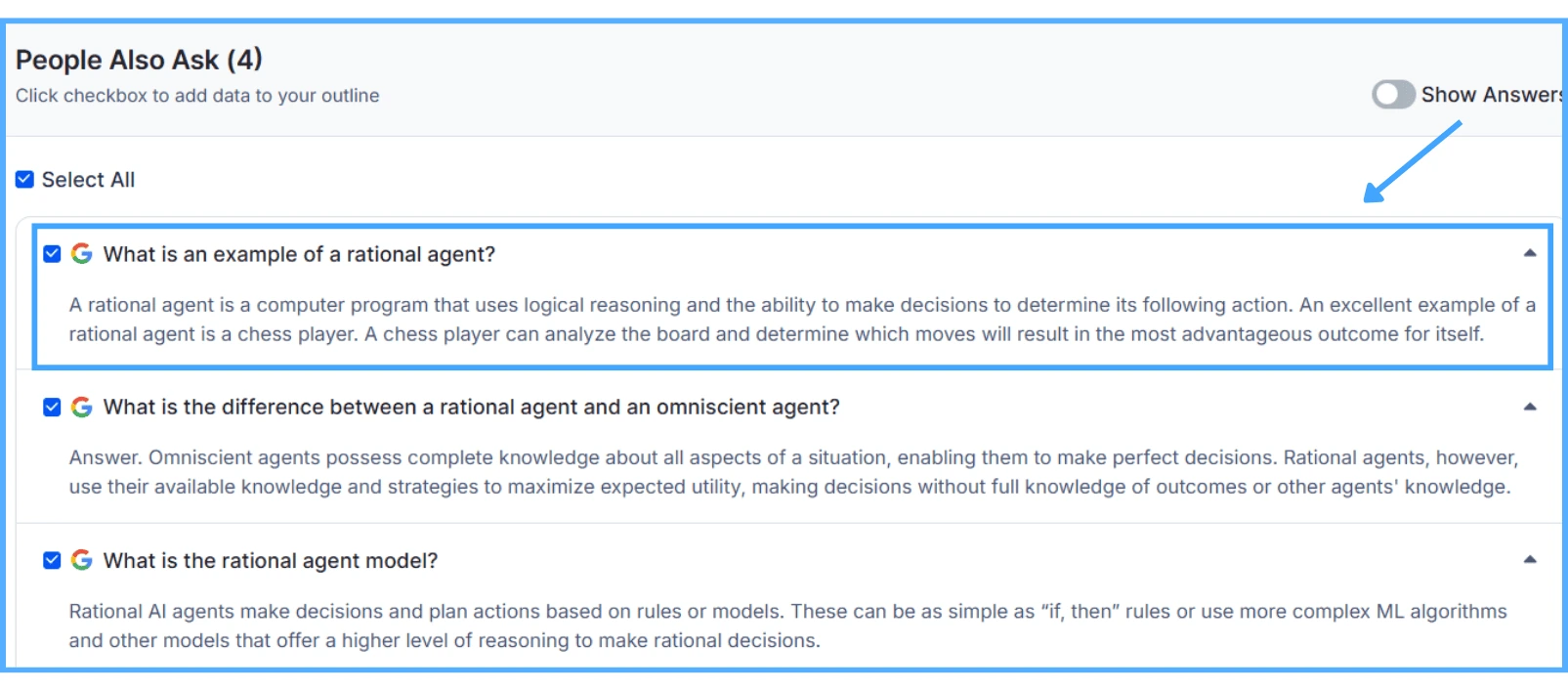
“People Also Ask” (PAA) questions add another layer. They uncover real user queries, which expand topical depth and make content more useful. Addressing PAA directly increases the chance of ranking in snippets and aligning with AI summaries. This is especially valuable for an AI content strategy for e-commerce websites, where visibility against major competitors is critical.
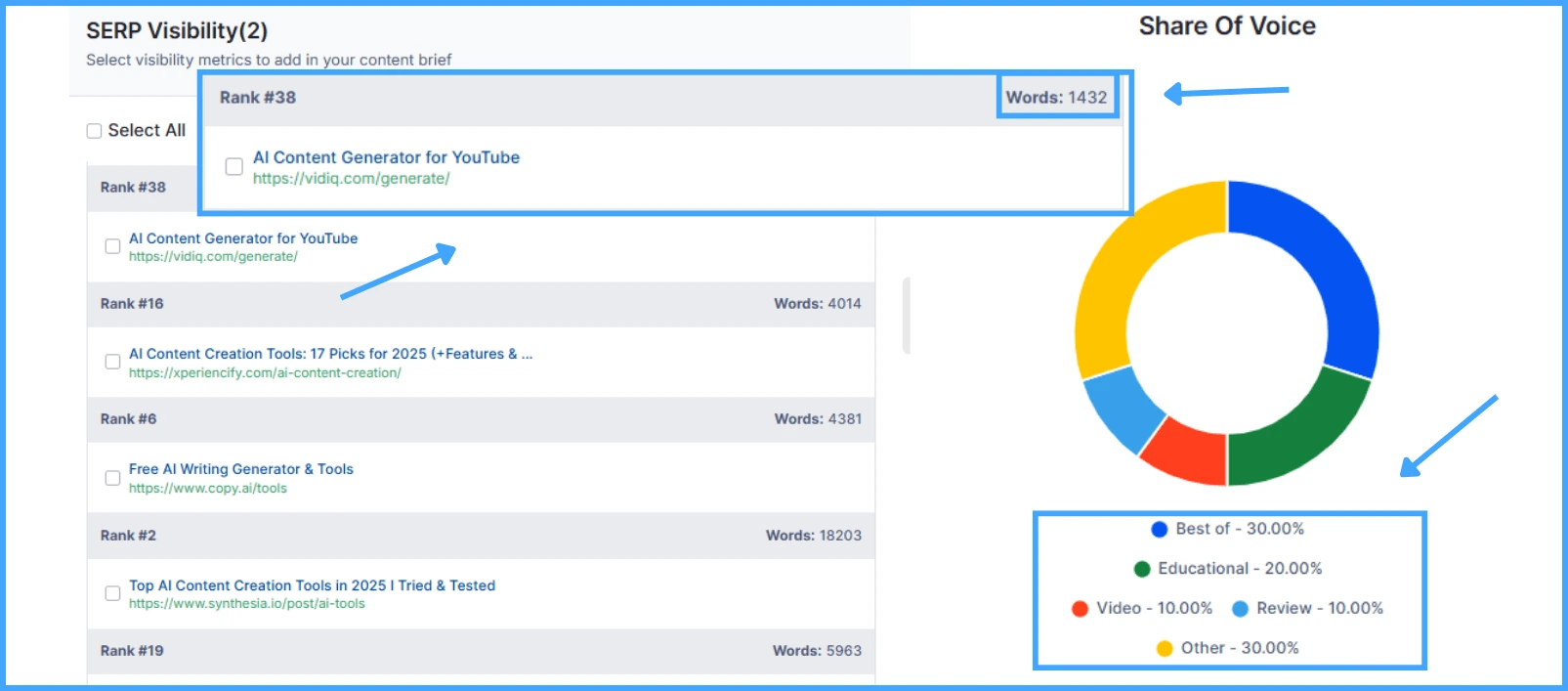
KIVA provides this insight with its SERP Visibility and PAA features. They show live SERP structures, related questions, and answer previews. With this data, you can structure content around proven formats, ensuring your pages align with both search engines and AI-driven results.
7- Why Should Content Strategies Be Refreshed Daily in AI-Driven SERPs
Static strategies age quickly. Search trends shift, competitors publish new material, and AI-driven results update with fresh queries. If your plan stays unchanged for weeks, it risks missing key opportunities and falling into content decay as rankings, impressions, and visibility quietly decline. This is why content strategies using artificial intelligence must be dynamic, not fixed.
Refreshing daily ensures your content pipeline stays aligned with what audiences are searching for right now. It helps you capture trending questions, adapt to new formats, and maintain visibility against rivals. These updates act as AI content tactics that keep output relevant and competitive.
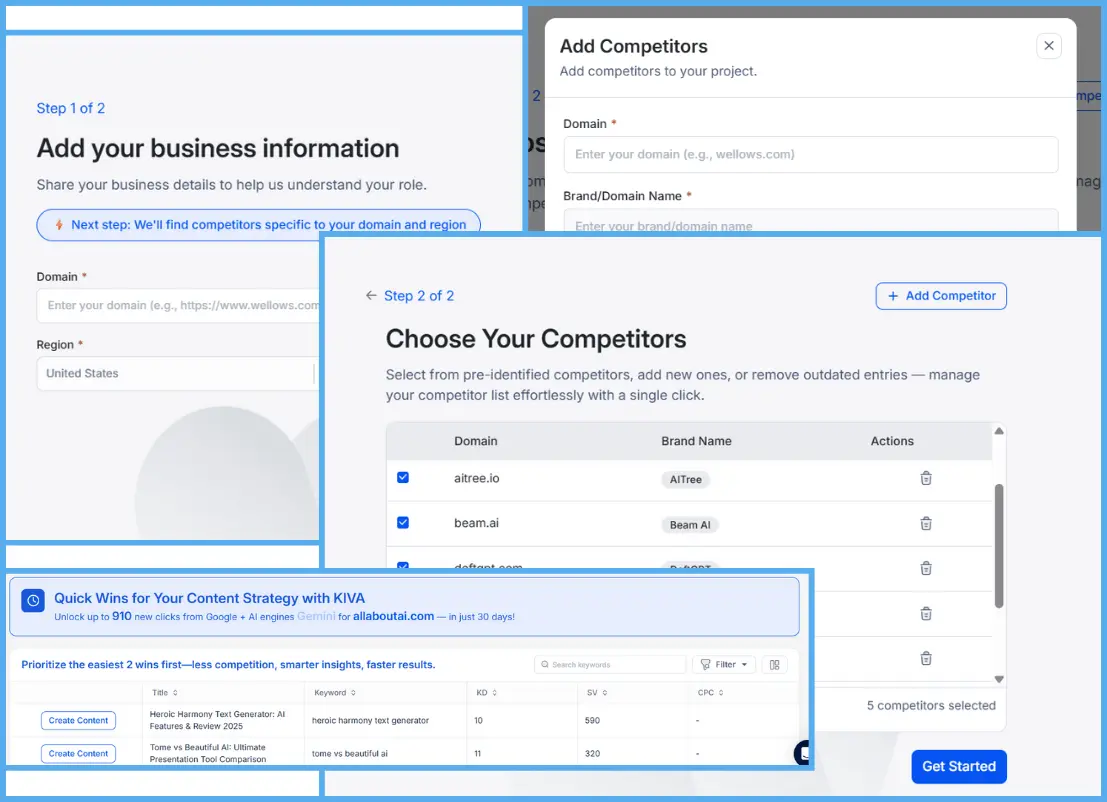
KIVA simplifies this through its Quick Wins feature. Suggestions reset every 24 hours, pulling from live SERPs and competitor data. Each refresh delivers new, ranked opportunities with editable titles, ready to expand into long-form drafts.
This turns strategy into a living process that allows you to write content for people first by capturing trending human concerns and updating old statistics with fresh, human-verified data.
What Are the Biggest Challenges With AI-Driven Strategies (and Fixes)
AI-driven workflows speed up content creation, but they also introduce risks. Without the right guardrails, output may lack quality or consistency. Below are the main issues marketers face and how to solve them.
Challenge 1: Losing brand voice
AI often produces text that feels generic. This weakens trust and recognition.Challenge 2: Content overlap
Targeting keywords without context creates duplicate posts and cannibalization.Challenge 3: Fact-checking AI output
AI tools can generate incorrect or unsupported claims.These examples show what are the challenges of implementing AI in content marketing and how a structured system ensures you overcome them.
What Expert Tips Make AI-Driven Strategies Work Better in 2026
AI works best when paired with simple, repeatable habits. Experts suggest the following practices to keep strategies focused and effective:
Start small, then scale.
This is especially useful when asking are AI content strategies suitable for small businesses.
Pair AI with human editing.
Monitor results and refine.
By following these tips, teams get speed and scale from AI while still protecting quality and trust.
FAQs
- Content Strategy Checklist for 2026: View the Content Strategy Checklist – A roadmap to align goals, keywords, and workflows.
- Content Marketing Plan Checklist: View the Content Marketing Plan Checklist – Covers campaign planning, distribution, and performance tracking.
- Blog Post Checklist: View the Blog Post Checklist – Ensures each article is optimized for SEO, readability, and conversions.
By combining these checklists with AI-driven strategies, you’ll move from planning to execution faster, with consistent results.
Conclusion
How can you build a 7-day AI-powered content strategy fast?
The seven strategies outlined above competitor gap analysis, keyword clustering, AI-powered briefs, faster drafting, humanizing, SERP insights, and daily refreshes show how to use AI for practical, structured results. Together, they answer a key question: how do AI content strategies affect SEO? They improve visibility, reduce overlap, and help your brand respond faster to changing search behavior.
The value is clear: AI accelerates execution, but humans guide direction. By combining automation with oversight, you get speed without losing trust or strategy.
With KIVA’s Quick Wins, you can generate a 7-day content plan in just 30 seconds and expand it into full articles in minutes.