In my years of developing content strategies for growth-focused brands, I’ve learned that having a clear Content Strategy Checklist and a well-structured approach isn’t just helpful—it’s essential to building consistent, high-performing marketing systems, whether you’re executing in-house or partnering with Content Marketing Agencies to scale production and performance.
That’s why I created this comprehensive checklist: to help brands align content with business objectives, forge stronger audience connections, and seize untapped market opportunities with confidence
Did you know?
Over half (58%) fall into the moderately effective category and many struggle due to poor goal alignment (42%), misaligned customer journey planning (39%), and weak audience research (29%).
This framework was built to close those exact gaps. It has consistently driven higher engagement, built lasting brand authority, and delivered measurable business outcomes for my clients—across industries and use cases.
I’m sharing these seven strategic phases as a practical roadmap to guide your content decisions, maintain consistency across channels, and ultimately, maximize your return on content investment.
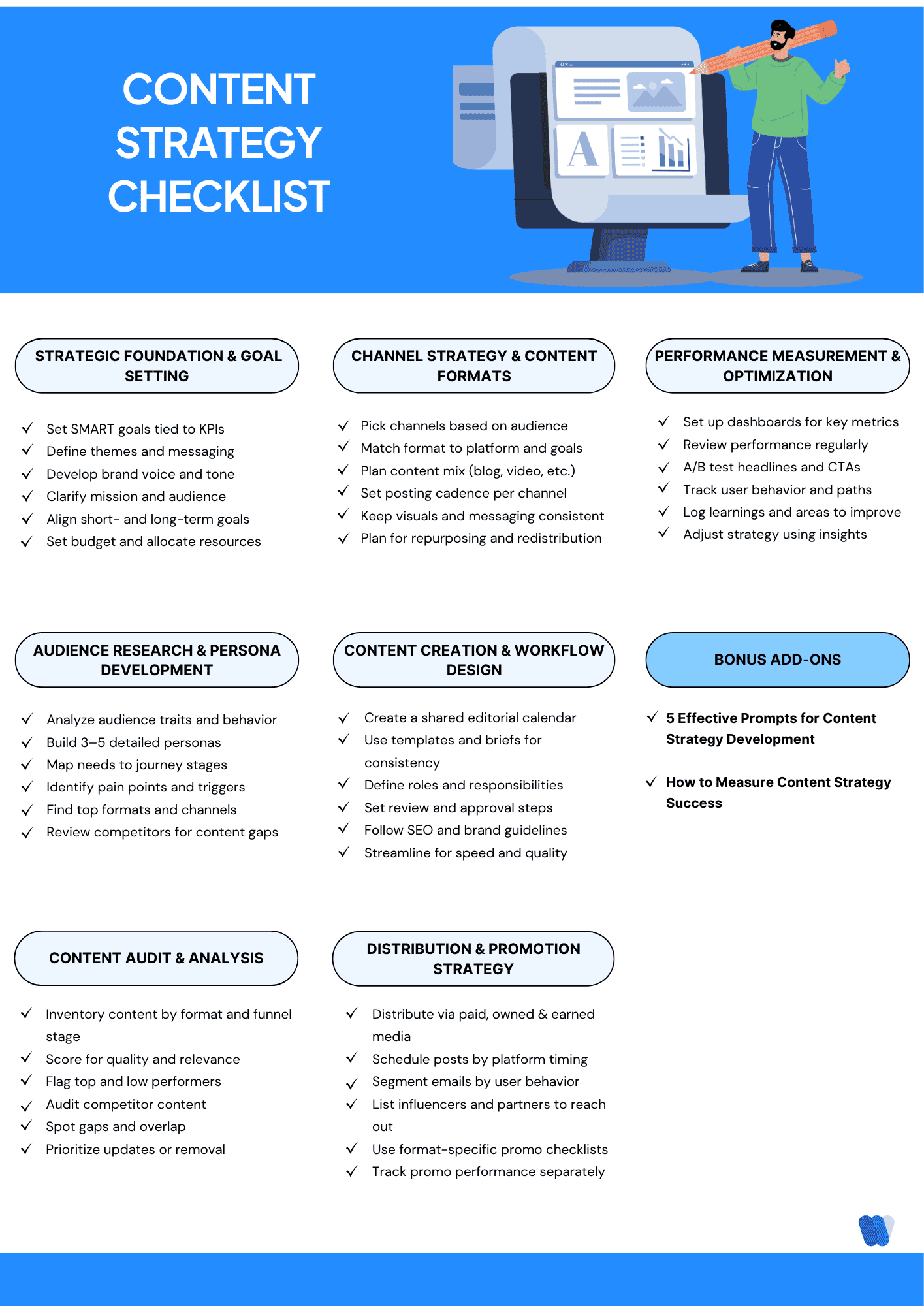
What is a Content Strategy?
A content strategy is a living, documented plan that outlines how an organization will strategically use content to achieve specific business objectives while genuinely meeting audience needs.
It encompasses the thoughtful planning, creative development, strategic distribution, and ongoing management of all content assets across channels.
An effective content strategy answers key questions: what content to create, why it matters to your audience, how it supports business goals, where to publish it, when to deliver it, and how to measure its performance.
Essential Components of a Content Strategy Checklist
A strong content strategy is more than a plan—it’s a framework that aligns business goals with audience needs. Below are the core components every checklist should cover to ensure your strategy delivers real impact.
1.Audience Insights
Start by deeply understanding your audience. Go beyond demographics to explore their pain points, motivations, and content habits. Audience personas help you craft messages that truly resonate.
2.Goal Alignment
Set clear and measurable goals, whether that’s brand awareness, engagement, or conversions. Every content piece should directly connect back to a business objective.
3.Planning and Workflow
Consistency drives results. Use a content calendar and clear workflows to ensure steady publishing and avoid reactive content creation.
4.Content Quality and Value
Focus on delivering original, well-researched, and valuable content that solves problems or provides insights. Quality content builds trust and keeps your audience coming back.
5.SEO Integration
Optimize your content for visibility. Use targeted keywords naturally, refine titles and metadata, and structure content for both users and search engines. Be mindful of issues like content cannibalization in SEO, and explore AI-driven content strategies that can help you stay competitive in evolving SERPs.
6.Promotion Strategy
Don’t let your content sit idle. Promote it across social, email, and other relevant channels. Repurpose formats and leverage partnerships to expand reach.
7.Engagement and Interaction
Treat content as a conversation. Encourage comments, respond to feedback, and highlight user-generated contributions to foster community and loyalty.
8.Performance Tracking
Measure impact with analytics. Track engagement, conversions, and traffic, then refine your strategy based on data-driven insights.
9.Adaptability and Innovation
The digital landscape evolves quickly. Stay updated on trends, adopt new formats, and experiment with emerging channels to keep your strategy fresh and competitive.
These components provide the foundation of a winning content strategy. To make them actionable, I’ve turned them into a structured Content Strategy Checklist in the next section, giving you step-by-step items you can directly apply to your business.
Content Strategy Checklist for SEO in 2025
To build a content strategy that actually drives business results, you need more than theory—you need a step-by-step checklist. This content strategy checklist outlines the core actions that ensure your content stays aligned with business goals, connects with your audience, and delivers measurable ROI.
1. Strategic Foundation & Goal Setting
Every winning content strategy starts with clarity. Defining your vision, purpose, and goals ensures that your content aligns directly with your broader business objectives.
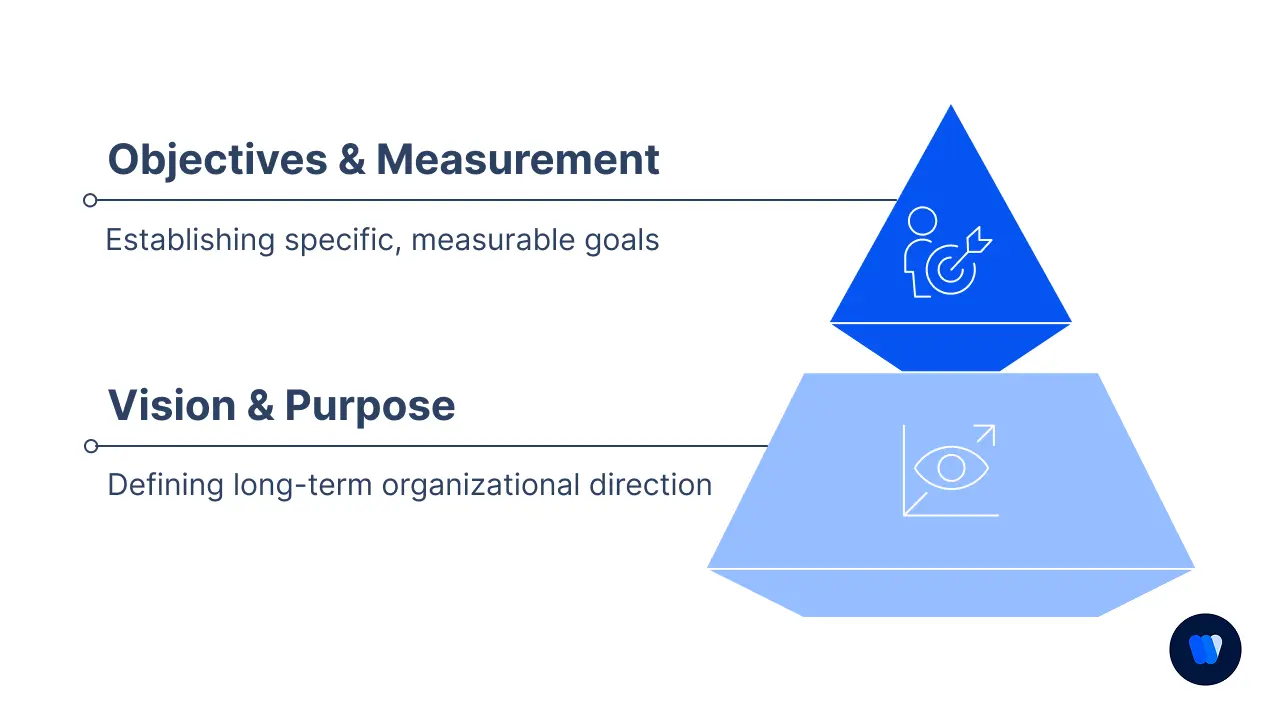
Vision & Purpose Definition
- Define the organization’s mission, vision, and core values as they relate to content
- Establish a unique value proposition for the content strategy that differentiates it from competitors
- Identify 3-5 key content themes that align with brand identity and audience interests
- Document a distinctive brand voice and storytelling approach based on brand personality
- Create a positioning statement that articulates how the content will uniquely serve the audience
Objectives & Measurement Planning
- Establish specific, measurable content marketing objectives tied to business outcomes
- Align content goals with broader business objectives to ensure executive buy-in
- Identify precise key performance indicators (KPIs) that will accurately measure content success
- Set both short-term (3-6 months) tactical goals and long-term (1-2 years) strategic content goals
- Determine a realistic content budget and resource allocation based on expected ROI
Tool Tip: My SMART Goal Framework
When setting content goals, I use this SMART framework to ensure clarity and accountability:
| SMART Element | Example Application |
|---|---|
| Specific | Increase blog traffic from financial professionals |
| Measurable | Achieve 25% growth in organic sessions |
| Achievable | Publish 2 in-depth articles weekly |
| Relevant | Focus on topics driving qualified leads |
| Time-bound | Complete within 6 months |
How Do I Align My Content Strategy Checklist with My Business Goals?
For your content strategy to be truly effective, every action should tie back to your company’s larger objectives. This alignment ensures that what you publish not only attracts attention but also drives measurable business impact.
Define Clear Business Objectives
Begin by clarifying the core outcomes your business is aiming for. These could include bringing in new customers, encouraging product adoption, reducing support costs, or tapping into new markets. Having clear objectives helps guide your entire content approach.
Set SMART Content Goals
Turn those objectives into SMART goals—Specific, Measurable, Achievable, Relevant, and Time-bound. Instead of vague ambitions like “improve support,” aim for something concrete, such as: “Cut support inquiries by 20% in six months through updated FAQ and troubleshooting content.”
Understand Your Target Audience
Get to know your audience in detail. Build buyer personas that outline their demographics, preferences, pain points, and motivations. This makes it easier to create content that speaks to their challenges and feels relevant to their needs.
Audit Existing Content
Review what you already have. Identify strong performers, find underperforming assets that need updates, and spot gaps that require new content. Use metrics like traffic, engagement, and conversions to make data-driven decisions.
Develop a Content Calendar
Plan your content in advance with a clear calendar. Map out topics, publishing dates, and responsibilities to ensure consistency. A calendar keeps your strategy structured and ensures every piece lines up with your business priorities.
Create Valuable Content
Produce content that directly serves both your audience and your objectives. Every blog, video, or resource should have a clear purpose—whether it’s educating, converting, or retaining—and should include an effective call to action.
Measure and Optimize Performance
Track how well your content is performing with KPIs such as organic traffic, engagement levels, conversions, or customer retention. Use these insights to refine your approach, ensuring your strategy stays aligned as business goals evolve.
When each step in your content checklist ties back to business goals, your strategy becomes more than just marketing—it becomes a direct driver of growth and measurable success.
2. Audience Research & Persona Development
Content resonates only when it speaks to the right people. By understanding your audience’s pain points, preferences, and journey stages, you create resources that engage and convert.
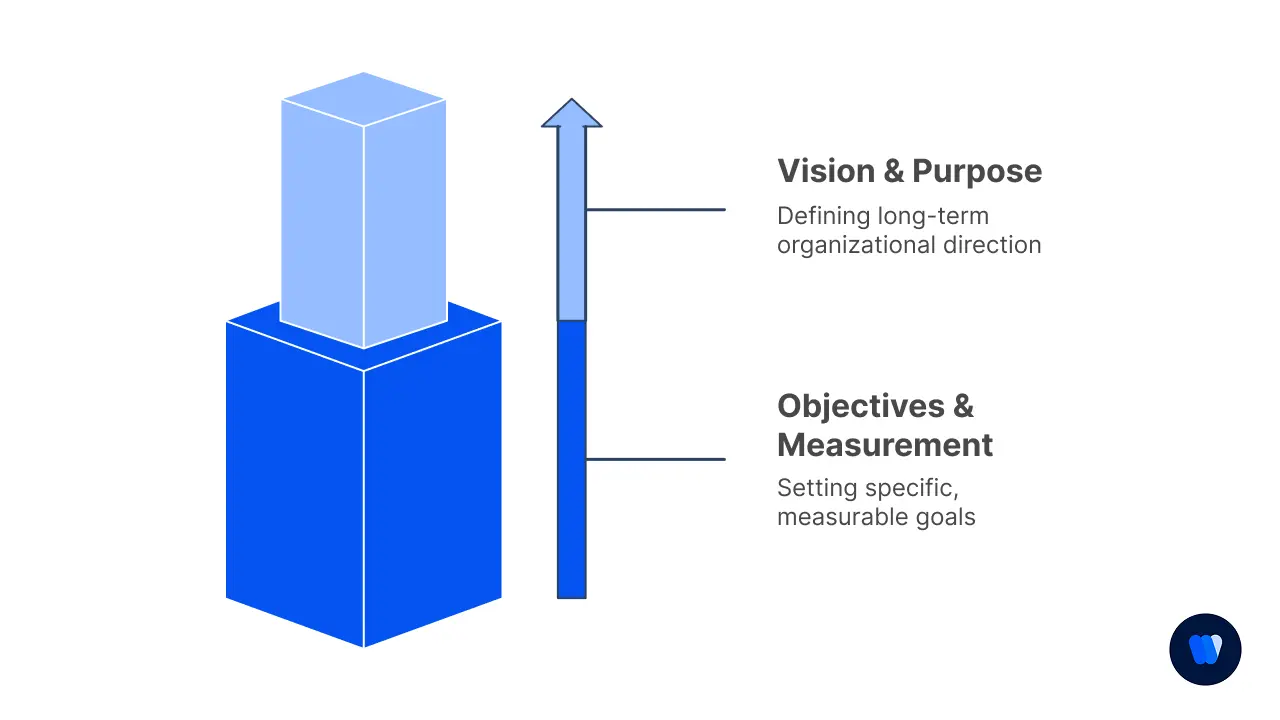
I’ve learned that deeply understanding my audience is crucial for creating relevant content that resonates and drives engagement.
Data Collection & Analysis
- Gather comprehensive demographic data (age, location, income) about my target audience
- Research psychographic information (interests, values, lifestyle) through surveys and interviews
- Analyze existing audience behavior using analytics tools to identify content preferences
- Conduct in-depth surveys, interviews, or focus groups with current customers to uncover needs
- Analyze competitors’ audiences for additional insights and opportunity gaps
Persona Creation & Journey Mapping
- Create 3-5 detailed buyer personas with comprehensive profiles beyond basic demographics
- Map specific content needs to each stage of the buyer’s journey for each persona
- Identify pain points and challenges for each persona through customer interviews
- Document content preferences and consumption habits by persona to guide format choices
- Develop user stories to guide long form content creation for each persona at different journey stages
Technical Note: My Research Methods Matrix
| Research Method | Best For | Tools I Use | Output Format |
|---|---|---|---|
| Quantitative | Statistical patterns | Google Analytics, Survey Monkey | Data dashboards |
| Qualitative | Emotional drivers | Interviews, Focus groups | Thematic analysis |
| Social Listening | Trending topics | Brandwatch, Hootsuite | Conversation maps |
| Search Analysis | Question discovery | SEMrush, AnswerThePublic | Topic clusters |
| Competitor Analysis | Gap identification | SpyFu, SimilarWeb | Opportunity matrix |
3. Content Audit & Competitive Analysis
Before planning new content, evaluate what you already have and study your competitors. This step uncovers gaps, strengths, and opportunities for differentiation.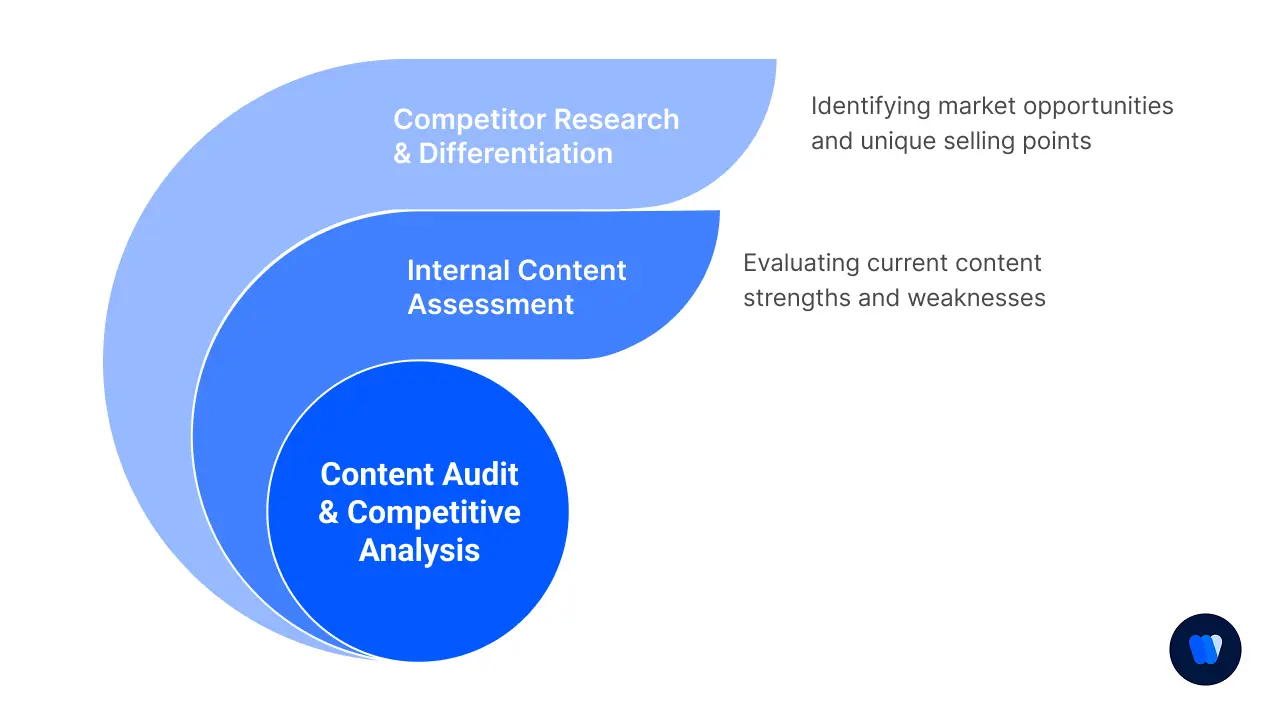
I evaluate existing content and research competitors to identify opportunities and gaps that can be strategically filled.
Internal Content Assessment
- Inventory all existing content assets across channels using a structured database
- Analyze content performance using web analytics, social metrics, and engagement data
- Categorize content by type, topic, target persona, and buyer’s journey stage
- Identify content gaps and opportunities by mapping current assets against persona needs
- Evaluate content for quality, relevance, and effectiveness using a consistent scoring system
Competitor Research & Differentiation
- Research 3-5 main competitors’ content strategies across all their channels
- Analyze competitors’ top-performing content using different analysis tools
- Identify competitors’ content gaps I can capitalize on with my unique expertise
- Evaluate competitors’ content quality and engagement levels using consistent metrics
- Develop a unique angle that differentiates my content based on competitive insights
Framework: My Content Matrix Evaluation
I evaluate all content using this performance/relevance matrix to guide next steps:
| Performance | Relevance | Recommended Action |
|---|---|---|
| High | High | KEEP & AMPLIFY • Promote across channels • Update regularly • Create related content |
| High | Low | REPURPOSE • Update for current needs • Extract valuable elements • Redirect traffic |
| Low | High | OPTIMIZE • Improve SEO factors • Enhance visuals/structure • Strengthen calls to action |
| Low | Low | REMOVE/ARCHIVE • Delete or noindex • Redirect if necessary • Document lessons learned |
4. Channel Strategy & Content Types
Choosing the right channels and formats is critical for reach. From LinkedIn to YouTube, this step ensures your content lives where your audience already spends time.
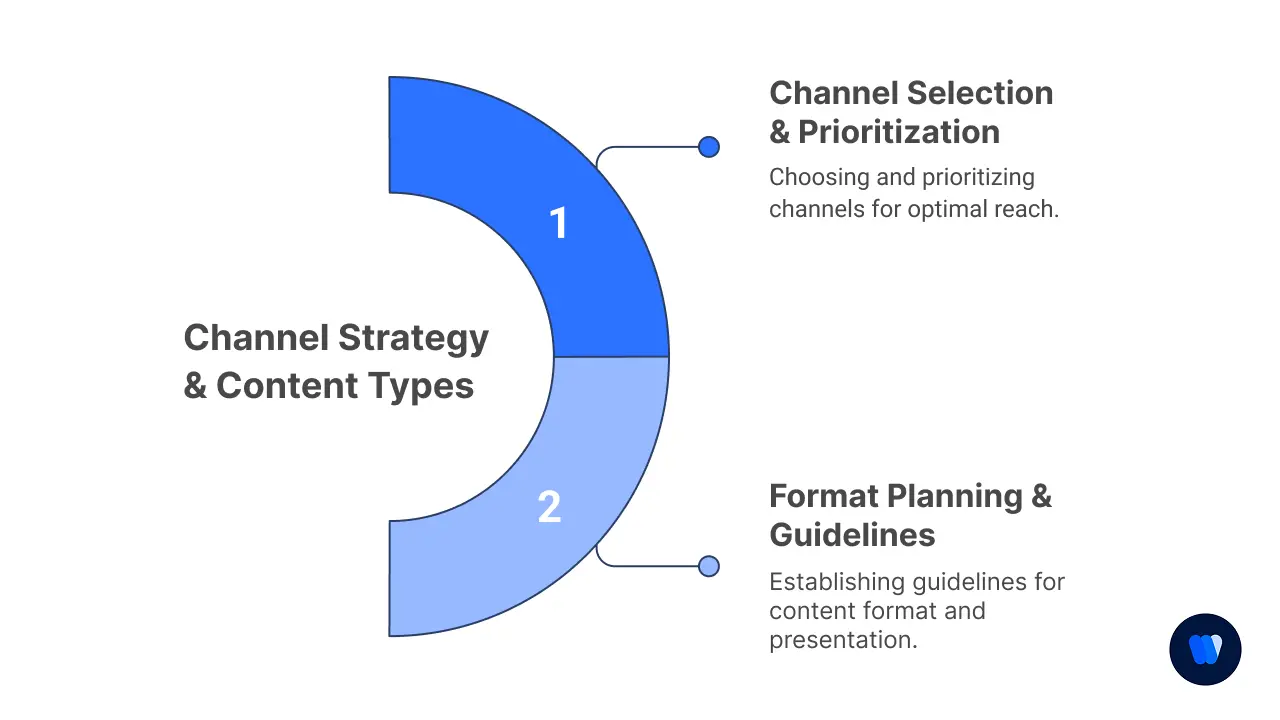
I determine the best channels and content formats for my audience to maximize reach and engagement.
Channel Selection & Prioritization
- Identify which platforms my target audience uses most through research and analytics
- Determine optimal content types for each platform based on audience behavior and platform mechanics
- Create channel-specific strategies that leverage each platform’s unique advantages
- Establish channel-specific goals and KPIs that align with overall content objectives
- Develop a multi-channel distribution plan with clear workflows for each channel
Format Planning & Guidelines
- Develop a content mix strategy balancing articles, videos, infographics, and other formats
- Create detailed guidelines for content adaptation across platforms to maintain consistency
- Plan efficient content repurposing strategies to maximize the value of each piece
- Define voice, tone, and style guidelines specific to each channel while maintaining brand identity
- Establish visual branding requirements for different content formats to ensure recognition
Tool Tip: My Channel Prioritization Matrix
I score each channel using this matrix to determine where to focus my efforts:
| Channel | Audience Presence (1-5) | Engagement Potential (1-5) | Competition Level (1-5, inverted) | Resource Requirements (1-5, inverted) | Goal Alignment (1-5) | Total Score |
|---|---|---|---|---|---|---|
| 5 | 4 | 3 | 2 | 5 | 19 | |
| 4 | 5 | 2 | 3 | 3 | 17 | |
| 5 | 4 | 4 | 4 | 5 | 22 | |
| Blog | 4 | 3 | 3 | 2 | 5 | 17 |
| YouTube | 3 | 5 | 1 | 1 | 4 | 14 |
5. Content Creation & Production Workflow
Great strategies fail without efficient execution. Streamlining workflows matter even more when content optimization for AI visibility becomes part of the process, since stronger structure and sharper updates compound over time.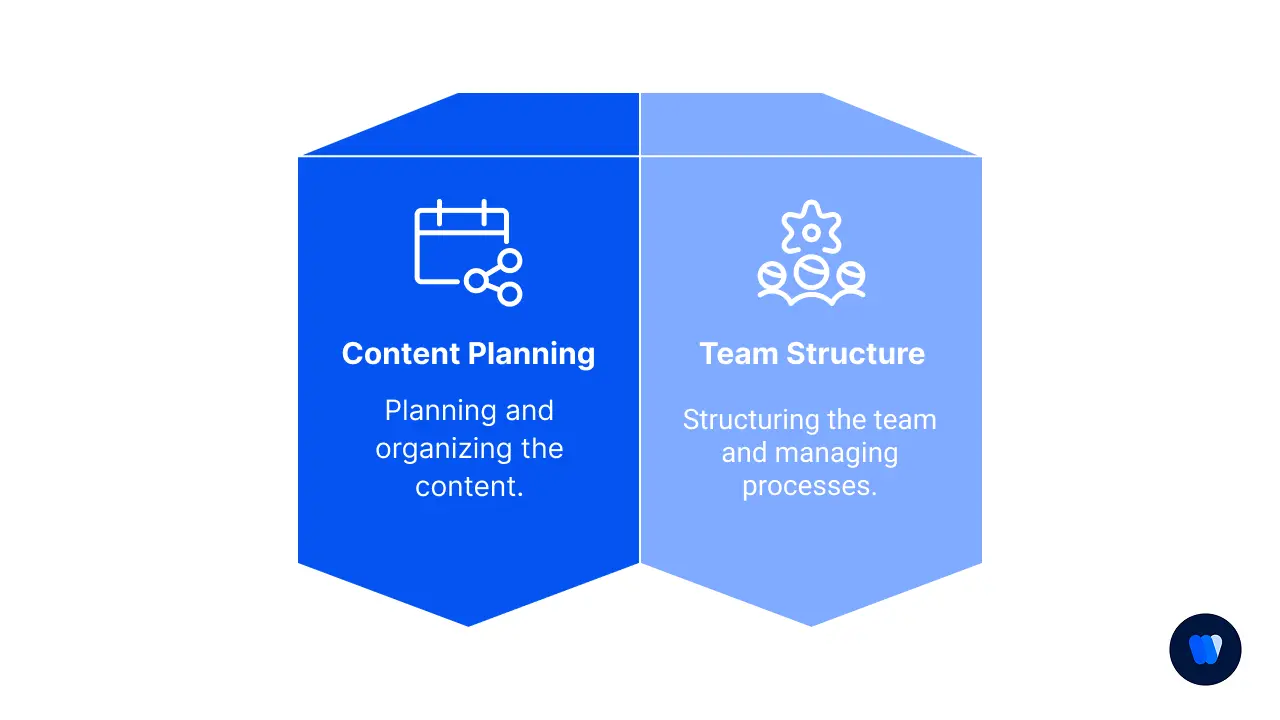
I develop efficient processes for long form content creation to ensure consistency, quality, and sustainable production.
Content Planning & Organization
- Create a detailed content calendar with a publishing schedule across all channels
- Develop topic clusters and content themes that build authority in key subject areas
- Establish comprehensive SEO guidelines and keyword strategies for optimal discoverability
- Create reusable content templates and style guides to ensure consistency and efficiency
- Implement a content management system (CMS) with clear taxonomies and workflows
Team Structure & Process Management
- Establish clear content creation workflows with defined steps and responsibilities
- Set up streamlined approval processes that balance quality control with production speed
- Assign specific team roles based on skills and strengths to maximize productivity
- Establish quality control processes with checklists for consistency across team members
- Create a sustainable content production cadence that prevents burnout while meeting goals
Technical Note: My Production Efficiency System
I use these tools to streamline the content production workflow:
| Production Stage | Tool | Purpose | Integration |
|---|---|---|---|
| Planning | Airtable | Editorial calendar | Google Calendar |
| Creation | Google Docs | Collaborative writing | Grammarly |
| Design | Canva Pro | Visual content | Brand kit integration |
| Asset Management | Dropbox | Central repository | Version control |
| Workflow | Asana | Task management | Calendar sync |
6. Distribution & Promotion Strategy
Publishing content is just the beginning—distribution is what makes it visible. Strategic use of SEO, email, communities, and paid partnerships maximizes reach and ROI.
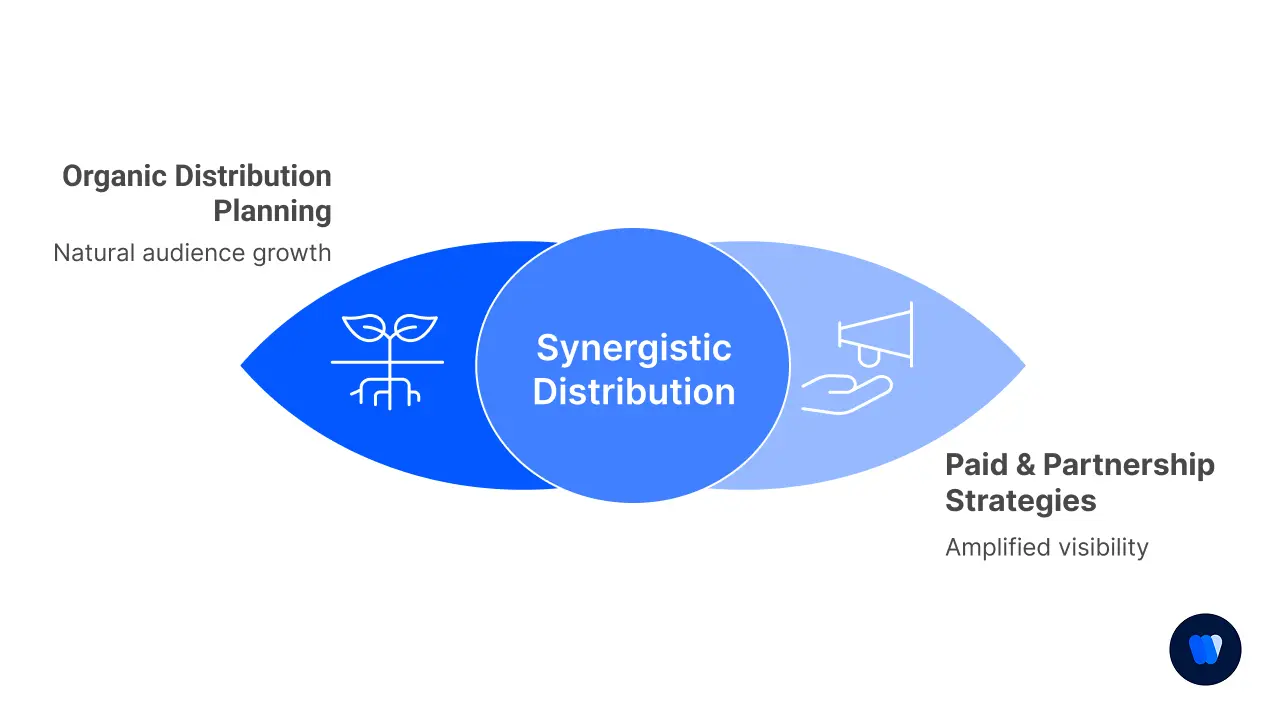
I plan strategic approaches to amplify content reach and engagement across appropriate channels.
Organic Distribution Planning
- Create a comprehensive content promotion checklist customized for each content type
- Develop an SEO strategy focusing on both on-page optimization and strategic link building
- Set up strategic social media sharing schedules optimized for each platform’s peak times
- Create segmented email marketing sequences that deliver relevant content to each audience
- Plan community engagement tactics to increase reach through authentic conversation
Paid & Partnership Strategies
- Plan targeted paid promotion tactics with specific audience segments and goals
- Identify strategic influencer partnerships based on audience overlap and brand alignment
- Develop content syndication opportunities with complementary publications
- Create specific strategies for encouraging user sharing through incentives and design
- Establish mutually beneficial cross-promotion partnerships with complementary brands
What Content Distribution Channels Are Most Effective in 2025?
Creating valuable content is only half the job—getting it in front of the right people is what drives impact. In 2025, the distribution landscape has shifted toward channels that balance scale, engagement, and audience trust. Here are the ones worth focusing on:
- Social Media Platforms
Social remains a powerhouse for visibility. Platforms like LinkedIn, TikTok, Instagram, and Facebook help brands share diverse content formats—from carousels to short-form video. Short video in particular has exploded, making it a must-have in any distribution mix. - Email Marketing
Email continues to deliver one of the highest ROIs. With strong segmentation and personalization, you can nurture relationships, build loyalty, and send content directly to people most likely to engage. - Video Content Platforms
YouTube dominates as the second-largest search engine and a go-to hub for tutorials, storytelling, and product demos. Pairing long-form YouTube videos with short-form content on TikTok or Reels widens reach across audiences. - Podcasts and Audio
The rise of podcasts shows no signs of slowing down. Audio content allows you to reach audiences during daily routines—commutes, workouts, or downtime—making it a channel with strong stickiness and intimacy. - Content Syndication
Republishing content on third-party sites helps amplify reach, build backlinks, and boost SEO. This approach also establishes thought leadership when your insights are featured on high-authority domains. - Influencer Marketing
Collaborating with creators and industry influencers lets you tap into established, trusted audiences. It’s an effective way to build credibility while extending your content’s reach. - Webinars and Live Events
Interactive formats like webinars and live streams deepen relationships. They’re perfect for sharing expertise, engaging in Q&A, and creating real-time value that audiences remember. - Search Engine Optimization (SEO)
SEO remains a backbone for discoverability. Optimizing for semantic search, fast-loading pages, and mobile-first experiences ensures your content attracts steady, high-intent traffic long after publication. - Content Distribution Apps
Tools that automate cross-platform publishing ensure consistency and save time. They help maintain brand presence across multiple channels without spreading resources too thin.
By combining these channels strategically, brands can meet audiences where they spend time, expand their reach, and build stronger long-term visibility in 2025.
Framework: My PESO Model Implementation
I structure all distribution efforts using this modified PESO model:
| Media Type | My Specific Tactics | Success Metrics | Time Investment |
|---|---|---|---|
| Paid | • Search ads • Social promotion • Sponsored content |
• CPC • Conversion rate • ROI |
20% |
| Earned | • Media pitches • Expert quotes • Guest posting |
• Placements • Backlinks • Authority |
25% |
| Shared | • Community engagement • User content • Partner amplification |
• Shares • Engagement • Community growth |
35% |
| Owned | • Website/blog • Email newsletters • Resource library |
• Traffic • Subscriptions • Time on page |
20% |
7. Performance Measurement & Optimization
To stay effective, your strategy must evolve. Regular performance tracking and optimization ensure your content continues to deliver measurable results over time.
I continuously measure and improve content strategy based on data and insights to maximize ROI.
Tracking & Analytics Implementation
- Set up comprehensive analytics tools and tracking systems across all content channels
- Create a custom reporting dashboard for key metrics that aligns with strategic objectives
- Schedule regular content performance reviews at tactical (weekly) and strategic (quarterly) levels
- Analyze content ROI and cost-effectiveness to optimize resource allocation
- Implement multi-touch attribution tracking to understand the full customer journey
Iteration & Continuous Improvement
- Implement systematic A/B testing for content elements to continuously optimize performance
- Closely monitor audience engagement signals to identify evolving preferences
- Collect qualitative data through user feedback, surveys, and direct conversation
- Document learnings and best practices in a knowledge base accessible to the whole team
- Update my content strategy quarterly based on performance data and market changes
Tool Tip: My Content Performance Scorecard
I rate each content piece using this scorecard to identify success patterns:
| Performance Category | Metrics | Weight | Scoring System |
|---|---|---|---|
| Traffic Generation | Sessions, users, views | 20% | 1-5 scale vs. benchmarks |
| Engagement | Time on page, bounce rate, scroll depth | 25% | 1-5 scale vs. benchmarks |
| Conversion | CTR, form fills, downloads | 30% | 1-5 scale vs. benchmarks |
| Amplification | Shares, backlinks, mentions | 15% | 1-5 scale vs. benchmarks |
| SEO Performance | Rankings, featured snippets, CTR | 10% | 1-5 scale vs. benchmarks |
How Often Should I Review and Update My Content Strategy Checklist?
To keep your content strategy effective, it’s important to revisit your checklist on a regular basis. A smart approach is to schedule a full review every quarter. This helps you measure performance, uncover gaps, and adjust your strategy in line with shifting audience preferences or market trends.
In addition to quarterly reviews, conducting a full content audit every 6 to 12 months is highly valuable. These audits allow you to assess whether your content is still accurate, optimized, and meeting SEO best practices. Top-performing pages may only need small updates, while outdated or weaker pieces may require complete rewrites.
For websites with large volumes of content or industries that evolve quickly, monthly mini-audits can be a practical solution. Focusing on high-priority categories or revenue-driving pages ensures that critical content stays fresh and competitive.
Establishing a consistent review cycle ensures your checklist remains useful and aligned with your long-term goals.
- Audience Analysis Prompt:: “Based on our target audience of [audience demographics], what are the top 3 pain points they experience related to [industry/subject], and what content formats would best address these challenges at each stage of their buyer’s journey?”
- Content Gap Analysis Prompt:: “Compare our existing content inventory to our competitors [competitor names] and identify the top 5 topics or content types they’re succeeding with that we haven’t adequately covered yet.”
- Content Optimization Prompt:: “Analyze our [content piece] performance data and recommend 3 specific improvements to increase its engagement rate and conversion potential for our [target persona].”
- Channel Strategy Prompt:: “Given our goals of [specific goals] and audience of [target audience], which 3 content distribution channels should we prioritize in the next quarter, and what specific content formats would perform best on each?”
- Content Repurposing Prompt:: “Our [content piece] has performed exceptionally well. Suggest 5 different ways we can repurpose this content across different channels to maximize its reach and impact.”
How to Measure Content Strategy Success
A high-performing content strategy isn’t defined by volume—it’s measured by outcomes. To determine whether your strategy is delivering meaningful impact, evaluate performance against clearly defined benchmarks that align with business goals.
Based on industry benchmarks and proven strategic frameworks, the following metrics are essential indicators of success:
Audience Engagement
Aim for a 20–30% increase in time on page, scroll depth, and returning visitor rates. These engagement signals show that your content is resonating with the right audience and holding their attention longer.
Lead Generation
Your content should contribute to lead acquisition. Ideally, 15–25% of all published content should directly generate leads through sign-up forms, gated downloads, or email subscriptions.
Content Performance
Approximately 70% of your published content should meet or exceed performance benchmarks, including views, shares, comments, and conversion metrics. If your output consistently underperforms, it may signal misalignment with audience intent or content quality issues.
SEO Impact
Expect to see a 25–40% increase in organic traffic within six months of implementing a targeted keyword strategy. Improvements in rankings, impressions, and click-through rates are strong indicators that your content is discoverable and aligned with search intent.
Cross-Channel Consistency
Strive for 100% consistency in voice, tone, and branding across all platforms—whether it’s your blog, LinkedIn, email campaigns, or YouTube channel. Consistency builds trust, strengthens recognition, and ensures a cohesive brand experience.
Pipeline Contribution
Content should influence 20–30% of your marketing-sourced pipeline, whether by generating new leads or assisting conversions through multiple journey stages. Attribution models and CRM integration can help quantify this contribution more accurately.
Cost Efficiency
Over time, a mature content strategy should lead to a 20–35% reduction in cost-per-lead, driven by increased reliance on organic channels and smarter content repurposing. Efficient planning and production allow you to generate more impact with fewer resources.
Strategic Alignment
Every piece of content should be mapped to at least one specific business goal. Your strategic alignment rate should be 100%, ensuring that all content supports broader organizational objectives and can be tracked in performance dashboards.
Remember: I never consider a content strategy “finished” – it’s an evolving framework that I continuously refine based on performance data, audience feedback, market changes, and evolving business objectives.
Checkout More Checklists!
- Content Marketing Plan Checklist
- Blog Post Checklist
- Keyword Research Checklist
- LLM Pattern Analysis Checklist
- Editorial SEO Style Guide Creation with LLMs Checklist
- E-E-A-T Strengthening SEO Checklist Using LLM Outputs
- On-Page SEO Content Checklist for LLM-Generated Content
- Keyword Strategy Integration for LLM SEO Checklist
- AI Visibility Deliverables Checklist for Agencies (2026 Guide)