As AI-powered search becomes part of how buyers research, compare, and shortlist vendors, I keep hearing the same concern from agency clients: AI visibility deliverables checklist for agencies’ expectations now matter as much as rankings and traffic.
That concern is valid. Industry data shows that over 60% of buyer decisions now happen before a website click, with AI summaries and zero-click answers shaping early shortlists (Search Engine Land, 2025).
In client reviews, I’ve seen agencies lose confidence not because work wasn’t done, but because results weren’t visible or explainable.
This creates a real gap. Many AI SEO agencies are doing AI visibility work, but few have clearly defined client-facing deliverables that show what was delivered, what changed inside AI answers, and why it matters to the business.
In this guide, I’m sharing a clear, client-ready AI visibility deliverables checklist for agencies based on how I document AI visibility work for stakeholders who need fast clarity.
It focuses entirely on what agencies should deliver and report, not how audits are run, how onboarding works, or how GEO optimization is executed.
TL;DR — AI Visibility Deliverables Checklist (2026)
- AI-driven answers now influence early buying decisions, often before users click a website.
- Agencies are expected to prove visibility inside AI answers, not just report rankings or traffic.
- This checklist defines the client-facing deliverables agencies should provide when AI visibility is in scope.
- It focuses on outputs and reporting (baselines, coverage, trends, citations), not internal execution.
- The goal is to reduce ambiguity, improve retention, and show visibility progress over time in a client-ready format.
What is AI Visibility Deliverables Checklist Covers (and What It Doesn’t)
An AI Visibility Deliverables Checklist is a structured list of agency deliverables that improves how a brand is discovered, understood, and cited across AI-driven platforms like ChatGPT, Google AI Overviews, and Bing Copilot.
This AI visibility deliverables checklist for agencies outlines the tangible assets, summaries, and reporting outputs clients should receive when Search Engine Visibility is included in an agency’s scope of work.
The checklist focuses on outputs and accountability (what gets delivered, documented, and reported), not step-by-step execution. Tactical details such as audits, optimization workflows, and onboarding processes are covered separately.
It is intentionally scoped to:
- Client-facing deliverables
- Reporting artifacts and summaries
- Visibility proof over time
It does not cover:
- AI visibility audits (diagnosis)
- GEO or content optimization tactics
- Client onboarding workflows
- First-30-day processes
Each item below represents something a client can see, review, or approve, helping agencies reduce ambiguity and improve retention as AI-driven discovery grows—especially when paired with a repeatable operating system for how agencies deliver AI search visibility.
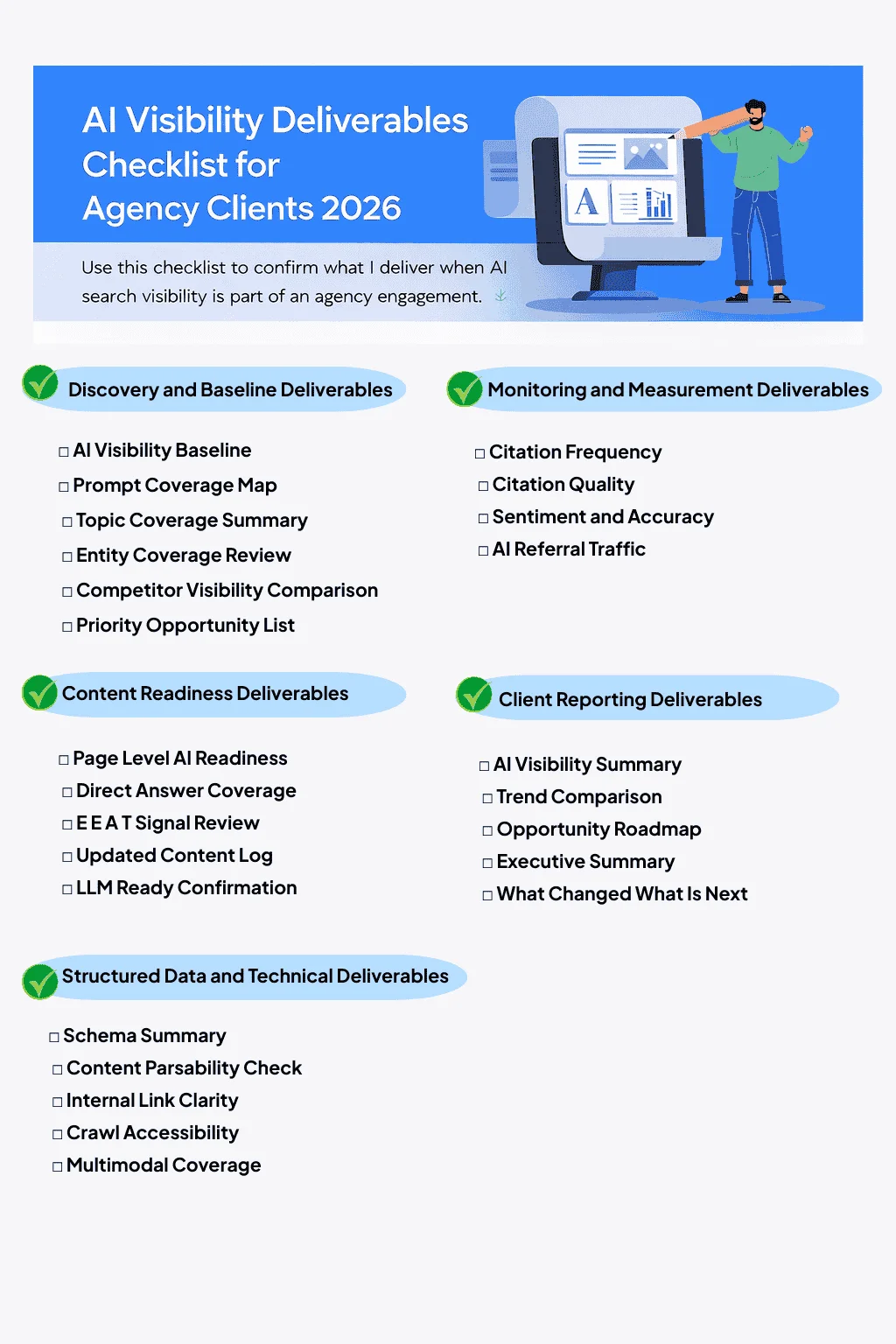
AI Visibility Deliverables Checklist for Agency Clients 2026
Use this checklist to confirm what I deliver when AI search visibility is part of an agency engagement.
Discovery and Baseline Deliverables
Use these deliverables to establish a clear baseline and identify where competitors are being recommended instead of the client.
AI Visibility Baseline: Snapshot of client brand presence across AI Overviews and major LLMs
Prompt Coverage Map: Branded and non branded prompts mapped to existing client content
Topic Coverage Summary: Coverage gaps by service category or solution
Entity Coverage Review: Validation of client brand products leadership and locations
Competitor Visibility Comparison: Side by side view of who AI recommends instead of the client
Priority Opportunity List: Ranked visibility gaps framed as opportunities
These opportunities are identified by comparing client presence against competitors across high-intent prompts, following the same methodology agencies use to find AI visibility gaps.
Content Readiness Deliverables
Use these deliverables to confirm priority pages are clear, complete, and structured for AI extraction and citation.
Page Level AI Readiness: Priority client pages reviewed and updated for AI clarity
Direct Answer Coverage: Key pages answer core questions clearly and completely
E-E-A-T Signal Review: Credibility improvements documented across priority pages
Updated Content Log: URLs updated added or consolidated with notes on changes
LLM Ready Confirmation: Core pages validated as AI readable and citation ready
Structured Data and Technical Deliverables
Use these deliverables to validate that AI and search crawlers can access, parse, and understand priority content reliably.
Schema Summary: Structured data types applied or validated across key templates
Content Parsability Check: Confirmation content is accessible in clean HTML
Internal Link Clarity: Review of intent driven internal linking and improvements
Crawl Accessibility: Confirmation search and AI crawlers can access priority pages
Multimodal Coverage: Supporting images or videos tied to key pages where needed
Monitoring and Measurement Deliverables
Use these deliverables to track visibility changes over time and detect risks like competitor dominance or misinformation early.
AI Visibility Dashboard: Centralized monitoring view across AI platforms
Share of AI Visibility: Competitive visibility tracking over time
Citation Frequency: How often the client brand is mentioned or cited
Citation Quality: Sources AI associates with the client brand
Sentiment and Accuracy: Flags for inaccurate negative or misleading mentions
AI Referral Traffic: Human traffic originating from AI surfaces where available
Ongoing monitoring reduces the risk of AI misinformation going unnoticed between reporting cycles, which is why many agencies now rely on real-time AI visibility alerts for clients.
Client Reporting Deliverables
Use these deliverables to package AI visibility work into clear, client-readable reporting that explains progress and next actions.
AI Visibility Summary: Consolidated visibility status report for the client
Trend Comparison: Period over period visibility changes across tracked queries
Opportunity Roadmap: Prioritized next actions tied to visibility gaps
Executive Summary: Plain language explanation for stakeholders
What Changed What Is Next: Narrative explaining progress and direction
How Agencies Use This AI Visibility Deliverables Checklist Internally
Agencies use this checklist as an internal operating framework to clearly define what gets delivered when AI search visibility is included in scope. It removes guesswork by turning abstract AI work into specific, reviewable outputs.
In practice, agencies rely on the checklist to:
Standardize scope: Use the checklist to define exactly what “AI visibility” includes in proposals, retainers, and client tiers—so expectations are set before delivery starts.
Align delivery teams: Turn the checklist into an internal QA reference so strategists, writers, and analysts ship the same core deliverables across every account.
Reduce retainer ambiguity: Separate deliverables from execution so clients review outcomes (summaries, logs, reports) without needing internal workflow details.
Make reporting consistent: Use the same deliverables format across accounts to simplify client updates and make progress easier to compare month-over-month.
Scale across multiple clients: Platforms like Wellows centralize AI visibility signals across Google AI Overviews and major LLMs, making it easier to convert data into repeatable, client-ready deliverables and reports for agency teams managing multiple accounts.
By separating deliverables from execution, agencies maintain clarity without overexposing internal workflows or tactical processes. This makes AI visibility easier to explain, easier to sell, and easier to retain.
Common Gaps When AI Visibility Deliverables Are Missing
When agencies don’t define AI visibility deliverables, the same seven gaps show up across accounts and quickly reduce client confidence.
1) Brand & Market Invisibility
The brand doesn’t appear consistently in AI answers for category, comparison, or “best” prompts—one of the most common issues covered in a generative engine optimization checklist for brand visibility. Competitors become the default shortlist before a prospect ever clicks a search result.
2) Competitor Dominance
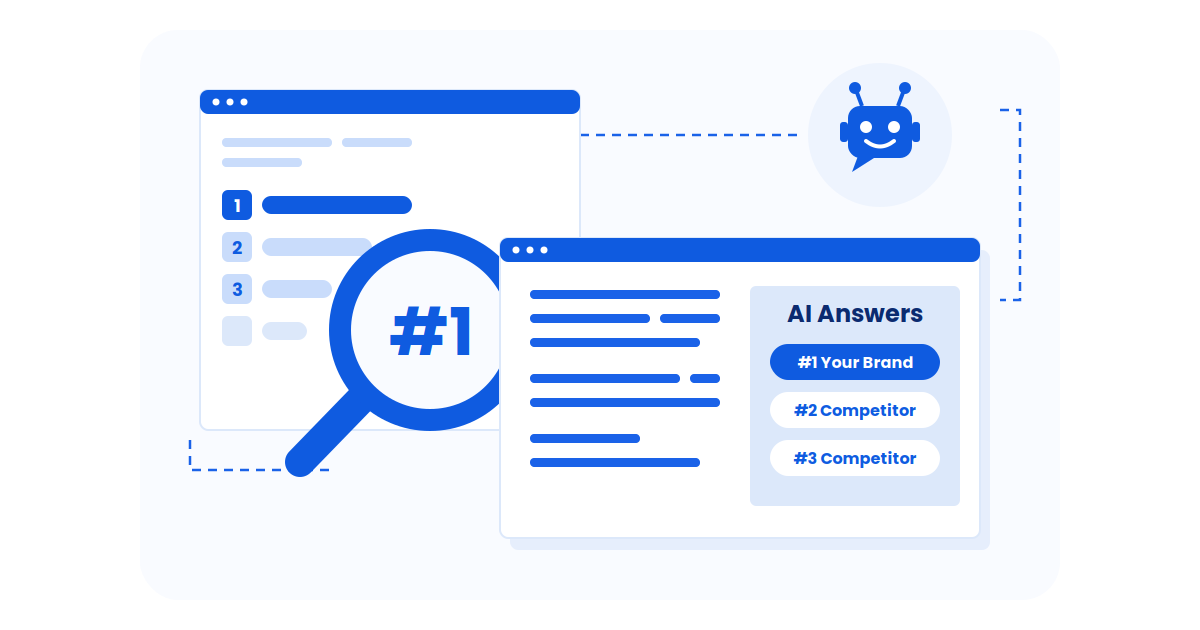
AI assistants repeatedly cite and recommend competitors as the trusted sources. Even if rankings improve, the brand still looks absent in the decision-shaping layer of AI search.
3) Misinformation
AI surfaces incorrect pricing, outdated features, or inaccurate comparisons about the brand. Trust erodes because prospects assume AI-generated answers are accurate by default.
4) Poor Data Quality
Core information is incomplete, inconsistent, or outdated, so AI outputs become unreliable. Weak source material reduces citation likelihood and increases misinterpretation—exactly the kind of issue teams diagnose and prioritize using AI content scoring.
5) Inconsistent Public Information
Details conflict across the website, LinkedIn, directories, and third-party listings. AI systems lose confidence when signals don’t match and may avoid recommending the brand.
6) No Baseline or Measurement
Without a baseline and recurring tracking, progress can’t be proven over time. Reporting becomes activity-based instead of outcomes-based, which increases churn risk.
7) Governance & Risk Blind Spots
There’s no clear QA, ownership, or compliance oversight for what AI says about the brand. This increases exposure in regulated categories and makes errors harder to correct quickly.
Standardized deliverables prevent these breakdowns by making AI visibility work measurable, client-readable, and repeatable across accounts.
How Wellows Solves It:
Wellows closes the most common AI visibility gaps by turning AI search into something you can measure, diagnose, and improve.
It establishes a clear baseline of where your brand appears in Google AI Overviews and major LLMs, shows when competitors are being cited instead, and surfaces the exact prompts and sources driving those outcomes.
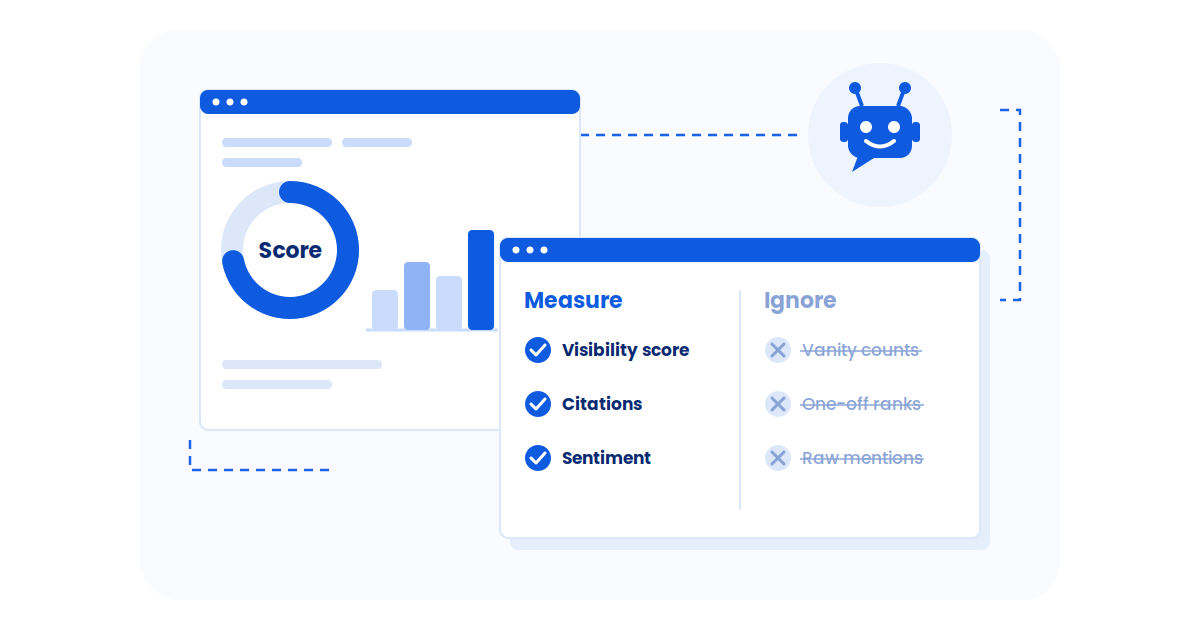
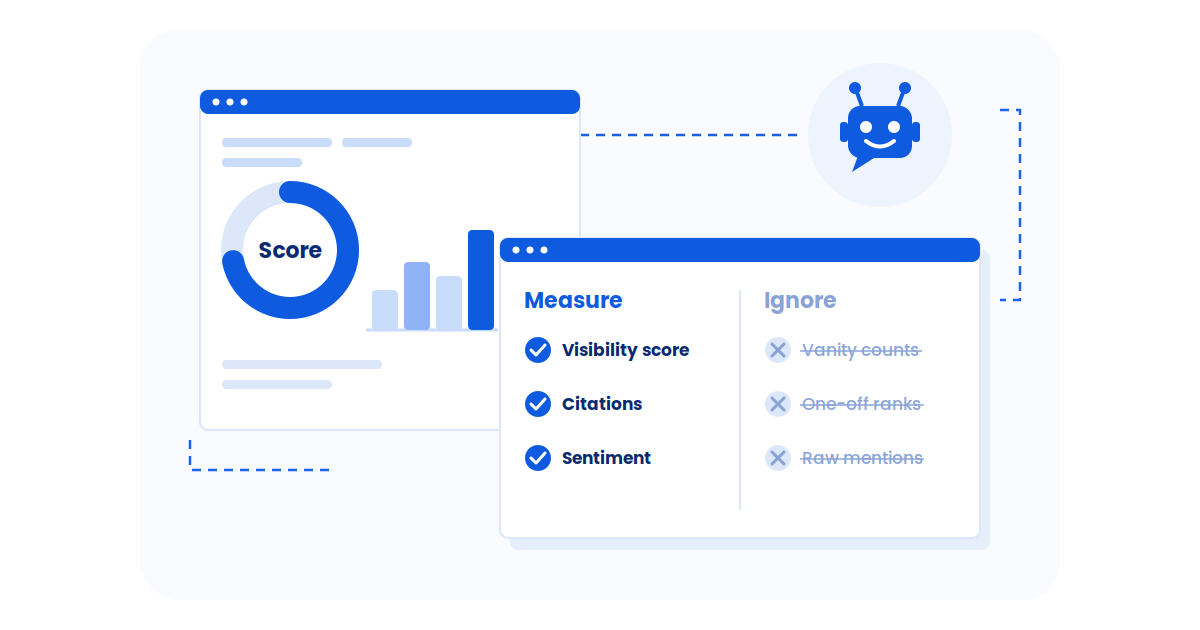
By tracking citations, explicit and implicit mentions, Brand Visibility Score, and sentiment over time, Wellows helps teams catch invisibility, competitor dominance, misinformation, and inconsistent brand signals early, then focus on the highest impact opportunities to fix them.
It also supports ongoing monitoring and historical comparisons so agencies can prove progress through client ready reporting and reduce governance blind spots by staying on top of how AI represents the brand.
Where the AI Visibility Deliverables Checklist Fits in an Agency Program
AI Visibility Deliverables Checklist for Agency Clients is the deliverables layer in an AI visibility program. It defines what I hand to clients (outputs + reporting), separate from how audits or optimization work is executed.
It helps agencies standardize scope, document progress, and prove visibility changes over time in a client-ready format.
This applies beyond SEO retainers and increasingly affects agencies managing brand narratives across multiple channels, including social media marketing agencies, as AI systems increasingly pull signals from public profiles and social content.
Did you know?
- Strategy (Why): Define program goals such as increasing AI mentions/citations, reducing inaccurate AI answers, and tying visibility improvements to leads or revenue.
- Audits (Diagnose): Establish a baseline of where the brand appears in AI answers, which competitors are cited, and which prompts/pages are missing.
- Optimization (Improve eligibility): Improve content quality, structure (H2/H3, FAQs, schema), data consistency (brand info across web), and freshness so AI systems can extract and trust the brand.
- Deliverables (This checklist): Package work into client-visible outputs (baselines, coverage maps, readiness summaries, monitoring dashboards, reporting artifacts).
- Measurement (Prove progress): Track share-of-visibility, citation frequency/quality, sentiment/accuracy, and AI referral traffic over time.
Operationalizing AI Visibility Deliverables at Scale
For agencies, operationalizing AI visibility at scale means building repeatable systems to monitor, manage, and report how client brands appear across AI platforms. The goal is consistency across accounts, not one-off visibility wins.
- Shared data foundations: Agencies standardize how client brand data (services, pricing pages, leadership, locations) is validated so AI systems interpret each account consistently.
- Governance and QA: Agencies define review ownership, correction workflows, and documentation to reduce misinformation risk and maintain compliance across clients.
- Repeatable workflows: Manual screenshots are replaced with standardized monitoring processes that delivery teams can apply across every retainer.
- Ongoing monitoring: Agencies run recurring query tests to track mentions, citations, sentiment, and accuracy over time, then report changes period-over-period.
- Structural fixes: Agencies improve entity clarity, semantic coverage, and page structure so AI systems extract correct meaning for each client.
- Client-ready measurement: Visibility metrics (coverage, citation quality, competitive share-of-visibility) are packaged into reports clients can review and approve.
Platforms like Wellows support agencies by centralizing AI visibility signals across Google AI Overviews and major LLMs. This allows delivery teams to turn monitoring into repeatable, client-ready deliverables such as baselines, trend reports, competitor comparisons, and accuracy flags.
Delivering AI visibility consistently requires more than manual prompt testing or screenshots. Agencies need a way to monitor mentions, citations, and competitive presence across AI systems and translate that data into clear, repeatable client deliverables.
Platforms like Wellows support this by centralizing AI visibility signals across Google AI Overviews and major LLMs.
This allows agencies to document baselines, track changes over time, and produce client-ready summaries that align directly with the deliverables in this checklist—without exposing internal workflows or relying on fragmented tools.
Why AI Visibility Deliverables Matter for Retention
Clients rarely disengage because of one missed KPI. They disengage when progress feels unclear.
Did you know?
AI visibility deliverables help agencies:
- Show influence before traffic moves
- Explain visibility changes in plain language
- Build confidence during periods of algorithmic volatility
- Reduce second-guessing as AI-driven discovery grows
As AI summaries and recommendations increasingly shape buying decisions, agencies that clearly document visibility earn stronger trust.
Checkout More Checklists!
- Content Strategy Checklist
- Content Marketing Plan Checklist
- Blog Post Checklist
- Keyword Research Checklist
- LLM Pattern Analysis Checklist
- Editorial SEO Style Guide Creation with LLMs Checklist
- Keyword Strategy Integration for LLM SEO Checklist
- On-Page SEO Content Checklist for LLM-Generated Content
- GEO Audit Checklist for Agencies 2026
FAQs
Agencies should define a fixed set of AI platforms (such as Google AI Overviews, ChatGPT, Gemini, and Perplexity) and include a documented visibility baseline so clients can see where their brand appears and where competitors are being recommended.
Because agencies are accountable for outcomes, technical accessibility (crawlability, clean HTML, structured data support) is included as a validation deliverable to confirm visibility issues are not caused by preventable technical blockers.
Rather than raw code, agencies typically deliver a schema summary that explains which structured data types were applied, validated, or missing and how they support AI extraction and citation.
AI-ready content means priority pages clearly answer high-intent questions, are structured for extraction, and demonstrate credibility—confirmed through page-level readiness reviews rather than subjective opinion.
Most agencies include AI visibility reporting on a recurring cadence (monthly or quarterly), focusing on trend movement, competitive coverage, and citation quality rather than one-off screenshots.
Agencies track sentiment and accuracy as part of monitoring deliverables and flag incorrect AI answers so corrective actions can be prioritized and documented for the client.
Agencies translate visibility gains into business context by showing competitive displacement, improved coverage for buying-stage prompts, and any measurable human traffic originating from AI surfaces.
Final Thoughts
AI-driven search has changed how brands are discovered, compared, and recommended. Agencies that treat AI visibility as an execution task alone often struggle to explain results. Agencies that treat AI visibility as a set of deliverables create clarity, confidence, and retention.
This AI visibility deliverables checklist for agencies provides a practical framework for documenting progress, aligning expectations, and proving value as AI search becomes a permanent part of the buyer journey.