Content cannibalization happens when multiple pages on the same site target the same keyword or search intent. Instead of identifying a clear winner, search engines rotate between URLs, splitting ranking signals and leaving all pages underperforming, where a single consolidated page could rank higher.
The real challenge is deciding which page to keep, which to merge, and how to prevent the issue from returning. Wellows helps here by checking cannibalization across the site before recommending content updates, scoring competing pages by intent and depth, and identifying the strongest URL to optimize.
Research suggests most growing websites are affected, with organic traffic dropping by 30–50% in impacted keyword clusters due to split authority across competing pages.
This guide shows how to identify, fix, and prevent it.
Key Aspects of Content Cannibalization
- Same intent, different packaging: “Best project management tools” and “Top project management software” look distinct. To a semantic search engine reading intent rather than exact strings, they answer the same question — and compete for the same ranking.
- Growth accelerates the problem: The larger a content library grows without a keyword map enforcing one URL per intent, the more pages quietly stack up against each other across quarters.
- The wrong page often wins: Search engines may surface an older, thinner article over a newer, richer one — ranking the weaker URL and sending users to content that doesn’t serve them best.
- It’s not just a blog problem: Category pages competing with blog posts, product pages overlapping with landing pages, FAQs duplicating pillar content — cannibalization appears across every content type on every site size.
How to Identify It
- Site operator test: Search
site:yourdomain.com "target keyword"in Google — two or more results for the same term signals a conflict worth investigating. - GSC Pages tab: In Google Search Console, filter Performance by a query, then switch from Queries to Pages. Multiple URLs sharing impressions for one search term confirms cannibalization.
- Rank instability: Track which URL ranks for a target keyword week over week. A URL that keeps switching between two pages means search engines are undecided — the clearest sign of active cannibalization.
How to Fix It
- Consolidate into one definitive page: Combine the strongest elements from all competing URLs into a single, deeper resource. One page with compounded authority signals will consistently outrank several pages splitting them.
- 301 redirect the weaker URLs: After merging, permanently redirect losing pages to the surviving URL — transferring accumulated link equity rather than abandoning it.
- Separate by intent, not just keyword: If pages serve genuinely different goals — awareness vs. decision, beginner vs. advanced — re-optimise each for its distinct angle so they complement rather than collide.
- Reinforce with internal links: Point every supporting article to the primary page using consistent anchor text. This tells search engines which URL holds the authority for that topic.
Example: A site running both “content marketing strategy for startups” and “how to build a content strategy” is almost certainly splitting rankings. Merge the stronger page’s depth with the weaker one’s unique angles, publish under the dominant URL, and redirect the other. One authoritative guide beats two average ones.
What is Content Cannibalization?
Content cannibalization occurs when two or more pages from the same website target the same keyword or search intent. This creates overlap, causing search engines to split ranking signals instead of prioritizing one authoritative page.
For example, a site publishes two blogs—”Best running shoes” and “Top running shoes”—both serve the same intent. Google struggles to decide which one is most relevant, and the result is fragmented rankings and weaker visibility overall.
Content Cannibalization vs Duplication vs Plagirism
What is the difference between content duplication and cannibalization?
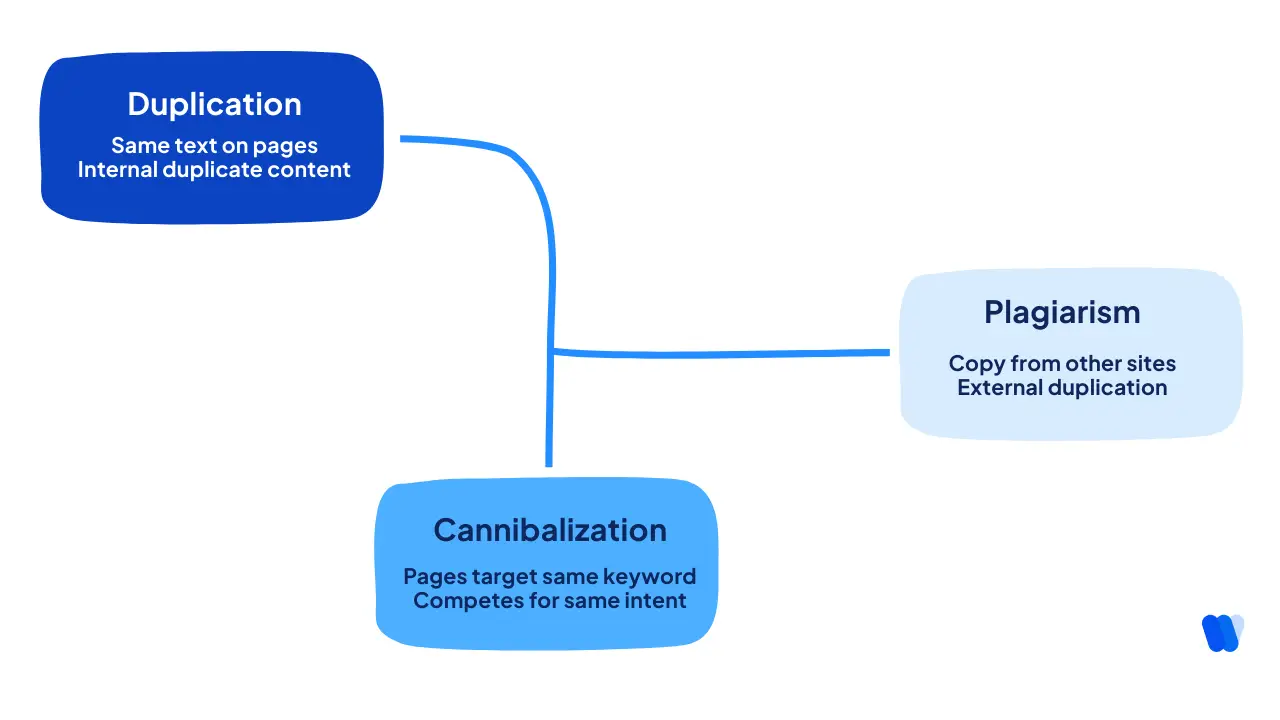
Duplication is identical content across pages, while cannibalization occurs when different pages target the same intent. Even unique content can compete if intent overlaps.
How does content cannibalization differ from plagiarism?
Plagiarism involves copying content from other websites, while cannibalization happens within the same domain. For more detail, see how to avoid plagiarism.
In cannibalization, content is original but still competes due to overlapping keywords.
How is content cannibalization vs keyword stuffing different?
Keyword stuffing overloads one page with repeated keywords, reducing quality. Cannibalization spreads the same keyword across multiple pages, dividing authority instead of concentrating it.
Content cannibalization is common on large sites, where overlapping URLs, internal competition, and unresolved Technical SEO Issues can gradually reduce rankings.
For more insights on content strategy and optimization, visit the Content Hub.
What Are the Signs of Content Cannibalization
Cannibalization can be tricky to spot. It often shows up as unstable rankings, uneven traffic, or user behavior changes. Recognizing these signals early is the first step toward fixing the issue.
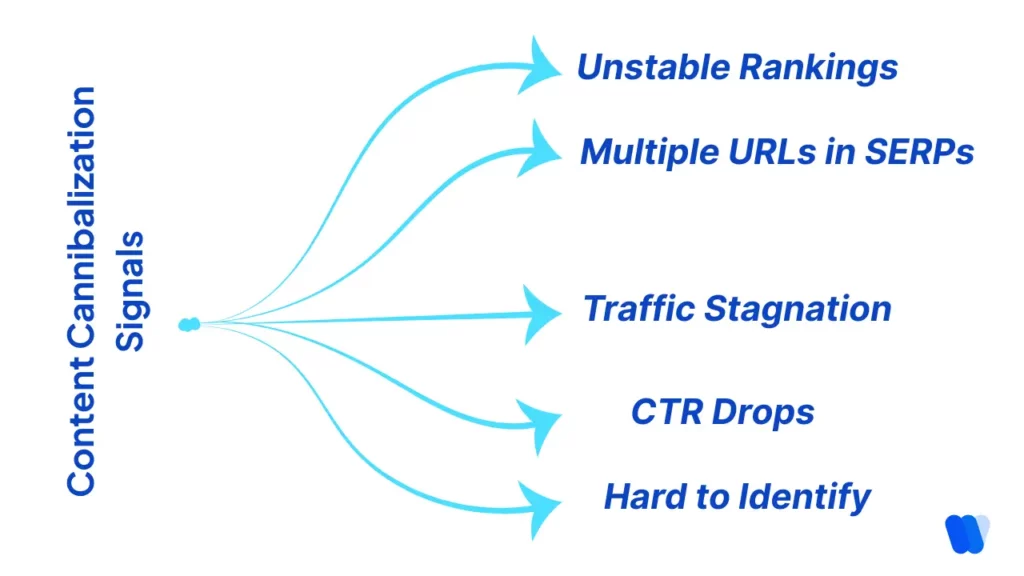
Unstable Rankings
That instability is a direct sign that search engines cannot decide which page deserves to rank, so they keep rotating between them.
Multiple URLs in SERPs
Split that across two competing pages and both underperform what one consolidated page would have earned outright.
Traffic Stagnation
The result is several mediocre pages competing for one keyword cluster instead of one authoritative page owning it.
CTR Drops
On high-intent pages such as product pages, or trial sign-ups, or demo requests, even a small CTR drop has a direct revenue impact.
Hard to Identify
There’s no single metric that flags it and you have to cross-reference ranking URLs, impression trends, and backlink distribution across competing pages. Tracking these signals manually is tedious and often misses deeper intent overlaps that keyword-only analysis doesn’t catch.
Wellows prevents cannibalization by running a full site-wide check before optimization, scoring pages by intent and depth to select the single best page so authority compounds instead of splitting.
To reduce overlap from repetitive or overly similar AI-generated drafts, pages can also be refined using free AI humanizer tool to maintain distinct tone, structure, and purpose.
What Are the Negative Impacts of Content Cannibalization?
Content cannibalization spreads authority across competing pages, lowering rankings, reducing traffic, and weakening overall content effectiveness. Left unaddressed, it makes sustainable growth harder.
Confused search engines
Search engines struggle to decide which page should rank. In many cases, instead of picking a winner, they rank both pages lower.
Diluted page authority
Instead of building one strong page, authority gets split across several weaker ones. Backlinks are spread thin, so none of the pages reach their full ranking potential.
Wasted crawl budget
Search engines spend time crawling duplicate or overlapping pages, which can delay indexing of more important content.
Lower click-through rates
When multiple similar pages appear in results, user clicks get divided. This signals weaker relevance and can push all pages down.
Reduced conversions
If the wrong page ranks, users land on content that doesn’t fully match their intent. Strong content readability in SEO plays a key role here, helping users quickly understand and engage with the right page.
Weaker AI visibility
AI search engines rely on clear topical authority. When multiple pages compete, it’s harder to identify a definitive source. Improving your readability score in AI content helps ensure your pages are easier to interpret, rank, and cite.
Prevention starts at the decision stage. Wellows evaluates your entire content landscape and uses its advance AI content optimization to determine which page deserves to rank for a given intent before any updates are made.
This approach keeps your content focused, avoids internal competition, and ensures each page plays a clear, distinct role in building your overall visibility.
How To Identify Cannibalization Issues? [6 Easy Ways]
Detecting cannibalization requires careful checks across your site’s pages and queries. The goal is to see where multiple URLs target the same intent, splitting visibility and rankings.
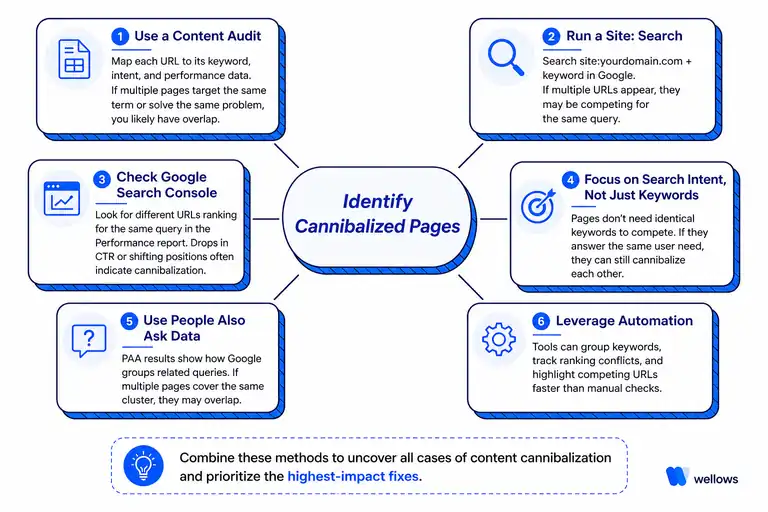
- Use a content audit: Map each URL to its keyword, intent, and performance data. If multiple pages target the same term or solve the same problem, you likely have overlap.
- Run a site: search: Search site:yourdomain.com + keyword in Google. If multiple URLs appear, they may be competing for the same query.
- Check Google Search Console: Look for different URLs ranking for the same query in the Performance report. Drops in CTR or shifting positions often indicate cannibalization.
- Focus on search intent, not just keywords: Pages don’t need identical keywords to compete. If they answer the same user need, they can still cannibalize each other.
- Use People Also Ask data: PAA results show how Google groups related queries. If multiple pages cover the same cluster, they may overlap.
- Leverage automation: Tools can group keywords, track ranking conflicts, and highlight competing URLs faster than manual checks.
What Are the Best Ways to Fix Content Cannibalization?
Once cannibalization is identified, the next step is to decide which content to keep, update, or merge. The aim is to remove competition between your own pages and give search engines a clear signal about which URL should rank.
Should you consolidate and merge content?
Did you know?
When should you re-optimize by intent?
Did you know?
How do 301 redirects solve redundancy?
Did you know?
Can canonical tags help?
Did you know?
How does internal linking resolve confusion?
Did you know?
If you’re tightening signals, this guide on how many internal links per page are needed for improved SEO helps you keep links focused and effective.
How can AI streamline this process?
Did you know?
When you rank platforms that help avoid duplication by identifying overlapping drafts, most fall short at the production stage. Manually merging and rewriting pages can be time-consuming. Wellows:
- helps map overlapping URLs and identify cannibalization patterns using keyword clustering and intent analysis.
- Its content creation tools rebuild merged pages into a single, optimized, high-quality draft.
- AI optimization features refine duplicate text, improve structure, and enhance readability, aligning with modern AI-driven strategies.
Used Case: How a Brand Successfully Fixed its Content Cannibalization Issue
Here’s a real-world example of how a brand figured a way out of content cannibalization:
Real-World Impact of Fixing Cannibalization
📈 Planable: 176% Traffic Growth
Planable published multiple articles targeting similar intent, causing rankings to fluctuate between positions 15 and 45. After auditing their content and merging overlapping pages, they redirected weaker URLs to a primary resource. Within six months, organic traffic increased by 176%, as authority was consolidated into stronger pages.
A similar approach led to a 466% increase in clicks for another site after consolidating overlapping content with 301 redirects. In both cases, the outcome was clear: one strong page consistently outperforms multiple competing ones.
Common Challenges During Audits
Choosing which page to keep: Evaluate pages based on backlinks, content depth, internal links, and conversions—not just traffic.
Ranking drops after publishing: New content often targets the same intent as existing pages. Check GSC to confirm overlap and re-optimize or merge accordingly.
Scaling across large sites: Start with high-impression queries in GSC where multiple URLs appear, then fix those clusters first.
How Tools and AI Simplify the Process
Manual audits miss deeper intent conflicts. Wellows analyzes your entire site, groups competing URLs by intent, and identifies the best page to optimize. This ensures authority builds on a single page instead of being split across multiple competing URLs.
What are the Best Practices to Avoid Content Cannibalization?
When reviewing content guidance in Wellows, compare each proposed topic with your existing URLs and their intent before commissioning another page. Choose whether to update an existing page, consolidate overlap, or investigate a distinct topic. This review reduces avoidable duplication; it does not guarantee that two pages will never overlap.
The best way to avoid content cannibalization is to ensure every page targets a unique keyword, serves a distinct intent, and fits within a structured content system. These practices help prevent overlap as your content library grows.
Best practices to prevent cannibalization:
- Assign one keyword per page: Avoid targeting the same primary keyword across multiple URLs. Use a structured plan like a content strategy checklist.
- Differentiate by intent: Separate informational, commercial, and transactional content.
- Create unique angles: Add new data, examples, or perspectives instead of repeating similar topics.
- Use long-tail keywords: Target specific queries to reduce competition between pages.
- Follow a content brief: Define keyword, intent, and page role before writing.
- Maintain internal linking: Link consistently to a primary page using descriptive anchor text.
- Plan content in advance: Use a structured calendar to avoid overlapping topics. This can be organized with a content marketing plan checklist.
- Run regular audits: Review and consolidate overlapping pages before rankings drop.
Systems to eliminate redundancy in content creation work best when applied at the brief stage with a keyword ownership map, an intent check against existing URLs, and a pre-publish scan are the three controls that stop overlap before it forms.
Example: Your keyword map already assigns “email marketing tips” to an existing guide. Before drafting a new article, you run an intent check and find overlap. Instead of creating a duplicate, you update the original guide and position the new piece around “email marketing tips for ecommerce.” This keeps both pages distinct and prevents authority from splitting.
How to Monitor Page Performance and Prevent Content Cannibalization Ongoing
Content cannibalization can reappear as new pages are published or updated. Monitoring keyword rankings, URL switching, and AI visibility helps detect overlap early and prevent long-term ranking loss.
6 Key ways to monitor and prevent cannibalization:
- Track keyword-level rankings: Monitor which URL ranks for each keyword. URL switching signals overlap.
- Use GSC for multi-URL queries: Identify queries where multiple pages compete.
- Monitor AI visibility: Ensure your pages are cited in AI answers, not just ranking in search.
- Run regular audits: Catch gradual overlap before it impacts rankings.
- Maintain a keyword map: Keep a live document assigning one keyword and intent per page.
- Check intent before publishing: Prevent duplication by comparing new topics with existing content.
Why URL Switching Signals Cannibalization
If different URLs begin ranking for the same keyword, search engines are unsure which page is most relevant. This instability prevents authority from consolidating on a single page.
Why AI Visibility Matters
Ranking in search is no longer enough. Cannibalization weakens authority signals, reducing the chances of your content being selected in AI-generated answers.
Tracking that selection layer requires a different lens than rank tracking — the agency workflow for monitoring AI search mentions shows how to surface which URLs LLMs are pulling from, so you can confirm authority is consolidating on the right page after a merge.
Wellows simplifies this process by combining ranking data, intent analysis, and AI visibility tracking into one system. It helps teams detect conflicts early and build authority around a single optimized page.
Which Tools Detect Cannibalization and Suggest Which Article to Merge or Redirect?
The best tools for detecting content cannibalization identify overlapping URLs, but only advanced platforms recommend which page to keep, merge, or optimize. Most SEO tools stop at detection, while newer AI-driven platforms go further by resolving conflicts.
Top tools for detecting and resolving cannibalization:
- Google Search Console: Shows when multiple URLs rank for the same query. Best for identifying overlap, but does not recommend fixes.
- Ahrefs / Semrush / Screaming Frog: Detect keyword overlap and competing URLs at scale. Strong for audits, but limited to detection only.
- Wellows: Detects cannibalization and recommends the single best page to optimize based on intent, depth, and authority signals.
Compare Tools That Detect Cannibalization and Recommend Which Page to Optimize
| Platform | Detects Cannibalization | Recommends Which Page | Checks Before Optimizing | AI Visibility Tracking |
|---|---|---|---|---|
| Wellows | Yes | Yes — selects best page | Site-wide check first | Tracks 5 AI engines |
| Ahrefs | Yes | Detection only | No | Limited |
| Semrush | Yes | Detection only | No | Limited |
| Screaming Frog | Yes | Detection only | No | No |
| Google Search Console | Partial | No | No | No |
Key takeaway: Most tools detect cannibalization, but only platforms that evaluate intent and content depth can recommend which page to keep. This is critical for consolidating authority instead of splitting it across multiple URLs.
Why Most Tools Fall Short
Traditional SEO tools highlight competing pages but do not decide which one should rank. This leaves teams manually comparing traffic, backlinks, and content depth, which is time-consuming and often inconsistent.
How Wellows Solves Cannibalization at the Source
Wellows runs a full site-wide cannibalization check before recommending any optimization. It scores pages by intent and content depth, then selects the strongest candidate so authority builds on a single page instead of splitting across multiple URLs.
Agencies dealing with cannibalization across multiple client accounts face an additional complexity: fixing overlapping pages is only half the problem. The other half is ensuring the consolidated, strengthened pages actually get picked up by AI search engines. Teams that manage client AI visibility at scale use Wellows to confirm that post-consolidation pages are being cited in LLM answers — turning what used to be a defensive cleanup exercise into a measurable visibility win.
- Line-level gap analysis: Identifies missing sections needed to improve ranking and AI citations.
- Cannibalization-safe content creation: Generates briefs and drafts aligned with the selected page.
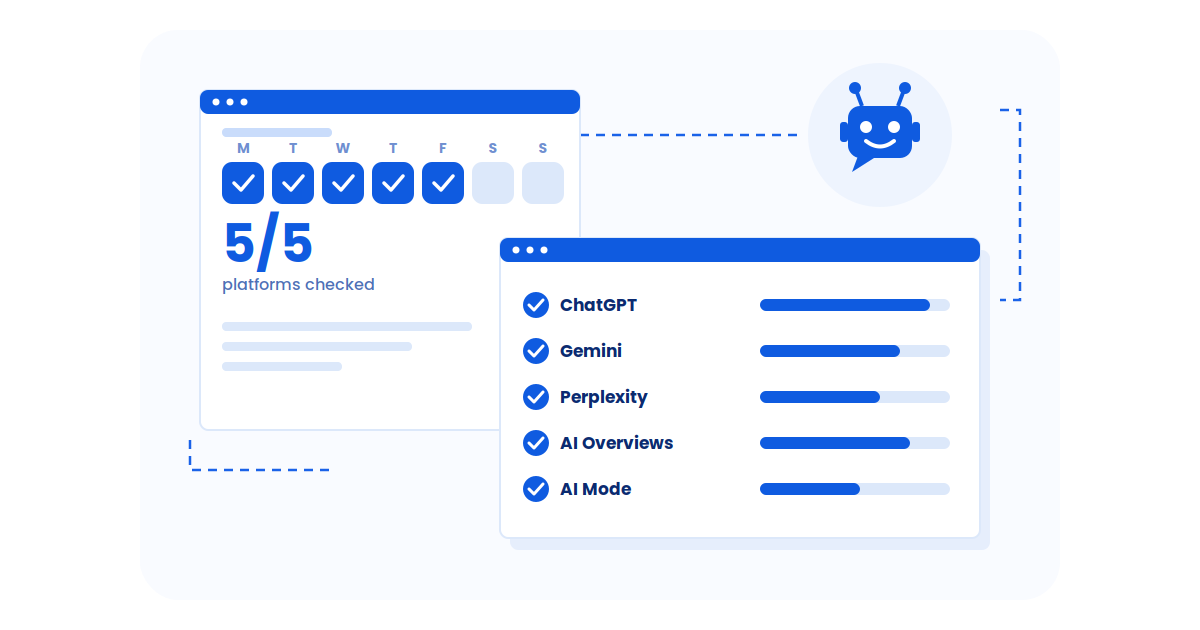
- AI Visibility Score: Tracks how often your content appears across ChatGPT, Gemini, Perplexity, and AI Overviews.
- Daily monitoring: Detects new overlap and competitor visibility shifts automatically.
What Is the Best AI Workflow for Identifying Cannibalizing Articles?
The best workflow for identifying content cannibalization combines URL extraction, intent clustering, page scoring, and AI-assisted decision-making. This ensures you detect overlap, prioritize the right page, and apply the correct fix.
Step-by-step workflow to identify cannibalization:
- Export URLs and keyword data: Pull indexed pages from Google Search Console with queries, impressions, and clicks.
- Cluster by intent: Group pages based on semantic intent, not just exact keywords. Similar intent signals cannibalization.
- Score competing pages: Evaluate traffic, backlinks, content depth, freshness, and conversion role.
- Run a pre-optimization check: Use a platform like Wellows to confirm which page should be optimized before making changes.
- Apply the fix: Merge pages, redirect weaker URLs, or re-optimize for distinct intent.
- Set up monitoring: Track rankings, URL switching, and AI visibility to prevent future overlap.
Why Intent Clustering Matters
Pages can compete even if they target different keywords but satisfy the same user goal. Grouping by intent ensures you identify hidden conflicts that keyword-only analysis misses.
How AI Improves Decision-Making
Manual audits require comparing multiple metrics across pages. AI tools automate this by scoring pages and recommending a single optimization target, reducing guesswork and preventing repeated cannibalization.
What Makes This Workflow Effective
This approach combines detection, prioritization, and execution into one system. Instead of reacting to ranking drops, it prevents overlap before it impacts performance.
FAQs
Final Takeaway
Content cannibalization is often a sign of growth, but it requires active management. Left unchecked, it fragments ranking signals, reduces visibility, and stalls growth.
The solution is to audit your pages regularly, consolidate overlapping content, and re-optimize with clear search intent. Prevention is even more powerful when you plan with keyword mapping, build topic clusters, and align each page to a distinct user need.
With Wellows’ writing agent KIVA and the content optimization feature you can easily cluster keywords, generate strategy, perform visibility check, and make the process smoother. By reducing manual errors and saving time, they help ensure that every piece of content supports growth instead of competing with it.