SEO in 2025 looks nothing like it did even a year ago. Search results are crowded with AI summaries, chat-based answers, and zero-click results that keep users from ever leaving the page.
That shift means keyword rankings alone don’t tell the full story. Visibility now depends on understanding search intent, content formats, and how modern AI SEO tools and models interpret and surface your content.
This is where an AI SEO Agent uses SERP Visibility to give you the full picture. It analyzes every element of a results page, revealing patterns, gaps, and opportunities your competitors miss.
With agents like KIVA, you can shift from chasing positions to building smarter strategies that actually capture attention across search and AI-driven platforms.
Why SERP Visibility is Critical in 2025
SEO is no longer just about climbing to the top of search results. Today, success is measured by visibility share—how often your content shows up across different formats like featured snippets, videos, carousels, and UGC posts. Ranking for a keyword is only part of the story; owning multiple spots on a SERP is where the real impact is.
Nearly 60% of Google searches now end without a click—users are finding answers directly on the results page instead of visiting websites (SEO Sherpa, 2025).
This shift makes it essential to measure visibility across formats, not just track rankings.
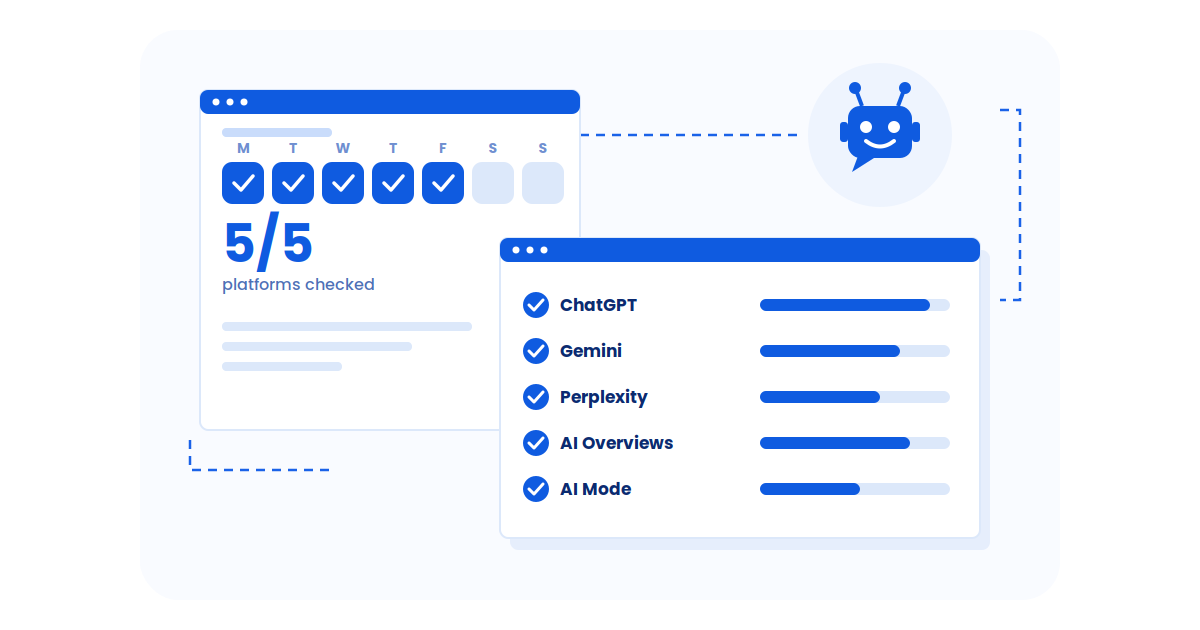
Another shift is the rise of LLMs like ChatGPT’s impact on search, Gemini, and Claude, which pull data directly from SERPs before generating answers. If your content isn’t showing up where these models look, you risk losing visibility not only in search but also in AI-driven responses.
For marketers, this creates a tougher playing field. AI summaries, knowledge panels, and rich results push traditional organic links further down, making it harder to earn clicks. Visibility now depends on understanding what formats win attention and optimizing for those.
This is where KIVA’s SERP Visibility feature comes in. It breaks down live SERPs by format, intent, and model preference, helping you spot gaps, track opportunities, and compete effectively in a crowded AI-first search landscape.
6 Ways AI SEO Agents Use SERP Visibility to Find Opportunities
Understanding search results is no longer just about where you rank—it’s about how your content shows up and whether AI models trust it enough to feature it. That’s where an AI SEO agent uses SERP Visibility to give you the full picture.
By breaking down search pages in real time, these tools uncover patterns and opportunities that traditional rank tracking misses. From spotting high-performing formats to finding content gaps, SERP visibility turns raw data into actionable insights.
In this section, we’ll look at six practical ways an AI SEO agent like KIVA helps marketers and businesses stay ahead in an AI-driven search landscape.
6 Ways AI SEO Agents Use SERP Visibility
Opportunity #1: Use SERP Visibility for Actionable Insights
Rank tracking alone no longer reflects how people experience search.
KIVA’s SERP Visibility feature provides a complete snapshot of search results, showing ranking positions, content types, competitor pages, and word count trends for every query.
With this data, you can align your strategy with search intent by understanding exactly how results are structured—whether search engines prioritize how-to guides, videos, UGC, or featured snippets.
KIVA also bridges the gap between SERPs and LLMs, helping you optimize content for both traditional search and AI-driven answer systems. This makes it easier to spot competitive gaps and create content that earns visibility across multiple result types.

Opportunity #2: Detecting LLM-Favored Sources
Large language models like ChatGPT, Gemini, and Claude often rely on top-ranking, high-authority SERP results to generate their answers. If your content isn’t visible to these models, you risk losing exposure not just in Google search, but in the AI-driven experiences users are turning to for quick answers.
Research shows that AI Overviews and featured snippets can reduce click-through rates by over 15%, and up to 20% for informational searches (Adapt Worldwide, 2025).
That means if your brand isn’t optimized for these AI-driven features, you could be missing a large share of search traffic.
KIVA’s LLM Optimization feature identifies exactly which pages and domains LLMs prefer, revealing how AI models interpret your content and what competitors they elevate. With this data, you can adjust strategy, strengthen authority signals, and ensure your brand is surfaced in AI-generated responses.
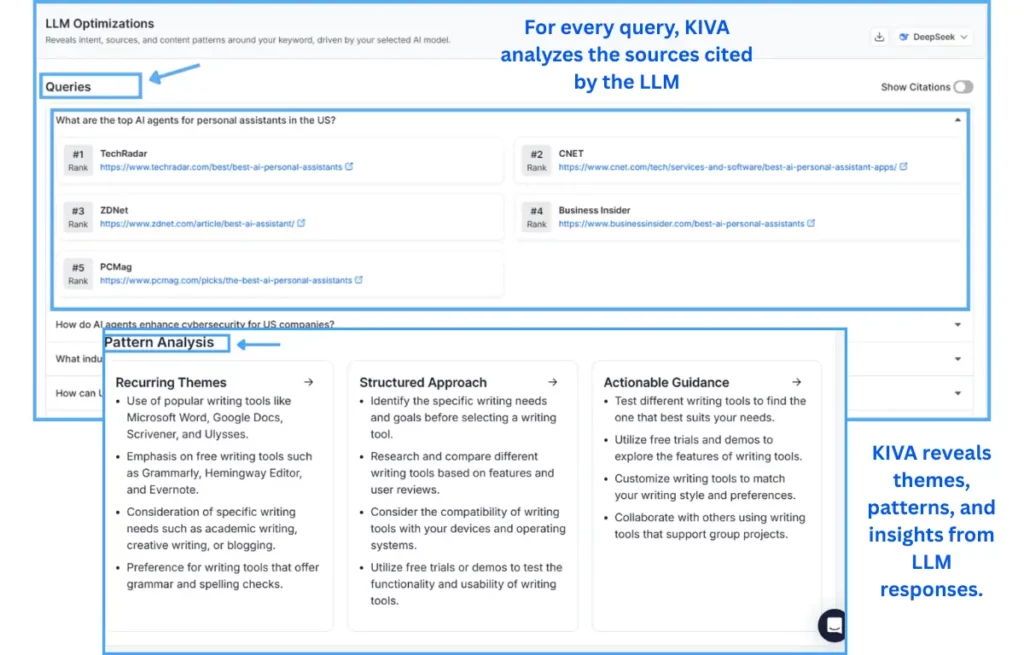
The takeaway is simple: SEO now extends beyond search engines. Optimizing your content for AI-driven search ensures your brand is visible wherever users are searching—whether that’s a Google results page, a chatbot, or a voice assistant answer.
Opportunity #3: Pinpointing Content Gaps
Even competitive SERPs often have blind spots. Some high-ranking pages may not fully address search intent, leaving opportunities for better, more relevant content.
KIVA’s AI clustering groups related keywords and analyzes SERP data to reveal where competitors are falling short—whether that’s missing content formats, unanswered subtopics, or gaps in expertise.
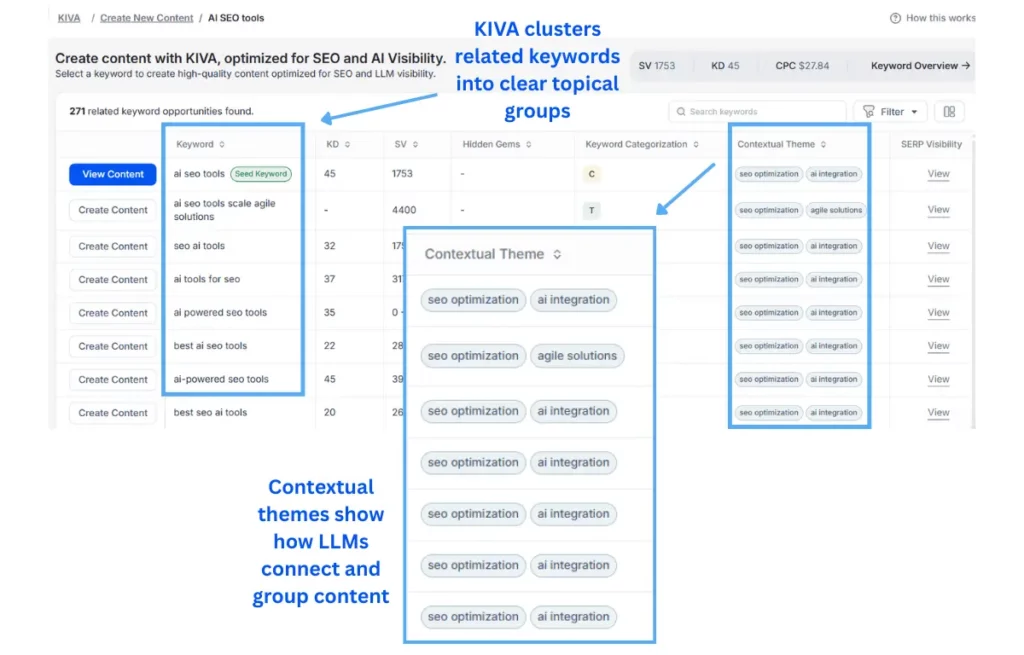
This is where intent mapping becomes critical. KIVA’s workflow automatically classifies search intent for each keyword, so you can see exactly what users are looking for and compare that against what’s currently ranking.
By filling these gaps—whether with a how-to guide, a comparison article, or a deeper explainer—you can create content that better satisfies both users and search engines, giving you a competitive edge without chasing already-saturated keywords.
Opportunity #4: Monitoring SERP Variants and Geo-Personalization
Search results don’t look the same everywhere. A keyword that shows blog posts in one country might show shopping ads or local listings in another. Even device type can change SERP layouts, affecting what users see first.
KIVA shows search results by region, giving you precise, market-specific insights. When you enter a keyword, KIVA lets you select a region so the data reflects exactly what users in that market see. This makes it easier to uncover regional opportunities, local competition trends, and market-specific search behavior—insights that often surface only in a detailed site audit.
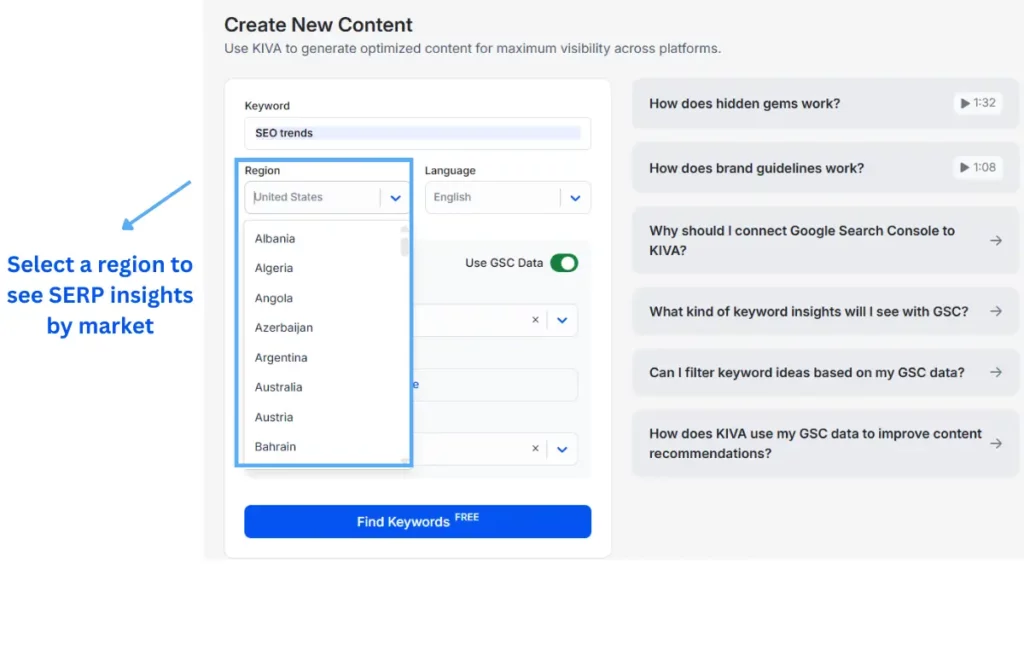
For brands running local SEO or multi-market campaigns, this is essential. Instead of manually checking results in different regions, KIVA compares variants in seconds—helping you refine targeting, adapt strategies, and secure visibility where it matters most.
Opportunity #5: Tracking Share of Voice by Content Type
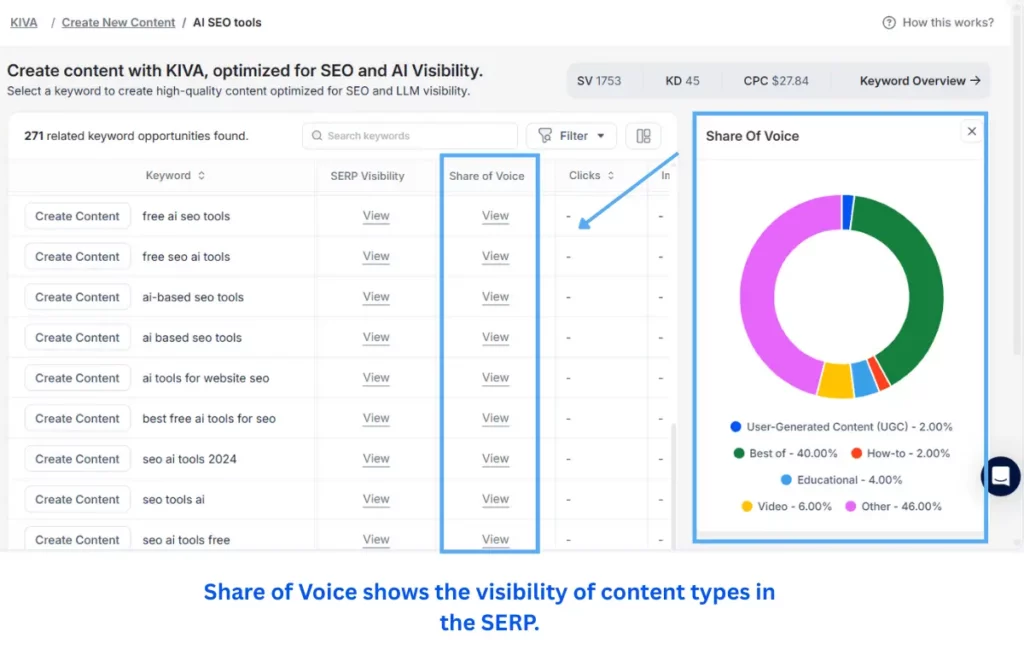
In 2025, share of search or Share of Voice (SoV) is one of the clearest indicators of SEO success. It measures how much of the SERP your brand owns compared to competitors—not just in organic listings, but across every content type like videos, UGC posts, reviews, and carousels.
This matters because you might dominate traditional organic rankings while losing visibility in other high-engagement areas, like YouTube results or Reddit threads. Those gaps can quietly siphon traffic and attention away from your site.
KIVA tracks SoV across multiple result types, showing you where competitors are gaining traction, and which formats to prioritize. With this data, you can make strategic moves to strengthen your presence across the full search experience, not just the blue links.
Opportunity #6: Surfacing Quick-Win Keywords
Some of the best growth opportunities come from low-hanging fruit—keywords where your content is already close to ranking at the top or appearing in rich snippets. These are often easier to win than starting fresh with new topics.
KIVA make spotting these opportunities simple, helping you focus on low-competition keywords that deliver quick wins. It tracks keywords where your pages rank just outside top positions, flags content that could earn a snippet, and automatically prioritizes them for optimization.
With Hidden Gems KIVA also uncovers high-potential opportunities buried in your Google Search Console data—keywords that competitors often overlook but can drive meaningful traffic when optimized.
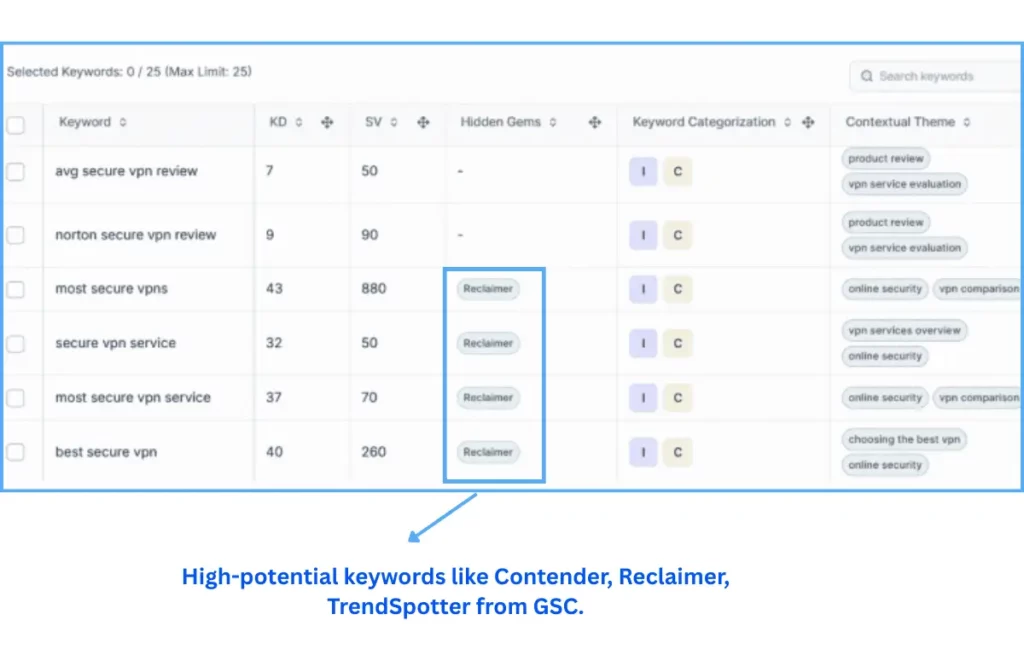
By refreshing or expanding this content, you can quickly capture more clicks without a full-scale content overhaul. This approach turns SERP data into a clear action plan, helping you get faster results with less effort.
How AI SEO Agents Make This Scalable
Manually auditing SERPs, clustering keywords, and tracking shifts across formats is time-consuming and often impossible at scale, especially when balancing technical fixes with structured on-page SEO improvements. That’s where AI SEO agents change the game, automating tasks that once took hours.
With KIVA, keyword clustering and intent mapping happen in under a minute, while live SERP snapshots provide instant visibility across multiple markets and devices. Its brief generation feature can turn all this data into an actionable content plan in just 15 minutes.
The result is a clear competitive edge. Instead of drowning in spreadsheets or relying on outdated rank trackers, you get real-time insights that let you adapt faster, create smarter strategies, and seize opportunities before competitors even notice them.
FAQs
Conclusion
SERP visibility has become the new frontier of SEO in 2025. With AI-generated answers, zero-click results, and evolving search formats, simply tracking rankings isn’t enough to stay competitive. The brands winning search today are the ones that understand how content appears, how AI models interpret it, and where opportunities truly lie.
An AI SEO agent like KIVA makes this process scalable. From live SERP snapshots to intent mapping and quick-win keyword tracking, it turns complex data into actionable strategies in minutes.
If you want to future-proof your SEO strategy and gain an edge in an AI-first search landscape, start exploring SERP Visibility with KIVA today. The sooner you adapt, the sooner you’ll own the spots that matter most.