If you’ve ever managed SEO with spreadsheets and SOPs, you know the drill. One sheet for keywords, another for backlinks, another for content calendars. Each with its own color codes, formulas, and inevitable errors. Add in a thick binder of SOPs that everyone is supposed to follow, and suddenly your “system” feels more like a maze.
It worked for a while. Spreadsheets gave us visibility, and SOPs gave us consistency. But as SEO has grown more competitive and unpredictable, these tools have started to show their cracks. Updates get missed, data goes stale, and rigid processes leave teams reacting too slowly to what’s actually happening in search results.
That’s why more marketers are looking beyond spreadsheets and SOPs. They need something faster, more adaptive, and far less error-prone than traditional AI SEO tools. Enter AI SEO Agent—the new way to run SEO without drowning in manual busywork.
Why Spreadsheets and SOPs Fall Short in SEO
At first, spreadsheets and SOPs feel like a safety net. Clear, organized, and reliable. But when it comes to SEO and structured on-page SEO execution, what looks good on paper often breaks down in practice.
The reality is that these old systems can’t keep up with the speed, complexity—especially when AI SEO agents using SERP visibility reveal new formats and AI summaries faster than static docs ever could.
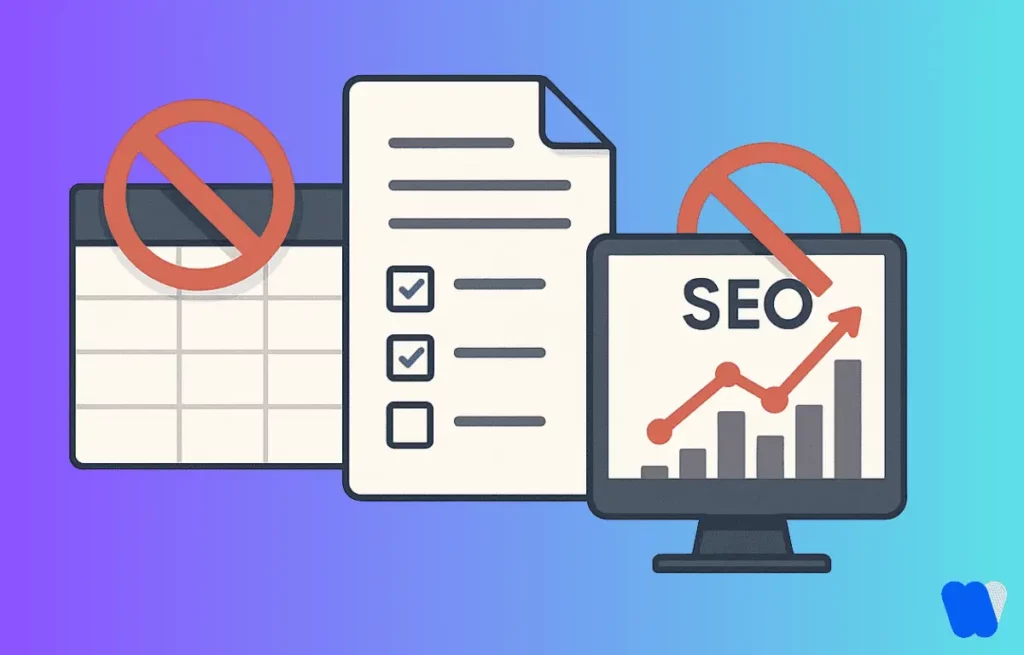
Why Spreadsheets & SOPs Fail SEO
Manual updates = errors and wasted time
Spreadsheets were never built to handle the moving parts of SEO. Someone has to update rankings, backlinks, and traffic numbers by hand—and one wrong formula or missed entry can throw off an entire report. Instead, smarter approaches like a Google Search Console keyword analysis can provide automated accuracy without the manual hassle.
Rigid SOPs = outdated in fast-changing SEO
SOPs are supposed to keep teams aligned, but in SEO, the rules change faster than the documents get updated. Google rolls out an algorithm tweak, competitors shift strategies or new SERP features appear—like zero-click searches—and suddenly yesterday’s ‘best practice’ SOP feels irrelevant.
This reflects a broader trend: 57% of marketers say SEO has become more competitive than ever, making rigid processes a liability in today’s environment.
Modern SEO requires adaptive planning, such as building an SEO strategy with user intent instead of relying on rigid documents.
Scaling problem = doesn’t work for agencies or startups
Managing one site with spreadsheets and SOPs is already a headache. Scale that to dozens of clients or campaigns, and the system collapses under its own weight.
Agencies, startups, and growing teams simply can’t afford to waste hours copying data across tabs or rewriting process docs just to keep up — which is why the AI search visibility platform for agencies was built to simplify scaling, automate reporting, and centralize visibility in one place.
How Marketers Are Solving This Problem
When spreadsheets and SOPs start breaking down, most teams don’t jump straight to AI. The shift usually happens in stages, each one fixing part of the problem but leaving other gaps.

How Marketers Fix It
- Step 1 – Manual Fixes:
The first attempt is usually to make the spreadsheets better. Marketers tighten templates, add conditional formatting, or enforce “spreadsheet hygiene” rules so nothing slips through the cracks. It helps for a while, but the reality is it’s still manual, error-prone, and impossible to scale when campaigns multiply.[/paa_step]
- Step 2 – Workflow Tools:
Next, teams turn to project management platforms like Trello, Asana, or Notion. These tools bring structure and make collaboration smoother, but they’re built to manage any kind of work. They’re not designed for SEO’s unique challenges—like monitoring rankings, link equity, or SERP changes—so marketers still end up stitching together multiple systems.
That’s where SEO automation steps in, bridging the gap with workflows tailored for rankings, backlinks, and content performance. Emerging solutions such as an AI Search Visibility Platform for Startups help teams centralize data, automate reporting, and respond faster to market shifts without relying on multiple disconnected tools.
- Step 3 – Automation Scripts & APIs:
For teams with technical know-how, the next step is writing scripts or tapping into APIs. Automating repetitive tasks—like pulling ranking data or generating weekly reports—saves time and reduces errors. But there’s a catch: it requires coding skills, ongoing maintenance, and still only solves narrow pieces of the SEO puzzle.
That’s why many teams are moving further: According to Marketing SEO Directory, automated SEO reporting tools can cut reporting time by up to 90%, saving 5–7 hours per week—the equivalent of an extra team member.
This creates the bigger debate of tools vs agents, whether patching tasks with scripts is enough, or if adaptive agents are the real solution.
- Step 4 – Transition to AI Agents for SEO:
Finally, the natural evolution: adaptive SEO systems. Instead of patching old systems, marketers are moving to agents that don’t just organize tasks or automate a step or two—they think and act like a strategist. AI Agents can gather data, analyze it, suggest actions, and in some cases execute optimizations directly.
This shift represents the leap from tools and scripts to a new era where solo consultants can run SEO smarter, faster, and more adaptively.
How AI Agents Replace Spreadsheets and SOPs
Instead of juggling messy sheets and outdated SOPs, marketers are now turning to AI Agents for SEO—intelligent assistants that actually do the work instead of just organizing it. These agents don’t just track data; they analyze it, adapt to changes, and generate outputs that move campaigns forward. That’s one of the biggest benefits of an AI Agent for SEO—removing repetitive work while scaling smarter.

Beyond SEO, agents are also replacing spreadsheets and rigid SOPs across day-to-day operations:
- Automating data entry and processing — Agents pull from multiple sources, clean and structure the data, and keep it fresh without manual copy–paste. Example: Sourcetable “Superagents” connect to systems, analyze, and even act inside sheets to cut errors and busywork.
- Enhancing spreadsheet functionality — Agent modes in office apps can write formulas, build charts, and summarize trends from a simple prompt (e.g., Microsoft’s Agent Mode in Excel/Word).
- Natural-language interactions — Tools like SheetMind/SheetAgent turn plain-English requests into precise data manipulations and analyses, closing the gap between intent and execution.
- Automating financial workflows — In accounting, agents handle mapping, reconciliation, and reporting, improving accuracy and shortening close cycles.
- Upgrading decision-making — Instead of static tabs, agents run real-time market checks, predictive models, and automated evaluations so teams act on live signals, not stale exports.
Here’s how that shift looks inside modern SEO workflows with KIVA:
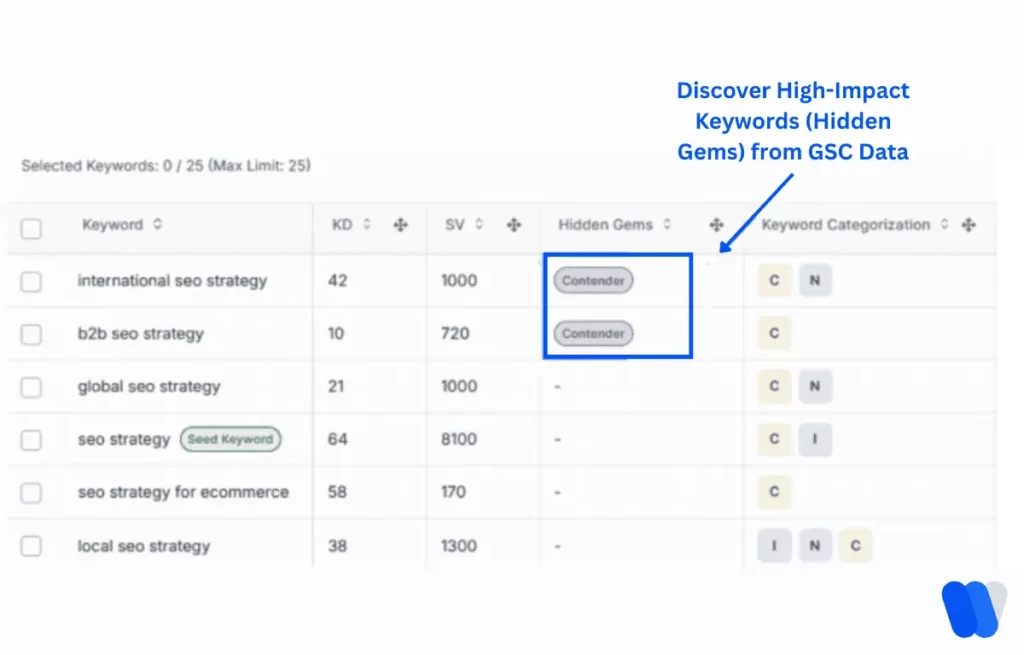
Discovers hidden keywords
No more manually adding endless rows to spreadsheets. KIVA automatically surfaces opportunities competitors miss.
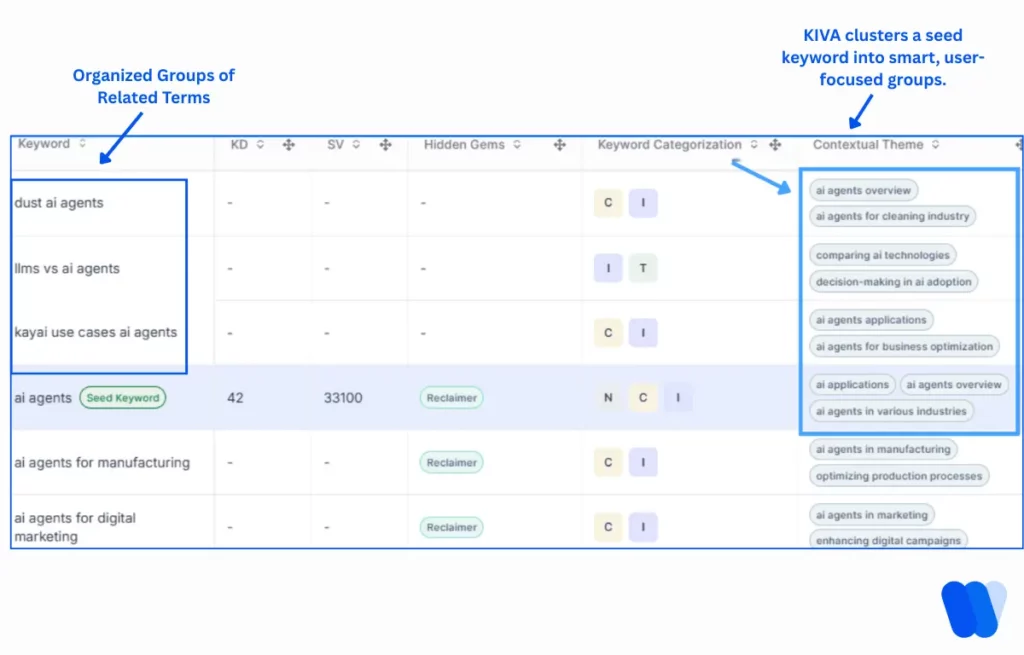
Clusters + analyzes SERP intent
Instead of spending hours grouping keywords and guessing at search intent, KIVA handles it instantly with AI-driven clustering.
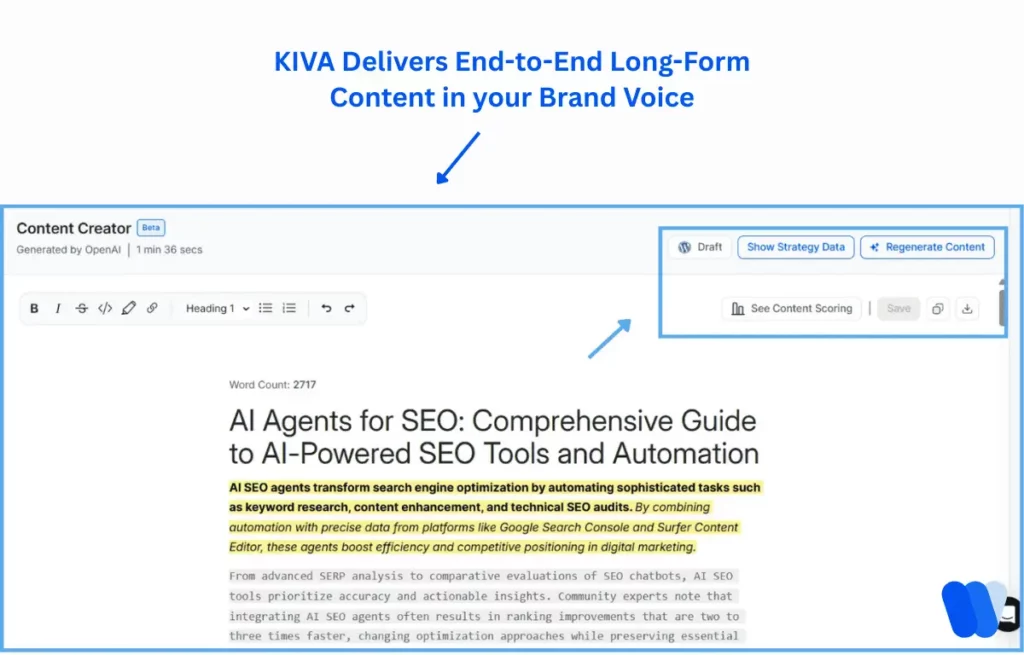
Generates content with your brand voice
Where SOPs used to dictate generic steps, KIVA produces publish-ready content tailored to your strategy and tone.
In short, KIVA turns the chaos of spreadsheets and rigid SOPs into a streamlined SEO workflow—faster, smarter, and built to scale. For teams tired of patching broken systems, autonomous SEO solutions like KIVA are the next logical step.
What This Shift Means for Different Teams
The move from spreadsheets and SOPs to next-gen SEO automation doesn’t just change workflows—it reshapes how different kinds of marketing teams operate.
Agencies often drown in reporting and repetitive tasks across multiple accounts. With automation in agency workflows, the time spent updating sheets or enforcing SOPs shifts into creating strategies and delivering results clients actually see. Freelancers no longer have to choose between quality and volume. By offloading keyword research, SERP clustering, and content briefing to AI, they can serve more clients or offer broader services without burning out—often by targeting low-competition keywords that deliver results faster Platform like the AI Search Visibility Platform for Freelancers make this even easier by centralizing data, automating insights, and helping independent professionals stay visible across evolving AI-driven search results. Startups usually lack the budget for full SEO departments. AI-powered SEO systems act like a built-in strategist and analyst, helping founders or small marketing teams scale visibility quickly without a heavy headcount. Consultants thrive on insights, but wrangling data eats into time that could be spent advising clients. SEO automation tools handle the grunt work—collecting, analyzing, and formatting—so consultants can focus on packaging strategy in ways clients understand and trust. With Wellows — the AI search visibility platform for consultants, complex data becomes clear, actionable, and presentation-ready—helping consultants turn performance metrics into persuasive stories that win confidence and results.Agencies: Less admin → more client output
Freelancers: Handle more work solo
Startups: Scale without hiring big SEO teams
Consultants: Turn raw data into client-friendly strategies
From Static Processes to Adaptive Growth
The old way of running SEO was static, manual, and rigid—spreadsheets that constantly needed updating and SOPs that went stale the moment Google shifted the rules. Teams spent more time managing the process than actually improving performance.
The new way is adaptive, automated, and intelligent. AI-driven SEO systems learn from data, adjust in real time, and keep strategies moving forward without the constant drag of manual oversight.
The big-picture outcome?
- Efficiency – Less time wasted on admin, more time spent on strategy.
- ROI – Faster insights and better execution turn SEO into a revenue driver, not a cost center.
- Consistency – Every campaign runs with the same level of accuracy and quality, no matter the size of the team.
This shift isn’t just about saving hours—it’s about transforming SEO into a growth engine that scales effortlessly. Part of that transformation includes optimizing for SERPs and LLMs to stay visible in both search engines and AI-driven results.
FAQs
Conclusion
Spreadsheets and SOPs had their place in the early days of SEO. They gave teams structure when search was simpler. But in 2025, SEO is too dynamic, competitive, and fast-moving for static processes to keep up. The old way now slows growth instead of supporting it.
The future belongs to adaptive systems—AI SEO Agents that cut out the busywork, scale effortlessly, and keep strategies aligned with real-time search changes.