Featured snippets shape how users interact with the search engine results page (SERP). They appear in Position Zero, providing quick answers above standard listings. These snippets influence user attention and CTR across Google results.
This guide explains why featured snippets matter, the main types, and the complete optimization workflow — from keyword research through to lifecycle management. AI SEO Agent KIVA automates clustering and People Also Ask extraction, reducing manual research while improving snippet readiness.
What Are Featured Snippets?
Featured snippets are highlighted boxes that Google displays at the top of the search engine results page (SERP). These snippets contain concise extracts in the form of text, lists, tables, or videos. Google selects them to provide direct answers to user queries, often placing them above the first organic result in Position Zero.
Ahrefs’ study shows that 99.5% of AI Overview sources come from pages already ranking in the top 10 organic results. This confirms that strong rankings remain essential for winning snippets and related SERP features.
To improve your chances further, make sure your answers are clear, natural, and easy for Google to extract — using an free AI humanizer tool by Wellows can help refine AI-generated sections into snippet-ready language without losing accuracy.
Types of Featured Snippets
Paragraph snippets present short text extracts that define or explain a concept. Google usually selects 40–60 word answers that directly address the query. These snippets often respond to “what is” or “why” questions with concise, factual statements.
List snippets appear as ordered or unordered points. Google uses them for step-based instructions or ranked collections. These snippets improve clarity by breaking content into sequential or grouped items.
Table snippets display structured data in rows and columns. Google pulls numerical or comparative information directly from formatted tables. These snippets help users scan metrics, prices, or rankings quickly.
Video snippets feature timestamped clips from YouTube. Google highlights the exact video segment that answers the query. These snippets increase visibility for tutorials, demos, and how-to searches.
Why Featured Snippets Matter for SEO
Did you know?
This shift makes Position Zero even more critical because standard organic listings lose attention when enhanced SERP features appear—and using an AI Overviews Tracker alongside your snippet monitoring helps you confirm when visibility losses are coming from AI-driven overlays versus true ranking movement.
Did you know?
Non-branded informational queries experience the steepest losses, dropping almost 20%. Position Zero therefore plays a vital role in retaining traffic and signaling authority above competitors.
Did you know?
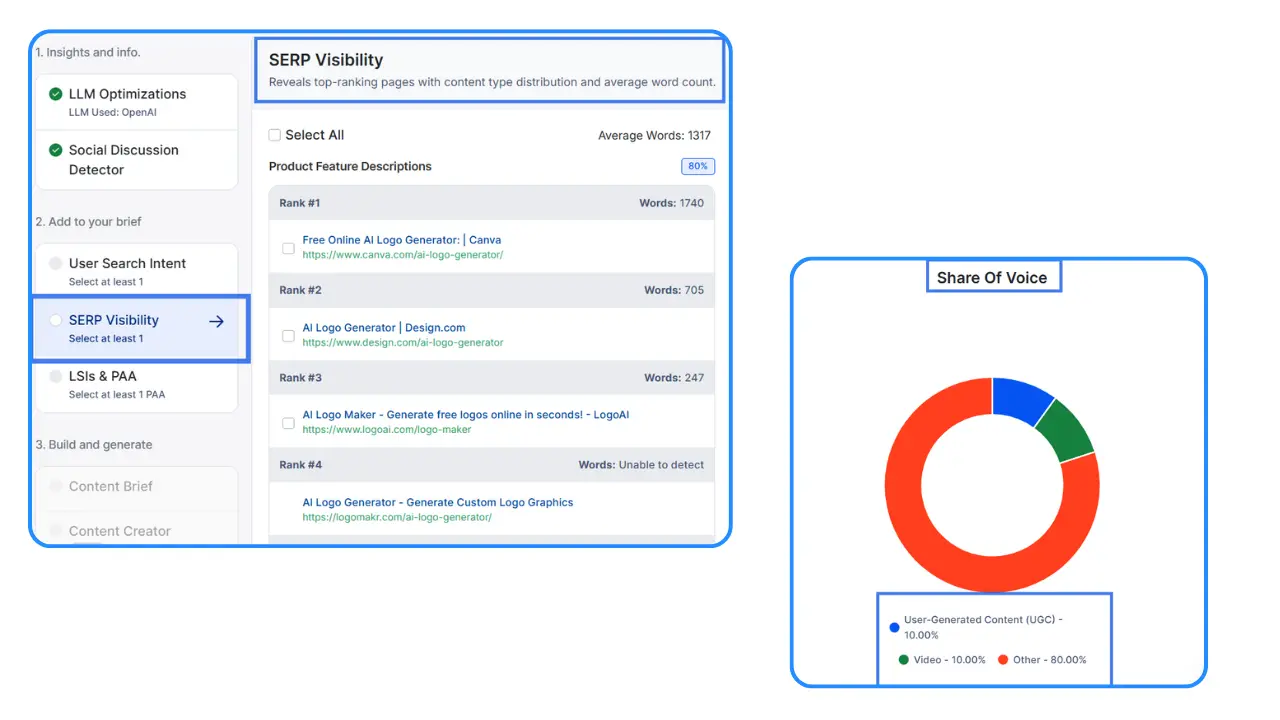
KIVA, your AI SEO Agent, tracks SERP visibility and LLM patterns together. These insights reveal when snippets overlap with People Also Ask or AI Overviews, clarifying whether pursuing Position Zero offers real value.
How To Optimize Content for Featured Snippets
Optimizing your content for featured snippets boosts visibility and drives organic traffic. Google selects answers that are precise, structured, and aligned with intent, favoring content that’s concise, contextually relevant, and easy to extract.
Marketers can improve their chances by combining clear headings, direct answers, and structured elements like lists and tables. This approach ensures both users and search engines quickly recognize the most relevant response—especially for Content Marketing Agencies managing snippet optimization across multiple clients and SERP features at scale.
Step 1: Perform Keyword Research
Keyword research forms the foundation of snippet optimization. Marketers should target long-tail and question-based queries, especially those beginning with who, what, how, or why. These queries often trigger snippet boxes because they signal informational intent.
Ahrefs analysis shows that over 12% of queries display featured snippets.
SERP analysis helps identify queries that already display snippets. Marketers can also leverage People Also Ask to uncover related sub-questions and content gaps.
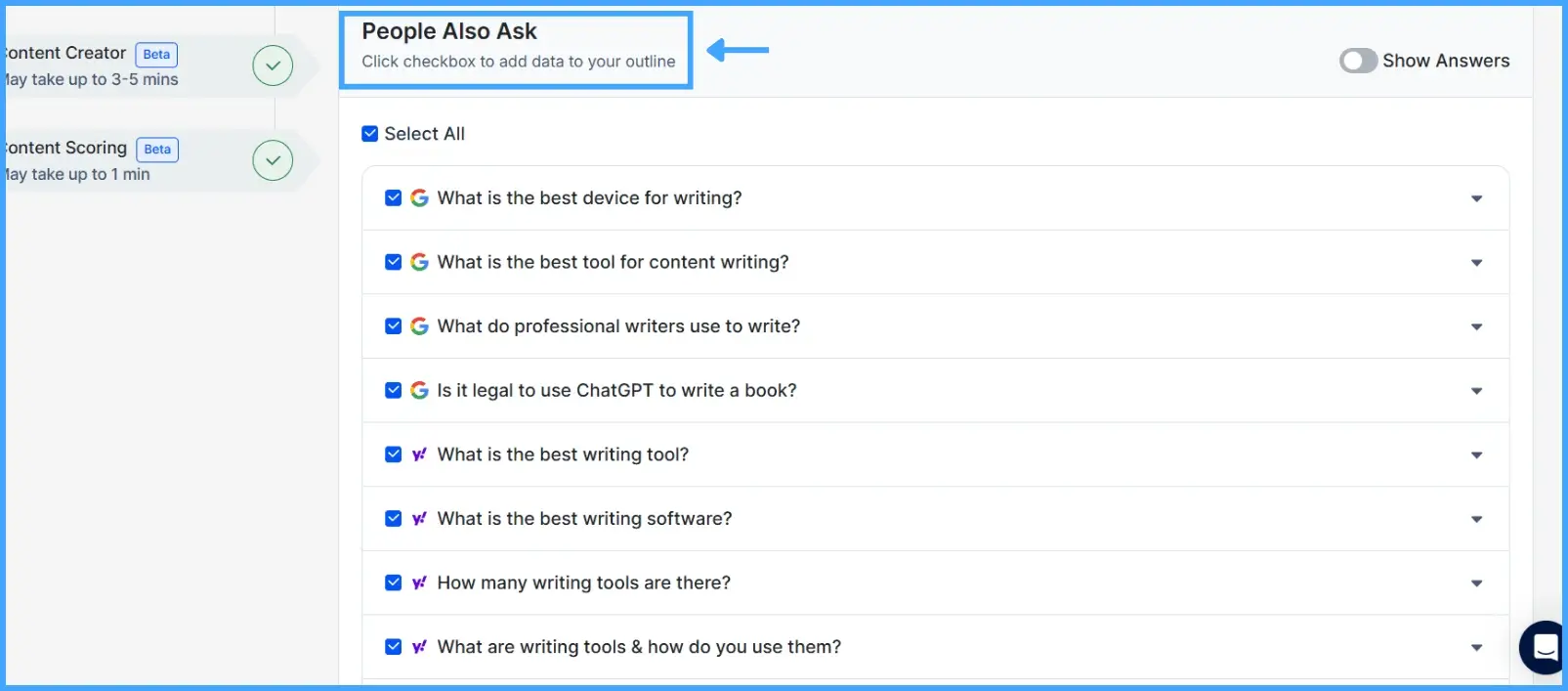
KIVA AI-powered SEO Agent supports this process through its Hidden Gems feature, which surfaces overlooked high-potential queries in GSC and SERPs.
Its Keyword Clustering system groups semantically related terms so one page can answer multiple snippet variations effectively. This process starts by identifying common user questions that often appear in People Also Ask or search suggestions.
Step 2: Structure Content Clearly for Google Extraction
Content structure determines whether Google can extract information for snippets and pair headings with entity-consistent language, as in schema, and NLP best practices for AI Search help Google interpret and lift the right passage. Writers should format H2 and H3 headings as natural questions that reflect user queries. This practice signals relevance and aligns with how search engines interpret intent.
Effective snippet optimization also requires short, direct answers. Marketers should place a 40–60-word response immediately below the heading. Google favors structured content that answers questions quickly without fluff.
For context on how extraction-first formatting fits modern search workflows, AI SEO explains why structure and intent signals increasingly drive visibility outcomes.
Lists and tables strengthen snippet eligibility. Ordered or bulleted lists clarify steps and comparisons, while HTML tables support chunk-level formatting that makes numerical or side-by-side data easier for Google to extract.
If you’re polishing long-form pages, use a clear baseline for how many internal links per page for better SEO, so links don’t distract from the extractable answer.
Structuring content this way improves eligibility for all snippet formats—paragraphs, lists, and tables.
Step 3: Use Schema Markup & Technical SEO Signals
Structured data markup, such as FAQ or HowTo schema, helps search engines interpret content more effectively.
Marketers should implement FAQ schema for Q&A content to strengthen snippet eligibility.
HowTo schema works for step-by-step guides, while table markup organizes comparative or numerical data in structured form.
Technical optimization increases the likelihood of winning Position Zero. Google uses structured data to display rich results that are more visible and clickable.
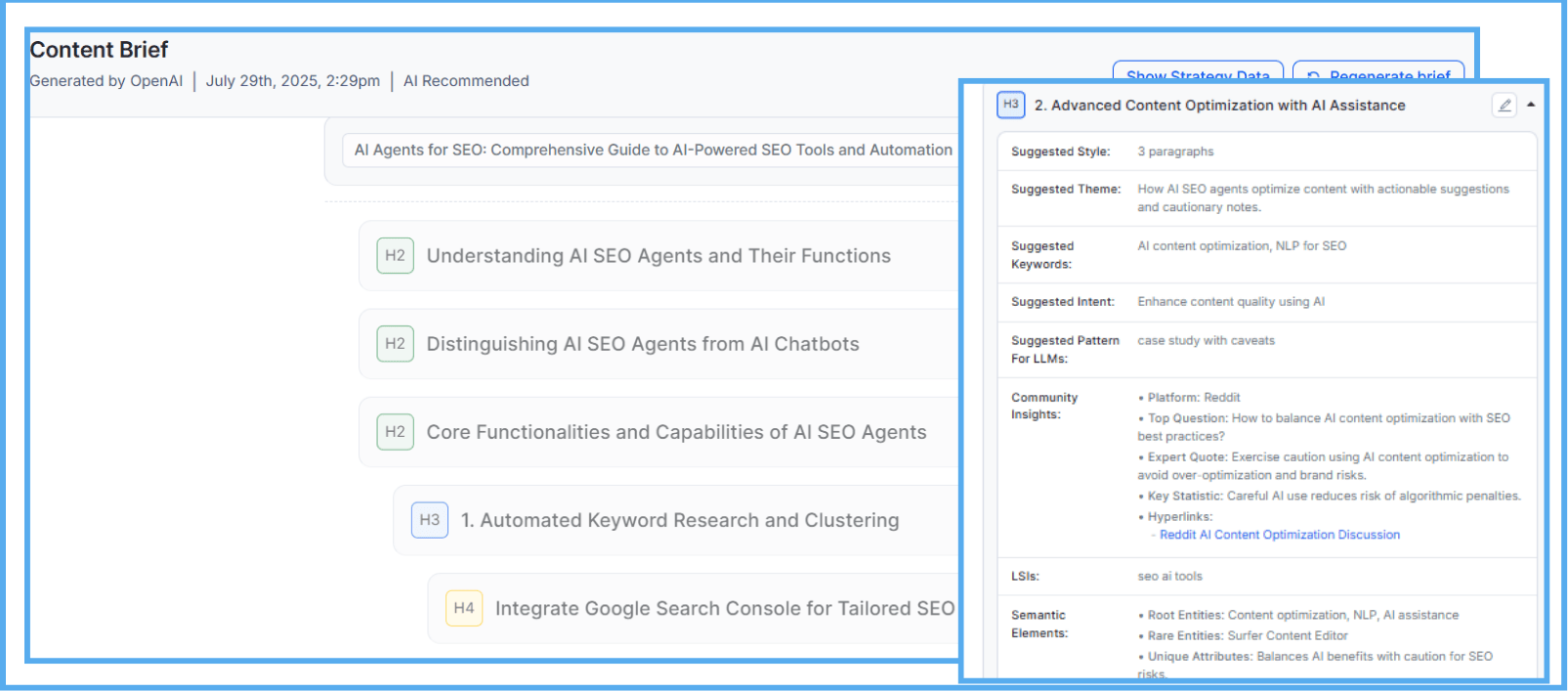
KIVA SEO automation agent streamlines this process. Its briefs generate schema-ready outlines that align with principles from AI content briefs, ensuring structured headings, lists, and tables are optimized for snippet extraction.
This capability simplifies integration, reduces formatting errors, and improves a page’s readiness for snippet extraction and AI visibility.
Step 4: Create Content Aligned with User Intent
User intent determines which queries generate featured snippets. Marketers should map content to the four main stages: Learn → Explore → Compare → Buy.
For example, “What is schema markup?” signals informational intent, while “Schema vs Rich Snippets” signals a comparison query.
Content alignment improves snippet eligibility when phrasing mirrors user language. Writers should use conversational, voice-search-friendly sentences to capture natural queries.
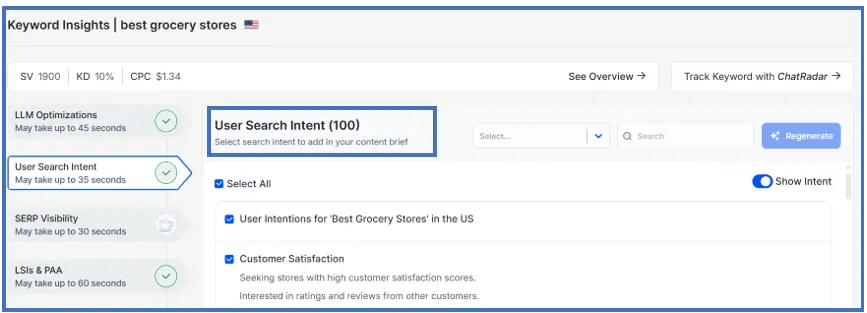
KIVA, enhances this workflow. Its User Intent Analysis auto-classifies intent types, including informational, navigational, and transactional, based on live query behavior.
This system reduces guesswork in snippet targeting and ensures that each page aligns with user needs. Expanding with short FAQ-style sections further reinforces coverage of related user questions.
Step 5: Optimize for Voice Search and AI Visibility
Voice queries differ from typed searches because they are longer and conversational. Users often phrase them as full questions, such as “How do I optimize content for snippets?” This pattern requires content that mirrors natural speech.
Voice assistants prefer concise answers. Marketers should structure responses in short, direct sentences that can be read aloud clearly. Google and other platforms prioritize content that matches this conversational style.
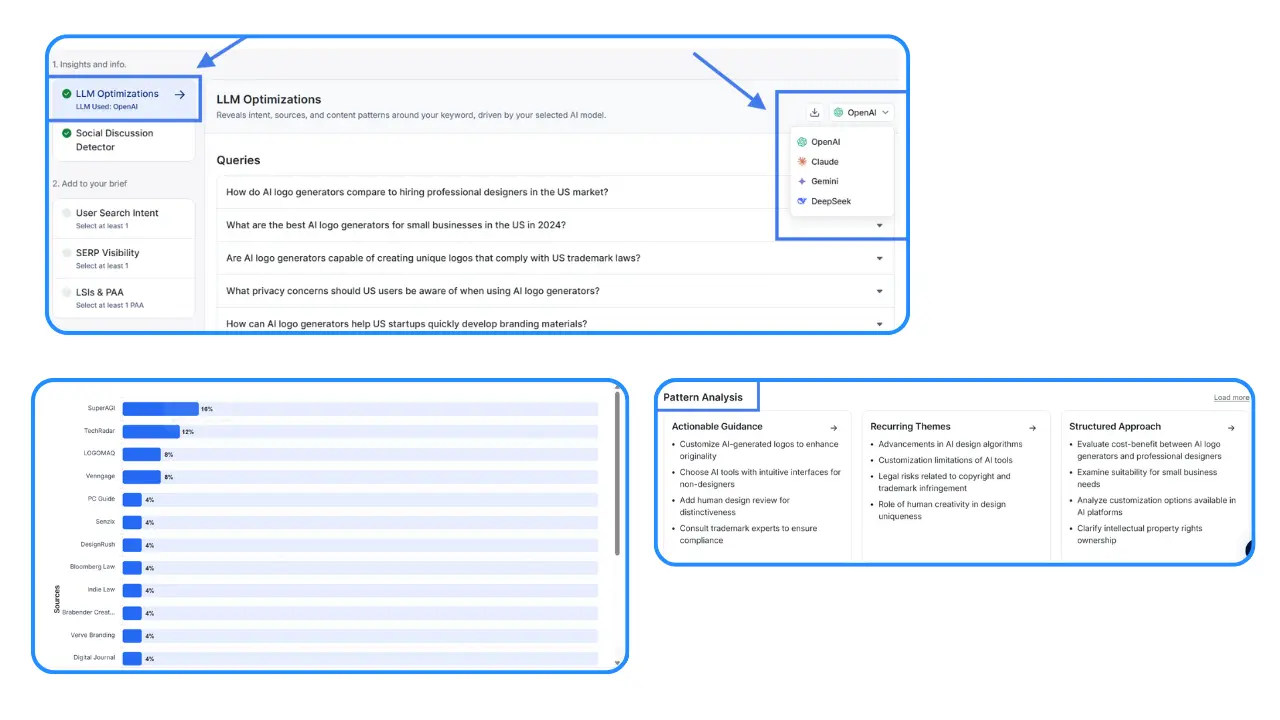
KIVA, expands this optimization. Its LLM Visibility module analyzes how queries appear across Claude, ChatGPT, and Gemini, aligning with strategies from LLM content creation for AI-first visibility.
These insights ensure content remains snippet-friendly in both traditional search results and AI-driven platforms.
Step 6: Monitor, Update, and Maintain Snippet Wins
Snippet visibility is volatile because competitors and algorithms constantly change. Marketers should refresh content every 6–12 months to counter content decay, updating statistics, examples, and schema validation so answers remain accurate, relevant, and extraction-ready.
Google Search Console (GSC) provides performance data for snippet queries. Marketers can track CTR shifts, impressions, and ranking movement.
GSC is a great baseline, but AI SEO tools can add automation by tracking snippet volatility, spotting content decay patterns sooner, and recommending refresh targets based on what’s changing in the SERP.
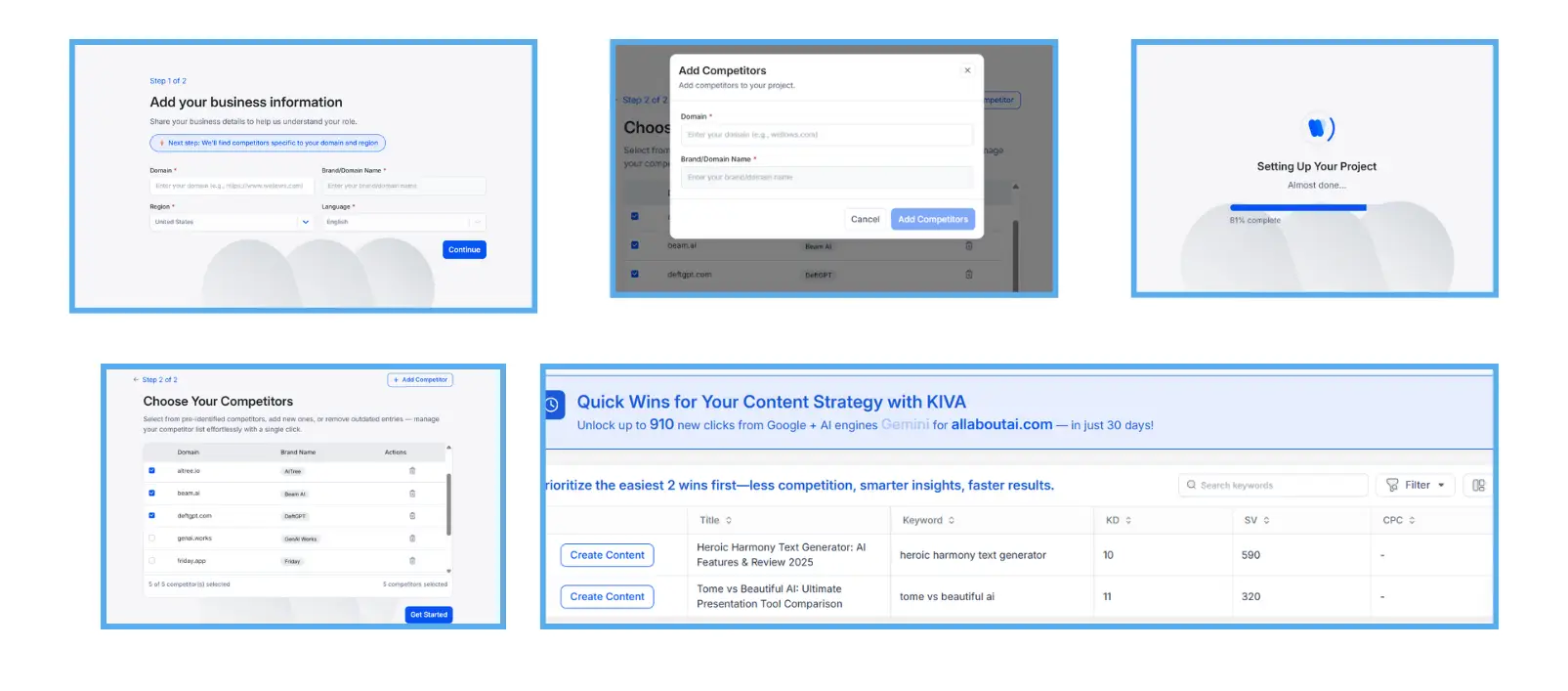
KIVA simplifies this process. Its Quick Wins feature delivers refreshed 7-day content plans aligned with competitor gaps.
Its Content Scoring system flags readability and snippet-eligibility issues, making updates systematic and reliable, reinforcing principles of content readability in SEO. Regular refreshes also keep snippet eligibility strong as algorithms and competitors evolve.
Beyond Optimization: Snippet Lifecycle Management
Most competitors stop at optimizing once for snippets, but snippet performance is volatile. Effective SEO requires lifecycle management rather than one-time adjustments. This approach ensures sustained visibility across shifting SERPs.
Snippet Lifecycle Management (SLM) has three stages. The acquisition phase identifies snippet gaps and optimizes definitions or lists. The retention phase monitors ranking shifts and updates content proactively. The expansion phase adds related queries and FAQs to scale snippet capture.
FAQs
Conclusion
Featured snippets matter because they capture Position Zero visibility, brand authority, and voice-search reach. Marketers who secure this placement gain higher trust signals and stronger exposure across SERPs. This advantage makes snippet optimization essential for modern SEO strategies.
Winning snippets requires structured answers, schema implementation, long-tail targeting, and consistent updates. Not every keyword benefits equally, so intent fit remains critical. Success comes from a repeatable framework: research, structure, schema, monitoring, and lifecycle management.
KIVA SEO AI Agent accelerates this process, transforming snippets from one-time wins into a managed SEO asset.