So now I’m sitting here with a question that probably keeps a lot of you up at night: Should we chase every AI citation opportunity or just ignore them when they disappear?
Let me back up and tell you why this matters and what the research says. Alongside external studies, we also validated these patterns with our own dataset. In our large-scale ChatGPT citation study, we analyzed 7,785 queries and 485,000+ citations to understand which domains win LLM mentions.
The Reality: LLM Answers Are Volatile By Design
When you type the same query into ChatGPT, Gemini, or Perplexity on different days, you’re not guaranteed the same answer. In fact, you shouldn’t expect it. Here’s why:
1. Retrieval-Augmented Generation (RAG) Systems Rotate Sources
Most modern LLMs don’t just rely on their training data they pull real-time information from the web using RAG. This process involves:
- Breaking your query into multiple synthetic sub-queries (a technique called “query fan-out”)
- Retrieving passages from dozens of web pages based on semantic embeddings, not just keywords
- Reranking those passages probabilistically before synthesizing an answer
Did you know?
2. Models Get Updated Silently and Frequently
OpenAI, Anthropic, and Google don’t announce every tweak. According to OpenAI’s Model Release Notes, models receive continuous updates to behavior, retrieval logic, and ranking algorithms.
Sometimes these are major version bumps (GPT-4 → GPT-4o); other times, they’re silent backend changes that shift how sources are weighted and that’s exactly why an AI citation opportunity can appear one day and vanish the next.
Did you know?
3. Temperature and Sampling Add Randomness
Even when the same sources are retrieved, LLMs use sampling parameters like temperature and top-p to generate responses. Higher temperatures increase diversity; lower temperatures favor predictability. But even at temperature=0 (the most deterministic setting), there’s still residual randomness in token selection.
Translation: Even “factual” answers can vary in phrasing, emphasis, and citation choice.
4. Context and User State Matter
Google’s patent on Stateful Chat Systems (US20240289407A1) reveals that search results now incorporate:
- Your prior queries in the session
- Device type and location
- Engagement history
- Real-time server load
Did you know?
But Here’s Where It Gets Interesting
Despite all this volatility, some patterns are predictable. What looks like chaos at first glance is actually patterned behavior driven by how LLMs interpret, retrieve, and reward structured content.
Think of it like this: SEO rankings are deterministic and relatively stable. LLM citation tracking measures a much more dynamic system, where the likelihood of being cited changes with the prompt and context.
The iPullRank Framework: From Rankings to Probabilities
Mike King’s team at iPullRank broke down the shift from traditional SEO to what they call “probability-driven search”:
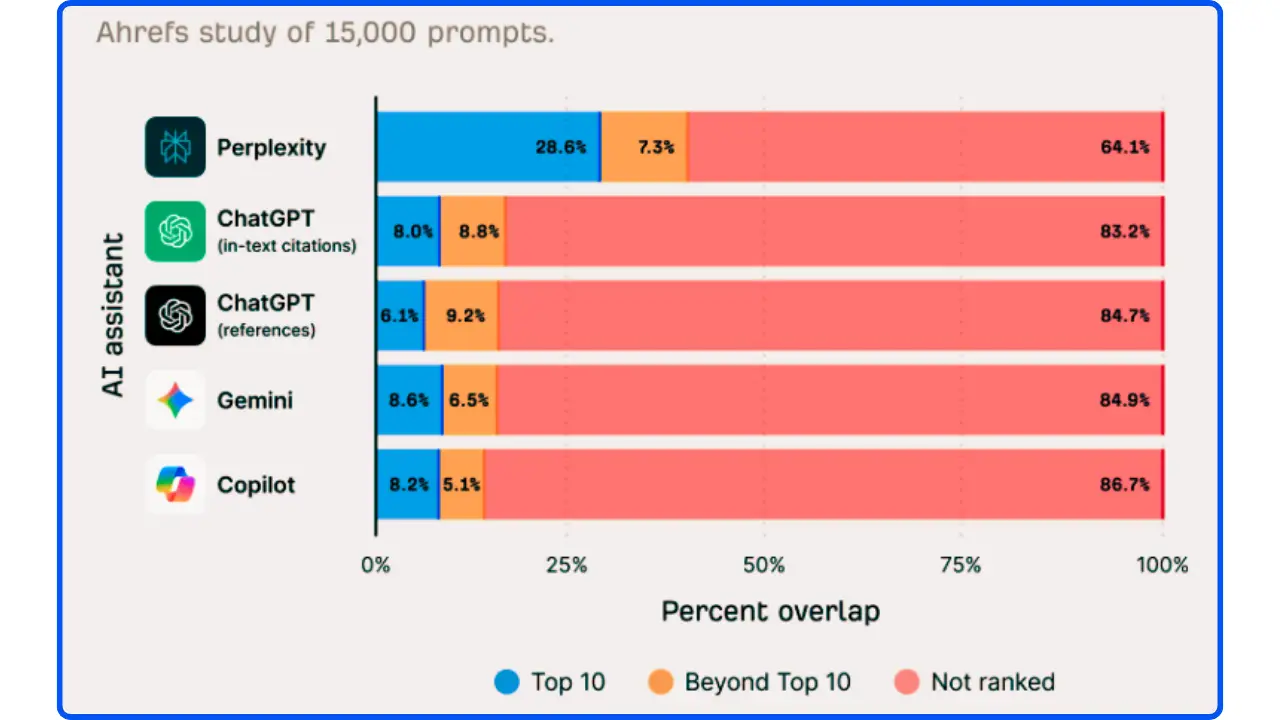
Ahrefs study of 15,000 prompts comparing AI assistants’ overlap with Google search results.
| Old SEO | New GEO (Generative Engine Optimization) |
|---|---|
| Optimize for one keyword | Optimize for passage-level retrieval across dozens of query variations |
| Rank #1 for that keyword | Increase your probability of being cited in 10–20% of LLM responses |
| Get consistent traffic | Monitor citation frequency instead of rankings |
Key Research Takeaways
- Only 12% of LLM citations overlap with Google’s top 10 results (Ahrefs, 15k queries).
- 80% of citations come from pages that don’t rank for the target keyword.
- Citation rotation happens every 24–72 hours, especially for commercial queries.
That last point? That’s exactly what we observed at Wellows.
What Should You Do When Your Citations Disappear
When a citation disappears, most people either panic and overhaul everything or ignore it completely. Both are mistakes.
Unlike traditional backlinks, LLM citations behave probabilistically, fluctuating as retrieval systems update their source weighting—so volatility is part of the system, not a signal of penalty.
The right move is to diagnose first, then act, because every disappearing mention could signal a missed AI citation opportunity. Citation loss has two core causes, and each one needs a different response.
Root Cause 1: You Lost the Third-Party Mention
This is when the source that was citing you a blog post, a comparison article, a roundup either:
- Removed your mention
- Updated the content and dropped you
- Got taken down entirely
Did you know?
Action Items:
- Audit the disappeared citation. Use Wellows to see what changed.
- Reach out to the author/site. If it was an update, ask to be re-included. Offer updated info, quotes, or assets.
- If it’s gone for good, replace it. Find 2-3 similar sources and get mentioned there instead.
Remember: You’re not just recovering one citation you’re maintaining your mention density across the corpus LLMs can retrieve from.
Root Cause 2: The LLM Changed Its Sources
This is the probabilistic rotation I described earlier. The 3rd party content is still there, still mentioning you but the LLM chose a different set of sources this time.
Did you know?
Did you know?
Action Items:
- Track which new sources replaced you. Don’t just notice you’re gone see who showed up instead.
- Get mentioned on those sources. Contribute content, offer expert quotes, sponsor roundups, guest post whatever it takes.
- Repeat the cycle. Every time the citations rotate, identify the new sources and get on them.
This is a compounding strategy: Month 1, you’re on 3 sources. Month 2, you’re on 7. Month 3, you’re on 12. By Month 6, you’re in 80% of LLM responses because you’ve saturated the retrieval pool.
What We’re Seeing at Wellows
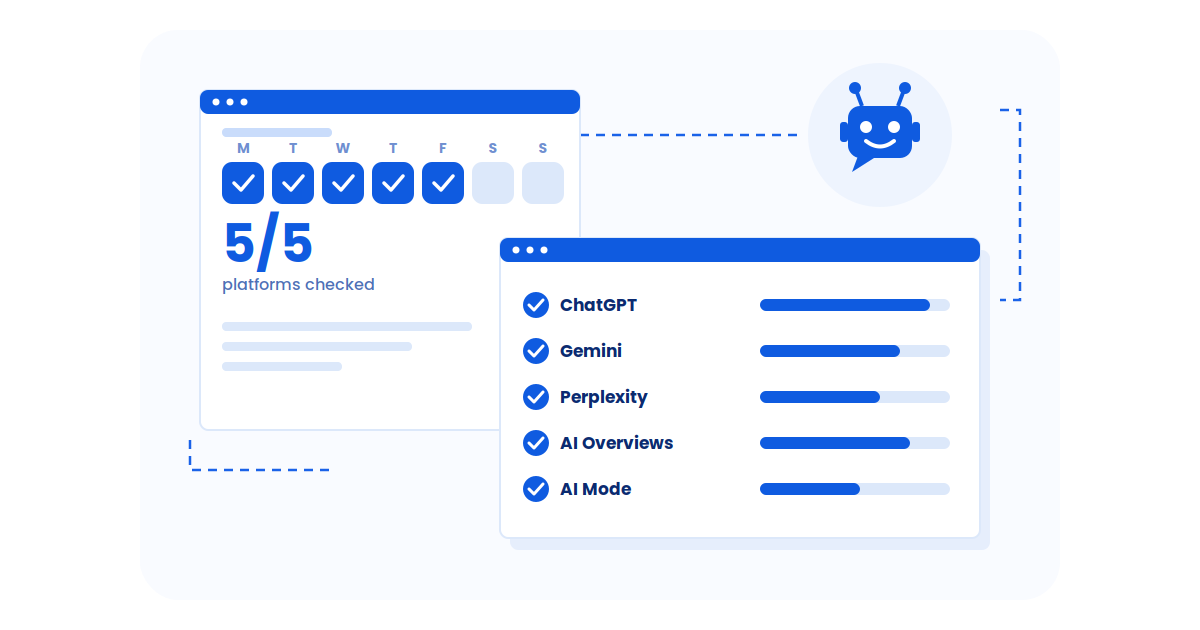
We built Wellows because of this volatility. Traditional SEO tools track rankings. We track LLM citation presence daily as part of structured AI visibility measurement across OpenAI, Gemini, Claude, and Perplexity.
Did you know?
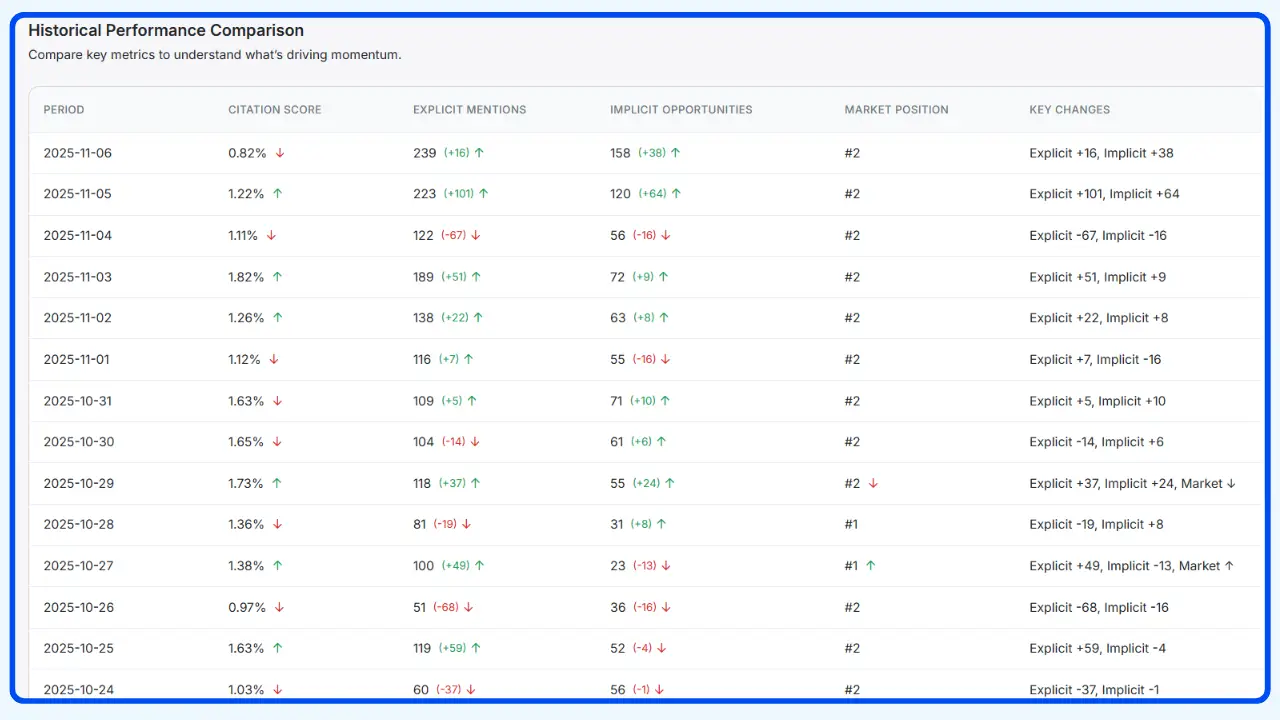
What we’re seeing in our monitoring data across hundreds of thousands of citations:
Citation rotation happens in 24-72 hour cycles, especially on:
- Commercial/transactional queries (“best X for Y”)
- Queries influenced by UGC signals (Reddit, forums)
- Rapidly evolving topics (AI tools, crypto, breaking news)
Stable citations tend to cluster around:
- Well-structured FAQ/comparison content
- Pages with explicit entity markup (schema, author bios, citations)
- Content that covers semantic neighbors (related sub-topics)
The brands seeing consistent LLM visibility are treating it like a brand awareness play, not a direct-response channel. They’re not trying to “Rank #1” in ChatGPT they’re trying to show up in 10-15% of relevant queries and compound that over time.
And they’re doing exactly what I described: tracking source rotation and systematically getting mentioned on every new source that emerges.
My Take: Always Chase It But Be Smart About How
So here’s my position:
Did you know?
Did you know?
This isn’t “SEO vs. GEO.” It’s SEO and GEO working together. The same strategies that win third-party mentions thought leadership, data, quotes, and tools also create every new AI citation opportunity that fuels long-term LLM visibility.
But you need the right monitoring infrastructure. If you’re manually checking ChatGPT every few days, you’ll miss the rotation cycles. You need to track:
- Which queries cite you (and when)
- Which sources are being cited alongside or instead of you
- Whether your mentions are growing or shrinking across the retrieval pool
That’s the real game now not ranking for one keyword, but building enough presence to saturate the option set so LLMs can’t avoid you.