When you ask an LLM a question inside its consumer app, you’re not just querying a model.
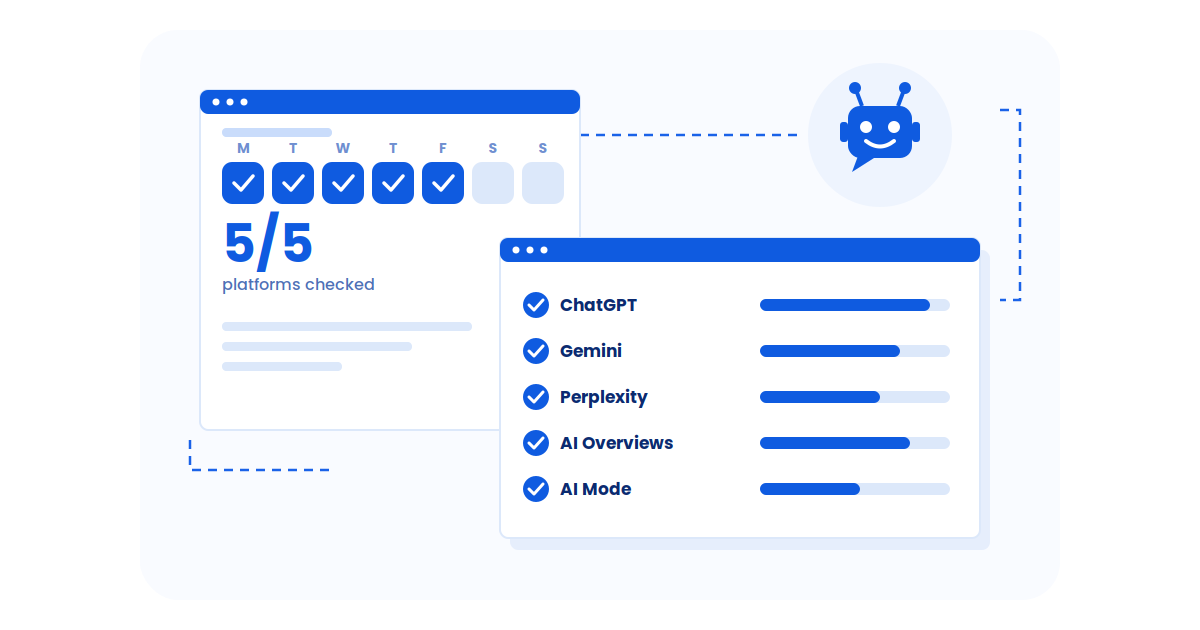
This difference directly impacts how AI visibility is measured across platforms like ChatGPT, Perplexity, Gemini, and Google AI Overviews.
You’re querying an entire product system: system prompts, safety layers, UI tooling, browsing and retrieval, ranked cards, image packs, commerce modules, experiments, and sometimes personalization.
But when you call that same provider through an API, you often get something meaningfully different.
That mismatch became a serious problem for what we’re building at Wellows: accurate AI visibility measurement based on real user-facing experiences, including e-commerce queries where images, products, and “answer layouts” matter as much as text.
So we upgraded our infrastructure.
We no longer rely on LLM APIs as our primary truth. Instead, we run browser-based retrieval per query, per LLM, so the outputs we capture align with the real user-facing experience. Yes, even when the result includes images for commerce queries, or when it doesn’t.
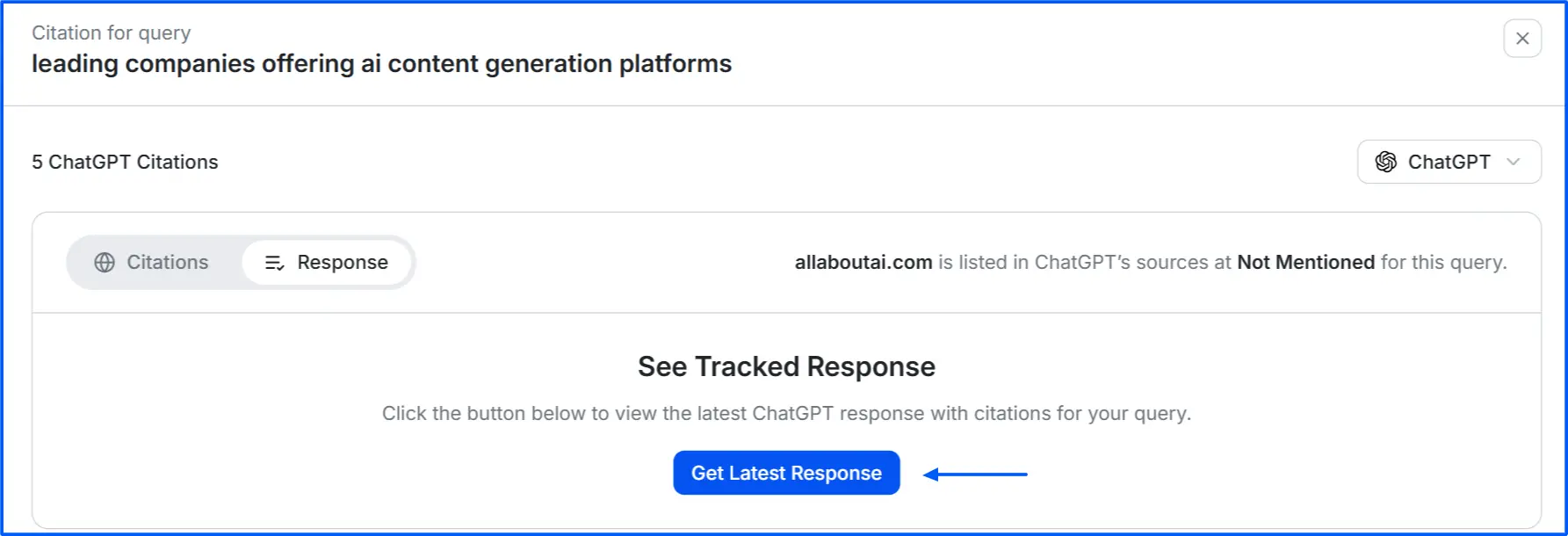
The core issue: API answers ≠ real AI visibility experience
APIs are designed for developers. Consumer apps are designed for users. Those two goals produce different output characteristics:
- Different system instructions and hidden policies
- Different tools (browsing/retrieval, shopping cards, citations, UI ranking layers)
- Different formatting and multimodal rendering (images/cards vs plain text)
- Different A/B experiments and release trains
- Different session context behavior
The result is simple: API outputs are not a faithful proxy for what users see day-to-day.
And if your product depends on user-perceived results, like brand presence, product inclusion, or share of voice inside AI answers, API-only testing can quietly mislead you.
“If you’re measuring AI visibility using APIs, you might be measuring a developer interface, not the user reality.“
What Changed at Wellows?
We rebuilt our pipeline to emphasize UI-parity capture:
Before
We used API to extract AI responses on ChatGPT, Perplexity, Google AI Overviews, Gemini and AI Mode.
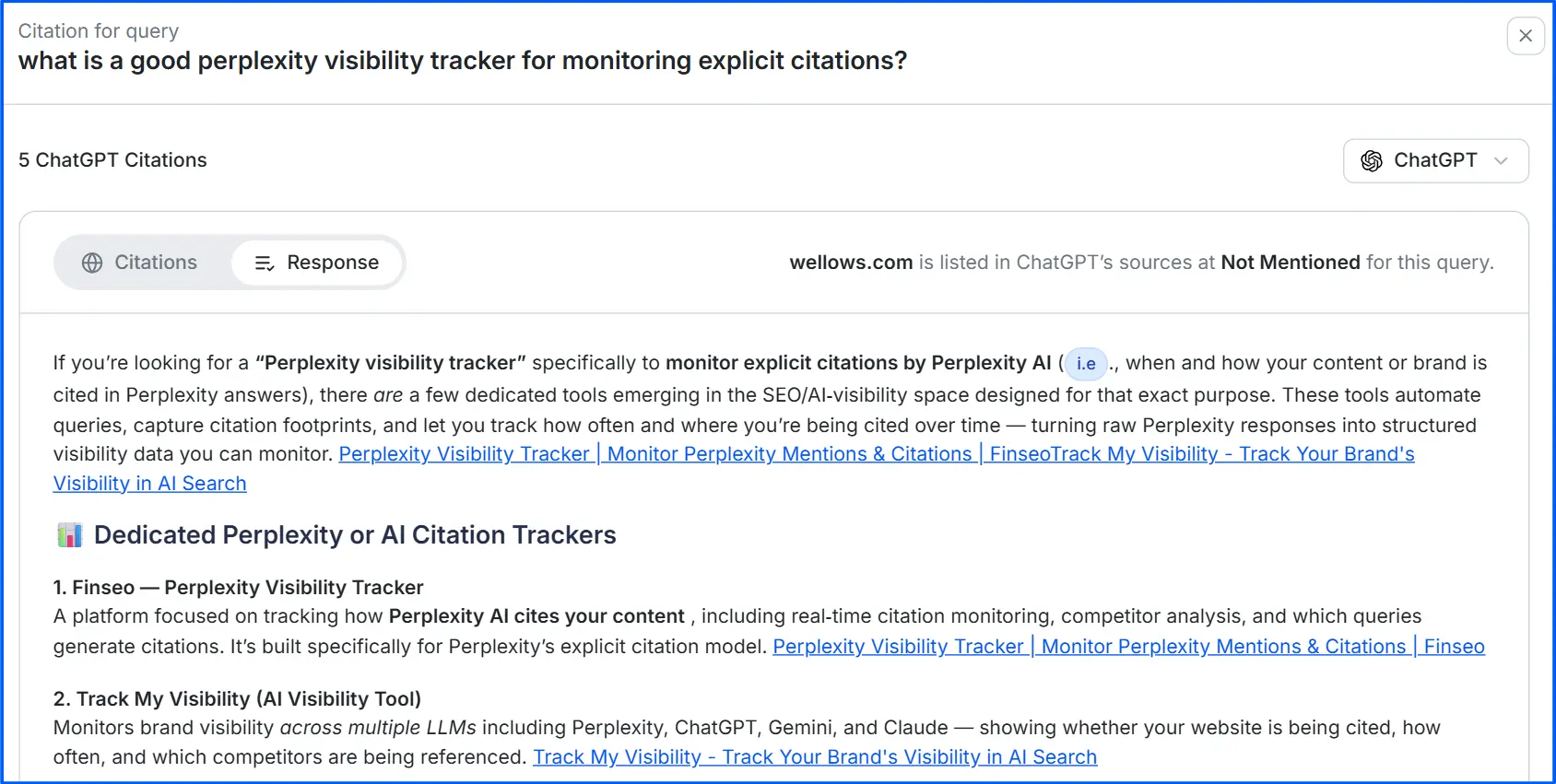
Now
Now, we no longer use API. We get live answers from AI platforms:
- Call model/provider APIs normalize outputs
- Score brand presence, citations, and ranking signals

- Run each query through browser-based user session simulation
- Capture what the user would actually see (text + layout signals, and image availability where applicable)
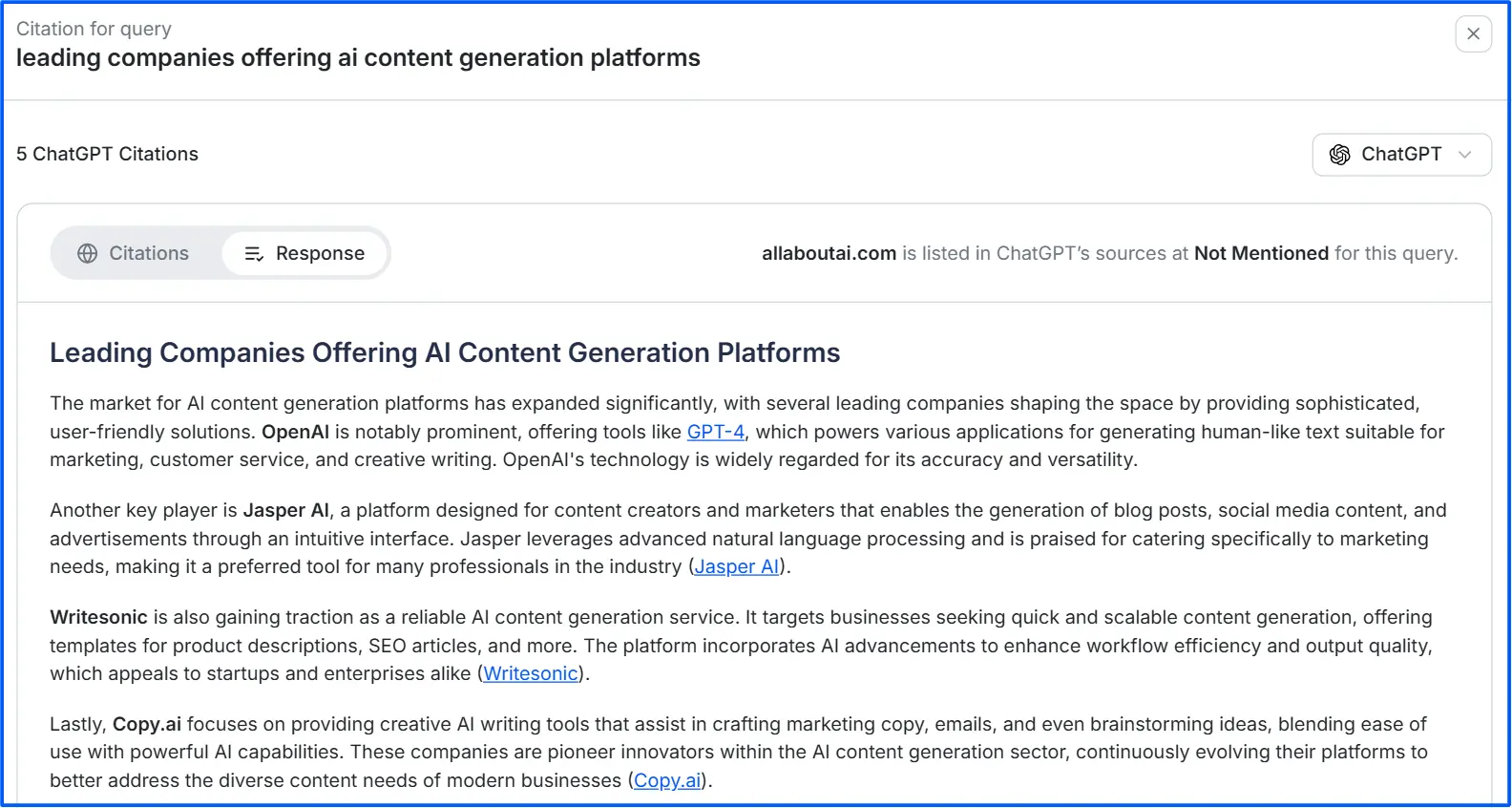
- Extract and normalize outputs for measurement
In practice: each query runs “against each LLM” as a real user session would, rather than via a simplified API response.
Why Experience-level Testing Produces More Realistic Results
Experience-level testing produces more realistic results because:
1) You get the same rendering path users see
Consumer experiences often include:
- Rich answer blocks
- Inline citations
- Product cards
- Image panels
- “Top picks” modules
- Layout-driven prominence
These are frequently absent or reduced in API responses.
2) You capture the “real distribution” of answers
Consumer LLM products can behave like living systems: experiments, UI changes, and ranking tweaks roll out constantly. Our front-end parity pipeline reflects that live reality.
3) E-commerce queries are inherently multimodal
For commerce, “did the model mention my brand?” is only half the question. The other half is:
- Did it show products?
- Did it show images?
- Did it cluster competitors visually?
- Did it choose a marketplace and not another?
Why this Matters for Customers?
If you’re an agency responsible for measuring AI visibility for clients, the question you actually care about is:
“What do users see?”
Not:
“What does an API return?”
With this infrastructure upgrade, Wellows can measure:
- Accurate AI visibility measurement based on real user experiences
- Verified brand presence in UI-rendered answers
- Actual competitor sets surfaced in live results
- Commerce visibility including images and product modules
- Reliable monitoring of visibility drift over time
What’s Next?
We’re continuing to invest in:
- Faster sessions and smarter caching
- Better extraction of multimodal signals
- More robust cross-provider normalization
- Hybrid approaches where APIs are accurate proxies; and where they aren’t
- Advanced session orchestration for scale Our goal stays the same:
Make AI visibility measurable in the real world, the way users actually experience AI search, not in the developer sandbox.