


TL;DR
| Patent Information gain comes from a Google patent. It isn’t a confirmed live ranking signal you can measure directly. |
No score There’s no public score to calculate. A tool that hands you one exact number is guessing, not measuring. |
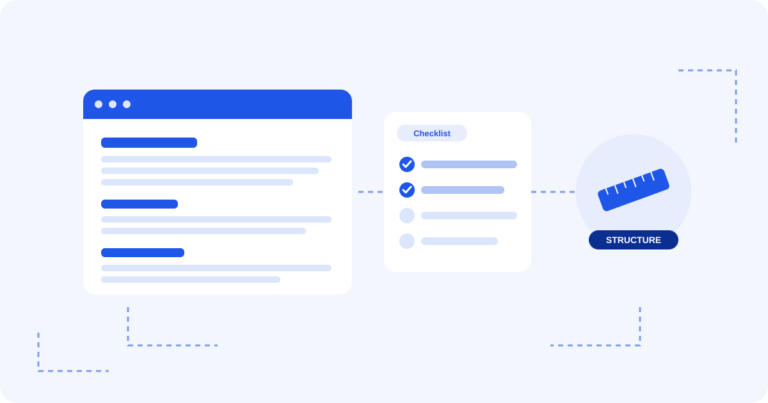
| Overlap check List what the top results already cover, then look for what’s missing. |
Original data Seems to help, but not evenly across every type of page. |
| Real work Add information gain by doing the work: your own data, firsthand tests, expert input, or a real gap filled. |
Skip novelty A new angle only counts if it’s actually useful to the reader. |
Information gain is a real concept, pulled from an actual Google patent, but it isn’t something you can calculate on demand. The reliable way to use it is a simple overlap check: see what the top results already cover, then add only what’s genuinely missing.
This guide explains what the patent actually says, why most summaries overstate it, how to run a practical overlap check, and when original data tends to help you get cited by AI engines.
1What is information gain?
Definition: information gain
A method, described in Google patent US11354342B2 (“Contextual estimation of link information gain,” granted June 7, 2022), for estimating how much new information a page adds relative to other pages already indexed on the same topic. It is not confirmed as a live ranking factor Google currently uses at scale.
Why the claim gets exaggerated
Patents make narrow, specific technical claims. Summaries round them up. “Google has a patent for scoring new information” turns into “Google ranks pages by an information gain score” after a few rounds of secondhand retelling. Reading the patent language itself, rather than a chain of summaries of it, is the only reliable way to know what it says.
2Can you calculate information gain?
Not precisely. Google hasn’t published a public score, and any tool selling an “information gain score” is a third party estimate built on guesses about the patent, not a confirmed replica of it.
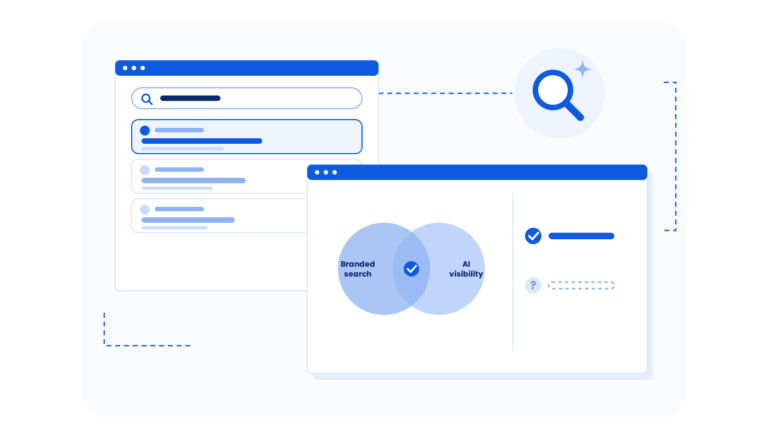
What actually works is simpler: pull the current top results for your target query, list what they already cover, and check your draft against that list. Here’s the five-step version.
| 1 | Pull the current top five results for your target query. |
| 2 | List every distinct claim or fact each one makes, in a single shared document. |
| 3 | Mark the claims that repeat across most of the five; those are the baseline a new page has to match. |
| 4 | Circle what’s missing: a question none of the five answer, a number nobody has published, an angle nobody has tried. |
| 5 | Write to fill only what you circled, backed by something real, not a guess dressed up as an insight. |
3Does original data help you get cited by AI?
Picture a company page, like one Apple might publish on a product feature, next to an independent comparison article that brings its own testing data and a published dataset. In practice, pages that bring something nobody else has, a dataset, a firsthand test, a specific number from real usage, tend to turn up more often as the cited source when an AI engine answers a comparison-style question. A page that only restates what every other page already says has less to offer an engine choosing between several similar sources.
A straightforward company feature page can still get cited for a direct factual question, like a spec or a release date, where originality matters less than being the accurate, authoritative source. Forum threads get cited too, not because they contain a formal dataset, but because they carry specific, firsthand detail that neither the company page nor the polished comparison article has reason to include.
Caveat
This pattern holds more clearly for comparison and research-style queries than for simple factual lookups. Treat it as a general tendency, not a rule that applies the same way to every topic.
4How do you add information gain to a page?
| Method | What it looks like |
|---|---|
| Own data | A dataset, survey, or analysis nobody else has published |
| Firsthand tests | Running the thing yourself and reporting what happened, not summarizing someone else’s test |
| Expert input | A quote or detail from someone with real, specific experience in the topic |
| Gap answers | Directly answering a question the existing top results skip entirely |
|
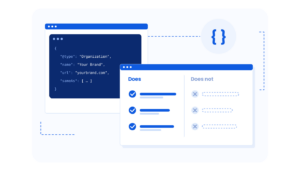
Do
|
Don’t
|
5What should you avoid?
Skip what some guides call “chunking for AI”: restructuring content purely to game a retrieval system rather than to help a reader. It treats the symptom, not the real question of whether your content says something worth citing.
A related trap is adding data for its own sake. A small, badly designed survey of a handful of people isn’t information gain. It’s noise with a chart attached, and a careful reader, or an AI engine summarizing several sources, will treat it that way.
What only Wellows adds
Wellows tracks which of your pages actually get cited by AI engines, broken down by page type, so you can see where original work is paying off and where it isn’t, instead of guessing from a single comparison. Before you write, use the free query fan out tool to see which related questions the top results already answer, and which ones are still open.
An information gain checklist
- Pull the top five results for your target query.
- List every claim and angle they already cover.
- Circle what’s genuinely missing, not just differently worded.
- Back every addition with real data, a real test, or real expert input.
- Skip novelty that doesn’t serve the reader’s actual question.
- Flag anything directional or small-sample as exactly that.
Conclusion
Information gain is real as a patent and a concept, but it isn’t something you can calculate on demand. Run the overlap check on your next piece this week, and treat anything you add as a genuine answer to a real gap, not a trick to satisfy an imaginary score.
FAQs