Search Engine Optimization (SEO) is a critical component of digital marketing that can impact your online visibility and business growth.
A well-structured SEO marketing plan serves as your roadmap to higher rankings, increased organic traffic, and improved conversion rates.
This comprehensive checklist breaks down the SEO process into manageable phases, providing you with actionable steps, tools, and techniques to implement an effective strategy that includes strong on-page SEO fundamentals.
Whether you’re a small business owner, marketing professional, or SEO specialist, this checklist will guide you through the entire SEO journey from initial research to performance measurement.
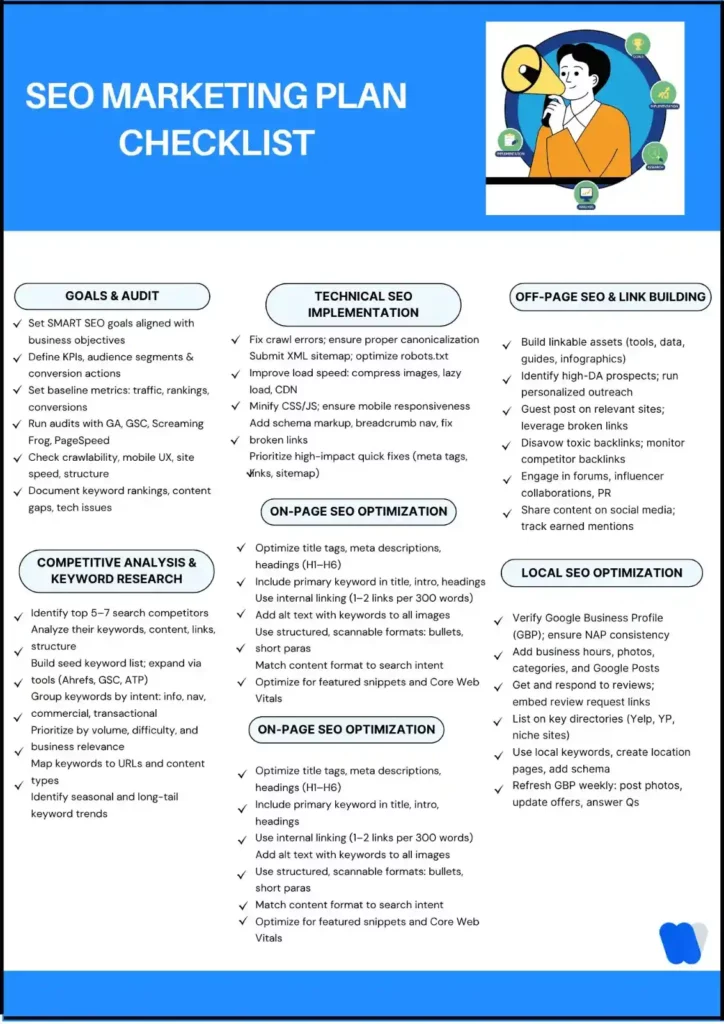
What is an SEO Marketing Plan?
An SEO Marketing Plan is a strategic document that outlines the specific tactics, resources, and timelines required to improve a website’s visibility in search engine results.
It serves as a structured framework that aligns SEO efforts with broader business objectives and provides a clear path toward achieving measurable outcomes.
A comprehensive SEO plan encompasses keyword research, technical optimization, content creation, link building, and performance tracking—all working together to boost organic search presence and drive qualified traffic to your website.
Unlike random SEO activities, a well-documented plan ensures consistency, accountability, and the ability to track progress toward defined goals. It also helps allocate resources effectively and demonstrate the ROI of SEO efforts to stakeholders.
SEO Marketing Plan Checklist – In-Detail Discussion
This section breaks down each phase of your SEO plan step-by-step.
It explains what to do, why it matters, and how to apply it effectively to grow your organic visibility.
Phase 1: SEO Goal Setting and Website Audit
Start by setting clear SEO goals and reviewing your website’s current performance.
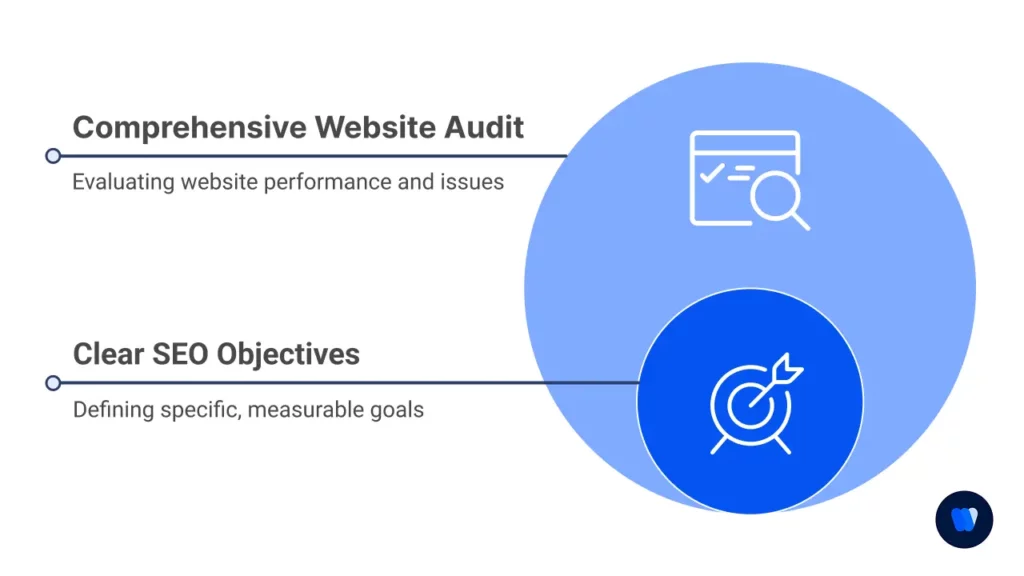
This helps you understand what’s working, what needs improvement, and where to focus your initial efforts.
Defining Clear SEO Objectives
- Establish specific, measurable, achievable, relevant, and time-bound (SMART) SEO goals
- Align SEO objectives with broader business and marketing targets
- Set baseline metrics for organic traffic, rankings, and conversions
- Identify key performance indicators (KPIs) to track progress
- Define your target audience segments and their search behaviors
- Determine primary conversion actions for each audience segment
Conducting a Comprehensive Website Audit
- Evaluate current website performance using tools like Google Analytics and Search Console
- Identify technical issues affecting crawling and indexing
- Assess website structure, navigation, and internal linking patterns
- Review mobile-friendliness and page loading speed
- Analyze current keyword rankings and organic traffic patterns
- Document content gaps and optimization opportunities
When performing your website audit or conducting a structured technical SEO audit, use a combination of tools to get comprehensive insights. Google’s PageSpeed Insights helps identify specific performance issues, while Screaming Frog and OPTA by Wellows can crawl your site to find technical SEO problems like broken links, duplicate content, and missing meta tags. Create a prioritized list of issues based on potential impact and implementation difficulty.Technical Note
Getting Started with Your SEO Journey:
Starting your SEO plan might feel overwhelming at first. Here’s a simple approach to make it manageable:
| Step | Action | Expected Outcome |
|---|---|---|
| 1 | Review last month’s analytics | Baseline understanding |
| 2 | Check the top 10 landing pages | Content performance insights |
| 3 | Run a basic SEO audit tool | Quick-win opportunities |
| 4 | Talk to 2–3 customers | Real search behavior insights |
Remember, the goal of your initial audit isn’t perfection—it’s getting clarity on where to focus first. Small, consistent improvements add up to major results over time.
Phase 2: Competitive Analysis and Keyword Research
Look at what your competitors are ranking for and find keywords your audience is searching.
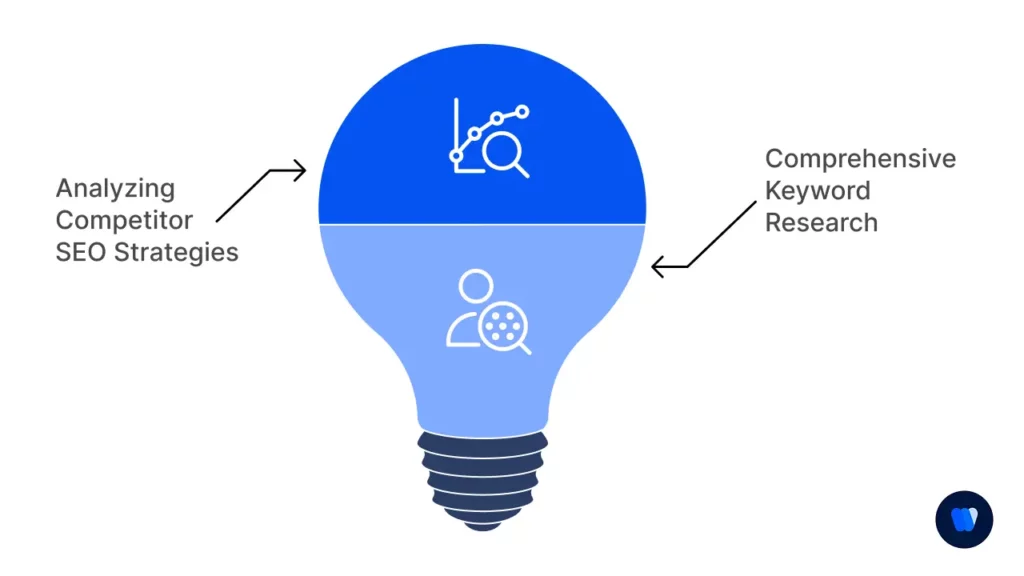
This step directs your SEO strategy and helps uncover opportunities you might be missing.
Analyzing Competitor SEO Strategies
- Identify the top 5-7 competitors in the search results for your target keywords
- Analyze competitors’ keyword portfolios and content strategies
- Review competitors’ backlink profiles and referring domains
- Examine competitors’ site structure and technical SEO implementations
- Identify gaps and opportunities in competitors’ strategies
- Document successful SEO tactics you can adapt for your website
Comprehensive Keyword Research
- Develop a core list of seed keywords relevant to your business
- Expand keyword list using research tools like Ahrefs, SEMrush, or Moz
- Categorize keywords by search intent (informational, navigational, transactional)
- Prioritize keywords based on search volume, competition, and business value
- Identify long-tail keyword opportunities with lower competition
- Map keywords to specific pages and content pieces
- Research seasonal trends and keyword variations
Tool Tip For effective keyword research, combine data from multiple sources. Google Keyword Planner provides search volume data, while tools like AnswerThePublic reveal question-based queries around your topics. Additionally, analyze your Google Search Console data to identify keywords already driving traffic to your site that could be further optimized. Group related keywords into thematic clusters to develop comprehensive content strategies.
Organizing your keywords strategically helps create a focused content plan: Pro Tip: Create a keyword mapping document with these columns: This organized approach helps you methodically build content that serves real user needs while improving your search visibility.Keyword Organization Framework:
Phase 3: Technical SEO Implementation
Fix any technical issues that prevent search engines from crawling your site.
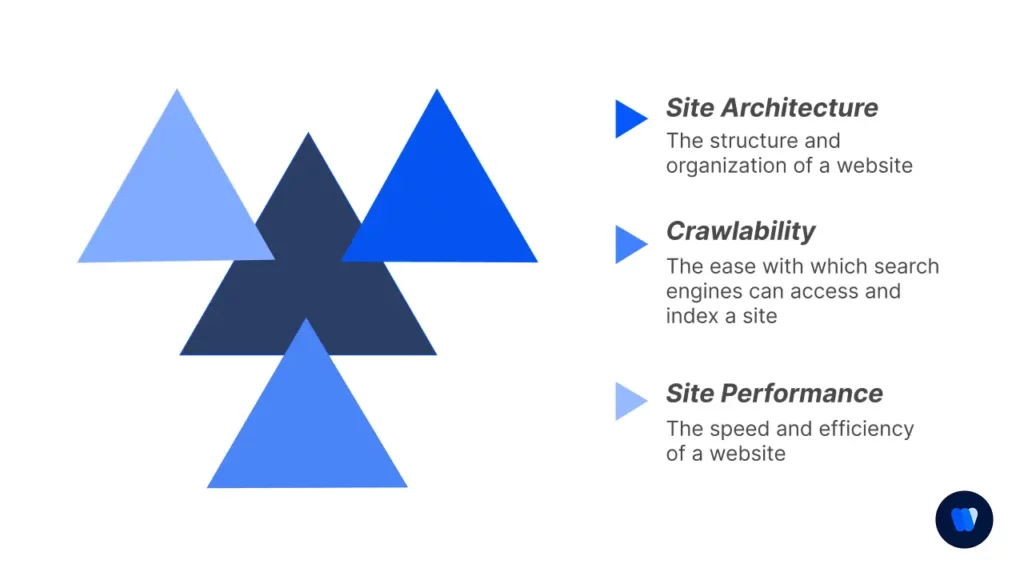
This includes improving load speed, mobile usability, and overall site structure to support better indexing and rankings.
Site Architecture and Crawlability
- Create a clear, logical site structure with minimal click depth
- Implement an XML sitemap and submit to search engines
- Optimize robots.txt file to guide search engine crawlers properly
- Ensure proper canonicalization to prevent duplicate content issues
- Address crawl errors identified in Google Search Console
- Implement schema markup for enhanced search results
- Enable breadcrumb navigation for improved user experience
Site Performance Optimization
- Optimize page loading speed across all devices
- Implement browser caching and content delivery network (CDN)
- Compress images and implement lazy loading
- Minify CSS, JavaScript, and HTML files
- Ensure proper rendering on mobile devices
- Implement accelerated mobile pages (AMP) where appropriate
- Fix broken links and redirect chains
Cheat Sheet: Technical SEO Quick Fixes
| Issue | Solution | Impact |
|---|---|---|
| Slow loading | Image compression, cache leverage | Reduced bounce rate, improved rankings |
| Missing meta tags | Add unique titles and descriptions | Better click-through rates |
| Duplicate content | Implement canonical tags | Prevents ranking dilution |
| Mobile issues | Responsive design implementation | Improved mobile rankings |
| Broken links | Regular site crawling and fixing | Better user experience and crawl budget |
Technical SEO Priority Matrix:
Not all technical issues have equal impact. Use this matrix to prioritize your efforts:
High Impact, Easy Fixes:
- Missing meta titles and descriptions
- Broken internal links
- Image compression
- XML sitemap submission
High Impact, More Complex:
- Site speed optimization
- Mobile responsiveness
- Schema implementation
- URL structure improvements
Focus on the top-left quadrant first to get momentum with quick wins before tackling more complex issues.
Most websites have several easy technical fixes that can boost rankings within weeks of implementation.
Phase 4: On-Page SEO Optimization
Make sure every page on your site is optimized for both search engines and users.
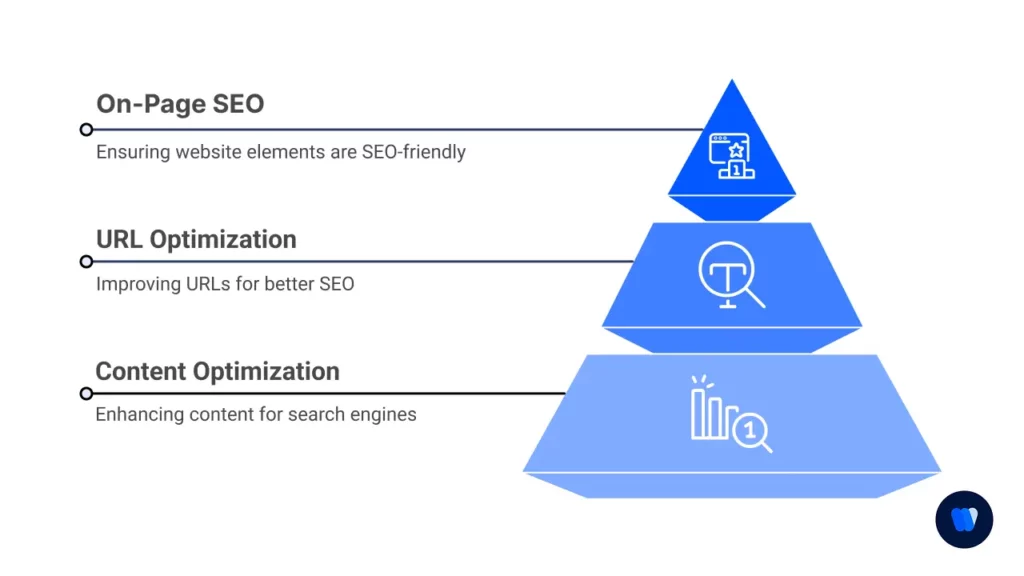
This includes refining content, headings, internal links, and meta tags for better visibility and engagement.
Content Optimization Strategies
- Create a content calendar aligned with keyword research
- Optimize title tags, meta descriptions, and H1 headings
- Structure content with appropriate heading hierarchy (H2-H6)
- Incorporate target keywords naturally throughout content
- Add internal links to related content and important pages
- Optimize image alt text and file names
- Ensure appropriate content length and depth for target keywords
- Implement featured snippet optimization for applicable content
User Experience Enhancement
- Improve readability with short paragraphs and bullet points
- Add relevant multimedia elements (images, videos, infographics)
- Optimize for dwell time by creating engaging, valuable content
- Ensure clear calls-to-action on all pages
- Design intuitive navigation and site search functionality
- Implement structured data markup where appropriate
- Optimize for Core Web Vitals metrics
Expert Advice: Focus on creating comprehensive, authoritative content that thoroughly addresses user intent. Google’s algorithms increasingly favor content that answers users’ questions completely. Use tools like Clearscope or MarketMuse to analyze competitors’ content and identify topics to cover. Remember that user engagement metrics like time on page, bounce rate, and pages per session are important signals to search engines about your content quality.
Every piece of content should undergo these optimization steps: ✓ Keyword appears in title, H1, and first 100 words ✓ Supporting keywords in H2s and throughout content ✓ Short, scannable paragraphs (3-4 lines max) ✓ Bulleted and numbered lists for easy scanning ✓ 1-2 internal links per 300 words of content ✓ Image alt text includes relevant keywords ✓ Custom meta description with call to action ✓ Content answers common user questionsContent Optimization Checklist:
Content Types by Search Intent:
| Intent Type | Best Content Formats | Example |
|---|---|---|
| Informational | How-to guides, tutorials | “How to optimize images for web” |
| Navigational | Landing pages, about pages | “Company name customer service” |
| Commercial | Comparison pages, reviews | “Best SEO tools for small business” |
| Transactional | Product pages with clear CTAs | “Buy organic cotton t-shirts” |
Matching your content format to search intent dramatically improves engagement metrics and conversion rates.
Phase 5: Off-Page SEO and Link Building
Build authority by earning links from other reputable websites.
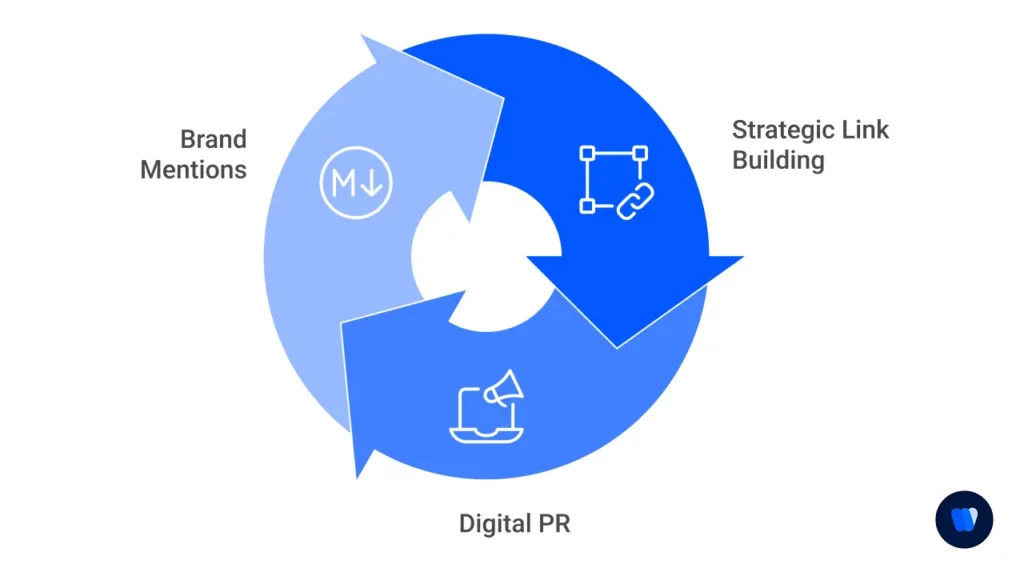
Focus on creating useful content, forming partnerships, and gaining mentions that improve your credibility and boost your rankings.
Strategic Link Building
- Develop a diverse backlink acquisition strategy
- Create linkable assets (research studies, infographics, tools)
- Identify and prioritize link prospects by domain authority
- Conduct outreach for guest blogging opportunities
- Leverage broken link building tactics
- Monitor competitors’ new backlinks for opportunities
- Disavow toxic or spammy backlinks
Digital PR and Brand Mentions
- Create newsworthy content to attract natural links
- Develop relationships with industry publications and influencers
- Monitor and respond to brand mentions across the web
- Participate in industry forums and online communities
- Leverage social media to amplify content reach
- Implement a citation-building strategy for local SEO
- Establish thought leadership through expert content contributions
Strategic Note: Quality always trumps quantity in modern link building. Focus on acquiring links from relevant, authoritative websites in your industry rather than pursuing high volumes of low-quality links. Use relationship-based approaches like expert roundups, interviews, and collaborative content to build sustainable link acquisition channels. Consider creating a unique research study or data visualization that provides genuine value to your industry—these types of content naturally attract links from multiple sources.
Focus on quality over quantity. These tactics help you earn backlinks through useful content, strong relationships, and personalized outreach that stands the test of time. Start with 5-10 quality outreach emails weekly rather than mass-sending generic requests. Building genuine relationships takes more time but yields lasting results that algorithm updates won’t diminish.Proven Link Building Tactics:
Phase 6: Local SEO Optimization
If location matters to your business, optimize for local search.
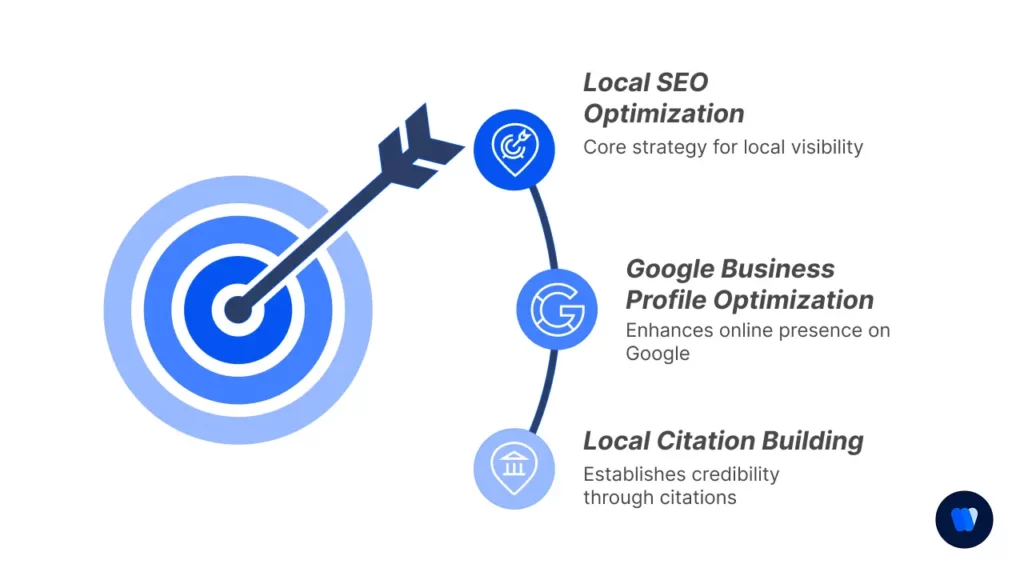
Set up your Google Business Profile, manage citations, and encourage reviews to improve your visibility in local search results.
Google Business Profile Optimization
- Create and verify your Google Business Profile listing
- Ensure consistent NAP (name, address, phone) information
- Add comprehensive business information (hours, services, etc.)
- Upload high-quality photos and videos of your business
- Encourage and respond to customer reviews
- Create Google Posts to highlight promotions and events
- Use appropriate business categories and attributes
Local Citation Building
- Create listings on major directory sites (Yelp, Yellow Pages, etc.)
- Ensure consistent business information across all citations
- Build industry-specific directory listings
- Optimize for local keywords in website content and tags
- Create location-specific landing pages for multi-location businesses
- Implement local schema markup on relevant pages
- Develop a strategy for generating positive reviews across platforms
Small, consistent actions build strong local visibility. Focus on generating reviews, publishing local content, and keeping your Google Business Profile fresh to stay relevant in local search results. These small, consistent actions build local authority over time and help your business appear in the valuable “Map Pack” results at the top of local searches.Local SEO Enhancement Tips:
Phase 7: Monitoring, Reporting, and Adjustment
Track your SEO performance regularly and make data-driven updates.
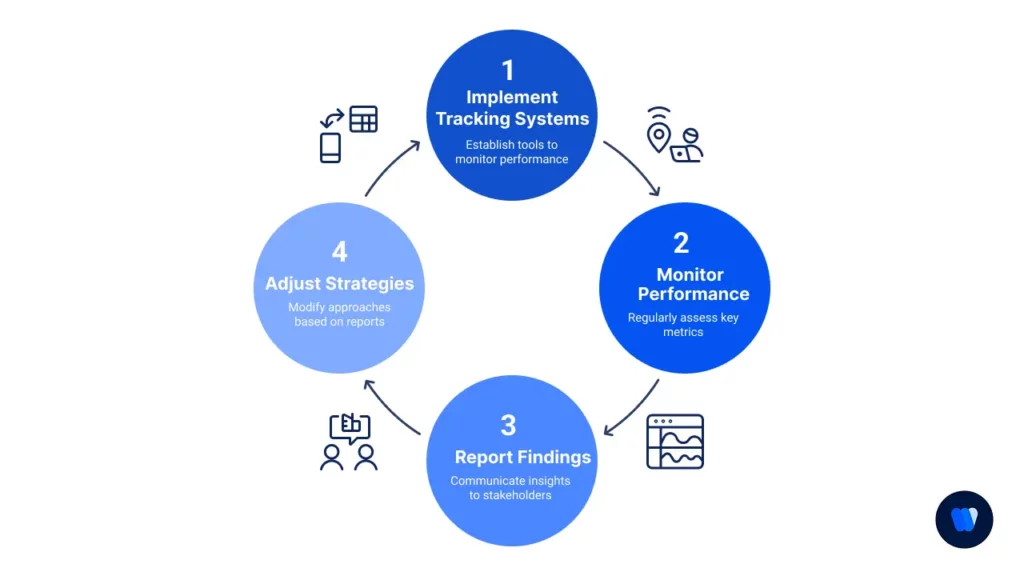
Reviewing your results helps you identify what’s working, fix what’s not, and adjust your strategy to keep improving over time.
Performance Tracking Systems
- Implement comprehensive analytics tracking across all pages
- Set up custom dashboards for key SEO metrics
- Create regular reporting schedules (weekly, monthly, quarterly)
- Track keyword rankings and visibility over time
- Monitor organic traffic, conversions, and revenue
- Analyze user behavior metrics (bounce rate, pages per session)
- Set up alerts for ranking or traffic changes
Continuous Optimization Strategy
- Regularly update and refresh high-performing content
- Identify and fix underperforming content and pages
- Stay current with algorithm updates and SEO best practices
- Conduct quarterly technical SEO audits
- Refine keyword targeting based on performance data
- A/B test page elements to improve conversion rates
- Document learnings and update your SEO strategy accordingly
Measurement Framework: Develop a comprehensive SEO scorecard that combines leading indicators (rankings, visibility, backlinks) with lagging indicators (traffic, conversions, revenue).
Use a tool like Google Data Studio or Looker Studio to create a visual dashboard that presents this data in an accessible format for stakeholders.
Establish regular review meetings to interpret data trends and make strategic adjustments to your SEO efforts based on performance insights.
Simple SEO Reporting Template:
Create a one-page monthly dashboard with these key metrics:
| Metric Category | Key Measurements | Review Frequency |
|---|---|---|
| Visibility | Ranking changes for top 20 keywords | Weekly |
| Traffic | Organic sessions, new users, pages/session | Monthly |
| Engagement | Avg. time on site, bounce rate | Monthly |
| Conversions | Goal completions from organic traffic | Monthly |
| Technical | Core Web Vitals, crawl stats | Quarterly |
Monthly Optimization Routine:
This balanced approach ensures you’re building on successes while fixing weaknesses.
SEO Competitor Analysis: “Analyze the top 5 organic search competitors for [your target keyword], identifying their content structure, backlink sources, and keyword targeting strategies. Provide actionable recommendations based on identified gaps and opportunities.” Content Optimization: “Review [URL] for on-page SEO factors and provide specific recommendations to improve keyword targeting, readability, user engagement, and conversion potential while maintaining natural, value-driven content.” Technical SEO Audit: “Perform a comprehensive technical SEO audit of [website URL], prioritizing issues based on impact and implementation difficulty. Include specific fixes for core web vitals, mobile optimization, and crawlability problems.” Link Building Strategy: “Develop a customized link building strategy for [industry/niche] that focuses on sustainable, white-hat techniques appropriate for our authority level and competitive landscape.” SEO Performance Analysis: “Analyze the past 6 months of organic search performance for [website], identifying trends, opportunities, and potential issues. Include recommendations for improving key metrics and addressing any declining performance areas.”5 Effective Prompts for SEO Marketing Plan Implementation
Measuring the success of your SEO marketing plan requires tracking both leading and lagging indicators across multiple dimensions. According to recent industry studies, businesses that regularly monitor and adjust their SEO strategies based on data see 150% better results than those following a static approach. Traffic Metrics: Engagement and Conversion Metrics: Technical Performance Metrics: Return on Investment:How to Measure the Success of Your SEO Marketing Plan
To effectively measure SEO success, establish baseline metrics before implementation, set realistic targets based on industry benchmarks and competition, and create a consistent measurement framework that aligns with your business goals.
Explore essential SEO and marketing checklists to boost your online growth:
- Keyword Research Checklist – Learn how to discover, analyze, and prioritize keywords for maximum traffic impact.
- On-Page SEO Checklist – Step-by-step guide to optimize content, titles, headings, and internal links.
- SEO Framework Checklist – A structured framework covering technical SEO, content, and authority signals.
- SEO Audit Checklist – Identify technical issues, fix site errors, and uncover quick SEO wins.
- Content Marketing Plan Checklist – Plan and execute content strategies that attract traffic and conversions.