Search Engine Optimization (SEO) has evolved from a technical discipline to a crucial business strategy that drives organic visibility, traffic, and conversions.
This comprehensive SEO strategy checklist provides a structured approach to developing, implementing, and optimizing your search presence through strong on-page SEO and strategic execution.
Whether you’re a seasoned SEO professional or just starting your journey, this template will guide you through the critical elements of a successful SEO strategy.
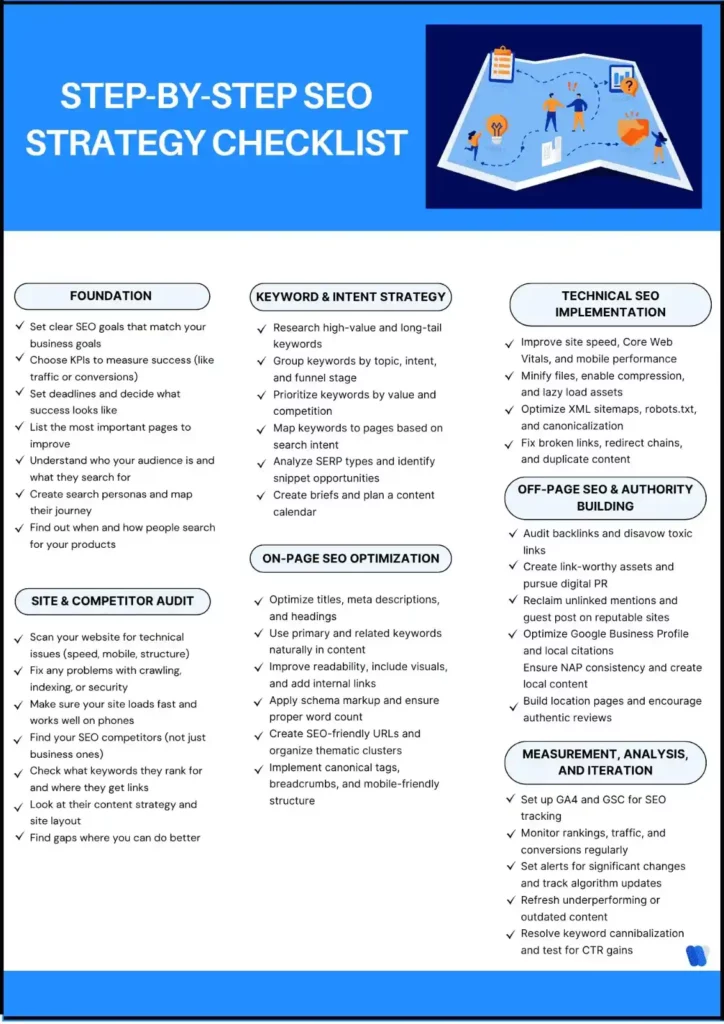
What is SEO Strategy?
An SEO strategy is a comprehensive plan that outlines how you will optimize your website to improve organic rankings, drive more relevant traffic, and achieve business objectives.
Unlike tactical SEO work, a strategy takes a holistic view—considering your business goals, competitive landscape, target audience, and available resources, to create a sustainable approach to search visibility that delivers long-term results.
SEO Strategy Checklist – In-Detail Discussion
This SEO strategy template breaks down the process into seven fundamental phases, each containing detailed action items, expert tips, and practical frameworks.
Each phase builds upon the previous one to create a cohesive strategy that addresses both technical requirements and user experience needs.
The checklist is designed to be adaptable to businesses of any size and in any industry, with recommendations that can be scaled according to your resources and objectives.
Phase 1: SEO Foundations and Goal Setting
Start by aligning SEO goals with your broader business objectives and defining clear KPIs.
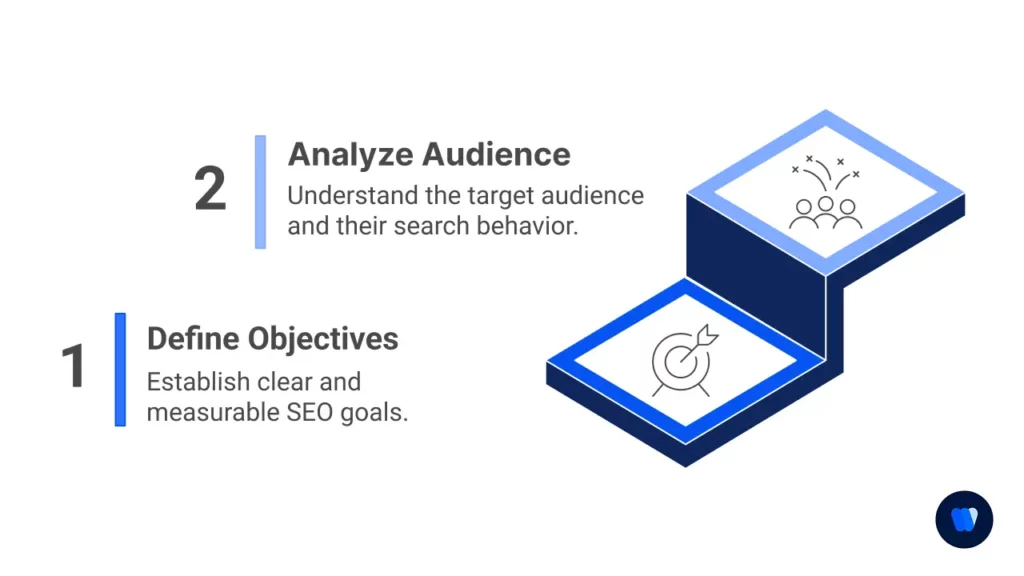
Understanding your audience and setting realistic, time-bound targets will shape a focused and measurable strategy.
Defining Your SEO Objectives
- Align SEO goals with broader business objectives
- Establish specific, measurable SEO KPIs (organic traffic, rankings, conversions)
- Set realistic timeframes for achieving SEO milestones
- Determine priority pages and sections for optimization
- Define target ROI for SEO investments
- Establish baseline metrics for future comparison
- Create a vision statement for your SEO program
Pro Tip: When setting SEO goals, consider both leading indicators (rankings, traffic) and lagging indicators (conversions, revenue). This provides a more complete picture of your SEO performance and value to the business.
Target Audience and Search Intent Analysis
- Identify primary and secondary audience segments
- Research search behaviors specific to your audience
- Map customer journey stages to search intent
- Create search personas with specific search patterns
- Document common questions your audience asks
- Analyze which devices your audience uses for search
- Identify seasonal trends in your audience’s search behavior
Pro Tip: Go beyond demographics when building search personas. Understanding the context of searches (where, when, and why people search for your products or services) provides valuable insights for optimization and content creation.
SEO Goal Setting Framework
When establishing SEO goals, use the SMART framework enhanced with search-specific considerations:
| Component | General Business Goal | Translated SEO Goal |
|---|---|---|
| Specific | Increase product sales | Improve organic rankings for product category pages |
| Measurable | Grow revenue by 15% | Increase organic traffic by 25% and conversion rate by 5% |
| Achievable | Expand market presence | Rank on page 1 for 15 priority keywords |
| Relevant | Establish thought leadership | Increase organic visibility for informational queries |
| Time-bound | Q2 objectives | Achieve goals within 6 months |
Phase 2: SEO Audit and Competitive Analysis
Evaluate your website’s technical health through a structured technical SEO audit and identify issues that impact performance, such as speed, crawlability, and structure.
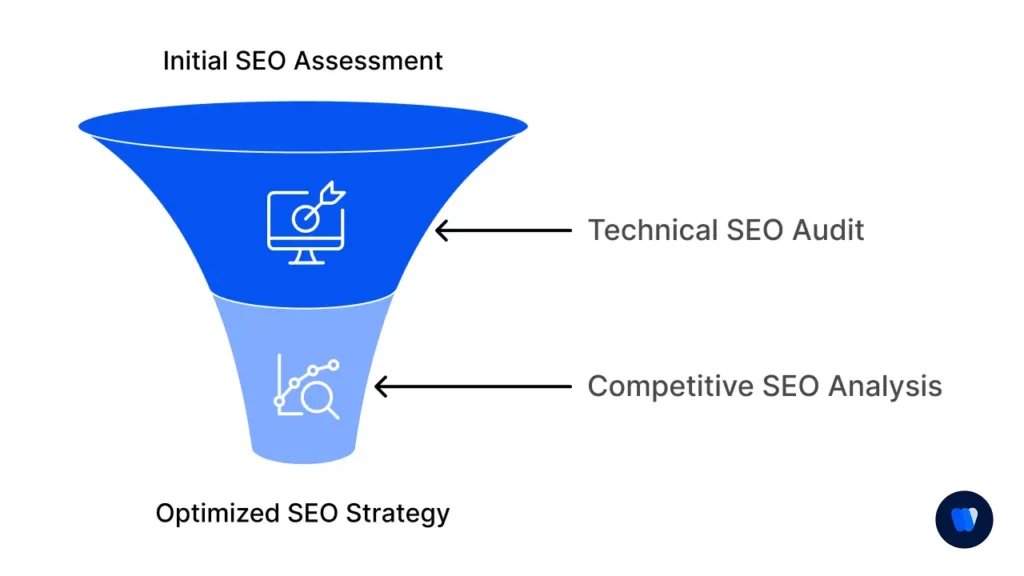
Analyze competitors to uncover content gaps and missed opportunities in your niche.
Technical SEO Audit
- Conduct a comprehensive crawl of your website
- Analyze site structure and internal linking patterns
- Identify and resolve crawlability and indexation issues
- Assess site speed and Core Web Vitals performance
- Audit mobile-friendliness and responsive design
- Check for duplicate content issues
- Evaluate structured data implementation
- Assess security (HTTPS) implementation
- Review robots.txt and XML sitemap configuration
This ensures you’re addressing the most critical issues that affect your business outcomes first.
Competitive SEO Analysis
- Identify top organic competitors (not just business competitors)
- Analyze competitors’ keyword rankings and gaps
- Examine competitors’ backlink profiles and strategies
- Review competitors’ content strategy and formats
- Identify competitors’ featured snippets and SERP features
- Assess competitors’ site structure and internal linking
- Determine competitors’ unique SEO advantages
- Document competitor weaknesses to exploit
Pro Tip: Use competitive analysis to find “content gaps” – valuable keywords your competitors rank for that you don’t. This often reveals untapped opportunities for quick SEO wins.
Technical SEO Audit Framework
| Element | Good | Needs Improvement | Critical Issue |
|---|---|---|---|
| Page Speed | <2s load time | 2–4s load time | >4s load time |
| Mobile-Friendly | Passes all tests | Minor UI issues | Major usability problems |
| Indexation | All important pages indexed | Some indexation issues | Major indexation problems |
| Crawlability | No crawl errors | Minor crawl issues | Blocked important content |
| Internal Linking | Logical structure | Inconsistent linking | Orphaned pages |
| HTTPS | Secure implementation | Mixed content warnings | Not implemented |
| Structured Data | Complete, valid markup | Partial implementation | Missing or invalid markup |
Phase 3: Keyword Research and Strategy
Research high-value keywords based on user intent, search volume, and relevance to your business.
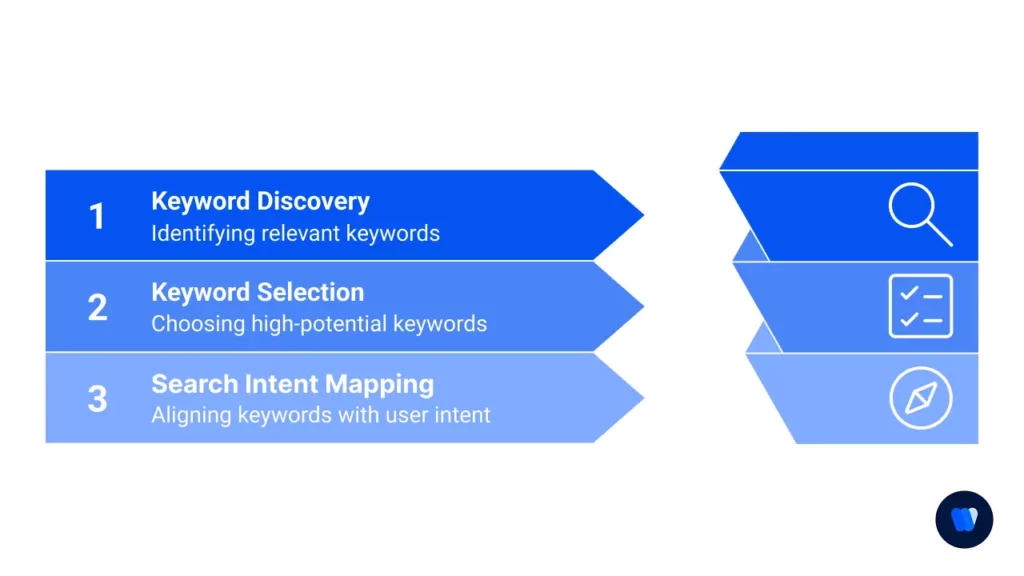
Organize them into clusters and map them to the customer journey for strategic targeting.
Keyword Discovery and Selection
- Conduct brainstorming sessions to identify seed keywords
- Use keyword research tools to expand your keyword list
- Analyze search volume, competition, and difficulty metrics
- Group keywords by topic, intent, and funnel stage
- Identify long-tail keyword opportunities
- Research trending and seasonal keywords
- Analyze keyword click-through rates from Search Console
- Prioritize keywords based on business value and competition
A lower-volume keyword with high purchase intent and lower competition often delivers better ROI than high-volume, highly competitive terms.
Search Intent Mapping
- Categorize keywords by intent (informational, navigational, commercial, transactional)
- Match content types to appropriate search intent
- Analyze SERP features for priority keywords
- Identify featured snippet opportunities
- Map keywords to specific pages based on intent match
- Create content briefs that address the identified intent
- Plan a content calendar to address all relevant intents
The types of content and SERP features displayed are strong indicators of the search intent Google has identified, which should guide your content development.
Keyword Mapping Template
| Page | Primary Keyword | Secondary Keywords | Search Intent | Current Ranking | Target Ranking | Priority |
|---|---|---|---|---|---|---|
| Home | [keyword] | [keywords] | Navigational | #X | #Y | High |
| Product Page | [keyword] | [keywords] | Transactional | #X | #Y | High |
| Category Page | [keyword] | [keywords] | Commercial | #X | #Y | Medium |
| Blog Post | [keyword] | [keywords] | Informational | #X | #Y | Medium |
| Support Page | [keyword] | [keywords] | Informational | #X | #Y | Low |
Phase 4: On-Page SEO Optimization
Optimize your pages with relevant keywords, proper headings, meta tags, and schema markup.
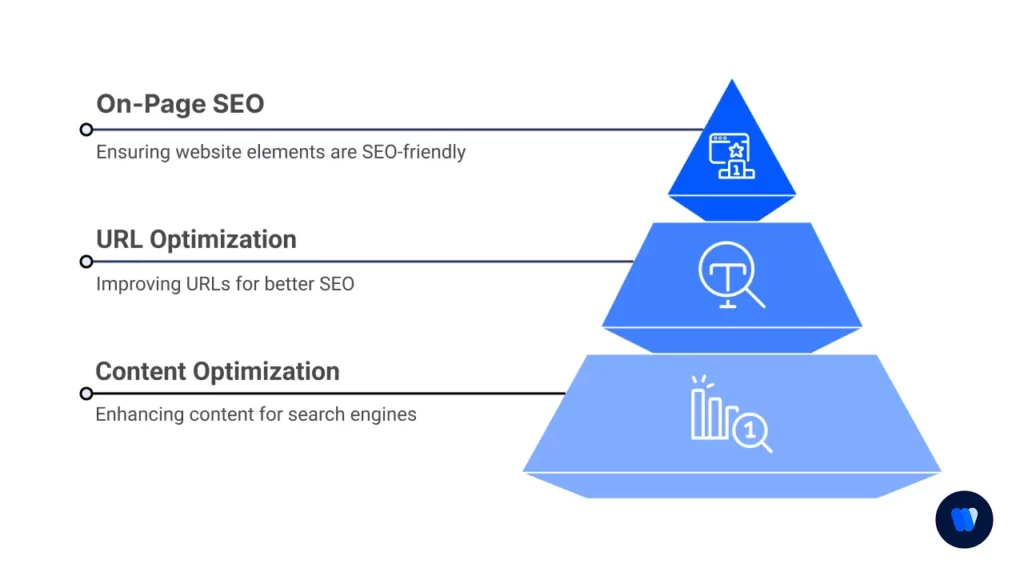
Focus on clarity, structure, and user intent to improve both rankings and engagement.
Content Optimization
- Develop a content strategy aligned with keyword research
- Create or optimize title tags and meta descriptions
- Ensure proper heading structure (H1, H2, H3)
- Optimize body content with primary and related keywords
- Enhance content readability and scannability
- Add relevant internal links with descriptive anchor text
- Incorporate engaging visual elements
- Implement schema markup where appropriate
- Ensure appropriate word count based on SERP analysis
Pro Tip: Instead of focusing on keyword density, write naturally around topics and semantically related terms. Google’s NLP capabilities are sophisticated enough to understand context without exact keyword matching in every instance.
URL and Site Structure Optimization
- Create SEO-friendly URL structures
- Implement clear site navigation and breadcrumbs
- Organize content into thematic clusters
- Develop pillar content for important topics
- Build strategic internal linking between related pages
- Implement proper canonicalization for duplicate content
- Create hub pages for key topics and categories
- Ensure mobile-friendly navigation and structure
A well-structured site with comprehensive coverage of related subtopics often outperforms isolated pages targeting individual keywords.
For each important page on your site, ensure you’ve optimized these critical elements:On-Page SEO Checklist
Phase 5: Technical SEO Implementation
Ensure your site is fast, mobile-friendly, and easily crawlable by search engines.

Fix indexation issues, broken links, and implement a clean, logical URL and navigation structure.
Site Speed and Performance
- Optimize image sizes and formats
- Implement browser caching
- Minify CSS, JavaScript, and HTML
- Reduce server response time
- Eliminate render-blocking resources
- Optimize Core Web Vitals (LCP, FID, CLS)
- Enable compression
- Minimize third-party scripts
- Consider AMP for appropriate content
- Implement lazy loading for images and videos
Pro Tip: Don’t just optimize for desktop speed. With Google’s mobile-first indexing, your mobile site speed is now even more critical for SEO success. Use tools like Google’s Mobile-Friendly Test and PageSpeed Insights to identify mobile-specific performance issues.
Indexation and Site Architecture
- Create and optimize XML sitemaps
- Configure robots.txt properly
- Implement pagination and canonicalization correctly
- Resolve duplicate content issues
- Fix broken links and redirect chains
- Optimize faceted navigation for e-commerce sites
- Implement hreflang tags for international sites
- Create a logical URL hierarchy
- Resolve orphaned pages
- Monitor and fix crawl errors regularly
Pro Tip: Regularly audit your indexed pages versus submitted pages in Google Search Console. A major discrepancy could indicate technical issues preventing Google from properly indexing your content.
When implementing technical SEO changes, prioritize based on impact and effort. Start with critical issues that affect site-wide performance or prevent indexation of important pages. Create a scoring system that weighs each issue by potential traffic impact and implementation difficulty. This ensures you’re focusing on changes that will drive meaningful results rather than getting caught in the technical weeds with minimal business impact.Technical SEO Implementation Note
Phase 6: Off-Page SEO and Link Building
Build authority through quality backlinks, digital PR, and local SEO practices.
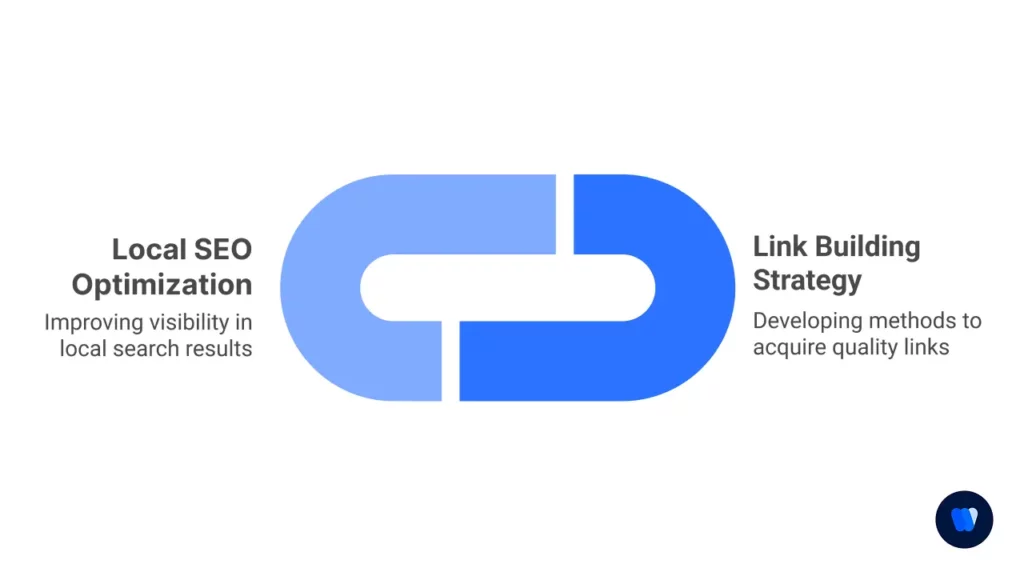
Strengthen your reputation by earning links from trusted sources and maintaining consistent business information online.
Link Building Strategy
A strong backlink profile remains one of the most important ranking factors in SEO.
- Conduct a backlink audit of your site
- Analyze competitors’ backlink profiles
- Develop a diverse link building strategy
- Create linkable assets and resources
- Implement digital PR for natural link acquisition
- Establish guest posting opportunities
- Reclaim unlinked brand mentions
- Build relationships with industry influencers
- Monitor and disavow toxic backlinks
- Track and measure link building success
Pro Tip: Focus on quality over quantity in your link-building efforts. One high-authority, relevant link often provides more SEO value than dozens of low-quality links, while also protecting you from potential penalties.
Local SEO Optimization
- Create and optimize Google Business Profile
- Ensure NAP (Name, Address, Phone) consistency across the web
- Build local citations in relevant directories
- Optimize for local keywords
- Create location-specific pages if appropriate
- Implement local schema markup
- Develop a strategy for generating authentic reviews
- Optimize for “near me” searches
- Create local content addressing community interests
- Build relationships with local businesses for backlinks
Include location-specific testimonials, team information, and community involvement to enhance relevance and build trust.
Link Building Quality Matrix
| Link Type | Value | Risk | Effort | Priority |
|---|---|---|---|---|
| Editorial mentions from industry publications | Very High | Very Low | High | Highest |
| Guest posts on reputable sites | High | Low | Medium | High |
| Resource pages and directories | Medium | Low | Low | Medium |
| Social media profiles | Low | Very Low | Low | Low |
| Forum links | Very Low | Medium | Low | Lowest |
| Paid links | Varies | Very High | Low | Not Recommended |
Phase 7: Measurement, Analysis, and Iteration
Track performance using analytics and SEO tools to monitor traffic, rankings, and conversions.
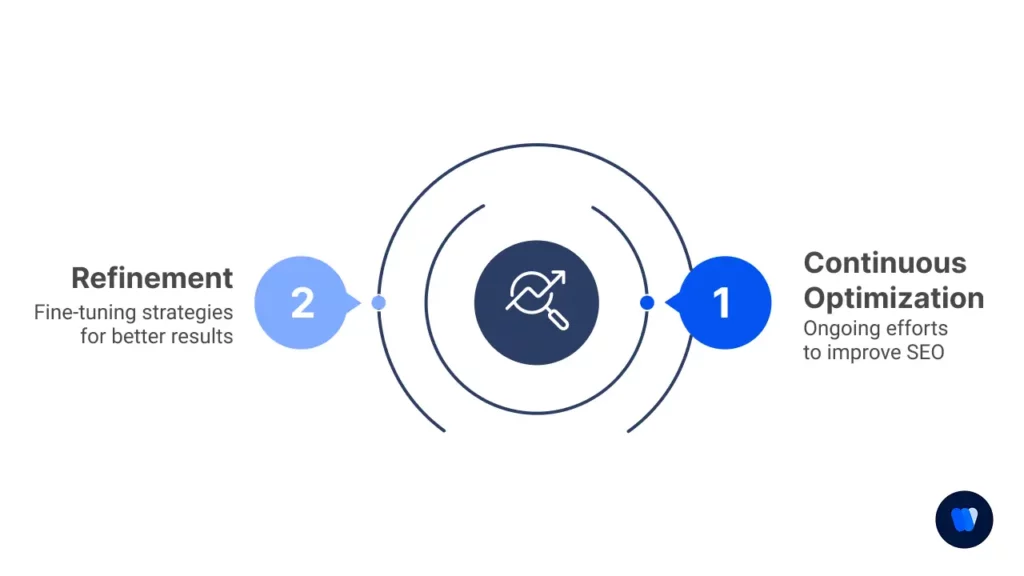
Use insights to refine your strategy, update content, and test new optimization tactics.
SEO Performance Tracking
- Set up comprehensive SEO tracking in Google Analytics
- Configure custom dashboards for key metrics
- Implement regular ranking reports for target keywords
- Track organic traffic by landing page and segment
- Monitor conversion rates from organic traffic
- Set up alerts for significant traffic or ranking changes
- Track Core Web Vitals and technical performance
- Document algorithm updates and their impact
- Analyze year-over-year and month-over-month trends
- Compare performance against competitors
Pro Tip: Create a balanced SEO scorecard that includes visibility metrics (rankings, impressions), traffic metrics (sessions, pages per session), and business metrics (conversions, revenue). This provides a complete picture of your SEO performance at each stage of the funnel.
Continuous Optimization and Refinement
- Schedule regular technical SEO audits
- Update and refresh content based on performance
- Re-optimize underperforming pages
- Expand content on successful topics
- Identify and fix keyword cannibalization issues
- Test title tags and meta descriptions for CTR improvements
- Update strategy based on algorithm changes
- Experiment with new content formats and approaches
- Prune or consolidate thin or redundant content
- Document and share learnings across the organization
Pro Tip: Implement a regular content refresh schedule based on performance data. Pages experiencing declining traffic or rankings should be prioritized for updates with fresh information, enhanced keyword targeting, and improved user experience elements.
Create a structured approach to testing and optimizing your SEO:SEO Experimentation Framework
5 Prompts for SEO Strategy Planning
A successful SEO strategy should be measured across multiple dimensions: Track improvements in search engine rankings for target keywords and overall keyword visibility. Monitor the number of keywords driving traffic and impressions from Search Console. Measure increases in organic search traffic, including metrics like sessions, users, and pageviews. Look at both overall growth and improvements for specific high-priority pages. Analyze user behavior metrics like bounce rate, time on site, and pages per session from organic traffic. Improvements in these metrics indicate better alignment with search intent. Track conversion rates, goal completions, and revenue from organic search traffic. These metrics directly connect SEO efforts to business outcomes. Monitor improvements in technical SEO metrics like Core Web Vitals, crawl stats, indexed pages, and site errors. A technically sound site provides the foundation for content to rank. Compare your organic visibility, traffic, and rankings against key competitors. Track the share of voice for important keyword sets in your industry. Calculate the return on investment from SEO efforts by comparing costs (time, resources, tools) against outcomes (traffic value, conversions, revenue).How to Measure SEO Strategy Success
Visibility and Rankings
Traffic Growth
User Engagement
Conversion Performance
Technical Health
Competitive Position
ROI and Efficiency
This SEO strategy checklist provides a comprehensive framework for developing, implementing, and optimizing your search presence.
By methodically working through each phase, you’ll create a strategy that not only improves your technical SEO foundation but also aligns with your broader business objectives..
The most successful SEO strategies are those that balance technical excellence with compelling user experiences.
Explore essential SEO and marketing checklists to boost your online growth:
- Keyword Research Checklist – Learn how to discover, analyze, and prioritize keywords for maximum traffic impact.
- On-Page SEO Checklist – Step-by-step guide to optimize content, titles, headings, and internal links.
- SEO Marketing Strategy Checklist – Align SEO campaigns with business goals and drive measurable results.
- SEO Audit Checklist – Identify technical issues, fix site errors, and uncover quick SEO wins.
- Content Marketing Plan Checklist – Plan and execute content strategies that attract traffic and conversions.
- Keyword Intent for Better SEO Results – Align content strategies for traffic and conversions.