Generative AI has transformed how teams create content. What once took hours of effort can now be done in minutes with a prompt. This speed is impressive but it raises a deeper question: should AI lead the process or complement human creativity?
The answer isn’t about choosing sides. It’s about using each where they work best. AI delivers speed, structure, and scale; humans add empathy, strategy, and imagination. Together, they create content that connects, converts, and feels authentic.
This blog explores when teams should rely on AI, when to trust human creativity, and how a balanced approach drives stronger, more sustainable results.
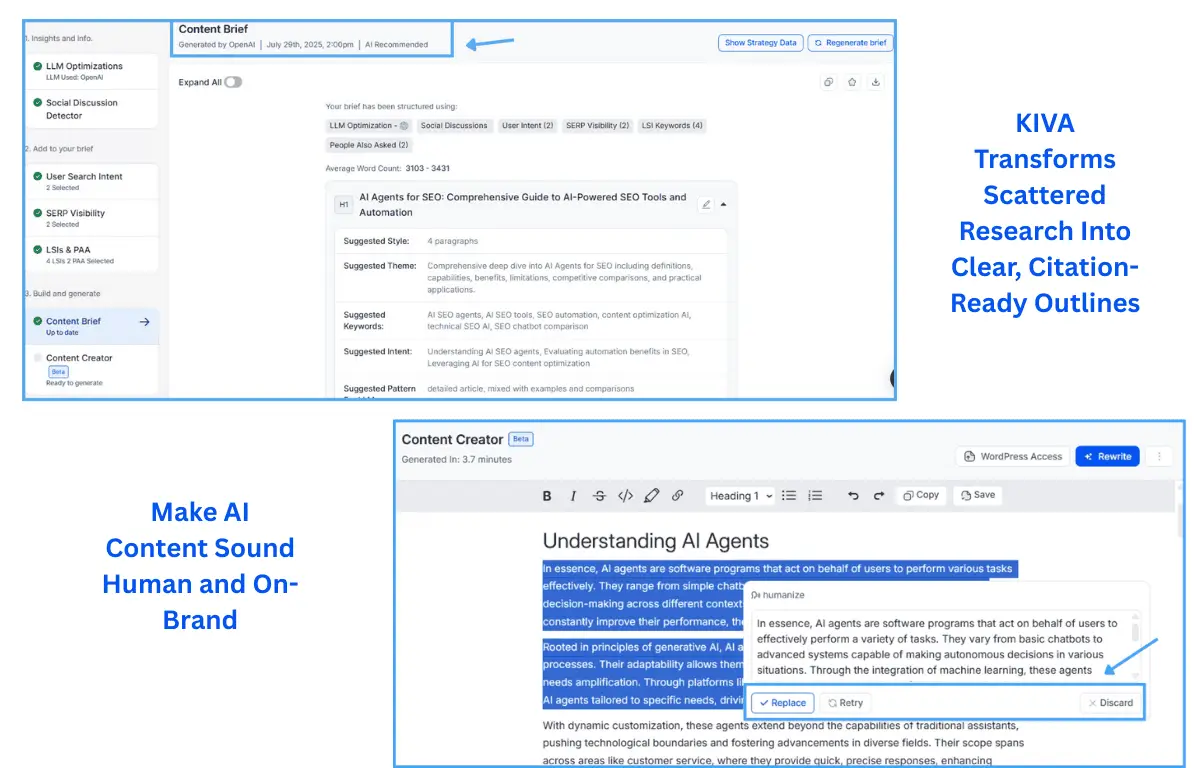
Wellows, an AI visibility platform exemplifies this balance combining keyword intelligence, automation, and human-centric refinement to help teams create SEO-ready, LLM-optimized content faster without losing authenticity.
What Are the Main Differences Between AI-Generated and Human-Written Content
AI and human writing differ in creativity, emotion, and context. AI offers scale and precision; humans deliver authenticity and depth. Understanding these contrasts helps teams assign tasks more intelligently and maintain brand quality at scale.
Creativity & Originality – Humans draw on experience and imagination, producing distinctive ideas. AI predicts from patterns, which can feel repetitive or predictable.
Emotional Depth & Empathy – Humans sense tone and intent, shaping language that resonates. AI imitates emotion but doesn’t feel it, making copy sound polished yet detached.
Context & Nuance – Humans adapt naturally to audience, timing, and culture. AI still misses sarcasm or subtle cues, leading to tonal gaps.
Accuracy & Fact-Checking – Humans verify and update sources. AI depends on static data and may generate outdated or biased information.
Scalability & Efficiency – AI excels at rapid, high-volume content. Humans are slower but sharper in complex, strategic writing.
Style & Tone – Humans shift tone easily for brand or audience. AI’s tone is consistent but often uniform in long-form work.
Consistency & Standardization – AI ensures structural consistency; human variation keeps content dynamic and personal.
When combined thoughtfully, these strengths create harmony. AI systems can manage repetitive drafting while human writers focus on voice, narrative, and persuasion producing content that performs across both algorithms and audiences.
Summary: AI delivers scale and uniformity, while humans provide creativity, emotion, and trust. The most effective teams blend both AI for structure, humans for storytelling.
Can AI Writing Match the Creativity and Originality of Human Writers
AI can produce coherent, grammatically sound text, but true creativity remains a human domain. Human writers interpret emotion, intention, and cultural signals elements that shape originality. AI’s strength lies in idea generation and structure, not innovation or emotional depth.
Another Creativity Index analysis revealed professional writers scoring 66% higher than AI models.
AI writing tools can accelerate brainstorming, but they still depend on human interpretation to elevate ideas into emotionally compelling narratives.
Summary: AI aids ideation but lacks the spontaneity, emotional intelligence, and cultural awareness that fuel genuine creativity. Human imagination remains the foundation of original writing.
Is AI-Generated Content as Engaging and Relatable as Human-Written Content
Engagement stems from emotional connection, and that’s where human writing still leads. Readers naturally respond to personal tone, storytelling, and empathy qualities AI can imitate but not internalize.
It’s shared 3–4× more on social media, proving the value of authenticity. AI, however, enables consistency and speed helpful when managing multiple campaigns.
To bridge the gap, human writers often refine AI drafts using tone-adjustment tools or brand alignment systems. When empathy and structure align, engagement and efficiency coexist.
Summary: AI can optimize for clarity and scale, but humans write with empathy and lived experience. Combining both ensures content that performs and connects.
How Does AI Handle Context and Cultural Nuances in Writing
AI has evolved in fluency and coherence, but context and culture remain tricky. Language reflects identity something algorithms can’t yet feel. Humor, idioms, and tone depend on shared experience and cultural logic that AI can misread.
- Idioms & Metaphors: AI interprets phrases literally, missing intended meaning.
- Politeness & Formality: Varies by culture; AI may sound too casual or too rigid.
- Cultural Bias: Western-heavy data training can limit authentic global expression.
For global brands, this limitation reinforces the need for human editors to refine drafts. The combination of AI precision and cultural review ensures inclusivity and tone consistency across markets.
Summary: AI is fast and multilingual but lacks cultural intuition. Human review ensures local relevance and respect for nuance.
Are There Specific Types of Content Where AI Writing Excels Over Human Writing
AI performs best in structured, data-driven, and repetitive formats where speed and consistency matter more than creativity. It’s ideal for teams handling high-volume SEO or product documentation.
- Data-Heavy Content: Reports, summaries, and product descriptions.
- SEO & Informational Copy: Keyword optimization, meta descriptions, and FAQs.
- Transactional Writing: Emails, chatbots, and customer responses.
- Translations: First-pass localization that humans later refine.
Summary: AI is ideal for volume-driven formats, while human input ensures strategy, nuance, and authenticity.
Can Readers Distinguish Between AI-Generated and Human-Written Content
Readers increasingly struggle to tell the difference. In a Tooltester survey, participants identified AI text correctly only 46.9% of the time. Even with GPT-4 content, accuracy dropped to 36.5%.
Detection Efforts: Tools like OpenAI’s text detector and Google’s watermarking help flag AI content, but none are fully reliable. Human judgment remains essential.
Summary: As AI quality improves, differentiation fades. Transparency and critical reading are key to maintaining trust.
What Are the Ethical Considerations of Using AI in Writing
AI enhances productivity but introduces ethical concerns that require active oversight.
Why This Matters
- Plagiarism: AI may echo existing content human originality ensures authenticity.
- Authorship: Responsibility rests with the human who edits and approves.
- Transparency: Disclose AI use to preserve reader trust.
- Bias & Accuracy: Audit AI outputs to avoid misinformation and stereotypes.
- Privacy: Use AI agents that comply with data protection standards.
- Employment Impact: Adopt AI to assist, not replace, creative professionals.
Summary: Ethical AI use demands disclosure, human oversight, and accountability. Teams should build policies that protect originality and integrity.
How Does AI Impact the Speed and Efficiency of Content Creation Compared to Human Writers
AI has completely redefined workflow velocity. It can produce thousands of words in minutes, freeing writers to focus on creativity and analysis rather than repetitive drafting.
Speed: AI generates 2,000–3,000 words per hour versus 300–500 for humans. Teams can publish faster, experiment with formats, and meet market demand effortlessly.
Efficiency: Automating research, formatting, and keyword alignment saves time and resources. The most effective content systems combine AI speed with human editing for emotional and contextual refinement.
Summary: AI dramatically increases speed and consistency, while human expertise ensures meaning, quality, and connection remain intact.
When Should Teams Use AI vs Human Writing
Choosing between AI and human writing depends on intent and complexity. Smart teams don’t choose one they design a process that blends both.
Use AI When:
- You need speed, consistency, or scale (e.g., briefs, outlines, or drafts).
- The topic is factual or data-driven.
- The goal is productivity, not storytelling.
Use Human Writers When:
- The content demands emotional impact, analysis, or originality.
- You’re building brand authority, thought leadership, or creative campaigns.
- The goal is trust, engagement, or unique perspective.
Use Both When:
- You want to scale quality content without sacrificing authenticity.
- AI handles structure and SEO; humans refine tone and insight.
- Workflow: Draft → Refine → Humanize → Optimize.
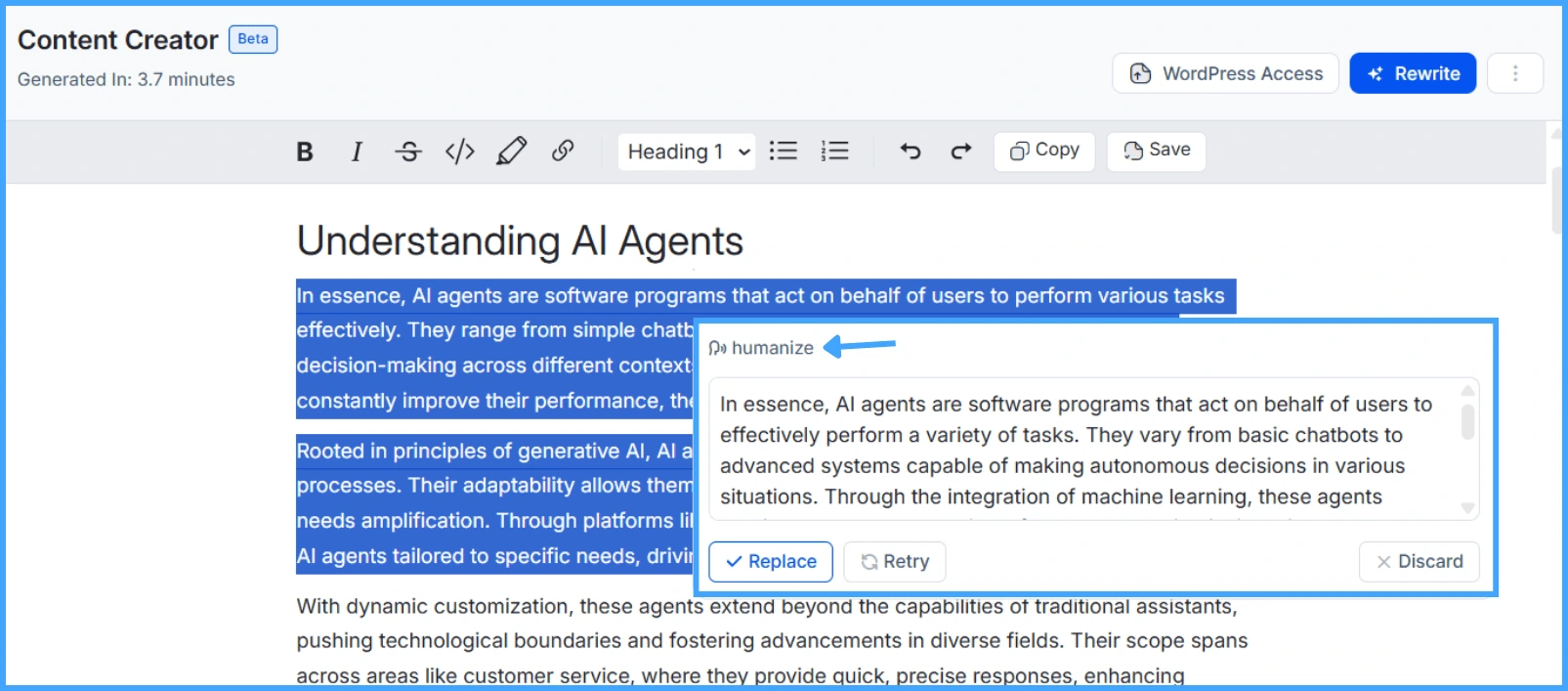
This aligns perfectly with the approach described in How to Humanize AI Content, which explores how small tone shifts make AI writing sound more natural and emotionally engaging.
Summary: Balance is the new advantage. Combining AI’s precision with human empathy delivers faster, higher-quality outcomes.
What Is the Future of AI in Writing, and Will It Replace Human Writers
AI is shifting from a content generator to a writing collaborator. Systems are evolving to understand tone, structure, and strategy rather than just words. But creativity imagination, humor, and empathy remains inherently human.
Even AI leaders agree. OpenAI’s Sam Altman has said that AI will empower creators, not displace them. In entertainment and journalism alike, AI now handles structure and data while humans guide storytelling, ethics, and emotion.
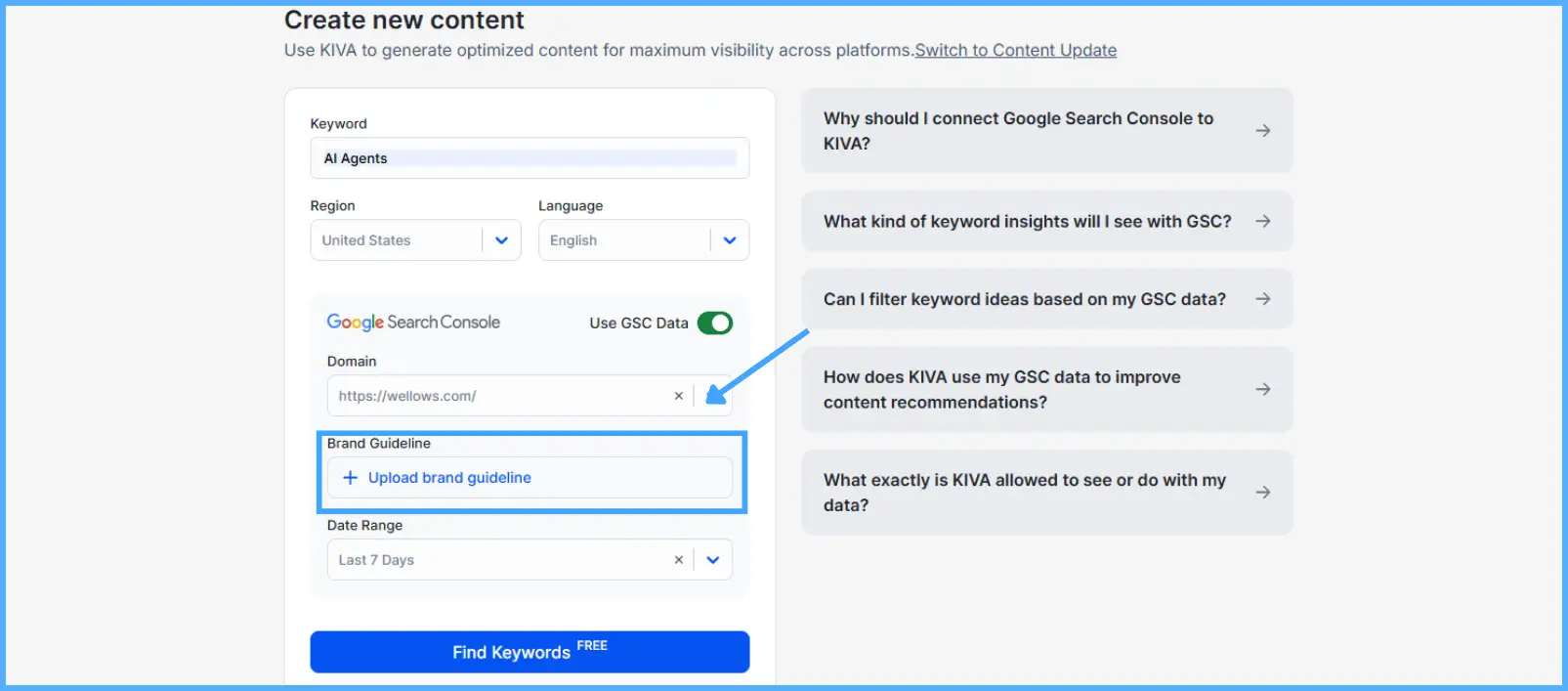
The Next Frontier: As tools evolve, expect adaptive systems that learn your writing style, tone, and rhythm. KIVA’s brand alignment and clustering capabilities are early signals of this shift helping teams maintain voice consistency while scaling faster.
Summary: The future is collaborative. AI provides the backbone; humans supply the soul.
FAQs
Helpful Guides to Strengthen Your AI Content Strategy
How To Optimize Content for Featured Snippets Learn how to structure your pages strategically to capture position-zero visibility and boost organic CTR.
How To Optimize Content for Voice Search Explore voice-first SEO methods that help your brand rank in conversational and mobile searches.
Best Tips for Creating Content That Actually Converts Master data-driven storytelling techniques that turn attention into engagement and engagement into sales.
How To Manage the AI Content Lifecycle and Keep It Evergreen Learn to maintain consistency, update relevance, and automate optimization across every stage of content performance.
By integrating these guides with AI-powered SEO workflows, you can streamline your entire content lifecycle, from planning to optimization ensuring every asset stays visible, relevant, and conversion-ready.
Conclusion
AI isn’t replacing human writers it’s redefining how they collaborate. The most innovative teams now combine technology with creative insight to produce smarter, faster, and more consistent work.
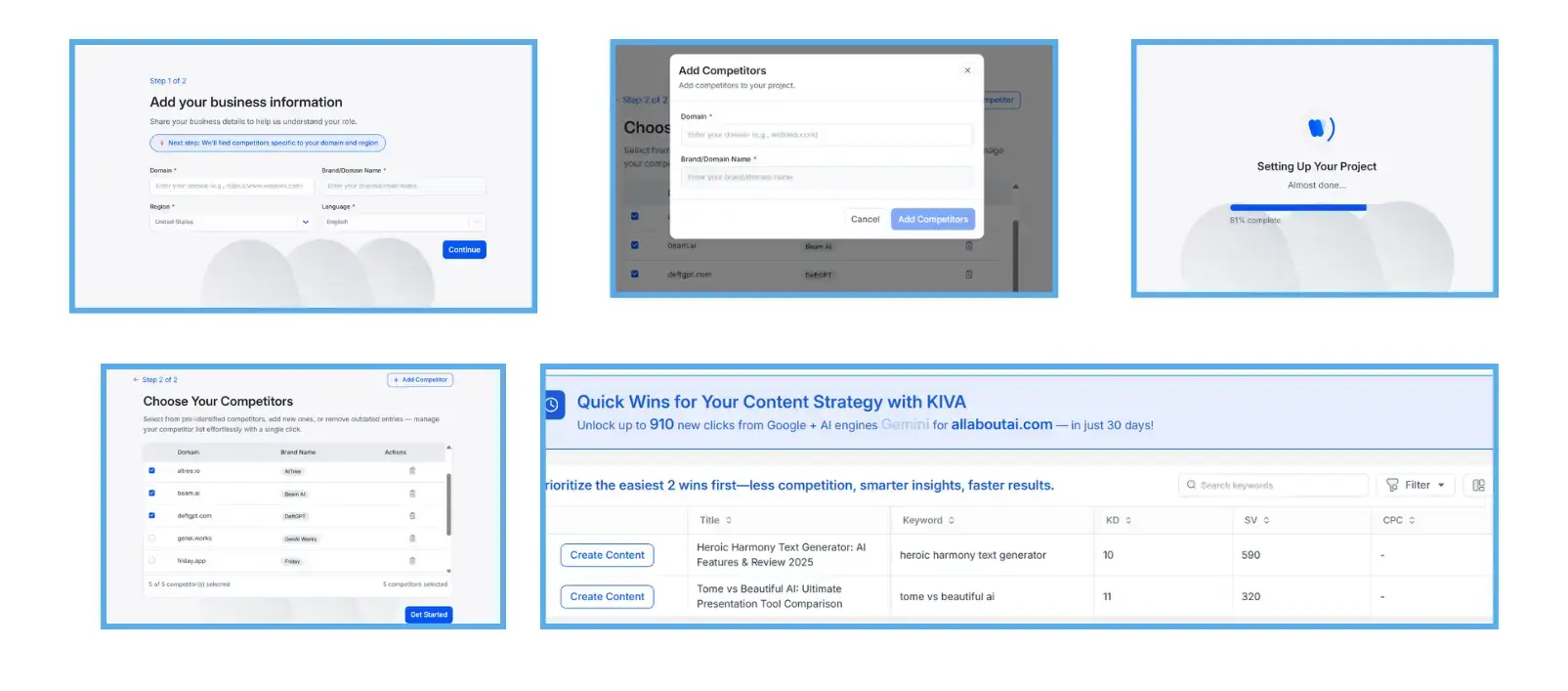
KIVA’s clustering and automation capabilities simplify the research phase, while features like Quick Wins and Humanize AI ensure every output is optimized for both SERPs and readers. It proves that the real advantage isn’t choosing between humans or AI but using both strategically.
The real power lies in precision and empathy working together: machine efficiency guided by human intuition.
Final takeaway: Teams that use AI strategically and humans intentionally will lead the next generation of intelligent, high-impact content creation.