AI now powers nearly every stage of digital content from ideation to optimization and refresh. In 2025, 81% of B2B marketers report using AI to support content-related tasks, up from 72% in 2024 (CMI & MarketingProfs, 2025).
The AI Content Lifecycle extends beyond creation. It integrates AI SEO Agents, content intelligence systems, and knowledge graphs to manage relevance and semantic precision over time. Each update strengthens topical authority and user intent alignment. To understand how this transformation begins, explore AI-generated content and its foundational role in digital ecosystems.
Keeping AI-generated content evergreen is now critical because search algorithms prioritize freshness, expertise, and factual accuracy (Google Search Central). As a result, brands that embed lifecycle optimization into their AI workflows sustain visibility and credibility across both SERPs and LLM-driven discovery systems.
What is the AI Content Lifecycle?
The AI content lifecycle is the end-to-end process of managing digital assets from ideation to retirement using artificial intelligence to increase precision, scalability, and longevity. Each phase combines machine learning, semantic analysis, and automation to maintain content relevance and value across time.
1. Content Creation
AI systems generate and refine multiple content types, including articles, visuals, and videos. Using large language and diffusion models, platforms automate first drafts, recommend structures, and adapt tone to brand voice. This accelerates ideation while preserving stylistic consistency.
2. Content Management
Intelligent content management relies on metadata extraction and contextual tagging. AI platforms like MediaLake AI automate classification, enable quick retrieval, and maintain version histories through vectorized content storage. This creates an adaptive, searchable ecosystem for enterprise-scale operations.
3. Content Optimization
AI continuously analyzes engagement metrics, readability, and SEO performance. Machine learning models detect keyword gaps, sentiment patterns, and semantic intent clusters, then suggest targeted refinements. This data-driven process boosts discoverability and audience resonance.
4. Content Distribution
AI-driven distribution systems use predictive analytics to select the right time, channel, and audience for each asset. They optimize content dissemination through automation pipelines that personalize delivery across search, social, and owned platforms, ensuring contextual relevance at scale.
5. Content Analysis and Feedback
Performance intelligence engines measure user behavior, CTR, dwell time, and conversion signals to evaluate impact. AI interprets this feedback to fine-tune future topics, formats, and tones. This continuous loop transforms content into a self-learning system for sustained engagement.
6. Content Archiving and Retirement
AI identifies outdated, redundant, or low-performing assets through version analysis and trend decay detection. It flags content for updating or archiving, maintaining repository freshness and compliance. Lifecycle automation ensures the entire library remains authoritative and up to date.
💡 By embedding AI in every stage of the lifecycle, organizations achieve predictive governance, semantic consistency, and evergreen visibility. This integration transforms content from a static resource into a living digital asset that adapts with audience behavior and algorithmic change.
How Does AI Impact Content Creation
Artificial intelligence is redefining how digital content is planned, produced, and adapted. By merging automation with data interpretation, AI transforms creative workflows into measurable, scalable systems that respond in real time to audience signals.
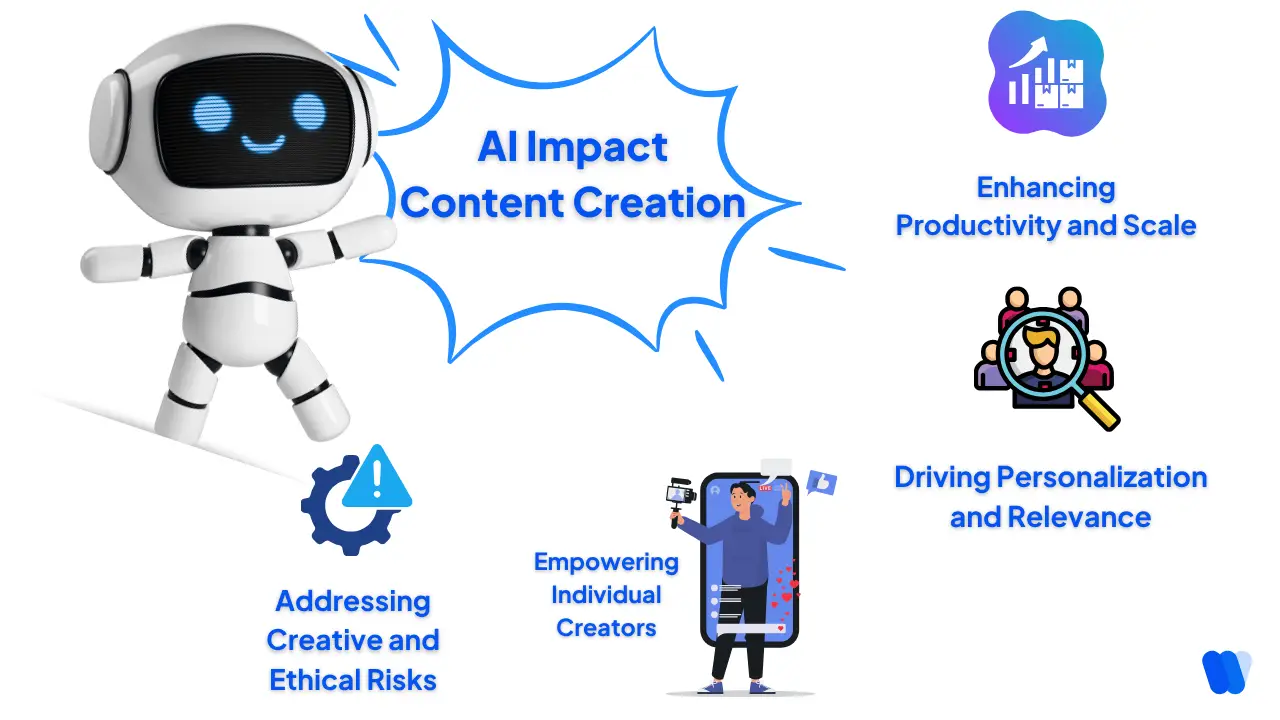
Enhancing Productivity and Scale
AI-powered platforms automate complex editorial and optimization tasks, reducing manual effort. Systems such as language and vision models generate product pages, video scripts, and captions at scale while maintaining brand tone consistency. This operational acceleration helps teams meet higher publishing demands without proportional resource increases.
Driving Personalization and Relevance
Advanced analytics engines process behavioral, contextual, and search intent data to shape personalized narratives. This adaptive generation ensures that each user encounter reflects their interests and intent, increasing engagement and retention rates across digital touchpoints.
Empowering Individual Creators
For independent creators, AI minimizes technical bottlenecks. Automated video cutting, captioning, and publishing systems allow storytellers to focus on originality and emotional appeal rather than repetitive editing tasks. As a result, creative independence expands while production barriers shrink.
Addressing Creative and Ethical Risks
- Depth and Authenticity: Over-reliance on automation may yield uniform tones or diminished originality.
- Intellectual Property: Training data sourced from existing works triggers concerns around ownership and attribution.
- Workforce Evolution: Content automation reduces routine editorial roles but simultaneously increases demand for strategic and creative oversight.
Leading platforms are embedding AI as a creative enabler rather than a replacement for human input.
YouTube has deployed generative assistants that automate editing, captioning, and metadata enhancement to accelerate creator workflows. (Reuters 2025)
OpenAI’s Sora enables short-form AI video generation while safeguarding rights through licensing frameworks and shared monetization options for content owners. (Reuters 2025)
Microsoft is piloting a Publisher Content Marketplace to ensure equitable compensation for human creators whose materials inform generative systems. (WindowsCentral 2025)
Building on these platform shifts, the next phase of the AI content lifecycle focuses on structured orchestration where planning, optimization, and feedback become unified.
What Are the Key Phases of the AI Content Lifecycle?
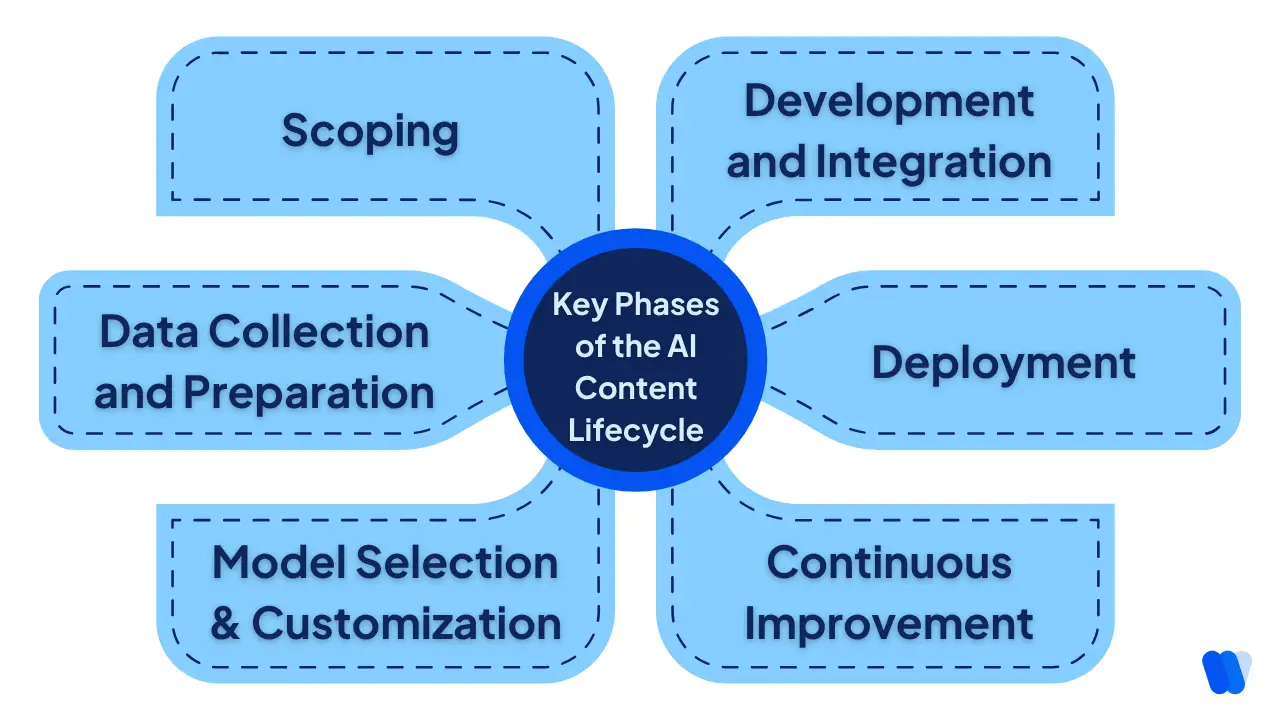
The AI content lifecycle follows a structured sequence that governs how AI-generated content is conceptualized, trained, implemented, and maintained. Each phase contributes to making content systems scalable, adaptive, and semantically aligned with business goals.
1. Scoping
This foundational phase defines the purpose of AI-generated content. Teams identify core objectives, user intent, and measurable outcomes to align technical parameters with strategic priorities. Establishing these baselines ensures that AI initiatives solve specific communication or engagement problems rather than operating as experimental projects.
2. Data Collection and Preparation
AI depends on the relevance and integrity of training data. During this phase, teams gather domain-specific datasets, perform data cleaning, remove bias, and structure inputs using metadata tagging. High-quality, representative data directly determines the model’s ability to generate accurate and contextually appropriate outputs.
3. Model Selection and Customization
Selecting the correct model architecture is central to lifecycle success. Teams may fine-tune pre-trained language or vision models to align with domain needs such as optimizing for readability, compliance, or tone consistency. Customized model layers improve both semantic accuracy and adaptability across diverse content types.
4. Development and Integration
This stage transforms the trained model into an operational system. Developers integrate it with existing CMS platforms, APIs, and workflow tools to automate content generation and review. Orchestration layers and UX interfaces make the AI accessible to non-technical teams, accelerating production without compromising governance.
5. Deployment
Once validated, the AI system is deployed in controlled environments to test stability, security, and scalability. DevOps and MLOps pipelines support continuous delivery and rollback mechanisms, ensuring the AI content system adapts safely to live conditions and user feedback loops.
6. Continuous Improvement
The lifecycle concludes but never ends with refinement. Ongoing monitoring detects drift in model performance or audience engagement trends. New data is ingested to retrain models, ensuring output remains relevant, accurate, and aligned with evolving brand narratives. This phase transforms static workflows into adaptive, learning ecosystems.
💡By adhering to these phases, organizations can operationalize AI content systems that remain transparent, compliant, and evergreen ensuring every generated asset evolves alongside user intent, search algorithms, and brand strategy.
How Can AI Optimize Content Distribution?
Artificial intelligence transforms content distribution into a precise, adaptive process that aligns timing, format, and audience behavior. Instead of relying on static schedules or intuition, AI continuously interprets engagement signals to ensure every asset reaches the right person, on the right channel, at the right moment.
1. Audience Segmentation and Personalization
AI processes large datasets to segment users by intent, interest, and engagement depth. These dynamic segments allow for hyper-personalized content delivery that increases relevance and conversion probability across audience clusters.
2. Timing Optimization and Scheduling
Machine learning algorithms evaluate behavioral patterns such as peak interaction times and platform dwell duration to determine optimal publishing windows. This ensures each release gains higher visibility without oversaturating feeds or inboxes.
3. Multi-Channel Adaptation
AI distribution engines reformat content automatically for different environments email, web, mobile, and social platforms. This ensures brand messaging stays consistent while adapting tone, layout, and metadata for each ecosystem’s algorithmic priorities.
4. Performance Monitoring and Real-Time Adjustment
AI analytics dashboards track engagement, click-throughs, and dwell time to identify friction points. When performance drops, automated systems reallocate impressions, adjust targeting, or modify calls-to-action allowing distribution to evolve continuously based on live results.
5. Predictive Analytics for Campaign Planning
Predictive models forecast which content types and formats are most likely to succeed based on historical interaction data. This anticipatory insight helps teams prioritize creative production toward topics and formats that match upcoming trends or seasonal demand.
6. Intelligent Content Repurposing
AI identifies opportunities to extend the lifespan of existing content by transforming it into new mediums turning a blog post into a short-form video, carousel, or podcast summary. This maximizes resource efficiency and increases exposure across audience touchpoints.
Learn how to repurpose content intelligently to expand reach and extend content lifespan.
7. Automated Content Curation
Curation algorithms surface relevant third-party or in-house materials that align with ongoing campaigns. This creates a continuous stream of valuable recommendations, enhancing credibility and maintaining engagement without overwhelming manual research efforts.
8. Enhanced Email Distribution
AI dynamically personalizes email campaigns by inserting user-specific content blocks reflecting browsing behavior, transaction history, and recency of interaction. This granular personalization increases open and response rates compared to static mailing sequences.
You can also explore AI-driven content strategies that integrate predictive analytics and personalization for sustainable distribution.
Through AI-driven distribution, organizations achieve continuous alignment between content delivery and audience intent. Each distribution cycle becomes a data feedback loop improving timing accuracy, channel performance, and personalization depth while reducing operational load.
What Role Do Human Editors Play in AI-Generated Content?
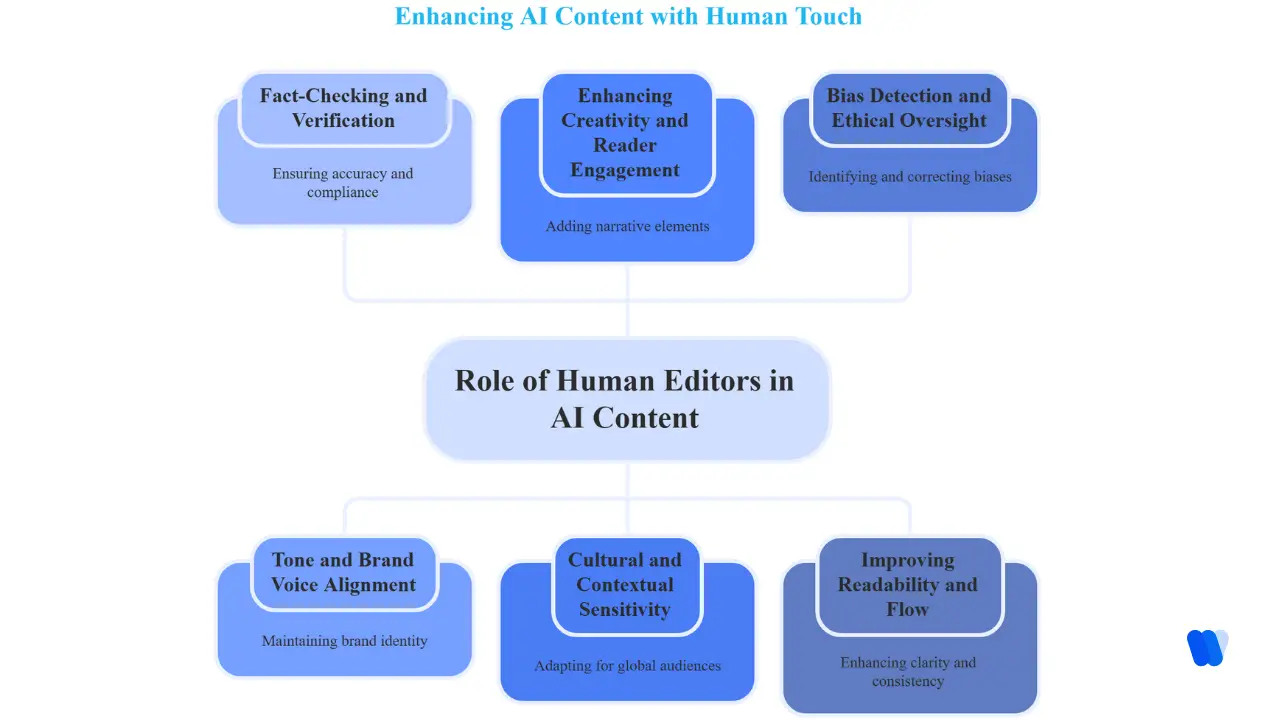
Human editors remain indispensable in AI-assisted publishing. They ensure that machine-generated material upholds editorial accuracy, brand tone, and ethical responsibility areas where automation alone often falls short.
1. Fact-Checking and Verification
AI systems can occasionally generate outdated or fabricated details. Human editors validate data against credible sources, ensuring factual precision and regulatory compliance. Their intervention transforms AI drafts into trustworthy assets suitable for public distribution.
2. Tone and Brand Voice Alignment
AI can replicate writing patterns but struggles with emotional tone and brand nuance. Editors refine phrasing, rhythm, and diction to align every piece with the organization’s established communication identity, preserving brand integrity across formats.
Editors also ensure tonal consistency across campaigns, learn how to align AI content with your brand voice to preserve authenticity.
3. Enhancing Creativity and Reader Engagement
AI writing often prioritizes structure over originality. Editors enrich drafts with narrative hooks, analogies, and stylistic variation to increase cognitive and emotional engagement. This human intervention converts informational text into compelling storytelling.
4. Cultural and Contextual Sensitivity
Language models may misinterpret cultural cues or overlook regional context. Human editors identify potential misalignments and adapt tone or references for inclusivity and relevance across global audiences.
5. Bias Detection and Ethical Oversight
Because AI reflects its training data, embedded biases can appear in generated text. Editors review content for discriminatory phrasing, unbalanced representation, or ethical conflicts, maintaining compliance with corporate and journalistic standards.
6. Improving Readability and Flow
Machine-generated drafts can sound formulaic or inconsistent. Editors restructure paragraphs, adjust pacing, and simplify syntax to improve narrative flow and reading ease. Their refinement ensures clarity while preserving the author’s intended message.
➡️ Editors play a crucial role in ensuring emotional resonance discover methods to humanize AI content without sacrificing factual precision. Through this collaborative dynamic, AI handles scale and speed, while human editors preserve nuance, integrity, and cultural intelligence. Together, they produce content that is not only efficient but also emotionally and ethically resonant.
How Does AI Assist in Content Performance Analysis?
Artificial intelligence elevates content performance analysis from reactive reporting to proactive optimization. It automates data aggregation, interprets engagement signals, and delivers actionable insights that guide strategy in real time.
1. Automated Data Collection and Integration
AI-driven analytics systems consolidate metrics from diverse sources such as websites, CRMs, and social networks. By integrating data streams into unified dashboards, they eliminate manual tracking errors and reveal a holistic view of how each content asset performs across channels.
2. Advanced Metrics Interpretation
Machine learning algorithms detect correlations between engagement rates, dwell time, and conversion outcomes. They identify which formats, headlines, or distribution patterns produce the highest ROI, helping content teams refine strategies with measurable precision.
3. Sentiment and Emotion Analysis
Natural language processing evaluates qualitative feedback comments, reviews, and mentions to determine audience sentiment. This helps brands quantify tone perception, track shifts in emotional response, and adapt messaging to maintain positive audience alignment.
4. Predictive Analytics and Trend Forecasting
AI models forecast future performance using historical interaction data and real-time engagement cues. These predictive systems anticipate emerging topics, seasonal interest patterns, or declining engagement areas, enabling timely strategy pivots.
5. Automated Optimization Insights
AI recommends tactical improvements keyword repositioning, readability enhancement, or call-to-action refinement based on performance data. These insights ensure that published content continues to evolve with search engine and audience behavior shifts.
6. Real-Time Monitoring and Alerts
Continuous surveillance tools powered by AI flag anomalies such as sudden traffic drops or viral engagement spikes. Instant alerts allow content managers to react quickly, amplifying high-performing posts or adjusting underperforming assets before visibility declines.
7. Efficiency in Workflow and Reporting
By automating collection, visualization, and interpretation, AI reduces the manual workload of analytics teams. Dashboards built on intelligent agents convert raw metrics into strategic narratives, allowing faster reporting cycles and more informed decision-making.
➡️ Through these capabilities, AI transforms performance measurement into a continuous learning system one that not only tracks outcomes but actively drives improvement across the entire content ecosystem.
What Challenges Arise in Managing the AI Content Lifecycle?
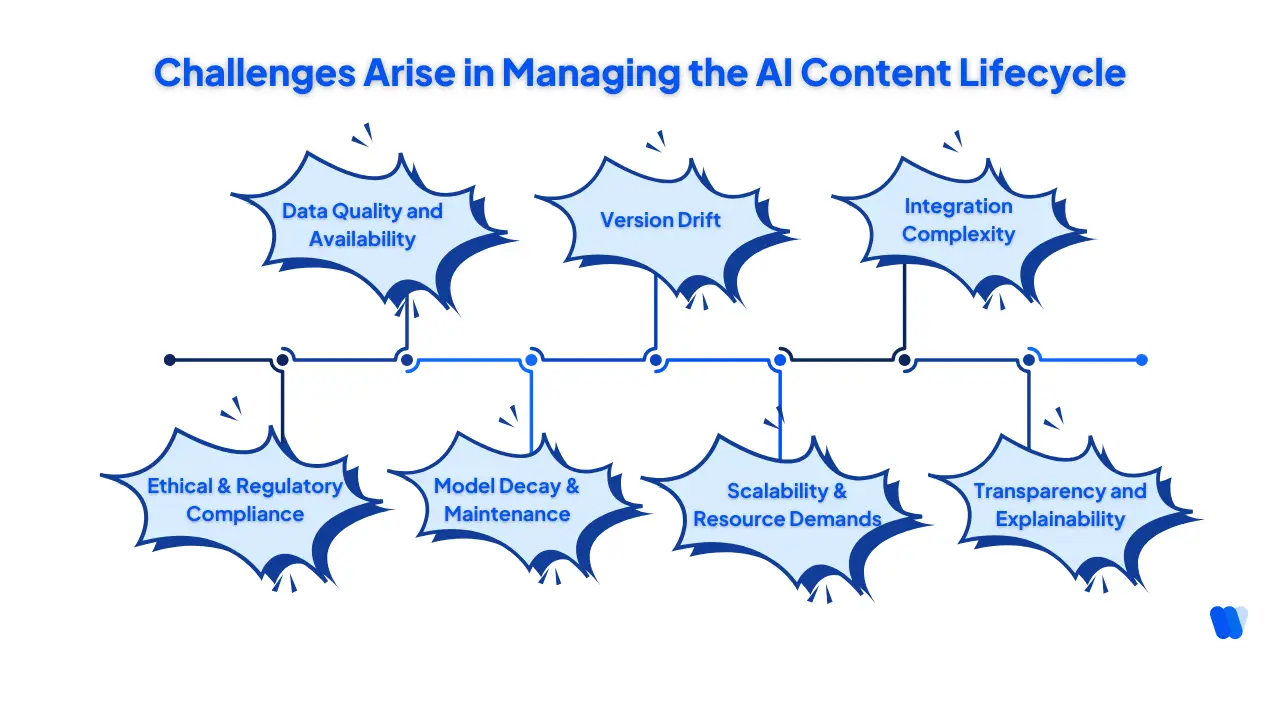
Managing the AI content lifecycle involves coordinating multiple technical and ethical elements across creation, deployment, and governance. Each stage introduces operational and strategic risks that influence the reliability, scalability, and integrity of AI-generated content systems.
1. Data Quality and Availability
AI systems depend on clean, diverse, and balanced data to perform effectively. Inconsistent datasets, missing records, or privacy restrictions can reduce accuracy and introduce bias. When training data lacks depth or diversity, models produce unreliable outcomes, making structured data governance and continuous validation essential.
2. Version Drift
Version drift occurs when outdated content or models circulate within an organization. Without strong version control and metadata alignment, AI systems can retrieve obsolete inputs, producing inconsistent or incorrect outputs. Maintaining synchronized repositories and audit trails helps prevent the spread of outdated content across workflows.
3. Integration Complexity
Incorporating AI into legacy architectures remains a major barrier. Disparate data sources, incompatible APIs, and siloed workflows make orchestration difficult. As a result, organizations often experience fragmented pipelines, inconsistent insights, and slower performance until a unified data infrastructure and integration layer are established.
4. Ethical and Regulatory Compliance
AI-generated content raises ethical challenges, including bias, misinformation, and copyright concerns. Without explicit governance frameworks, these issues can harm brand credibility and violate regulatory requirements. Maintaining compliance requires clear guidelines for data usage, transparency, and intellectual property management throughout the content lifecycle.
5. Model Decay and Maintenance
AI models deteriorate over time when user behavior, input data, or market conditions evolve a process known as model or data drift. If models aren’t regularly monitored and retrained, their predictions lose accuracy. Establishing automated retraining pipelines and performance monitoring ensures stability and long-term effectiveness.
6. Scalability and Resource Demands
As generative and large-scale models grow in size, they consume significant compute power and storage. High infrastructure costs can limit experimentation and accessibility, especially for smaller organizations. Efficient resource allocation and model optimization are crucial for sustaining cost-effective scalability.
7. Transparency and Explainability
Complex neural models often act as opaque “black boxes,” making it difficult for teams to understand how outputs are generated. This lack of interpretability undermines accountability and user trust. Implementing explainable AI techniques and transparent documentation helps ensure that AI decisions remain auditable and defensible.
Addressing These Challenges
Overcoming these barriers requires an integrated lifecycle framework that combines data integrity, ethical oversight, and operational agility. Continuous monitoring, retraining, and compliance auditing transform AI content workflows from reactive maintenance to proactive governance, ensuring sustained reliability and brand safety.
How Can Businesses Implement AI in Their Content Lifecycle?
Implementing artificial intelligence effectively requires more than automation it demands strategic alignment, governance, and continuous optimization. Businesses should focus on integrating AI tools where they provide measurable value rather than replicating existing manual workflows.
1. Strategic Planning and Integration
AI supports content strategy through intelligent audits and data-driven insights. Modern teams increasingly use AI to streamline their content workflows, making ideation-to-distribution cycles more efficient. It identifies performance gaps, keyword opportunities, and audience intent, allowing teams to allocate resources where impact is highest.
2. Governance and Compliance
Ethical and transparent AI usage is essential. Implement frameworks that monitor bias, ensure model accuracy, and maintain compliance with data protection regulations. Governance tools and lifecycle policies keep AI operations accountable and secure.
3. Continuous Learning and Improvement
AI thrives on feedback. By linking analytics and content performance data back into creation systems, businesses enable models to retrain and evolve with user behavior and algorithm updates keeping strategies current and adaptive.
➡️Outcome
This approach transforms AI from a task automation tool into a strategic growth engine. When guided by governance and iteration, the AI content lifecycle delivers scalable efficiency, measurable ROI, and a long-term competitive advantage.
What Are the Ethical Considerations in AI-Generated Content?
AI-generated content enables efficiency and scalability in digital communication, but it also introduces complex ethical risks. Responsible adoption requires balancing innovation with accountability, transparency, and fairness throughout the content lifecycle.
1. Bias and Representation
AI models reflect the data they are trained on. When datasets mirror societal bias, outputs may reinforce stereotypes or marginalize certain groups. For example, some generative systems have shown gender or racial imbalance in image and text outputs. Addressing these issues demands diverse training data, fairness audits, and ongoing evaluation to maintain inclusivity and representational accuracy.
2. Plagiarism and Intellectual Property
Because AI systems often learn from existing creative works, generated content can unintentionally replicate copyrighted material. The U.S. Copyright Office (2025) reaffirmed that only content with significant human contribution qualifies for legal protection, as outlined in Copyright and Artificial Intelligence: Part 2 Copyrightability Report (U.S. Copyright Office, 2025).
Businesses must ensure originality through human oversight, plagiarism detection, and documentation of human input during AI-assisted creation.
3. Misinformation and Accuracy
Generative models can produce convincing but incorrect information. When such outputs circulate without verification, they contribute to misinformation and reputational risk. Maintaining editorial integrity requires fact-checking, traceable data sourcing, and human review checkpoints before publication to preserve accuracy and public trust.
4. Transparency and Disclosure
Audiences deserve to know when they are engaging with AI-generated content. Lack of disclosure can undermine credibility and blur accountability. Ethical publishing practices include labeling AI contributions, disclosing automation in authorship, and maintaining records of human intervention to uphold transparency and trustworthiness.
5. Privacy and Data Protection
AI systems rely on extensive datasets that may contain personal or sensitive information. Using such data without consent risks violating privacy laws and individual rights. Compliance with frameworks like GDPR and CCPA, accompanied by anonymization protocols and transparent consent mechanisms, helps ensure responsible data handling and ethical use of user information (UMN Hubbard School, 2025)
6. Environmental Impact
Large-scale AI model training consumes substantial energy and computing resources. Though emissions data varies by model, the overall environmental cost of AI operations is growing. Developers and organizations should prioritize energy-efficient architectures, cloud optimization, and carbon-aware computing to reduce ecological impact.
➡️ Ensuring Ethical Governance
Mitigating these ethical risks requires structured governance frameworks that combine policy, technology, and human judgment. Continuous auditing, transparent documentation, and responsible model updates help maintain trust and accountability in AI-assisted content ecosystems.
How Does AI Influence Content Personalization?
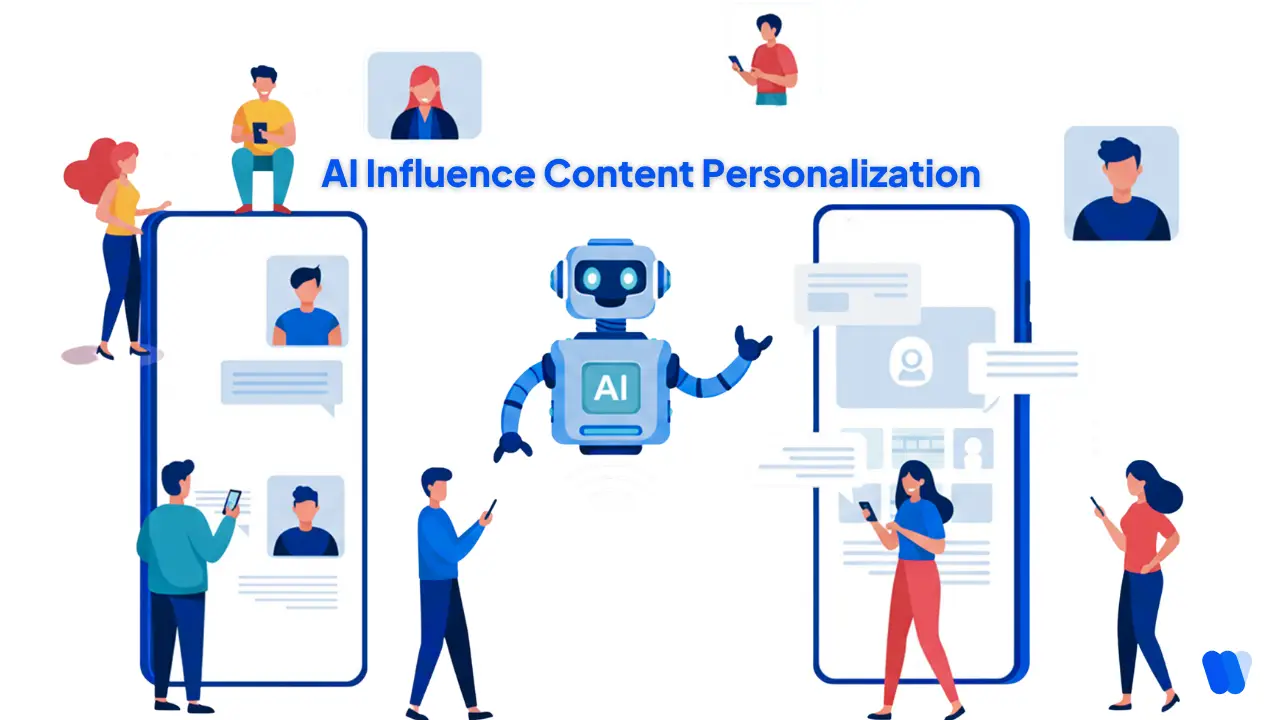
Artificial intelligence has transformed personalization from basic audience segmentation into precise, real-time experience design. By interpreting behavioral, contextual, and preference data, AI enables brands to deliver content that aligns with each user’s intent, enhancing engagement, trust, and conversion potential.
1. Behavioral Analysis and Recommendations
AI continuously studies user interactions such as dwell time, navigation paths, and purchase activity to predict interests. Recommendation engines in platforms like Netflix and Spotify apply collaborative filtering and deep learning to surface shows or songs most likely to capture attention, driving higher engagement and retention.
2. Real-Time Content Adaptation
Adaptive content systems adjust page layouts, imagery, or headlines based on user behavior. This real-time responsiveness improves relevance and user satisfaction by aligning visual and textual elements with immediate intent or device context.
3. Enhanced Customer Engagement
AI personalization deepens audience relationships through relevance and timing. When content resonates emotionally and contextually, users engage longer and convert faster. Brands using adaptive recommendations report improved customer loyalty and a measurable lift in long-term retention.
4. Operational Efficiency and Scalability
AI automates audience targeting and segmentation, enabling scalable personalization across millions of users. Machine learning reduces manual workload while optimizing delivery efficiency, ensuring consistent quality as marketing ecosystems expand.
5. Data-Driven Insights
By analyzing audience behavior at scale, AI reveals which content formats, tones, and channels produce the highest engagement. These insights guide editorial and campaign planning, making personalization strategies more predictive than reactive.
6. Consistency Across Channels
AI ensures coherent storytelling across digital touchpoints. Unified user profiles help maintain consistent tone, messaging, and brand identity across websites, social channels, and email building user confidence through familiarity.
Real-World Applications
Meta Platforms: Beginning December 2025, Meta will integrate interactions with its generative AI chat tools into personalized content and ad delivery across Facebook and Instagram.
Education: AI-driven personalization in e-learning platforms has improved engagement by adapting materials to each learner’s pace and comprehension level.
➡️ AI-powered personalization creates a continuous loop between data interpretation and experience design. As algorithms evolve, content becomes context-aware shifting from mass communication to individualized connection at scale.
Making AI Content Evergreen
Creating evergreen AI content material that remains relevant and valuable over time requires a balance of strategic planning, user understanding, and intelligent automation. The goal is to produce content that adapts to audience intent and algorithmic change while maintaining topical authority.
1. Identify and Understand Your Audience Sustainable content begins with deep audience insights. Build detailed personas outlining demographics, goals, and challenges. Understanding what consistently matters to your audience ensures your content remains useful long after publication.
2. Choose Timeless, Foundational Topics Focus on subjects that stay relevant despite industry shifts. Core concepts such as AI-driven automation, workflow optimization, and ethical content creation retain value because they evolve rather than expire.
3. Leverage AI Writing Systems for Consistency AI-powered tools streamline writing while maintaining voice and structure. They can refresh data, adjust tone, and expand existing sections automatically helping brands sustain a consistent, high-quality output with minimal manual effort.
4. Optimize for Sustainable SEO Use AI analytics to identify long-term keywords and semantic connections. Integrate them naturally into content and link structures to reinforce authority signals. Using chunk optimization helps structure content for better readability and AI-driven SERP visibility. Continuous optimization keeps evergreen material discoverable across changing search environments.
5. Refresh Content Periodically Evergreen does not mean static. Schedule periodic reviews to update examples, add recent data, and adjust formatting for readability. Even small refinements strengthen relevance and signal freshness to both users and search engines.
6. Enrich with AI-Generated Visuals Visual storytelling extends content lifespan. Use AI to create on-brand illustrations, data visuals, or short clips that reinforce comprehension. Well-designed visuals improve engagement and make timeless topics feel dynamic and current.
7. Maintain Continuous Promotion Evergreen content stays effective only if consistently visible. Repurpose and share it through newsletters, social media, or topic clusters. AI scheduling tools help maintain steady exposure and identify the best-performing distribution cycles.
8. Measure and Refine Over Time Track performance metrics like engagement duration, return visits, and social shares. Use these insights to identify which evergreen assets continue to deliver results and which require adjustments, ensuring ongoing ROI.
AI is evolving from automation to autonomy. As AI-driven search continues to evolve, understanding how to optimize for AI Overviews ensures content remains visible in dynamic discovery environments. Autonomous content agents will soon detect gaps, refresh outdated pages, and optimize performance without human input. Content will update itself as algorithms, audiences, and markets shift.
Multimodal AI will merge text, visuals, and audio into unified, adaptive experiences creating dynamic stories that evolve across every platform.
Together, these advances form self-refreshing content ecosystems where AI continuously detects, diagnoses, and deploys updates in real time. Content becomes a living system always current, context-aware, and effortlessly evergreen.
Helpful Guides to Strengthen Your AI Content Strategy
How To Optimize Content for Featured Snippets – Learn how to structure and format your content to capture top SERP visibility.
How To Optimize Content for Voice Search – Discover voice-first SEO strategies that improve accessibility and conversational ranking.
Best Tips for Creating Content That Actually Converts – Practical tactics to turn readers into loyal customers through AI-optimized storytelling.
AI vs Human Writing: When Teams Should Use Each — Understand how to balance automation with creativity to scale quality content without losing authenticity or intent.
By combining these guides with intelligent automation, you’ll move from creation to optimization seamlessly—keeping every asset current, discoverable, and conversion-ready.
FAQs
Conclusion: Turning AI Content into an Evergreen Asset
Sustaining visibility now depends on treating content as a living system, not a one-time output. Brands that manage the full AI content lifecycle from ideation to sunset maintain relevance and authority over time. The key is balance: automation for scale, authenticity for trust.
The next era of content belongs to those who build sustainable AI-driven ecosystems that adapt, refresh, and evolve continuously ensuring their message never goes stale.