Did you know?
- The generative AI in gaming market reached $1.47B in 2024, reflecting rapid industry-wide adoption (The Business Research Company, 2025).
- The broader AI-in-gaming segment is valued at $3.28B in 2024, driven by AI-led content generation and personalization (Grand View Research, 2024).
- Industry surveys show 52% of game-dev companies already use generative AI tools, with 36% of developers applying them in daily production (Gamespot, 2024).
AI Search Visibility for Gaming Brands matters because AI now shapes how games are built, described, and recommended. As studios scale AI-driven workflows, systems like ChatGPT, Gemini, and Perplexity increasingly determine which titles feel trustworthy to surface.
Generative engines rely on structured metadata, clear gameplay descriptions, and consistent sentiment to recommend a title. Gaps in this data reduce visibility across wishlists, trials, and early discovery.
Wellows, an AI search visibility platform, identifies missing citations, weak GEO signals, and metadata inconsistencies that limit generative placement. Strengthening these signals raises visibility in prompts like “best RPGs,” “top FPS games,” and “recommended indie titles for 2026″.
What AI Search Visibility Means for Gaming Studios, Esports Teams & Platforms
Search Engine Visibility shows how clearly AI systems understand a gaming brand. For studios and esports teams, it means AI tools can confidently identify your game, genre, platform, roster, and achievements as a verified entity.
AIs decide which titles or teams to recommend by checking structured facts, consistent gameplay details, sentiment, and trusted third-party references. When this data is incomplete or unclear, AI systems avoid citing the brand.
For gaming brands, AI search visibility is different from SERP rankings. It reflects how often you appear inside AI Overviews, LLM answer boxes, and conversational responses. GEO improves this visibility by organizing metadata so AI tools can reuse it accurately in queries like “What does AI search visibility mean for gaming brands?”
Who benefits? Whether you’re a freelancer, a gaming startup, a consultant, or an agency, understanding how AI systems cite and interpret your games, teams, or platforms is now essential for discovery and long-term player growth.
The AI discoverability checklist for startups helps teams prioritize metadata, structured facts, and citation-friendly elements AI systems now rely on.
How to Assess Your Current AI Search Visibility (Baseline + Benchmarks)
When I audit AI Search Visibility for Gaming Brands, I don’t start with keywords. I start with one question: how often do AI assistants actually name your game, studio, esports team, or platform when players ask about titles, genres, features, or console comparisons?
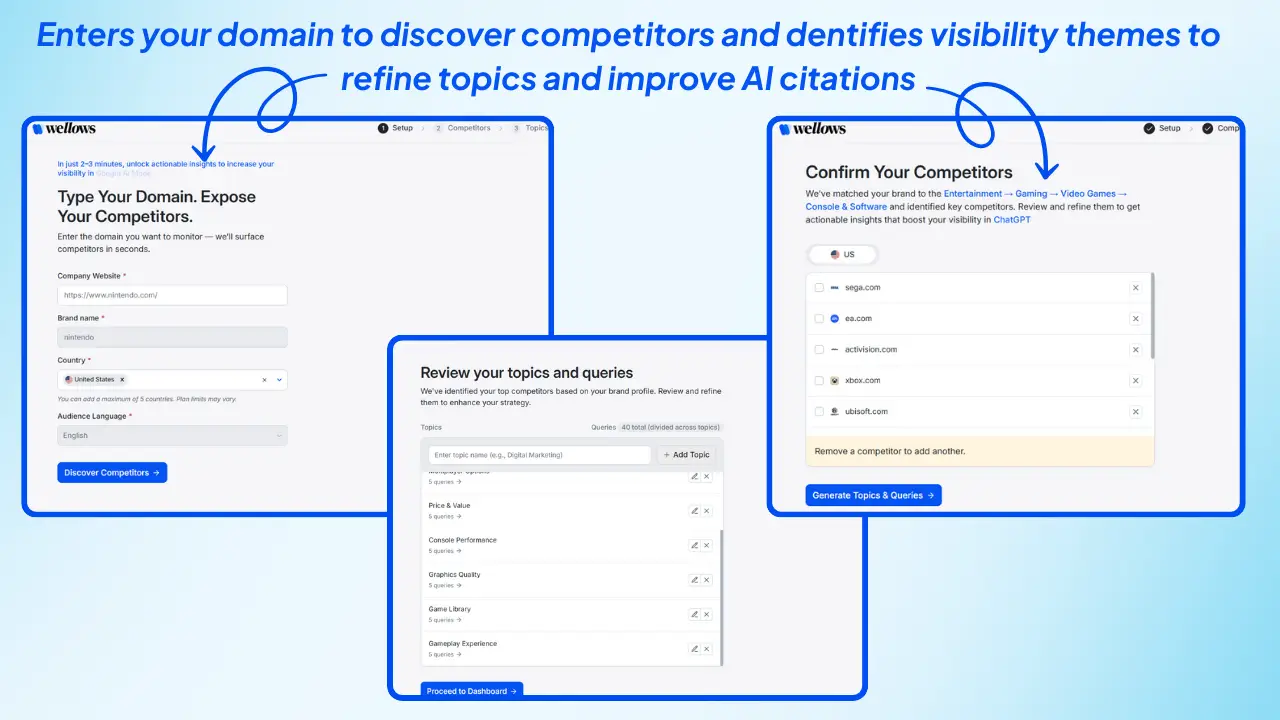 I then add the brand’s domain into the Wellows AI visibility platform. For a major gaming ecosystem such as nintendo.com, Wellows scanned 40 player-intent queries and detected 173 citations , producing a 10.41% Citation Score and a competitive Rank #3 among gaming platforms.
PlayStation and Xbox sit slightly higher, while publishers like EA, Ubisoft, Sega, and Capcom fall far below this tier.
 Next, I review how Wellows clusters the domain inside the broader gaming space. The platform automatically groups citations into themes such as gameplay experience, console performance, price & value, and graphics quality.
This view shows which competitors dominate each intent and where your brand underperforms, even when AI mentions topics your games are actually strong at.
 The Citation Score Comparison chart makes this even clearer. In the snapshot, PlayStation leads with 0.164, Xbox follows at 0.143, and Nintendo maintains a strong 0.104. Meanwhile, EA (0.034), Sega, Capcom, and Ubisoft record near-zero visibility. This converts “we think we’re visible” into a measurable benchmark across the industry.
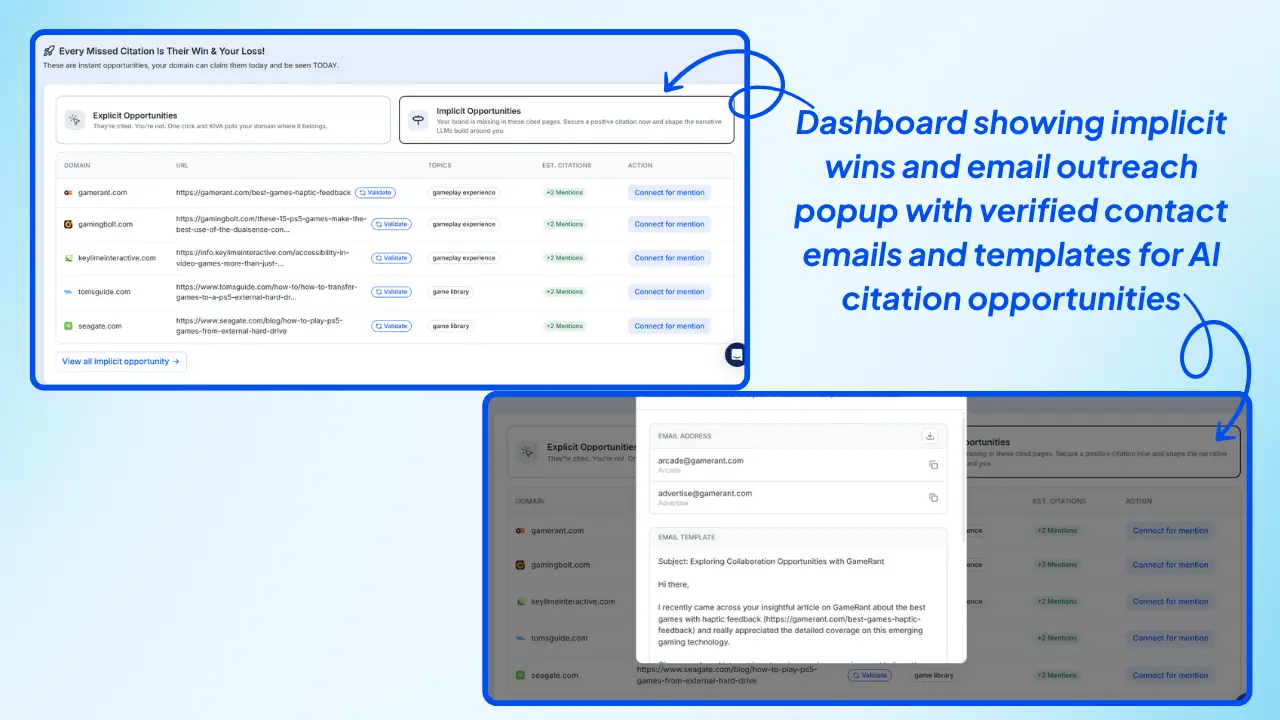
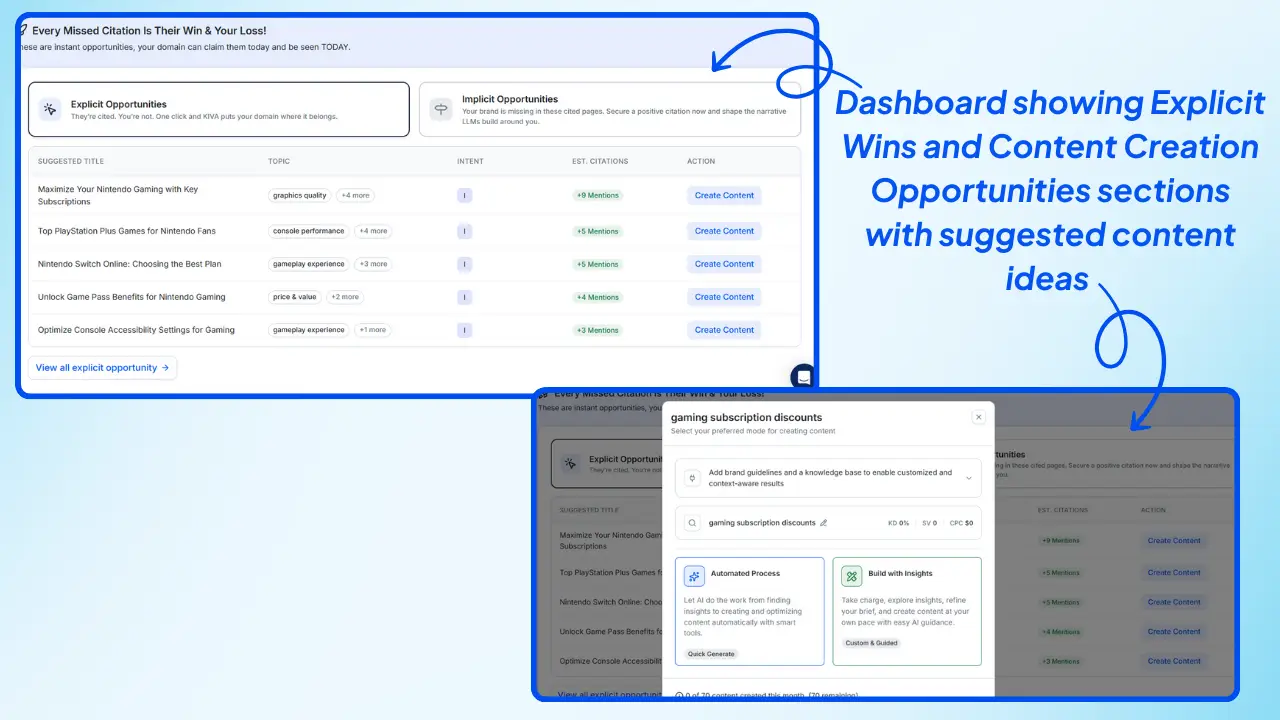 From here, I dig into explicit and implicit wins. Wellows separates citations where the brand is directly named from opportunities where AI uses your strengths, but credits a competitor like PlayStation or Xbox instead. For gaming brands, these missed wins usually occur around themes such as subscription value, console usability, controller recommendations, and gameplay optimization.
 I then check Competitive Insights and Top Cited Queries. These reveal which prompts drive the highest citation volume, such as “best console for non-tech users,” “is a pro controller worth it,” or “why are new games $70”, and which gaming brands dominate each topic. This helps align product-led content with real player questions instead of internal assumptions.
 Finally, I monitor performance trends across LLMs. Wellows tracks sentiment shifts, changing rank, and coverage across ChatGPT, Gemini, Google AI Overview, Bing AI, and Perplexity.
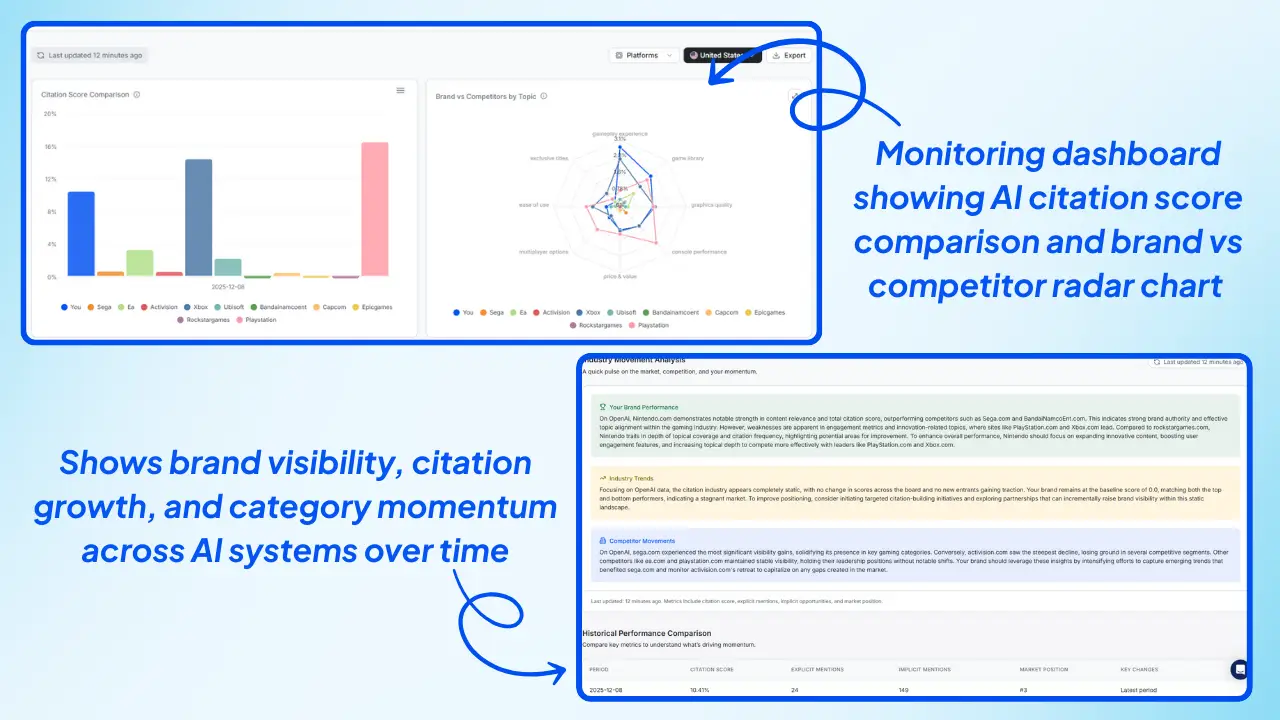 In the Nintendo snapshot, sentiment remains 56% positive, 41% neutral, and 3% negative , a healthy baseline with clear opportunities to strengthen perception on gameplay experience and pricing topics.
Curious to see how visible your studio, platform, or esports team is across AI systems?
What Is the Current State of AI Search Visibility in Gaming?
Major platforms dominate: Large gaming ecosystems such as PlayStation, Xbox, Nintendo, Steam, and Epic Games Store capture most citations in AI-generated gaming answers. Their structured catalogs, consistent metadata, and extensive third-party coverage make them “safe defaults” when users ask broad questions about consoles, game recommendations, or platform features.
Nintendo sits in a competitive mid-upper tier: In Wellows audit for nintendo.com, the brand records 173 tracked citations across 40 queries, with a 10.41% Citation Score and a Citation Rank of #3. PlayStation and Xbox hold slightly higher citation volumes, while publishers such as EA, Ubisoft, Sega, and Capcom sit far below , showing a clear multi-tier visibility structure within the gaming sector.
Topic-level patterns: AI-generated gaming answers tend to cluster around recurring themes: gameplay experience, graphics quality, console performance, price & value, and ease of use. In the Nintendo snapshot, top cited queries such as “Switch Online family plan,” “screen time limits,” and “best console for non-technical users” align directly with these dominant intents.
Sentiment trends: For nintendo.com, Wellows reports 56% positive, 41% neutral, and only 3% negative sentiment across AI systems. This balanced profile mirrors broader gaming trends: established platforms typically receive factual, stable descriptions rather than polarized commentary in LLM-generated responses.
Monitor performance over time: Competitive Insight charts reveal that platform ecosystems lead most gaming intents , especially gameplay experience, console performance, and value messaging , while areas like accessibility settings, subscription optimization, and cross-platform comparisons show no clear category leader yet. For studios, indie teams, and esports organizations, these gaps create opportunities to own emerging AI-visible topics before larger brands dominate them.
AI Search Visibility Strategies for Gaming Brands
AI search visibility for gaming brands improves fastest when GEO, structured data, and product-led content work together. The goal is simple: make it easy for AI systems to understand what your game is, who it’s for, and why it is a safer recommendation compared to similar titles.
9 Practical GEO Strategies for Gaming Studios, Platforms & Esports Teams
1. Treat GEO as a core discovery channel: Optimize for ChatGPT, Gemini, Perplexity, and Bing AI by structuring mechanics, story summaries, ESRB data, and platform availability. GEO focuses on being cited inside AI answers, not just ranking on traditional SERPs.
2. Build structured game foundations: Create scannable sections for mechanics, modes, difficulty, progression, monetization, and update cadence. Use schema-like fields to make your title machine-readable, improving entity clarity in generative answers.
3. Standardize cross-platform metadata: Align Steam, PlayStation, Xbox, Epic, and Nintendo descriptions. Inconsistent genre tags or platform details cause AI models to skip or downgrade your title.
4. Turn support and patch content into AI-ready FAQs: Convert common questions, “Is this game beginner-friendly?”, “Does it support co-op?”, “Is crossplay available?”, into clear Q&A sections. Structured answers increase reuse inside generative responses.
5. Create genre-specific comparison pages AI can trust: Publish neutral, structured comparisons like “Action RPG vs Open-World RPG” or “This shooter vs similar titles.” AI prefers factual, structured comparisons when recommending games for specific player intents.
6. Build topic clusters around player-intent queries: Design clusters for “best RPGs for beginners,” “games with deep progression,” or “top co-op titles.” Interlink mechanics pages, lore summaries, and platform info so AI models view your title as authoritative on those intents.
7. Document gameplay flows and unique value: Explain onboarding, combat loops, skill trees, progression paths, and end-game structure. AI uses these structured signals to match your game to difficulty, experience, and genre-fit prompts.
8. Tie GEO improvements to product-led KPIs: Track wishlist additions, demo downloads, store conversions, and player retention as structured data improves. Wellows shows how citation gains link directly to high-intent player actions.
9. Use Wellows as your GEO feedback loop: Monitor changes in Citation Score, Rank, sentiment patterns, and theme coverage. When competitors dominate categories like “best FPS games,” refine your metadata and content until AI reliably cites your title.
How to Get Your Video Game Mentioned in AI Recommendations
AI platforms surface games through direct mentions and indirect recognition. Both influence how to get your video game mentioned in AI recommendations during genre, difficulty, and experience-level queries.
Clear, verifiable signals make the game a “safe pick,” especially in prompts like “best RPG for beginners” or “popular indie action titles.”
Wellows highlights missing elements such as unclear mechanics, inconsistent platform tags, or outdated release notes that prevent explicit citations.
Wellows flags these “credit shifts,” showing where your game’s value appears inside AI answers but a competitor is credited due to stronger structured signals. Fixing metadata gaps, story summaries, and sentiment inconsistencies helps convert implicit visibility into direct recommendations.
Clear proposition matters. AI rewards games that express their core hook simply, combat style, story theme, progression structure, and audience suitability, without conflicting descriptions across platforms.
Release clarity boosts visibility. LLMs prioritize games with structured patch notes, feature updates, and roadmap transparency. Titles with vague or outdated update history lose confidence points in generative evaluations.
Genre alignment strengthens ranking. Games with clean genre tags and mechanic consistency surface more often across prompts like “open-world RPGs,” “casual platformers,” or “best multiplayer shooters.” Models avoid titles with genre drift or mismatched descriptions.
Trusted third-party citations improve placement. Consistent summaries across Steam reviews, Metacritic, PlayStation Store, and gaming publications reinforce title credibility. AI elevates games with stable sentiment and cross-wiki consistency.
GEO Optimization for Esports Organizations (Team Visibility Layer)
AI systems rely on structured, verifiable signals to describe esports teams. Strong esports organization GEO optimization helps models understand roster identity, tournament history, regional relevance, and long-term competitive consistency.
LLMs interpret esports brands through achievements, roster stability, league placement, coach and analyst structure, and sponsor credibility. When these signals align across trusted sources, teams appear more often in prompts like “best NA esports teams” or “top Valorant teams to follow.”
Esports teams that maintain clean roster timelines, structured achievement summaries, and consistent regional identity earn stronger placement across AI recommendation layers. These GEO-focused structures help models classify the team accurately and mention it in competitive, regional, and game-specific queries.
How Gaming Platforms Can Improve Their AI Presence
AI systems rank gaming platforms based on how reliably they surface accurate catalog data. Strong gaming platform AI presence improvement begins with consistent metadata, verified listings, and platform-wide clarity across all games, genres, and developer pages.
Models evaluate whether Steam, Xbox, PlayStation Store, or Epic Games Store provide complete, structured product data. Platforms with cleaner catalogs and stable taxonomy appear more often in prompts like “best platforms for indie games” or “where to find top RPGs.”
Did you know?
Did you know?
Did you know?
Did you know?
Did you know?
Did you know?
Gaming platforms that maintain consistent catalog formatting, structured product details, and accurate developer metadata earn stronger placement across AI discovery layers. These signals help models decide which store feels safest to feature in game, genre, and platform-specific recommendations.
Generative Search Framework for Game Studios (Product-Led Loop)
AI systems surface games they can clearly understand, verify, and describe. Studios that publish structured, narrative-consistent content earn higher game studio visibility in generative search because models can confidently reuse their data in zero-click answers.
GEO foundations, stable metadata, consistent lore summaries, and reliable patch history, help AI determine who the game is for, how it plays, and why it should be recommended.
Studios that treat every content type, mechanics, updates, lore, and trailers, as structured data see faster gains in AI-driven discovery. This product-led loop improves how reliably AI names the game during genre, difficulty, and story-intent searches.
The Role of Third-Party Sources in Gaming AI Visibility
AI systems rely heavily on high-authority external sources when evaluating games, platforms, and studios. Sites like Steam, IGN, Gamespot, Polygon, Reddit, Twitch, and YouTube shape how models interpret popularity, sentiment, and gameplay depth.
Generative engines cite these sources more often than brand websites because they provide richer, multi-perspective signals, reviews, gameplay footage, patch reactions, community discussions, and long-form analysis.
When third-party coverage reinforces the same story your studio publishes, AI becomes more confident recommending your game across genre, difficulty, and player-intent queries.
AI Bias, Safety, and Reputation Management for Gaming Brands
AI systems evaluate more than mechanics and genre, they assess safety, sentiment, and reputational signals before recommending a game. Titles with unclear safety markers or inconsistent ESRB details often receive fewer citations in generative answers.
LLMs also avoid recommending games associated with toxic communities, unresolved controversies, or unclear content ratings. These elements directly influence placement in AI-driven discovery.
Did you know?
Did you know?
Did you know?
Did you know?
Did you know?
When safety, sentiment, and rating data align, AI becomes far more confident recommending a title, especially in queries such as “best games for teens,” “non-toxic multiplayer titles,” or “story-driven games with mature themes.”
Why Gaming Brands Need Wellows for AI Search Visibility
Most SEO tools were not built for the AI search era. They track rankings, backlinks, and keyword movement, but they cannot see how generative AI systems cite, describe, or compare your game, platform, or esports team. For gaming brands, this creates a blind spot at the exact moment players now make decisions.
Wellows closes that gap. It operates as an AI visibility platform and GenAI visibility stack for gaming brands, measuring how often you appear in AI answers, how clearly your entity is understood, and how your visibility compares to rival studios, esports teams, and gaming platforms.
| Feature | Wellows | Traditional SEO Tools | Basic AI Monitoring Tools |
|---|---|---|---|
| AI Citation Tracking (ChatGPT, Gemini, Bing, Perplexity) | Yes Tracks how often AI systems mention your games, platforms, or teams. | No Focuses on website rankings, not generative visibility. | Partial Limited prompt testing, no industry context. |
| Implicit Citation Detection (Uncredited Mentions) | Yes Finds where AI describes your strengths but names a competitor. | No Cannot detect or classify LLM-generated answers. | No Only detects explicit name mentions. |
| Citation Score + Sentiment Fusion | Yes Combines citation frequency, share of voice, and sentiment into one metric. | Partial Offers sentiment tools, but not LLM-specific scoring. | Limited Basic sentiment labels without competitive context. |
| Gaming-Focused Benchmarking | Yes Benchmarks visibility against major studios, esports orgs, and platforms. | No Competitor sets built around SERP keywords, not AI queries. | No Usually monitors one entity at a time. |
| Explicit vs Implicit Wins Dashboard | Yes Shows where your brand should be cited in AI answers but isn’t. | No No visibility into generative engine behavior. | No Lacks actionable insights for citation recovery. |
| Query Intent Clustering | Yes Groups prompts into gaming-relevant themes, genre, difficulty, reviews, esports, platform choice. | No Clusters based only on keyword volume. | Partial Groups prompts without industry alignment. |
| Real-Time Sentiment Tracking | Yes Monitors tone for your games and competitors across AI systems. | Partial Tracks web reviews, not LLM sentiment. | Limited Surface-level tone analysis. |
| Visibility Playbooks & Content Suggestions | Yes Generates GEO-aligned optimizations for mechanics, story summaries, roster pages, or platform listings. | No Requires manual research. | No Provides raw prompt outputs only. |
90-Day AI Search Visibility Plan for Gaming Teams
To turn AI Search Visibility for Gaming Brands into a measurable growth channel, studios need clear metrics and a structured 90-day roadmap. This ensures every improvement in generative visibility translates into wishlist lifts, store purchases, sign-ups, and long-term player growth.
- Citation Score: Share of AI answers mentioning or recommending your game, studio, platform, or esports team.
- Citation Rank: Your position versus competitors across genre, platform, and discovery prompts.
- Tracked Queries: Prompts players actually use , “best RPGs for beginners,” “most active FPS games,” “top NA esports teams.”
- LLM Coverage: Frequency of mentions across ChatGPT, Gemini, Bing AI, and Perplexity.
- Sentiment by Theme: Tone across gameplay depth, difficulty, community health, performance, or esports reputation.
- Weeks 0–4: Run a Wellows audit to establish a baseline, identify implicit and explicit wins, fix metadata gaps, and update structured data for game pages, rosters, and platform listings.
- Weeks 4–8: Build genre and mechanic-led topic clusters, clean up entity inconsistencies across Steam/Xbox/PlayStation, and align third-party listings with official facts.
- Weeks 8–12: Strengthen sentiment signals, refine store and wiki descriptions, expand GEO clarity for esports teams, and perform targeted outreach to review sites and press to recover missed citations.
AI search visibility determines how brands across different markets appear inside generative answers. These guides show how organisations improve citations, entity clarity, and sentiment signals to rise in AI-driven discovery.
- AI Search Visibility for Hospitality Brands: Improve placement inside AI-powered travel planning and hotel recommendation flows.
- AI Search Visibility for Insurance Brands: Enhance coverage clarity, claims transparency, and underwriting signals to earn more AI citations.
- AI Search Visibility for Consumer Electronics Brands: Optimise technical specs, product metadata, and device comparisons for generative search.
- AI Search Visibility for Entertainment Brands: Improve visibility inside zero-click recommendations and viewer-intent prompts.
- AI Search Visibility for Fashion & Apparel Brands: Standardise product signals, sizing data, and trend cues for stronger AI-driven recommendations.
- AI Search Visibility for Home Improvement Brands: Earn citations within AI-led renovation guidance, material comparisons, and project advice.
Insight: Brands that align structured metadata, sentiment consistency, and cross-platform accuracy achieve higher placement inside generative answers and gain a measurable edge over competitors.
FAQs , AI Search Visibility for Gaming Brands
Conclusion: AI Visibility Now Drives Gaming Discovery
Did you know?
Did you know?
Did you know?
Did you know?
Did you know?
Did you know?