Consumers now use ChatGPT, Gemini, Perplexity, and Bing AI to compare devices and shortlist brands. These systems generate direct answers, so AI search visibility now determines which electronics brands enter consideration at the earliest stage of product research.
AI is already influencing buying behavior. Recent data shows 40–55% of U.S. consumers rely on AI-powered search to make electronics and appliance decisions (McKinsey, 2025).
Because models depend on structured signals, every consumer electronics AI search optimization guide now stresses clarity, entity accuracy, and consistent product metadata for stronger AI Search Optimization for Electronics Brands.
Brands gain visibility when product specs and compatibility details are easy for AI to verify. AI search visibility for electronics improves further when AI systems can confirm identities across external sources.
Platforms like Wellows, an AI search visibility platform, analyse how LLMs interpret product information and reveal citation gaps that limit early recommendations.
What Is AI Search Visibility for Consumer Electronics?
AI search visibility for consumer electronics reflects how confidently models identify a brand, its product lines, and its technical attributes. LLMs read structured data, spec sheets, compatibility details, and category signals to confirm which devices belong to your catalog and how they compare to competing products.
Models verify information by checking product specs, reliability claims, and consistent naming across external sources. Stronger signals improve hardware brand visibility in generative search and increase the likelihood of improving electronics brand AI assistant mentions, especially when users ask how to get tech products recommended by AI.
Clear taxonomies, unified SKUs, and accurate metadata reduce ambiguity for AI systems. When these signals align with LLM trust patterns, brands gain stronger placement inside answers, comparisons, and early consideration flows that shape consumer electronics discovery.
Why Consumer Electronics Brands Are Struggling in Generative Search
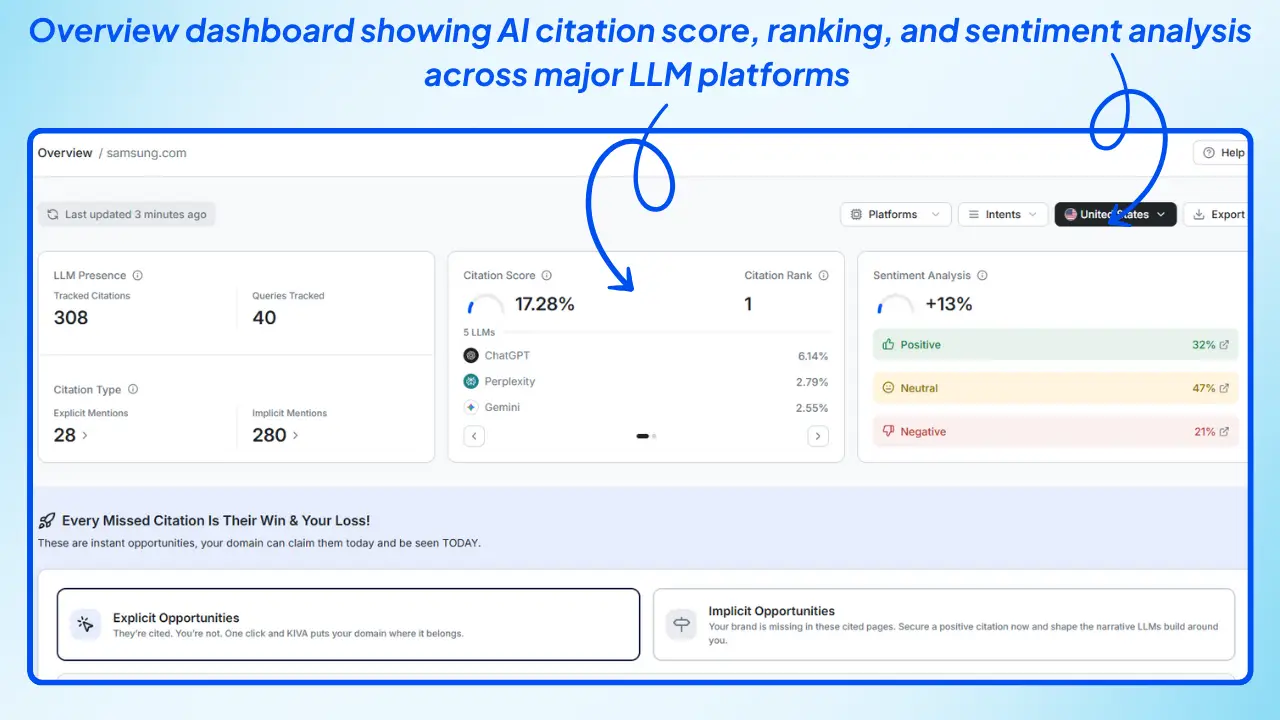
Wellows data shows major visibility gaps across smartphones, audio devices, wearables, and home appliances. Samsung leads with 308 citations from 40 tracked queries, far ahead of LG (129), Sony (47), and TCL (30), highlighting how uneven LLM recognition has become in consumer electronics.
AI redistributes “brand authority” by prioritising structured product data instead of traditional SERP signals. Because Samsung maintains consistent specs and reliable metadata, it secures stronger placement while competitors lose ground due to fragmented taxonomies and unclear device information.
Misattribution remains a core issue. Only 28 citations are explicit, while 280 are implicit, meaning AI often uses Samsung’s strengths but credits other brands with cleaner signals. Sentiment also shapes recommendations, with 32% positive, 47% neutral, and 21% negative influencing visibility in generative answers.
| Metric | Value |
|---|---|
| Tracked Queries | 40 |
| Total Citations | 308 |
| Citation Score | 17.28% |
| Explicit Mentions | 28 |
| Implicit Mentions | 280 |
| Citation Rank | 1 |
| Top Competitors | LG 129, Sony 47, TCL 30, Whirlpool 18, Bosch 6, Electrolux 5, GE 4, Vizio 3, Panasonic 2 |
| Positive Sentiment | 32% |
| Neutral Sentiment | 47% |
| Negative Sentiment | 21% |
How AI Systems Rank, Compare, and Recommend Tech Products
AI models rank electronics by analysing structured specs, product families, warranties, and reliability signals. Clear chipset data, display terms, audio profiles, battery metrics, and UX patterns strengthen AI Search Visibility strategies for consumer electronics because they reduce ambiguity during comparisons.
Models verify brand identity through cross-device consistency, SKU accuracy, and alignment with retailers, certification bodies, and review sites. Brands gain visibility faster when these sources match cleanly.
Generative engines recommend products more confidently when specs, compatibility details, and performance claims follow predictable structures. Wellows, an AI search visibility platform, highlights trust gaps and helps teams apply AI tools for enhancing search visibility in electronics with precision.
The Core Signals AI Needs From Electronics Brands (Entity Foundation)
AI engines answer “What is AI search visibility for consumer electronics?” by checking how well a brand defines its devices, product families, and technical identity. Stronger entity signals create more reliable AI recommendations.
Did you know?
- Device-level E-E-A-T: Verified specs, reliability data, transparent materials, and consistent performance claims help models confirm product credibility.
- Feature documentation: Clear chipset details, display properties, audio profiles, sensor capabilities, and safety notes reduce ambiguity during AI comparisons.
- Compatibility mapping: OS versions, app integrations, wireless standards, and smart-home ecosystem support help AI group devices accurately.
- Product taxonomies: Clean hierarchies, unified naming, and SKU clarity prevent misattribution when multiple model generations exist.
- Support and warranty pathways: Stable repair information, coverage terms, and authorised service links serve as trust signals for AI-driven recommendations.
Explicit vs. Implicit Visibility for Tech Brands
AI systems create two kinds of visibility in electronics: direct mentions and indirect recognition. Both shape how often a brand appears in generative answers across devices and categories.
Explicit citations: Occur when AI names the brand or device directly. These appear in prompts such as “best smart TV,” where models select a product based on spec clarity, taxonomy consistency, and trusted external references.
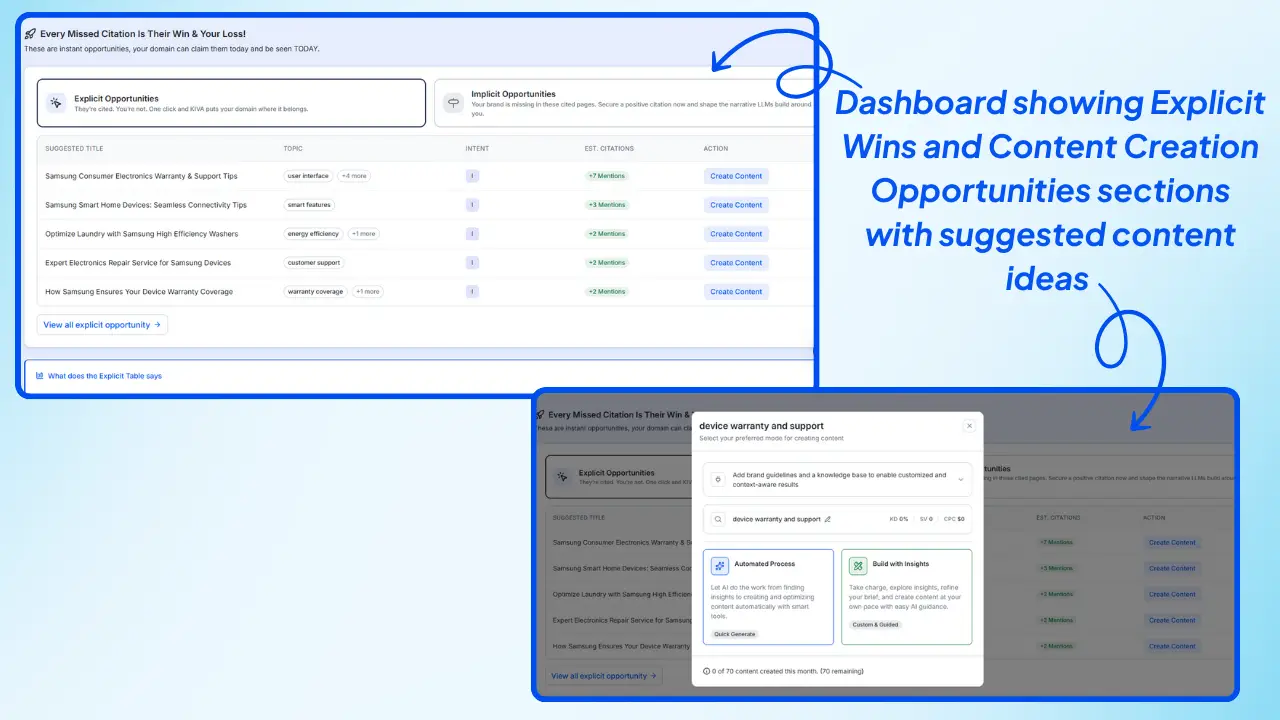
Implicit wins: Happen when AI uses your strengths—battery life, smart-home integrations, durability—but credits a competitor with cleaner metadata. This is common in crowded categories with overlapping features.
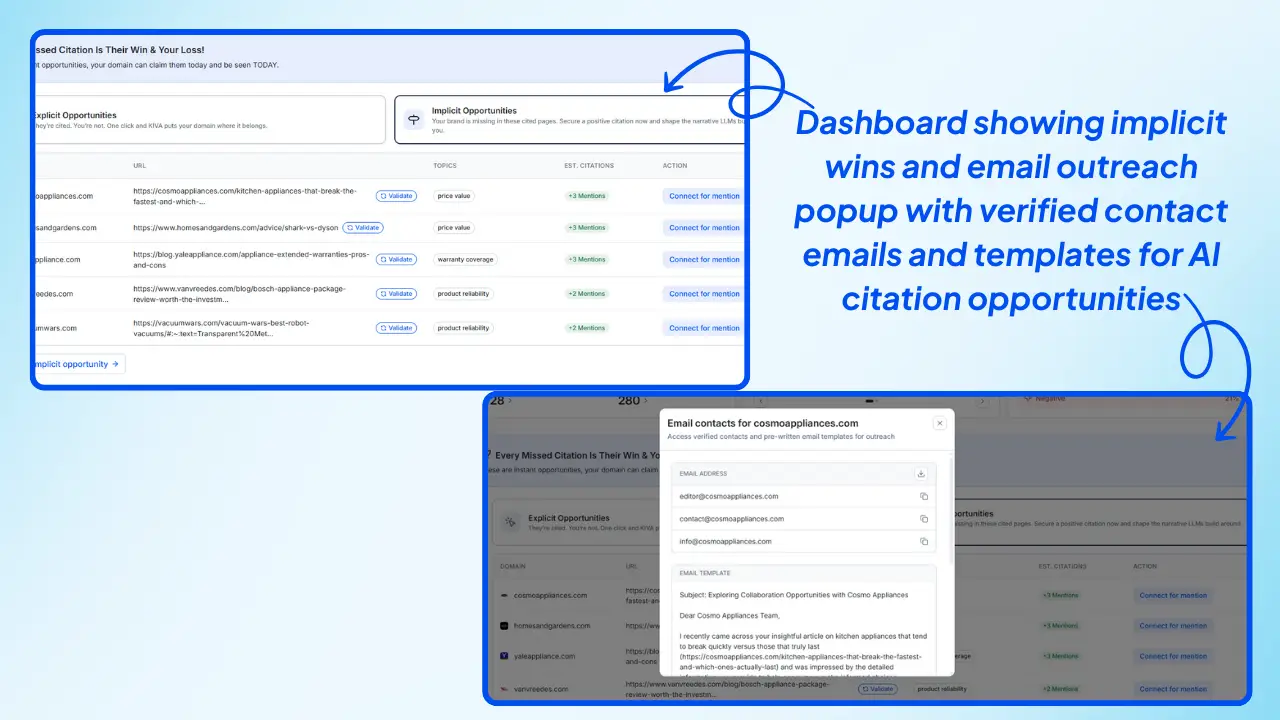
Consumer electronics SEO tactics using AI: Structured specs, unified naming, and consistent feature documentation increase the odds of explicit placement across LLM platforms.
AI search visibility techniques for home appliance brands: Clear warranty terms, energy-efficiency data, and installation details help AI match appliances to user intents without shifting credit to rivals.
Why Competitor Electronics Brands Rank Higher in AI Answers
Competitor brands often secure stronger AI placement because their product information is easier for models to verify across devices, categories, and third-party ecosystems.
Did you know?
- Stronger spec consistency: Competitors maintain uniform details for chipsets, displays, audio features, sensors, and power ratings, reducing ambiguity in model-to-model comparisons.
- Better third-party validation: Listings on BestBuy, Wirecutter, Rtings, UL certification, and FCC databases give AI systems trusted references that confirm performance, safety, and reliability claims.
- Richer compatibility signals: Clear OS support, smart-home integrations, app ecosystems, and wireless standards help AI understand where devices fit within user workflows.
- More structured documentation: Competitors publish cleaner taxonomies, unified SKU naming, and detailed setup or troubleshooting guides, which improve AI confidence in their product families.
How To Audit consumer electronics brands for AI Search Visibility
When I assess AI search visibility for consumer electronics brands, I begin by adding the domain and product categories into the Wellows platform. This shows how often AI systems name the brand when users compare devices, search for reliability guidance, or ask which product fits their needs.
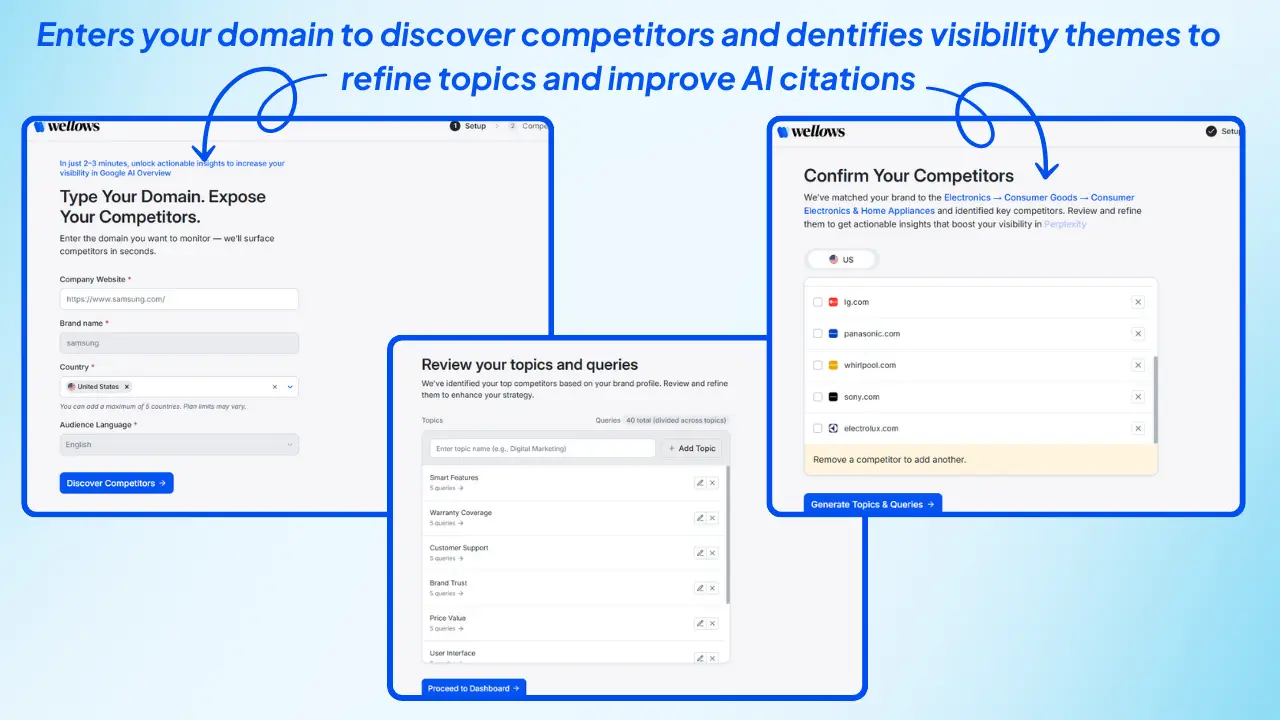
In Samsung’s case, Wellows scanned 40 queries and surfaced 308 citations across major LLMs. The platform converts these outputs into a 17.28% Citation Score, which reflects how reliably models mention Samsung compared to LG, Sony, TCL, and other competitors.
I then review how Wellows groups the brand across visibility themes. Samsung leads with a strong mix of smartphone, TV, appliance, and wearable-level coverage, outperforming LG’s 129 citations and Sony’s 47. These clusters explain why Samsung holds Rank #1 in AI-generated recommendations.
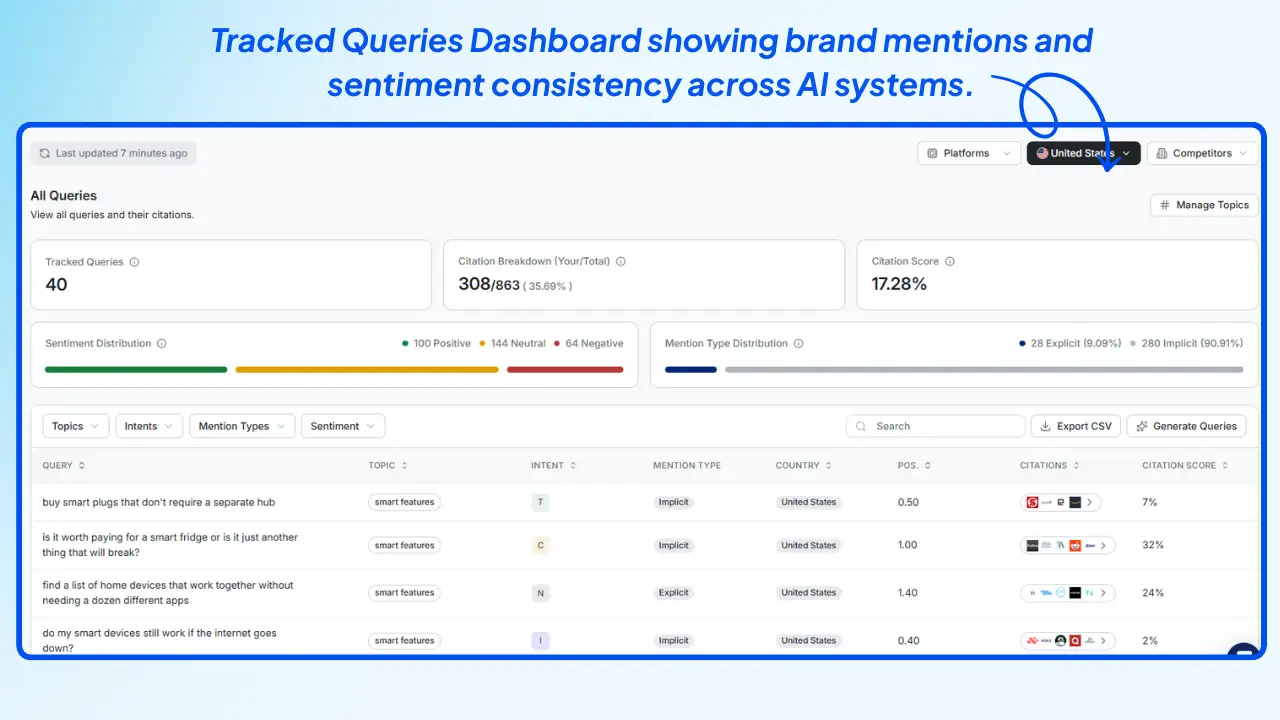
Next, I analyse explicit and implicit wins. Only 28 mentions are explicit, while 280 are implicit, meaning AI often uses Samsung’s strengths—such as reliability or smart-home integration—but credits a competitor with clearer metadata. These gaps turn into structured updates for specs, compatibility mapping, and SKU consistency.
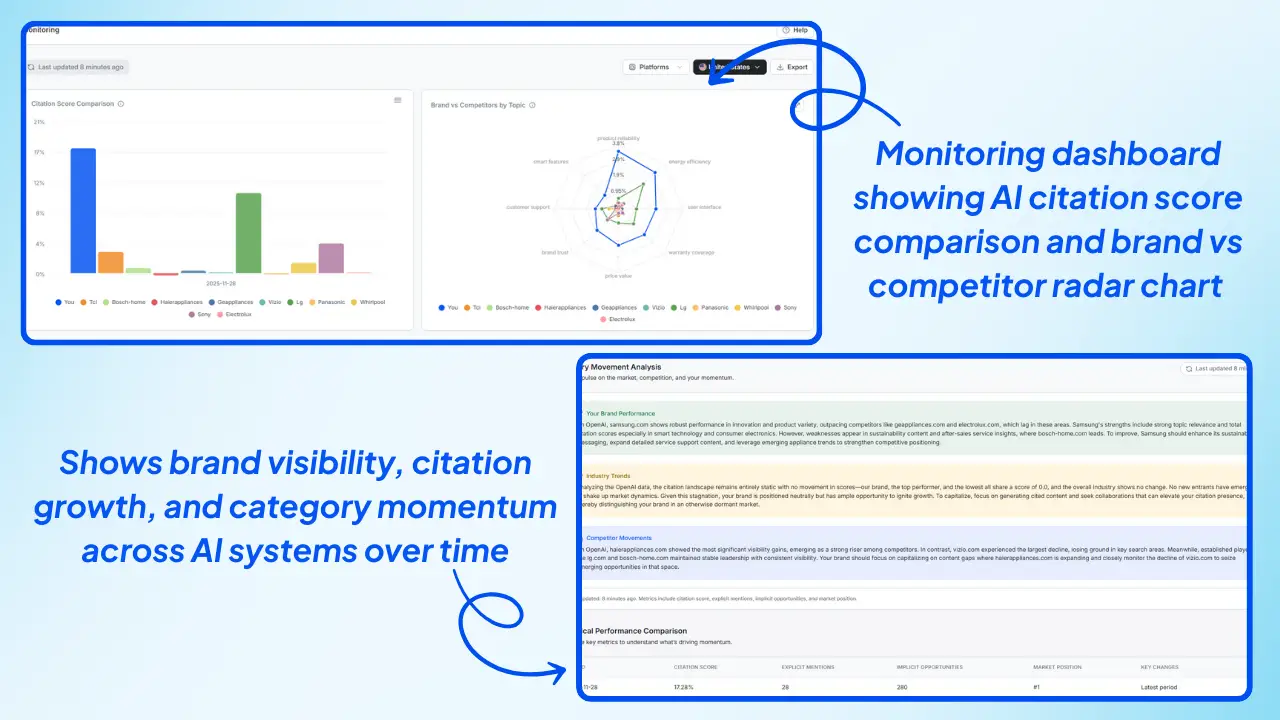
Wellows also highlights sentiment patterns. Samsung shows 32% positive, 47% neutral, and 21% negative, which mirrors how LLMs summarise user experience, durability, and support expectations. These insights improve Search Engine Optimization for Retail Brands and guide Digital Marketing Strategies for Tech Brands by revealing where clarity or documentation is missing.
Wellows supports agencies managing large consumer electronics portfolios and startups launching new hardware lines that require strong entity signals from day one. These patterns mirror the AI search visibility challenges now shaping smartphones, audio devices, appliances, wearables, and smart-home ecosystems.
Practical AI Search Optimization Strategies for Consumer Electronics Brands
AI improves electronics visibility when product data is structured clearly enough for models to verify. When I optimize consumer tech content, I focus on signals LLMs can reuse reliably across devices, ecosystems, and generations.
Practical AI Visibility Strategies for Consumer Electronics
GEO, Retail Availability, and AI-Driven Local Electronics Discovery
Electronics brands surface more often in local, zero-click answers when AI systems can reuse structured, location-aware product information. GEO gives models the clarity they need to match devices to local stock, pricing, and service options without distortion.
Brands that publish consistent, region-ready product data earn more placements because AI assistants can reference them safely inside “near me” and purchase-intent prompts.
The Role of Third-Party Tech Sources in AI Visibility
AI systems depend heavily on trusted third-party tech sources when ranking and recommending electronics. These platforms act as verification layers, helping LLMs confirm whether a device’s specs, performance claims, and safety information are accurate and consistent across the broader ecosystem.
Sites like Rtings, Wirecutter, Tom’s Guide, GSMArena, and TechRadar influence visibility because they document benchmarks, reliability scores, and long-term performance tests. LLMs treat these reviews as baseline reference data when comparing devices inside generative answers.
Certification bodies such as UL and FCC reinforce factual accuracy. Their safety listings, wireless approvals, and compliance documentation help AI models validate hardware attributes that affect product placement, especially in categories like smart-home devices and connected appliances.
Retail ecosystems add another layer of verification. When pricing, availability, warranty terms, and model variations match across Amazon, BestBuy, and manufacturer listings, AI systems surface those products more reliably in purchase-intent queries.
Wellows separates these influences into explicit and implicit citations. Explicit citations appear when AI names the brand because its external data aligns cleanly. Implicit citations occur when AI uses a brand’s strengths but credits a competitor with clearer signals across third-party platforms.
Explicit citation: When ChatGPT recommends a TV because its Rtings and UL listings match the manufacturer’s specs.
Implicit citation: When AI uses your audio performance strengths but cites another brand because their Wirecutter and TechRadar pages are more complete.
External reinforcement: When consistent FCC and GSMArena data increases trust in your device specs and improves reuse in zero-click recommendations.
Governance, Accuracy, and Compliance for AI-Facing Consumer Electronics Content
Electronics brands must maintain precise AI-facing content because outdated specs or compatibility notes can cause incorrect recommendations. Models depend on third-party listings for verification, making accuracy non-negotiable.
Specs must remain current. Firmware changes affect features, and AI systems favour brands whose data matches retailer and certification sources such as the FCC.
Safety compliance influences visibility. Pages should include certified wireless limits and electrical standards aligned with UL terminology.
Energy-focused devices must follow ENERGY STAR definitions because AI uses these labels to validate efficiency claims.
Version accuracy matters. LLMs confuse generations when SKU names, features, or firmware notes are inconsistent, increasing misattribution risk.
Wellows identifies outdated specs, missing compatibility notes, and incorrect variant mappings so teams can correct gaps before they reduce AI visibility or damage trust.
Why Consumer Electronics Marketers Need AI Search Visibility Platforms
Most marketing tools were built for the SERP era. They track keywords and traffic, but they cannot see how ChatGPT, Gemini, Perplexity, or Bing AI describe, compare, or cite devices inside real user questions. This creates a critical blind spot in AI search visibility for electronics brands.
Wellows closes that gap. As an AI search visibility platform and GenAI visibility stack, it measures how often each device is cited, how product categories are framed, and where competitors outperform you across LLMs. These patterns align with modern Search Engine Optimization for Retail Brands and product-led growth strategies.
| Feature | Wellows | Traditional SEO Suite | Basic AI Monitoring Tools |
|---|---|---|---|
| AI Citation Tracking (ChatGPT, Gemini, Perplexity, Bing) | Yes Tracks device, category, spec, and product-line citations. | No SERP-focused only. | Partial Mentions without technical context. |
| Implicit Citation Detection | Yes Finds where your specs appear but another brand is credited. | No Cannot interpret LLM reasoning. | No Counts direct mentions only. |
| Citation Score + Sentiment | Yes Combines frequency, category share, and tone for each device. | Partial High-level brand sentiment only. | Limited No sentiment intelligence. |
| Electronics-Focused Benchmarking | Yes Benchmarks against Samsung, LG, Sony, TCL, Whirlpool. | No Keyword-only comparison. | No No hardware benchmarking. |
| Explicit vs Implicit Wins | Yes Highlights misattributed device strengths. | No No LLM reasoning signals. | No No classification. |
| Intent Clustering | Yes Groups queries around price, smart-home, audio, reliability, repairs. | No Keyword clusters only. | Partial Weak intent understanding. |
| Real-Time Sentiment Tracking | Yes Shows how AI systems describe reliability and user experience. | Partial Based on reviews only. | Limited No historical analysis. |
This mirrors the evolution of modern search, where AI search visibility functions as a core performance channel. With Wellows, electronics marketers see how LLMs describe their devices, where competitors dominate citations, and which user intents drive discovery.
90-Day AI Search Visibility Roadmap for Electronics Brands
A 90-day roadmap helps electronics brands measure how AI systems interpret product entities, specifications, and category-level accuracy across LLMs. These improvement cycles mirror patterns seen in other fast-evolving sectors and align with insights from broader AI visibility research.
Did you know?
- Audit Citation Score, Rank, and sentiment across major LLM platforms.
- Clean spec sheets, firmware notes, and product-family metadata.
- Unify SKU naming across retailers and certification databases.
- Update compatibility details for OS versions, wireless standards, and app integrations.
Did you know?
- Build device clusters for audio, smart-home, appliances, wearables, and tablets.
- Clarify feature terminology to reduce ambiguity in LLM product comparisons.
- Improve compatibility mapping for smart-home ecosystems and connected services.
- Strengthen GEO signals by aligning regional availability and support-center data.
Did you know?
- Improve visibility across Rtings, Wirecutter, GSMArena, TechRadar, and retailer listings.
- Fix misattributions surfaced in Wellows implicit-win reports.
- Monitor sentiment shifts and update outdated specs or feature descriptions.
- Re-run Wellows scans to confirm visibility growth across product categories.
This cycle ensures electronics brands maintain consistent visibility across AI-driven purchase journeys and prevent competitors from capturing early consideration.
Consumer Electronics AI Search Playbooks (Device-Specific)
Discover how AI Search Visibility shapes discovery across major sectors. These guides explain how organisations strengthen citations, entity clarity, and sentiment inside AI-generated answers.
- AI Search Visibility for B2B SaaS Brands: Strengthen recognition in AI software recommendations and workflow-led prompts.
- AI Search Visibility for Hospitality Brands: Understand how hotels and resorts can improve entity signals, GEO alignment, and citation consistency in AI-driven travel discovery.
- AI Search Visibility for Banking & Financial Services Brands: Improve trust signals for lending, advisory, and compliance-related AI queries.
- AI Search Visibility for Environmental Sustainability Brands: Strengthen placement in climate, ESG, and policy-driven AI explanations.
- AI Search Visibility for Entertainment Brands: Enhance citations in zero-click recommendations and viewer-intent queries.
- AI Search Visibility for Fashion & Apparel Brands: Improve product-level clarity, sizing consistency, and trend relevance inside generative search.
Insight: Across all industries, organisations that control their metadata, structured signals, and third-party accuracy gain stronger placement in generative answers and outperform competitors inside AI-driven discovery flows.
FAQs
Conclusion
Did you know?
- AI assistants now act as the primary comparison layer for consumer electronics, replacing traditional search with instant generative answers.
- Users rely on ChatGPT, Gemini, Perplexity, and Bing AI to evaluate features, reliability, pricing, and compatibility before opening a product page.
- Brands that control their metadata, structured signals, and third-party accuracy gain stronger AI recommendations across devices and categories.
- Aligned specs, SKUs, certifications, and ecosystem data help AI verify products confidently and reduce misattribution to competitors.
- Wellows identifies citation gaps, misattributed strengths, and missing product signals across major LLMs to build measurable AI visibility.
- In an AI-first marketplace, visibility inside generative systems is no longer optional—it has become the new performance channel driving product-led growth.