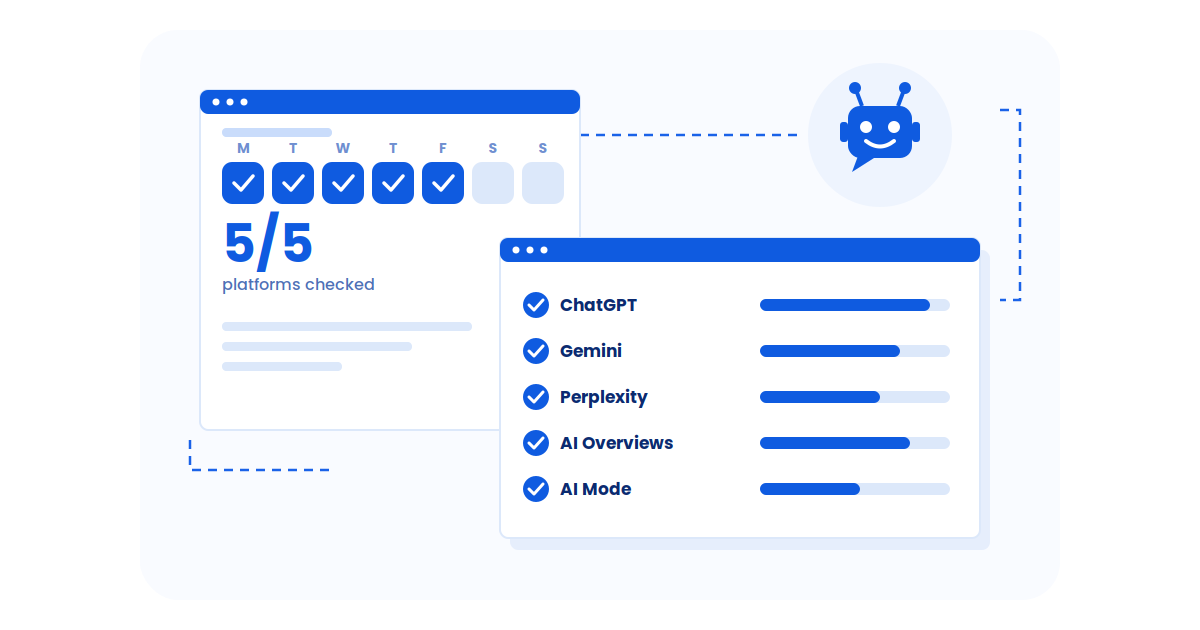
Shoppers now turn to ChatGPT, Gemini, and Perplexity to compare brands, evaluate materials, and decide what to buy. As a result, AI Search Visibility for Fashion & Apparel Brands now determines which labels, designers, and retailers appear in generative answers.
Brands with clean product data, consistent material details, and verified sourcing surface more often across AI systems. Recent studies show 39% of consumers use AI for product discovery (Salesforce, 2025) and 61% of US shoppers rely on AI tools during online shopping (Customer Experience Dive, 2025), making entity clarity essential.
Wellows, an AI search visibility platform, tracks citations, exposes missed mentions, and reveals where competitors dominate key buyer intents, turning scattered AI outputs into measurable improvements in Citation Score. If you want to know more, you can book a demo.
TL;DR
- AI drives fashion discovery: Shoppers use ChatGPT, Gemini, and Perplexity to compare brands, fabrics, and value—AI visibility now matters.
- Consistency earns citations: Clean, consistent product data (materials, sizing, care, sourcing) makes you easier to trust and recommend.
- Optimization isn’t keywords: Focus on structured metadata, AI-friendly FAQs, visual clarity, and intent-led content.
- Gaps are measurable: Brands may appear implicitly but not be named—fixing data gaps converts mentions into citations.
- Wellows makes it actionable: Track citations, sentiment, and competitor gaps to improve Citation Score and AI recommendations.
What AI Search Visibility Means for Fashion Brands
AI Search Visibility for Fashion & Apparel Brands reflects how reliably AI systems identify a label, interpret its product details, and match it to shopper intents. Engines prioritise brands whose materials, sizing rules, and sustainability data remain consistent across the web.
Because assistants generate direct answers, visibility hinges on factual stability rather than keyword signals. When a brand’s craftsmanship notes, care instructions, and provenance details align across sources, AI systems present it confidently in product comparisons and style recommendations.
Wellows, an AI search visibility platform, tracks where a fashion brand appears across LLMs, detects mismatched or missing details, and shows how these gaps influence a brand’s Citation Score.
Fashion Brand AI Search Optimization Techniques
Fashion brand AI search optimization techniques focus on making your product data, metadata, and brand signals easy for AI systems to interpret and recommend. Instead of ranking links, the goal is to become a reliable source for AI-generated answers across ChatGPT, Gemini, and Perplexity.
1. Improve product metadata and tagging: Standardize product titles, material composition, care instructions, size logic, and category labels across your site and retail partners so AI can confidently summarize and compare items.
2. Add visual search readiness: Use consistent image naming, alt text (material + silhouette + color), and clear product-photo sets (front/back/detail) to help AI-driven discovery and “find similar items” workflows.
3. Build AI-friendly FAQs for buying decisions: Publish short Q&A blocks for sizing, authenticity, repairs, shipping/returns, and material durability—these map directly to shopper prompts AI engines answer.
4. Use chatbots/assistants as discovery layers: Create guided “find my size,” “choose a fabric,” and “care guidance” experiences. These generate structured signals and reduce ambiguity AI systems struggle with.
5. Track query trends and gaps: Monitor which prompts trigger competitor mentions (e.g., craftsmanship, durability, authenticity) and publish pages that answer those prompts with verifiable details.
6. Connect optimization to omnichannel data: Keep store policies, after-sales service, appointments, and availability consistent across brand site, retailers, and support docs so AI can quote stable facts.
To get fashion products recommended by AI (ChatGPT, Gemini, Perplexity, and AI Overviews), your product pages must be easy for AI systems to verify, compare, and summarize. AI recommends items it can confidently interpret — based on clear product facts, trusted references, and consistent listings across the web.
- Publish complete product specs (material composition, fit, care, origin, warranty) in a scannable format
- Use Product + Offer + Review schema so AI can read price, availability, ratings, and key attributes
- Create comparison-friendly content (e.g., “cotton vs linen in summer,” “best fabrics for sensitive skin,” “capsule wardrobe essentials”)
- Answer recommendation prompts directly with short Q&A blocks (best for, best season, best body type/fit, styling use-cases)
- Keep retailer and marketplace listings consistent (same product names, sizes, materials, and images everywhere)
- Earn trusted third-party mentions (fashion editors, material guides, sustainability certifications) to strengthen AI confidence
- Add visual clarity (alt text describing fabric + silhouette + color + use-case) to support AI-led discovery and “similar items” prompts
In short: products get recommended when AI can validate what they are, who they’re for, and why they’re a good match — using stable, structured, and widely consistent product data.
How AI Enhances Search Visibility for Fashion Brands
When I analyse Search Engine Visibility for Fashion & Apparel Brands inside the Wellows, I look at how consistently AI systems interpret a label’s materials, craftsmanship standards, sourcing notes, and after-sales signals. AI engines prioritise brands whose details remain stable across authoritative sources.
In the Wellows snapshot for lvmh.com, the domain recorded 104 citations across 40 tracked queries, all implicit. This tells me AI describes LVMH’s value in answers, but rarely names the brand directly, which limits explicit visibility in high-intent prompts.
Because Wellows separates citations by LLM, I can see how each system understands the brand. OpenAI contributes 1.2% of mentions, Perplexity 2.35%, and Gemini 0.69%. These uneven patterns show where entity recognition is strong and where it needs reinforcement.
Wellows also identifies the themes driving visibility. LVMH appears most often around craftsmanship, brand prestige, authenticity assurance, and after-sales service. These LLM Pattern recognition match top shopper intents such as “which luxury brands are worth the money” and “how digital passports prevent fakes”.
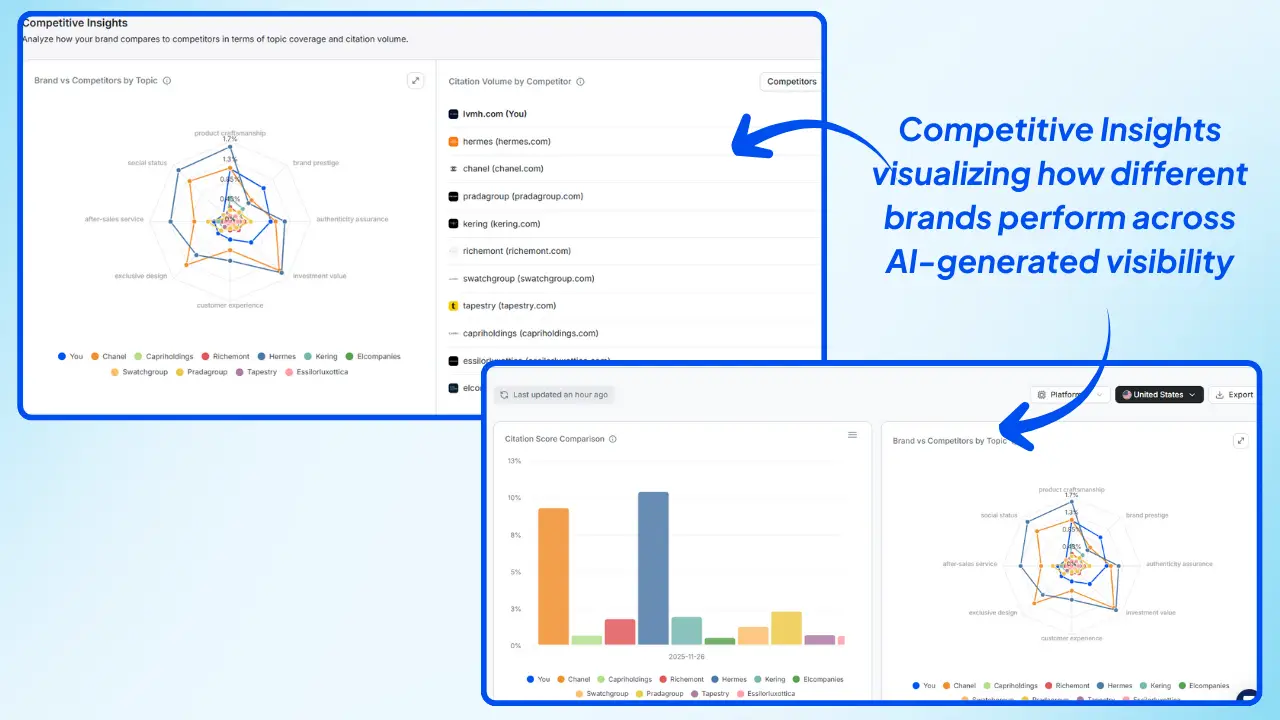
When I compare LVMH to competitors inside Wellows, the gaps become clearer a llm visibility audit. Hermès earns 165 citations and Chanel 151, while LVMH holds 104. Competitors outperform in investment value and social-status queries, topics where they score up to 3× higher.
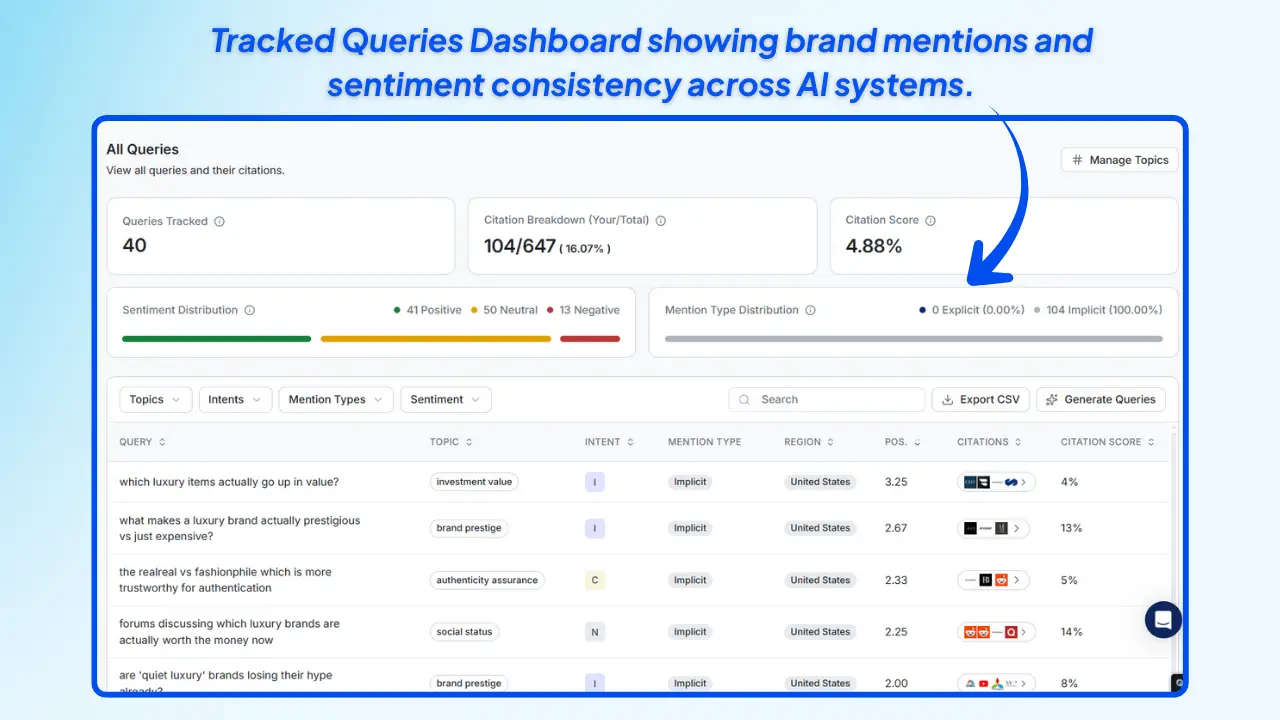
Sentiment trends reinforce this. LVMH shows 39% positive, 48% neutral, and 13% negative. High neutrality signals factual recognition without strong preference, which affects how confidently AI engines recommend the brand in style or value comparisons.
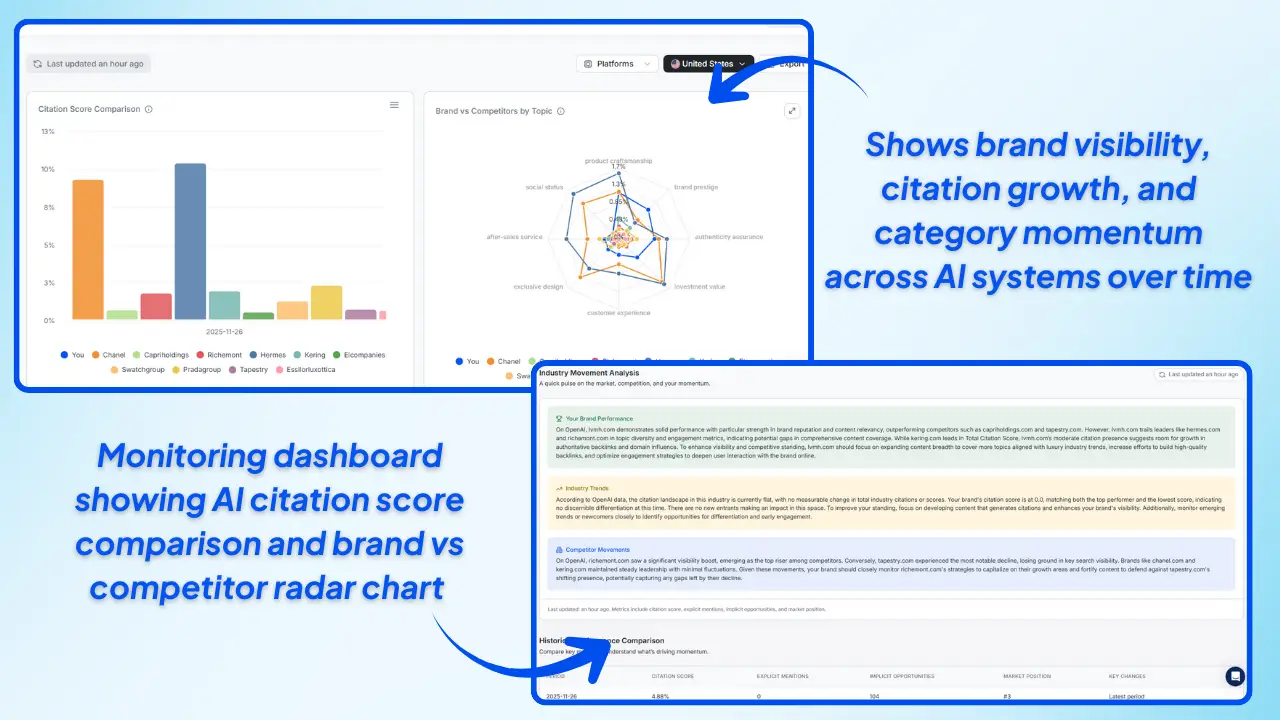
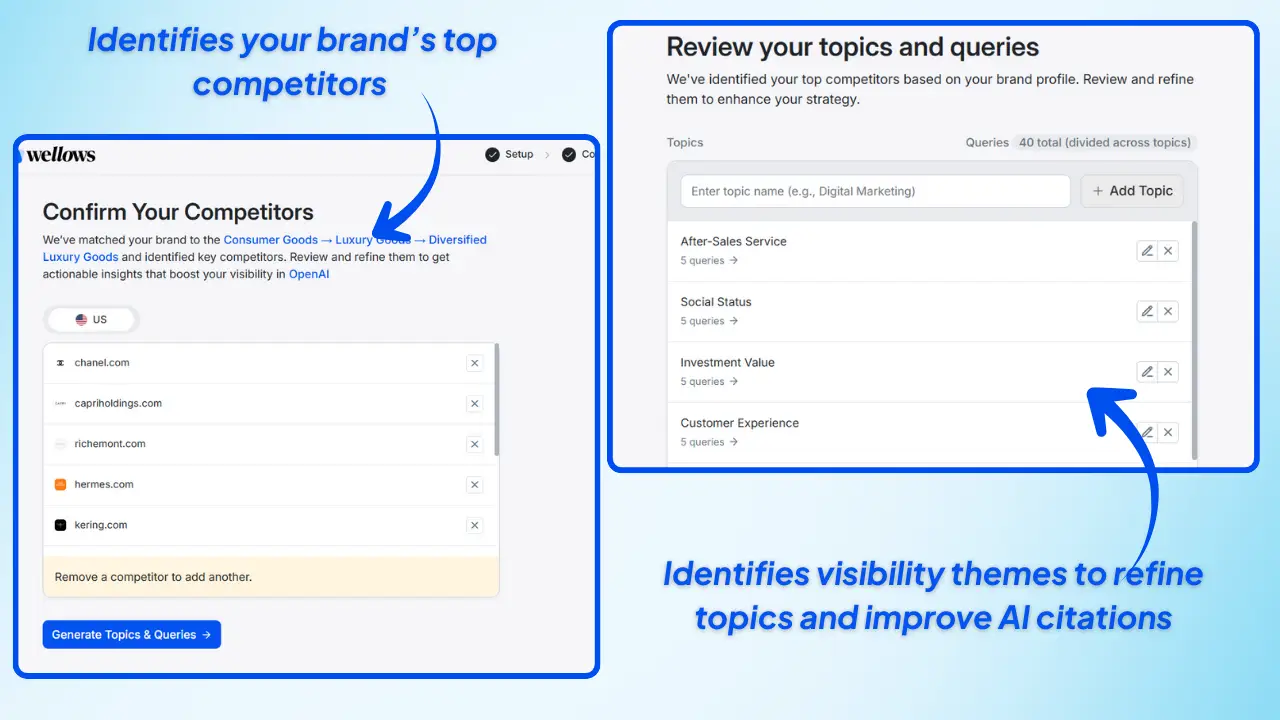
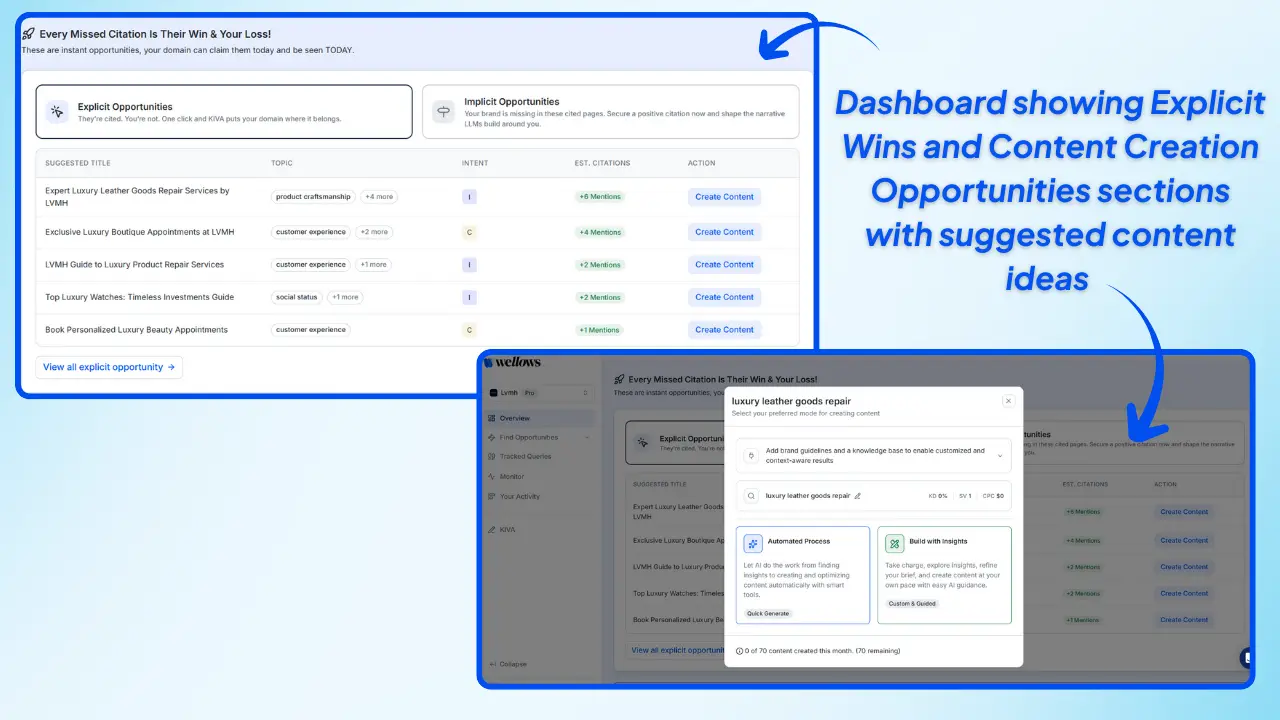
Finally, Wellows highlights missed opportunities. LVMH lacks citations across repair services, boutique appointments, watch investment guides, and beauty consultations. These implicit wins show where the brand already delivers value, but AI systems credit competitors instead.
Clothing company visibility in generative AI refers to how often and how accurately AI systems describe, recommend, or reference a brand when users ask open-ended questions about fashion, style, quality, or sustainability.
For apparel brands, visibility is shaped not only by creative use of AI, but by how clearly brand information can be interpreted by generative models.
- Generative AI increases visibility when brands publish clear, reusable product narratives that AI can summarize confidently
- Virtual design tools and AI-generated visuals influence how brands appear in inspiration and discovery prompts
- Personalization signals (fit logic, style rules, use cases) help AI tailor brand mentions to shopper context
- Sustainability documentation improves visibility in ethical and eco-conscious fashion queries
- Consistent product facts across brand sites, retailers, and media reduce ambiguity and increase AI trust
- Brands that pair creative AI with structured brand data are surfaced more reliably in generative answers
In practice, generative AI visibility is strongest when creative storytelling, operational clarity, and factual consistency reinforce each other — allowing AI systems to reference a clothing brand with confidence instead of relying on generic summaries.
What Is the Current State of AI Search Visibility in Fashion
Luxury houses dominate: AI assistants most frequently cite leading luxury brands such as Hermès, Chanel, LVMH, Prada Group, and Kering. Their long-standing heritage, consistent craftsmanship signals, and stable product data make them “safe defaults” when shoppers ask broad questions about quality, prestige, or value.
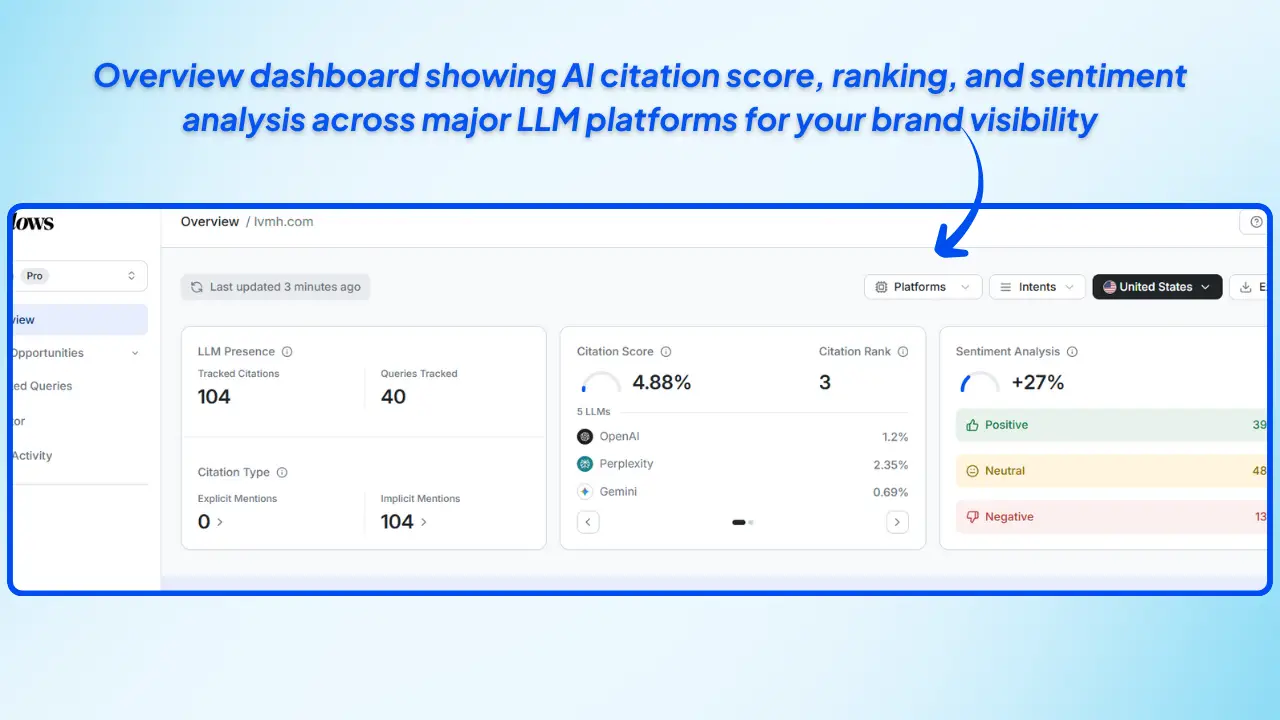
Hermès leads in AI visibility: In the Wellows snapshot, hermes.com records 165 citations, the highest in the category. Chanel follows with 151 citations, while lvmh.com sits at 104 across 40 tracked queries. LVMH ranks #3 with a 4.88% Citation Score, ahead of Prada Group, Kering, and Richemont, which form the mid-tier.
Topic-level patterns: AI answers for fashion brands concentrate on recurring themes such as craftsmanship, social status, brand prestige, authenticity assurance, and after-sales service. Queries like “which luxury brands are actually worth the money,” “what makes a brand prestigious,” and “how digital passports prevent counterfeits” appear frequently across LLMs.
Sentiment trends: For lvmh.com, Wellows shows 39% positive, 48% neutral, and 13% negative sentiment across AI engines. This reflects how assistants describe craftsmanship and heritage neutrally, while noting concerns about repair costs, appointment wait times, or product availability.
Monitor performance over time: Competitive Insight data shows Hermès and Chanel dominate topics tied to exclusivity, investment value, and social-status signals. Meanwhile, emerging areas, such as digital authentication, repair services, and customer experience, have no clear leader, creating openings for fashion brands to gain visibility quickly.
AI Visibility for Clothing Brands: Core Optimization Techniques
AI Search Visibility for Fashion & Apparel Brands improves fastest when clean product data, verified sourcing information, and intent-aligned content work together. The goal is simple: make it easy for AI systems to understand your materials, craftsmanship, and service details with confidence.
9 Core Optimization Techniques for Fashion Teams
Best Practices for AI Search Visibility in Apparel
AI systems evaluate apparel brands by how clearly they present identity, product truth, and trust signals. Strong visibility depends on factual coherence rather than technical markup alone. This aligns with the principles outlined in the Generative Engine Visibility Factors.
In Wellows data, lvmh.com earns 104 implicit citations across 40 queries, showing that AI engines recognise its value but avoid naming it directly when brand signals lack clarity.
Did you know?
Did you know?
Did you know?
Did you know?
Did you know?
Apparel Brand GEO Best Practices
Generative Engine Optimization helps apparel brands structure product data, fit information, and craftsmanship signals so AI systems can verify details and cite the brand confidently. GEO is the tactical layer that turns brand recognition into measurable citations.
For lvmh.com, Wellows shows 104 citations across 40 queries, all implicit. This indicates strong topical presence but low explicit naming, an ideal use case for GEO improvements.
- Prioritize machine-readable product data: Adding structured data like schema for Product, Material, Brand, SizeChart, and FAQPage, so AI systems can validate fabric composition, construction quality, and care rules without relying on external summaries.
- Organize catalog content by shopper intent: Build pages around durability, craftsmanship, after-sales service, material quality, and prestige value, topics that frequently appear in Wellows shopper-intent clusters.
- Convert implicit wins into explicit citations: Wellows highlights missed mentions around repairs, boutique appointments, and luxury watch guidance for LVMH. Turning these into structured content increases naming in AI answers.
- Standardize fit and measurement data: AI engines give higher visibility to brands with consistent sizing rules and detailed measurement guides, improving placement in “how does it fit” and “what size should I buy” queries.
- Reinforce sustainability and authenticity cues: GEO works best when sourcing origins, care instructions, and anti-counterfeit steps remain accurate across all domains, reducing uncertainty for AI evaluating trust signals.
Improving Retail Fashion Brand AI Search Rankings
AI engines rank fashion brands higher when product facts, service details, and brand signals stay consistent across domains. Strong accuracy helps AI decide which labels to surface in quality, value, and authenticity-related answers.
For lvmh.com, Wellows reports 104 citations across 40 queries, all implicit. This means AI describes LVMH’s value but rarely names the brand directly, a clear opportunity to strengthen ranking signals.
Did you know?
Did you know?
Did you know?
Did you know?
Did you know?
Why Should Fashion Brands Use AI Search Visibility Platforms
Most SEO tools were not built for the AI search era. They track rankings, impressions, and backlinks, but they cannot see how ChatGPT, Gemini, Perplexity, or Bing AI describe or compare a fashion label in real shopper prompts. For AI Search Visibility for Fashion & Apparel Brands, this creates a major blind spot, because discovery now happens inside AI answers, not just search results.
Wellows fills this gap. It acts as an AI search visibility platform and GenAI visibility stack for luxury houses, apparel retailers, and fashion groups. It tracks how often a brand appears in AI answers, how those mentions are framed, and how visibility compares to competitors like Hermès, Chanel, Prada Group, and Kering.
| Feature | Wellows | Traditional SEO Suite | Basic AI Monitoring Tools |
|---|---|---|---|
| AI Citation Tracking (ChatGPT, Gemini, Perplexity) | Yes Tracks brand, product, and craftsmanship mentions across major LLMs. | No Tracks web rankings only. | Partial Shows mentions but lacks fashion-specific context. |
| Implicit Citation Detection | Yes Identifies uncredited value mentions such as durability, prestige, or repair quality. | No Cannot interpret AI-generated answers. | No Captures direct mentions only. |
| Citation Score + Sentiment Tracking | Yes Combines mention frequency and sentiment into a single visibility score. | Partial Offers general sentiment, not LLM-specific tone. | Limited Basic counts with no sentiment modelling. |
| Fashion-Focused Benchmarking | Yes Benchmarks against Hermès, Chanel, Prada Group, Kering, and Richemont. | No Compares only keyword rankings. | No Lacks luxury-category insights. |
| Explicit vs Implicit Wins Dashboard | Yes Shows missed citations in repair, prestige, and authenticity queries. | No Cannot classify LLM outputs. | No Does not separate citation types. |
| Query Intent Clustering | Yes Groups AI prompts around craftsmanship, authenticity, after-sales, and brand value. | No Groups by keywords only. | Partial Lacks luxury-specific clustering. |
| LLM Sentiment Monitoring | Yes Tracks tone across AI engines | Partial Tracks reviews but not LLM sentiment. | Limited No historical sentiment trend. |
Insight: With Wellows, fashion teams finally see how AI assistants talk about their brand, where competitors win citations, and which shopper intents drive discovery. Each missed mention becomes an actionable fix, better material clarity, stronger craftsmanship pages, or improved repair guidance.
Search Visibility Strategies for Retail Fashion Brands
Fashion brands achieve stronger AI visibility when product data, brand narratives, and service details remain consistent across every domain where shoppers interact. AI engines prioritise labels that provide stable, verifiable information about materials, quality, and authenticity.
Retail brands benefit from aligning their product stories with real shopper intent, as outlined in the User Intent framework for generative engines.
Clarifying craftsmanship processes helps AI understand how a product is made and why it belongs in a premium category. This reduces uncertainty and increases the likelihood of a brand appearing in value and quality-focused answers.
Fashion retailers also improve visibility by updating service information, such as repair timelines, care rules, and warranty coverage. These details shape buyer expectations and influence how AI engines judge reliability.
Consistency across retailers, brand sites, and third-party listings strengthens entity stability. When materials, fit notes, and sustainability claims match everywhere, AI can reference the label with greater confidence.
Competitive Benchmarking and Cross-Assistant Visibility
AI assistants evaluate fashion brands differently, which means visibility varies widely across ChatGPT, Gemini, Perplexity, Bing, and Claude. A brand may perform strongly on one engine and weakly on another, creating fragmented recognition.
Wellows highlights these gaps for lvmh.com. Perplexity shows the strongest visibility at 2.35%, OpenAI follows at 1.2%, while Gemini records only 0.69%. These inconsistencies show how unevenly AI systems understand the same brand.
Did you know?
Did you know?
Did you know?
Did you know?
Did you know?
Tracking and Measuring AI Search Visibility Over Time
AI visibility changes quickly as product details, sentiment signals, and external references shift. These movements align with core GEO KPIs that show how consistently AI systems recognise and cite a fashion brand.
Fashion brands need continuous measurement to understand how consistently AI systems recognise and cite them across shopper queries.
Wellows tracks these movements for lvmh.com, showing how Citation Score, sentiment levels, and assistant-specific presence evolve as new content, repairs data, or authenticity topics enter the conversation.
FAQs
Discover how AI Search Visibility impacts discovery across multiple industries. Each guide shows how brands improve citations, strengthen entity recognition, and stabilise sentiment inside AI-generated answers.
- AI Algorithm Updates: SEO Impact & Recovery Tips: Understand AI SEO updates, ranking impacts, and recovery strategies
- AI Search Visibility for Cybersecurity Brands: Improve how security vendors appear in AI-led risk intelligence and compliance-related prompts.
- AI Search Visibility for B2B SaaS Brands: Strengthen presence in AI-powered software recommendations and solution comparison queries.
- AI Search Visibility for Automotive Brands: Boost visibility in AI-generated mobility guidance, model comparisons, and purchase-intent answers.
- AI Search Visibility for Aviation & Airlines Brands: Enhance how routes, pricing, and travel services appear in AI itinerary and trip-planning explanations.
- AI Search Visibility for Banking & Financial Services Brands: Increase visibility inside AI-led financial guidance, lending discussions, and advisory prompts.
- AI Search Visibility for Beauty & Personal Care Brands: Strengthen citations in beauty recommendations, product education, and skincare guidance inside AI assistants.
- Boost AI Search Visibility with Knowledge Graphs: Use structured entity mapping to gain AI citations.
Insight: Fashion is becoming one of the most dynamic categories in AI search. Brands that maintain consistent materials data, craftsmanship clarity, and authenticity signals earn stronger placement in generative answers, and avoid losing visibility to better-documented competitors.
The same principles are proving critical for FinTech Startups, many of which are gaining market share by ensuring their offerings are clearly described, cited, and structured for AI-powered decision-making platforms.
Conclusion
AI assistants now shape how shoppers evaluate materials, compare brands, and choose what to buy. For fashion and apparel labels, visibility inside these answers depends on the clarity of product data, craftsmanship signals, and after-sales transparency across every domain.
Wellows makes this measurable. By tracking Citation Score, sentiment shifts, and cross-assistant coverage, it shows exactly how reliably AI systems understand a brand, and where competitors gain ground in high-value shopper intents.
The brands that win in this new landscape are those that maintain consistent materials data, highlight their craftsmanship, document authenticity steps, and strengthen category leadership with structured, verifiable content.
As AI-driven discovery accelerates, improving AI Search Visibility for Fashion & Apparel Brands becomes a direct lever for trust, preference, and long-term growth.