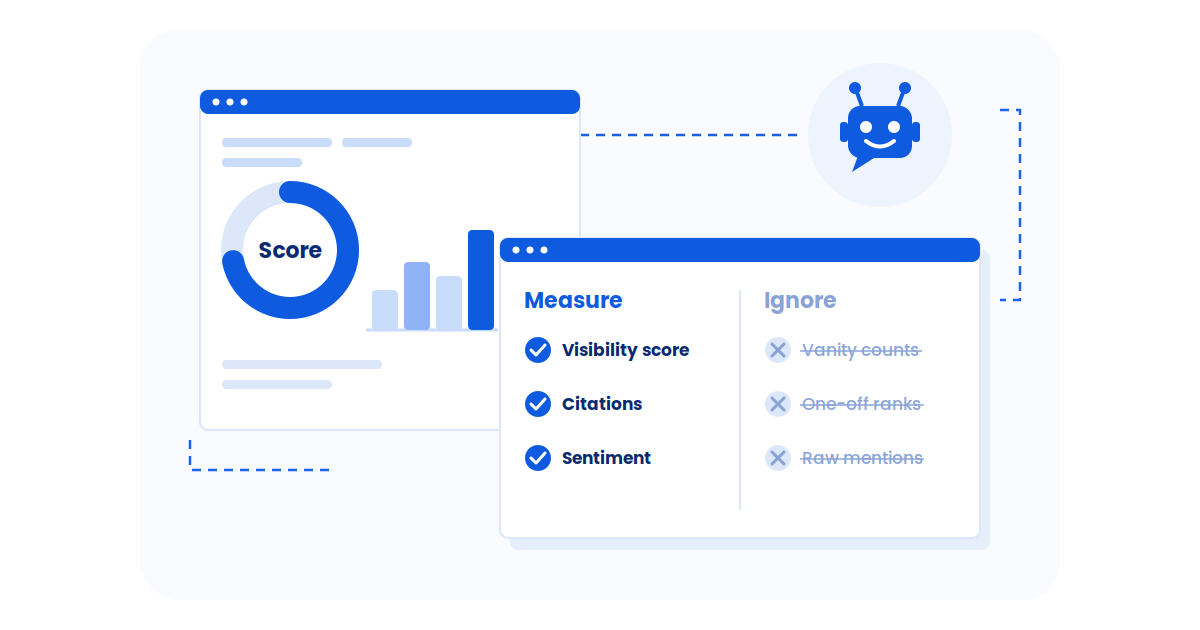
Today, CISOs and enterprise buyers skip traditional Google results and ask conversational AI tools like ChatGPT, Google Gemini, or Microsoft Copilot for the “best endpoint security” or “CrowdStrike vs Microsoft Defender” and they trust the answer they get.
Analyses of Google’s AI Overviews show that AI-generated results can cut website traffic by as much as 79% in certain query types. Gartner (2025) further predicts that organic search traffic will decline by over 50% by 2028, as most global buyers adopt AI-driven discovery tools.
In this zero-click discovery era, brands that aren’t cited inside AI-generated answers disappear from buyer consideration. AI systems highlight only those companies viewed as credible, authoritative, and consistently validated across trusted sources.
What Is AI Search Visibility for Cybersecurity Brands
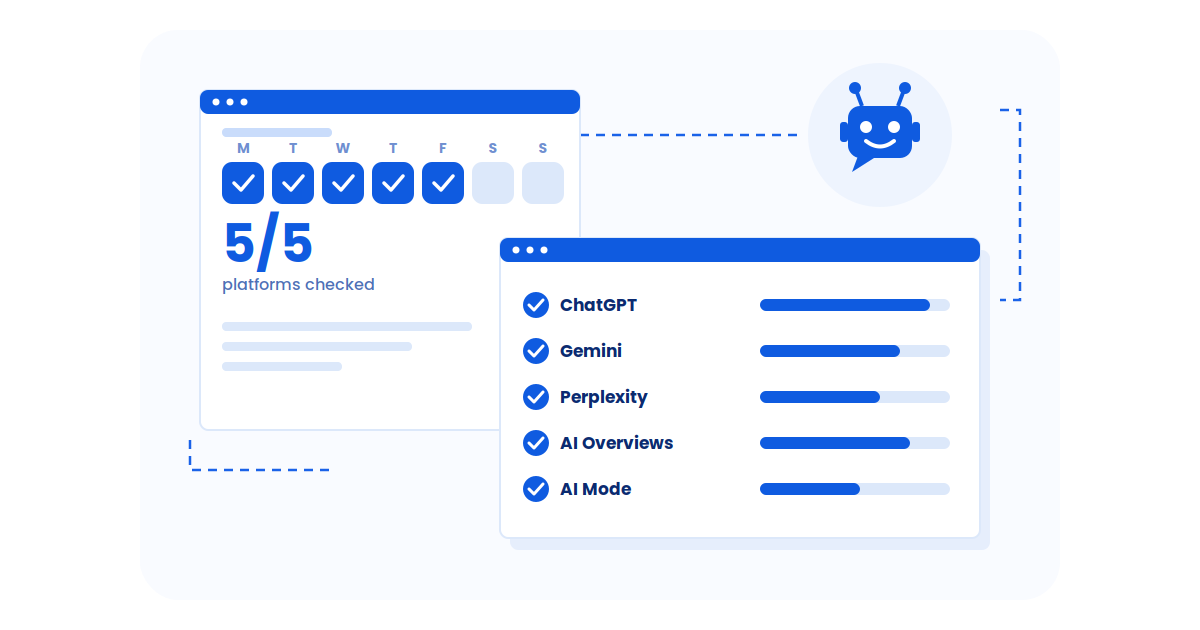
AI Search Visibility shows how often a cybersecurity brand is mentioned or cited inside AI-generated answers across ChatGPT, Gemini, Copilot, and Perplexity not just where it ranks on Google.
When a CISO asks, “Which XDR solution offers better threat detection?” or “Is [Vendor] SOC 2 compliant?”, AI delivers a synthesized answer not a list of links. If your brand isn’t cited there, you’re absent where enterprise decisions happen.
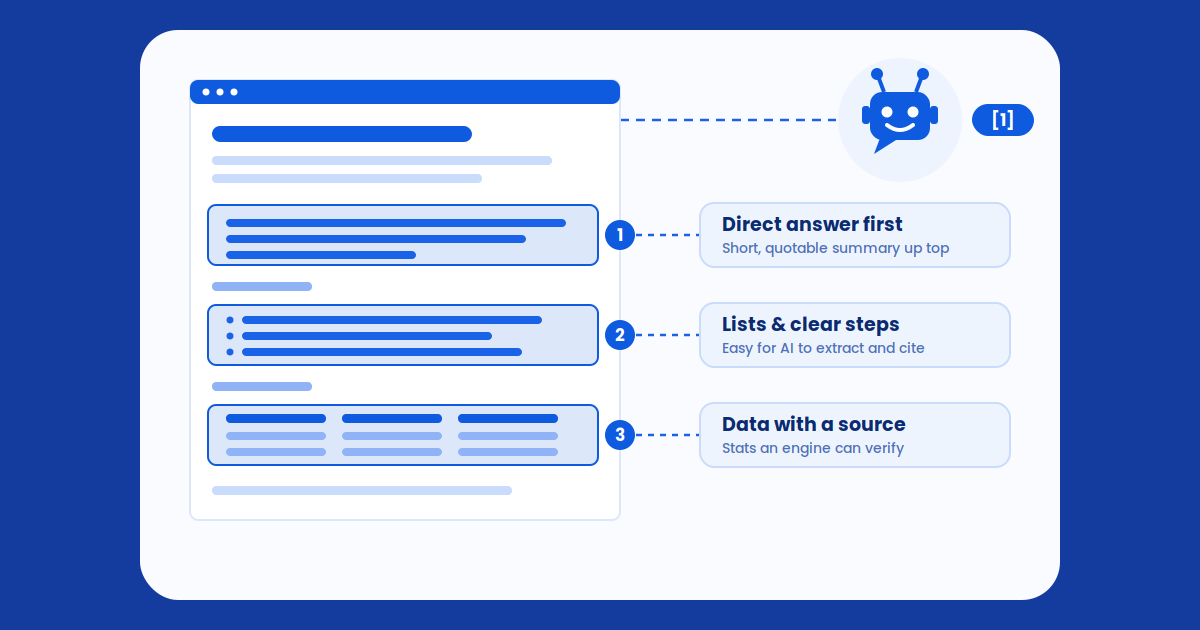
This visibility depends on Generative Engine Optimization (GEO) structuring brand data so AIs can verify and recommend it. For cybersecurity brands, GEO means publishing structured feature data (EDR, XDR, MDR), integration lists (SIEM, SOAR, MDM), compliance certifications (SOC 2, ISO 27001), and service transparency (SLAs, uptime, audit summaries).
In short, GEO makes your brand AI-readable, compliant, and trusted turning verified data into citations that drive visibility inside AI answers.
The Current State of AI Search Visibility in Cybersecurity
AI-driven discovery is already redefining competition among cybersecurity leaders. In our 2025 analysis using Wellows, brands like CrowdStrike, Microsoft Defender, and Palo Alto Networks dominated visibility across ChatGPT, Gemini, and Copilot appearing in more than 60% of high-intent security queries.
CrowdStrike achieved a 9.06% citation score across five leading LLMs, ranking second only to Microsoft. Its strongest visibility occurred around threat detection, incident response, and cost-effectiveness topics where enterprise buyers most frequently ask AI tools for recommendations.
However, gaps emerged in ease of use and integration compatibility, areas where Microsoft Defender outperformed by up to 15%. Across all competitors, data privacy and compliance visibility remained underrepresented showing a clear opportunity for new content that addresses SOC 2, ISO 27001, and endpoint encryption standards in machine-readable form.
How Can Cybersecurity Brands Optimize Content for AI-Generated Search Results
AI-driven search is redefining how enterprise buyers evaluate cybersecurity vendors. Instead of comparing listings, CISOs and IT leaders now ask ChatGPT, Gemini, or Copilot for recommendations like “best endpoint protection for hybrid teams” or “CrowdStrike vs Microsoft Defender for SMBs.”
To stay visible, cybersecurity brands must evolve beyond traditional SEO into Generative Engine Optimization (GEO) strategies that help AIs read, verify, and recommend their solutions confidently.
Use Generative Engine Optimization (GEO): Structure your brand data including features, integrations, and SOC reports so AI systems can interpret and cite it accurately. GEO transforms verified technical data into AI-readable trust signals.
Implement structured data: Use schema markup for Product, FAQPage, and Service. Structured data helps AIs extract compliance, SLAs, and certifications, improving your inclusion in AI-generated cybersecurity comparisons.
Highlight compliance and security posture: Publish verified certifications like SOC 2, ISO 27001, and FedRAMP. AI models prefer brands with transparent trust frameworks and documented security standards.
Document integrations: List supported ecosystems (SIEM, SOAR, MDM, EDR). AIs use integration data to identify interoperability in answers to queries like “best XDR for Microsoft 365.”
Earn third-party validation: Mentions from analysts, threat reports, or trusted outlets (like Forrester or CSO Online) strengthen your factual credibility and increase citation likelihood in AI systems.
Track implicit mentions: Monitor unlinked AI references using visibility tools like Wellows. Turn those uncredited mentions into verified citations through structured updates or PR alignment.
Answer AI-driven queries: Create content that directly addresses real AI prompts such as “Which MDR solution scales fastest?” or “What’s the difference between XDR and EDR?” Align language with how AIs phrase security recommendations.
Publish real-time performance metrics: Detection speed, false positive rate, and uptime improve your factual density metrics that AI models favor when ranking vendors for reliability.
Leverage AI-ready PR: Use thought leadership, breach response case studies, and analyst collaborations to reinforce credibility. AIs value externally validated trust signals more than internal claims.
Maintain consistency across entities: Ensure your brand’s Wikipedia, Crunchbase, and documentation use consistent naming, certifications, and version details. Uniformity helps AIs connect and verify your entity graph more accurately.
How Can Cybersecurity Brands Measure and Track Their AI Search Visibility?
When I ran an AI visibility scan for crowdstrike.com using Wellows, I wanted to understand one thing: how often is CrowdStrike mentioned inside AI-generated results and how that compares to top competitors like Microsoft, Palo Alto Networks, and Cisco. What I found revealed exactly how cybersecurity visibility now works inside generative engines.
Below is the same step-by-step flow I used, showing how any cybersecurity brand can analyze and improve its AI presence using Wellows.
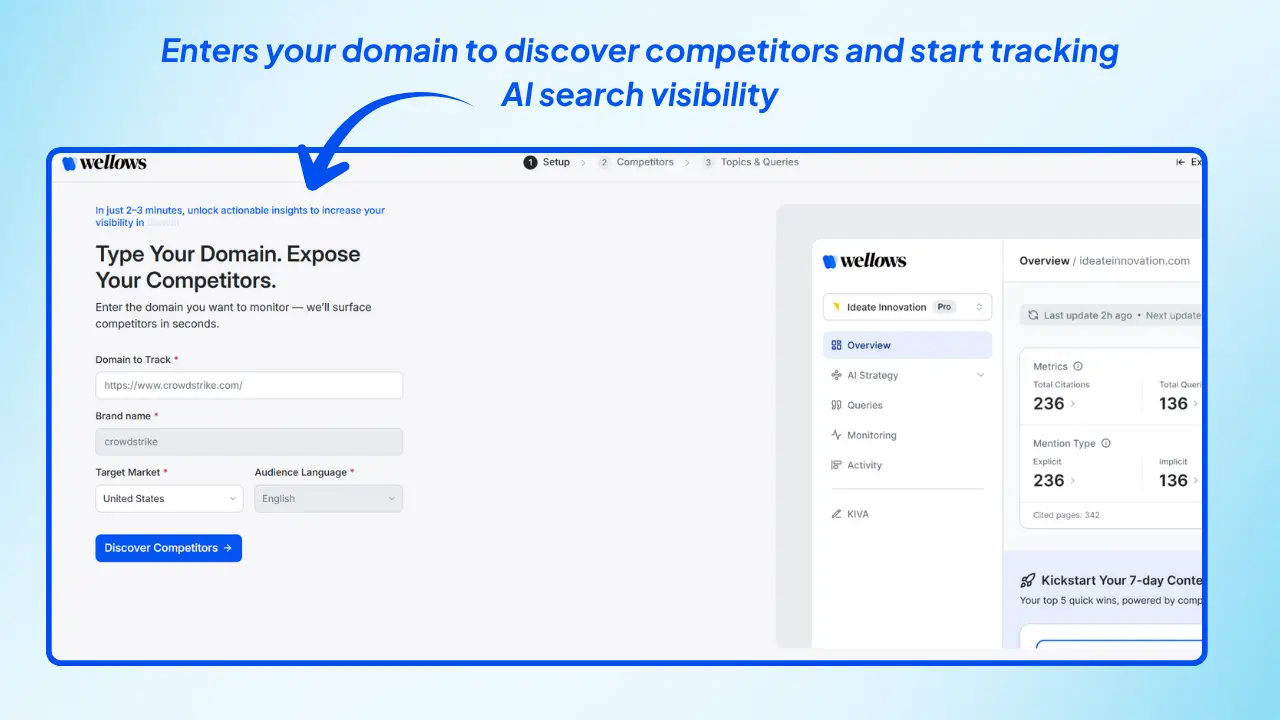
1. Add Your Brand Domain
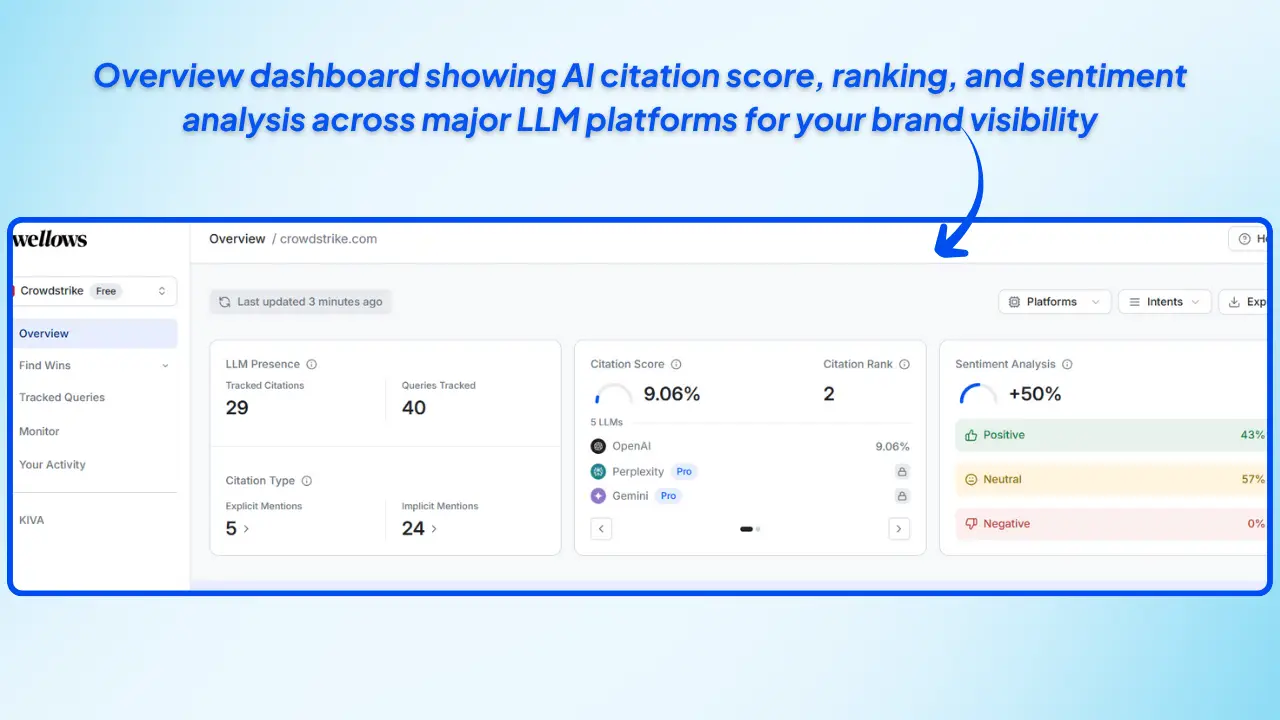
I entered crowdstrike.com into Wellows and instantly saw a live scan of its presence across ChatGPT, Gemini, Claude, and Perplexity. The scan detected 29 citations with a 9.06% citation score ranking CrowdStrike second overall for cybersecurity visibility.
2. Automatic Competitor Mapping
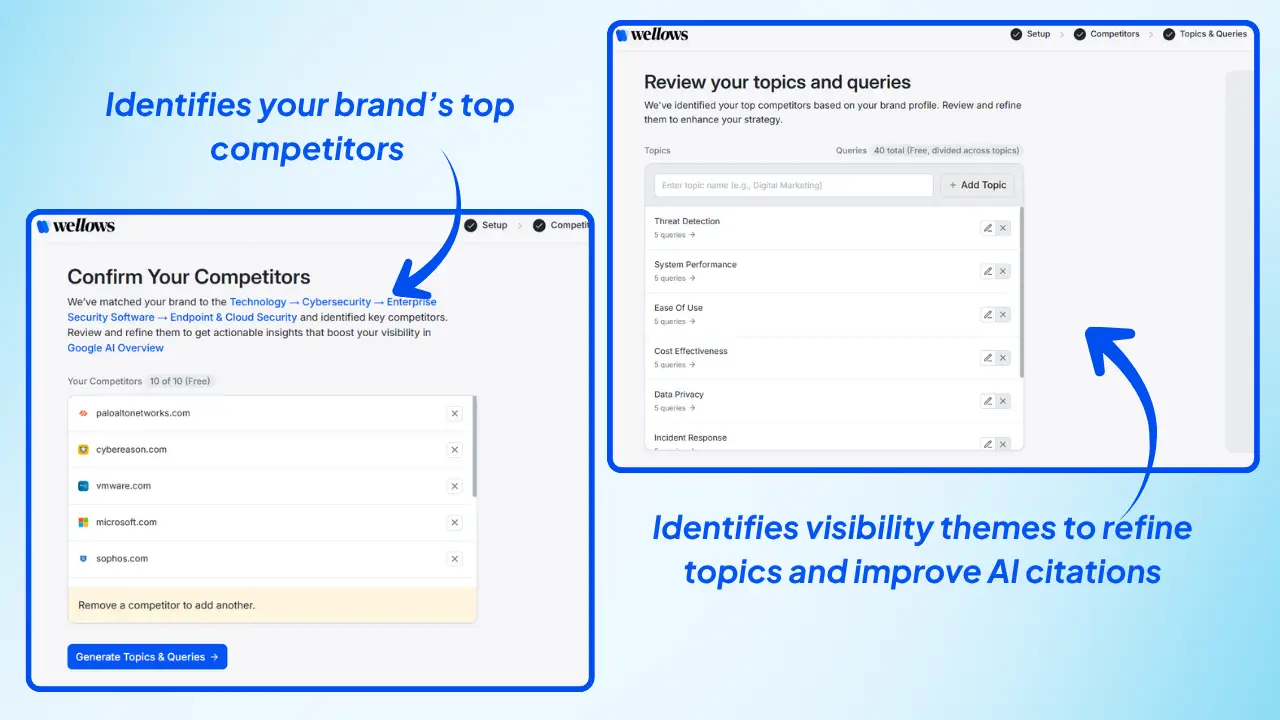
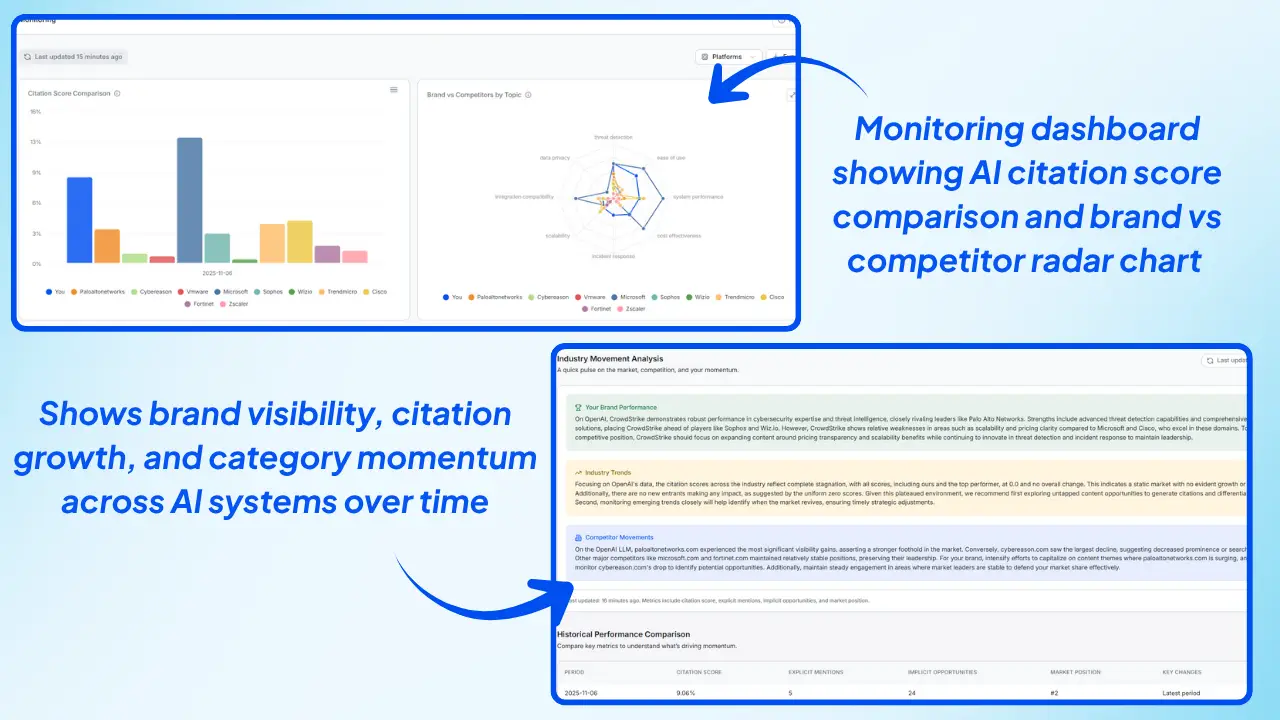
Without any manual setup, Wellows identified peer brands like Microsoft, Trend Micro, Palo Alto Networks, Cisco, Fortinet, and Sophos. Microsoft led with a 13.16% citation score, while CrowdStrike followed at 9.06%, proving structured content and topical authority directly affect AI recognition.
3. Fine-Tune Topics
I added key topics like “EDR vs XDR,” “endpoint scalability,” and “incident response.” Within seconds, Wellows updated insights showing where CrowdStrike dominated (threat detection) and where competitors were gaining (ease of use and integration). It’s AI-driven topic intelligence not guesswork.
4. Review the Dashboard
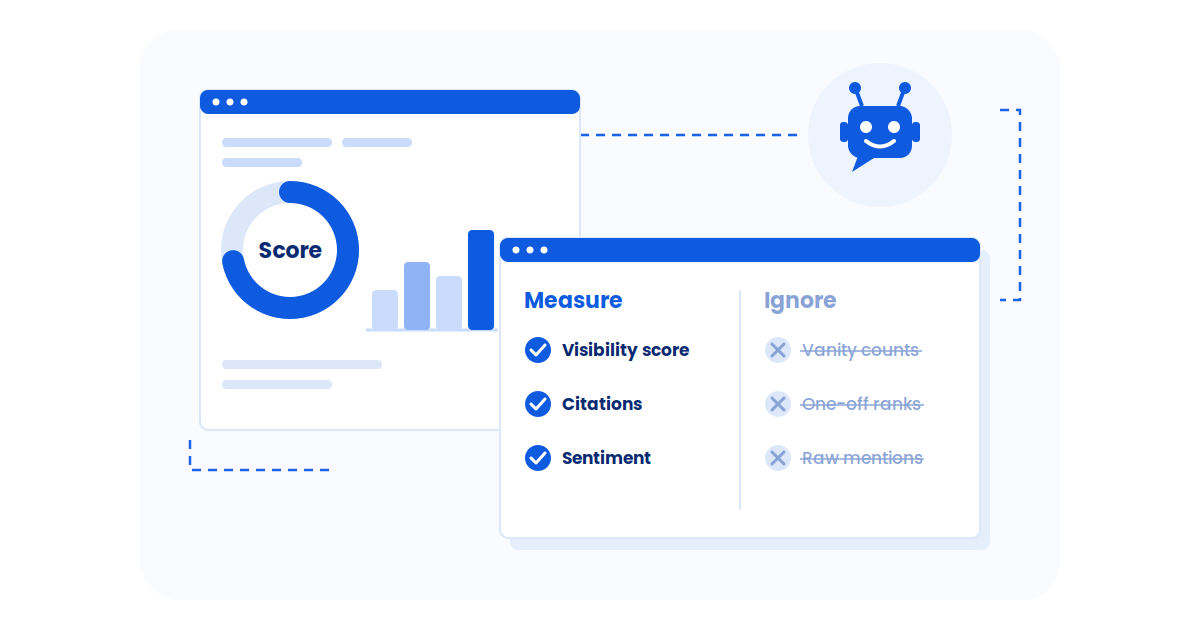
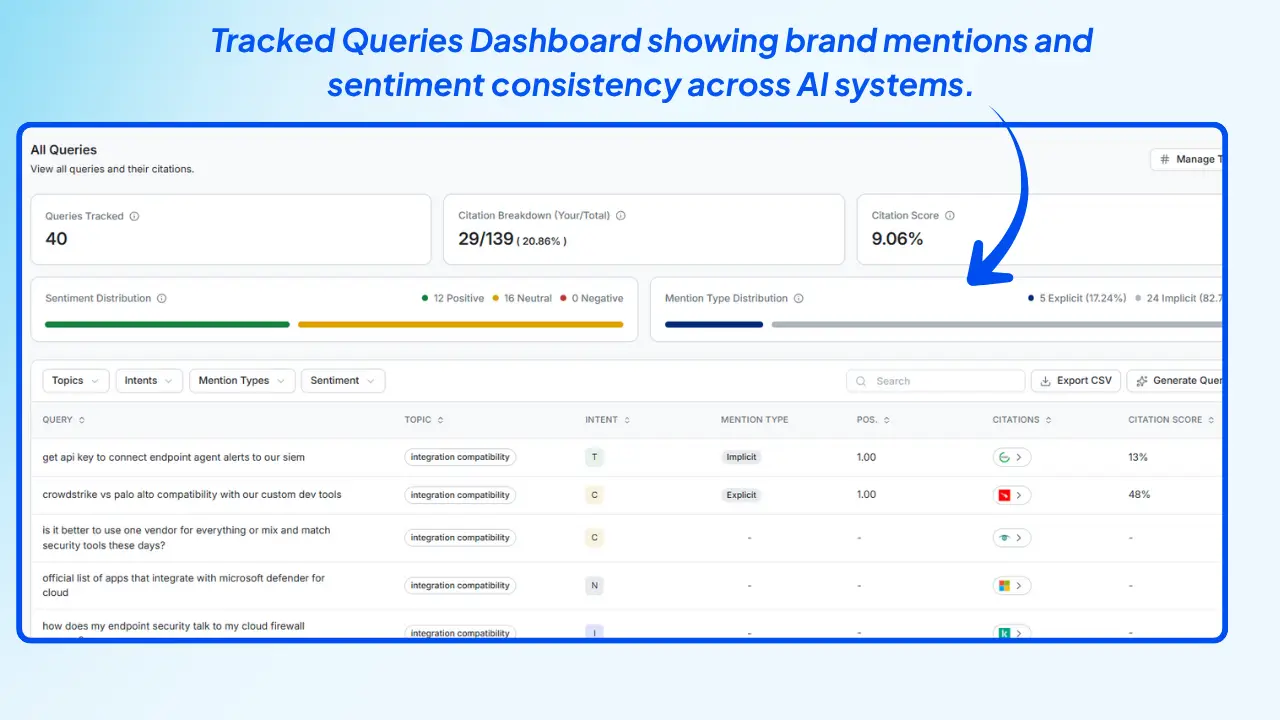
The dashboard visualized everything: citation scores, LLM presence, and sentiment analysis. CrowdStrike showed 50% positive mentions, 43% neutral, and 0% negative confirming strong AI trust signals. Seeing tone distribution by platform made it clear how AIs perceive brand credibility.
5. Identify Explicit & Implicit Wins
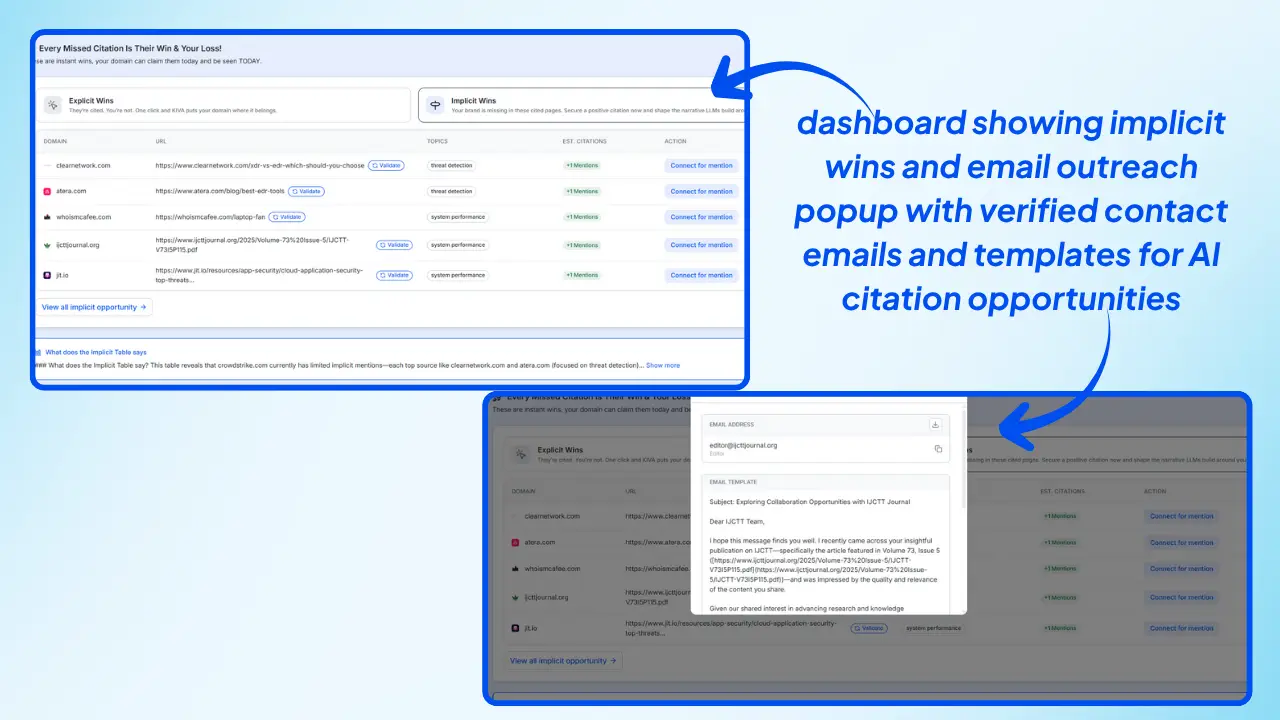
Next, I explored citation breakdowns. Wellows separated explicit mentions (directly credited in AI answers) from implicit mentions (referenced but unlinked).
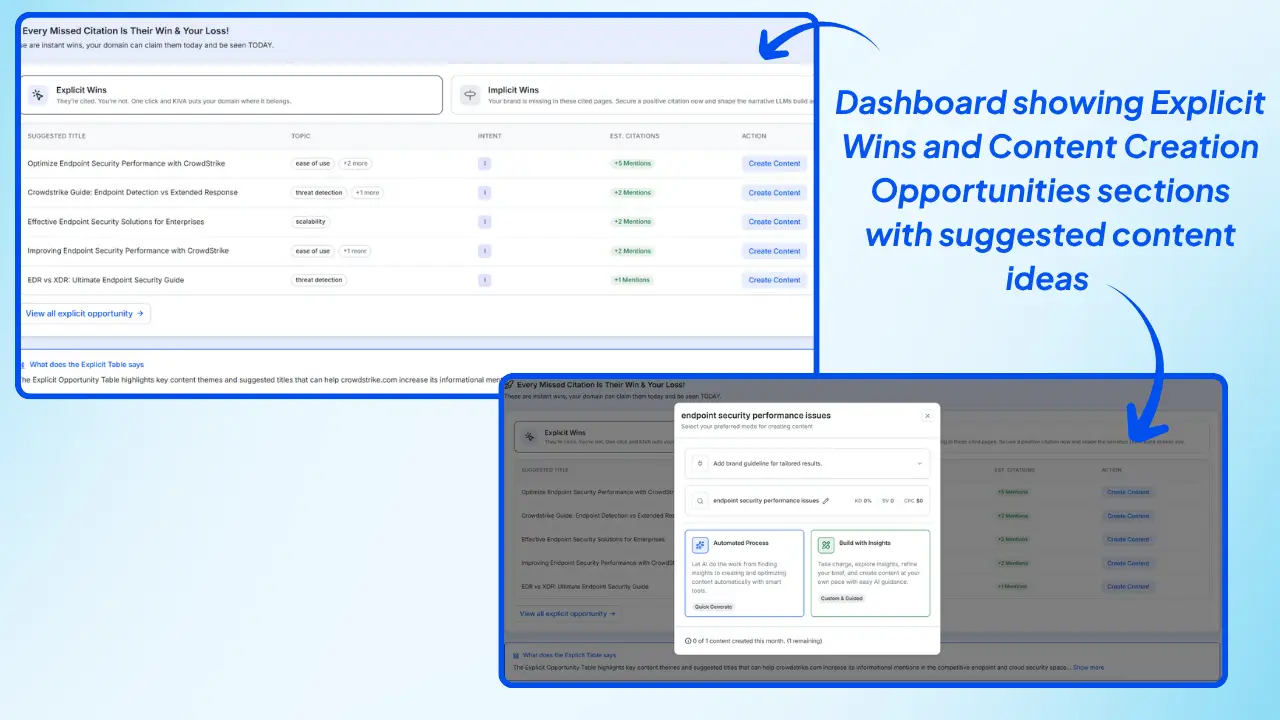
CrowdStrike had 5 explicit and 24 implicit mentions untapped opportunities that could be turned into credited citations with better schema or entity consistency.
6. Competitive Insights
Radar charts showed where each brand stood. CrowdStrike led in threat detection, incident response, and cost-effectiveness, but Microsoft outperformed in ease of use and integration performance. This data made it easy to spot where GEO-focused updates could shift balance in future AI answers.
7. Cited Query Analysis
Then I reviewed the exact queries generating citations prompts like “CrowdStrike vs Microsoft Defender cost comparison” and “best endpoint security for hybrid teams.” These revealed how AI interprets buyer intent and where to strengthen structured, factual content.
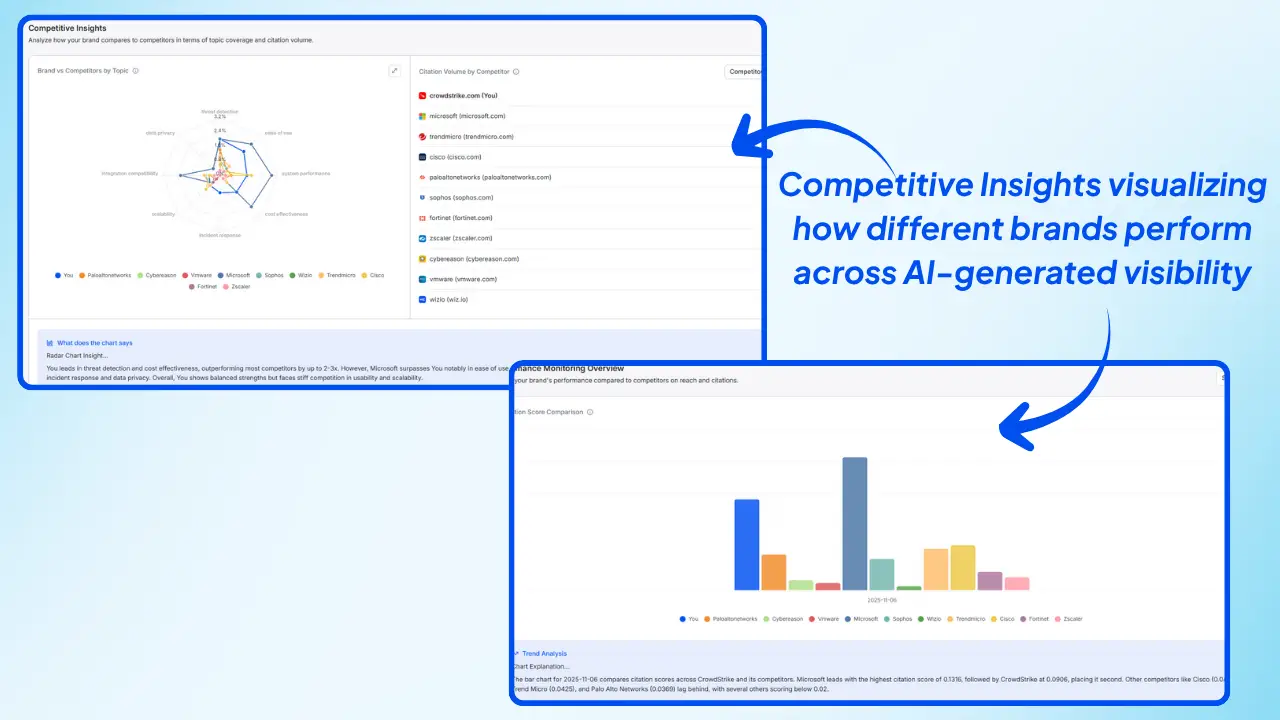
8. Track Progress Over Time
I set monthly scans to monitor shifts. CrowdStrike’s citation score remained stable around 9%, but spikes correlated with major industry events confirming that earned media and topical authority directly influence AI visibility momentum.
What Strategies Can Cybersecurity Brands Use to Enhance Their AI Search Visibility
After running multiple AI visibility scans for cybersecurity brands, I’ve learned that citations inside AI answers come from structure, credibility, and data transparency. Treat Generative Engine Optimization (GEO) like part of your GTM not an experiment.
What Are Common Challenges Cybersecurity Brands Face in AI Search Visibility?
Even with structured content and strong SEO, cybersecurity brands face unique challenges when competing for visibility inside AI-generated answers. These challenges often come down to outdated data, lack of third-party mentions, or inconsistent entity signals across the web.
Traditional analytics can’t show where or how your brand appears inside ChatGPT, Gemini, or Copilot answers. The solution is to track citations directly using platforms like Wellows it measures both explicit (linked) and implicit (unlinked) mentions across LLMs.
If your pages don’t answer real prompts like “best ransomware protection for SMBs” or “EDR vs XDR cost,” AIs won’t cite you. Use conversational phrasing and structured Q&As to align with the language CISOs actually use.
When rivals like Microsoft or Palo Alto Networks publish more consistent and schema-optimized data, their names show up in AI answers more frequently. Benchmark your citation share and close topic gaps with fact-rich, authoritative content.
AI models retain stale information if content or metadata isn’t refreshed. Keep technical documentation, product pages, and integrations current to ensure AIs reflect accurate data.
AI-generated responses can amplify outdated press or biased coverage. Ongoing sentiment monitoring inside Wellows helps detect and correct misinformation before it spreads across LLMs.
What Are Common Challenges Cybersecurity Brands Face in AI Search Visibility?
Even with structured content and authority-driven strategies, cybersecurity brands face unique hurdles in optimizing for AI search visibility. These challenges often mirror traditional SEO issues but now demand faster, data-backed responses aligned with how large language models evaluate authority and trust.
| Challenge | Solution | Insight |
|---|---|---|
| Hard to measure AI visibility | Use platforms like Wellows to track brand mentions and citations across ChatGPT, Gemini, Copilot, and Claude. | Visibility intelligence shows your brand’s presence in AI-generated answers and reveals exactly where competitors dominate. |
| Poor alignment with user intent | Analyze AI-driven prompts such as “best endpoint protection for hybrid teams” or “XDR vs SIEM cost comparison.” Create content that directly answers those queries with verified data. | Intent mapping ensures AIs surface your brand during real purchase-stage and evaluation-stage searches. |
| Competitors dominate AI citations | Benchmark citation share for key queries and identify which topics feature rivals like Microsoft, CrowdStrike, or Palo Alto Networks. | Competitive benchmarking highlights missed content areas especially where schema or factual coverage can turn implicit mentions into citations. |
| Inconsistent or outdated technical data | Keep documentation, integrations, and compliance certifications (SOC 2, ISO 27001, FedRAMP) updated and machine-readable through structured markup. | Structured accuracy prevents AI models from citing outdated specs or linking to obsolete third-party data. |
| Negative or incorrect AI mentions | Monitor tone and factual accuracy within AI-generated content and correct misinformation through PR and updated content hubs. | Sentiment tracking identifies bias early so brands can respond before misinformation becomes part of AI training data. |
Why Choose Wellows for Your Cybersecurity Brand
Wellows bridges the gap between traditional SEO and AI search. It measures how your brand appears inside generative answers tracking mentions, tone, and authority across ChatGPT, Gemini, Bing Copilot, and Perplexity. Here’s how it compares with other visibility platforms built for the AI era:
| Feature | Wellows | PeecAI | Otterly |
|---|---|---|---|
| AI Citation Tracking (ChatGPT, Gemini, Bing, Perplexity) |
✅ Real-time tracking across major LLMs with brand-level insights. | ✅ Monitors brand presence across ChatGPT, Perplexity, and Google AI Overviews. | ✅ Tracks visibility in Google SGE, ChatGPT, and Perplexity with source mentions. |
| Implicit Citation Detection (Unlinked Mentions) |
✅ Detects uncredited references and separates explicit vs implicit mentions. | ⚠️ Mention tracking only implicit crediting not clearly defined. | ❌ Focused on brand mentions, no implicit tracking advertised. |
| Visibility + Sentiment Fusion | ✅ Combines citation frequency, tone, and authority in one score. | ✅ Includes visibility and tone metrics for brand and competitor mentions. | ⚠️ Visibility-focused; sentiment not integrated. |
| Competitor Benchmarking | ✅ Sector-wide benchmarking and share-of-voice tracking. | ✅ Benchmarks visibility across key competitors. | ✅ Basic competitor comparison within AI answers. |
| Query & Prompt Insights | ✅ Identifies LLM prompts triggering brand mentions with intent clustering. | ✅ Surfaces high-impact AI queries and prompt visibility metrics. | ⚠️ Tracks occurrences; limited on query-intent insights. |
| Content / Playbook Suggestions | ✅ Generates instant playbooks to convert missed citations into wins. | ⚠️ Manual analysis no automated playbooks. | ❌ Data-only dashboards, no guidance tools. |
| Integrations & Exports | ✅ CSV, BI, and custom dashboards supported. | ✅ Supports API + BI integration for reporting. | ✅ Exports enabled (CSV / JSON format). |
Why Search Intent Matters for Cybersecurity
In cybersecurity, understanding search intent is crucial to visibility inside AI-generated answers. Whether buyers seek compliance support, pricing, or vendor comparison aligning your content with intent ensures your brand appears when decisions happen.
➡️ Publish educational explainers with structured data and trusted citations to train AI models to quote your expertise.
➡️ Keep your documentation, SLAs, and policies structured and accessible so AI assistants reference verified sources not third parties.
➡️ Use clear, schema-backed pricing and product data to ensure accurate AI-driven cost comparisons.
➡️ Publish factual, data-backed comparisons to secure citations in high-value AI answers.
Market Insights for Security Buyers (2025)
- AI-driven search now guides over 70% of cybersecurity solution discovery.
- Digital-first buying cycles dominate enterprise procurement workflows.
- Voice and mobile queries are rising for compliance and endpoint security topics.
- Millennial CISOs now make up 60% of security purchase committees.
- Review platforms and AI overviews influence shortlists more than search ads.
- Generative AI answers shape vendor credibility earlier in the funnel.
Audience Insights for Cybersecurity
| Segment | What They Value | Content That Triggers AI Mentions |
|---|---|---|
| CISOs | Risk reduction, compliance confidence, verifiable benchmarks. | Whitepapers, compliance explainers, security posture reports. |
| SecOps & Incident Response | Speed, automation, and real-time threat visibility. | Incident workflow guides, EDR comparisons, case studies. |
| IT & Architecture Teams | Integration depth, API reliability, platform scalability. | Technical blogs, integration tutorials, platform documentation. |
| Procurement | ROI, compliance assurance, vendor transparency. | Pricing data, compliance certifications, security scorecards. |
| Developers & Analysts | Code clarity, threat intelligence, interoperability. | API documentation, SDK explainers, open-source examples. |
Latest Trends in AI Search Visibility for Cybersecurity (2025)
- Surge in “X vs Y” queries shaping late-funnel comparisons.
- Compliance and SOC 2–related prompts dominate AI visibility gains.
- Community content from GitHub and Reddit cited in AI responses.
- Transparent pricing and performance benchmarks improve citation likelihood.
- AI systems now weigh sentiment and trust signals in vendor mentions.
Discover how AI-driven visibility strategies reshape brand discovery across industries. Each guide reveals how structured data, verified mentions, and GEO optimization help brands stay visible inside AI-generated answers.
- AI Search Visibility for Biotechnology Brands: Feature in AI-generated research summaries, lab insights, and innovation analyses.
- AI Search Visibility for B2B SaaS Brands: Rank in AI tool recommendations, software reviews, and tech stack comparisons.
- AI Search Visibility for Education & EdTech Brands: Be cited in AI-driven course recommendations and learning platform queries.
- AI Search Visibility for Automotive Brands: Get discovered in AI-powered car comparisons and mobility advice.
- AI Search Visibility for Aviation & Airlines Brands: Appear in AI travel planning and flight discovery results.
- AI Search Visibility for Banking & Financial Services Brands: Show up in AI finance, lending, and money management summaries.
💡 Insight: Across industries from finance to cybersecurity AI visibility now defines trust and discovery. If AI can’t verify your data, your brand vanishes from the decision layer.
FAQs
Conclusion
AI answers are now the first impression for cybersecurity buyers. Whether it’s a CISO comparing XDRs or a developer researching integrations, visibility inside AI-generated responses defines credibility and pipeline impact.
Wellows bridges this shift turning untracked AI mentions into measurable visibility, sentiment, and growth. As generative engines reshape discovery, staying visible isn’t just SEO it’s security marketing redefined.
Bottom line: In 2025, AI doesn’t just summarize your brand it shapes how buyers trust it. With Wellows, you can finally see, measure, and strengthen that trust inside every AI answer.