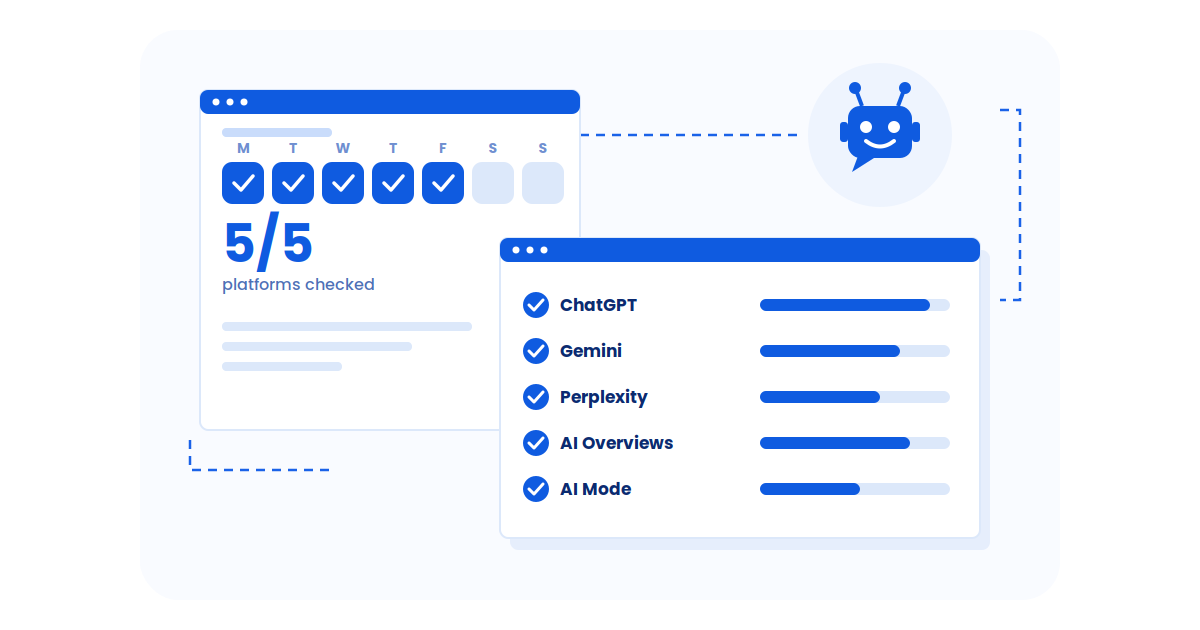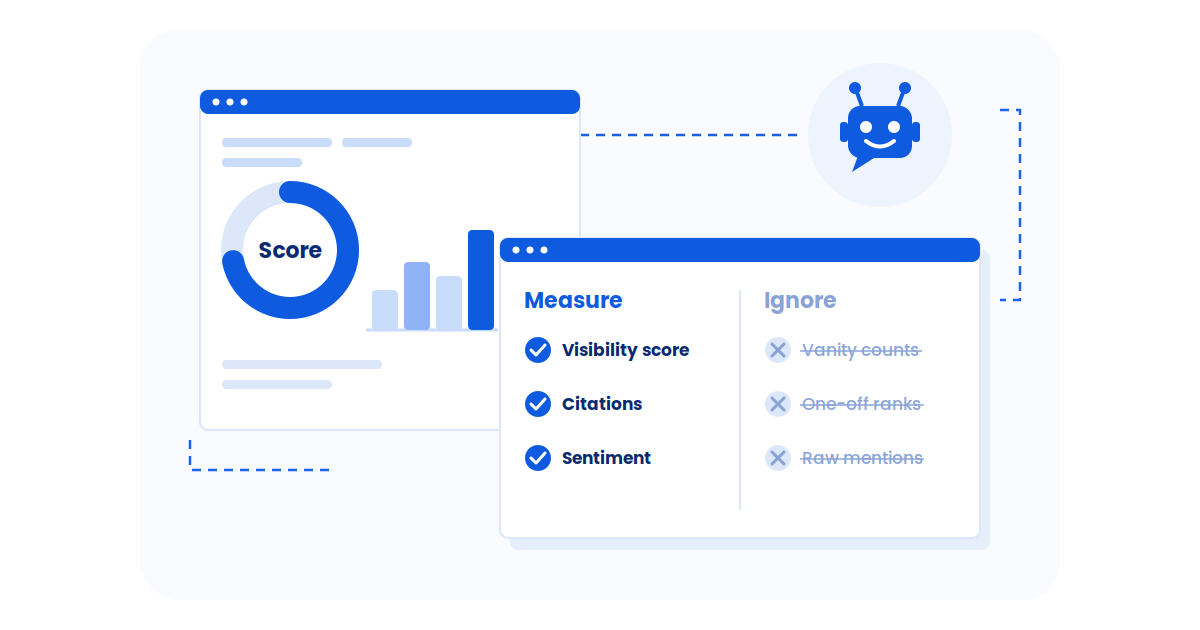
Learners now compare courses and apps through ChatGPT, Gemini, and Perplexity—not endless result pages. In this shift, brands win attention only if assistants name and trust them inside the final answer. For education brands, AI Search Visibility for Education & EdTech Brands matters more than legacy click metrics that can’t see LLM citations.
Students no longer scroll through links; they ask AI which bootcamp, program, or app fits their goals. For education brands, AI Search Visibility for Education & EdTech Brands now matters more than traditional SEO metrics, which can’t show whether you’re cited inside large language models.
Wellows AI search visibility platform closes that gap by tracking how often and where education and EdTech brands are mentioned across AI systems, surfacing both credited and unlinked references for domains like duolingo.com, coursera.org, and udemy.com.
As this behaviour becomes normal, showing up inside AI-generated answers is becoming as critical as ranking in search results for any education or EdTech brand.
What Is AI Search Visibility for Education & EdTech Brands?
AI Search Visibility for Education & EdTech Brands is best understood as three layers: how often AI tools cite your brand by name, how clearly they recognise you as a distinct entity, and how your courses or products are framed in their explanations.
Classic SEO focuses on rankings and clicks. Search Engine Visibility focuses on whether generative results and AI overviews pull you into the answer box. One large study found that Google’s AI Overviews now appear in over 13% of all searches, and that share keeps rising (Semrush, 2025).
In this model, visibility depends on more than keywords. AI systems look for clear entities (your institution or platform), consistent facts (pricing, outcomes, accreditation), and stable, mostly positive sentiment across trusted sources. These signals make it safer for AI to mention and recommend you.
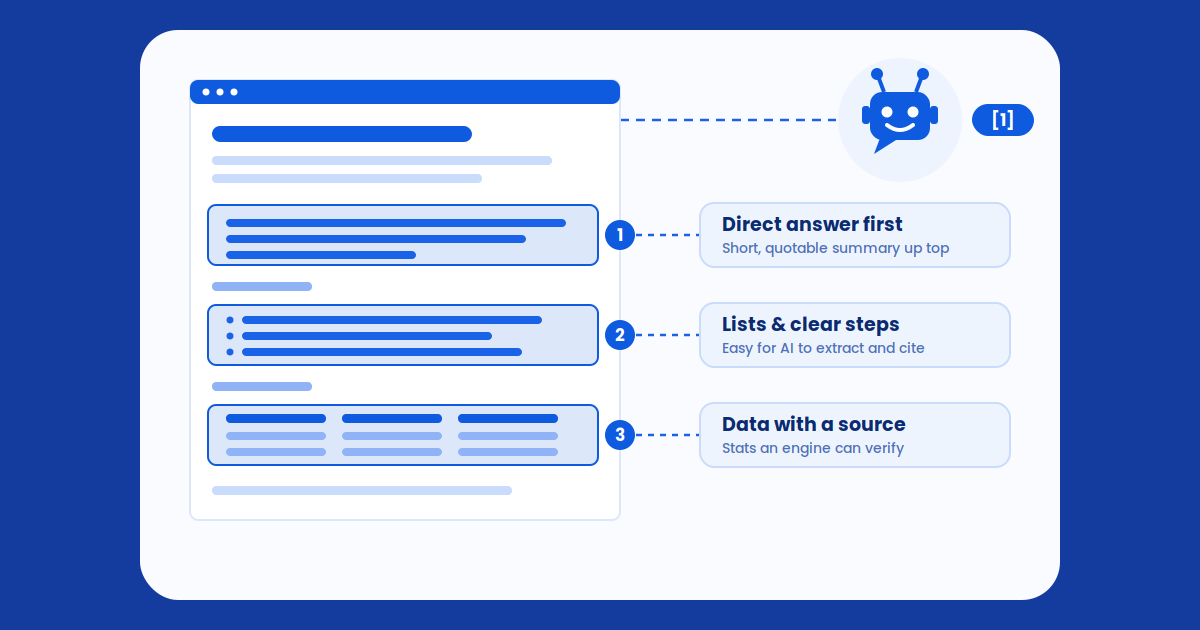
Generative Engine Optimization (GEO) brings this into your content strategy. It means structuring program pages, feature pages, FAQs, and help content so AI systems can easily understand, verify, and reuse them when answering learner questions about what and where to study.
Who benefits? Whether you’re a freelancer, EdTech startup, consultant, or agency, understanding how AI assistants cite your brand is now essential for visibility and growth.
How Can You Assess Your Current Visibility in AI-Powered Search Results?
When I audit AI Search Visibility for Education & EdTech Brands, I don’t start with keywords. I start with a simple question: how often do AI assistants actually name this brand when learners ask about courses, skills, or platforms like it?
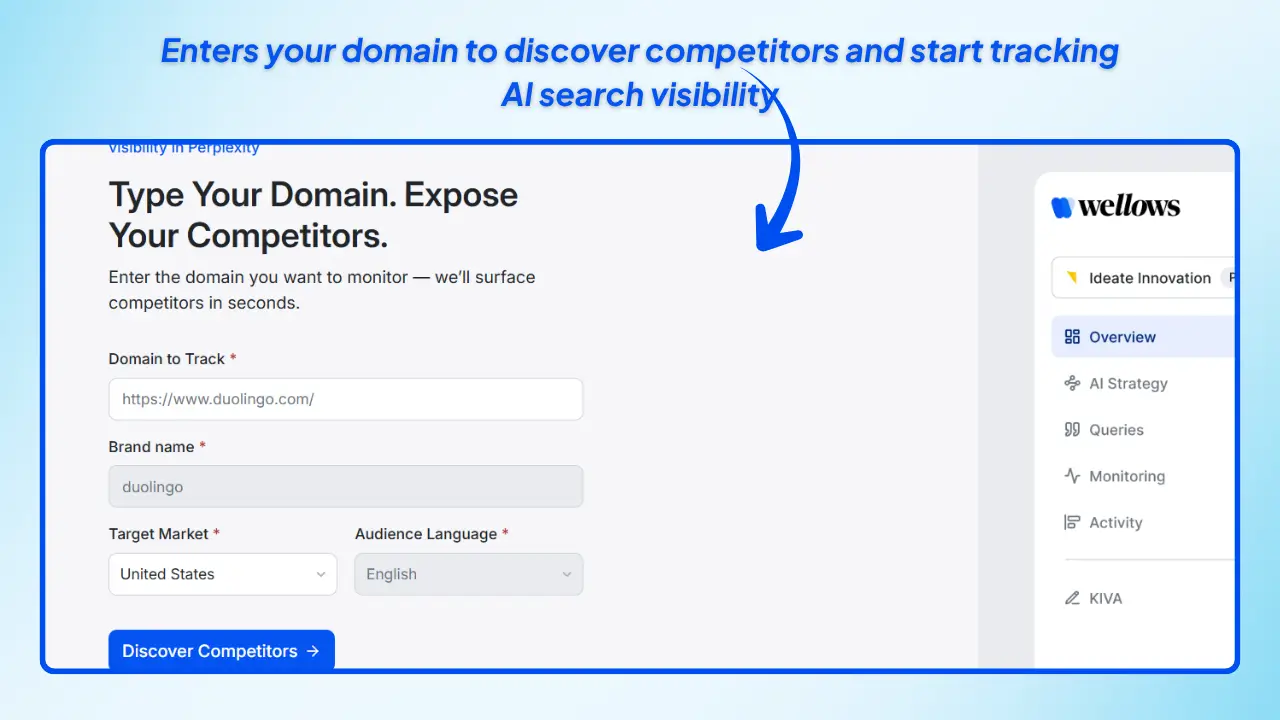
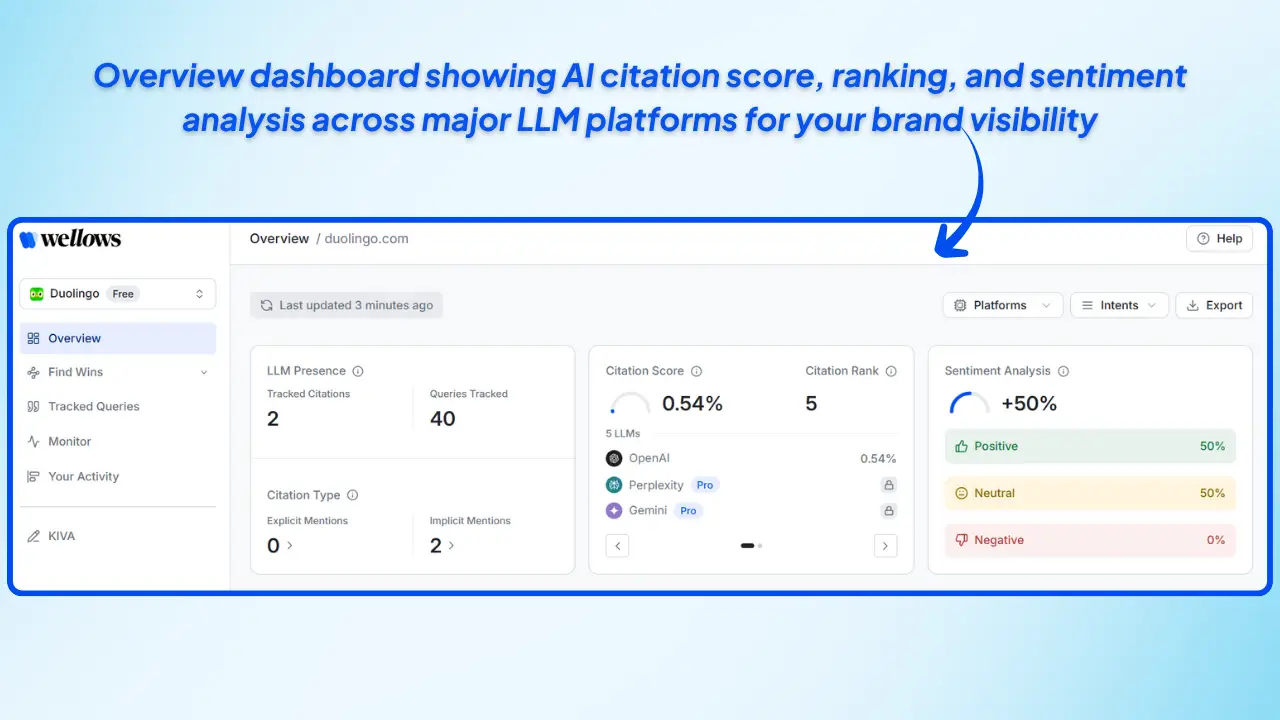
I then add the brand’s domain into the Wellows AI search visibility platform. For a large language-learning platform such as duolingo.com, Wellows scanned dozens of education queries and found 39 tracked prompts but only 2 citations, which translated into a 0.54% Citation Score and a mid-table Citation Rank across five major LLMs.
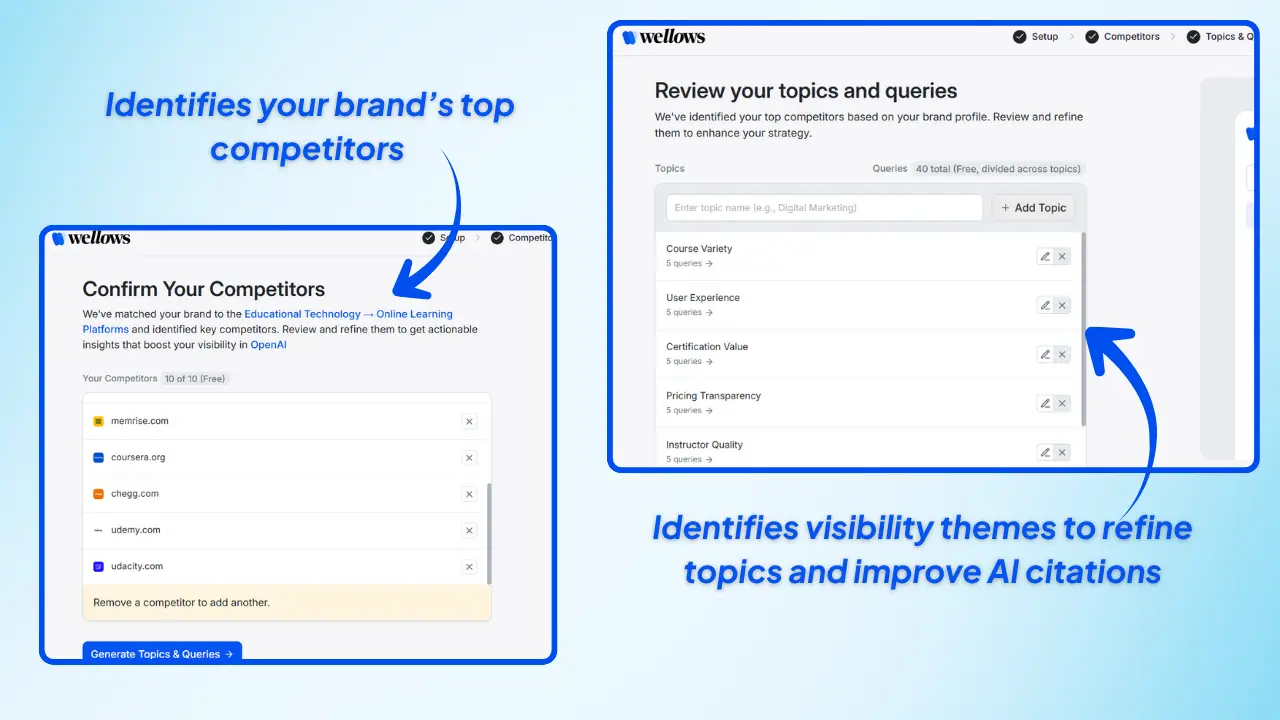
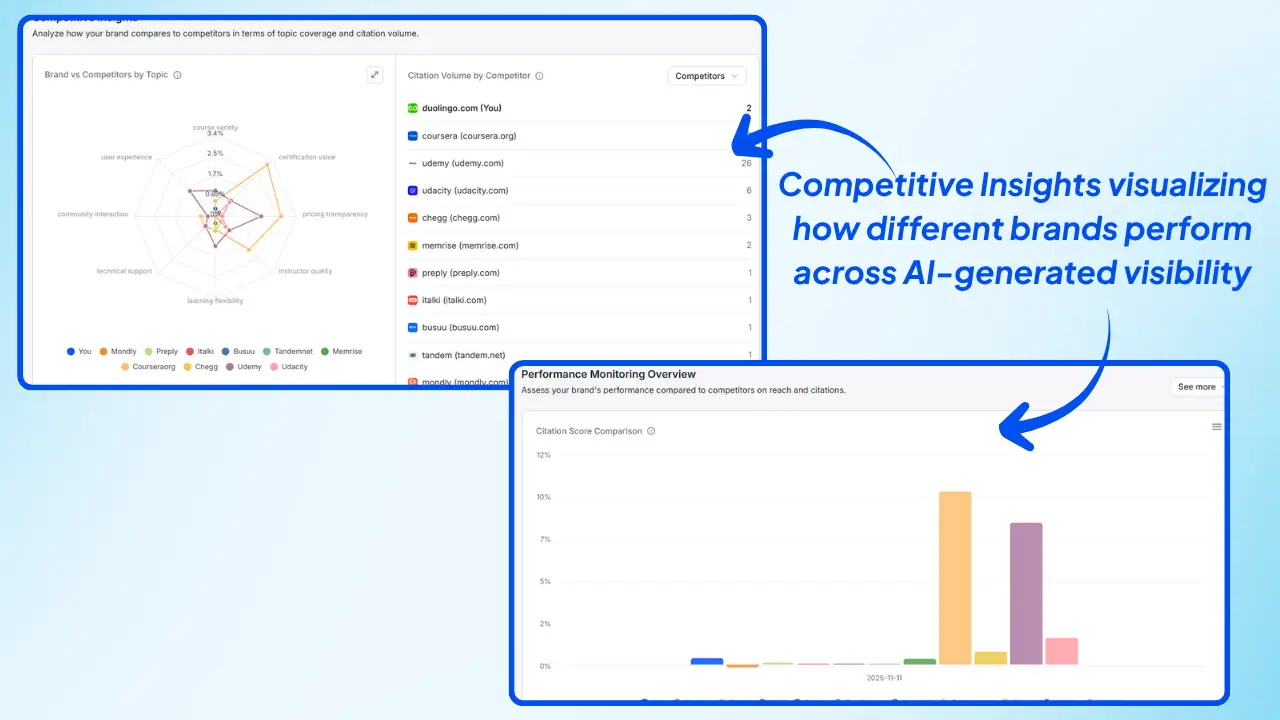
Next, I look at how Wellows groups the domain within the broader industry. The platform automatically matches it to the language learning and EdTech space, then benchmarks it against category leaders like coursera.org, udemy.com, and udacity.com, as well as smaller players such as memrise.com, preply.com, busuu.com, and italki.com. That view shows which platforms dominate AI answers today.
To make this more actionable, I use the Citation Score Comparison chart. In the language-learning snapshot, Coursera sits at roughly 0.1026, Udemy at 0.0843, and Chegg around 0.00929, while Duolingo’s 0.00545 places it above some niche competitors but still behind the leaders. This turns vague “we might be visible” into a clear, comparable metric.
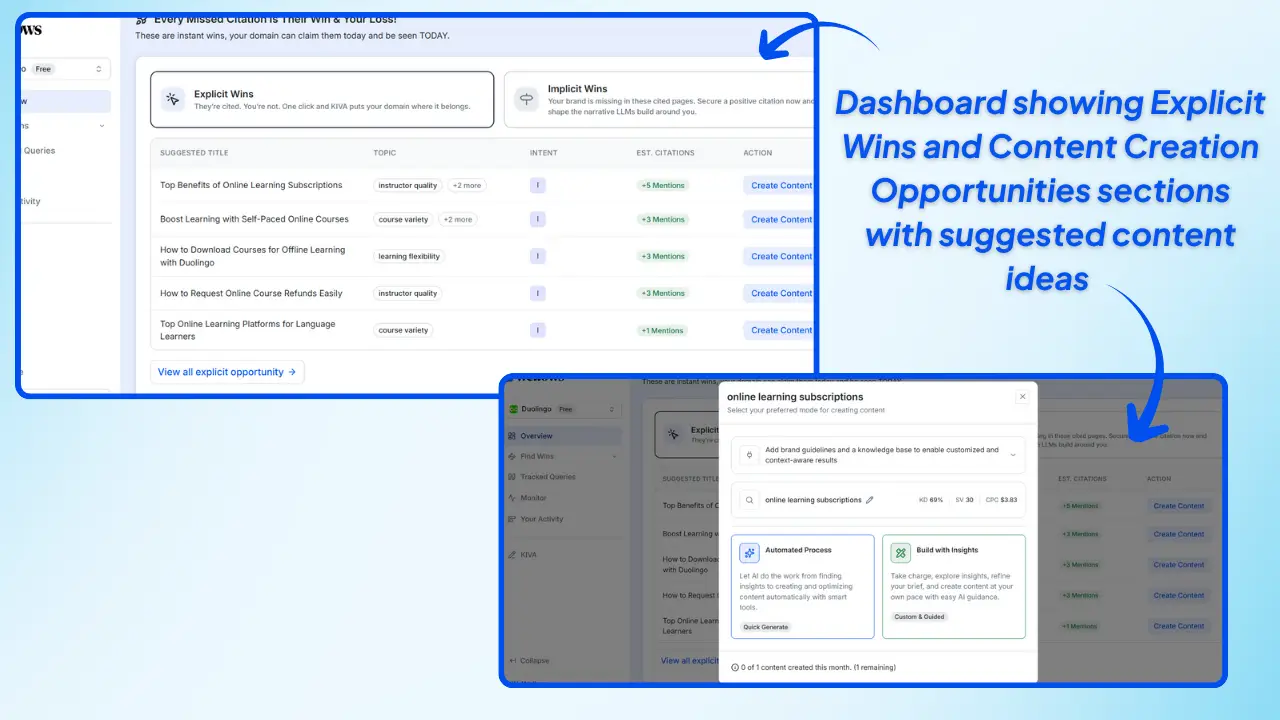
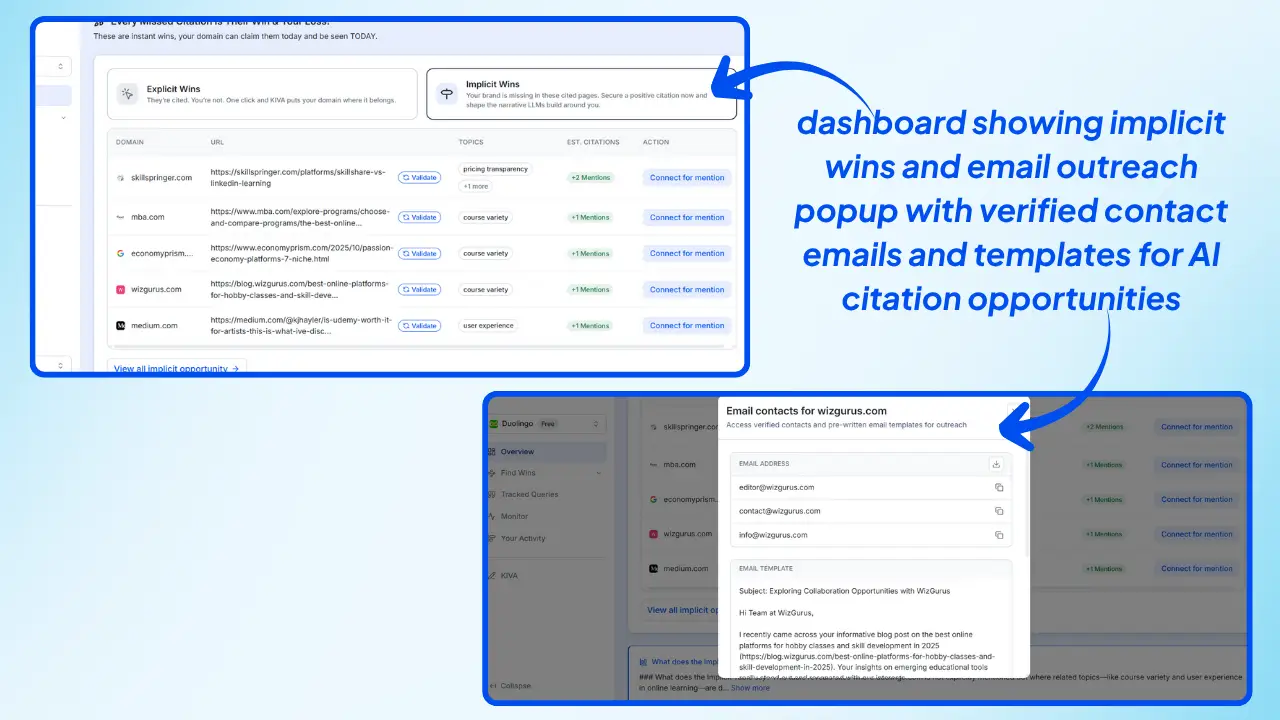
From there, I dig into explicit and implicit wins. Wellows separates direct, credited mentions from opportunities where similar topics appear but the domain is missing. In education, I often see themes like learning flexibility, instructor quality, course variety, and certification value attached to competitors instead of the brand I’m auditing. Each row in that table becomes a content or outreach brief.
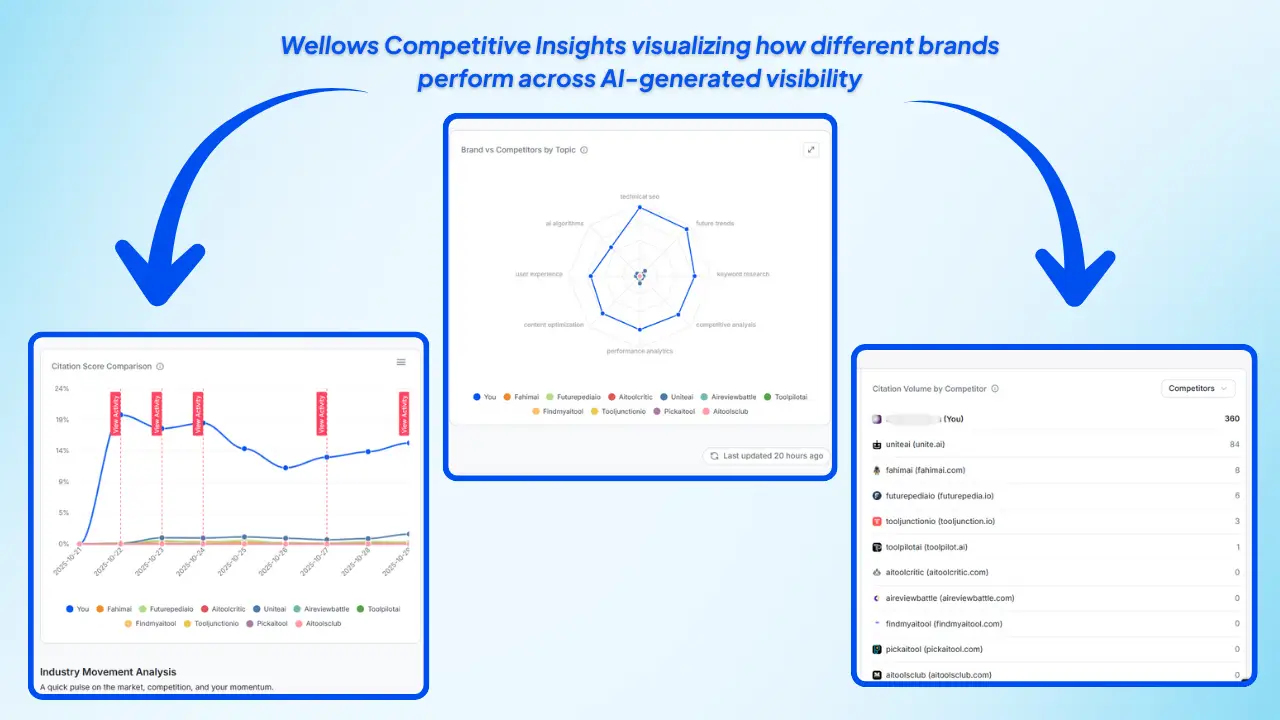
I also rely on the Competitive Insights and Top Cited Queries views. These show which topics drive most citations—such as “can you learn a skill online without watching hours of video lectures” or “which online certificates led to a real job offer”—and which platforms AI prefers to recommend. That helps me align product-led content with actual learner language rather than internal assumptions.
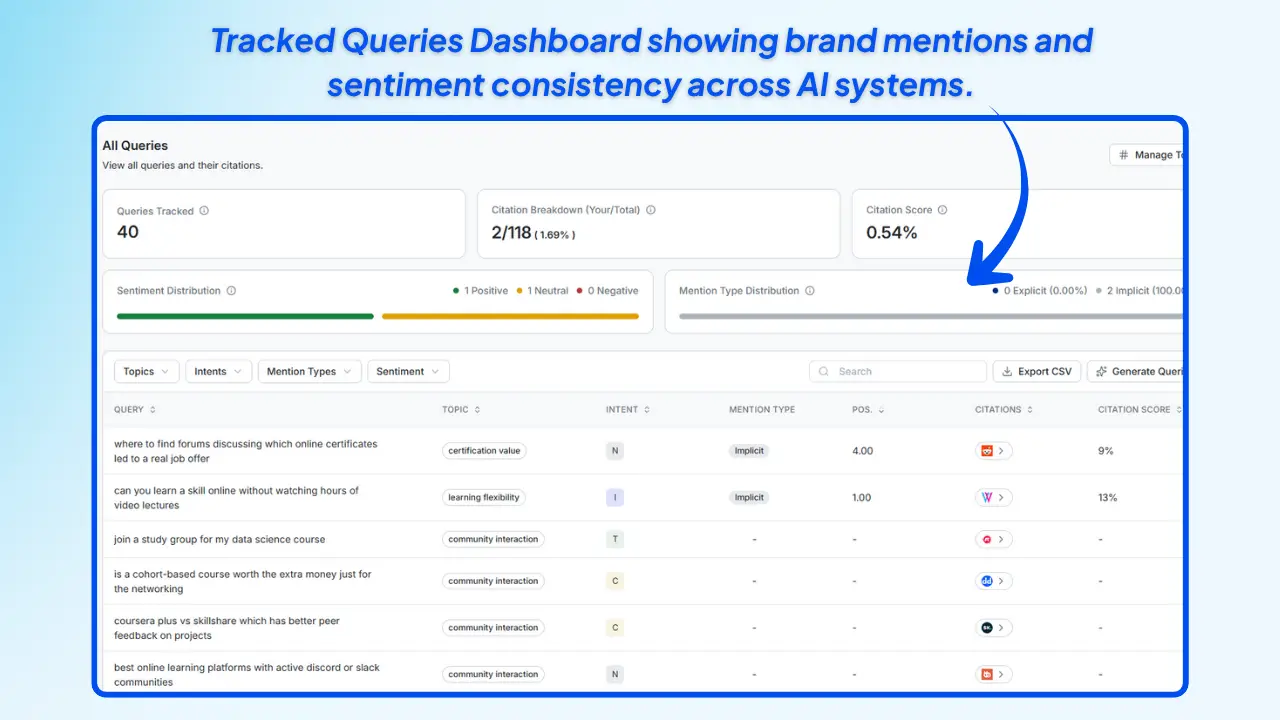
Finally, I look at how performance moves over time. Wellows tracks Citation Score, rank, and sentiment as new campaigns, partnerships, or content clusters go live. In the Duolingo snapshot, sentiment stays at 50% positive and 50% neutral with 0% negative, which signals a healthy baseline but also room to grow visibility on the most important topics.
Start your AI visibility report and turn more AI answers into enrollments, trials, and revenue today.
What Is the Current State of AI Search Visibility in Education?
Major platforms dominate: Large learning platforms such as Coursera, Udemy, edX, Duolingo, and Khan Academy, along with well-known universities, capture most citations in AI-generated education answers. Their scale, structured catalogs, and deep content libraries make them “safe defaults” for AI assistants when learners ask broad questions about online courses or skills.
Duolingo sits in the middle: In the Wellows report for duolingo.com, the platform records only 2 tracked citations across 39 queries, with a 0.54% Citation Score and a Citation Rank of 5. Coursera and Udemy hold far more citations, while smaller language platforms like Preply, Busuu, and Italki sit below Duolingo, showing a clear mid-tier visibility position.
Topic-level patterns: Most education-related AI answers cluster around a few recurring themes: learning flexibility (self-paced, offline, mobile), instructor quality, certification value, and community interaction such as study groups or peer feedback. In the Duolingo snapshot, query ideas like “online learning subscriptions,” “self-paced online courses,” “course refunds,” and “online platforms for language learners” sit directly on these themes.
Sentiment trends : For duolingo.com, Wellows shows 50% positive and 50% neutral sentiment with 0% negative mentions across AI systems. That pattern is typical for established education brands: AI responses tend to describe features and trade-offs factually, rather than amplifying strong criticism.
Monitor Performance Over Time: Competitive Insight charts reveal that big platforms lead on broad topics, while areas like AI visibility, free tools, and some niche intents have no clear winner. For emerging EdTech products and specialised universities, that creates room to own narrowly defined skills, learner segments, or formats that AI currently answers with generic or competitor-first recommendations.
What Strategies Can EdTech Companies Use to Improve AI Search Visibility?
AI Search Visibility for Education & EdTech Brands improves fastest when GEO, structured data, and product-led content work together. The aim is simple: make it easy for AI assistants to understand what you teach, who it serves, and why your platform is a safer recommendation than generic alternatives.
9 Practical GEO Strategies for EdTech Teams
1. Treat GEO as a core channel: Use Generative Engine Optimization (GEO) to optimise content for AI engines like ChatGPT, Gemini, Perplexity, and AI Overviews. GEO focuses on being cited inside answers, not only ranking as a link. Start by mapping key journeys: “how to learn X online” and “best platform for Y skill.”
2. Build structured product foundations: Implement schema for Course, Organization, FAQPage, and Review. Well-implemented structured data is now one of the strongest signals for AI-driven visibility because it turns course catalogs and feature pages into machine-readable objects.
3. Turn support content into AI-ready FAQs: Convert help docs and admissions emails into clean Q&A blocks with FAQPage schema. Focus on questions AI already sees: “Is this certificate recognized?”, “How flexible is the schedule?”, “Do I need prior experience?”. Clear, structured answers make it easier for AI to quote your site instead of a forum thread.
4. Create comparison pages AI can trust: Publish balanced, data-backed comparisons such as “bootcamp vs degree for data analytics” or “this LMS vs spreadsheets for assessment tracking.” Use verifiable facts (duration, price range, support model) rather than hype. AIs prefer neutral, structured comparisons over vague sales copy.
5. Build topic clusters around learner questions: For each core skill, design a cluster: a hub like “how to learn Python online” plus supporting pieces on prerequisites, project ideas, assessments, and career paths. Interlink these pages and make sure each includes syllabus-style details. Clusters help AI recognise you as an authority on specific skills rather than a random course listing.
6. Align content to intents AI already answers: Study prompts that appear in Wellows, search data, or sales calls—such as “learning flexibility,” “instructor quality,” “certification value,” and “community interaction.” For each intent, ship a dedicated page or FAQ that explains how your platform solves it with concrete examples, not slogans.
7. Make lesson flows and product UX discoverable: Document how your platform actually works: onboarding, first lesson, progress tracking, feedback loops, and certification steps. Screenshots, workflows, and short how-to articles help AI describe your product accurately when learners ask “how does [type of platform] work?” or “what happens after I enroll?”.
8. Tie GEO work directly to product-led metrics: For each topic cluster or FAQ rollout, define product KPIs: free trials started, lesson starts in week one, demo requests, or campus inquiries. Track how changes in Citation Score and AI mentions from Wellows line up with lifts in these metrics so AI visibility is clearly linked to revenue, not just traffic.
9. Use Wellows as your GEO feedback loop: After publishing new structured content, monitor Wellows for changes in Citation Score, Citation Rank, and topic coverage. If competitors still dominate “best platform for Y skill,” refine your pages with clearer outcomes, proofs, and schema until AI assistants begin to cite you more often than them.
How Can Universities Use GEO Optimization Techniques?
Universities can use GEO to make degrees, certificates, and micro-credentials easier for AI systems to understand and recommend. The goal is to turn complex academic catalogs into clear, structured signals that AI assistants can safely reuse in their answers.
How Can You Optimize Content for AI-Driven Zero-Click Searches?
AI Search Visibility for Education & EdTech Brands increasingly lives inside AI-generated, zero-click answers. Learners get explanations directly from assistants, so your content must both power those answers and still guide users toward action.
What Role Do Third-Party Sources Play in AI Search Visibility?
Third-party sites are a major driver of AI Search Visibility for Education & EdTech Brands. Studies show AI assistants cite external domains far more often than brand blogs, especially when those domains already score high on authority and trust.
- .edu and public-sector sites: AI engines lean on .edu domains, official education portals, and policy sites for questions about curricula, funding, and licensing. These domains are strong E-E-A-T signals and shape which institutions feel “safe” to recommend.
- Review platforms and marketplaces: For LMS, SIS, and other EdTech tools, assistants often pull from G2, Capterra, and similar review sites. G2’s 90M+ yearly visitors make its categories and ratings powerful social proof that models can reuse.
- Media, rankings, and research: Coverage from major media, rankings publishers, and research partners gives AI concrete evidence of your authority. Independent references from trusted outlets now matter as much as classic link volume for brand trust.
- Guest content and data-led PR: Guest posts, whitepapers, and original data studies on authoritative domains are frequently cited because they blend external validation with structured evidence about outcomes and pedagogy.
- Implicit vs. explicit wins in Wellows: An AI search visibility platform highlights where AI answers describe value you provide but don’t name you (implicit mentions), and where competitors get explicit credit. These become a focused outreach list—review pages, media articles, and partner sites to update so future answers cite you directly.
When trusted third-party domains describe you clearly and consistently, AI systems see a stronger story about your brand—and your chances of being cited inside their answers rise quickly.
How Should Education Brands Handle Bias, Governance, and Privacy in AI Search?
In education, biased or incomplete AI answers are not just annoying—they can damage trust in your brand, especially for under-represented groups. Recent studies show that unfair or opaque AI behaviour quickly reduces student confidence in both tools and institutions that promote them.
- Mitigate bias in what AI says about you: Publish diverse, inclusive examples across your site—different learner profiles, geographies, and starting points—and have experts review high-stakes content. Fairness reviews in educational AI consistently highlight the need for representative data and human oversight to avoid reinforcing existing gaps.
- Protect student data by default: When you use AI for discovery, chat, or personalization, minimise personal data, avoid feeding identifiable student records into third-party tools, and apply clear consent, access controls, and retention rules. Guidance on AI in education now treats privacy and transparency as core requirements, not extras.
- Set a simple governance framework: Define which AI tools are allowed, what they can be used for, who approves new use cases, and how you monitor risks over time. Many education governance studies recommend a lightweight AI policy plus regular reviews so teams can still experiment without putting student trust or compliance at risk.
Handled well, governance, privacy, and bias work together: they keep learners safe while still allowing AI Search Visibility for Education & EdTech Brands to grow on a foundation your institution can stand behind.
Why Should Education & EdTech Brands Use Wellows for AI Search Visibility?
Most SEO tools were not built for the AI search era. They track rankings and backlinks but cannot see how large language models cite, describe, or compare your platform in conversational answers. For AI Search Visibility for Education & EdTech Brands, that leaves a blind spot exactly where students and decision-makers now ask their most important questions.
Wellows closes that gap. It operates as an AI search visibility platform and GenAI visibility stack for education, measuring how often you appear in AI answers, what tone those mentions carry, and how you compare to rival course platforms, LMS vendors, and universities. Here’s how it compares conceptually to typical tools:
| Feature | Wellows | Traditional SEO Suite | Basic AI Monitoring Tools |
|---|---|---|---|
| AI Citation Tracking (ChatGPT, Gemini, Bing, Perplexity) | Yes Tracks brand mentions and citations across major AI engines for education queries. | No Focuses on web rankings and click data only. | Partial Monitors some prompts, often without education-specific context. |
| Implicit Citation Detection (Unlinked Mentions) | Yes Finds where your value appears in AI answers without naming your brand. | No Cannot see or classify LLM answers. | No Tracks visible mentions but misses uncredited references. |
| Citation Score + Sentiment Fusion | Yes Combines citation volume, share of voice, and tone into a single visibility score. | Partial Offers visibility or brand metrics, but not LLM-specific scoring. | Limited Shows counts, rarely fuses sentiment or authority. |
| Education-Focused Benchmarking | Yes Benchmarks you against course platforms, language apps, and universities in your category. | No Competitor sets are built around SERP keywords, not AI answers. | No Usually monitors one brand at a time. |
| Explicit vs Implicit Wins Dashboard | Yes Highlights missed citations and content gaps where competitors are credited and you are not. | No Cannot distinguish AI citation types. | No Lacks actionable “wins” or outreach views. |
| Query Intent Clustering | Yes Groups AI queries by themes like learning flexibility, certification value, and instructor quality. | No Groups by keywords and SERP metrics only. | Partial Buckets prompts, but without education-specific intents. |
| Real-Time Sentiment Tracking | Yes Monitors tone for your brand and competitors across AI systems. | Partial Tracks reviews or social mentions, not LLM sentiment. | Limited Surface-level tone labels, no history or comparison. |
| Visibility Playbooks & Content Suggestions | Yes Generates GEO-aligned topics and outreach ideas to convert missed citations into wins. | No Leaves strategy to manual analysis. | No Provides raw data only. |
How Should You Measure Progress and Plan the Next 90 Days?
To make AI Search Visibility for Education & EdTech Brands a measurable growth channel, combine clear metrics with a 90-day roadmap. This ensures every visibility gain translates into real product or enrollment outcomes.
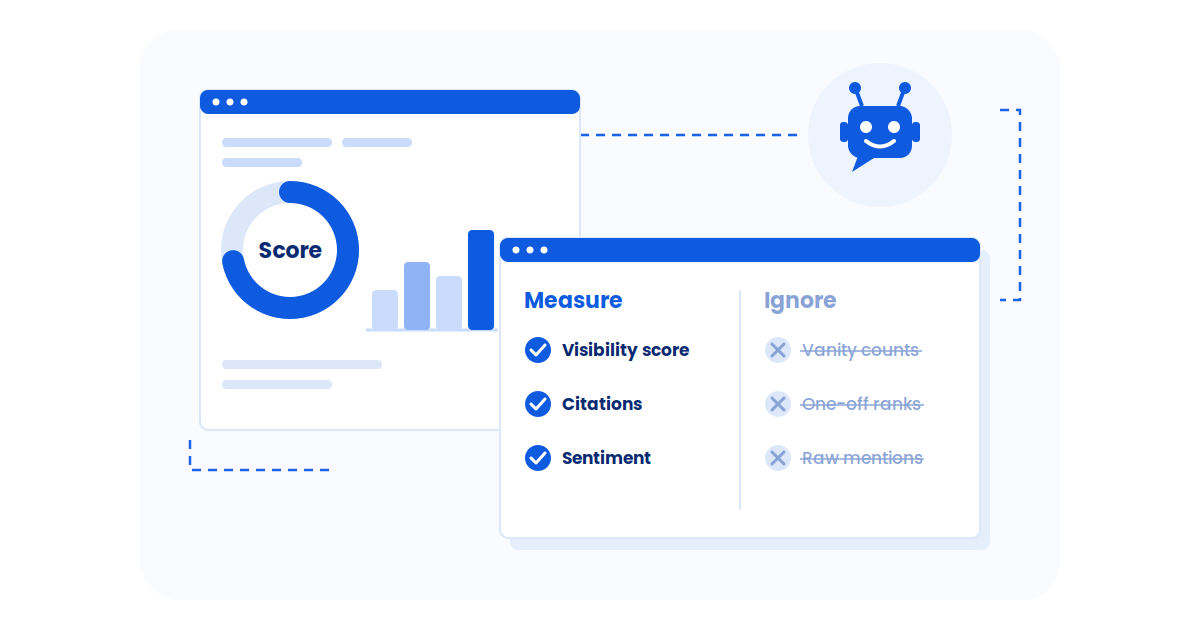
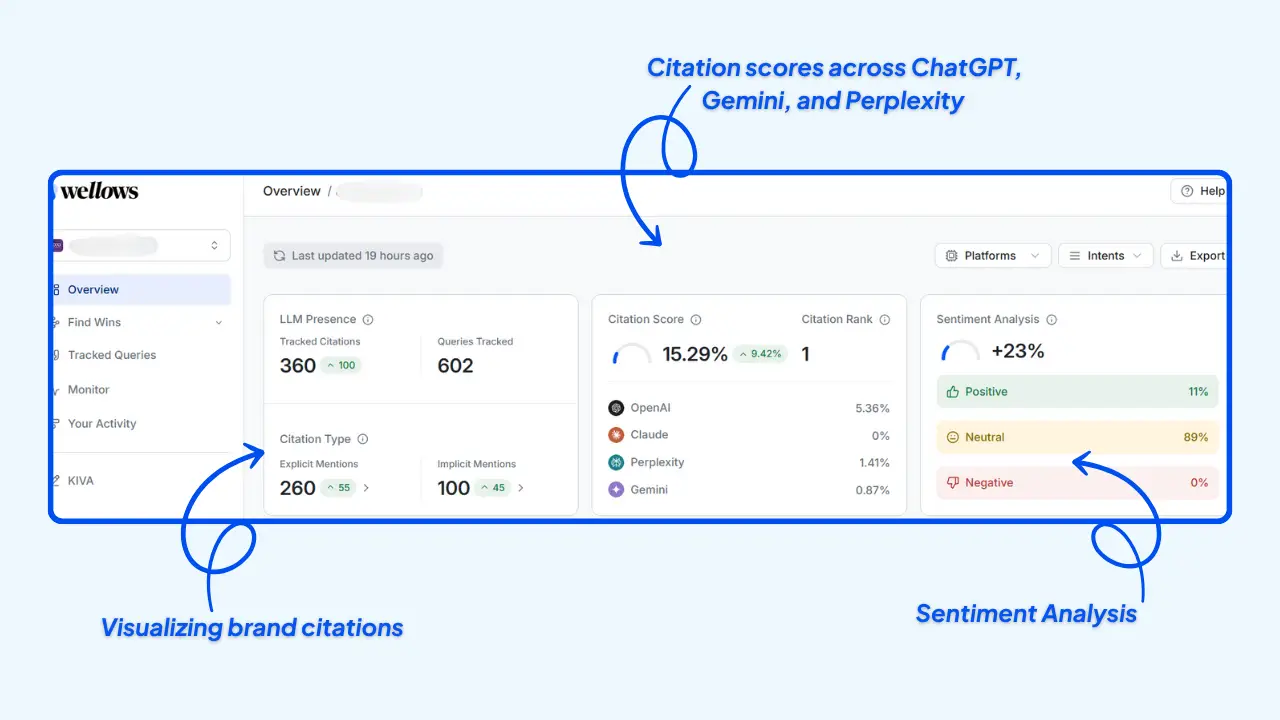
- Citation Score: Share of AI answers mentioning or recommending your brand.
- Citation Rank: Position versus competitors across the same tracked queries.
- Tracked Queries: Prompts learners actually use — “best data science course online,” “which app helps me learn Spanish fast.”
- LLM Coverage: Frequency of brand mentions across ChatGPT, Gemini, Bing AI, and Perplexity.
- Sentiment by Topic: Tone across key education themes like learning flexibility, certification value, and instructor quality.
90-Day Plan:
- Weeks 0–4: Run a Wellows audit, identify implicit and explicit citation wins, and publish FAQ and course schema for high-value journeys.
- Weeks 4–8: Build topic clusters around top skills, refresh program pages, and align messaging across key AI-cited touchpoints.
- Weeks 8–12: Strengthen third-party visibility (.edu partners, review platforms, media), formalize light AI governance, and iterate content based on citation score trends.
Discover how AI Search Visibility applies across industries. Each guide explains how to strengthen brand authority, citations, and sentiment inside AI-generated answers for your niche.
- AI Search Visibility for Cybersecurity Brands: Secure visibility in AI-driven risk, compliance, and threat intelligence results.
- AI Search Visibility for B2B SaaS Brands: Rank in AI tool recommendations, software reviews, and tech stack comparisons.
- AI Search Visibility for Automotive Brands: Get discovered in AI-powered car comparisons and mobility advice.
- AI Search Visibility for Aviation & Airlines Brands: Appear in AI travel planning and flight discovery results.
- AI Search Visibility for Entertainment Brands: Improve how streaming platforms, studios, and media catalogs appear across major AI assistants
- AI Search Visibility for Beauty & Personal Care Brands: Get featured in AI beauty recommendations, product comparisons, and skincare insights.
💡 Insight: No matter the sector, one principle stays constant—if AI assistants can’t find, verify, or trust your data, your brand won’t appear in their answers. These guides show how to stay visible and trusted across every AI-powered search environment.
FAQs
Conclusion
The biggest risk in the AI search era is simple: if AI assistants don’t cite you, learners don’t see you. Visibility now depends on how clearly your brand, programs, and data appear inside generative answers—not just in search rankings.
The playbook is a loop: audit → structure → earn citations → monitor & improve. Start by scanning where you appear, organize your course and product pages with clear data and schema, build authoritative mentions across trusted sources, and keep tracking Citation Score, Rank, and sentiment over time.
Every improvement in AI Search Visibility for Education & EdTech Brands directly connects to growth: better visibility drives more trials, more enrollments, and more predictable revenue. Treat AI search as a performance channel—and you’ll stay visible where the next generation of learners is already asking questions.