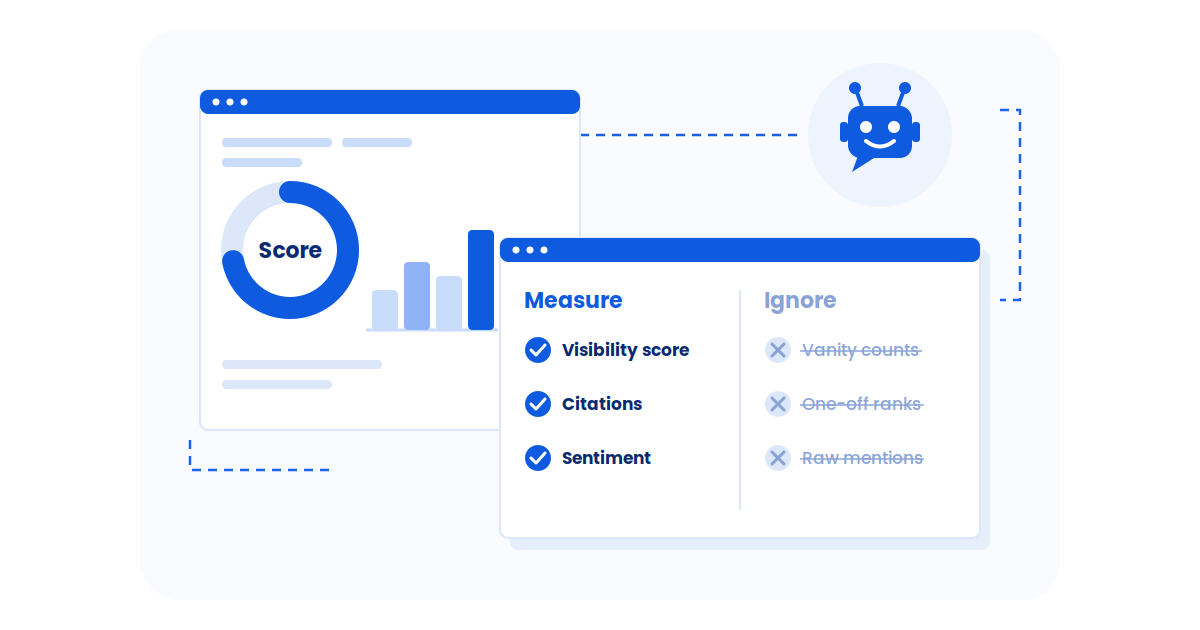
Forget “ranking on Google.” In 2025, the real question every HealthTech and medical device brand must answer is:
“When AI recommends products, will it recommend yours?”
Whether a clinician asks ChatGPT, “Which wearable helps detect arrhythmias?” or a procurement officer types, “Best AI imaging devices for hospitals,” the assistant’s answer becomes the new front door to your brand.
If your device isn’t cited, referenced, or surfaced in those AI-curated responses, you lose visibility long before a buyer even reaches your website — even if you rank on Page 1.
For HealthTech, med devices, wearables, diagnostics, and medical equipment manufacturers, AI search visibility is now a competitive advantage — and in some cases, a survival factor.
This guide is your blueprint for owning AI-driven discovery, covering:
- How search has changed for HealthTech & MedTech
- How to get your health products recommended by AI
- Wearable device AI search presence strategies
- GEO optimization for HealthTech startups
What Is AI Search Visibility for HealthTech & Medical Devices Brands?
AI search visibility refers to how clearly, consistently, and confidently AI-powered search engines—like Google’s AI Overviews, ChatGPT Search, Perplexity, and Med-LLMs—recognize, understand, and recommend your HealthTech product or medical device when users ask questions.
For fast-growing teams focused on HealthTech startup GEO optimization, this becomes a critical competitive advantage because AI systems increasingly rely on entity understanding, medical context, and authoritative signals to surface the right brands.
In simple terms:
Search Engine Visibility determines whether AI includes your brand in its answers—or overlooks you entirely.
For HealthTech and medical device companies, this is more than just a new SEO trend. It is the new front line of digital discovery, especially because your buyers—clinicians, hospital procurement teams, administrators, and patients—are shifting rapidly from keyword search to AI-assisted decision-making.
What’s Changed: Search + AI + Medical/Device Sector
The way clinicians, procurement teams, and patients discover medical devices has fundamentally shifted. Instead of browsing through pages of search results, decision-makers now rely on AI assistants that summarize, compare, and recommend products instantly.
This shift has reshaped digital visibility for HealthTech and MedTech brands—introducing new rules, new ranking signals, and a new level of competition inside AI-generated answers, especially as Generative Engine Optimization continues to redefine how visibility is computed.
1. Zero-click & AI-first discovery
More and more informational queries are answered within the search result page or via AI assistants, rather than driving a click to a website. For medical/tech queries this means: “What is a digital therapeutic for diabetes?” might get answered directly with a summary and citations — it may bypass your website entirely.1. Generative Engine Optimization (GEO) emerges
Traditional SEO remains important, but now brands must optimize for how large language models (LLMs) select, summarise and cite sources. This is sometimes called GEO (Generative Engine Optimization). For HealthTech/medical devices this means: your content needs to align with how AI “thinks”, not only how Google “indexes”.1. Authority, trust and signal intensify
In sectors with high stakes (health, medical devices), AI systems prioritize sources with strong trust, expertise, and structured provenance. Recent articles highlight the role of clinician-authored content, explicit author credentials, citations of research, and well-structured schema.1. From clicks to citations
While clicks and traffic are still useful, the new metric for visibility is being cited by AI answers. Less traffic may still yield high influence if your brand appears as the trusted answer.1. Complex buyer journeys & longer funnels
For HealthTech and med-devices brands the buyer is rarely a consumer; it’s HCPs, hospitals, procurement, regulatory, payers. Search visibility therefore must support multiple stages (research → evaluation → decision). With AI search, these stages may compress, or new touchpoints emerge.Why AI Search Visibility Matters for HealthTech & Medical Devices
Health-related queries are among the most frequently asked in AI tools.
Buyers now ask:
- “Which medical device is best for early cancer detection?”
- “What are the top AI-powered ultrasound systems?”
- “Best wearable for monitoring heart rhythms?”
- “Which HealthTech startup offers remote patient monitoring solutions?”
The AI does not show 10 blue links.
It shows one answer—a curated, summarized recommendation.
If your product isn’t cited there, your visibility disappears at the moment it matters most.
For medical devices, wearables, diagnostics, and clinical AI solutions, this is critical because:
- AI favors authoritative, clinically credible brands
- Medical buyers depend on accuracy and trust signals
- Procurement teams use AI to shortlist vendors
- Generative search reduces clicks—visibility happens before traffic
Traditional SEO gets you ranked. AI search visibility gets you recommended.
Medical Device Company AI Visibility Guide
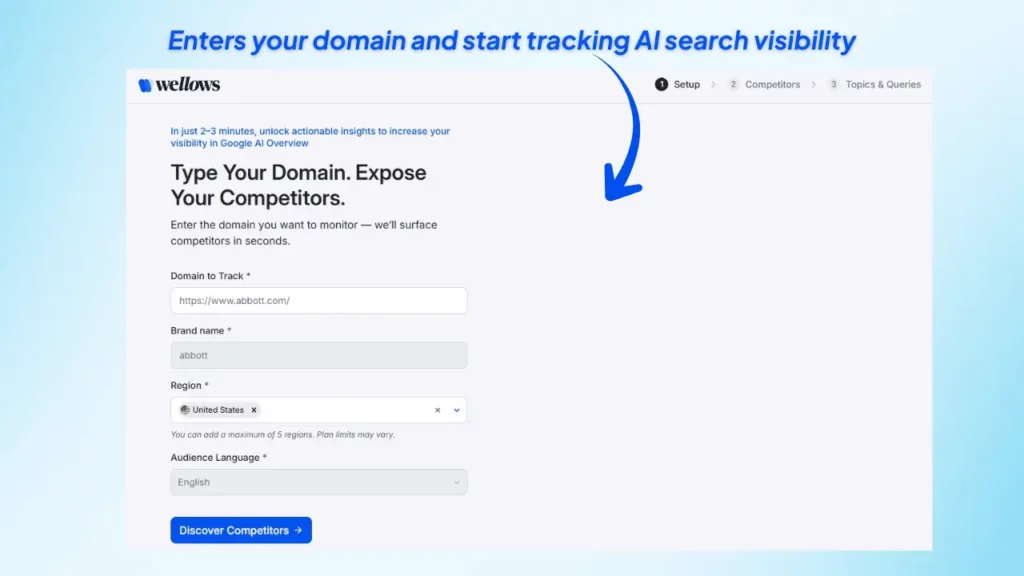
To understand how medical device brands perform across major AI systems, we ran a full AI visibility scan using the Wellows platform. For this analysis, we selected Abbott — one of the most established and trusted names in diagnostics, medical devices, and health technology.
By tracking abbott.com, we were able to uncover how often the brand appears in AI-generated answers, which competitors dominate the space, and where new visibility opportunities exist for MedTech companies.
Abbott’s Competitors, Topics & AI Visibility Signals
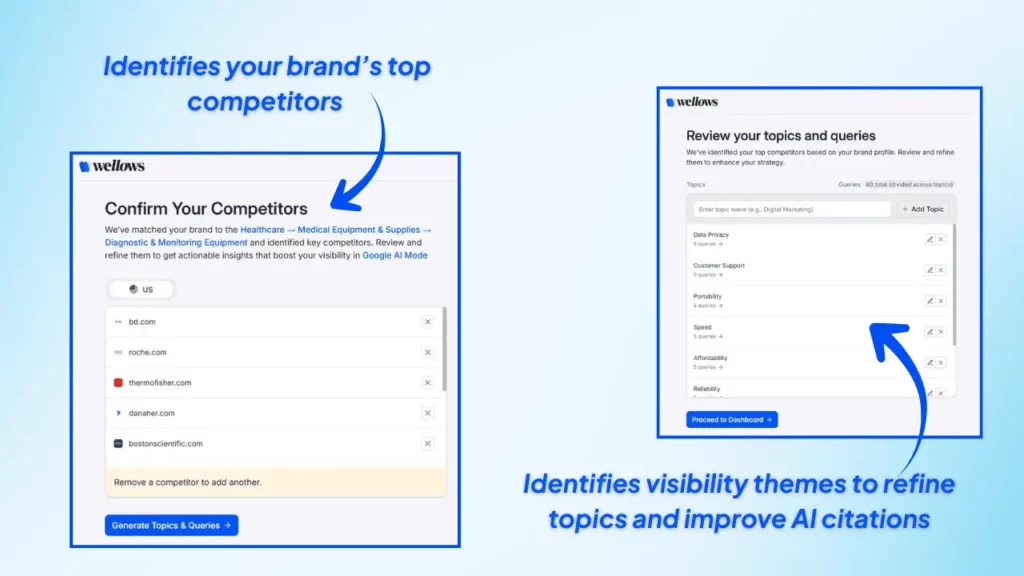
Wellows automatically categorized Abbott under Healthcare → Medical Equipment & Supplies → Diagnostic & Monitoring Equipment and surfaced key competitors — including BD, Roche, Thermo Fisher, Danaher, and Boston Scientific — to benchmark Abbott’s AI search performance against the leading brands in the space.
It also identified Abbott’s core AI visibility themes — such as data privacy, customer support, portability, speed, affordability, and reliability — revealing the topics AI systems most frequently analyze when interpreting medical device brands. These signals help highlight how Abbott appears across AI Overviews and where strategic improvements can strengthen visibility.
Abbott’s AI Presence & Sentiment Overview
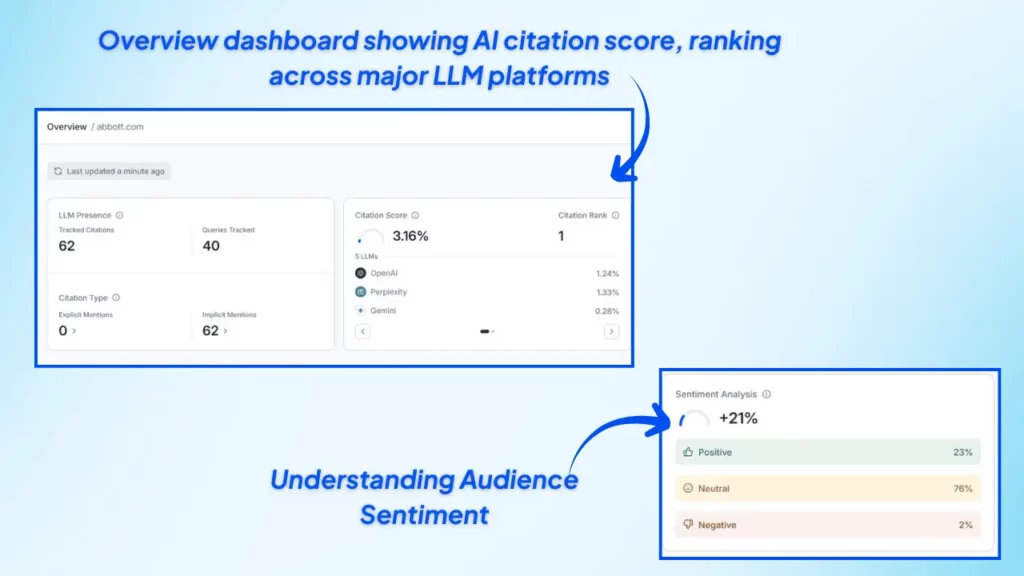
The Wellows scan revealed that Abbott currently appears in 62 AI-generated mentions across 40 tracked MedTech queries. All of these were implicit references, with no direct, credited citations, resulting in a 3.16% citation score — the highest among competing medical device brands, placing Abbott at Citation Rank #1.
Sentiment analysis showed overwhelmingly stable and positive perception:
- 23% positive
- 76% neutral
- Just 2% negative
This +21% sentiment score indicates that AI systems consistently view Abbott as a reliable and trusted medical device manufacturer.
However, the absence of explicit mentions suggests a major opportunity: Abbott is frequently referenced but not formally cited — meaning stronger entity clarity, structured data, and content refinement could convert these unlinked mentions into authoritative, trackable citations across LLMs like OpenAI, Perplexity, and Gemini.
Abbott’s Fastest Path to Earn Explicit Citations
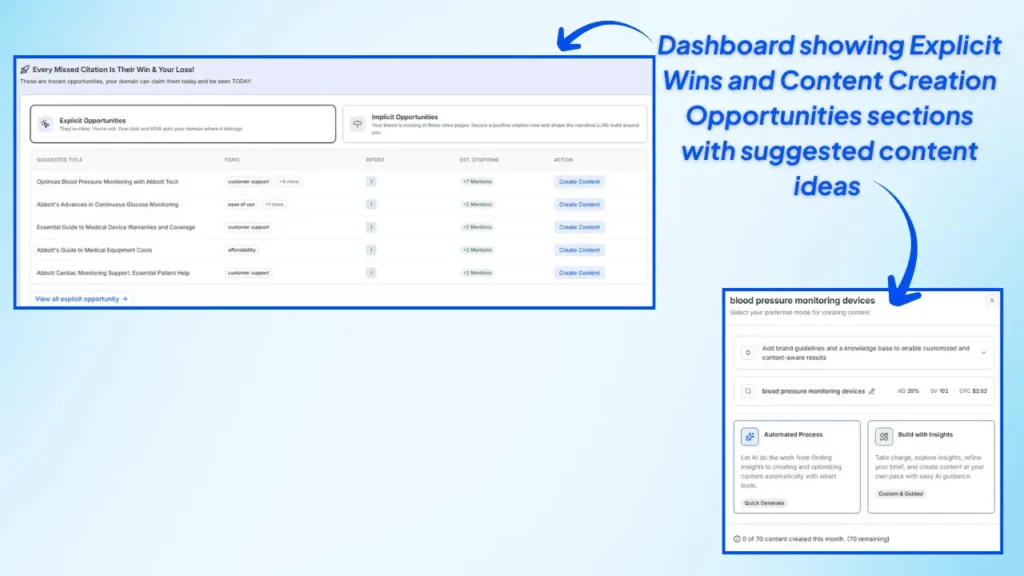
Wellows highlighted several Explicit Opportunities where AI systems mention medical device topics but omit Abbott, creating clear openings to secure immediate citations. Suggested pages—such as blood pressure monitoring, glucose tracking, warranties, and equipment costs—show estimated gains of +2 to +7 mentions.
With options for quick generation or guided creation, Abbott can rapidly produce AI-ready, structured content to claim these missed citations. Focusing on these priority themes strengthens Abbott’s presence across LLM platforms and boosts its visibility in generative search.
Convert Implicit Mentions into Verified AI Citations
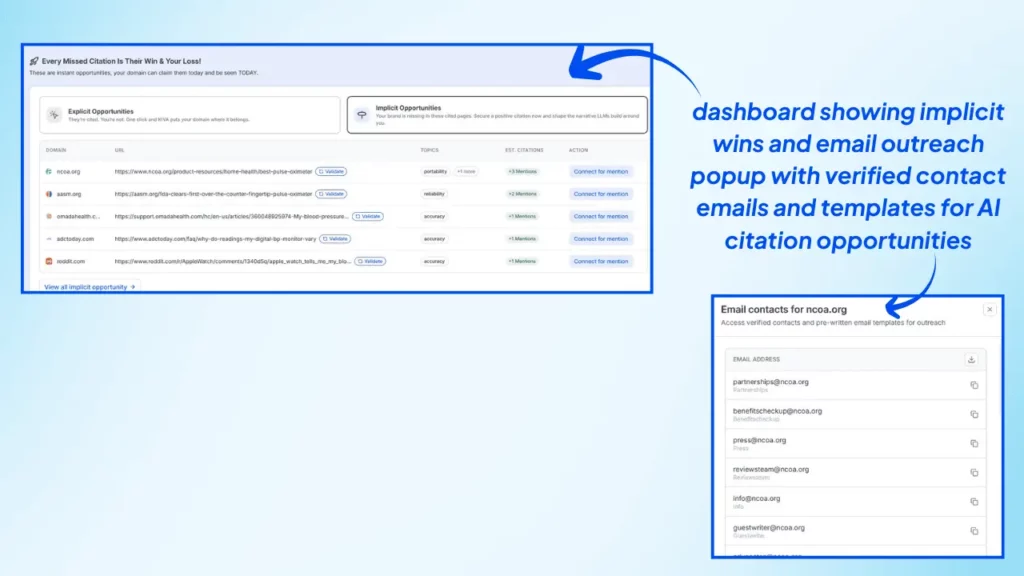
Wellows identified several domains where Abbott is referenced in AI responses without being properly cited, creating easy opportunities to convert unlinked mentions into credited citations. Pages from organizations like NCOA, AASM, Omada Health, and ADCToday surfaced themes such as accuracy, portability, and reliability — each offering an estimated +1 to +3 citation gain.
To streamline attribution, Wellows provides verified contact emails and ready-to-send outreach templates for each citing site. With one click, Abbott can connect with editors, confirm product details, and request citation updates, turning overlooked mentions into explicit AI-visible references that strengthen authority across generative platforms.
Analyze Competitive Insights
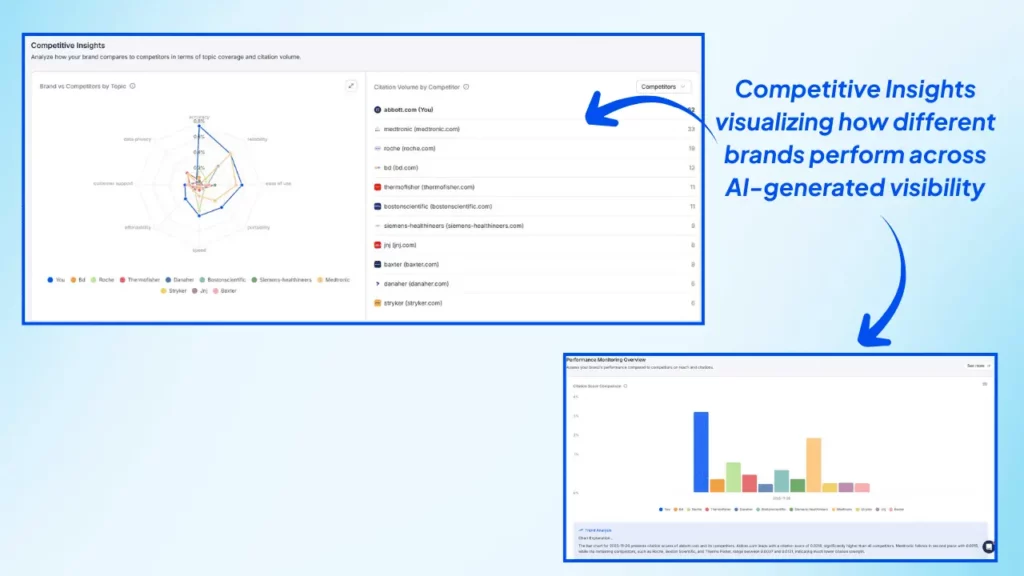
Wellows shows Abbott leading competitors in core MedTech themes such as accuracy, reliability, and ease of use, with 62 citations—nearly double Medtronic’s volume. Other players like Roche, BD, and Boston Scientific trail across most categories, revealing clear gaps where Abbott holds strong AI visibility and where new topic expansion could strengthen its competitive edge in generative search.
Review Top Cited Queries
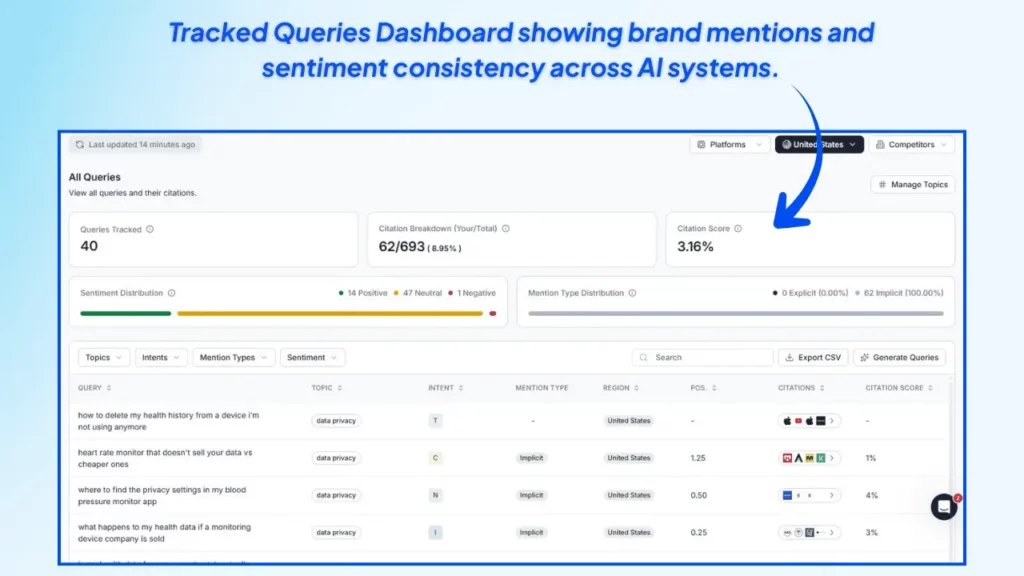
Across 40 tracked queries, Abbott earned citations in 62 of 693 total AI responses, with most activity centered on data privacy concerns—such as deleting device data, privacy settings, and how companies handle stored health information.
These queries show where AI systems most frequently reference Abbott, revealing that privacy-focused topics currently drive the strongest visibility and should remain a priority for future AI-optimized content.
Monitor Performance Over Time
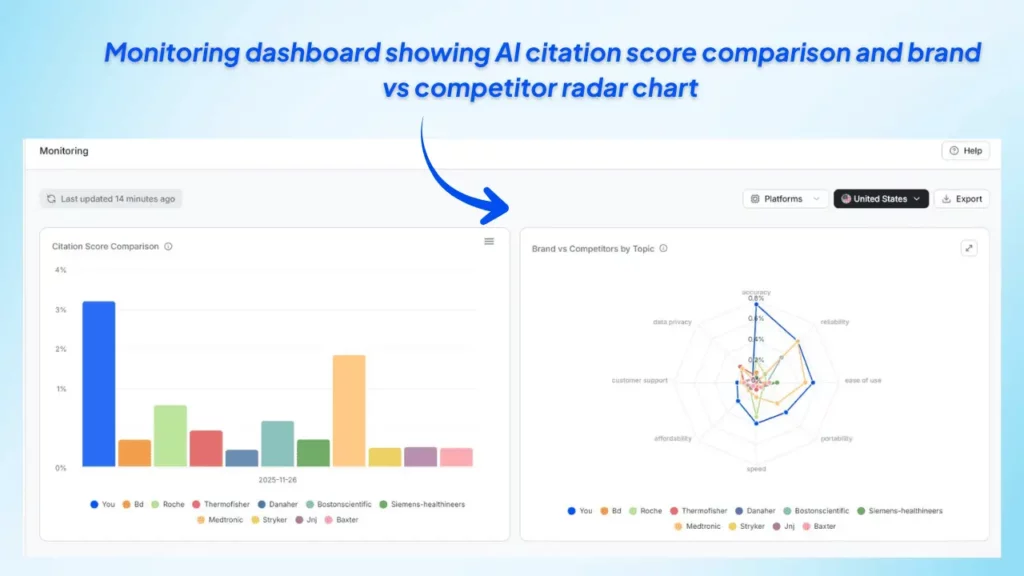
The monitoring dashboard shows Abbott sustaining a clear lead in AI visibility, consistently outperforming major competitors like Medtronic, Roche, and Boston Scientific. Citation scores remain significantly higher across key dates, while topic-level radar charts highlight Abbott’s ongoing strength in accuracy, reliability, and ease of use. These steady patterns confirm that Abbott’s brand signals continue to resonate across generative AI systems.
Wearable Device Brand AI Search Presence
Recent evaluations show that while some brands consistently surface across major AI search platforms, others are still struggling to gain meaningful visibility.
A study from Avenuez highlighted that 70% of all AI mentions were concentrated among just ten brands, with Apple leading by appearing in nearly 75% of AI responses.
Factors Influencing AI Search Visibility:
Brands that perform well in AI-driven discovery typically follow a shared playbook:
- Credible Editorial Mentions: Coverage from respected publications strengthens a brand’s authority signals.
- Well-Structured Official Content: Clear, detailed, and semantically rich product pages help AI systems understand and recommend the brand.
- Engaged Communities: Active participation in forums, social channels, and user discussions boosts visibility and trust.
Tips for Improving Medical Equipment Visibility in Generative AI
Generative AI systems—such as Google’s AI Overviews, ChatGPT Search, Perplexity, and clinical LLMs—are rapidly becoming the first place clinicians, procurement teams, and patients look when researching medical equipment. To ensure your devices are consistently recognized and recommended by these AI engines, brands must optimize not just for traditional SEO but for AI-driven discovery signals.
Here’s how to strengthen your visibility:
1. Build a Strong Entity Profile
AI models rely on entity understanding. Clearly define your brand, product categories, and device capabilities across:
- Your website
- Knowledge panels
- Wikis (corporate + product)
- Third-party databases
- Medical directories
Structured, consistent information helps AI confidently identify and recommend your equipment.
2. Publish Evidence-Based, Expert-Reviewed Content
Generative AI prioritizes medically credible sources. Improve authority by producing:
- Whitepapers
- Clinical validation studies
- Expert-authored articles
- Comparison guides with scientific backing
Include citations, outcomes, and methodology details—AI models look for these signals when determining trustworthiness.
3. Optimize Product Pages for AI Retrieval
Your product pages should be more than brochures. Include:
- Detailed technical specs
- FDA/CE approvals
- Indications for use
- Contraindications
- Performance metrics
- Compatibility details
Use structured data (schema.org/medicaldevice) to help AI interpret your pages correctly.
4. Strengthen Digital Footprint Through Third-Party Mentions
Generative AI often cross-references external sources. Increase presence by securing:
- Mentions in reputable healthcare publications
- Reviews from medical influencers or clinicians
- Listings on procurement platforms
- Citations in industry research
These external signals validate your authority to AI systems.
5. Encourage Community and Professional Engagement
AI models weigh public and expert discussions. Encourage:
- Case studies from clinicians
- Testimonials shared on LinkedIn and medical forums
- Participation in Reddit medical communities
- Feedback on procurement platforms
Community conversations make your products more discoverable.
6. Use Semantic SEO and Medical Taxonomy
AI understands concepts more than keywords. Use:
- Medical terminology
- UMLS and SNOMED-aligned language
- Procedure-based context (e.g., “used in laparoscopic surgery”)
- Symptom/condition framing
This helps AI map your device to clinical intent queries.
7. Keep Regulatory and Safety Information Up to Date
AI penalizes outdated or incomplete medical information. Maintain:
- Updated regulatory filings
- Current safety notices
- Recall history (if applicable)
- Version changes and new model releases
- Fresh and transparent data boosts credibility with AI evaluators.
8. Leverage AI-Ready Media Assets
AI models increasingly interpret multimodal content. Include:
- Annotated product images
- High-resolution clinical-use photos
- Technical diagrams
- Short explainer videos
These help AI systems better understand functionality and use cases.
9. Optimize for GEO (Generative Engine Optimization)
With generative search reshaping discovery, adopt GEO practices like:
- Structuring content for answer-generation
- Highlighting product differentiators clearly
- Using FAQs designed for LLM interpretation
- Creating content that directly solves “clinical intent” queries
This positions your products to appear directly in AI-generated answers.
10. Monitor Your AI Footprint and Fill Gaps
Regularly evaluate:
- How often your brand appears in AI answers
- Which competitors are outranking you
- Missing specifications or unclear claims
- Weak presence in clinical or procurement discussions
Proactively filling these content and authority gaps boosts AI visibility over time.
Discover how AI-driven visibility strategies apply across industries. Each guide offers actionable insights to strengthen brand authority in AI-generated answers within its niche.
- AI Search Visibility for Automotive Brands: Be recognized in AI-powered car research, comparisons, and buying advice.
- AI Search Visibility for Hospitality Brands: Understand how hotels and resorts can improve entity signals, GEO alignment, and citation consistency in AI-driven travel discovery.
- AI Search Visibility for Banking & Financial Services Brands: Get cited in AI money management, budgeting, and lending insights.
- AI Search Visibility for Environmental & Sustainability Brands: Appear in sustainability queries.
- AI Search Visibility for Consumer Electronics Brands: Guide covering metadata, spec clarity, and AI-optimized device visibility.
- AI Search Visibility Audit Checklist: A practical framework to measure, fix, and grow your brand’s citations across major AI search platforms.
FAQs
Conclusion
AI has officially become the new decision-maker in HealthTech discovery. Clinicians, procurement teams, and patients now turn to generative AI tools before they ever visit a website — and the brands that show up in those answers are the ones shaping buying decisions, clinical workflows, and market leadership.
Your visibility no longer depends on ranking high in traditional search results. It depends on whether AI systems can understand, trust, and recommend your medical device when it matters most. As Abbott’s analysis showed, even industry leaders risk losing ground when implicit mentions go uncited, entity signals remain unclear, or competitors dominate emerging AI categories.
The path forward is clear: strengthen your entity foundations, build expert-validated content, optimize product pages for LLM retrieval, and expand your digital footprint through credible third-party mentions. Pair this with consistent GEO practices and ongoing monitoring, and your brand won’t just appear in AI-driven conversations — it will lead them.
In the AI-first era of 2025 and beyond, HealthTech and medical device companies that invest early in AI search visibility will gain a durable competitive advantage. The question is no longer “Can people find your products?” It’s “Will AI choose your products?” And now, you have the roadmap to make sure the answer is yes.