TL;DR
| Answer Wikipedia is a real but small slice of AI citations, and it matters far more on ChatGPT than elsewhere. |
The range One large study found 7.8% of ChatGPT citations and 0.6% on AI Overviews. A small one found 1.1% overall. |
| Have a page Audit it for accuracy, keep Wikidata consistent, and request changes openly. |
No page Earn independent coverage first. Notability is a result of that coverage, not a target. |
| Never No undisclosed paid edits, no promotional edits and no editing your own page without disclosure. |
Measure Track wikipedia.org as a cited domain on your own prompts, per engine. |
Wikipedia drives some AI citations, but how many depends on the engine and on how you count. One large study found Wikipedia made up 7.8% of all ChatGPT citations and 0.6% of Google AI Overviews citations, while a smaller study found 1.1% of citations across four engines. ChatGPT is the engine that leans on it most.
This guide compares the published numbers, explains Wikipedia versus Wikidata versus your own pages, and sets out what brands with and without a page can do. It also covers what Wikipedia’s rules forbid, because the wrong move can hurt your brand.
1Does Wikipedia drive AI citations?
Yes, but the share is modest and uneven. Here are two published studies side by side. Both come from companies that sell AI visibility services, and neither is a neutral benchmark.
| Large citation study | Small answer study | |
|---|---|---|
| Sample | About 680 million citations, ChatGPT, Google AI Overviews and Perplexity | 288 answers: 24 questions, 3 runs, 4 engines |
| ChatGPT | 7.8% of all citations | Named Wikipedia in 17 of 72 answers (23.6%) |
| Google AI Overviews | 0.6% of all citations | No Wikipedia figure reported |
| Perplexity | Below the published top-10 lists | Named Wikipedia in 0 of 72 answers |
| Gemini and Claude | Not covered | Named Wikipedia in 0 of 72 answers each |
| Overall | Not reported | Cited in 1.1% of citations |
Quotable stat
In one study of about 680 million citations, Wikipedia was 7.8% of ChatGPT citations and 0.6% of Google AI Overviews citations (source). In a small four-engine study, only ChatGPT named Wikipedia in its answers (source).
The studies measure different things, so do not merge the numbers. The first counts share of all citations and also publishes a share of each platform’s top ten sources, which is far higher for ChatGPT at 47.9%. The second counts how often Wikipedia is named in an answer, from one day of API outputs, with only 72 answers per engine. Neither gives a figure for B2B prompts.
The takeaway is cautious. Wikipedia matters most on ChatGPT, matters little on several other engines, and no study tells you the figure for your own prompts. Measure that yourself, as the last section shows.
2Does ChatGPT cite Wikipedia?
More than the other engines in the studies above. The large study found Wikipedia’s share was highest on ChatGPT, at 47.9% of its top ten sources, and in the small study ChatGPT was the only engine of four to name it. ChatGPT also draws on its training knowledge, so Wikipedia can shape an answer without appearing as a link.
Do not generalize from that to every engine. Perplexity and Google AI Overviews cite Wikipedia far less in the same data, so a Wikipedia strategy will move some engines and leave others unchanged.
3Which sources do AI models cite: Wikipedia or our own pages?
Both, and many others. Engines with search retrieve pages for the question, then cite sources for parts of the answer. Google documents this for Gemini with search grounding (Gemini API documentation). The result is a mix of reference sites, review pages, forums, publisher pages and brand sites, depending on the prompt.
| Source | Best at | You control it? |
|---|---|---|
| Your own pages | Product facts, pricing, claims and proof | Yes |
| Wikipedia | Neutral, sourced background on notable subjects | No, and you should not try to |
| Review and community sites | Opinions and “best for” comparisons | Partly |
| Press and industry publications | Independent coverage | Earned, not controlled |
See how engines pick sites in our guide to how AI selects sites to cite, and how to place your brand on the other third-party sources in our guide to LLM seeding.
4What is the difference between Wikipedia and Wikidata for AI visibility?
Wikipedia holds written articles. Wikidata holds structured facts about items, such as a company’s name, founding and website. Both are volunteer-edited. No engine documents exactly how it uses either, so treat the benefit as unproven and focus on what you can verify: the facts must be right and match everywhere else.
| Wikipedia | Wikidata | |
|---|---|---|
| Format | Written articles with citations | Structured facts about items |
| Who edits | Volunteers, under strict rules | Volunteers and bots |
| Your action | Audit, then request corrections openly | Check the item for wrong or missing facts |
| Risk | Promotional or undisclosed edits get reverted | Unsourced or wrong edits get reverted |
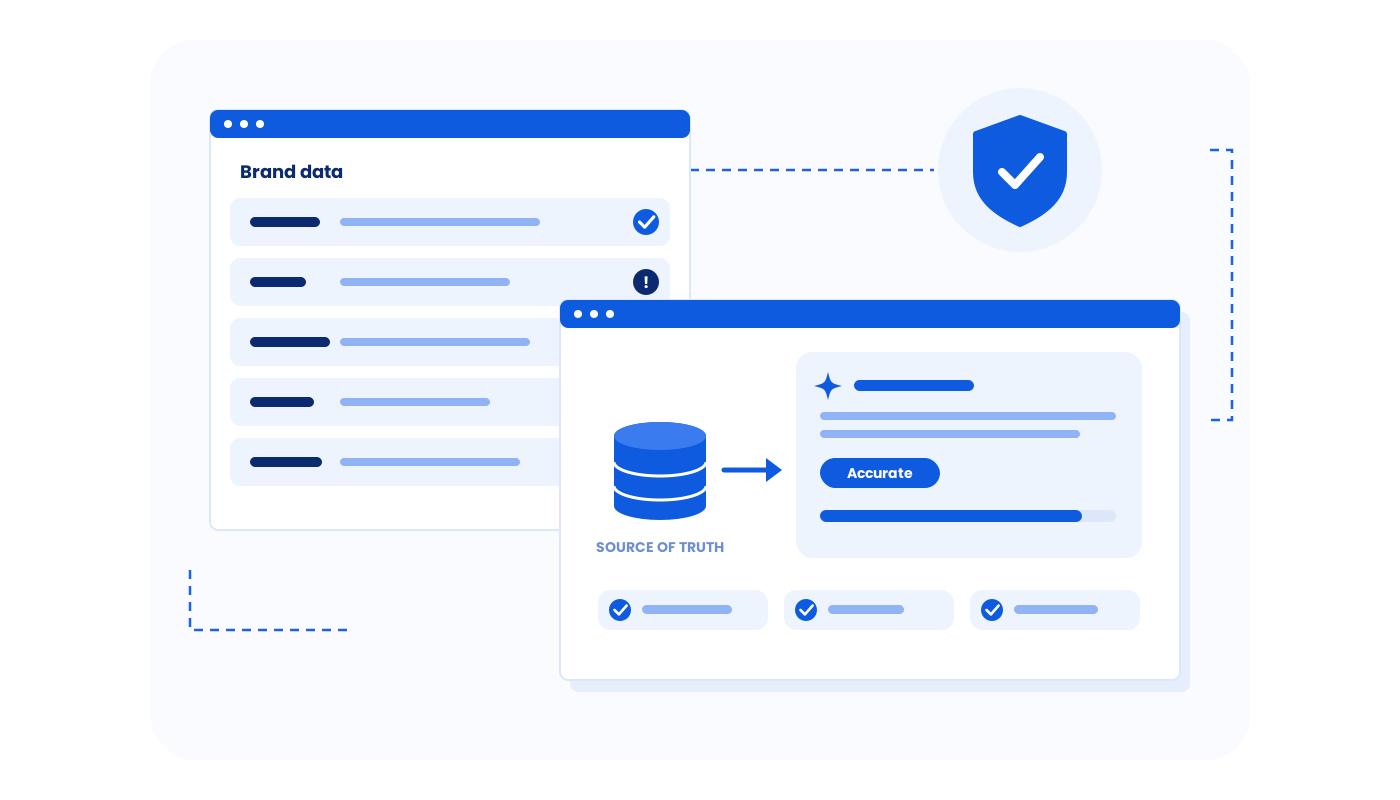
Keep the same facts in your brand kit and on your own pages, so every source agrees. Our guide to managing brand data for citation accuracy shows how, and entity-based content covers the entity side.
5Brands with a Wikipedia page: audit it and keep Wikidata consistent
If you already have a page, check it as you would any source that engines read. Do it as a reader first, and as an editor only within the rules.
| 1 | Read the article and list every fact about your brand: description, founding, products, leadership and links. |
| 2 | Compare each fact with your brand kit and flag anything wrong, old or unsourced. |
| 3 | Check the sources the article cites. Weak or dead sources are a risk to the facts around them. |
| 4 | Request corrections on the article’s talk page, with a reliable independent source for each change. |
| 5 | Check your Wikidata item for the same facts, and keep it consistent with your site. |
| 6 | Repeat the audit regularly, and rerun your AI prompts to see whether answers change. |
If you have a conflict of interest, Wikipedia’s guideline says to propose changes on the talk page, use an edit request, and make only uncontroversial edits yourself, such as fixing a typo or reverting vandalism (Wikipedia conflict of interest guideline).
6Brands without a page: earn coverage in the sources Wikipedia cites
If you have no page, the way forward is independent coverage, not a page for its own sake. Wikipedia needs significant coverage of a subject in reliable sources that are independent of it. Press releases, your own site and routine announcements do not count. The notability rules are Wikipedia’s to apply, and many companies do not meet them.
The same coverage helps AI visibility without a page, because engines also cite the publications, analysts and reviewers who write about you. Focus on original research, expert commentary and customer stories that others report on. If your brand is a young B2B company, expect to invest here first, and treat a Wikipedia page as a possible later result.
For the other third-party sources, such as publishing platforms, forums and review sites, see our LLM seeding guide.
7How do I get my company on Wikipedia?
Only through Wikipedia’s own process, and only if the company is notable. These steps follow the conflict of interest guideline. They are not a promise of a page.
| 1 | Check whether independent, reliable sources have covered your company in depth. |
| 2 | Declare your connection. Paid editors must disclose their employer, client and affiliation, and you should not create a shared company account. |
| 3 | Draft a neutral, sourced article in plain language, without marketing wording. |
| 4 | Submit it for review through Wikipedia’s draft process, or ask on a relevant talk page, rather than publishing it yourself. |
| 5 | Accept the outcome. Reviewers can decline a draft, and you should not argue it into existence. |
8What not to do
What not to do
- Do not pay for edits without disclosure. Paid editors must disclose their employer, client and affiliation under the Wikimedia Terms of Use.
- Do not edit your own company’s article directly. The guideline advises people with a close financial tie to avoid editing the affected articles.
- Do not write promotional content. Paid promotional editing may be presumed to violate the neutrality policy.
- Do not use a company or shared account. The guideline says not to use an organization’s name as an account name.
- Do not buy a page from a vendor that promises one. Notability and review decide, not payment.
- Do not fake coverage to meet the notability bar. Google also says artificial mentions are not helpful.
The risk is practical as well as ethical. Edits that break the rules get reverted, and a flagged page can harm your reputation more than having no page.
9How do I measure the impact of Wikipedia on my AI visibility?
Formula: Wikipedia citation share
Share % = answers that cite wikipedia.org ÷ total answers run × 100, per engine, on a fixed prompt set.
Measure it for the prompts that matter to you, and run each prompt several times.
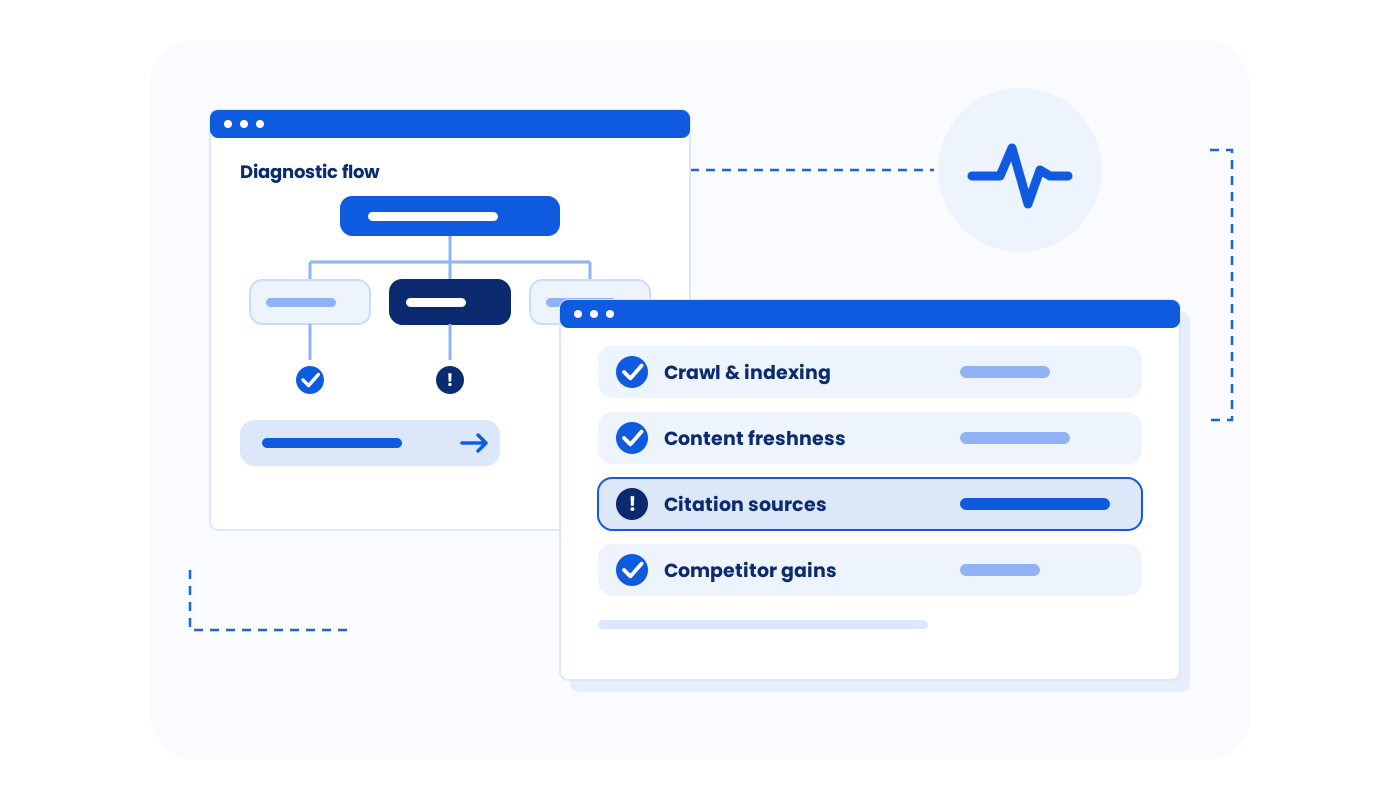
Track it before and after any audit or correction, using the same prompts, and read it alongside your mention and citation rates. See our guides to AI mention tracking and how to track AI referral traffic in GA4 for the visit side. A change in Wikipedia citations that does not move your own citations or visits is a sign to look elsewhere.
What only Wellows adds
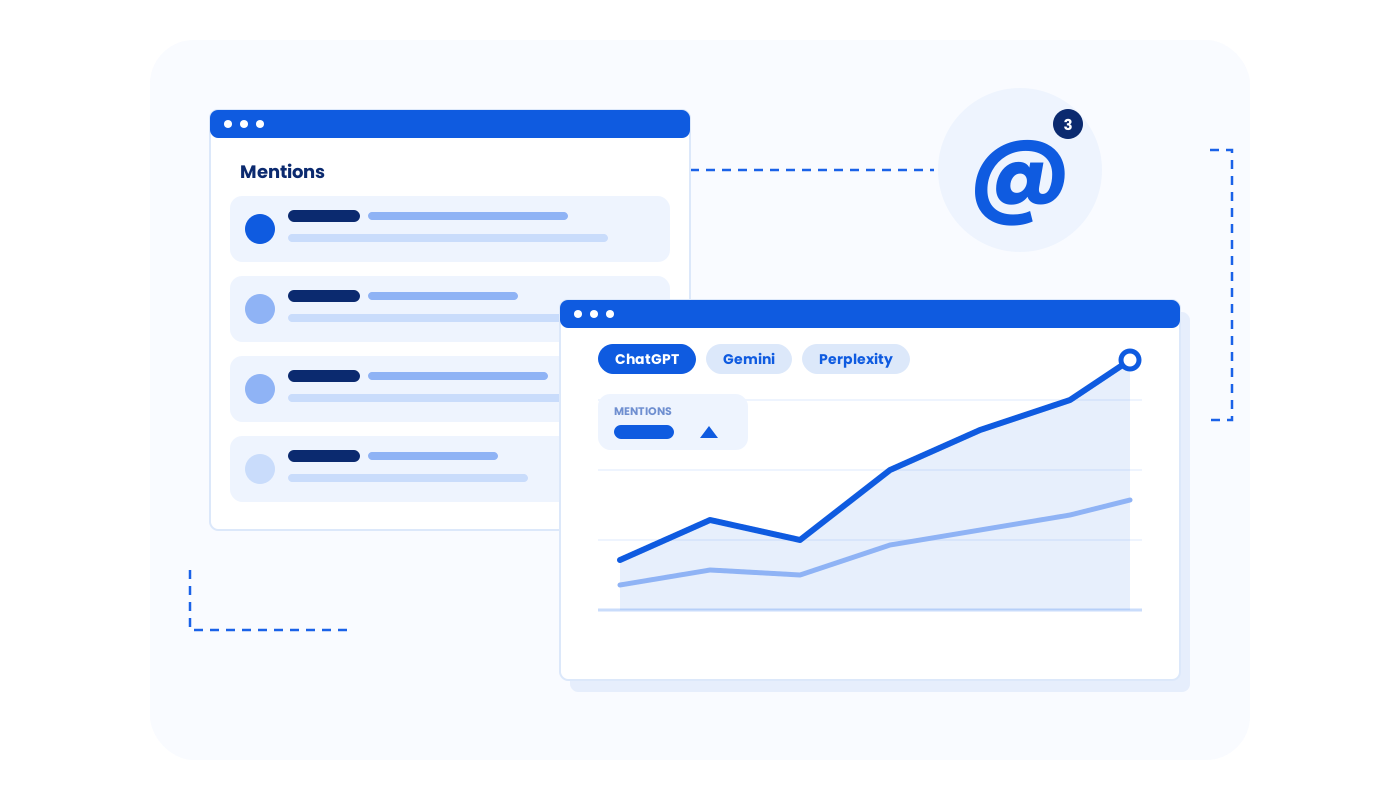
Published numbers cannot tell you what AI says about your brand. Wellows LLM Citations tracks the URLs that ChatGPT, Google AI Overviews, Google AI Mode, Perplexity and Gemini cite for each of your prompts, so you can see whether Wikipedia appears at all for your category and how often. It refreshes every 24 hours.
It also tracks implicit citations, the times you are not cited but another page about your topic is. This is your shadow reputation, and it is the narrative that AI engines create based on pages you have not written. Wikipedia can be one of those pages, and so can the press, reviews and forums it draws on. Those pages are your outreach targets.
Start with a free look at the story one engine tells today, and the pages it cites.
Wikipedia and AI visibility: do and do not
| Do | Do not |
|---|---|
| Audit any existing page for facts, sources and tone | Edit your own company page directly |
| Request corrections on the talk page with independent sources | Pay for edits without disclosure |
| Keep Wikidata and your own pages consistent | Write promotional wording |
| Earn independent press, analyst and reviewer coverage | Fake coverage to pass notability |
| Measure Wikipedia citation share on your own prompts | Assume one study applies to your category |
Conclusion
Wikipedia is a real source for AI engines, mostly ChatGPT, and a small one overall. Keep any existing page accurate and consistent with Wikidata, earn independent coverage if you have no page, and follow Wikipedia’s rules without exception. Measure Wikipedia citation share on your own prompts this week before you invest further.