AI-driven search is reshaping how legal clients discover and evaluate law firms. Instead of browsing multiple pages, buyers now use ChatGPT, Google Gemini, and Lexis+ AI for instant attorney comparisons and corporate legal guidance. These systems summarize expertise inside the answer itself, shifting visibility from rankings to citations.
Legal buyer behavior has shifted significantly. In 2025, more than 70% of professional-services buyers used generative AI during vendor evaluation (G2 Buyer Behavior Report, 2025). Google’s AI Overviews now appear in 13% of global searches, reducing organic clicks by 79%(BrightEdge, 2025).
As clients depend on generative answers for legal guidance, AI visibility for legal brands determines who gets recommended first. Many firms question why competitors law firms rank higher in AI results, but the reasons are structural: cleaner attorney schema, verifiable credentials, richer authority signals, and more consistent entity data.
Stronger AI visibility directly improves client acquisition, credibility, and attorney reputation at the moment prospects are making decisions.
What Does AI Search Visibility Mean for Legal Services?
AI search visibility for legal services refers to how often a law firm, attorney, or practice area is mentioned or cited inside AI-generated answers from platforms like ChatGPT, Google Gemini, and Lexis+ AI. Visibility now depends on in-answer recognition, not just search rankings.
Artificial intelligence search presence for law firms is shaped by how well AIs can interpret legal entities, attorney bios, jurisdictions, case types, and trust signals. These systems evaluate factual consistency, bar association data, published case outcomes, reviews, and authoritative legal sources before citing a firm. This interpretation process aligns closely with the principles of Generative Engine Optimization (GEO), which defines how structured legal data is processed by AI systems.
Compared with traditional search engine optimization for professional services, which focuses on keywords and backlinks, AI visibility prioritizes structure and verification. When users ask “best corporate attorney for startups” or “top firms for compliance issues,” AIs surface results from transparent, machine-readable data, not just optimized pages.
How Can AI Improve Search Visibility for Legal Brands?
As clients turn to generative systems for rapid legal guidance, many firms now ask: How can AI improve search visibility for legal brands? AI elevates visibility by evaluating attorney credentials, case outcomes, jurisdictional relevance, and trust signals, then citing the most credible firms inside its answers.
Generative Engine Optimization (GEO) structures legal data so AIs can interpret it accurately. GEO connects attorney bios, bar memberships, practice areas, precedents, and compliance details to the correct entity, allowing systems like ChatGPT, Gemini, and Lexis+ AI to confidently reference the firm.
Did you know?
To improve visibility across LLMs, firms must maintain unified attorney data, verified citations, structured practice-area content, and authoritative third-party references. These signals help AI systems trust your information, and recommend your brand in key legal decision moments.
Legal Services GEO Best Practices
Mastering legal services GEO best practices begins with structuring your legal entity data clearly. AI systems must understand the hierarchy of firm → attorney → practice area → case types to match your expertise with user intent in generative answers, and this depends on clean visibility signals shaped by consistent entity structure such as those found in generative engine visibility factors.
Attorney bios should follow a uniform format: bar memberships, jurisdictions, years of experience, key verdicts, certifications, and published work. Adding clear compliance statements, disclaimers, and service boundaries helps AIs categorize legal offerings correctly, which becomes even more important when considering how SEO vs GEO influences the way legal entities are interpreted.
Case summaries should be factual and structured, highlighting the matter type, role, outcome, and legal context. Verified reviews from Chambers, Martindale-Hubbell, Google, or Avvo strengthen authority because AI models heavily rely on trusted external validation.
Did you know?
Applying these GEO principles ensures your legal data is machine-readable, credible, and complete, making your firm more visible in AI-led legal evaluations.
How to Get Attorneys Mentioned in AI Legal Answers
AI systems increasingly determine which attorneys appear in legal recommendations, making firms ask: how to get attorney mentioned in AI legal answers? AIs evaluate verifiable expertise, credentials, bar associations, jurisdictions, verdicts, case history, awards, and peer recognition, to decide which attorneys they can safely cite in legal guidance.
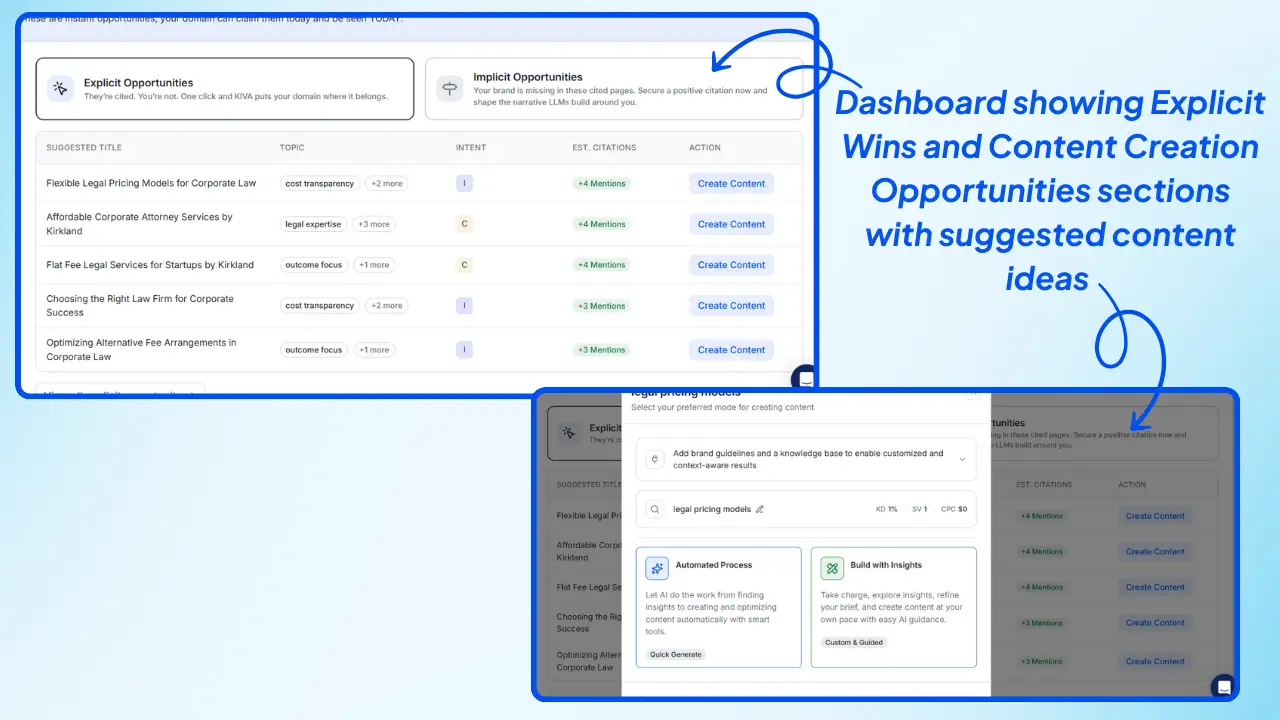
Firms lose explicit mentions when attorney bios lack standardized credentials, contain vague case descriptions, or display outdated practice-area information. Cleaning these signals restores attorney-level visibility.
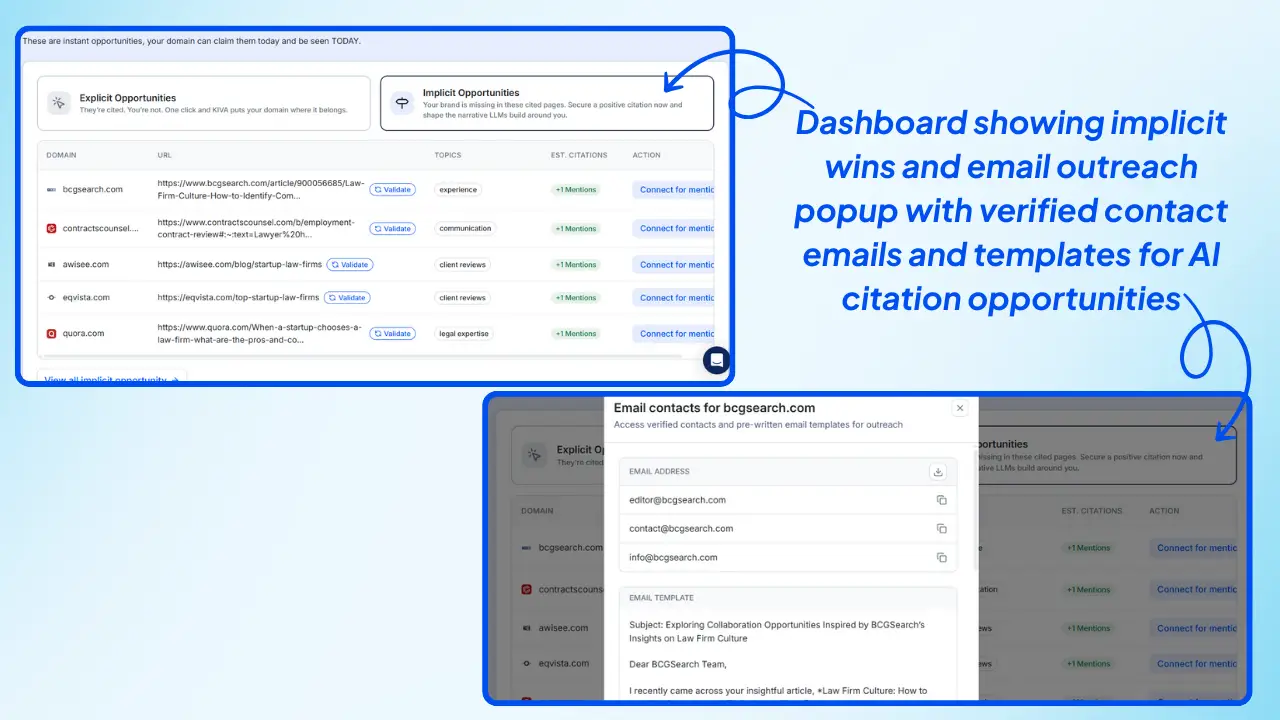
Improving structured data, clarifying roles in past cases, and reinforcing attorney specializations helps convert implicit recognition into named citations.
Attorney visibility relies on citations, not backlinks. AIs prioritize factual, consistent records such as publications, court filings, professional memberships, and validated case involvement. When attorney data is complete, structured, and supported by authoritative sources, AI models gain confidence and surface the attorney more often in legal comparisons and advisory responses.
Why Competitor Law Firms Rank Higher in AI Results
Many firms now ask why their competitors appear more frequently in generative answers. The core issue is structural: why competitors law firms rank higher in AI results comes down to cleaner data, stronger authority signals, and more consistent legal entity structures.
Together, these factors explain why competitors law firms rank higher in AI results. AI does not reward volume, it rewards clarity, credibility, and verifiable legal expertise.
AI Tools for Law Firm SEO
Modern firms now rely on AI tools for law firm SEO to understand how often they appear inside generative answers from ChatGPT, Google Gemini, Lexis+ AI, and Perplexity. These tools reveal whether attorneys, practice areas, or the firm itself are cited, mentioned, or omitted in legal recommendations.
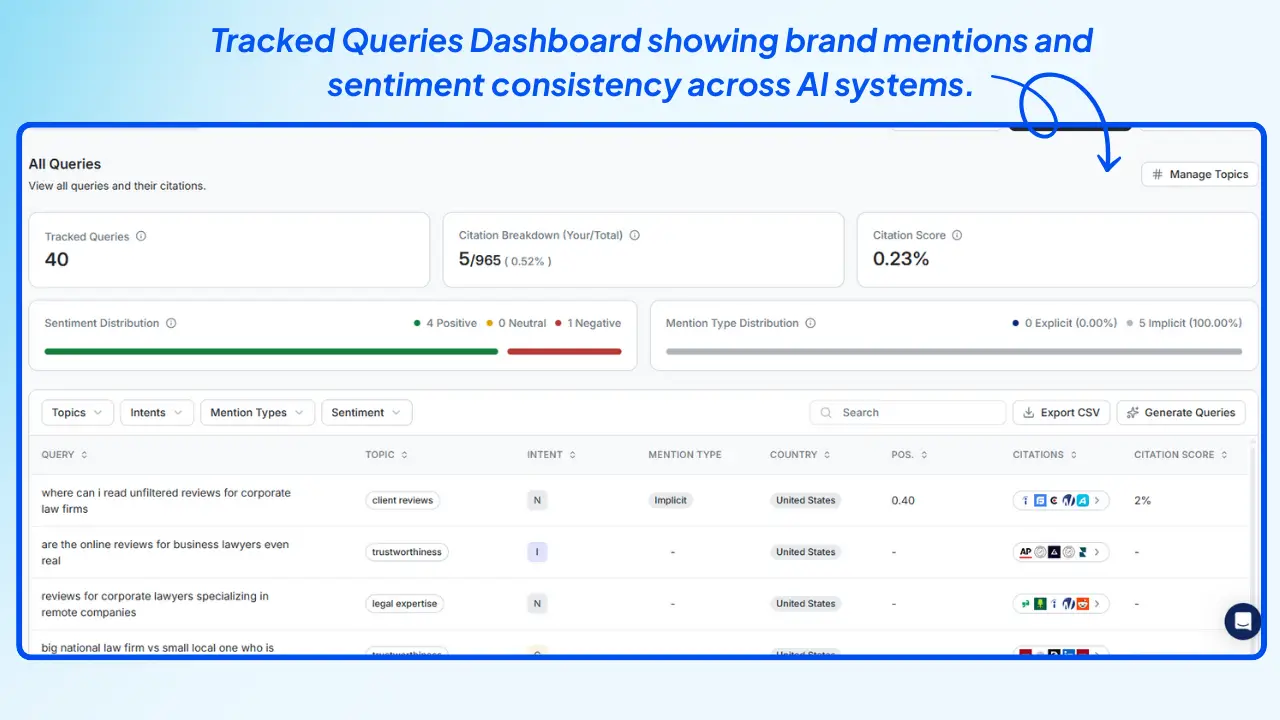
Wellows track explicit and implicit citations across major LLMs. Explicit mentions show where the firm or attorney is named directly; implicit mentions highlight where your expertise is used but credit is given to a competitor with clearer metadata or stronger trust signals.
These tools also uncover missing citations, pages where competing firms appear but yours does not. Identifying these gaps helps improve attorney schema, strengthen practice-area pages, and refine entity consistency so AI models can confidently reference your firm.
Using AI visibility tools such as AI visibility audits ensures your legal brand stays measurable, comparable, and optimizable across emerging generative search systems.
What Types of Legal Services Benefit Most From AI Visibility?
Many firms now ask: What types of legal services benefit from AI visibility? The answer begins with high-intent practice areas where clients rely heavily on AI assistants for fast clarity, corporate law, immigration, personal injury, intellectual property, and employment matters. These categories generate high search volume and require trust-driven decision-making.
AI systems surface attorneys based on data quality, not keywords. Structured case histories, verified credentials, clear jurisdictional data, and authoritative reviews determine which firms appear inside generative responses.
Common conversational queries include: “best corporate attorney for startups,” “top immigration lawyer for H-1B guidance,” “who handles serious injury claims in my state,” “patent lawyer for SaaS companies,” or “employment lawyer for wrongful termination.” Each query triggers AI to match attorneys based on structured expertise signals.
Practice areas with strong, machine-readable data gain more citations, making them more visible to clients during critical decision moments.
Legal Tech Platform AI Presence Improvement
As generative systems increasingly guide how legal teams evaluate software, vendors are prioritizing legal tech platform AI presence improvement. Tools for e-discovery, contract automation, matter management, and billing appear in AI-generated summaries when their product data is structured, consistent, and verifiable.
Legal tech SaaS platforms must supply machine-readable details: pricing tiers, compliance certifications (SOC 2, ISO 27001), data security practices, uptime guarantees, and integrations with tools like iManage, NetDocuments, Clio, or Salesforce. AI systems depend on these structured signals when recommending platforms for specific workflows.
Did you know?
Credibility also plays a decisive role. Reviews from G2, Gartner, ILTA, and LegalTech News validate reliability, shaping how AIs assess risk and performance. Without these third-party signals, tools often lose placement to competitors with stronger authority footprints.
When structured data, compliance details, and authoritative validation align, legal tech platforms surface more frequently in AI-driven comparisons and legal workflow recommendations.
How AI Interacts With Traditional SEO for Legal Brands
Many firms now ask: How does AI interact with traditional SEO for legal brands? While SEO and GEO share foundational principles, AI shifts the emphasis from keyword optimization to structured, verifiable legal data. Traditional SEO helps users find your pages; GEO ensures AI systems can correctly interpret and cite your attorneys and practice areas.
SEO focuses on rankings, backlinks, and content relevance. GEO focuses on entity accuracy, bar memberships, jurisdictions, case types, attorney experience, compliance statements, and authoritative reviews. For AI assistants, clarity and fact consistency matter far more than keyword repetition.
AI models evaluate legal trust signals such as attorney credentials, verdict history, third-party validation (e.g., Chambers, Martindale, Avvo), sentiment quality, and regulatory compliance. These signals determine whether a firm is safe and credible enough to cite inside generative answers.
Ultimately, SEO brings visibility to search engines, but GEO ensures your brand is accurately represented across AI-driven legal recommendations.
Key Components of AI Search Visibility for Legal Services
Many firms ask: What are the key components of AI search visibility? AI platforms evaluate a blend of structured legal data, authority signals, and trust indicators to determine which attorneys and firms they can confidently cite in generative answers.
AI models weigh these components collectively. Firms with consistent, verifiable, and well-structured legal data earn more frequent citations in AI-driven legal summaries and attorney comparisons.
How Legal Brands Can Track AI Mentions & Benchmark Competitors
The Kirkland.com Wellows dataset shows how firms can measure generative visibility through citation score, tracked queries, sentiment analysis, and competitive benchmarking. This data aligns with generative visibility research such as the ChatGPT visibility experiment, revealing where competitors win citations, and where your firm can close critical visibility gaps.
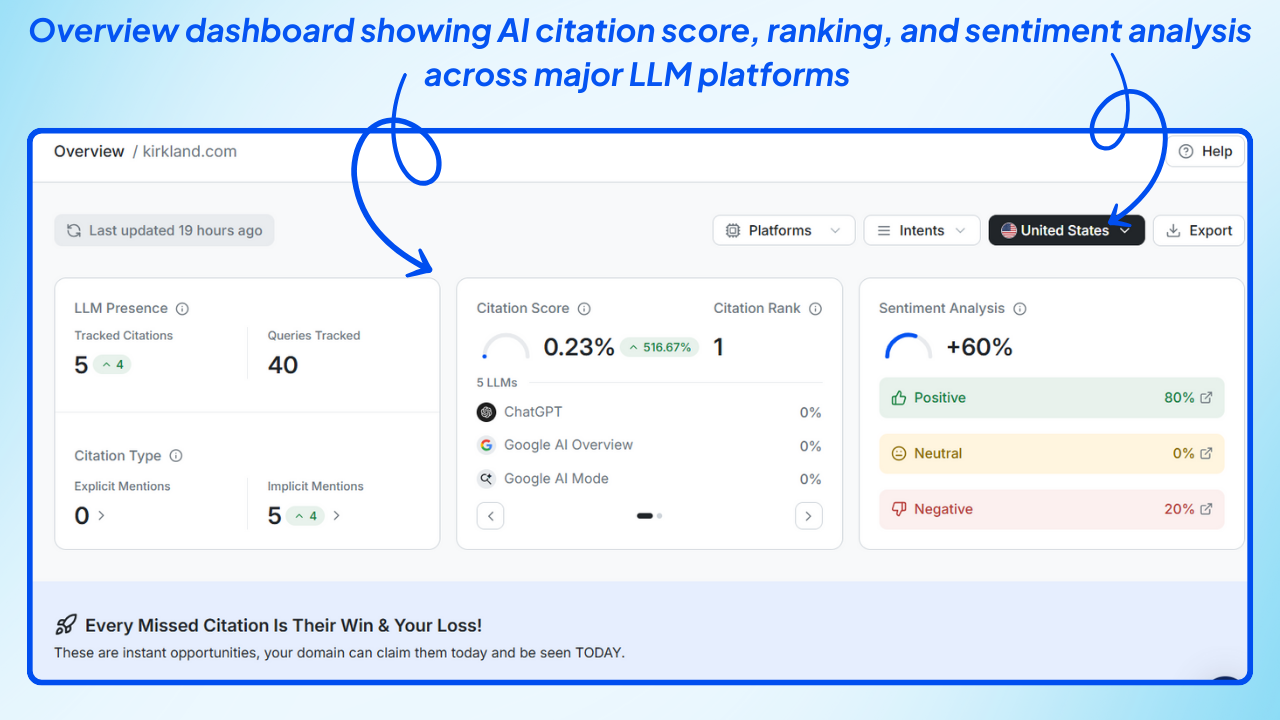
Citation score insights: Kirkland.com holds a 0.04% citation score, driven entirely by 1 implicit mention and 0 explicit mentions. This indicates that AI references the firm indirectly but does not credit it directly.
Tracked queries analysis: Wellows monitored 40 legal queries involving corporate law, attorney reviews, and startup-focused services. Most queries surfaced competitors like Sidley and Cravath, highlighting under-optimized entity signals for Kirkland.
Implicit opportunities: Kirkland appears in contextual answers but loses attribution to firms with stronger schema, such as Sidley, Latham, and Skadden. These implicit mentions represent immediate, high-impact opportunities to strengthen structured attorney data and earn explicit citations.
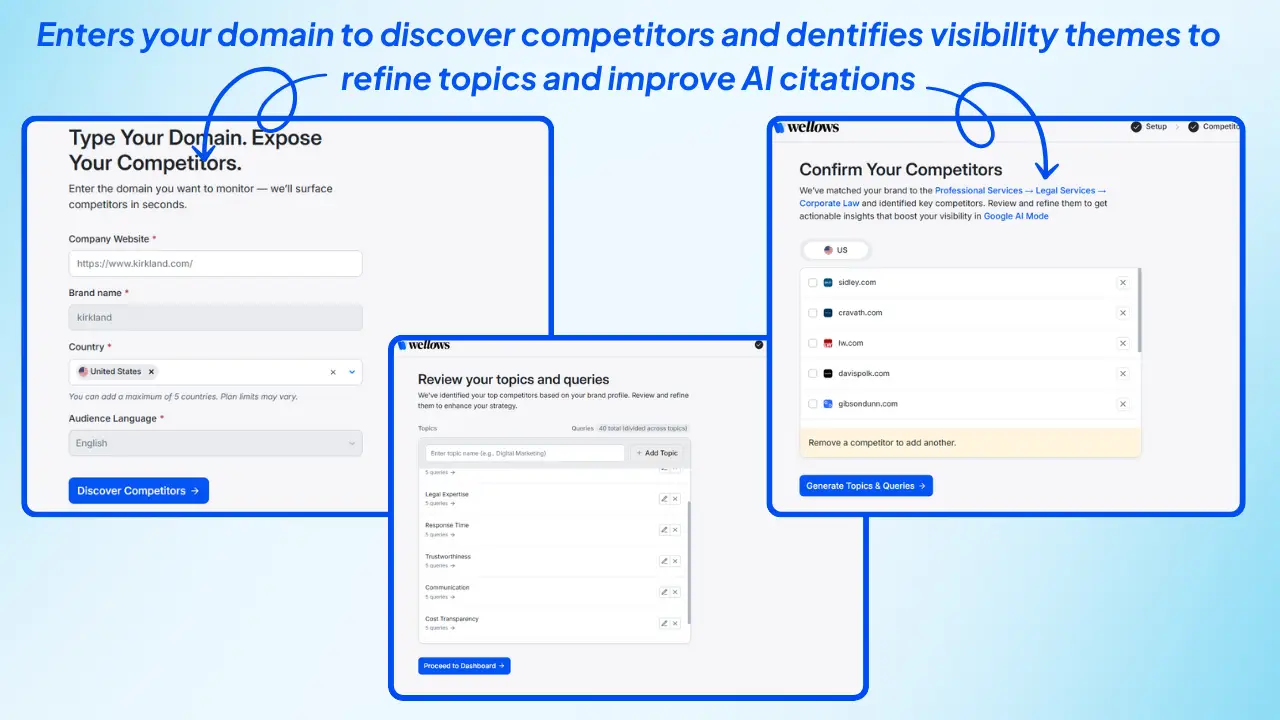
Competitor radar insights: Benchmarking shows Sidley, Cravath, and Latham outperform Kirkland in trust categories like client reviews, attorney experience, and practice-area authority. Minimal topic coverage signals inconsistent entity architecture on Kirkland’s side.
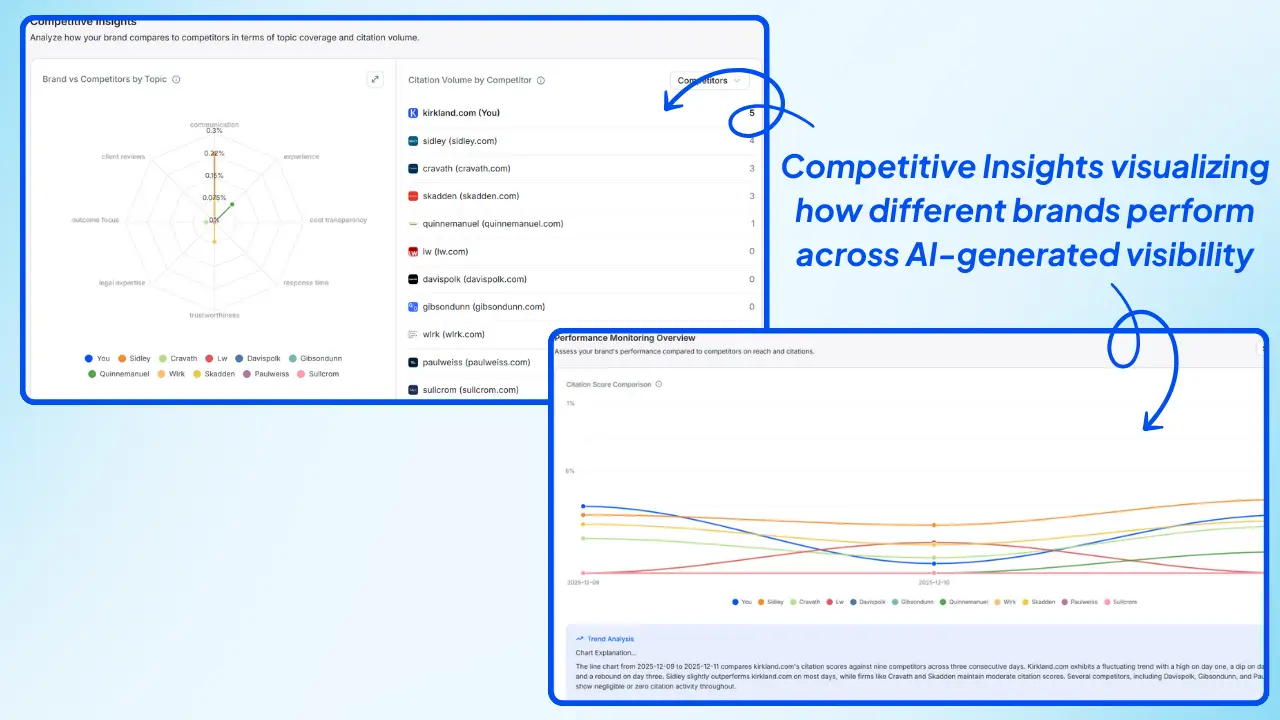
Wellows also flags explicit opportunities, pages where competitors are cited but Kirkland is absent. These include topics like cost transparency, startup legal services, and trusted corporate law support. Strengthening attorney schema, enriching verdict data, and improving review signals help firms convert these gaps into visibility gains.
By optimizing entity consistency, reinforcing external authority, and acting on implicit opportunities, legal brands can raise generative visibility and outperform competitors in AI-driven legal evaluations.
Curious how visible your legal brand is inside AI engines?
Strategies to Improve AI Presence for Legal Services Brands
As AI-driven research becomes the default, firms must adopt modern digital marketing strategies for law firms that improve generative visibility, strengthen trust signals, and ensure attorneys are cited accurately inside AI-led legal recommendations. Many of these principles are already reflected in effective strategies for AI visibility enhancement used across high-authority industries.
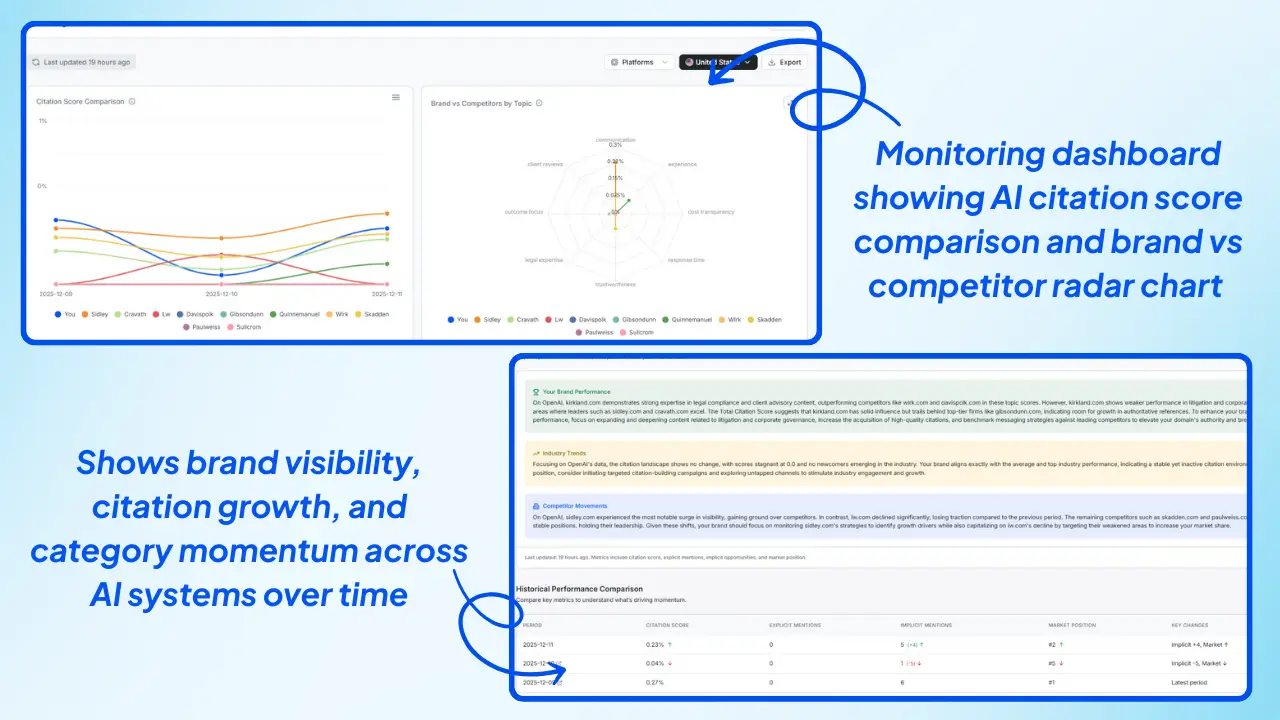
Combined, these strategies help firms secure more citations, appear in intent-driven AI answers, and close visibility gaps against better-structured competitors. Improving legal visibility often requires a balanced approach that combines SEO and GEO so both search engines and AI systems can interpret legal expertise accurately.
Ready to accelerate AI visibility for your legal brand?
Common Challenges in AI Search Visibility for Law Firms & Legal Tech
Many firms now ask: What challenges exist in AI search visibility for law firms? The most significant obstacles come from regulatory constraints, weak structured data, and inconsistent attorney verification, elements that directly affect how AI systems assess legal credibility and risk.
Did you know?
| Challenge | Solution | Insight |
|---|---|---|
| ABA advertising rules | Provide factual, verifiable claims only. Use structured bios and avoid subjective language in attorney pages. | AIs deprioritize firms that risk regulatory violations or present unverifiable claims. |
| Jurisdictional limitations | List bar admissions, states served, and federal practice eligibility in machine-readable schema. | Without clear jurisdiction data, AIs avoid recommending attorneys for fear of legal mismatch. |
| Low schema adoption | Implement LegalService, Person, Review, and Organization schema for attorneys and practice areas. | Schema provides the structure AIs require to validate expertise and surface firms in generative answers. |
| Missing attorney verification | Ensure bar numbers, certifications, verdict summaries, and peer awards are consistently published. | AIs cannot cite attorneys without clear, verifiable expertise signals. |
| Sparse review signals | Strengthen profiles on Avvo, Martindale-Hubbell, Chambers, and SuperLawyers to reinforce credibility. | Third-party sentiment + authority significantly influence AI-generated attorney recommendations. |
These challenges weaken legal data integrity. Resolving them strengthens structured visibility, reduces AI risk concerns, and increases the likelihood of being cited in high-intent legal queries across generative platforms.
Market Insights: How AI Is Changing Legal Marketing
AI-driven research is reshaping legal marketing trends across the US. Clients no longer browse multiple law firm websites, they rely on ChatGPT, Google AI Overviews, Gemini, and Lexis+ AI for instant attorney comparisons, legal interpretations, and practice-area recommendations.
These shifts mirror broader visibility changes documented in search optimization myths costing visibility, where outdated SEO assumptions reduce placement in AI-driven environments.
Did you know?
Did you know?
Did you know?
Did you know?
These trends underscore the shift toward AI-mediated legal discovery. Firms that adapt early, by strengthening attorney entities, improving structured proof, and aligning with conversational intent, will lead the next era of legal marketing.
Audience Insights: What Different Legal Buyers Ask AI
Each legal buyer segment asks AI different types of questions, shaping how generative engines select which firms and attorneys to cite. Understanding these patterns helps firms align entity data with real client intent and mirrors the evolving relationship between prompts vs keywords.
Startups & early-stage companies. They ask prompts like “best corporate attorney for startups,” “flat-fee business formation lawyer,” and “who can review my investor agreements?” AI cites firms with strong corporate law schema, transparent pricing, and clearly structured attorney expertise.
SMBs & mid-market businesses. Their queries center on risk and operations: “employment lawyer for SMB disputes,” “contract review lawyer,” and “who handles compliance issues for small businesses?” AI elevates firms with strong employment law signals, jurisdiction-specific data, and consistent review sentiment.
Individuals seeking personal legal help. Common prompts include “immigration lawyer near me,” “best custody attorney,” and “top personal injury lawyer in my city.” AI prioritizes attorneys with verified credentials, geographic specificity, and high authority on legal directories.
These audience-specific prompt patterns influence which law firms appear in generative summaries. Matching structured data and attorney entities to these intent clusters strengthens visibility where it matters most.
Did you know?
AI search visibility is now the foundation of brand discovery across multiple sectors. These industry guides show how organisations improve citations, entity accuracy, structured content, and sentiment signals to strengthen their presence inside generative answers.
- AI Search Visibility for Mobile Apps Businesses: Improve app discovery through AI recommendations, task-based queries, and generative assistant comparisons.
- AI Search Visibility for Fashion & Apparel Brands: Build stronger AI citations with consistent sizing data, trend indicators, and structured product details.
- AI Search Visibility for HR & Recruiting Brands: Improve placement in AI-driven employer evaluations, HR tech recommendations, and ATS tool comparisons.
- AI Search Visibility for Gaming Brands: Strengthen game discoverability with structured metadata, genre clarity, and cross-platform consistency.
- AI Search Visibility for Insurance Brands: Enhance visibility in AI-driven policy comparisons, risk evaluations, and claims guidance.
- AI Search Visibility for IT Services Brands: Improve visibility in AI-driven evaluations of IT consulting, cloud services, cybersecurity offerings, and managed service providers.
Insight: Brands that maintain structured metadata, consistent sentiment, and cross-channel accuracy earn stronger placement inside generative answers, gaining a measurable advantage in AI-powered discovery.
FAQs
AI improves visibility for legal service providers by interpreting structured attorney data, case types, and jurisdictional details to match user intent precisely. When firms publish machine-readable bios, verified certifications, and consistent practice-area metadata, AI systems surface them more often in generative answers. This increases visibility across corporate law, litigation, immigration, and personal legal queries.
AI-enhanced search visibility refers to the lift law firms gain when generative engines, like ChatGPT, Gemini, and Lexis+ AI, cite their attorneys, practice groups, or case expertise. Unlike traditional SEO, AI visibility depends on structured legal schema, bar verification, third-party reviews, and jurisdiction clarity. Firms with consistent data structures appear more frequently in AI-led legal recommendations.
AI algorithms evaluate law firm authority using structured attorney data, bar records, case results, compliance notes, and authoritative reviews from platforms like Martindale-Hubbell and Chambers. AIs look for consistency, jurisdiction alignment, and sentiment stability. When these trust signals are strong, AI systems treat the firm as credible and are more likely to cite it inside legal recommendations.
Legal brands can increase AI visibility by strengthening schema, publishing verifiable attorney proof (bar numbers, verdicts, certifications), and maintaining accurate profiles across directories. AI platforms also reveal missing citations and competitor advantages. Aligning practice-area content with conversational queries, such as “best employment lawyer for SMBs”, increases generative visibility.
Structured PR, articles, interviews, case studies, awards, provides authoritative data AIs use to validate attorney reputation. When PR content includes clear entity references and verifiable achievements, AI models treat it as a trust-building signal. This strengthens attorney authority and increases citation frequency in AI-generated summaries and legal comparisons.
Entity consistency ensures attorney names, practice areas, jurisdictions, certifications, and case types match across websites, directories, and publications. AI models penalize inconsistent or contradictory profiles because they indicate unreliable data. Consistent entities increase trust and help AIs confidently match attorneys to high-intent legal queries.
Conclusion: AI Visibility as the New Growth Engine for Legal Services
As client behavior shifts toward conversational search and AI-generated legal guidance, citations, not rankings, now determine who gets discovered, trusted, and contacted. Law firms that invest in structured legal data, verified attorney expertise, jurisdiction clarity, and credible review signals earn more placements inside generative responses across ChatGPT, Gemini, Perplexity, and Lexis+ AI.
GEO optimization strengthens these signals by ensuring attorneys, case types, verdicts, and compliance details are machine-readable and consistent across the legal ecosystem. Wellows help firms monitor AI citations, uncover implicit opportunities, benchmark competitors, and close visibility gaps before they become market disadvantages.
The firms that embrace AI visibility now, not later, will define the next era of legal marketing, outperforming competitors through trust, accuracy, and authoritative presence across every AI-driven discovery channel.