Enterprise AI visibility is already shaping how brands are discovered and evaluated in digital search experiences , and the data shows why this matters for long-term brand presence.
AI search adoption on traditional engines is growing rapidly; an estimated 5.6% of U.S. desktop search traffic is now routed to AI-powered platforms, more than double the share from a year earlier (Wall Street Journal, 2025).
For enterprises, these trends expose a strategic challenge. Traditional SEO success, driven by rankings and clicks , no longer guarantees visibility inside AI-powered answers, recommendations, or summaries.
Instead, AI systems increasingly rely on entity clarity, contextual credibility, and multi-source reinforcement when deciding which brands to cite or surface. Without an intentional enterprise AI visibility strategy, even well-established brands risk being absent from the AI-driven experiences where modern users increasingly seek answers.
What Is an Enterprise AI Visibility Strategy and Why It’s Not SEO
An enterprise AI visibility strategy defines how an organization governs brand representation across AI-driven search and answer systems. It aligns entities, data ownership, and brand signals so AI systems can consistently recognize and reference the business across sources.
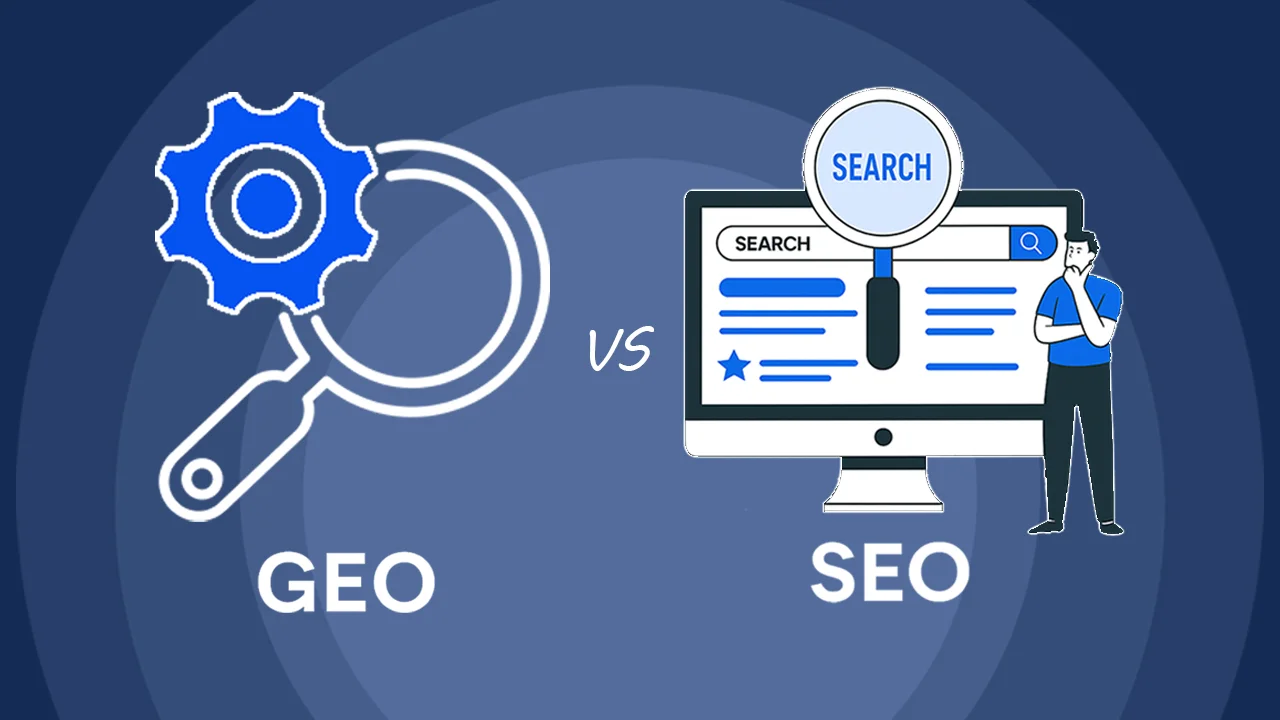
SEO focuses on making individual pages discoverable. AI visibility focuses on how the brand itself is interpreted. This distinction becomes critical in large organizations where signals are produced by multiple teams, regions, and platforms. The limitation of page-level execution is especially clear in SEO vs GEO differences, where consistency, not optimization, determines visibility.
Did you know?
Because AI systems synthesize information from many external sources, visibility depends on consistency at the brand and entity level, not individual page performance. Without this layer, enterprises often rank well but appear inconsistently in AI-generated answers.
What Does AI Visibility Mean in Enterprises vs. Traditional Search
In enterprise contexts, AI visibility reflects whether a brand is referenced, cited, or trusted inside AI-generated answers rather than how highly its pages rank. This distinction explains why many large brands maintain strong organic positions yet fail to appear consistently in AI responses that increasingly influence discovery and evaluation.
Traditional search rewards page-level relevance and technical optimization, while AI search engine visibility depends on how reliably AI systems recognize and trust a brand as an entity across multiple sources.
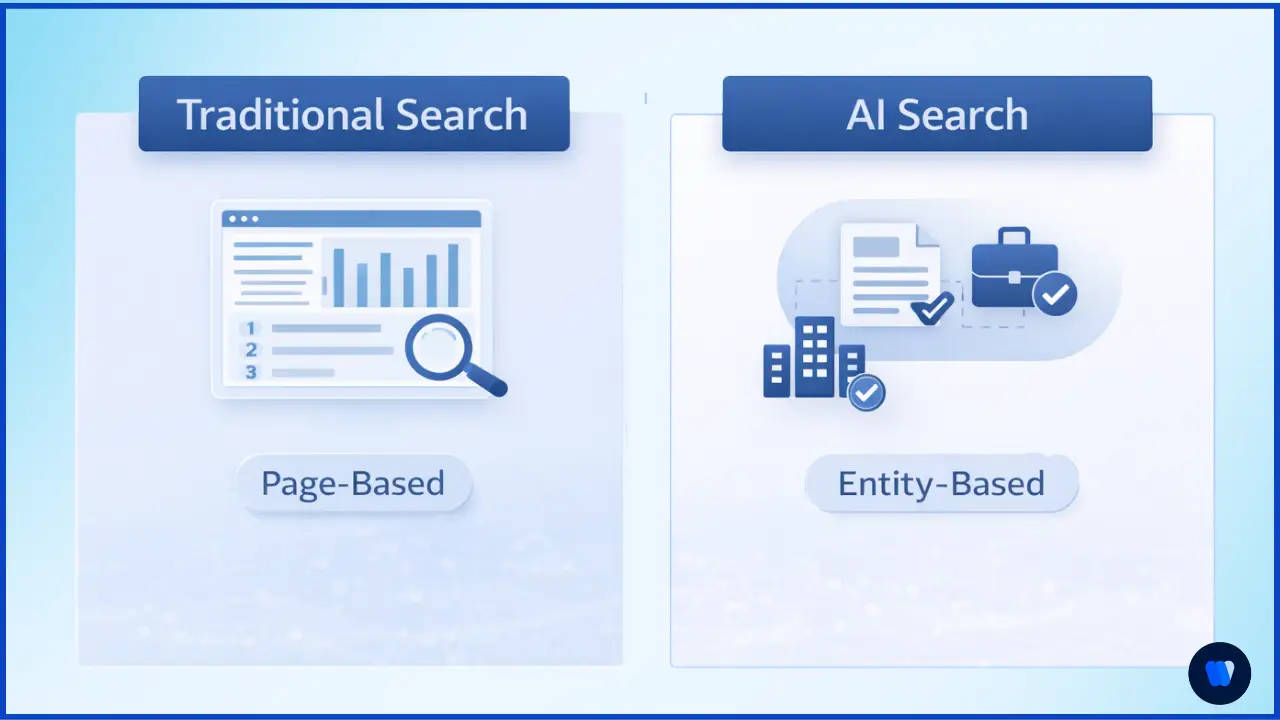
| Traditional Search | AI Search Systems |
|---|---|
| Rankings | Mentions & citations |
| Page-based | Entity-based |
| Traffic-driven | Trust-driven |
Because AI-generated answers prioritize entity trust over page performance, enterprises often encounter a visibility gap where authority exists but recognition does not. Addressing this gap requires aligning how AI systems interpret the brand across the ecosystem, not improving individual page rankings in isolation.
The Enterprise AI Visibility Framework Most Brands Are Missing
Most enterprises approach AI visibility as an execution problem when it is fundamentally a structural one. An effective enterprise AI visibility framework defines how people, systems, and signals work together so AI systems can consistently understand and trust the brand across search and generative answer environments.
This framework does not prescribe tactics. Instead, it establishes the conditions that determine whether AI systems can reliably interpret enterprise-scale brands, especially when content, data, and authority are distributed across teams, regions, and platforms.
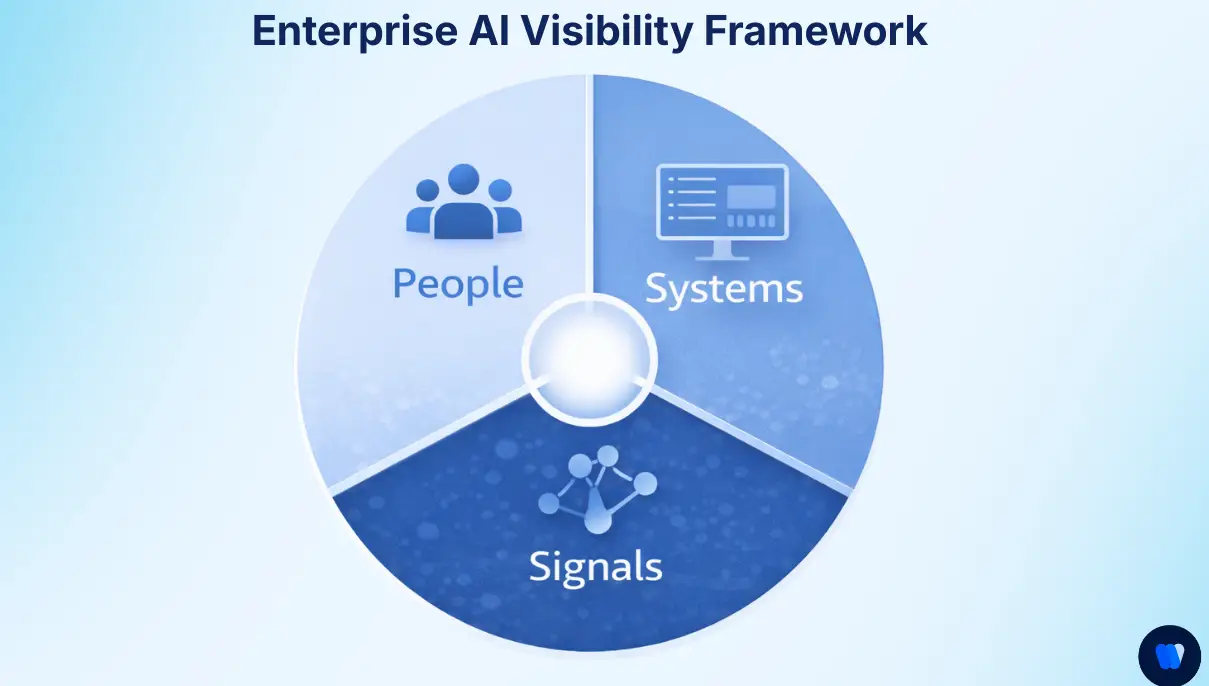
People: Clear ownership of brand entities, content standards, and data accountability ensures AI systems encounter consistent representations rather than conflicting narratives.
Systems: Enterprise platforms must expose information in formats AI systems can process and reconcile, including the use of structured data in LLMs to reduce ambiguity across sources.
Signals: AI systems prioritize repeated, contextually aligned references, which is why entity-based content plays a critical role in reinforcing trust and recognition at scale.
| Framework Layer | Primary Outcome |
|---|---|
| People | Consistent brand interpretation across teams and regions |
| Systems | Improved AI retrievability and reduced entity ambiguity |
| Signals | Higher trust and citation likelihood in AI-generated answers |
Without this framework in place, enterprises often invest in optimization efforts that fail to translate into AI visibility, not because the tactics are wrong, but because the underlying structure prevents AI systems from forming a coherent understanding of the brand.
Did you know?
Why Most Enterprise AI Strategies Fail at Implementation
Enterprise AI strategies rarely break at the technology layer. They fail at the organizational level, where ownership, approvals, and compliance models are misaligned with how AI systems interpret and trust enterprise brands.
Did you know?
Did you know?
Did you know?
Did you know?
These failures compound over time. Until enterprises address how teams, approvals, and governance interact, even well-funded AI initiatives struggle to translate into consistent visibility within AI-generated answers and recommendations.
In contrast, most of the FinTech Startups often bypass this bottleneck by embedding AI visibility principles into product marketing from day one, enabling faster iteration and consistent citation in AI results.
How to Implement an Enterprise AI Visibility Strategy Without Breaking Governance
Implementing an enterprise AI visibility strategy is less about execution speed and more about coordination. The goal is to align teams, systems, and accountability so AI systems receive consistent signals, without disrupting legal, compliance, or brand governance structures.
- Strategy alignment comes first: Enterprise leadership defines what the brand represents in AI-driven environments and who owns those definitions. This alignment ensures visibility decisions are intentional and shared across marketing, data, legal, and product teams.
- Governance enables consistency, not control: Clear standards guide how information is created and approved across regions and teams. Using structured SEO briefs helps teams produce consistent signals without adding friction to existing approval workflows.
- Signals reinforce trust at scale: Once governance is in place, enterprises focus on how AI systems interpret recurring references, terminology, and context. This is where pattern recognition in AI answers becomes critical, as repeated, aligned signals increase recognition and citation likelihood.
- Measurement validates alignment: Visibility is monitored at the brand and entity level, not page level. Enterprises assess whether AI systems consistently recognize and reference the brand across answers, summaries, and recommendations.
By sequencing strategy, governance, signals, and measurement in this order, enterprises can improve AI visibility without bypassing controls or introducing risk. The result is alignment that supports scale, compliance, and long-term brand trust.
Why Data Visibility Strategies Determine AI Search Outcomes
Why Business Intelligence Strategies Don’t Translate to AI Visibility
Business intelligence strategies are designed to help enterprises understand performance after user interactions occur. They rely on dashboards, attribution models, and historical data to explain what happened. AI visibility, however, depends on whether AI systems can understand, trust, and reference a brand before any interaction takes place.
This mismatch creates blind spots. BI tools surface insights from clicks, impressions, and conversions, while AI systems form answers based on entity understanding, contextual consistency, and external validation.
These gaps become especially visible when examining AI visibility tracking blind spots, where traditional analytics fail to capture how brands appear inside AI-generated answers.
| Business Intelligence (BI) | AI Visibility |
|---|---|
| Measures performance after engagement | Determines brand presence before engagement |
| Dashboard and report-driven | Entity and context-driven |
| Relies on clicks, traffic, and conversions | Relies on mentions, citations, and trust signals |
| Optimized for human analysis | Optimized for AI interpretation |
Because BI strategies explain outcomes rather than shape AI interpretation, enterprises often assume visibility exists when it does not. AI visibility requires understanding how systems generate answers, not just how users behave after seeing them.
Enterprise AI Monitoring Plans: Measuring Visibility Beyond Rankings
Enterprise AI monitoring plans focus on understanding how brands appear inside AI-generated answers, not how pages rank in traditional search. For large organizations, visibility must be evaluated at the brand and entity level, where mentions and citations influence trust long before any click occurs.
This requires a shift in measurement philosophy. Instead of relying on rankings and traffic as proxies, enterprises assess whether AI systems consistently recognize, reference, and surface the brand across different query types and answer formats. This approach reframes visibility as presence, not performance.
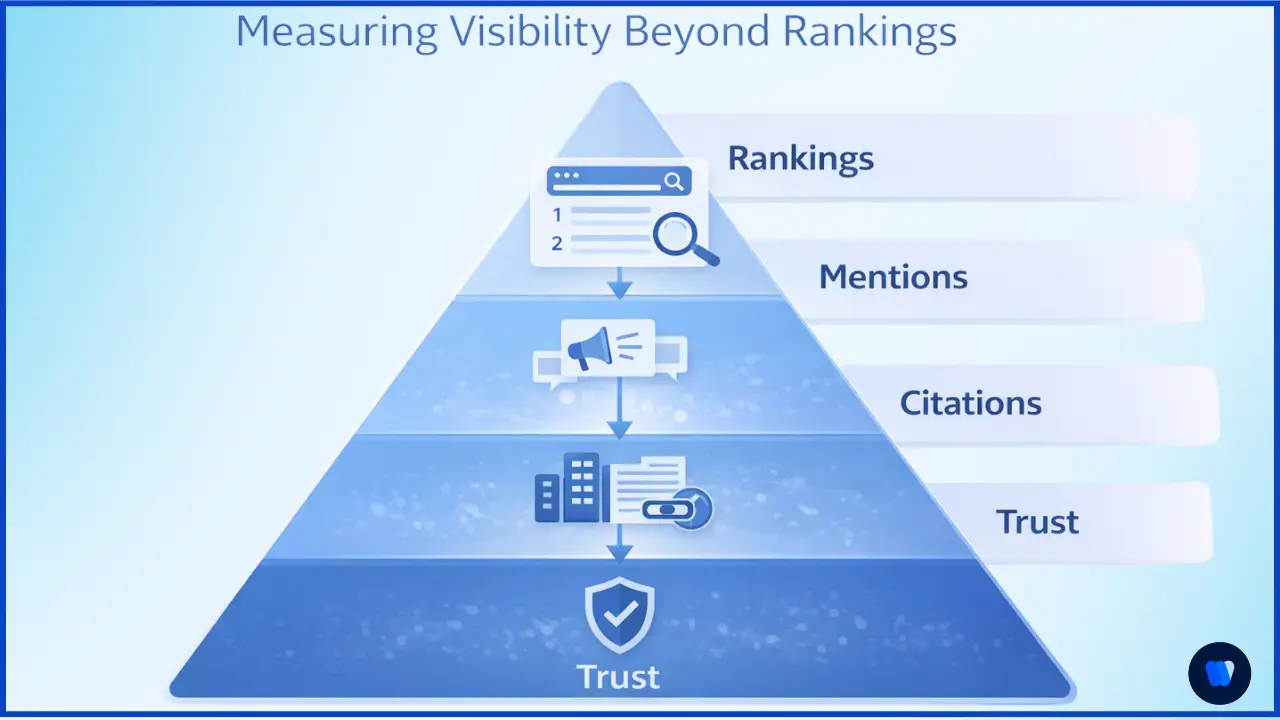
Answer presence: Monitoring whether the brand appears directly in AI-generated responses across informational, comparative, and recommendation-based queries.
Citation consistency: Evaluating how often the brand is referenced as a source, which is why teams regularly audit brand visibility on LLMs to identify gaps.
Entity recognition: Assessing whether AI systems correctly associate products, services, and expertise with the brand rather than with competitors or generic entities.
Visibility alignment: Understanding the rankings vs citations gap to determine where traditional SEO success fails to translate into AI mentions.
By monitoring these layers together, enterprises gain a clearer picture of AI visibility that rankings alone cannot provide. This approach helps large organizations detect visibility loss early and align teams around signals that actually influence AI-generated answers.
AI Strategy for Businesses: Why Enterprises Need a Separate Visibility Layer
Most enterprise AI strategies focus on efficiency, automation, and internal decision-making. While these priorities improve operations, they do not address how AI systems outside the organization discover, interpret, and reference the brand. This gap is where AI visibility becomes a distinct strategic layer rather than an extension of marketing execution.
AI visibility operates upstream of demand and engagement. It influences whether a brand is included in AI-generated answers, recommendations, and summaries before users ever see a website or advertisement. As search behavior shifts, this separation becomes clearer within the broader SEO evolution in AI search, where visibility is shaped by entity trust and contextual understanding, not campaign performance.
For enterprises, treating AI visibility as a standalone layer enables clearer ownership, governance, and measurement. It ensures brand presence in AI systems is managed strategically across teams and regions, instead of being fragmented across marketing, data, and technology functions.
You can use the AI discoverability checklist for startups to build entity clarity and consistent visibility signals across generative systems.
Industry-Specific Enterprise AI Visibility Constraints
AI visibility constraints vary significantly by industry. Regulation, data sensitivity, and operating scale shape how AI systems interpret and trust enterprise brands, making a single visibility approach ineffective across sectors.
Financial Institutions
Entity ambiguity: Similar product names, subsidiaries, and overlapping brand entities create confusion for AI systems, a common challenge in AI visibility strategy for financial institutions.
Healthcare Organizations
Authority fragmentation: Hospitals, providers, research bodies, and service lines often operate under a single brand, complicating entity recognition in enterprise AI visibility strategy for healthcare.
Retail Enterprises
Brand dilution: Marketplaces, resellers, and third-party listings introduce conflicting representations, a recurring issue in enterprise AI visibility strategy for retail.
Across industries, these constraints limit how AI systems validate trust, not because enterprises lack authority, but because structural realities restrict how consistently that authority can be expressed and confirmed.
AI Transparency Strategy for Tech Companies and Platform Brands
For technology companies and platform brands, AI visibility depends on transparency. Clear disclosures, consistent entity definitions, and verifiable product information allow AI systems to attribute expertise and intent with greater confidence, increasing the likelihood of accurate mentions in AI-generated answers.
When transparency breaks down, AI systems respond conservatively. Opaque disclosures or shifting narratives introduce uncertainty, leading to generalization or exclusion, an effect closely tied to the great decoupling in AI search, where traditional authority no longer guarantees AI visibility.
An effective AI transparency strategy aligns what a platform claims, what users experience, and what external sources confirm. This alignment helps AI systems consistently understand the brand’s role, reducing misattribution and supporting sustained visibility across AI-driven search environments.
How an Enterprise AI Visibility Strategy Supports Long-Term Brand Growth
Enterprise brand growth in AI-driven search follows a predictable progression. Visibility is not the final outcome, it is the prerequisite that enables trust, preference, and long-term growth to compound over time.

- Consistent visibility builds AI trust: When AI systems repeatedly recognize and reference a brand across answers and summaries, they begin treating it as a reliable entity rather than an occasional source.
- AI trust reinforces brand authority: Trusted brands are more likely to be cited and recommended, strengthening brand signals in generative engines that shape how AI systems prioritize sources.
- Brand authority increases user confidence: Repeated AI mentions influence perception before users ever visit a website, reducing uncertainty and accelerating evaluation and consideration.
- User confidence supports sustainable growth: Over time, this cycle drives stronger demand, higher conversion efficiency, and resilience as discovery continues shifting toward AI-generated answers.
By treating AI visibility as a strategic layer rather than a campaign outcome, enterprises create durable growth driven by trust, recognition, and long-term brand equity.
How Wellows Operationalizes Enterprise AI Visibility
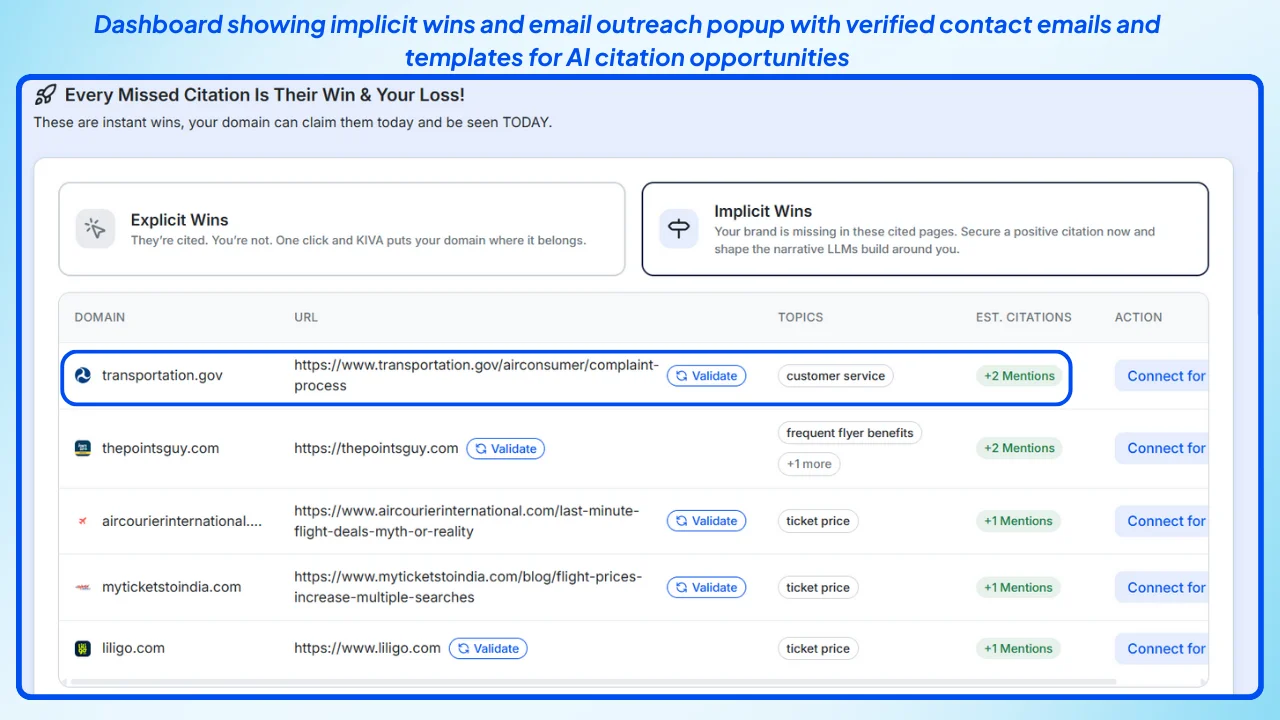
Wellows supports enterprise AI visibility by consolidating how brands are recognized, cited, and compared across AI-driven search systems. Instead of fragmenting visibility signals across tools, it brings brand mentions, citations, competitors, and contextual signals into a single, governed visibility layer.
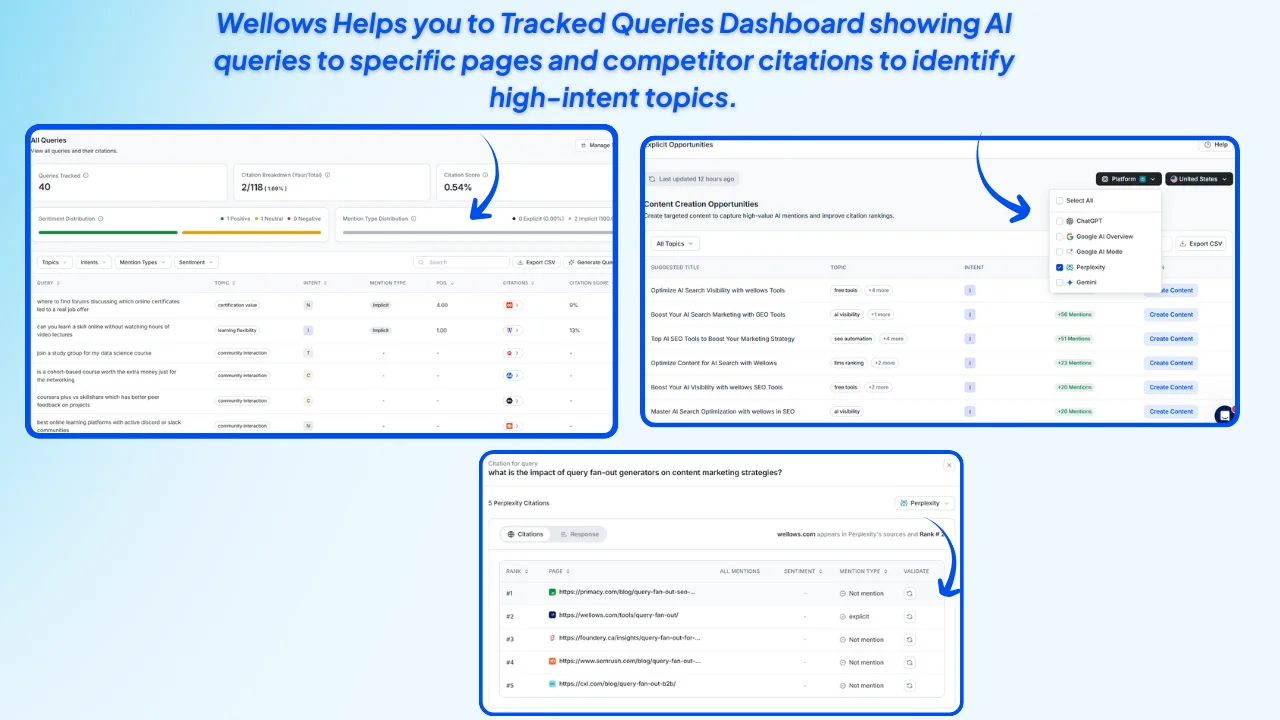
This unified view helps enterprises identify discovery gaps and visibility opportunities without relying on page-level metrics.

Daily visibility insights support proactive decision-making at scale.
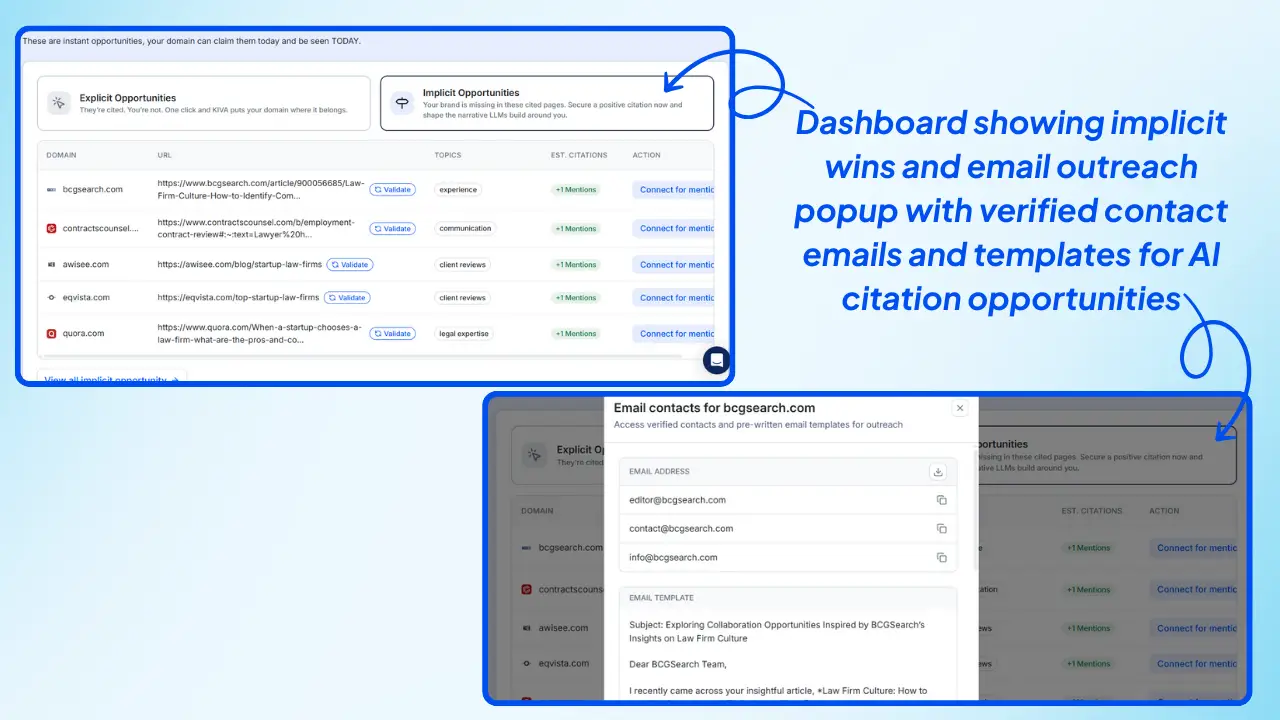 These signals often indicate early-stage recognition that enterprises miss using traditional analytics.
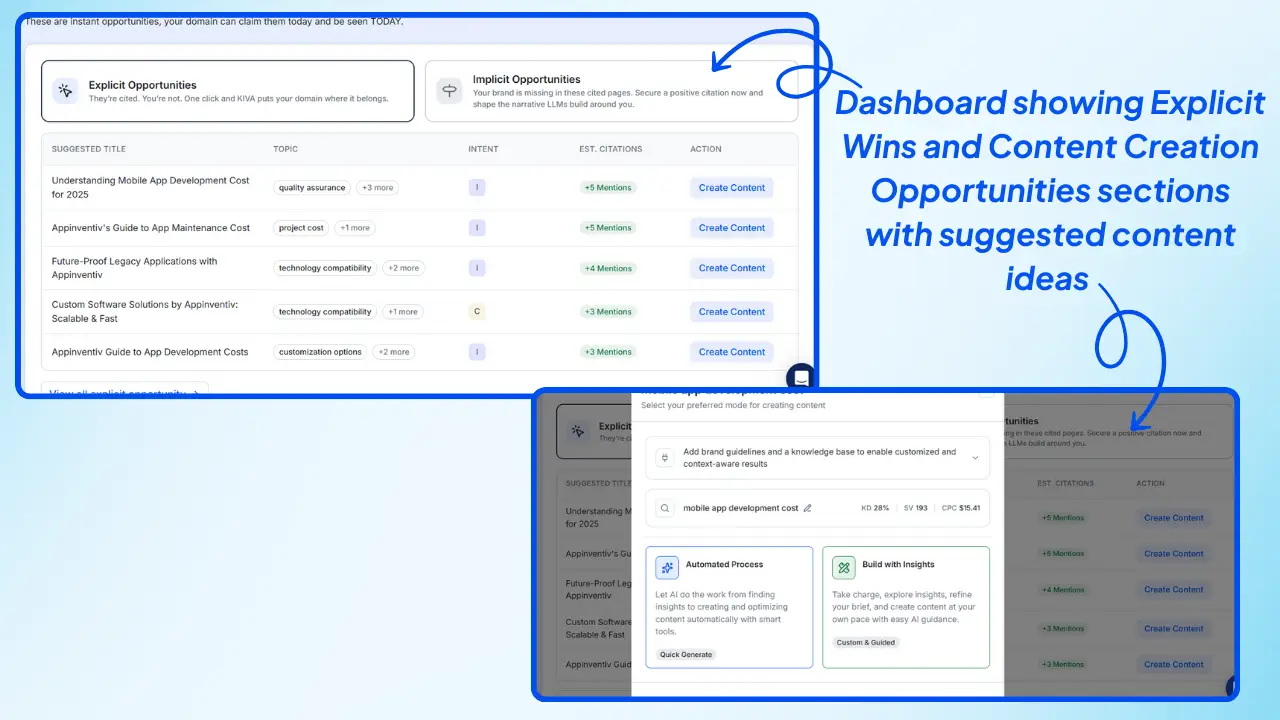 This helps teams understand where authority is being allocated externally.
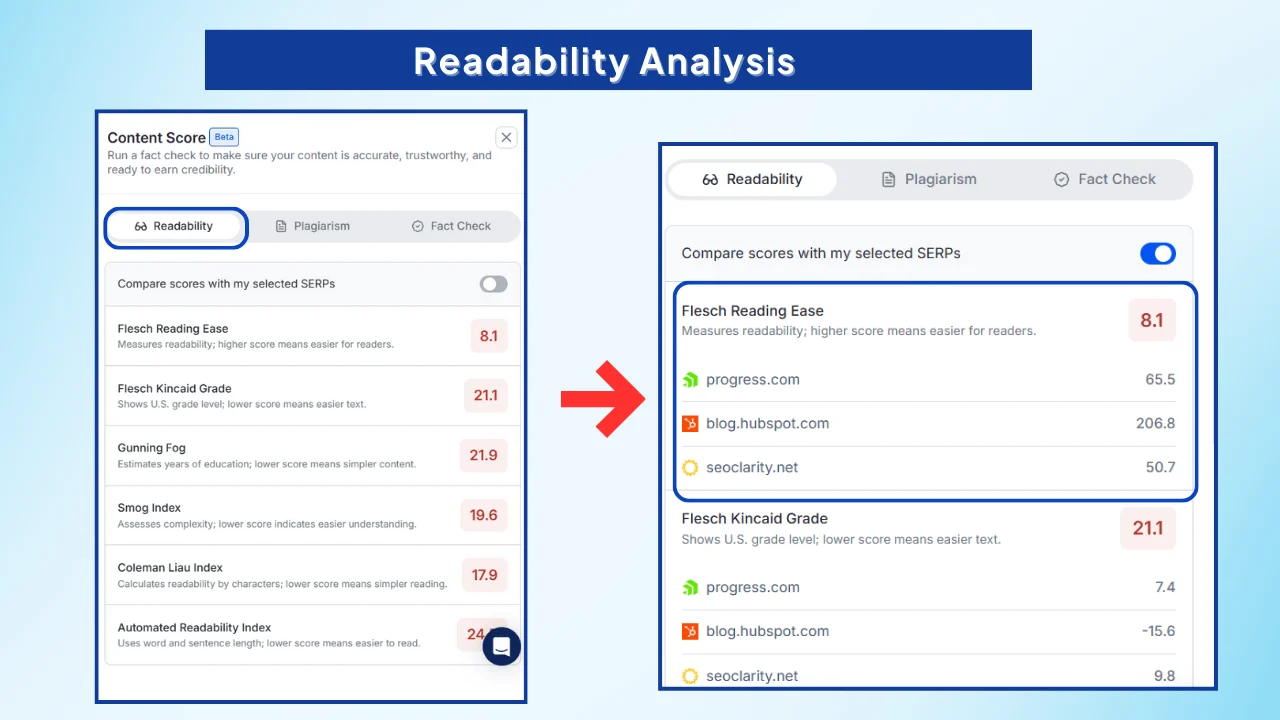 This ensures outputs align with credibility and AI search visibility requirements.
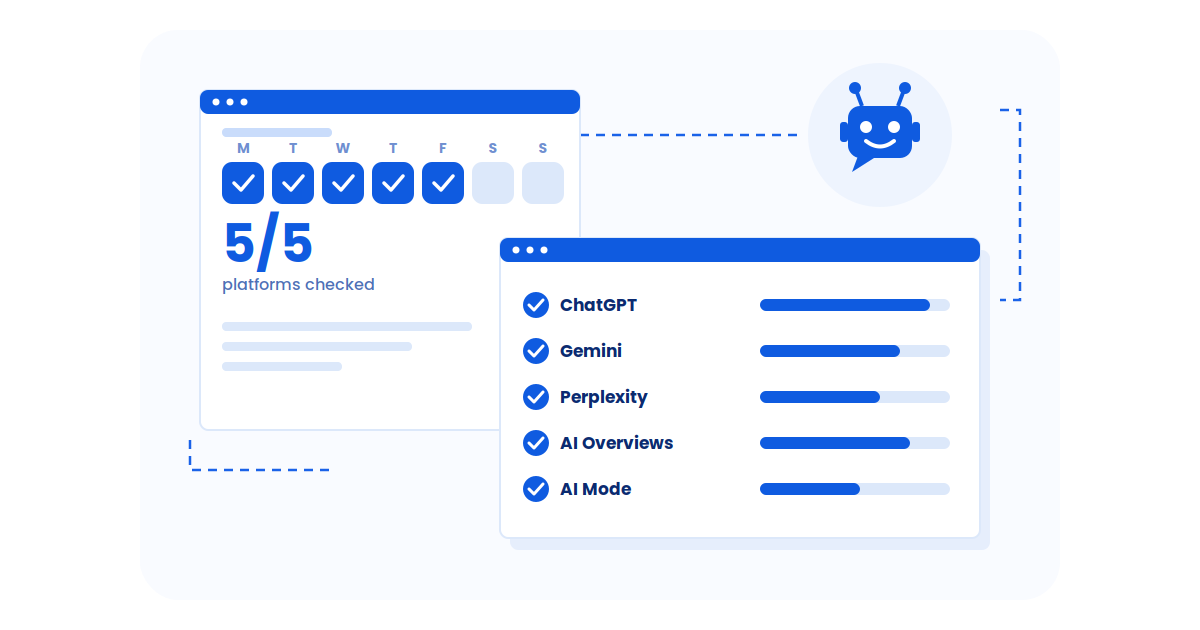
Together, these capabilities form a cohesive AI visibility solution that supports enterprise teams in measuring, managing, and expanding brand presence across ChatGPT, Gemini, Perplexity, Google AI Overview, and emerging AI search environments, without breaking governance or operational workflows.
FAQs
An Enterprise AI Visibility Strategy is a governance-led approach that ensures a brand is consistently understood, referenced, and trusted by AI-driven search systems. It focuses on entity clarity, cross-team alignment, and sustained visibility across generative answers rather than page-level optimization.
Citation Score reflects how frequently and consistently AI systems reference a brand across generated answers. Higher citation consistency increases AI trust, which directly affects whether a brand appears in summaries, comparisons, and recommendations.
Enterprises often lose AI visibility because authority alone does not guarantee recognition. Fragmented brand signals, inconsistent entity representation, and governance gaps prevent AI systems from forming a clear understanding of the brand.
Traditional SEO measures rankings and traffic, while AI visibility measures whether a brand is mentioned, cited, or trusted within AI-generated answers. AI systems prioritize entity consistency and contextual validation over keyword placement.
Enterprises should assess AI visibility continuously or daily, as generative systems update answers dynamically. Frequent monitoring helps teams detect citation loss, emerging competitors, and shifts in AI interpretation early.
AI visibility is an enterprise-wide function. It requires coordination between SEO, brand, content, data, legal, and product teams to ensure AI systems receive consistent, trusted signals across all touchpoints.
Key Takeaways for Enterprise SEO, Brand, and AI Teams
Enterprise visibility in AI-driven search is shaped by structure, consistency, and trust, not by isolated optimizations. These takeaways summarize what teams must align on to remain visible as discovery increasingly shifts toward AI-generated answers.
Each point reflects a strategic shift enterprises must make across SEO, brand, and AI functions to support sustainable visibility and long-term growth.
Did you know?
- AI visibility is a strategic layer, not a channel: Enterprises must manage how AI systems interpret and trust the brand, not just how pages rank or perform.
- Authority does not guarantee recognition: Strong SEO performance and market presence can still result in low AI visibility when entity signals are fragmented or inconsistent.
- Governance enables scale: Clear ownership, standards, and accountability are prerequisites for consistent AI visibility across teams, regions, and platforms.
- Data must be retrievable, not just measurable: Internal dashboards and BI insights do not influence AI systems unless they are externally accessible and contextually reinforced.
- Monitoring requires new lenses: Mentions, citations, and answer presence reveal visibility gaps that rankings and traffic metrics cannot capture.
- Trust compounds over time: Consistent AI recognition strengthens brand authority, user confidence, and long-term growth as discovery shifts toward AI-driven answers.