AI content generation has changing digital marketing, with 47% of marketers now using automation to scale output (HubSpot Marketing Statistics, 2025).
But this efficiency often comes with a significant cost: content that feels robotic, lacks authenticity, and fails to connect with real people.
Modern SEO demands more than volume. Search engines and AI platforms increasingly reward content that demonstrates genuine expertise and human connection.
Research shows that “loss of the human touch” is consumers’ top concern about brands using AI (59%) (Attest, Consumer Adoption of AI Report, 2025), making it critical for professionals, marketers, and tech-driven brands to humanize AI content for SEO without sacrificing clarity, credibility, or optimization.
The good news? Tools like Wellows Free AI Humanizer can instantly transform robotic AI text into natural, engaging writing while you maintain full control over your brand voice and message. But technology alone isn’t enough.
You need proven strategies that blend automation with authentic human insight.
This article reveals the complete approach: essential tools, step-by-step strategies, and best practices that transform machine-generated drafts into compelling, trustworthy content.
Discover how to meet rising expectations and deliver material that resonates with both search engines and real audiences.
- AI humanizers transform robotic text into natural writing by changing tone, rhythm, and emotional flow, not just words
- Ethical use depends on context: generally acceptable for business content, problematic for academic work without disclosure
- Humanized content sees 2x higher click through rates and 30% more social shares compared to unedited AI output
- Essential features for business email humanizers include tone customization, context awareness, and professional vocabulary that maintains credibility
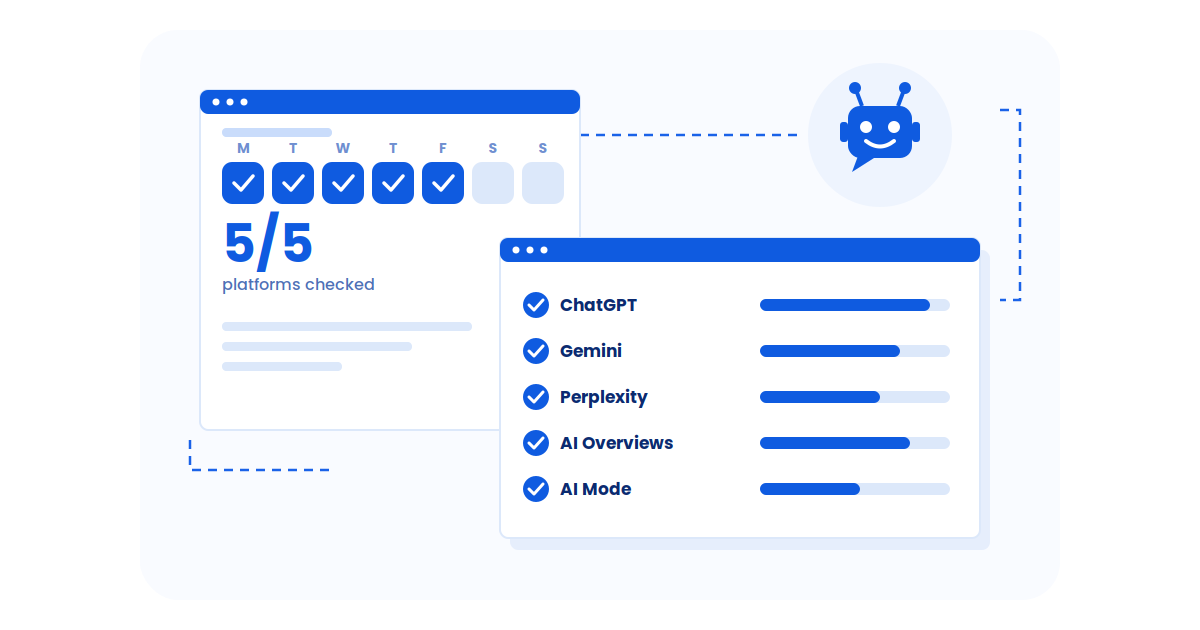
- Wellows tracks how your humanized content performs across ChatGPT, Gemini, Perplexity, and AI search platforms, showing which styles generate the most citations
- Successful humanization combines AI efficiency with personal experience, varied sentence structure, conversational language, and expert insights
- Tools like Wellows’ Free AI Humanizer achieve 98% semantic accuracy while removing 500+ AI fingerprints that detection systems flag
- Google doesn’t penalize AI content for being AI generated, but does deprioritize content lacking genuine value and original expertise
Understanding AI Content Generation
AI content generation uses artificial intelligence systems, particularly large language models, to produce written materials using learned data patterns. These systems analyze massive amounts of text from books, articles, and web pages to generate human like responses.
The process works through structured patterns. First, datasets are ingested by machine learning models. Through training cycles, the system learns how language functions, recognizes patterns, predicts phrases, and models sentence structure.
When given a prompt, the model generates output by sequencing words based on learned probabilities.
While efficient and scalable, this workflow creates content lacking depth, experience, or original insight. Modern tools like GPT-4 improve realism but still rely on detecting and repeating patterns, often missing the nuanced logic that comes from actual expertise.
Common Flaws in AI Written Content
AI generated text exhibits predictable weaknesses that human editors must address, which is why teams increasingly lean on AI content optimization strategies to refine structure, depth, and tone before publishing. Besides these, human editors must also address:
- Factual inaccuracies slip through as AI models sometimes generate plausible but incorrect information, creating trust issues with readers.
- Contextual gaps occur when AI misses subtle intent, leading to tone mismatches or lack of empathy in brand sensitive topics.
- Sudden topic shifts disrupt narrative flow, making content feel disjointed and confusing.
- Overuse of jargon without proper context alienates readers instead of engaging them.
An AI generated blog post on marketing strategies might cite outdated statistics or shift tone unexpectedly, signaling why purely automated processes cannot guarantee quality results for every use case—especially when you compare AI vs human writing and how each impacts credibility, tone, and reader trust.
Why Humanizing AI Content Matters for SEO
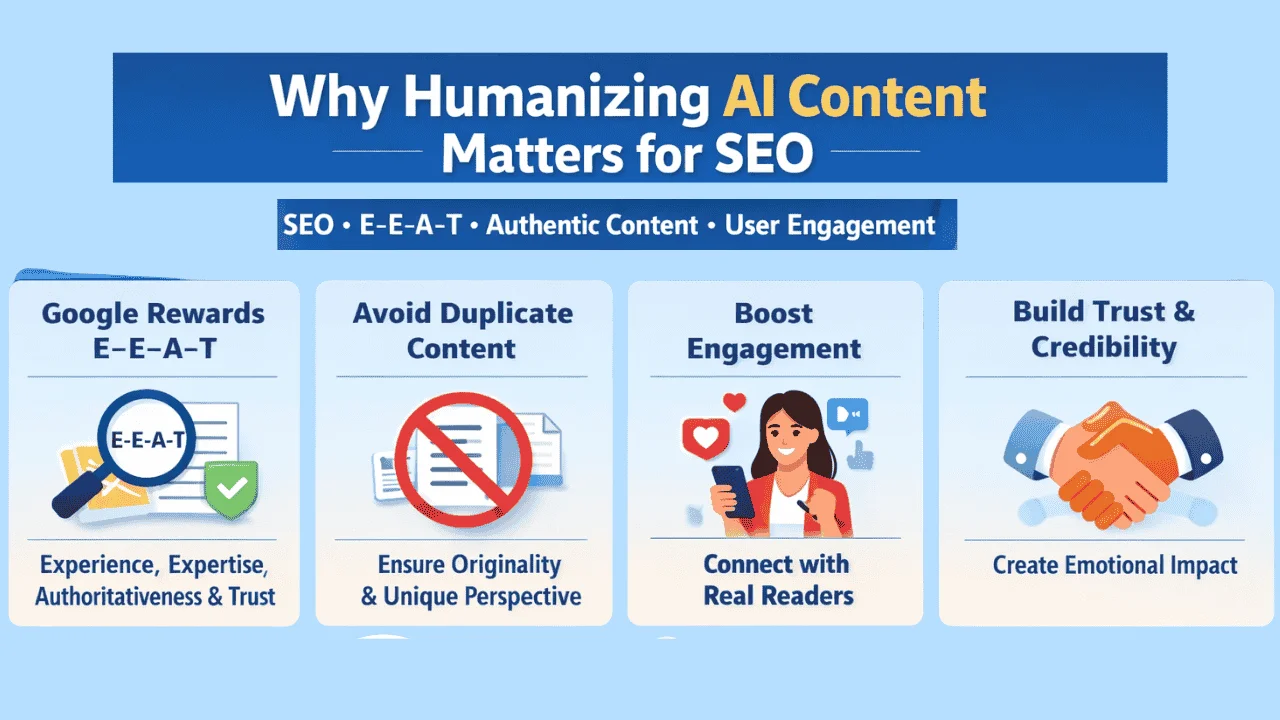
Transforming AI-generated copy is essential for SEO, branding, and audience trust. Search engines—especially Google—reward content that demonstrates Experience, Expertise, Authoritativeness, and Trust (E-E-A-T). Brands that publish generic, robotic content risk falling behind both algorithms and real audience expectations.
- Google's Standards for Quality Content:
Search engines increasingly deprioritize derivative, low-value writing. Google’s quality guidance emphasizes people-first, helpful content—meaning thin, repetitive pages often struggle to rank, especially when they don’t add original insight, real experience, or clear usefulness.
In practice, content that reads like an unedited machine draft can underperform because it tends to be vague, pattern-heavy, and light on evidence. Humanizing adds specificity, depth, and credibility—the same signals quality systems look for.
- The Plagiarism and Duplicate Content Risk:
Generative AI can unintentionally produce phrasing that overlaps with existing material online, which increases originality risk. Editing for uniqueness—adding your own perspective, examples, and wording—reduces duplication concerns and strengthens brand differentiation, especially as AI detection trends continue to evolve.
- Improving Readability and User Engagement:
Humanizing content makes complex ideas easier to follow and more enjoyable to read. In a study of 2,000 US and UK consumers, 52% said they feel less engaged when they suspect content is AI-generated (Bynder, 2024).
Personalization and well-chosen examples also increase shareability. Research cited by Headstream found that when people love a brand story, 44% will share it (MarComm News citing Headstream, 2015).
- Creating Emotional Connection and Trust:
Emotion-rich content is more memorable and more persuasive because it creates a human connection. Kantar research found digital ads that evoke strong emotions are 4x more likely to drive impact and 2.6x more likely to go viral (Kantar, 2023).
Storytelling and perspective shift content from transactional to meaningful—supporting stronger engagement, better retention, and more trust over time.
- Establishing Brand Voice and Identity:
Your brand’s tone, vocabulary, and point of view are key differentiators. A consistent voice strengthens recognition and recall. Without humanization, AI-generated writing can sound similar across companies—making it harder to stand out from competitors.
What Is an AI Humanizer and How Does It Make AI Generated Text Sound More Natural?
An AI humanizer transforms machine generated text into natural, engaging content that sounds like a real person wrote it. Think of it as adding a human editing layer that injects personality and ensures content connects with real audiences.
AI humanizers work differently from simple paraphrasing tools. While paraphrasers focus on synonym replacement and structural rewording, humanizers target the fundamental character and feel of writing.
They change tone, rhythm, personality, and emotion, not just words—making them a practical part of broader AI-driven strategies for creating content that performs.
Did you know?
Key Elements of Humanized Content
Effective humanization focuses on several essential elements:
- Personality and emotion through humor, personal stories, and cultural references that resonate with readers.
- Audience relevance by aligning tone and examples with reader interests and pain points.
- Varied sentence structure mixing short, punchy sentences with longer, descriptive ones for better readability.
- Conversational language using contractions, rhetorical questions, and direct address to create natural flow.
- Brand consistency maintaining unique voice across all content to build recognition.
- Authenticity incorporating real experiences and genuine perspectives that demonstrate expertise.
Modern AI humanizers use advanced techniques to make text sound natural:
- Statistical disruption breaks token predictability with unexpected syntax and diverse sentence patterns, making content less algorithmically detectable.
- Semantic enrichment adds context, examples, and depth beyond simple paraphrasing, making content more informative and valuable.
- Natural voice injection adds personality, emotion, and conversational elements that create genuine connection with readers.
- Pattern elimination removes the 500+ AI fingerprints that detection tools look for, including repetitive structures and predictable phrasing.
Research shows properly humanized content achieves 98% semantic accuracy while transforming robotic text into natural writing (Wellows AI Humanizer, 2025).
Is It Ethical to Use AI Humanizers to Make AI Generated Content Undetectable?
This question strikes at the heart of ongoing debates about AI in content creation. The answer depends on context, intent, and transparency.
Ethical Use Guidelines by Context
Business and marketing content is generally ethical. The focus is on quality and engagement, not deception. Companies use humanizers to improve readability and effectiveness, which is good editorial practice.
Academic work is often problematic. Using AI humanizers to disguise AI generated academic work violates most institutional policies requiring original student work.
Professional certifications require checking specific requirements. Many certification programs mandate disclosure of AI involvement in submitted work.
Journalism and research requires transparency. Readers have a right to know about AI involvement in news reporting and published research.
Did you know?
The key principle: if someone evaluating your work would care whether AI was involved, you have an ethical obligation to either disclose it or not use it.
In professional content creation for businesses, marketing, and general publishing, using AI humanizers is widely accepted.
Your readers care about value and readability, not whether your first draft came from human or AI—especially when the workflow follows a clear LLM content creation strategy focused on quality, review, and usefulness. The goal is efficiency and effectiveness, not deception.
When Should You Humanize AI Generated Content?
Specific scenarios demand targeted humanization to ensure clarity, empathy, and brand impact—especially within a scalable AI content marketing workflow where speed still needs quality control.
1. Marketing and Branding Campaigns
Where nuanced storytelling and emotional impact drive customer loyalty and conversions.
Example: Rewrite a product launch email to sound more human by adding a short customer moment (“Here’s what surprised us most in beta…”), tightening vague claims, and using a warmer, brand-consistent tone.
2. Customer Service Touchpoints
Where the right tone, warmth, and contextual empathy boost user satisfaction and retention.
Example: Humanize an AI-written support reply by acknowledging the customer’s frustration, summarizing the issue in plain language, and offering clear next steps with a friendly close (“If you want, I can stay with you while you try it.”).
3. Educational Blogs and Articles
Where personality, authority, and readability set brands apart from generic content.
Example: Upgrade an AI draft by adding a real mini case study (“We tested this across 3 landing pages…”) plus practical screenshots/steps, so the post reads like expert guidance—not a generic overview.
4. Crisis or Sensitive Communications
Where accuracy, empathy, and language nuance minimize risks and prevent misunderstandings.
Example: Rewrite a service outage update to be direct and calm: what happened, what users should do now, what you’re doing next, and when the next update will arrive—without corporate fluff or vague AI phrasing.
5. High Stakes Content
That shapes perception, influences decisions, or carries regulatory considerations requiring careful review.
Example: Humanize a finance/healthcare page by adding expert review notes, precise definitions, compliant language, and citations—then have a human editor validate claims before publishing.
Any content representing your brand’s expertise or directly impacting business outcomes benefits from humanization that adds authentic voice and genuine value—especially if you’re also working to audit brand visibility on LLMs and understand how your content shows up in AI-generated answers.
What Features Should I Look for When Choosing an AI Humanizer for Business Emails?
Business emails require specific humanization capabilities that balance professionalism with genuine connection. Look for these essential features:
- Tone customization that adapts to different business contexts, from formal client communications to friendly internal updates.
- Context awareness that understands email purpose and adjusts language appropriately for introductions, follow ups, requests, or responses.
- Professional vocabulary that maintains credibility while avoiding overly stiff or robotic phrasing common in AI output.
- Personality injection that adds warmth and authenticity without compromising professional standards or brand voice.
- Length optimization that keeps emails concise while ensuring complete communication of necessary information.
- Cultural sensitivity that adapts language for international recipients and respects communication norms across different markets.
For business email humanization, tools offering customizable tone settings and professional templates deliver the best results. The goal is emails that sound like they come from a real person who understands context and cares about the recipient—because LLMs need context to produce writing that feels truly relevant and human.
How to Humanize AI Content for SEO: Proven Step-by-Step Strategies
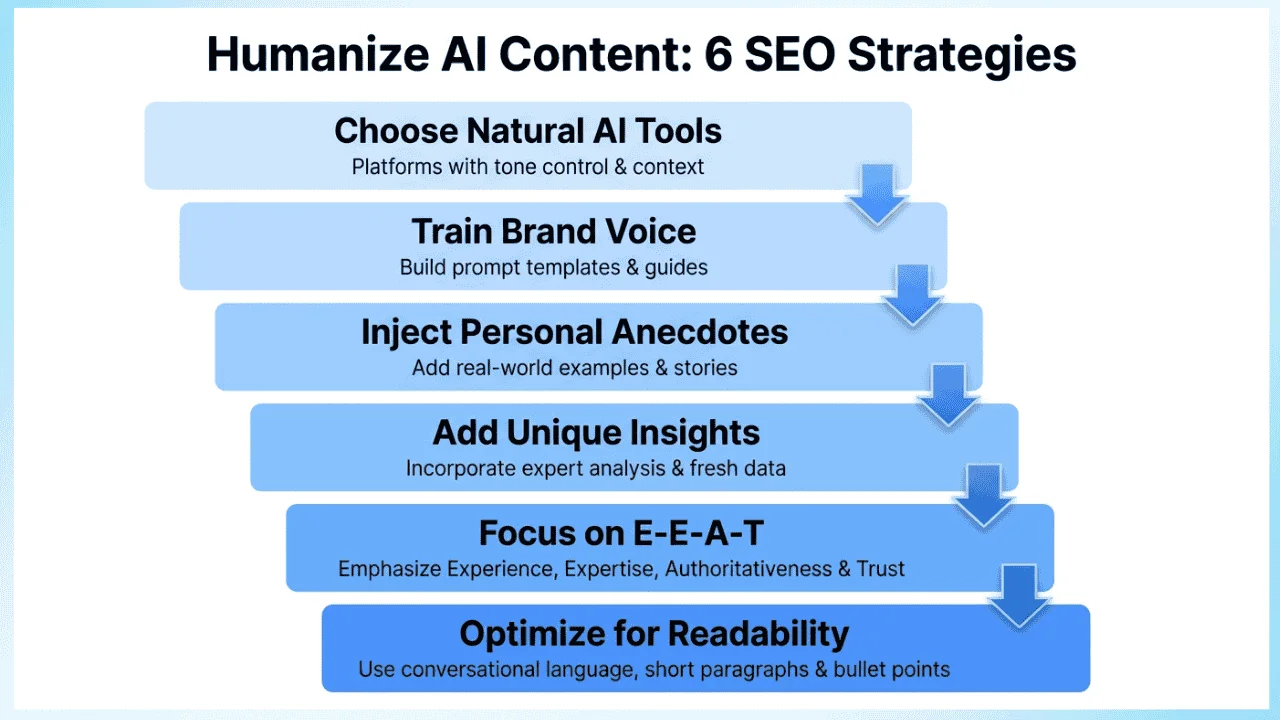
Use the steps below to turn AI drafts into clear, credible, people-first content—without losing SEO value. Start with the tool and prompt, then refine for clarity, experience, originality, and final quality checks.
Step 1: Choose AI Tools That Produce Natural Language
Pick tools that let you control tone and context. Test outputs for natural rhythm, varied sentence length, and how easy the draft is to edit into your brand voice. Compare a few platforms side by side and choose the one that needs the least cleanup to sound human—because low-quality drafts can contribute to broader visibility issues when content feels thin or generic.
Step 2: Humanize the First Draft With a Free AI Humanizer
Run your draft through a humanizer to smooth robotic phrasing, improve flow, and make the tone feel more natural before you do manual edits. For example, the Wellows Free AI Humanizer lets you paste text and quickly generate a more human-sounding version—then you can fine-tune it to match your brand voice.
Step 3: Train the AI on Your Brand Voice With Better Prompts
Better prompts = better drafts. Feed the AI examples of your best content plus a simple voice guide (tone, audience, style rules, and do/don’t phrases). Build reusable prompt templates for blogs, emails, and social posts, then refine drafts by giving clear feedback.
Step 4: Edit Line-by-Line to Remove Jargon and Passive Voice
Cut jargon, clichés, and passive phrasing to make the writing direct and confident. Swap complex terms for audience-friendly words, shorten long sentences, and split dense paragraphs. Replace filler like “game changer” with specific, concrete language.
Step 5: Add Real Experience and Expert Insight (E-E-A-T Boost)
Add what AI can’t through E-E-A-T: lived experience, real examples, and original insights. Include mini case studies, lessons learned, screenshots, or measurable outcomes. Quote team members or subject-matter experts when relevant. Use “I” or “we” where appropriate to show practical proof—not just theory.
Step 6: Insert Helpful Visuals and Optimize Them for SEO
Add visuals that support the point: screenshots, charts, infographics, or step-by-step examples. Write descriptive ALT text, compress images for speed, and ensure mobile-friendly sizing and accessible contrast. Update visuals so examples and data stay current.
Step 7: Validate With AI Detectors and a Final Human Review
Run a final pass with detection tools to flag repetitive patterns, then do a human review for accuracy, tone, and credibility. Rewrite any flagged sections for clarity and authenticity. For high-stakes content, add an approval workflow (editor + subject expert + final reviewer) before publishing—and use learnings to improve future prompts.
How Wellows Helps You Create Humanized Content That Improves Visibility
The Wellows Free AI Humanizer is an essential tool for Humanizing and Detecting AI Content. It helps refine AI-generated drafts so they sound clearer, more natural, and easier to understand—while preserving the original meaning and intent.
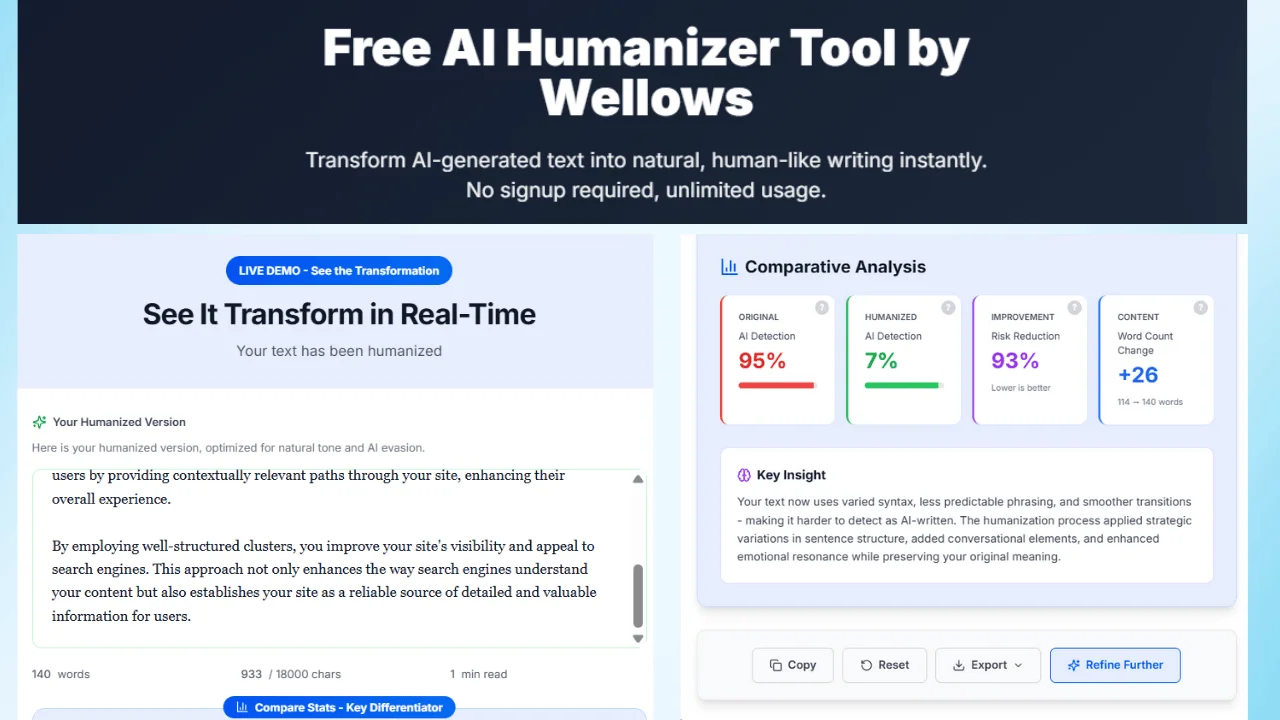
Key Features of AI Humanizer
- Natural Tone Adjustment: Smooths robotic phrasing, improves flow, and balances sentence structure so content feels human and readable without over-editing.
- High Semantic Accuracy: Retains the original message and facts while rewriting for clarity—helpful when working with technical, SEO, or research-based content.
- Detection Pattern Reduction: Reduces common AI writing patterns such as repetitive phrasing, rigid structure, and unnatural transitions that can hurt trust and visibility.
- Fast, No-Setup Workflow: Paste text, humanize, and review. No signup required, making it ideal for quick edits, drafts, and content polishing.
- Supports AI & Search Visibility: Clearer, more natural writing makes content easier for readers and AI systems to understand, summarize, and reference—supporting broader discovery across search and AI platforms.
Common Mistakes When Humanizing AI Content
Awareness of frequent errors helps you avoid pitfalls that compromise results and waste resources.
Mistakes When Humanizing AI Content
- Over Reliance on Automation: Using AI for initial strategy without human oversight leads to dull, repetitive content that misses audience needs. Automation should support human expertise, not replace it entirely.
- Losing Brand Consistency: Automated voice without clear guidelines dilutes established brand tone, causing communication drift. Readers disengage when text is indistinguishable from competitors’ generic outputs.
- Keyword Stuffing and Repetitiveness: AI models may over optimize, producing unnatural keyword density that triggers search engine penalties. Focus on natural language that happens to include relevant terms.
- Insufficient Personalization: AI written text that doesn’t reflect first hand knowledge or credible perspective fails to satisfy Google’s EEAT requirements. Lack of expertise leads to lower engagement and missed business goals.
- Skipping Human Review Steps: Publishing AI content without thorough human review allows errors, tone problems, and factual inaccuracies to reach audiences. Always validate content before publication.
Avoiding those mistakes becomes easier with structured AI content optimization, which guides teams toward sharper edits, stronger depth, and more authentic content that still performs in search.
Following ai search engine visibility guidelines ensures your humanized content ranks well and avoids penalties.
Demonstrate EEAT Throughout Content
Google prioritizes Experience, Expertise, Authoritativeness, and Trustworthiness. Demonstrate human input and authentic value, not just keyword matching. Include author bios highlighting relevant expertise. Reference verifiable sources for factual claims. Show real world application of advice through case studies and examples.
Avoid Thin or Duplicate Content
Ensure each piece provides unique value. Attribute facts to original sources. Fact check all statistics and timely claims for accuracy. Use plagiarism checkers to verify originality. Rewrite sections that too closely match existing content. Add unique insights that distinguish your perspective.
Optimize Technical Elements
Keep meta descriptions, headings, and on page elements aligned with natural, clear language. Tie supporting visual content to page focus and keyword intent. Meet accessibility standards including imagery ALT tags and logical navigation. Apply consistent review workflows to maintain compliance over time.
Monitor Algorithm Updates
Regularly review Google’s Helpful Content updates and search quality guidelines. Adapt strategies based on evolving best practices and industry commentary. Track ranking changes after publishing humanized content. Identify patterns in what performs well to inform future creation.
- Content Marketing Stats: Why Structured SEO Briefs Are the New Foundation of AI Search Success
- SERP & LLM Trends: How To Create Content Based on SERP and LLM Trends
- SEO Automation with AI: Why AI Agents Power Smarter SEO Automation in 2025
- Agency Workflow Automation: Save 50+ Hours: Automation for Agency Workflows in 2025
- SEO Strategy by Intent: Master SEO Strategy with User Intent for Higher Rankings
- ChatGPT vs Traditional Search: AI Search Marketing: ChatGPT vs Traditional Search
- AI Content Prompts: 77 Must-Try AI Prompts for Content Marketing Team
FAQs
Yes. An AI humanizer can smooth stiff phrasing, vary sentence rhythm, and make writing feel more natural. For best results, humanize the draft first, then add your own examples, align the voice with your brand, and fact-check key claims before publishing.
Google doesn’t penalize content simply because AI helped create it, but pages that feel robotic, thin, or unhelpful can rank lower. If your content lacks original insight, real expertise, or clear user value, it may be suppressed in search results—even if there’s no manual penalty.
Look for common signals such as repetitive phrasing, uniform sentence length, generic transitions, and vague claims without evidence. AI-detection tools can help flag issues, but a human review focused on tone, clarity, and logic is still essential.
Start by adjusting tone and flow: add a short anecdote or real example, replace clichés with specific language, vary sentence structure, and tighten introductions and conclusions. Finish with a quick human edit to ensure accuracy and brand alignment.
For detection, tools like Copyleaks and Originality.AI are widely used to flag AI patterns and duplication. For humanization, the Wellows Free AI Humanizer is a fast, no-signup option to smooth robotic drafts while preserving meaning. Other tools like Undetectable.AI and HIX Bypass can also help, but final quality should always be confirmed through human review.
Add signals AI can’t fake: (1) include real-world experience (examples, case studies, screenshots), (2) cite credible sources for facts and statistics, (3) use an author bio with relevant credentials, (4) keep content accurate and updated, (5) match search intent with clear structure and practical answers, and (6) strengthen internal linking to related expert content to build topical authority.
Top options include: Wellows Free AI Humanizer (fast, no-signup rewriting for more natural tone), Undetectable.AI (rewriting and style smoothing), and HIX Bypass (paraphrasing + tone refinement). Pair these with detection and originality tools like Copyleaks and Originality.AI, then finish with a human editor to ensure accuracy, voice, and E-E-A-T.
Start Creating Humanized Content That Improves Visibility
Achieving SEO success today requires blending AI efficiency with an authentic human touch. By using the strategies in this guide on How to Humanize AI Content for SEO, you can turn robotic AI drafts into clear, credible content that resonates with both search engines and real people.
Humanization isn’t about hiding AI—it’s about improving quality. When your content feels natural, specific, and genuinely helpful, it becomes easier to trust, easier to read, and more aligned with user intent. Over time, that strengthens the signals search engines look for: real expertise, original insight, and clear value.
The most sustainable approach is simple: use AI for speed, then apply human editing for accuracy, voice, and depth. That combination turns machine-generated drafts into content that stands out, supports your brand, and performs consistently in search.